Kevin, aka Plant Daddy, is a serial founder and CEO who cultivates success as passionately as he grows plants. With a finger in multiple pies, from epic gardening to seed sales and digital art, he constantly experiments and evolves. His tweets blend practical business wisdom with a green thumb’s touch, inspiring both budding entrepreneurs and plant enthusiasts alike.
For a guy named ‘Plant Daddy,’ Kevin sure spends more time tweeting about business strategies than watering his green babies, maybe his plants need a social media manager more than he does!
Kevin’s biggest win is successfully founding and growing epicgardening and botanicalseeds into recognized brands that merge his passions for plants and business, proving you can literally grow your dreams from the ground up.
Kevin’s life purpose revolves around nurturing growth, whether that’s in his plants, his businesses, or himself. He’s driven to build sustainable enterprises that solve real problems and to empower others to discover alternative, fulfilling paths to success.
Kevin believes in the power of practical experimentation and open-minded innovation, valuing convenience and efficiency alongside creativity. He embraces alternative lifestyles and business models, challenging conventional wisdom and showing that success doesn’t have to look one way.
Kevin’s strengths lie in his relentless experimentation, multi-industry mindset, and ability to communicate complex business and gardening ideas simply and engagingly. His hustle and versatility make him adaptable in diverse fields.
His biggest challenge might be spreading himself too thin; juggling multiple ventures can dilute focus and sometimes overwhelm his audience with the breadth of his interests.
To grow his audience on X, Kevin should leverage his natural storytelling by sharing more behind-the-scenes insights into his experiments and daily routines. Regularly engaging his community with Q&As on both gardening and entrepreneurship could foster deeper connections and boost interaction.
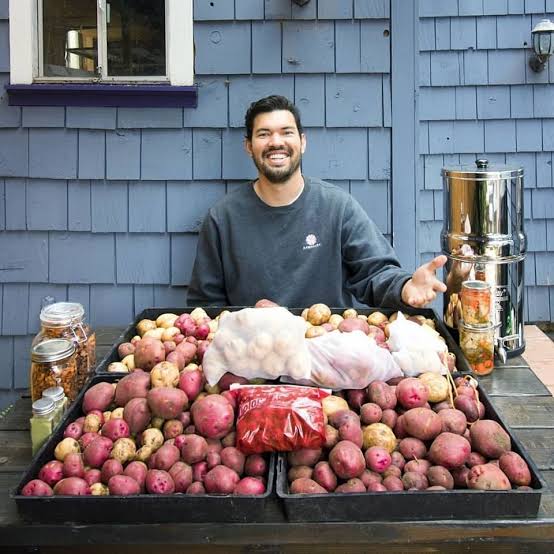
Fun fact: Kevin once re-tested a Depression-era potato growing method and found it surprisingly effective, proving vintage wisdom holds power in modern times!
{"data":{"__meta":{"device":false,"path":"/creators/KevinEspiritu"},"/creators/KevinEspiritu":{"data":{"user":{"id":"136404183","name":"Kevin → Plant Daddy","description":"I like growing plants, businesses, and the thing I call my self | founder / ceo @epicgardening, seeds @botanicalseeds, artist @rampfade","followers_count":68072,"friends_count":2604,"statuses_count":28771,"profile_image_url_https":"https://pbs.twimg.com/profile_images/2105487896484749313/2-Ot54E4_normal.jpg","screen_name":"KevinEspiritu","location":"☀️ San Diego Zone 10b","entities":{"description":{},"url":{"urls":[{"display_url":"kevinespiritu.com","expanded_url":"https://www.kevinespiritu.com/","indices":[0,23],"url":"https://t.co/ZSY1SeiHUp"}]}}},"details":{"type":"The Entrepreneur","description":"Kevin, aka Plant Daddy, is a serial founder and CEO who cultivates success as passionately as he grows plants. With a finger in multiple pies—from epic gardening to seed sales and digital art—he constantly experiments and evolves. His tweets blend practical business wisdom with a green thumb’s touch, inspiring both budding entrepreneurs and plant enthusiasts alike.","purpose":"Kevin’s life purpose revolves around nurturing growth—whether that’s in his plants, his businesses, or himself. He’s driven to build sustainable enterprises that solve real problems and to empower others to discover alternative, fulfilling paths to success.","beliefs":"Kevin believes in the power of practical experimentation and open-minded innovation, valuing convenience and efficiency alongside creativity. He embraces alternative lifestyles and business models, challenging conventional wisdom and showing that success doesn’t have to look one way.","facts":"Fun fact: Kevin once re-tested a Depression-era potato growing method and found it surprisingly effective, proving vintage wisdom holds power in modern times!","strength":"Kevin’s strengths lie in his relentless experimentation, multi-industry mindset, and ability to communicate complex business and gardening ideas simply and engagingly. His hustle and versatility make him adaptable in diverse fields.","weakness":"His biggest challenge might be spreading himself too thin; juggling multiple ventures can dilute focus and sometimes overwhelm his audience with the breadth of his interests.","recommendation":"To grow his audience on X, Kevin should leverage his natural storytelling by sharing more behind-the-scenes insights into his experiments and daily routines. Regularly engaging his community with Q&As on both gardening and entrepreneurship could foster deeper connections and boost interaction.","roast":"For a guy named ‘Plant Daddy,’ Kevin sure spends more time tweeting about business strategies than watering his green babies—maybe his plants need a social media manager more than he does!","win":"Kevin’s biggest win is successfully founding and growing epicgardening and botanicalseeds into recognized brands that merge his passions for plants and business, proving you can literally grow your dreams from the ground up."},"tweets":[{"bookmarked":false,"display_text_range":[0,208],"entities":{"hashtags":[],"symbols":[],"timestamps":[],"urls":[],"user_mentions":[]},"favorited":false,"lang":"en","quoted_status_id_str":"1885869976092823567","quoted_status_permalink":{"url":"https://t.co/AxXzvfRDYP","expanded":"https://twitter.com/HardPass4/status/1885869976092823567","display":"x.com/HardPass4/stat…"},"retweeted":false,"fact_check":null,"id":"1886235567790391468","view_count":2695592,"bookmark_count":1908,"created_at":1738548578000,"favorite_count":42898,"quote_count":174,"reply_count":893,"retweet_count":2583,"user_id_str":"136404183","conversation_id_str":"1886235567790391468","full_text":"I used to think this, until I ran a brand. At scale, USA consumers buy based on lowest price and highest convenience nearly 100% of the time\n\nPeople like to say this, but their credit card statements disagree","in_reply_to_user_id_str":null,"in_reply_to_status_id_str":null,"is_quote_status":1,"is_ai":null,"ai_score":null,"source":"scraping","fetched_at":null,"edit_history_tweet_ids":null,"poll_10min_at":null,"poll_3day_at":null,"poll_count":0,"poll_complete":0},{"entities":{},"display_text_range":[0,60],"lang":"en","quoted_tweet":{"id":"2058775068268785834","text":"If you're worried about ticks, put up an owl box.\n\nThe animal driving most Lyme disease in the eastern US is the white-footed mouse. Ticks that feed on them are far more likely to come away infected than ticks that feed on other animals. The bigger the local mouse population, the worse the next year's tick year.\n\nA single barred owl pair raising chicks can take hundreds of rodents in a breeding season. Owls also don't carry Lyme. The bacterium can't survive their digestive tract, so an owl that eats an infected mouse is a dead end for the disease.\n\nResearchers at the Cary Institute, the leading lab on Lyme ecology, have been explicit about this: \"Landscapes that support predators have reduced Lyme disease risk.\"\n\nOne owl box on its own isn't going to fix a tick year. But a yard with owls, foxes, bobcats, and weasels in it has fewer mice, and a yard with fewer mice has fewer infected ticks.\n\nIf you have woods or fields nearby, a properly sized barn owl or screech owl box (different species, different boxes) is one of the most useful single things you can do for tick exposure at the landscape scale. Match the box to the owl that lives near you.\n\nThe mouse is the problem, owls are the solution.","full_text":"If you're worried about ticks, put up an owl box.\n\nThe animal driving most Lyme disease in the eastern US is the white-footed mouse. Ticks that feed on them are far more likely to come away infected than ticks that feed on other animals. The bigger the local mouse population, the worse the next year's tick year.\n\nA single barred owl pair raising chicks can take hundreds of rodents in a breeding season. Owls also don't carry Lyme. The bacterium can't survive their digestive tract, so an owl that eats an infected mouse is a dead end for the disease.\n\nResearchers at the Cary Institute, the leading lab on Lyme ecology, have been explicit about this: \"Landscapes that support predators have reduced Lyme disease risk.\"\n\nOne owl box on its own isn't going to fix a tick year. But a yard with owls, foxes, bobcats, and weasels in it has fewer mice, and a yard with fewer mice has fewer infected ticks.\n\nIf you have woods or fields nearby, a properly sized barn owl or screech owl box (different species, different boxes) is one of the most useful single things you can do for tick exposure at the landscape scale. Match the box to the owl that lives near you.\n\nThe mouse is the problem, owls are the solution.","created_at":1779685201000,"author_id":"2788596146","author":{"id":"2788596146","name":"Give A Shit About Nature","username":"giveashitnature","screen_name":"giveashitnature","profile_image_url":"https://pbs.twimg.com/profile_images/2033126272780427264/FlEV6uSc_400x400.jpg","profile_image_url_https":"https://pbs.twimg.com/profile_images/2033126272780427264/FlEV6uSc_400x400.jpg","is_blue_verified":1},"public_metrics":{"like_count":31503,"retweet_count":5007,"reply_count":384,"quote_count":191}},"fact_check":null,"id":"2058917655776763918","view_count":3619132,"bookmark_count":4572,"created_at":1779719196000,"favorite_count":39205,"quote_count":10,"reply_count":119,"retweet_count":2746,"user_id_str":"136404183","conversation_id_str":"2058917655776763918","full_text":"One of the best new accounts I've seen on X in recent months","in_reply_to_user_id_str":null,"in_reply_to_status_id_str":null,"is_quote_status":1,"is_ai":null,"ai_score":null,"source":"rapidapi","fetched_at":1780694773916,"edit_history_tweet_ids":null,"poll_10min_at":null,"poll_3day_at":1779980420714,"poll_count":1,"poll_complete":1},{"entities":{"media":[{"allow_download_status":{"allow_download":true},"display_url":"pic.x.com/cPPMS0j0B7","expanded_url":"https://x.com/KevinEspiritu/status/2055315348594036736/photo/1","ext_media_availability":{"status":"Available"},"features":{"large":{"faces":[{"h":192,"w":192,"x":162,"y":346},{"h":282,"w":282,"x":147,"y":825},{"h":290,"w":290,"x":659,"y":833}]},"medium":{"faces":[{"h":170,"w":170,"x":144,"y":307},{"h":250,"w":250,"x":130,"y":733},{"h":257,"w":257,"x":585,"y":740}]},"orig":{"faces":[{"h":192,"w":192,"x":162,"y":346},{"h":282,"w":282,"x":147,"y":825},{"h":290,"w":290,"x":659,"y":833}]},"small":{"faces":[{"h":96,"w":96,"x":81,"y":174},{"h":142,"w":142,"x":74,"y":415},{"h":146,"w":146,"x":331,"y":419}]}},"id_str":"2055315321616232448","indices":[0,23],"media_key":"3_2055315321616232448","media_results":{"result":{"media_key":"3_2055315321616232448"}},"media_url_https":"https://pbs.twimg.com/media/HIXyZT5acAAP-Hi.jpg","original_info":{"focus_rects":[{"h":605,"w":1080,"x":0,"y":745},{"h":1080,"w":1080,"x":0,"y":270},{"h":1231,"w":1080,"x":0,"y":119},{"h":1350,"w":675,"x":405,"y":0},{"h":1350,"w":1080,"x":0,"y":0}],"height":1350,"width":1080},"sizes":{"large":{"h":1350,"resize":"fit","w":1080},"medium":{"h":1200,"resize":"fit","w":960},"small":{"h":680,"resize":"fit","w":544},"thumb":{"h":150,"resize":"crop","w":150}},"type":"photo","url":"https://t.co/cPPMS0j0B7"}]},"extended_entities":{"media":[{"allow_download_status":{"allow_download":true},"display_url":"pic.x.com/cPPMS0j0B7","expanded_url":"https://x.com/KevinEspiritu/status/2055315348594036736/photo/1","ext_media_availability":{"status":"Available"},"features":{"large":{"faces":[{"h":192,"w":192,"x":162,"y":346},{"h":282,"w":282,"x":147,"y":825},{"h":290,"w":290,"x":659,"y":833}]},"medium":{"faces":[{"h":170,"w":170,"x":144,"y":307},{"h":250,"w":250,"x":130,"y":733},{"h":257,"w":257,"x":585,"y":740}]},"orig":{"faces":[{"h":192,"w":192,"x":162,"y":346},{"h":282,"w":282,"x":147,"y":825},{"h":290,"w":290,"x":659,"y":833}]},"small":{"faces":[{"h":96,"w":96,"x":81,"y":174},{"h":142,"w":142,"x":74,"y":415},{"h":146,"w":146,"x":331,"y":419}]}},"id_str":"2055315321616232448","indices":[0,23],"media_key":"3_2055315321616232448","media_results":{"result":{"media_key":"3_2055315321616232448"}},"media_url_https":"https://pbs.twimg.com/media/HIXyZT5acAAP-Hi.jpg","original_info":{"focus_rects":[{"h":605,"w":1080,"x":0,"y":745},{"h":1080,"w":1080,"x":0,"y":270},{"h":1231,"w":1080,"x":0,"y":119},{"h":1350,"w":675,"x":405,"y":0},{"h":1350,"w":1080,"x":0,"y":0}],"height":1350,"width":1080},"sizes":{"large":{"h":1350,"resize":"fit","w":1080},"medium":{"h":1200,"resize":"fit","w":960},"small":{"h":680,"resize":"fit","w":544},"thumb":{"h":150,"resize":"crop","w":150}},"type":"photo","url":"https://t.co/cPPMS0j0B7"}]},"display_text_range":[0,0],"lang":"zxx","possibly_sensitive":false,"fact_check":null,"id":"2055315348594036736","view_count":6782628,"bookmark_count":3023,"created_at":1778860339000,"favorite_count":25331,"quote_count":210,"reply_count":711,"retweet_count":620,"user_id_str":"136404183","conversation_id_str":"2055315348594036736","full_text":"https://t.co/cPPMS0j0B7","in_reply_to_user_id_str":null,"in_reply_to_status_id_str":null,"is_quote_status":0,"is_ai":null,"ai_score":null,"source":"rapidapi","fetched_at":1779639965595,"edit_history_tweet_ids":null,"poll_10min_at":null,"poll_3day_at":1779120040603,"poll_count":1,"poll_complete":1},{"bookmarked":false,"display_text_range":[0,170],"entities":{"hashtags":[],"media":[{"display_url":"pic.x.com/JZJMn3mJdu","expanded_url":"https://x.com/KevinEspiritu/status/1918395429072585170/photo/1","id_str":"1918395366204162052","indices":[171,194],"media_key":"3_1918395366204162052","media_url_https":"https://pbs.twimg.com/media/Gp-Ca-VawAQVzYU.jpg","type":"photo","url":"https://t.co/JZJMn3mJdu","ext_media_availability":{"status":"Available"},"features":{"large":{"faces":[{"x":1515,"y":211,"h":123,"w":123}]},"medium":{"faces":[{"x":887,"y":124,"h":72,"w":72}]},"small":{"faces":[{"x":503,"y":70,"h":41,"w":41}]},"orig":{"faces":[{"x":1667,"y":233,"h":136,"w":136}]}},"sizes":{"large":{"h":2048,"w":2047,"resize":"fit"},"medium":{"h":1200,"w":1199,"resize":"fit"},"small":{"h":680,"w":680,"resize":"fit"},"thumb":{"h":150,"w":150,"resize":"crop"}},"original_info":{"height":2253,"width":2252,"focus_rects":[{"x":0,"y":439,"w":2252,"h":1261},{"x":0,"y":0,"w":2252,"h":2252},{"x":0,"y":0,"w":1976,"h":2253},{"x":394,"y":0,"w":1127,"h":2253},{"x":0,"y":0,"w":2252,"h":2253}]},"media_results":{"result":{"media_key":"3_1918395366204162052"}}}],"symbols":[],"timestamps":[],"urls":[],"user_mentions":[]},"extended_entities":{"media":[{"display_url":"pic.x.com/JZJMn3mJdu","expanded_url":"https://x.com/KevinEspiritu/status/1918395429072585170/photo/1","id_str":"1918395366204162052","indices":[171,194],"media_key":"3_1918395366204162052","media_url_https":"https://pbs.twimg.com/media/Gp-Ca-VawAQVzYU.jpg","type":"photo","url":"https://t.co/JZJMn3mJdu","ext_media_availability":{"status":"Available"},"features":{"large":{"faces":[{"x":1515,"y":211,"h":123,"w":123}]},"medium":{"faces":[{"x":887,"y":124,"h":72,"w":72}]},"small":{"faces":[{"x":503,"y":70,"h":41,"w":41}]},"orig":{"faces":[{"x":1667,"y":233,"h":136,"w":136}]}},"sizes":{"large":{"h":2048,"w":2047,"resize":"fit"},"medium":{"h":1200,"w":1199,"resize":"fit"},"small":{"h":680,"w":680,"resize":"fit"},"thumb":{"h":150,"w":150,"resize":"crop"}},"original_info":{"height":2253,"width":2252,"focus_rects":[{"x":0,"y":439,"w":2252,"h":1261},{"x":0,"y":0,"w":2252,"h":2252},{"x":0,"y":0,"w":1976,"h":2253},{"x":394,"y":0,"w":1127,"h":2253},{"x":0,"y":0,"w":2252,"h":2253}]},"media_results":{"result":{"media_key":"3_1918395366204162052"}}}]},"favorited":false,"lang":"en","possibly_sensitive":false,"possibly_sensitive_editable":true,"retweeted":false,"fact_check":null,"id":"1918395429072585170","view_count":332549,"bookmark_count":1696,"created_at":1746216087000,"favorite_count":13765,"quote_count":58,"reply_count":192,"retweet_count":835,"user_id_str":"136404183","conversation_id_str":"1918395429072585170","full_text":"I (re)tested an old Depression-era potato growing method where you drop them directly on the surface and just cover with straw...I'm gonna go ahead and say it's effective https://t.co/JZJMn3mJdu","in_reply_to_user_id_str":null,"in_reply_to_status_id_str":null,"is_quote_status":0,"is_ai":null,"ai_score":null,"source":"scraping","fetched_at":null,"edit_history_tweet_ids":null,"poll_10min_at":null,"poll_3day_at":null,"poll_count":0,"poll_complete":0},{"bookmarked":false,"display_text_range":[0,141],"entities":{"hashtags":[],"media":[{"display_url":"pic.x.com/XEA4q9Xfzg","expanded_url":"https://x.com/KevinEspiritu/status/1742937224163778884/photo/1","id_str":"1742937214991093760","indices":[142,165],"media_key":"3_1742937214991093760","media_url_https":"https://pbs.twimg.com/media/GDAoKZ1aUAAhgkE.png","type":"photo","url":"https://t.co/XEA4q9Xfzg","ext_media_availability":{"status":"Available"},"features":{"large":{"faces":[]},"medium":{"faces":[]},"small":{"faces":[]},"orig":{"faces":[]}},"sizes":{"large":{"h":794,"w":794,"resize":"fit"},"medium":{"h":794,"w":794,"resize":"fit"},"small":{"h":680,"w":680,"resize":"fit"},"thumb":{"h":150,"w":150,"resize":"crop"}},"original_info":{"height":794,"width":794,"focus_rects":[{"x":0,"y":155,"w":794,"h":445},{"x":0,"y":0,"w":794,"h":794},{"x":68,"y":0,"w":696,"h":794},{"x":218,"y":0,"w":397,"h":794},{"x":0,"y":0,"w":794,"h":794}]},"media_results":{"result":{"media_key":"3_1742937214991093760"}}}],"symbols":[],"timestamps":[],"urls":[],"user_mentions":[]},"extended_entities":{"media":[{"display_url":"pic.x.com/XEA4q9Xfzg","expanded_url":"https://x.com/KevinEspiritu/status/1742937224163778884/photo/1","id_str":"1742937214991093760","indices":[142,165],"media_key":"3_1742937214991093760","media_url_https":"https://pbs.twimg.com/media/GDAoKZ1aUAAhgkE.png","type":"photo","url":"https://t.co/XEA4q9Xfzg","ext_media_availability":{"status":"Available"},"features":{"large":{"faces":[]},"medium":{"faces":[]},"small":{"faces":[]},"orig":{"faces":[]}},"sizes":{"large":{"h":794,"w":794,"resize":"fit"},"medium":{"h":794,"w":794,"resize":"fit"},"small":{"h":680,"w":680,"resize":"fit"},"thumb":{"h":150,"w":150,"resize":"crop"}},"original_info":{"height":794,"width":794,"focus_rects":[{"x":0,"y":155,"w":794,"h":445},{"x":0,"y":0,"w":794,"h":794},{"x":68,"y":0,"w":696,"h":794},{"x":218,"y":0,"w":397,"h":794},{"x":0,"y":0,"w":794,"h":794}]},"media_results":{"result":{"media_key":"3_1742937214991093760"}}}]},"favorited":false,"lang":"en","possibly_sensitive":false,"possibly_sensitive_editable":true,"retweeted":false,"fact_check":null,"id":"1742937224163778884","view_count":793259,"bookmark_count":1566,"created_at":1704383591000,"favorite_count":13354,"quote_count":106,"reply_count":102,"retweet_count":713,"user_id_str":"136404183","conversation_id_str":"1742937224163778884","full_text":"I got a new mechanical keyboard for Christmas, which threw me DEEP into the world of custom-made artisanal keycaps and...it's pretty crazy... https://t.co/XEA4q9Xfzg","in_reply_to_user_id_str":null,"in_reply_to_status_id_str":null,"is_quote_status":0,"is_ai":null,"ai_score":null,"source":"scraping","fetched_at":null,"edit_history_tweet_ids":null,"poll_10min_at":null,"poll_3day_at":null,"poll_count":0,"poll_complete":0},{"entities":{"hashtags":[],"symbols":[],"timestamps":[],"urls":[],"user_mentions":[]},"display_text_range":[0,278],"lang":"en","quoted_tweet":{"id":"2027942148830859686","text":"Tough call here! https://t.co/2dSnvT5bjJ","full_text":"Tough call here! https://t.co/2dSnvT5bjJ","created_at":1772334060000,"author_id":"498292566","author":{"id":"498292566","name":"Food Pleaser","username":"FoodPleaser","screen_name":"FoodPleaser","profile_image_url":"https://pbs.twimg.com/profile_images/1325880691704410113/cage2LVR_400x400.jpg","profile_image_url_https":"https://pbs.twimg.com/profile_images/1325880691704410113/cage2LVR_400x400.jpg","is_blue_verified":1},"public_metrics":{"like_count":491,"retweet_count":30,"reply_count":328,"quote_count":325}},"fact_check":null,"id":"2028335550370132462","view_count":1701047,"bookmark_count":1384,"created_at":1772427854000,"favorite_count":12885,"quote_count":107,"reply_count":334,"retweet_count":550,"user_id_str":"136404183","conversation_id_str":"2028335550370132462","full_text":"Rye Chip: The wagyu of the bag. Dense, salty, crunchy, and most importantly somewhat rare in a classic bag of Gardetto's, leading to a scarcity flavor boosting psychological effect. Discerning consumers pair a classic bag with a \"Special Request\" bag of rye chips to balance the ratio.\n\nWheat Chex: Smaller and more dense grid, slightly crunchier than Corn Chex and more flavorful overall. A reliable second to rye chips.\n\nCorn Chex: A weaker and less flavorful base grain, but still passable as a random pull from the bag. \n\nMini Breadstick: We've entered \"filler\" territory now. Decent surface area, holds a solid amount of salt. But more of a palate cleanser in between rounds of the top three. \n\nCircle Pretzel: No one comes to Gardetto's for a pretzel, let's be real. Circle is only second worst because it's objectively less pretzel by mass than...\n\nSquare Pretzel: Absolute F-Tier trash. Pure filler, too smooth and barely even holds salt. Often never leaves the bag amongst sophisticated Gardetto consumers.","in_reply_to_user_id_str":null,"in_reply_to_status_id_str":null,"is_quote_status":1,"is_ai":null,"ai_score":null,"source":"rapidapi","fetched_at":1772832165189,"edit_history_tweet_ids":null,"poll_10min_at":null,"poll_3day_at":1772690402882,"poll_count":1,"poll_complete":1},{"entities":{"media":[{"display_url":"pic.x.com/KuWbINvewg","expanded_url":"https://x.com/KevinEspiritu/status/1956836068965409067/photo/1","ext_media_availability":{"status":"Available"},"features":{"large":{"faces":[]},"medium":{"faces":[]},"orig":{"faces":[]},"small":{"faces":[]}},"id_str":"1956836066893430784","indices":[93,116],"media_key":"3_1956836066893430784","media_results":{"result":{"media_key":"3_1956836066893430784"}},"media_url_https":"https://pbs.twimg.com/media/GygUCPrbAAAVsxG.jpg","original_info":{"focus_rects":[{"h":643,"w":1149,"x":0,"y":109},{"h":1149,"w":1149,"x":0,"y":0},{"h":1149,"w":1008,"x":41,"y":0},{"h":1149,"w":575,"x":258,"y":0},{"h":1149,"w":1149,"x":0,"y":0}],"height":1149,"width":1149},"sizes":{"large":{"h":1149,"resize":"fit","w":1149},"medium":{"h":1149,"resize":"fit","w":1149},"small":{"h":680,"resize":"fit","w":680},"thumb":{"h":150,"resize":"crop","w":150}},"type":"photo","url":"https://t.co/KuWbINvewg"}]},"extended_entities":{"media":[{"display_url":"pic.x.com/KuWbINvewg","expanded_url":"https://x.com/KevinEspiritu/status/1956836068965409067/photo/1","ext_media_availability":{"status":"Available"},"features":{"large":{"faces":[]},"medium":{"faces":[]},"orig":{"faces":[]},"small":{"faces":[]}},"id_str":"1956836066893430784","indices":[93,116],"media_key":"3_1956836066893430784","media_results":{"result":{"media_key":"3_1956836066893430784"}},"media_url_https":"https://pbs.twimg.com/media/GygUCPrbAAAVsxG.jpg","original_info":{"focus_rects":[{"h":643,"w":1149,"x":0,"y":109},{"h":1149,"w":1149,"x":0,"y":0},{"h":1149,"w":1008,"x":41,"y":0},{"h":1149,"w":575,"x":258,"y":0},{"h":1149,"w":1149,"x":0,"y":0}],"height":1149,"width":1149},"sizes":{"large":{"h":1149,"resize":"fit","w":1149},"medium":{"h":1149,"resize":"fit","w":1149},"small":{"h":680,"resize":"fit","w":680},"thumb":{"h":150,"resize":"crop","w":150}},"type":"photo","url":"https://t.co/KuWbINvewg"}]},"display_text_range":[0,92],"lang":"en","possibly_sensitive":false,"fact_check":null,"id":"1956836068965409067","view_count":923836,"bookmark_count":7869,"created_at":1755381049000,"favorite_count":8307,"quote_count":57,"reply_count":135,"retweet_count":366,"user_id_str":"136404183","conversation_id_str":"1956836068965409067","full_text":"Everything I've learned about drawing after 78 days of teaching myself to draw from scratch: https://t.co/KuWbINvewg","in_reply_to_user_id_str":null,"in_reply_to_status_id_str":null,"is_quote_status":0,"is_ai":null,"ai_score":null,"source":"scraping","fetched_at":1787926099874,"edit_history_tweet_ids":null,"poll_10min_at":null,"poll_3day_at":null,"poll_count":0,"poll_complete":0},{"entities":{"media":[{"display_url":"pic.x.com/uzy26vsqqK","expanded_url":"https://x.com/KevinEspiritu/status/2083399065195163854/photo/1","ext_media_availability":{"status":"Available"},"features":{"large":{"faces":[]},"medium":{"faces":[]},"orig":{"faces":[]},"small":{"faces":[]}},"id_str":"2083399058874372096","indices":[280,303],"media_key":"3_2083399058874372096","media_results":{"result":{"media_key":"3_2083399058874372096"}},"media_url_https":"https://pbs.twimg.com/media/HOm4Z92XEAAoP2N.jpg","original_info":{"focus_rects":[{"h":1680,"w":3000,"x":0,"y":0},{"h":2000,"w":2000,"x":425,"y":0},{"h":2000,"w":1754,"x":548,"y":0},{"h":2000,"w":1000,"x":925,"y":0},{"h":2000,"w":3000,"x":0,"y":0}],"height":2000,"width":3000},"sizes":{"large":{"h":1365,"resize":"fit","w":2048},"medium":{"h":800,"resize":"fit","w":1200},"small":{"h":453,"resize":"fit","w":680},"thumb":{"h":150,"resize":"crop","w":150}},"type":"photo","url":"https://t.co/uzy26vsqqK"}]},"extended_entities":{"media":[{"display_url":"pic.x.com/uzy26vsqqK","expanded_url":"https://x.com/KevinEspiritu/status/2083399065195163854/photo/1","ext_media_availability":{"status":"Available"},"features":{"large":{"faces":[]},"medium":{"faces":[]},"orig":{"faces":[]},"small":{"faces":[]}},"id_str":"2083399058874372096","indices":[280,303],"media_key":"3_2083399058874372096","media_results":{"result":{"media_key":"3_2083399058874372096"}},"media_url_https":"https://pbs.twimg.com/media/HOm4Z92XEAAoP2N.jpg","original_info":{"focus_rects":[{"h":1680,"w":3000,"x":0,"y":0},{"h":2000,"w":2000,"x":425,"y":0},{"h":2000,"w":1754,"x":548,"y":0},{"h":2000,"w":1000,"x":925,"y":0},{"h":2000,"w":3000,"x":0,"y":0}],"height":2000,"width":3000},"sizes":{"large":{"h":1365,"resize":"fit","w":2048},"medium":{"h":800,"resize":"fit","w":1200},"small":{"h":453,"resize":"fit","w":680},"thumb":{"h":150,"resize":"crop","w":150}},"type":"photo","url":"https://t.co/uzy26vsqqK"}]},"display_text_range":[0,279],"lang":"en","possibly_sensitive":false,"fact_check":null,"id":"2083399065195163854","view_count":1260729,"bookmark_count":3448,"created_at":1785556019000,"favorite_count":8116,"quote_count":50,"reply_count":229,"retweet_count":618,"user_id_str":"136404183","conversation_id_str":"2083399065195163854","full_text":"Every time egg prices spike, someone posts \"just get backyard chickens\" like it's a financial hack...except it's not. Your backyard eggs WILL cost you more than store-bought, probably for years (or forever). But chickens might still be one of the best things you ever add to your garden, and the eggs are the least interesting reason why...\n\nLet's do the math first so we can stop pretending this is about saving money:\n\nA basic coop and run for 4 to 6 hens runs $300 to $800 if you build it yourself, easily $1,000+ for a prefab. Mine was $12k but I'm stupid and MAXXED my coop. Chicks cost $3 to $5 each, but they don't lay for 5 to 6 months while you're still getting them through the chick -> pullet -> hen stage\n\nFeed runs about $15 to $20 per 50-pound bag, and a small flock will go through one every month or so. Add bedding, feeders, waterers, a heat lamp for chicks, and the inevitable \"I need a better coop\" upgrade (you WILL fall prey to this), and your first year is somewhere between $700 and $1,500 before you see a single egg\n\nA laying hen produces roughly 250 to 300 eggs per year in her first two years, then production drops. So your first-year cost per egg, even being generous, lands somewhere around $3 to $5 per egg. Store-bought eggs, even at the crazy prices we saw during the bird flu spike, topped out around $0.50 to $0.75 per egg, MAYBE $1.00\n\nYou will never, ever \"save money\" on eggs with backyard chickens, at least not in the way people mean when they say it\n\nSo why do I think more gardeners should have them?\n\nBecause chickens are one of the best tools a gardener can have, and almost nobody frames it that way\n\nStart with pest control. A single chicken can eat 150+ bugs a day. Slugs, snails, beetle larvae, aphids, grasshoppers, ticks, earwigs, even small mice (as a flock, at least)\n\nWe spend so much energy in the gardening world talking about organic pest solutions, neem oil, diatomaceous earth, companion planting. A small flock of chickens patrolling your yard will outperform much of it. I've watched hens clear a slug-infested bed in an afternoon, scratching and hunting their way through every inch of it\n\nYou do need to manage them though. Chickens in a vegetable garden without supervision will eat your seedlings and scratch up your mulch. The move is controlled access: let them into beds AFTER harvest, or run them in a \"chicken tractor\" (a movable pen) across sections you want cleared. They eat the bugs, scratch up the top layer of soil, and deposit fertilizer as they go\n\nSpeaking of fertilizer...chicken manure is one of the highest-nitrogen organic fertilizers available. Fresh chicken manure runs roughly 1.1% nitrogen, 0.8% phosphorus, and 0.5% potassium. For comparison, cow manure is about 0.5% nitrogen, roughly half the concentration. One laying hen produces about 130 pounds of manure per year. That's a LOT of free fertilizer, BUT...\n\nThe catch: fresh chicken manure is too \"hot\" to apply directly. The nitrogen content is high enough to burn plant roots, and raw poultry manure can carry pathogens. You need to compost it first, usually for 3 to 6 months, mixing it with carbon-rich material like straw or wood chips\n\nBut here's what makes it all click for a garden: coop bedding (straw and wood shavings mixed with manure) IS your compost. The chicken coop becomes a compost system. Every time you clean the coop, you're building the next season's soil amendment. You stop buying bagged compost and bagged fertilizer. The chickens make it for you\n\nWe run a deep-litter method in our coops at the @epicgardening test garden. You layer carbon material on the coop floor, the chickens add nitrogen through their manure, they turn it by scratching, and the whole thing slowly composts in place. Every few months you shovel it out and it's nearly finished compost, ready for a final cure in a pile before going into beds. It's one of my favorite looped systems in the backyard\n\nBut to me, the biggest benefit is psychological: chickens give you a reason to go outside every single morning\n\nChecking on the flock, filling water, collecting eggs, making sure nothing got into the run overnight. Takes about 5min. But those 5min pull you into your garden, and suddenly you're noticing your tomatoes need staking, there are aphids on your cabbage, etc. Chickens create a daily rhythm that makes you a better gardener, not because they do something magical, but because they make you show up\n\nSo no, backyard chickens won't save you money on eggs.\n\nBut they'll eat your pests, make your fertilizer, build your compost, improve your soil, get you outside every morning, and quietly turn you into a more attentive, more connected gardener...AND you'll get some of the most nutritious eggs you've ever tasted...\n\nThat's worth a lot more than $4 a dozen :)","in_reply_to_user_id_str":null,"in_reply_to_status_id_str":null,"is_quote_status":0,"is_ai":null,"ai_score":null,"source":"rapidapi","fetched_at":1786686687622,"edit_history_tweet_ids":null,"poll_10min_at":null,"poll_3day_at":1785816030697,"poll_count":1,"poll_complete":1},{"entities":{},"display_text_range":[0,273],"lang":"en","quoted_tweet":{"id":"2093413311035646117","text":"Rockstar has confirmed that GTA 6 doesn't use any generative AI.\n\nInstead, they made over 600,000 animations by hand and used human artists for every asset in the game. https://t.co/JSIu3wCoPa","full_text":"Rockstar has confirmed that GTA 6 doesn't use any generative AI.\n\nInstead, they made over 600,000 animations by hand and used human artists for every asset in the game. https://t.co/JSIu3wCoPa","created_at":1787943601000,"author_id":"904630459539312640","author":{"id":"904630459539312640","name":"Pubity","username":"pubity","screen_name":"pubity","profile_image_url":"https://pbs.twimg.com/profile_images/1778055517925146624/nJXOa2UM_400x400.jpg","profile_image_url_https":"https://pbs.twimg.com/profile_images/1778055517925146624/nJXOa2UM_400x400.jpg","is_blue_verified":1},"public_metrics":{"like_count":53226,"retweet_count":2938,"reply_count":501,"quote_count":507}},"fact_check":null,"id":"2093844182154793211","view_count":303912,"bookmark_count":411,"created_at":1788046329000,"favorite_count":7898,"quote_count":8,"reply_count":31,"retweet_count":514,"user_id_str":"136404183","conversation_id_str":"2093844182154793211","full_text":"Human-made scoreboard for '26:\n\n- GTA 6 confirmed no genAI\n- The Odyssey mostly practical fx, $1.48B\n- Project Hail Mary no genAI, $684M\n- Obsession 90% practical, $502M on $750K\n- Backrooms $393M on $10M\n\nMost of highest grossing titles of the year not using gen AI at ALL","in_reply_to_user_id_str":null,"in_reply_to_status_id_str":null,"is_quote_status":1,"is_ai":null,"ai_score":null,"source":"rapidapi","fetched_at":1789179976163,"edit_history_tweet_ids":null,"poll_10min_at":null,"poll_3day_at":1788310815586,"poll_count":1,"poll_complete":1},{"entities":{"hashtags":[],"media":[{"allow_download_status":{"allow_download":true},"display_url":"pic.x.com/uAYtBGxVL5","expanded_url":"https://x.com/KevinEspiritu/status/2041601640990700003/photo/1","ext_media_availability":{"status":"Available"},"features":{"large":{"faces":[{"h":127,"w":127,"x":224,"y":772}]},"medium":{"faces":[{"h":93,"w":93,"x":164,"y":567}]},"orig":{"faces":[{"h":127,"w":127,"x":224,"y":772}]},"small":{"faces":[{"h":52,"w":52,"x":93,"y":321}]}},"id_str":"2041600219809464320","indices":[279,302],"media_key":"3_2041600219809464320","media_results":{"result":{"media_key":"3_2041600219809464320"}},"media_url_https":"https://pbs.twimg.com/media/HFU4lUMaQAAx19s.jpg","original_info":{"focus_rects":[{"h":913,"w":1631,"x":0,"y":0},{"h":1631,"w":1631,"x":0,"y":0},{"h":1631,"w":1431,"x":200,"y":0},{"h":1631,"w":816,"x":815,"y":0},{"h":1631,"w":1631,"x":0,"y":0}],"height":1631,"width":1631},"sizes":{"large":{"h":1631,"resize":"fit","w":1631},"medium":{"h":1200,"resize":"fit","w":1200},"small":{"h":680,"resize":"fit","w":680},"thumb":{"h":150,"resize":"crop","w":150}},"type":"photo","url":"https://t.co/uAYtBGxVL5"}],"symbols":[],"timestamps":[],"urls":[],"user_mentions":[]},"extended_entities":{"media":[{"allow_download_status":{"allow_download":true},"display_url":"pic.x.com/uAYtBGxVL5","expanded_url":"https://x.com/KevinEspiritu/status/2041601640990700003/photo/1","ext_media_availability":{"status":"Available"},"features":{"large":{"faces":[{"h":127,"w":127,"x":224,"y":772}]},"medium":{"faces":[{"h":93,"w":93,"x":164,"y":567}]},"orig":{"faces":[{"h":127,"w":127,"x":224,"y":772}]},"small":{"faces":[{"h":52,"w":52,"x":93,"y":321}]}},"id_str":"2041600219809464320","indices":[279,302],"media_key":"3_2041600219809464320","media_results":{"result":{"media_key":"3_2041600219809464320"}},"media_url_https":"https://pbs.twimg.com/media/HFU4lUMaQAAx19s.jpg","original_info":{"focus_rects":[{"h":913,"w":1631,"x":0,"y":0},{"h":1631,"w":1631,"x":0,"y":0},{"h":1631,"w":1431,"x":200,"y":0},{"h":1631,"w":816,"x":815,"y":0},{"h":1631,"w":1631,"x":0,"y":0}],"height":1631,"width":1631},"sizes":{"large":{"h":1631,"resize":"fit","w":1631},"medium":{"h":1200,"resize":"fit","w":1200},"small":{"h":680,"resize":"fit","w":680},"thumb":{"h":150,"resize":"crop","w":150}},"type":"photo","url":"https://t.co/uAYtBGxVL5"}]},"display_text_range":[0,278],"lang":"en","possibly_sensitive":false,"fact_check":null,"id":"2041601640990700003","view_count":186867,"bookmark_count":593,"created_at":1775590736000,"favorite_count":7571,"quote_count":33,"reply_count":145,"retweet_count":552,"user_id_str":"136404183","conversation_id_str":"2041601640990700003","full_text":"I have NEVER seen this in my 13+ years gardening! This is an albino cucumber, in the sense that it has a genetic mutation to either not synthesize chlorophyll or not even produce chlorophlasts (the things that synthezize chlorophyll)\n\nYou can tell it's a true albino because the stem is also pure white. It's smaller than the rest of the cucumber seedlings as well...\n\nYou might be wondering how it was even able to survive to this point - don't plants need chlorophyll to photosynthesize?\n\nYES, they do - but seeds have a little trick up their sleeves in the fact that they have endosperm, which is basically energy from the parent plant that produced the seed it \"packs\" into the seed to help them get through the first 1-2 weeks of life\n\nIt's highly unlikely this plant will survive another week, so it's VERY cool to catch this phenomenon!","in_reply_to_user_id_str":null,"in_reply_to_status_id_str":null,"is_quote_status":0,"is_ai":null,"ai_score":null,"source":"rapidapi","fetched_at":1775872302635,"edit_history_tweet_ids":null,"poll_10min_at":null,"poll_3day_at":1775851226777,"poll_count":1,"poll_complete":1},{"entities":{"hashtags":[],"symbols":[],"timestamps":[],"urls":[],"user_mentions":[]},"display_text_range":[0,279],"lang":"en","quoted_tweet":{"id":"2029256027363815744","text":"Wendy’s U.S. president takes a few bites of a Wendy’s burger after the Burger King CEO went viral for taking a huge bite of his burger and the McDonald’s CEO went viral for barely taking a bite. https://t.co/cD1CCgSBsC","full_text":"Wendy’s U.S. president takes a few bites of a Wendy’s burger after the Burger King CEO went viral for taking a huge bite of his burger and the McDonald’s CEO went viral for barely taking a bite. https://t.co/cD1CCgSBsC","created_at":1772647313000,"author_id":"1594871021978652673","author":{"id":"1594871021978652673","name":"FearBuck","username":"FearedBuck","screen_name":"FearedBuck","profile_image_url":"https://pbs.twimg.com/profile_images/2068865473026887680/ou2PwE7A_400x400.jpg","profile_image_url_https":"https://pbs.twimg.com/profile_images/2068865473026887680/ou2PwE7A_400x400.jpg","is_blue_verified":1},"public_metrics":{"like_count":13108,"retweet_count":663,"reply_count":474,"quote_count":427}},"fact_check":null,"id":"2029315459854520694","view_count":1818821,"bookmark_count":1669,"created_at":1772661483000,"favorite_count":7223,"quote_count":79,"reply_count":386,"retweet_count":277,"user_id_str":"136404183","conversation_id_str":"2029315459854520694","full_text":"McDonald's CEO is still clearing. I've now even come around on the OG viral video of his. We simply didn't understand his game...\n\nHE IS A CEO - it's a product to him. Apparently someone in the test kitchen asked what his favorite food was and he just said, \"Fish, I eat a lot of fish.\" \n\nDidn't even think to answer with an item that the company he's the CEO of produces. This is a raw input:output organism we're dealing with\n\nBurger King CEO went for the obvious transparent burgermogging attempt by taking a bigger bite. So obviously a mog attempt that it actually puts him below McDonald's CEO because he \"tried.\" \n\nWendy's CEO attempt is a nothingburger. It lacks the autistic CEO authenticity of McDonald's and even the obvious marketing move of Burger King\n\nThere's also the first mover advantage here. McDonald's CEO is gaining status with every subsequent CEO validating his format by recreating it\n\nWe seriously underestimated this man","in_reply_to_user_id_str":null,"in_reply_to_status_id_str":null,"is_quote_status":1,"is_ai":null,"ai_score":null,"source":"koosocial_viral","fetched_at":1774926984653,"edit_history_tweet_ids":null,"poll_10min_at":null,"poll_3day_at":1772920841539,"poll_count":1,"poll_complete":1},{"entities":{},"display_text_range":[0,99],"lang":"en","fact_check":null,"id":"2093417823380910423","view_count":111442,"bookmark_count":1111,"created_at":1787944677000,"favorite_count":7130,"quote_count":40,"reply_count":46,"retweet_count":1086,"user_id_str":"136404183","conversation_id_str":"2093417823380910423","full_text":"You don't grow plants \n\nYou create an environment in which they grow themselves \n\nApplies elsewhere","in_reply_to_user_id_str":null,"in_reply_to_status_id_str":null,"is_quote_status":0,"is_ai":null,"ai_score":null,"source":"rapidapi","fetched_at":1789050580801,"edit_history_tweet_ids":null,"poll_10min_at":null,"poll_3day_at":1788206414550,"poll_count":1,"poll_complete":1},{"entities":{"hashtags":[],"symbols":[],"timestamps":[],"urls":[],"user_mentions":[]},"display_text_range":[0,274],"lang":"en","quoted_tweet":{"id":"1966005759583596745","text":"My favorite local coffee shop has a bot farm setup in their backroom to boost IG engagement, this is some next-level local marketing 😂 https://t.co/MwgqbGbLP9","full_text":"My favorite local coffee shop has a bot farm setup in their backroom to boost IG engagement, this is some next-level local marketing 😂 https://t.co/MwgqbGbLP9","created_at":1757567274000,"author_id":"136404183","author":{"id":"136404183","name":"Kevin → Plant Daddy","username":"KevinEspiritu","screen_name":"KevinEspiritu","profile_image_url":"https://pbs.twimg.com/profile_images/2105487896484749313/2-Ot54E4_400x400.jpg","profile_image_url_https":"https://pbs.twimg.com/profile_images/2105487896484749313/2-Ot54E4_400x400.jpg","is_blue_verified":1},"public_metrics":{"like_count":4807,"retweet_count":443,"reply_count":315,"quote_count":428}},"fact_check":null,"id":"2015929748019646479","view_count":389853,"bookmark_count":1447,"created_at":1769470080000,"favorite_count":6860,"quote_count":26,"reply_count":90,"retweet_count":694,"user_id_str":"136404183","conversation_id_str":"2015929748019646479","full_text":"A friendly reminder that my local coffee shop is running a bot farm to boost engagement. I'm talking a VERY small business. Imagine at a country's scale. If you're still responding to / reposting anonymous accounts with zero vetting, you're being used like the idiot you are","in_reply_to_user_id_str":null,"in_reply_to_status_id_str":null,"is_quote_status":1,"is_ai":null,"ai_score":null,"source":"rapidapi","fetched_at":1770258150010,"edit_history_tweet_ids":null,"poll_10min_at":null,"poll_3day_at":1769810432613,"poll_count":1,"poll_complete":1},{"bookmarked":false,"display_text_range":[0,234],"entities":{"hashtags":[],"media":[{"display_url":"pic.x.com/xsjn8NbcT3","expanded_url":"https://x.com/KevinEspiritu/status/1651784058165395457/photo/1","id_str":"1651784055019679748","indices":[235,258],"media_key":"3_1651784055019679748","media_url_https":"https://pbs.twimg.com/media/FuxQ2LUaMAQepyQ.jpg","type":"photo","url":"https://t.co/xsjn8NbcT3","ext_media_availability":{"status":"Available"},"features":{"large":{"faces":[]},"medium":{"faces":[]},"small":{"faces":[]},"orig":{"faces":[]}},"sizes":{"large":{"h":1153,"w":2048,"resize":"fit"},"medium":{"h":676,"w":1200,"resize":"fit"},"small":{"h":383,"w":680,"resize":"fit"},"thumb":{"h":150,"w":150,"resize":"crop"}},"original_info":{"height":1153,"width":2048,"focus_rects":[{"x":0,"y":0,"w":2048,"h":1147},{"x":0,"y":0,"w":1153,"h":1153},{"x":0,"y":0,"w":1011,"h":1153},{"x":70,"y":0,"w":577,"h":1153},{"x":0,"y":0,"w":2048,"h":1153}]},"media_results":{"result":{"media_key":"3_1651784055019679748"}}}],"symbols":[],"timestamps":[],"urls":[],"user_mentions":[]},"extended_entities":{"media":[{"display_url":"pic.x.com/xsjn8NbcT3","expanded_url":"https://x.com/KevinEspiritu/status/1651784058165395457/photo/1","id_str":"1651784055019679748","indices":[235,258],"media_key":"3_1651784055019679748","media_url_https":"https://pbs.twimg.com/media/FuxQ2LUaMAQepyQ.jpg","type":"photo","url":"https://t.co/xsjn8NbcT3","ext_media_availability":{"status":"Available"},"features":{"large":{"faces":[]},"medium":{"faces":[]},"small":{"faces":[]},"orig":{"faces":[]}},"sizes":{"large":{"h":1153,"w":2048,"resize":"fit"},"medium":{"h":676,"w":1200,"resize":"fit"},"small":{"h":383,"w":680,"resize":"fit"},"thumb":{"h":150,"w":150,"resize":"crop"}},"original_info":{"height":1153,"width":2048,"focus_rects":[{"x":0,"y":0,"w":2048,"h":1147},{"x":0,"y":0,"w":1153,"h":1153},{"x":0,"y":0,"w":1011,"h":1153},{"x":70,"y":0,"w":577,"h":1153},{"x":0,"y":0,"w":2048,"h":1153}]},"media_results":{"result":{"media_key":"3_1651784055019679748"}}}]},"favorited":false,"lang":"en","possibly_sensitive":false,"possibly_sensitive_editable":true,"retweeted":false,"fact_check":null,"id":"1651784058165395457","view_count":903090,"bookmark_count":909,"created_at":1682650982000,"favorite_count":6141,"quote_count":85,"reply_count":187,"retweet_count":488,"user_id_str":"136404183","conversation_id_str":"1651784058165395457","full_text":"My friend Andrew farms this entire plot himself - no team, no debt, no tractors\n\nHe works 35 hours a week, sells at one farmers market only, and makes 6 figures a year, with PLENTY of room to grow the business\n\nAlternative paths exist https://t.co/xsjn8NbcT3","in_reply_to_user_id_str":null,"in_reply_to_status_id_str":null,"is_quote_status":0,"is_ai":null,"ai_score":null,"source":"scraping","fetched_at":null,"edit_history_tweet_ids":null,"poll_10min_at":null,"poll_3day_at":null,"poll_count":0,"poll_complete":0},{"entities":{"hashtags":[],"symbols":[],"timestamps":[],"urls":[],"user_mentions":[]},"display_text_range":[0,216],"lang":"en","quoted_tweet":{"id":"2022719087177023609","text":"#2 ranked CHAD Androgenic DISCOVERED the ASU FRAT LEADER FLED to Miami and CONFIRMED he will be FLYING OUT soon to BRUTALLY FRAME MOG him in person 🫢 https://t.co/SzNFaXLKNf","full_text":"#2 ranked CHAD Androgenic DISCOVERED the ASU FRAT LEADER FLED to Miami and CONFIRMED he will be FLYING OUT soon to BRUTALLY FRAME MOG him in person 🫢 https://t.co/SzNFaXLKNf","created_at":1771088785000,"author_id":"1695475143613562880","author":{"id":"1695475143613562880","name":"KickChamp","username":"Kick_Champ","screen_name":"Kick_Champ","profile_image_url":"https://pbs.twimg.com/profile_images/1730999787443376130/RpgHyWWk_400x400.jpg","profile_image_url_https":"https://pbs.twimg.com/profile_images/1730999787443376130/RpgHyWWk_400x400.jpg","is_blue_verified":0},"public_metrics":{"like_count":7022,"retweet_count":223,"reply_count":157,"quote_count":120}},"fact_check":null,"id":"2022846356185080106","view_count":172801,"bookmark_count":552,"created_at":1771119128000,"favorite_count":6128,"quote_count":5,"reply_count":43,"retweet_count":240,"user_id_str":"136404183","conversation_id_str":"2022846356185080106","full_text":"This entire saga is an IRL manga mixed with 90s-early 00s yolo internet culture. The craziest part is its effectively a distributed storytelling effort via dozens of clippers. It's absolutely amazing, so entertaining","in_reply_to_user_id_str":null,"in_reply_to_status_id_str":null,"is_quote_status":1,"is_ai":null,"ai_score":null,"source":"rapidapi","fetched_at":1772043752451,"edit_history_tweet_ids":null,"poll_10min_at":null,"poll_3day_at":1771380008138,"poll_count":1,"poll_complete":1},{"entities":{"hashtags":[],"symbols":[],"timestamps":[],"urls":[],"user_mentions":[]},"display_text_range":[0,282],"lang":"en","quoted_tweet":{"id":"2005517495302754810","text":"Starting a garden to ideally fulfill all veggie / fruit / green requirements? (How hard is this?) \n\nAny suggestions? Feeling like indoor in some capacity makes most sense for potentially growing what we need year round? \n\nAsking ai for help but I have zero history w this and human input from farmers rly helped w chicken farming lol \n\nif u were doing farm in the yard in the city what wud u prioritize? Any soil testing easy and good to do?","full_text":"Starting a garden to ideally fulfill all veggie / fruit / green requirements? (How hard is this?) \n\nAny suggestions? Feeling like indoor in some capacity makes most sense for potentially growing what we need year round? \n\nAsking ai for help but I have zero history w this and human input from farmers rly helped w chicken farming lol \n\nif u were doing farm in the yard in the city what wud u prioritize? Any soil testing easy and good to do?","created_at":1766987606000,"author_id":"276540738","author":{"id":"276540738","name":"𝖦𝗋𝗂𝗆𝖾𝗌 ⏳","username":"Grimezsz","screen_name":"Grimezsz","profile_image_url":"https://pbs.twimg.com/profile_images/2107898917404782592/xgoGf7IX_400x400.jpg","profile_image_url_https":"https://pbs.twimg.com/profile_images/2107898917404782592/xgoGf7IX_400x400.jpg","is_blue_verified":1},"public_metrics":{"like_count":892,"retweet_count":44,"reply_count":560,"quote_count":21}},"fact_check":null,"id":"2006157732773257572","view_count":301738,"bookmark_count":4842,"created_at":1767140250000,"favorite_count":6070,"quote_count":42,"reply_count":187,"retweet_count":659,"user_id_str":"136404183","conversation_id_str":"2006157732773257572","full_text":"I've grown enough food to live off of in my front & back yard for a few years, here's what to focus on if you're trying to do the same:\n\nVeggies and greens requirements are the easiest to hit. Any leafy green (lettuce, kale, spinach, chard, collards, etc.) more or less grow the same way. You're only eating the leaf tissue of these plants and harvest them before they even get through their full life cycle (most people don't know that all of these plants produce flowers and seeds!)\n\nA simple way to approach growing any leafy green:\n\nSay the time to harvest is ~30 days and you want ~4 heads of lettuce per week. \n\nStart 4 heads of lettuce on Week 1, 4 on Week 2, 4 on Week 3, and 4 on Week 4\n\nBy Week 4, the Week 1 batch is ready to harvest. Keep starting 4 lettuce every week. After 4-5 weeks you'll have a repetitive cycle. This is called succession sowing and is great for crops that: 1. You want to consume often but 2. Don't need a TON of and 3. Don't store well.\n\nFor other veggies, there are two basic seasons to consider: warm and cool.\"\n\nStuff like tomatoes, peppers, eggplants, okra, and squashes like warm temperatures and thus are warm season crops. Start them a month or two before your spring season kicks off (aka the first day of the year where temps aren't reliably freezing) and get them in the ground so they can enjoy spring through summer.\n\nStuff like broccoli, cabbage, brussels sprouts, beets, radishes, etc. like cooler temps are thus are cool season crops. Start them in late winter to enjoy a spring harvest, or late summer to enjoy a fall / early winter harvest.\n\nFruit is harder to fully self-supply. I have 25 fruit trees on my property, so I have achieved this, but most don't have the space, time, or knowledge to cultivate them appropriately in an urban home\n\nThe BEST fruit of all time to grow is the strawberry. They grow in clumps, self-replicate via runners, and don't require crazy soil or growing conditions. You want to pick June-bearing varieties if you want the HUGE strawberries and have the harvests clustered in June, or ever-bearing strawberries if you want smaller berries with harvests spread out across the late spring -> summer.\n\nFor growing CALORIES, there are only a handful of crops that are easily grown at home that satisfy this job: potatoes, sweet potatoes, and beans.\n\nOf these, the potato is the easiest - it's considered a \"pioneer crop\", AKA it doesn't need much in the way of soil or water to grow successfully. I have grown hundreds / thousands of pounds in a single season. \n\nPotatoes aren't planted the normal way (via a seed). You use a small \"seed potato\" instead, which sprouts out of the eyes and replicates itself via underground stems called \"stolons\". Plant ~6\" deep, water once you see sprouts, and harvest once the leaves have fully died back. You should see ~10x the yield in weight at least from each seed potato you planted.\n\nNutritionally, FAT is the hardest thing to grow at home. The best crop would be avocados, but that's difficult to cultivate EVEN IF you're in the right climate, so I recommend getting a lot of your fats from your animal consumption, eggs, etc. \n\nThis is the most concise way I could break this down in 10 minutes, if there is interest on Twitter for more of this type of stuff happy to write more.","in_reply_to_user_id_str":null,"in_reply_to_status_id_str":null,"is_quote_status":1,"is_ai":null,"ai_score":null,"source":"rapidapi","fetched_at":1768440152882,"edit_history_tweet_ids":null,"poll_10min_at":null,"poll_3day_at":null,"poll_count":0,"poll_complete":0}],"ctweets":[{"bookmarked":false,"display_text_range":[0,208],"entities":{"hashtags":[],"symbols":[],"timestamps":[],"urls":[],"user_mentions":[]},"favorited":false,"lang":"en","quoted_status_id_str":"1885869976092823567","quoted_status_permalink":{"url":"https://t.co/AxXzvfRDYP","expanded":"https://twitter.com/HardPass4/status/1885869976092823567","display":"x.com/HardPass4/stat…"},"retweeted":false,"fact_check":null,"id":"1886235567790391468","view_count":2695592,"bookmark_count":1908,"created_at":1738548578000,"favorite_count":42898,"quote_count":174,"reply_count":893,"retweet_count":2583,"user_id_str":"136404183","conversation_id_str":"1886235567790391468","full_text":"I used to think this, until I ran a brand. At scale, USA consumers buy based on lowest price and highest convenience nearly 100% of the time\n\nPeople like to say this, but their credit card statements disagree","in_reply_to_user_id_str":null,"in_reply_to_status_id_str":null,"is_quote_status":1,"is_ai":null,"ai_score":null,"source":"scraping","fetched_at":null,"edit_history_tweet_ids":null,"poll_10min_at":null,"poll_3day_at":null,"poll_count":0,"poll_complete":0},{"entities":{"media":[{"allow_download_status":{"allow_download":true},"display_url":"pic.x.com/cPPMS0j0B7","expanded_url":"https://x.com/KevinEspiritu/status/2055315348594036736/photo/1","ext_media_availability":{"status":"Available"},"features":{"large":{"faces":[{"h":192,"w":192,"x":162,"y":346},{"h":282,"w":282,"x":147,"y":825},{"h":290,"w":290,"x":659,"y":833}]},"medium":{"faces":[{"h":170,"w":170,"x":144,"y":307},{"h":250,"w":250,"x":130,"y":733},{"h":257,"w":257,"x":585,"y":740}]},"orig":{"faces":[{"h":192,"w":192,"x":162,"y":346},{"h":282,"w":282,"x":147,"y":825},{"h":290,"w":290,"x":659,"y":833}]},"small":{"faces":[{"h":96,"w":96,"x":81,"y":174},{"h":142,"w":142,"x":74,"y":415},{"h":146,"w":146,"x":331,"y":419}]}},"id_str":"2055315321616232448","indices":[0,23],"media_key":"3_2055315321616232448","media_results":{"result":{"media_key":"3_2055315321616232448"}},"media_url_https":"https://pbs.twimg.com/media/HIXyZT5acAAP-Hi.jpg","original_info":{"focus_rects":[{"h":605,"w":1080,"x":0,"y":745},{"h":1080,"w":1080,"x":0,"y":270},{"h":1231,"w":1080,"x":0,"y":119},{"h":1350,"w":675,"x":405,"y":0},{"h":1350,"w":1080,"x":0,"y":0}],"height":1350,"width":1080},"sizes":{"large":{"h":1350,"resize":"fit","w":1080},"medium":{"h":1200,"resize":"fit","w":960},"small":{"h":680,"resize":"fit","w":544},"thumb":{"h":150,"resize":"crop","w":150}},"type":"photo","url":"https://t.co/cPPMS0j0B7"}]},"extended_entities":{"media":[{"allow_download_status":{"allow_download":true},"display_url":"pic.x.com/cPPMS0j0B7","expanded_url":"https://x.com/KevinEspiritu/status/2055315348594036736/photo/1","ext_media_availability":{"status":"Available"},"features":{"large":{"faces":[{"h":192,"w":192,"x":162,"y":346},{"h":282,"w":282,"x":147,"y":825},{"h":290,"w":290,"x":659,"y":833}]},"medium":{"faces":[{"h":170,"w":170,"x":144,"y":307},{"h":250,"w":250,"x":130,"y":733},{"h":257,"w":257,"x":585,"y":740}]},"orig":{"faces":[{"h":192,"w":192,"x":162,"y":346},{"h":282,"w":282,"x":147,"y":825},{"h":290,"w":290,"x":659,"y":833}]},"small":{"faces":[{"h":96,"w":96,"x":81,"y":174},{"h":142,"w":142,"x":74,"y":415},{"h":146,"w":146,"x":331,"y":419}]}},"id_str":"2055315321616232448","indices":[0,23],"media_key":"3_2055315321616232448","media_results":{"result":{"media_key":"3_2055315321616232448"}},"media_url_https":"https://pbs.twimg.com/media/HIXyZT5acAAP-Hi.jpg","original_info":{"focus_rects":[{"h":605,"w":1080,"x":0,"y":745},{"h":1080,"w":1080,"x":0,"y":270},{"h":1231,"w":1080,"x":0,"y":119},{"h":1350,"w":675,"x":405,"y":0},{"h":1350,"w":1080,"x":0,"y":0}],"height":1350,"width":1080},"sizes":{"large":{"h":1350,"resize":"fit","w":1080},"medium":{"h":1200,"resize":"fit","w":960},"small":{"h":680,"resize":"fit","w":544},"thumb":{"h":150,"resize":"crop","w":150}},"type":"photo","url":"https://t.co/cPPMS0j0B7"}]},"display_text_range":[0,0],"lang":"zxx","possibly_sensitive":false,"fact_check":null,"id":"2055315348594036736","view_count":6782628,"bookmark_count":3023,"created_at":1778860339000,"favorite_count":25331,"quote_count":210,"reply_count":711,"retweet_count":620,"user_id_str":"136404183","conversation_id_str":"2055315348594036736","full_text":"https://t.co/cPPMS0j0B7","in_reply_to_user_id_str":null,"in_reply_to_status_id_str":null,"is_quote_status":0,"is_ai":null,"ai_score":null,"source":"rapidapi","fetched_at":1779639965595,"edit_history_tweet_ids":null,"poll_10min_at":null,"poll_3day_at":1779120040603,"poll_count":1,"poll_complete":1},{"entities":{"hashtags":[],"media":[{"display_url":"pic.x.com/IkDgEXx5OI","expanded_url":"https://x.com/KevinEspiritu/status/1974567701696717206/photo/1","id_str":"1974567699662389248","indices":[279,302],"media_key":"3_1974567699662389248","media_url_https":"https://pbs.twimg.com/media/G2cS3HNWQAAejNa.jpg","type":"photo","url":"https://t.co/IkDgEXx5OI","ext_media_availability":{"status":"Available"},"features":{"large":{"faces":[{"x":431,"y":479,"h":182,"w":182}]},"medium":{"faces":[{"x":431,"y":479,"h":182,"w":182}]},"small":{"faces":[{"x":271,"y":301,"h":114,"w":114}]},"orig":{"faces":[{"x":431,"y":479,"h":182,"w":182}]}},"sizes":{"large":{"h":1080,"w":1079,"resize":"fit"},"medium":{"h":1080,"w":1079,"resize":"fit"},"small":{"h":680,"w":679,"resize":"fit"},"thumb":{"h":150,"w":150,"resize":"crop"}},"original_info":{"height":1080,"width":1079,"focus_rects":[{"x":0,"y":476,"w":1079,"h":604},{"x":0,"y":1,"w":1079,"h":1079},{"x":93,"y":0,"w":947,"h":1080},{"x":296,"y":0,"w":540,"h":1080},{"x":0,"y":0,"w":1079,"h":1080}]},"media_results":{"result":{"media_key":"3_1974567699662389248"}}}],"symbols":[],"timestamps":[],"urls":[],"user_mentions":[]},"extended_entities":{"media":[{"display_url":"pic.x.com/IkDgEXx5OI","expanded_url":"https://x.com/KevinEspiritu/status/1974567701696717206/photo/1","id_str":"1974567699662389248","indices":[279,302],"media_key":"3_1974567699662389248","media_url_https":"https://pbs.twimg.com/media/G2cS3HNWQAAejNa.jpg","type":"photo","url":"https://t.co/IkDgEXx5OI","ext_media_availability":{"status":"Available"},"features":{"large":{"faces":[{"x":431,"y":479,"h":182,"w":182}]},"medium":{"faces":[{"x":431,"y":479,"h":182,"w":182}]},"small":{"faces":[{"x":271,"y":301,"h":114,"w":114}]},"orig":{"faces":[{"x":431,"y":479,"h":182,"w":182}]}},"sizes":{"large":{"h":1080,"w":1079,"resize":"fit"},"medium":{"h":1080,"w":1079,"resize":"fit"},"small":{"h":680,"w":679,"resize":"fit"},"thumb":{"h":150,"w":150,"resize":"crop"}},"original_info":{"height":1080,"width":1079,"focus_rects":[{"x":0,"y":476,"w":1079,"h":604},{"x":0,"y":1,"w":1079,"h":1079},{"x":93,"y":0,"w":947,"h":1080},{"x":296,"y":0,"w":540,"h":1080},{"x":0,"y":0,"w":1079,"h":1080}]},"media_results":{"result":{"media_key":"3_1974567699662389248"}}}]},"display_text_range":[0,278],"lang":"en","possibly_sensitive":false,"fact_check":null,"id":"1974567701696717206","view_count":500371,"bookmark_count":302,"created_at":1759608600000,"favorite_count":4619,"quote_count":73,"reply_count":618,"retweet_count":184,"user_id_str":"136404183","conversation_id_str":"1974567701696717206","full_text":"15 years ago, I bought 350oz of silver bars at $42.80/oz (an all time high) because I convinced myself the financial system was going to collapse\n\nEveryone laughed at me. My mom was worried, as it was a significant chunk of my net worth at the time...\n\nBut I've held every ounce for the last 15 years, and...\n\nWELL WHO'S LAUGHING NOW?\n\nSilver is sitting at $47.74/oz, putting my $15,000 investment at a cool $16,709 for a GAIN of $1,709\n\nNow I know what the haters will say...\n\n\"You could have bought 71,000BTC and be up $8.7 billion\"\n\n\"Even $15k in the SP500 would be worth $103,000!\"\n\n\"Taking inflation into account you actually LOST money!\"\n\nAll pathetic cope from people who have & will do nothing with their life\n\nI made a high conviction bet, and I WON. Have fun staying poor!!!!!","in_reply_to_user_id_str":null,"in_reply_to_status_id_str":null,"is_quote_status":0,"is_ai":null,"ai_score":null,"source":"scraping","fetched_at":1766609102909,"edit_history_tweet_ids":null,"poll_10min_at":null,"poll_3day_at":null,"poll_count":0,"poll_complete":0},{"entities":{"hashtags":[],"media":[{"display_url":"pic.x.com/QQWjI1KGIP","expanded_url":"https://x.com/KevinEspiritu/status/2003723148748022062/photo/1","id_str":"2003721923155685376","indices":[281,304],"media_key":"3_2003721923155685376","media_url_https":"https://pbs.twimg.com/media/G86meRJbcAA9_n6.jpg","type":"photo","url":"https://t.co/QQWjI1KGIP","ext_media_availability":{"status":"Available"},"features":{"large":{"faces":[{"x":1117,"y":657,"h":191,"w":191}]},"medium":{"faces":[{"x":654,"y":385,"h":112,"w":112}]},"small":{"faces":[{"x":371,"y":218,"h":63,"w":63}]},"orig":{"faces":[{"x":1229,"y":723,"h":211,"w":211}]}},"sizes":{"large":{"h":2048,"w":2048,"resize":"fit"},"medium":{"h":1200,"w":1200,"resize":"fit"},"small":{"h":680,"w":680,"resize":"fit"},"thumb":{"h":150,"w":150,"resize":"crop"}},"original_info":{"height":2252,"width":2252,"focus_rects":[{"x":0,"y":101,"w":2252,"h":1261},{"x":0,"y":0,"w":2252,"h":2252},{"x":0,"y":0,"w":1975,"h":2252},{"x":0,"y":0,"w":1126,"h":2252},{"x":0,"y":0,"w":2252,"h":2252}]},"allow_download_status":{"allow_download":true},"media_results":{"result":{"media_key":"3_2003721923155685376"}}}],"symbols":[],"timestamps":[],"urls":[],"user_mentions":[]},"extended_entities":{"media":[{"display_url":"pic.x.com/QQWjI1KGIP","expanded_url":"https://x.com/KevinEspiritu/status/2003723148748022062/photo/1","id_str":"2003721923155685376","indices":[281,304],"media_key":"3_2003721923155685376","media_url_https":"https://pbs.twimg.com/media/G86meRJbcAA9_n6.jpg","type":"photo","url":"https://t.co/QQWjI1KGIP","ext_media_availability":{"status":"Available"},"features":{"large":{"faces":[{"x":1117,"y":657,"h":191,"w":191}]},"medium":{"faces":[{"x":654,"y":385,"h":112,"w":112}]},"small":{"faces":[{"x":371,"y":218,"h":63,"w":63}]},"orig":{"faces":[{"x":1229,"y":723,"h":211,"w":211}]}},"sizes":{"large":{"h":2048,"w":2048,"resize":"fit"},"medium":{"h":1200,"w":1200,"resize":"fit"},"small":{"h":680,"w":680,"resize":"fit"},"thumb":{"h":150,"w":150,"resize":"crop"}},"original_info":{"height":2252,"width":2252,"focus_rects":[{"x":0,"y":101,"w":2252,"h":1261},{"x":0,"y":0,"w":2252,"h":2252},{"x":0,"y":0,"w":1975,"h":2252},{"x":0,"y":0,"w":1126,"h":2252},{"x":0,"y":0,"w":2252,"h":2252}]},"allow_download_status":{"allow_download":true},"media_results":{"result":{"media_key":"3_2003721923155685376"}}}]},"display_text_range":[0,280],"lang":"en","possibly_sensitive":false,"fact_check":null,"id":"2003723148748022062","view_count":374629,"bookmark_count":255,"created_at":1766559800000,"favorite_count":3255,"quote_count":45,"reply_count":599,"retweet_count":109,"user_id_str":"136404183","conversation_id_str":"2003723148748022062","full_text":"15 years ago, I bought 350oz of silver bars at $42.80/oz (an all time high) because I convinced myself the financial system was going to collapse\n\nI posted a tweet 3 months ago when silver hit $47.74/oz, putting my $15,000 investment at a cool $16,709 for a GAIN of $1,709...\n\nThe hate flooded in:\n\n\"You could have bought 71,000BTC and be up $8.7 billion\"\n\n\"You idiot, even $15k in the SP500 would be worth $103,000!\" \n\n\"Taking inflation into account you actually LOST money!\"\n\nWell, just three months later, silver has ripped to $72.20/oz, putting my investment at $25,277, for a GAIN of $10,000 over the last 15 years\n\nAll the hate? It only makes my SILVER HANDS stronger. Pathetic cope from people who have & will do nothing with their life\n\nMake high conviction bets. Win. Everyone else? Have fun staying POOR!!!!!!\n\nI'll see you on the other side of $100/oz, losers","in_reply_to_user_id_str":null,"in_reply_to_status_id_str":null,"is_quote_status":0,"is_ai":null,"ai_score":null,"source":"rapidapi","fetched_at":1767890260609,"edit_history_tweet_ids":null,"poll_10min_at":null,"poll_3day_at":null,"poll_count":0,"poll_complete":0},{"bookmarked":false,"display_text_range":[0,248],"entities":{"hashtags":[],"symbols":[],"timestamps":[],"urls":[],"user_mentions":[{"id_str":"17323412","name":"Botanical Interests 🌻","screen_name":"BotanicalSeeds","indices":[201,216]}]},"favorited":true,"lang":"en","retweeted":false,"fact_check":null,"id":"1775978501583290382","view_count":97033,"bookmark_count":42,"created_at":1712261245000,"favorite_count":143,"quote_count":3,"reply_count":429,"retweet_count":6,"user_id_str":"136404183","conversation_id_str":"1775978501583290382","full_text":"Going to start a fertilizer line. What should I name it?\n\n- Ideally 1-2 words\n- Not cringe\n- Communicates organic, quality, and performance\n\nIf I choose your brand/line name, I'll send you $100 of our @BotanicalSeeds as a thank you for the inspo :)","in_reply_to_user_id_str":null,"in_reply_to_status_id_str":null,"is_quote_status":0,"is_ai":null,"ai_score":null,"source":"scraping","fetched_at":null,"edit_history_tweet_ids":null,"poll_10min_at":null,"poll_3day_at":null,"poll_count":0,"poll_complete":0},{"entities":{"hashtags":[],"symbols":[],"timestamps":[],"urls":[],"user_mentions":[]},"display_text_range":[0,279],"lang":"en","quoted_tweet":{"id":"2029256027363815744","text":"Wendy’s U.S. president takes a few bites of a Wendy’s burger after the Burger King CEO went viral for taking a huge bite of his burger and the McDonald’s CEO went viral for barely taking a bite. https://t.co/cD1CCgSBsC","full_text":"Wendy’s U.S. president takes a few bites of a Wendy’s burger after the Burger King CEO went viral for taking a huge bite of his burger and the McDonald’s CEO went viral for barely taking a bite. https://t.co/cD1CCgSBsC","created_at":1772647313000,"author_id":"1594871021978652673","author":{"id":"1594871021978652673","name":"FearBuck","username":"FearedBuck","screen_name":"FearedBuck","profile_image_url":"https://pbs.twimg.com/profile_images/2068865473026887680/ou2PwE7A_400x400.jpg","profile_image_url_https":"https://pbs.twimg.com/profile_images/2068865473026887680/ou2PwE7A_400x400.jpg","is_blue_verified":1},"public_metrics":{"like_count":13108,"retweet_count":663,"reply_count":474,"quote_count":427}},"fact_check":null,"id":"2029315459854520694","view_count":1818821,"bookmark_count":1669,"created_at":1772661483000,"favorite_count":7223,"quote_count":79,"reply_count":386,"retweet_count":277,"user_id_str":"136404183","conversation_id_str":"2029315459854520694","full_text":"McDonald's CEO is still clearing. I've now even come around on the OG viral video of his. We simply didn't understand his game...\n\nHE IS A CEO - it's a product to him. Apparently someone in the test kitchen asked what his favorite food was and he just said, \"Fish, I eat a lot of fish.\" \n\nDidn't even think to answer with an item that the company he's the CEO of produces. This is a raw input:output organism we're dealing with\n\nBurger King CEO went for the obvious transparent burgermogging attempt by taking a bigger bite. So obviously a mog attempt that it actually puts him below McDonald's CEO because he \"tried.\" \n\nWendy's CEO attempt is a nothingburger. It lacks the autistic CEO authenticity of McDonald's and even the obvious marketing move of Burger King\n\nThere's also the first mover advantage here. McDonald's CEO is gaining status with every subsequent CEO validating his format by recreating it\n\nWe seriously underestimated this man","in_reply_to_user_id_str":null,"in_reply_to_status_id_str":null,"is_quote_status":1,"is_ai":null,"ai_score":null,"source":"koosocial_viral","fetched_at":1774926984653,"edit_history_tweet_ids":null,"poll_10min_at":null,"poll_3day_at":1772920841539,"poll_count":1,"poll_complete":1},{"entities":{"hashtags":[],"symbols":[],"timestamps":[],"urls":[],"user_mentions":[]},"display_text_range":[0,278],"lang":"en","quoted_tweet":{"id":"2027942148830859686","text":"Tough call here! https://t.co/2dSnvT5bjJ","full_text":"Tough call here! https://t.co/2dSnvT5bjJ","created_at":1772334060000,"author_id":"498292566","author":{"id":"498292566","name":"Food Pleaser","username":"FoodPleaser","screen_name":"FoodPleaser","profile_image_url":"https://pbs.twimg.com/profile_images/1325880691704410113/cage2LVR_400x400.jpg","profile_image_url_https":"https://pbs.twimg.com/profile_images/1325880691704410113/cage2LVR_400x400.jpg","is_blue_verified":1},"public_metrics":{"like_count":491,"retweet_count":30,"reply_count":328,"quote_count":325}},"fact_check":null,"id":"2028335550370132462","view_count":1701047,"bookmark_count":1384,"created_at":1772427854000,"favorite_count":12885,"quote_count":107,"reply_count":334,"retweet_count":550,"user_id_str":"136404183","conversation_id_str":"2028335550370132462","full_text":"Rye Chip: The wagyu of the bag. Dense, salty, crunchy, and most importantly somewhat rare in a classic bag of Gardetto's, leading to a scarcity flavor boosting psychological effect. Discerning consumers pair a classic bag with a \"Special Request\" bag of rye chips to balance the ratio.\n\nWheat Chex: Smaller and more dense grid, slightly crunchier than Corn Chex and more flavorful overall. A reliable second to rye chips.\n\nCorn Chex: A weaker and less flavorful base grain, but still passable as a random pull from the bag. \n\nMini Breadstick: We've entered \"filler\" territory now. Decent surface area, holds a solid amount of salt. But more of a palate cleanser in between rounds of the top three. \n\nCircle Pretzel: No one comes to Gardetto's for a pretzel, let's be real. Circle is only second worst because it's objectively less pretzel by mass than...\n\nSquare Pretzel: Absolute F-Tier trash. Pure filler, too smooth and barely even holds salt. Often never leaves the bag amongst sophisticated Gardetto consumers.","in_reply_to_user_id_str":null,"in_reply_to_status_id_str":null,"is_quote_status":1,"is_ai":null,"ai_score":null,"source":"rapidapi","fetched_at":1772832165189,"edit_history_tweet_ids":null,"poll_10min_at":null,"poll_3day_at":1772690402882,"poll_count":1,"poll_complete":1},{"entities":{"hashtags":[],"media":[{"display_url":"pic.x.com/MwgqbGbLP9","expanded_url":"https://x.com/KevinEspiritu/status/1966005759583596745/video/1","id_str":"1966005738150723584","indices":[135,158],"media_key":"7_1966005738150723584","media_url_https":"https://pbs.twimg.com/ext_tw_video_thumb/1966005738150723584/pu/img/I7dfDUH7Nmdpb2HX.jpg","type":"video","url":"https://t.co/MwgqbGbLP9","additional_media_info":{"monetizable":false},"ext_media_availability":{"status":"Available"},"sizes":{"large":{"h":1920,"w":1080,"resize":"fit"},"medium":{"h":1200,"w":675,"resize":"fit"},"small":{"h":680,"w":383,"resize":"fit"},"thumb":{"h":150,"w":150,"resize":"crop"}},"original_info":{"height":1920,"width":1080,"focus_rects":[]},"video_info":{"aspect_ratio":[9,16],"duration_millis":9002,"variants":[{"content_type":"application/x-mpegURL","url":"https://video.twimg.com/ext_tw_video/1966005738150723584/pu/pl/CcDYsJR82GmnkNy0.m3u8?tag=12"},{"bitrate":632000,"content_type":"video/mp4","url":"https://video.twimg.com/ext_tw_video/1966005738150723584/pu/vid/avc1/320x568/lFdKV-G3SkJwftur.mp4?tag=12"},{"bitrate":950000,"content_type":"video/mp4","url":"https://video.twimg.com/ext_tw_video/1966005738150723584/pu/vid/avc1/480x852/ZgwclewY352xQ3Mi.mp4?tag=12"},{"bitrate":2176000,"content_type":"video/mp4","url":"https://video.twimg.com/ext_tw_video/1966005738150723584/pu/vid/avc1/720x1280/MH99IWXHCTrSvLem.mp4?tag=12"}]},"media_results":{"result":{"media_key":"7_1966005738150723584"}}}],"symbols":[],"timestamps":[],"urls":[],"user_mentions":[]},"extended_entities":{"media":[{"display_url":"pic.x.com/MwgqbGbLP9","expanded_url":"https://x.com/KevinEspiritu/status/1966005759583596745/video/1","id_str":"1966005738150723584","indices":[135,158],"media_key":"7_1966005738150723584","media_url_https":"https://pbs.twimg.com/ext_tw_video_thumb/1966005738150723584/pu/img/I7dfDUH7Nmdpb2HX.jpg","type":"video","url":"https://t.co/MwgqbGbLP9","additional_media_info":{"monetizable":false},"ext_media_availability":{"status":"Available"},"sizes":{"large":{"h":1920,"w":1080,"resize":"fit"},"medium":{"h":1200,"w":675,"resize":"fit"},"small":{"h":680,"w":383,"resize":"fit"},"thumb":{"h":150,"w":150,"resize":"crop"}},"original_info":{"height":1920,"width":1080,"focus_rects":[]},"video_info":{"aspect_ratio":[9,16],"duration_millis":9002,"variants":[{"content_type":"application/x-mpegURL","url":"https://video.twimg.com/ext_tw_video/1966005738150723584/pu/pl/CcDYsJR82GmnkNy0.m3u8?tag=12"},{"bitrate":632000,"content_type":"video/mp4","url":"https://video.twimg.com/ext_tw_video/1966005738150723584/pu/vid/avc1/320x568/lFdKV-G3SkJwftur.mp4?tag=12"},{"bitrate":950000,"content_type":"video/mp4","url":"https://video.twimg.com/ext_tw_video/1966005738150723584/pu/vid/avc1/480x852/ZgwclewY352xQ3Mi.mp4?tag=12"},{"bitrate":2176000,"content_type":"video/mp4","url":"https://video.twimg.com/ext_tw_video/1966005738150723584/pu/vid/avc1/720x1280/MH99IWXHCTrSvLem.mp4?tag=12"}]},"media_results":{"result":{"media_key":"7_1966005738150723584"}}}]},"display_text_range":[0,134],"lang":"en","possibly_sensitive":false,"fact_check":null,"id":"1966005759583596745","view_count":4277022,"bookmark_count":2611,"created_at":1757567274000,"favorite_count":4808,"quote_count":428,"reply_count":315,"retweet_count":445,"user_id_str":"136404183","conversation_id_str":"1966005759583596745","full_text":"My favorite local coffee shop has a bot farm setup in their backroom to boost IG engagement, this is some next-level local marketing 😂 https://t.co/MwgqbGbLP9","in_reply_to_user_id_str":null,"in_reply_to_status_id_str":null,"is_quote_status":0,"is_ai":null,"ai_score":null,"source":"scraping","fetched_at":1769733877762,"edit_history_tweet_ids":null,"poll_10min_at":null,"poll_3day_at":null,"poll_count":0,"poll_complete":0},{"entities":{"media":[{"display_url":"pic.x.com/uzy26vsqqK","expanded_url":"https://x.com/KevinEspiritu/status/2083399065195163854/photo/1","ext_media_availability":{"status":"Available"},"features":{"large":{"faces":[]},"medium":{"faces":[]},"orig":{"faces":[]},"small":{"faces":[]}},"id_str":"2083399058874372096","indices":[280,303],"media_key":"3_2083399058874372096","media_results":{"result":{"media_key":"3_2083399058874372096"}},"media_url_https":"https://pbs.twimg.com/media/HOm4Z92XEAAoP2N.jpg","original_info":{"focus_rects":[{"h":1680,"w":3000,"x":0,"y":0},{"h":2000,"w":2000,"x":425,"y":0},{"h":2000,"w":1754,"x":548,"y":0},{"h":2000,"w":1000,"x":925,"y":0},{"h":2000,"w":3000,"x":0,"y":0}],"height":2000,"width":3000},"sizes":{"large":{"h":1365,"resize":"fit","w":2048},"medium":{"h":800,"resize":"fit","w":1200},"small":{"h":453,"resize":"fit","w":680},"thumb":{"h":150,"resize":"crop","w":150}},"type":"photo","url":"https://t.co/uzy26vsqqK"}]},"extended_entities":{"media":[{"display_url":"pic.x.com/uzy26vsqqK","expanded_url":"https://x.com/KevinEspiritu/status/2083399065195163854/photo/1","ext_media_availability":{"status":"Available"},"features":{"large":{"faces":[]},"medium":{"faces":[]},"orig":{"faces":[]},"small":{"faces":[]}},"id_str":"2083399058874372096","indices":[280,303],"media_key":"3_2083399058874372096","media_results":{"result":{"media_key":"3_2083399058874372096"}},"media_url_https":"https://pbs.twimg.com/media/HOm4Z92XEAAoP2N.jpg","original_info":{"focus_rects":[{"h":1680,"w":3000,"x":0,"y":0},{"h":2000,"w":2000,"x":425,"y":0},{"h":2000,"w":1754,"x":548,"y":0},{"h":2000,"w":1000,"x":925,"y":0},{"h":2000,"w":3000,"x":0,"y":0}],"height":2000,"width":3000},"sizes":{"large":{"h":1365,"resize":"fit","w":2048},"medium":{"h":800,"resize":"fit","w":1200},"small":{"h":453,"resize":"fit","w":680},"thumb":{"h":150,"resize":"crop","w":150}},"type":"photo","url":"https://t.co/uzy26vsqqK"}]},"display_text_range":[0,279],"lang":"en","possibly_sensitive":false,"fact_check":null,"id":"2083399065195163854","view_count":1260729,"bookmark_count":3448,"created_at":1785556019000,"favorite_count":8116,"quote_count":50,"reply_count":229,"retweet_count":618,"user_id_str":"136404183","conversation_id_str":"2083399065195163854","full_text":"Every time egg prices spike, someone posts \"just get backyard chickens\" like it's a financial hack...except it's not. Your backyard eggs WILL cost you more than store-bought, probably for years (or forever). But chickens might still be one of the best things you ever add to your garden, and the eggs are the least interesting reason why...\n\nLet's do the math first so we can stop pretending this is about saving money:\n\nA basic coop and run for 4 to 6 hens runs $300 to $800 if you build it yourself, easily $1,000+ for a prefab. Mine was $12k but I'm stupid and MAXXED my coop. Chicks cost $3 to $5 each, but they don't lay for 5 to 6 months while you're still getting them through the chick -> pullet -> hen stage\n\nFeed runs about $15 to $20 per 50-pound bag, and a small flock will go through one every month or so. Add bedding, feeders, waterers, a heat lamp for chicks, and the inevitable \"I need a better coop\" upgrade (you WILL fall prey to this), and your first year is somewhere between $700 and $1,500 before you see a single egg\n\nA laying hen produces roughly 250 to 300 eggs per year in her first two years, then production drops. So your first-year cost per egg, even being generous, lands somewhere around $3 to $5 per egg. Store-bought eggs, even at the crazy prices we saw during the bird flu spike, topped out around $0.50 to $0.75 per egg, MAYBE $1.00\n\nYou will never, ever \"save money\" on eggs with backyard chickens, at least not in the way people mean when they say it\n\nSo why do I think more gardeners should have them?\n\nBecause chickens are one of the best tools a gardener can have, and almost nobody frames it that way\n\nStart with pest control. A single chicken can eat 150+ bugs a day. Slugs, snails, beetle larvae, aphids, grasshoppers, ticks, earwigs, even small mice (as a flock, at least)\n\nWe spend so much energy in the gardening world talking about organic pest solutions, neem oil, diatomaceous earth, companion planting. A small flock of chickens patrolling your yard will outperform much of it. I've watched hens clear a slug-infested bed in an afternoon, scratching and hunting their way through every inch of it\n\nYou do need to manage them though. Chickens in a vegetable garden without supervision will eat your seedlings and scratch up your mulch. The move is controlled access: let them into beds AFTER harvest, or run them in a \"chicken tractor\" (a movable pen) across sections you want cleared. They eat the bugs, scratch up the top layer of soil, and deposit fertilizer as they go\n\nSpeaking of fertilizer...chicken manure is one of the highest-nitrogen organic fertilizers available. Fresh chicken manure runs roughly 1.1% nitrogen, 0.8% phosphorus, and 0.5% potassium. For comparison, cow manure is about 0.5% nitrogen, roughly half the concentration. One laying hen produces about 130 pounds of manure per year. That's a LOT of free fertilizer, BUT...\n\nThe catch: fresh chicken manure is too \"hot\" to apply directly. The nitrogen content is high enough to burn plant roots, and raw poultry manure can carry pathogens. You need to compost it first, usually for 3 to 6 months, mixing it with carbon-rich material like straw or wood chips\n\nBut here's what makes it all click for a garden: coop bedding (straw and wood shavings mixed with manure) IS your compost. The chicken coop becomes a compost system. Every time you clean the coop, you're building the next season's soil amendment. You stop buying bagged compost and bagged fertilizer. The chickens make it for you\n\nWe run a deep-litter method in our coops at the @epicgardening test garden. You layer carbon material on the coop floor, the chickens add nitrogen through their manure, they turn it by scratching, and the whole thing slowly composts in place. Every few months you shovel it out and it's nearly finished compost, ready for a final cure in a pile before going into beds. It's one of my favorite looped systems in the backyard\n\nBut to me, the biggest benefit is psychological: chickens give you a reason to go outside every single morning\n\nChecking on the flock, filling water, collecting eggs, making sure nothing got into the run overnight. Takes about 5min. But those 5min pull you into your garden, and suddenly you're noticing your tomatoes need staking, there are aphids on your cabbage, etc. Chickens create a daily rhythm that makes you a better gardener, not because they do something magical, but because they make you show up\n\nSo no, backyard chickens won't save you money on eggs.\n\nBut they'll eat your pests, make your fertilizer, build your compost, improve your soil, get you outside every morning, and quietly turn you into a more attentive, more connected gardener...AND you'll get some of the most nutritious eggs you've ever tasted...\n\nThat's worth a lot more than $4 a dozen :)","in_reply_to_user_id_str":null,"in_reply_to_status_id_str":null,"is_quote_status":0,"is_ai":null,"ai_score":null,"source":"rapidapi","fetched_at":1786686687622,"edit_history_tweet_ids":null,"poll_10min_at":null,"poll_3day_at":1785816030697,"poll_count":1,"poll_complete":1},{"entities":{"hashtags":[],"media":[{"allow_download_status":{"allow_download":true},"display_url":"pic.x.com/8m8opO9c2p","expanded_url":"https://x.com/KevinEspiritu/status/2042061400470909392/photo/1","ext_media_availability":{"status":"Available"},"features":{"large":{"faces":[{"h":57,"w":57,"x":214,"y":325},{"h":104,"w":104,"x":944,"y":919}]},"medium":{"faces":[{"h":43,"w":43,"x":162,"y":246},{"h":79,"w":79,"x":717,"y":698}]},"orig":{"faces":[{"h":57,"w":57,"x":214,"y":325},{"h":104,"w":104,"x":944,"y":919}]},"small":{"faces":[{"h":24,"w":24,"x":92,"y":139},{"h":44,"w":44,"x":406,"y":395}]}},"id_str":"2042061037122519040","indices":[257,280],"media_key":"3_2042061037122519040","media_results":{"result":{"media_key":"3_2042061037122519040"}},"media_url_https":"https://pbs.twimg.com/media/HFbbsadagAA2BuX.jpg","original_info":{"focus_rects":[{"h":722,"w":1290,"x":0,"y":0},{"h":1290,"w":1290,"x":0,"y":0},{"h":1471,"w":1290,"x":0,"y":0},{"h":1580,"w":790,"x":0,"y":0},{"h":1580,"w":1290,"x":0,"y":0}],"height":1580,"width":1290},"sizes":{"large":{"h":1580,"resize":"fit","w":1290},"medium":{"h":1200,"resize":"fit","w":980},"small":{"h":680,"resize":"fit","w":555},"thumb":{"h":150,"resize":"crop","w":150}},"type":"photo","url":"https://t.co/8m8opO9c2p"}],"symbols":[],"timestamps":[],"urls":[],"user_mentions":[]},"extended_entities":{"media":[{"allow_download_status":{"allow_download":true},"display_url":"pic.x.com/8m8opO9c2p","expanded_url":"https://x.com/KevinEspiritu/status/2042061400470909392/photo/1","ext_media_availability":{"status":"Available"},"features":{"large":{"faces":[{"h":57,"w":57,"x":214,"y":325},{"h":104,"w":104,"x":944,"y":919}]},"medium":{"faces":[{"h":43,"w":43,"x":162,"y":246},{"h":79,"w":79,"x":717,"y":698}]},"orig":{"faces":[{"h":57,"w":57,"x":214,"y":325},{"h":104,"w":104,"x":944,"y":919}]},"small":{"faces":[{"h":24,"w":24,"x":92,"y":139},{"h":44,"w":44,"x":406,"y":395}]}},"id_str":"2042061037122519040","indices":[257,280],"media_key":"3_2042061037122519040","media_results":{"result":{"media_key":"3_2042061037122519040"}},"media_url_https":"https://pbs.twimg.com/media/HFbbsadagAA2BuX.jpg","original_info":{"focus_rects":[{"h":722,"w":1290,"x":0,"y":0},{"h":1290,"w":1290,"x":0,"y":0},{"h":1471,"w":1290,"x":0,"y":0},{"h":1580,"w":790,"x":0,"y":0},{"h":1580,"w":1290,"x":0,"y":0}],"height":1580,"width":1290},"sizes":{"large":{"h":1580,"resize":"fit","w":1290},"medium":{"h":1200,"resize":"fit","w":980},"small":{"h":680,"resize":"fit","w":555},"thumb":{"h":150,"resize":"crop","w":150}},"type":"photo","url":"https://t.co/8m8opO9c2p"}]},"display_text_range":[0,256],"lang":"en","possibly_sensitive":false,"quoted_tweet":{"id":"2041601640990700003","text":"I have NEVER seen this in my 13+ years gardening! This is an albino cucumber, in the sense that it has a genetic mutation to either not synthesize chlorophyll or not even produce chlorophlasts (the things that synthezize chlorophyll)\n\nYou can tell it's a true albino because the stem is also pure white. It's smaller than the rest of the cucumber seedlings as well...\n\nYou might be wondering how it was even able to survive to this point - don't plants need chlorophyll to photosynthesize?\n\nYES, they do - but seeds have a little trick up their sleeves in the fact that they have endosperm, which is basically energy from the parent plant that produced the seed it \"packs\" into the seed to help them get through the first 1-2 weeks of life\n\nIt's highly unlikely this plant will survive another week, so it's VERY cool to catch this phenomenon!","full_text":"I have NEVER seen this in my 13+ years gardening! This is an albino cucumber, in the sense that it has a genetic mutation to either not synthesize chlorophyll or not even produce chlorophlasts (the things that synthezize chlorophyll)\n\nYou can tell it's a true albino because the stem is also pure white. It's smaller than the rest of the cucumber seedlings as well...\n\nYou might be wondering how it was even able to survive to this point - don't plants need chlorophyll to photosynthesize?\n\nYES, they do - but seeds have a little trick up their sleeves in the fact that they have endosperm, which is basically energy from the parent plant that produced the seed it \"packs\" into the seed to help them get through the first 1-2 weeks of life\n\nIt's highly unlikely this plant will survive another week, so it's VERY cool to catch this phenomenon!","created_at":1775590736000,"author_id":"136404183","author":{"id":"136404183","name":"Kevin → Plant Daddy","username":"KevinEspiritu","screen_name":"KevinEspiritu","profile_image_url":"https://pbs.twimg.com/profile_images/2105487896484749313/2-Ot54E4_400x400.jpg","profile_image_url_https":"https://pbs.twimg.com/profile_images/2105487896484749313/2-Ot54E4_400x400.jpg","is_blue_verified":1},"public_metrics":{"like_count":7572,"retweet_count":552,"reply_count":144,"quote_count":33}},"fact_check":null,"id":"2042061400470909392","view_count":57001,"bookmark_count":99,"created_at":1775700352000,"favorite_count":2993,"quote_count":19,"reply_count":217,"retweet_count":152,"user_id_str":"136404183","conversation_id_str":"2042061400470909392","full_text":"Update: The albino cucumber is dying today. May it rest in peace. It inspired hundreds of thousands in its short life on Earth, so all is not in vain\n\nPlease leave a 🥒 in the chat to pay your respects and thank you for respecting my privacy at this time😭🕊️ https://t.co/8m8opO9c2p","in_reply_to_user_id_str":null,"in_reply_to_status_id_str":null,"is_quote_status":1,"is_ai":null,"ai_score":null,"source":"rapidapi","fetched_at":1776782334219,"edit_history_tweet_ids":null,"poll_10min_at":null,"poll_3day_at":1775962802523,"poll_count":1,"poll_complete":1},{"bookmarked":true,"display_text_range":[0,128],"entities":{"hashtags":[],"media":[{"display_url":"pic.x.com/hTqmEHMcRj","expanded_url":"https://x.com/KevinEspiritu/status/1875302406021640521/photo/1","id_str":"1875302404104806400","indices":[129,152],"media_key":"3_1875302404104806400","media_url_https":"https://pbs.twimg.com/media/GgZpmcsaYAACEwf.jpg","type":"photo","url":"https://t.co/hTqmEHMcRj","ext_media_availability":{"status":"Available"},"features":{"large":{"faces":[]},"medium":{"faces":[]},"small":{"faces":[]},"orig":{"faces":[]}},"sizes":{"large":{"h":1445,"w":1446,"resize":"fit"},"medium":{"h":1199,"w":1200,"resize":"fit"},"small":{"h":680,"w":680,"resize":"fit"},"thumb":{"h":150,"w":150,"resize":"crop"}},"original_info":{"height":1445,"width":1446,"focus_rects":[{"x":0,"y":209,"w":1446,"h":810},{"x":1,"y":0,"w":1445,"h":1445},{"x":124,"y":0,"w":1268,"h":1445},{"x":397,"y":0,"w":723,"h":1445},{"x":0,"y":0,"w":1446,"h":1445}]},"media_results":{"result":{"media_key":"3_1875302404104806400"}}}],"symbols":[],"timestamps":[],"urls":[],"user_mentions":[]},"extended_entities":{"media":[{"display_url":"pic.x.com/hTqmEHMcRj","expanded_url":"https://x.com/KevinEspiritu/status/1875302406021640521/photo/1","id_str":"1875302404104806400","indices":[129,152],"media_key":"3_1875302404104806400","media_url_https":"https://pbs.twimg.com/media/GgZpmcsaYAACEwf.jpg","type":"photo","url":"https://t.co/hTqmEHMcRj","ext_media_availability":{"status":"Available"},"features":{"large":{"faces":[]},"medium":{"faces":[]},"small":{"faces":[]},"orig":{"faces":[]}},"sizes":{"large":{"h":1445,"w":1446,"resize":"fit"},"medium":{"h":1199,"w":1200,"resize":"fit"},"small":{"h":680,"w":680,"resize":"fit"},"thumb":{"h":150,"w":150,"resize":"crop"}},"original_info":{"height":1445,"width":1446,"focus_rects":[{"x":0,"y":209,"w":1446,"h":810},{"x":1,"y":0,"w":1445,"h":1445},{"x":124,"y":0,"w":1268,"h":1445},{"x":397,"y":0,"w":723,"h":1445},{"x":0,"y":0,"w":1446,"h":1445}]},"media_results":{"result":{"media_key":"3_1875302404104806400"}}}]},"favorited":false,"lang":"en","possibly_sensitive":false,"possibly_sensitive_editable":true,"retweeted":false,"fact_check":null,"id":"1875302406021640521","view_count":293315,"bookmark_count":339,"created_at":1735941909000,"favorite_count":810,"quote_count":15,"reply_count":216,"retweet_count":22,"user_id_str":"136404183","conversation_id_str":"1875302406021640521","full_text":"Guys what do I do, just got a CO2 monitor and this is my office reading even with a mini split fan piping air in from outdoors 😱 https://t.co/hTqmEHMcRj","in_reply_to_user_id_str":null,"in_reply_to_status_id_str":null,"is_quote_status":0,"is_ai":null,"ai_score":null,"source":"scraping","fetched_at":null,"edit_history_tweet_ids":null,"poll_10min_at":null,"poll_3day_at":null,"poll_count":0,"poll_complete":0},{"bookmarked":false,"display_text_range":[0,150],"entities":{"hashtags":[],"symbols":[],"timestamps":[],"urls":[],"user_mentions":[]},"favorited":false,"lang":"en","retweeted":false,"fact_check":null,"id":"1858230589851357453","view_count":203945,"bookmark_count":339,"created_at":1731871671000,"favorite_count":287,"quote_count":3,"reply_count":212,"retweet_count":8,"user_id_str":"136404183","conversation_id_str":"1858230589851357453","full_text":"Real estate question - if you're looking for:\n\n5-10 acres\n~30min from fun city w/ some culture\nNear lake or ocean of some kind\n\nWhere are you looking?","in_reply_to_user_id_str":null,"in_reply_to_status_id_str":null,"is_quote_status":0,"is_ai":null,"ai_score":null,"source":"scraping","fetched_at":null,"edit_history_tweet_ids":null,"poll_10min_at":null,"poll_3day_at":null,"poll_count":0,"poll_complete":0},{"entities":{"hashtags":[],"media":[{"display_url":"pic.x.com/qJwkkfp7ap","expanded_url":"https://x.com/KevinEspiritu/status/2051044191590101262/photo/1","ext_media_availability":{"status":"Available"},"features":{"large":{"faces":[{"h":56,"w":56,"x":248,"y":111}]},"medium":{"faces":[{"h":56,"w":56,"x":248,"y":111}]},"orig":{"faces":[{"h":56,"w":56,"x":248,"y":111}]},"small":{"faces":[{"h":56,"w":56,"x":248,"y":111}]}},"id_str":"2051044189572681728","indices":[266,289],"media_key":"3_2051044189572681728","media_results":{"result":{"media_key":"3_2051044189572681728"}},"media_url_https":"https://pbs.twimg.com/media/HHbF0tIb0AApiBz.jpg","original_info":{"focus_rects":[{"h":310,"w":554,"x":0,"y":0},{"h":554,"w":554,"x":0,"y":0},{"h":554,"w":486,"x":20,"y":0},{"h":554,"w":277,"x":125,"y":0},{"h":554,"w":554,"x":0,"y":0}],"height":554,"width":554},"sizes":{"large":{"h":554,"resize":"fit","w":554},"medium":{"h":554,"resize":"fit","w":554},"small":{"h":554,"resize":"fit","w":554},"thumb":{"h":150,"resize":"crop","w":150}},"type":"photo","url":"https://t.co/qJwkkfp7ap"}],"symbols":[],"timestamps":[],"urls":[],"user_mentions":[{"id_str":"1209449395","indices":[169,183],"name":"Epic Gardening","screen_name":"epicgardening"}]},"extended_entities":{"media":[{"display_url":"pic.x.com/qJwkkfp7ap","expanded_url":"https://x.com/KevinEspiritu/status/2051044191590101262/photo/1","ext_media_availability":{"status":"Available"},"features":{"large":{"faces":[{"h":56,"w":56,"x":248,"y":111}]},"medium":{"faces":[{"h":56,"w":56,"x":248,"y":111}]},"orig":{"faces":[{"h":56,"w":56,"x":248,"y":111}]},"small":{"faces":[{"h":56,"w":56,"x":248,"y":111}]}},"id_str":"2051044189572681728","indices":[266,289],"media_key":"3_2051044189572681728","media_results":{"result":{"media_key":"3_2051044189572681728"}},"media_url_https":"https://pbs.twimg.com/media/HHbF0tIb0AApiBz.jpg","original_info":{"focus_rects":[{"h":310,"w":554,"x":0,"y":0},{"h":554,"w":554,"x":0,"y":0},{"h":554,"w":486,"x":20,"y":0},{"h":554,"w":277,"x":125,"y":0},{"h":554,"w":554,"x":0,"y":0}],"height":554,"width":554},"sizes":{"large":{"h":554,"resize":"fit","w":554},"medium":{"h":554,"resize":"fit","w":554},"small":{"h":554,"resize":"fit","w":554},"thumb":{"h":150,"resize":"crop","w":150}},"type":"photo","url":"https://t.co/qJwkkfp7ap"}]},"display_text_range":[0,265],"lang":"en","possibly_sensitive":false,"fact_check":null,"id":"2051044191590101262","view_count":41155,"bookmark_count":180,"created_at":1777842016000,"favorite_count":1852,"quote_count":3,"reply_count":208,"retweet_count":122,"user_id_str":"136404183","conversation_id_str":"2051044191590101262","full_text":"If you garden OR want to start a garden this season toss this post a like and introduce yourself below - want to connect with more growers on Twitter \n\nI'm Kevin, I run @epicgardening and we make videos and media on how to garden + we sell seeds and garden supplies https://t.co/qJwkkfp7ap","in_reply_to_user_id_str":null,"in_reply_to_status_id_str":null,"is_quote_status":0,"is_ai":null,"ai_score":null,"source":"koosocial_viral","fetched_at":1778764057548,"edit_history_tweet_ids":null,"poll_10min_at":null,"poll_3day_at":1778104831254,"poll_count":1,"poll_complete":1},{"bookmarked":false,"display_text_range":[0,170],"entities":{"hashtags":[],"media":[{"display_url":"pic.x.com/JZJMn3mJdu","expanded_url":"https://x.com/KevinEspiritu/status/1918395429072585170/photo/1","id_str":"1918395366204162052","indices":[171,194],"media_key":"3_1918395366204162052","media_url_https":"https://pbs.twimg.com/media/Gp-Ca-VawAQVzYU.jpg","type":"photo","url":"https://t.co/JZJMn3mJdu","ext_media_availability":{"status":"Available"},"features":{"large":{"faces":[{"x":1515,"y":211,"h":123,"w":123}]},"medium":{"faces":[{"x":887,"y":124,"h":72,"w":72}]},"small":{"faces":[{"x":503,"y":70,"h":41,"w":41}]},"orig":{"faces":[{"x":1667,"y":233,"h":136,"w":136}]}},"sizes":{"large":{"h":2048,"w":2047,"resize":"fit"},"medium":{"h":1200,"w":1199,"resize":"fit"},"small":{"h":680,"w":680,"resize":"fit"},"thumb":{"h":150,"w":150,"resize":"crop"}},"original_info":{"height":2253,"width":2252,"focus_rects":[{"x":0,"y":439,"w":2252,"h":1261},{"x":0,"y":0,"w":2252,"h":2252},{"x":0,"y":0,"w":1976,"h":2253},{"x":394,"y":0,"w":1127,"h":2253},{"x":0,"y":0,"w":2252,"h":2253}]},"media_results":{"result":{"media_key":"3_1918395366204162052"}}}],"symbols":[],"timestamps":[],"urls":[],"user_mentions":[]},"extended_entities":{"media":[{"display_url":"pic.x.com/JZJMn3mJdu","expanded_url":"https://x.com/KevinEspiritu/status/1918395429072585170/photo/1","id_str":"1918395366204162052","indices":[171,194],"media_key":"3_1918395366204162052","media_url_https":"https://pbs.twimg.com/media/Gp-Ca-VawAQVzYU.jpg","type":"photo","url":"https://t.co/JZJMn3mJdu","ext_media_availability":{"status":"Available"},"features":{"large":{"faces":[{"x":1515,"y":211,"h":123,"w":123}]},"medium":{"faces":[{"x":887,"y":124,"h":72,"w":72}]},"small":{"faces":[{"x":503,"y":70,"h":41,"w":41}]},"orig":{"faces":[{"x":1667,"y":233,"h":136,"w":136}]}},"sizes":{"large":{"h":2048,"w":2047,"resize":"fit"},"medium":{"h":1200,"w":1199,"resize":"fit"},"small":{"h":680,"w":680,"resize":"fit"},"thumb":{"h":150,"w":150,"resize":"crop"}},"original_info":{"height":2253,"width":2252,"focus_rects":[{"x":0,"y":439,"w":2252,"h":1261},{"x":0,"y":0,"w":2252,"h":2252},{"x":0,"y":0,"w":1976,"h":2253},{"x":394,"y":0,"w":1127,"h":2253},{"x":0,"y":0,"w":2252,"h":2253}]},"media_results":{"result":{"media_key":"3_1918395366204162052"}}}]},"favorited":false,"lang":"en","possibly_sensitive":false,"possibly_sensitive_editable":true,"retweeted":false,"fact_check":null,"id":"1918395429072585170","view_count":332549,"bookmark_count":1696,"created_at":1746216087000,"favorite_count":13765,"quote_count":58,"reply_count":192,"retweet_count":835,"user_id_str":"136404183","conversation_id_str":"1918395429072585170","full_text":"I (re)tested an old Depression-era potato growing method where you drop them directly on the surface and just cover with straw...I'm gonna go ahead and say it's effective https://t.co/JZJMn3mJdu","in_reply_to_user_id_str":null,"in_reply_to_status_id_str":null,"is_quote_status":0,"is_ai":null,"ai_score":null,"source":"scraping","fetched_at":null,"edit_history_tweet_ids":null,"poll_10min_at":null,"poll_3day_at":null,"poll_count":0,"poll_complete":0},{"bookmarked":false,"display_text_range":[0,234],"entities":{"hashtags":[],"media":[{"display_url":"pic.x.com/xsjn8NbcT3","expanded_url":"https://x.com/KevinEspiritu/status/1651784058165395457/photo/1","id_str":"1651784055019679748","indices":[235,258],"media_key":"3_1651784055019679748","media_url_https":"https://pbs.twimg.com/media/FuxQ2LUaMAQepyQ.jpg","type":"photo","url":"https://t.co/xsjn8NbcT3","ext_media_availability":{"status":"Available"},"features":{"large":{"faces":[]},"medium":{"faces":[]},"small":{"faces":[]},"orig":{"faces":[]}},"sizes":{"large":{"h":1153,"w":2048,"resize":"fit"},"medium":{"h":676,"w":1200,"resize":"fit"},"small":{"h":383,"w":680,"resize":"fit"},"thumb":{"h":150,"w":150,"resize":"crop"}},"original_info":{"height":1153,"width":2048,"focus_rects":[{"x":0,"y":0,"w":2048,"h":1147},{"x":0,"y":0,"w":1153,"h":1153},{"x":0,"y":0,"w":1011,"h":1153},{"x":70,"y":0,"w":577,"h":1153},{"x":0,"y":0,"w":2048,"h":1153}]},"media_results":{"result":{"media_key":"3_1651784055019679748"}}}],"symbols":[],"timestamps":[],"urls":[],"user_mentions":[]},"extended_entities":{"media":[{"display_url":"pic.x.com/xsjn8NbcT3","expanded_url":"https://x.com/KevinEspiritu/status/1651784058165395457/photo/1","id_str":"1651784055019679748","indices":[235,258],"media_key":"3_1651784055019679748","media_url_https":"https://pbs.twimg.com/media/FuxQ2LUaMAQepyQ.jpg","type":"photo","url":"https://t.co/xsjn8NbcT3","ext_media_availability":{"status":"Available"},"features":{"large":{"faces":[]},"medium":{"faces":[]},"small":{"faces":[]},"orig":{"faces":[]}},"sizes":{"large":{"h":1153,"w":2048,"resize":"fit"},"medium":{"h":676,"w":1200,"resize":"fit"},"small":{"h":383,"w":680,"resize":"fit"},"thumb":{"h":150,"w":150,"resize":"crop"}},"original_info":{"height":1153,"width":2048,"focus_rects":[{"x":0,"y":0,"w":2048,"h":1147},{"x":0,"y":0,"w":1153,"h":1153},{"x":0,"y":0,"w":1011,"h":1153},{"x":70,"y":0,"w":577,"h":1153},{"x":0,"y":0,"w":2048,"h":1153}]},"media_results":{"result":{"media_key":"3_1651784055019679748"}}}]},"favorited":false,"lang":"en","possibly_sensitive":false,"possibly_sensitive_editable":true,"retweeted":false,"fact_check":null,"id":"1651784058165395457","view_count":903090,"bookmark_count":909,"created_at":1682650982000,"favorite_count":6141,"quote_count":85,"reply_count":187,"retweet_count":488,"user_id_str":"136404183","conversation_id_str":"1651784058165395457","full_text":"My friend Andrew farms this entire plot himself - no team, no debt, no tractors\n\nHe works 35 hours a week, sells at one farmers market only, and makes 6 figures a year, with PLENTY of room to grow the business\n\nAlternative paths exist https://t.co/xsjn8NbcT3","in_reply_to_user_id_str":null,"in_reply_to_status_id_str":null,"is_quote_status":0,"is_ai":null,"ai_score":null,"source":"scraping","fetched_at":null,"edit_history_tweet_ids":null,"poll_10min_at":null,"poll_3day_at":null,"poll_count":0,"poll_complete":0},{"entities":{"hashtags":[],"symbols":[],"timestamps":[],"urls":[],"user_mentions":[]},"display_text_range":[0,282],"lang":"en","quoted_tweet":{"id":"2005517495302754810","text":"Starting a garden to ideally fulfill all veggie / fruit / green requirements? (How hard is this?) \n\nAny suggestions? Feeling like indoor in some capacity makes most sense for potentially growing what we need year round? \n\nAsking ai for help but I have zero history w this and human input from farmers rly helped w chicken farming lol \n\nif u were doing farm in the yard in the city what wud u prioritize? Any soil testing easy and good to do?","full_text":"Starting a garden to ideally fulfill all veggie / fruit / green requirements? (How hard is this?) \n\nAny suggestions? Feeling like indoor in some capacity makes most sense for potentially growing what we need year round? \n\nAsking ai for help but I have zero history w this and human input from farmers rly helped w chicken farming lol \n\nif u were doing farm in the yard in the city what wud u prioritize? Any soil testing easy and good to do?","created_at":1766987606000,"author_id":"276540738","author":{"id":"276540738","name":"𝖦𝗋𝗂𝗆𝖾𝗌 ⏳","username":"Grimezsz","screen_name":"Grimezsz","profile_image_url":"https://pbs.twimg.com/profile_images/2107898917404782592/xgoGf7IX_400x400.jpg","profile_image_url_https":"https://pbs.twimg.com/profile_images/2107898917404782592/xgoGf7IX_400x400.jpg","is_blue_verified":1},"public_metrics":{"like_count":892,"retweet_count":44,"reply_count":560,"quote_count":21}},"fact_check":null,"id":"2006157732773257572","view_count":301738,"bookmark_count":4842,"created_at":1767140250000,"favorite_count":6070,"quote_count":42,"reply_count":187,"retweet_count":659,"user_id_str":"136404183","conversation_id_str":"2006157732773257572","full_text":"I've grown enough food to live off of in my front & back yard for a few years, here's what to focus on if you're trying to do the same:\n\nVeggies and greens requirements are the easiest to hit. Any leafy green (lettuce, kale, spinach, chard, collards, etc.) more or less grow the same way. You're only eating the leaf tissue of these plants and harvest them before they even get through their full life cycle (most people don't know that all of these plants produce flowers and seeds!)\n\nA simple way to approach growing any leafy green:\n\nSay the time to harvest is ~30 days and you want ~4 heads of lettuce per week. \n\nStart 4 heads of lettuce on Week 1, 4 on Week 2, 4 on Week 3, and 4 on Week 4\n\nBy Week 4, the Week 1 batch is ready to harvest. Keep starting 4 lettuce every week. After 4-5 weeks you'll have a repetitive cycle. This is called succession sowing and is great for crops that: 1. You want to consume often but 2. Don't need a TON of and 3. Don't store well.\n\nFor other veggies, there are two basic seasons to consider: warm and cool.\"\n\nStuff like tomatoes, peppers, eggplants, okra, and squashes like warm temperatures and thus are warm season crops. Start them a month or two before your spring season kicks off (aka the first day of the year where temps aren't reliably freezing) and get them in the ground so they can enjoy spring through summer.\n\nStuff like broccoli, cabbage, brussels sprouts, beets, radishes, etc. like cooler temps are thus are cool season crops. Start them in late winter to enjoy a spring harvest, or late summer to enjoy a fall / early winter harvest.\n\nFruit is harder to fully self-supply. I have 25 fruit trees on my property, so I have achieved this, but most don't have the space, time, or knowledge to cultivate them appropriately in an urban home\n\nThe BEST fruit of all time to grow is the strawberry. They grow in clumps, self-replicate via runners, and don't require crazy soil or growing conditions. You want to pick June-bearing varieties if you want the HUGE strawberries and have the harvests clustered in June, or ever-bearing strawberries if you want smaller berries with harvests spread out across the late spring -> summer.\n\nFor growing CALORIES, there are only a handful of crops that are easily grown at home that satisfy this job: potatoes, sweet potatoes, and beans.\n\nOf these, the potato is the easiest - it's considered a \"pioneer crop\", AKA it doesn't need much in the way of soil or water to grow successfully. I have grown hundreds / thousands of pounds in a single season. \n\nPotatoes aren't planted the normal way (via a seed). You use a small \"seed potato\" instead, which sprouts out of the eyes and replicates itself via underground stems called \"stolons\". Plant ~6\" deep, water once you see sprouts, and harvest once the leaves have fully died back. You should see ~10x the yield in weight at least from each seed potato you planted.\n\nNutritionally, FAT is the hardest thing to grow at home. The best crop would be avocados, but that's difficult to cultivate EVEN IF you're in the right climate, so I recommend getting a lot of your fats from your animal consumption, eggs, etc. \n\nThis is the most concise way I could break this down in 10 minutes, if there is interest on Twitter for more of this type of stuff happy to write more.","in_reply_to_user_id_str":null,"in_reply_to_status_id_str":null,"is_quote_status":1,"is_ai":null,"ai_score":null,"source":"rapidapi","fetched_at":1768440152882,"edit_history_tweet_ids":null,"poll_10min_at":null,"poll_3day_at":null,"poll_count":0,"poll_complete":0}],"activities":{"nviews":[{"label":"2025-10-22","value":17741},{"label":"2025-10-23","value":89197},{"label":"2025-10-24","value":20651},{"label":"2025-10-25","value":78102},{"label":"2025-10-26","value":80023},{"label":"2025-10-27","value":27097},{"label":"2025-10-28","value":47627},{"label":"2025-10-29","value":11904},{"label":"2025-10-30","value":20991},{"label":"2025-10-31","value":13194},{"label":"2025-11-01","value":20690},{"label":"2025-11-02","value":12787},{"label":"2025-11-03","value":24723},{"label":"2025-11-04","value":12532},{"label":"2025-11-05","value":26825},{"label":"2025-11-06","value":737},{"label":"2025-11-07","value":3288},{"label":"2025-11-08","value":3661},{"label":"2025-11-09","value":9418},{"label":"2025-11-10","value":52418},{"label":"2025-11-11","value":28223},{"label":"2025-11-12","value":20003},{"label":"2025-11-13","value":19179},{"label":"2025-11-14","value":26137},{"label":"2025-11-15","value":270887},{"label":"2025-11-16","value":20408},{"label":"2025-11-17","value":69531},{"label":"2025-11-18","value":62592},{"label":"2025-11-19","value":8638},{"label":"2025-11-20","value":7834},{"label":"2025-11-21","value":0}],"nlikes":[{"label":"2025-10-22","value":262},{"label":"2025-10-23","value":1556},{"label":"2025-10-24","value":310},{"label":"2025-10-25","value":1370},{"label":"2025-10-26","value":550},{"label":"2025-10-27","value":194},{"label":"2025-10-28","value":734},{"label":"2025-10-29","value":232},{"label":"2025-10-30","value":487},{"label":"2025-10-31","value":81},{"label":"2025-11-01","value":150},{"label":"2025-11-02","value":306},{"label":"2025-11-03","value":145},{"label":"2025-11-04","value":68},{"label":"2025-11-05","value":412},{"label":"2025-11-06","value":2},{"label":"2025-11-07","value":60},{"label":"2025-11-08","value":83},{"label":"2025-11-09","value":84},{"label":"2025-11-10","value":153},{"label":"2025-11-11","value":510},{"label":"2025-11-12","value":270},{"label":"2025-11-13","value":241},{"label":"2025-11-14","value":308},{"label":"2025-11-15","value":5595},{"label":"2025-11-16","value":305},{"label":"2025-11-17","value":397},{"label":"2025-11-18","value":1185},{"label":"2025-11-19","value":170},{"label":"2025-11-20","value":94},{"label":"2025-11-21","value":0}],"nretweets":[{"label":"2025-10-22","value":0},{"label":"2025-10-23","value":2},{"label":"2025-10-24","value":2},{"label":"2025-10-25","value":14},{"label":"2025-10-26","value":18},{"label":"2025-10-27","value":7},{"label":"2025-10-28","value":9},{"label":"2025-10-29","value":5},{"label":"2025-10-30","value":12},{"label":"2025-10-31","value":1},{"label":"2025-11-01","value":2},{"label":"2025-11-02","value":1},{"label":"2025-11-03","value":1},{"label":"2025-11-04","value":1},{"label":"2025-11-05","value":3},{"label":"2025-11-06","value":0},{"label":"2025-11-07","value":0},{"label":"2025-11-08","value":1},{"label":"2025-11-09","value":1},{"label":"2025-11-10","value":2},{"label":"2025-11-11","value":6},{"label":"2025-11-12","value":4},{"label":"2025-11-13","value":2},{"label":"2025-11-14","value":6},{"label":"2025-11-15","value":444},{"label":"2025-11-16","value":5},{"label":"2025-11-17","value":1},{"label":"2025-11-18","value":42},{"label":"2025-11-19","value":0},{"label":"2025-11-20","value":0},{"label":"2025-11-21","value":0}],"nreplies":[{"label":"2025-10-22","value":35},{"label":"2025-10-23","value":69},{"label":"2025-10-24","value":30},{"label":"2025-10-25","value":93},{"label":"2025-10-26","value":67},{"label":"2025-10-27","value":18},{"label":"2025-10-28","value":75},{"label":"2025-10-29","value":33},{"label":"2025-10-30","value":59},{"label":"2025-10-31","value":9},{"label":"2025-11-01","value":29},{"label":"2025-11-02","value":36},{"label":"2025-11-03","value":14},{"label":"2025-11-04","value":12},{"label":"2025-11-05","value":48},{"label":"2025-11-06","value":0},{"label":"2025-11-07","value":25},{"label":"2025-11-08","value":24},{"label":"2025-11-09","value":10},{"label":"2025-11-10","value":16},{"label":"2025-11-11","value":59},{"label":"2025-11-12","value":51},{"label":"2025-11-13","value":47},{"label":"2025-11-14","value":39},{"label":"2025-11-15","value":111},{"label":"2025-11-16","value":66},{"label":"2025-11-17","value":36},{"label":"2025-11-18","value":56},{"label":"2025-11-19","value":27},{"label":"2025-11-20","value":18},{"label":"2025-11-21","value":0}],"nbookmarks":[{"label":"2025-10-22","value":7},{"label":"2025-10-23","value":24},{"label":"2025-10-24","value":9},{"label":"2025-10-25","value":21},{"label":"2025-10-26","value":65},{"label":"2025-10-27","value":34},{"label":"2025-10-28","value":37},{"label":"2025-10-29","value":5},{"label":"2025-10-30","value":23},{"label":"2025-10-31","value":2},{"label":"2025-11-01","value":5},{"label":"2025-11-02","value":4},{"label":"2025-11-03","value":5},{"label":"2025-11-04","value":10},{"label":"2025-11-05","value":21},{"label":"2025-11-06","value":1},{"label":"2025-11-07","value":1},{"label":"2025-11-08","value":1},{"label":"2025-11-09","value":48},{"label":"2025-11-10","value":17},{"label":"2025-11-11","value":12},{"label":"2025-11-12","value":13},{"label":"2025-11-13","value":24},{"label":"2025-11-14","value":105},{"label":"2025-11-15","value":240},{"label":"2025-11-16","value":108},{"label":"2025-11-17","value":36},{"label":"2025-11-18","value":1153},{"label":"2025-11-19","value":20},{"label":"2025-11-20","value":2},{"label":"2025-11-21","value":0}]},"interactions":{"users":[{"created_at":1335372768000,"uid":"563110056","id":"563110056","screen_name":"orenmeetsworld","name":"Oren John","friends_count":1055,"followers_count":43165,"profile_image_url_https":"https://pbs.twimg.com/profile_images/1781491105504354304/bqcglL2t_normal.jpg","description":"The Internet’s Creative Director.","entities":{"description":{"urls":[]},"url":{"urls":[{"display_url":"bit.ly/m/orenmeetswor…","expanded_url":"https://bit.ly/m/orenmeetsworld","url":"https://t.co/R1qTeHXXuc","indices":[0,23]}]}},"interactions":3},{"created_at":1174774255000,"uid":"2137521","id":"2137521","screen_name":"adamkillam","name":"Adam Killam","friends_count":3795,"followers_count":4774,"profile_image_url_https":"https://pbs.twimg.com/profile_images/1749191918477787136/juzaPn8u_normal.png","description":"https://t.co/iXQSewm9UI former sales & marketing VP now building apps, agents and a new autonomous agency https://t.co/qs03KQQdTP","entities":{"description":{"urls":[{"display_url":"kill.am","expanded_url":"https://kill.am","url":"https://t.co/iXQSewm9UI","indices":[0,23]},{"display_url":"scail.agency","expanded_url":"https://scail.agency","url":"https://t.co/qs03KQQdTP","indices":[106,129]}]},"url":{"urls":[{"display_url":"scail.agency","expanded_url":"https://scail.agency","url":"https://t.co/qs03KQQdTP","indices":[0,23]}]}},"interactions":3},{"created_at":1497047735000,"uid":"873307613697523712","id":"873307613697523712","screen_name":"JohnPistotti","name":"J🌐HN","friends_count":6109,"followers_count":5074,"profile_image_url_https":"https://pbs.twimg.com/profile_images/1860336019394166790/XuT3x4jR_normal.jpg","description":"Art | Inspiration #coffeequotes ☕️ #piano 🎹 #events 🗺️ Experience Architect ✨ Business Development at BCD Meetings & Events, Production + Content","entities":{"description":{"urls":[]},"url":{"urls":[{"display_url":"linkedin.com/in/johnpistotti","expanded_url":"https://www.linkedin.com/in/johnpistotti","url":"https://t.co/eXG1AHzQqe","indices":[0,23]}]}},"interactions":2},{"created_at":1413056986000,"uid":"2823517150","id":"2823517150","screen_name":"BrockHBriggs","name":"Brock Briggs","friends_count":448,"followers_count":2272,"profile_image_url_https":"https://pbs.twimg.com/profile_images/1593245414139973633/fF7kEiQb_normal.png","description":"Husband, dad, and GWOT veteran. Search funder.\nStudying and sharing how veterans turn military experience into business greatness.","entities":{"description":{"urls":[]},"url":{"urls":[{"display_url":"readscuttlebutt.com","expanded_url":"https://readscuttlebutt.com","url":"https://t.co/p3NNV82w4q","indices":[0,23]}]}},"interactions":2},{"created_at":1694049254000,"uid":"1699591741043527680","id":"1699591741043527680","screen_name":"jackfriks","name":"jack friks","friends_count":1570,"followers_count":65473,"profile_image_url_https":"https://pbs.twimg.com/profile_images/1702129084510187520/7BoxQiz9_normal.jpg","description":"curious guy creating things @ https://t.co/HXWladhJaA - up and coming wife guy","entities":{"description":{"urls":[{"display_url":"jackfriks.com","expanded_url":"http://jackfriks.com","url":"https://t.co/HXWladhJaA","indices":[30,53]}]},"url":{"urls":[{"display_url":"post-bridge.com","expanded_url":"https://www.post-bridge.com/","url":"https://t.co/6YLp5cEVLt","indices":[0,23]}]}},"interactions":2},{"created_at":1692463943000,"uid":"1692942548740841472","id":"1692942548740841472","screen_name":"BotanicalGalaxy","name":"RowBear 🔆","friends_count":338,"followers_count":2061,"profile_image_url_https":"https://pbs.twimg.com/profile_images/1984481002786267136/wy8p2c8x_normal.jpg","description":"I like Forests, Family, Freedom, Faith, and The Church of Jesus Christ of Latter-day Saints. @Ch_JesusChrist 📖🌳","entities":{"description":{"urls":[]}},"interactions":2},{"created_at":1630278365000,"uid":"1432117228225236997","id":"1432117228225236997","screen_name":"PantsToTravel","name":"TravelPants","friends_count":1806,"followers_count":603,"profile_image_url_https":"https://pbs.twimg.com/profile_images/1458284988814659584/AXyui8F8_normal.jpg","description":"Here to laugh and learn. Don’t take it too seriously, life works itself out when you let it.","entities":{"description":{"urls":[]}},"interactions":2},{"created_at":1269370187000,"uid":"125744842","id":"125744842","screen_name":"aschmelyun","name":"Andrew Schmelyun","friends_count":2394,"followers_count":14920,"profile_image_url_https":"https://pbs.twimg.com/profile_images/1944550050291474432/1xstQITc_normal.jpg","description":"Software engineer with too many ideas and poor impulse control","entities":{"description":{"urls":[]},"url":{"urls":[{"display_url":"linktr.ee/aschmelyun","expanded_url":"https://linktr.ee/aschmelyun","url":"https://t.co/7jxLCJAq0Q","indices":[0,23]}]}},"interactions":2},{"created_at":1519075784000,"uid":"965699949512900608","id":"965699949512900608","screen_name":"IAmClintMurphy","name":"Clint Murphy","friends_count":717,"followers_count":384633,"profile_image_url_https":"https://pbs.twimg.com/profile_images/1936183728797368321/piOTE0nH_normal.png","description":"Real Estate Developer (https://t.co/VDNLmrL2DC), Podcast Host and Writer (https://t.co/77vE5wp1Vs). Sharing what I learn to help you Grow: Personally and Financially.","entities":{"description":{"urls":[{"display_url":"frame.properties","expanded_url":"http://frame.properties","url":"https://t.co/VDNLmrL2DC","indices":[23,46]},{"display_url":"thegrowth.guide","expanded_url":"http://thegrowth.guide","url":"https://t.co/77vE5wp1Vs","indices":[74,97]}]},"url":{"urls":[{"display_url":"thegrowth.guide/newsletter/","expanded_url":"https://thegrowth.guide/newsletter/","url":"https://t.co/uVj2ZdfLN1","indices":[0,23]}]}},"interactions":1},{"created_at":1516995709000,"uid":"956975483735957504","id":"956975483735957504","screen_name":"zerepalaura","name":"Laura Perez 🍓","friends_count":1849,"followers_count":347,"profile_image_url_https":"https://pbs.twimg.com/profile_images/1209532902217854976/vYNIAUOw_normal.jpg","description":"Amateur gardener & glassblower, real-life materials scientist. Florida girl unexpectedly in Philly. Reads a lot, can’t properly describe herself. She/her","entities":{"description":{"urls":[]},"url":{"urls":[{"display_url":"zerepmaterials.com","expanded_url":"http://zerepmaterials.com","url":"https://t.co/9JuOfy47Lg","indices":[0,23]}]}},"interactions":1},{"created_at":1516519627000,"uid":"954978649895309313","id":"954978649895309313","screen_name":"Jesita1988","name":"Jess","friends_count":1395,"followers_count":490,"profile_image_url_https":"https://pbs.twimg.com/profile_images/1601037489770156032/L2gj-1-R_normal.jpg","description":"low-key people observer.","entities":{"description":{"urls":[]}},"interactions":1},{"created_at":1516515055000,"uid":"954959474594230273","id":"954959474594230273","screen_name":"xansnds","name":"Xans","friends_count":1017,"followers_count":11274,"profile_image_url_https":"https://pbs.twimg.com/profile_images/1835061514275041280/V-XD1J9A_normal.jpg","description":"","entities":{"description":{"urls":[]},"url":{"urls":[{"display_url":"substack.com/@unbrokenspirt…","expanded_url":"https://substack.com/@unbrokenspirt?r=5wu717&utm_medium=ios","url":"https://t.co/Xge3uFdA5K","indices":[0,23]}]}},"interactions":1},{"created_at":1511850109000,"uid":"935393272146489344","id":"935393272146489344","screen_name":"madssoda","name":"mads","friends_count":987,"followers_count":262,"profile_image_url_https":"https://pbs.twimg.com/profile_images/1820662533663137792/HG2ecX9j_normal.jpg","description":"she/her. small, bi, and ready to cry. i wish i could hold every cat.","entities":{"description":{"urls":[]}},"interactions":1},{"created_at":1506641913000,"uid":"913548516034699264","id":"913548516034699264","screen_name":"FracSlap","name":"Collin McLelland 🏴☠️","friends_count":600,"followers_count":33668,"profile_image_url_https":"https://pbs.twimg.com/profile_images/1971012687292243968/3ZVt_ULl_normal.jpg","description":"I used to roughneck in the oilfield. Now I build startups in the energy industry. MMA/Grappling","entities":{"description":{"urls":[]},"url":{"urls":[{"display_url":"bit.ly/Collide-ai","expanded_url":"https://bit.ly/Collide-ai","url":"https://t.co/lXn10LT2Mf","indices":[0,23]}]}},"interactions":1},{"created_at":1257784837000,"uid":"88702981","id":"88702981","screen_name":"Deaf__Smith","name":"Deaf Smith ☦️","friends_count":2234,"followers_count":1858,"profile_image_url_https":"https://pbs.twimg.com/profile_images/1895265712765108224/cGjCUeWo_normal.jpg","description":"Keep your mind in hell, and despair not.\n\nIt's later than you think.","entities":{"description":{"urls":[]}},"interactions":1},{"created_at":1500149266000,"uid":"886316379401474048","id":"886316379401474048","screen_name":"ChrisFritz346","name":"ChristopherFritz","friends_count":8,"followers_count":10,"profile_image_url_https":"https://pbs.twimg.com/profile_images/907082306094903297/Q3oh1zm1_normal.jpg","description":"Software programmer; writer; photographer; video game player; Japanese language learner; fan of detective stories.\n\nPostings are temporary.","entities":{"description":{"urls":[]}},"interactions":1},{"created_at":1487737682000,"uid":"834258420836495361","id":"834258420836495361","screen_name":"joshgcalderon","name":"Josh Calderon","friends_count":201,"followers_count":227,"profile_image_url_https":"https://pbs.twimg.com/profile_images/1683865841878683649/TIdYgohn_normal.jpg","description":"God and family first, everything else after | M&A and corporate law at grit + co law","entities":{"description":{"urls":[]},"url":{"urls":[{"display_url":"gritandcolaw.com","expanded_url":"http://gritandcolaw.com","url":"https://t.co/2hKCXajcob","indices":[0,23]}]}},"interactions":1},{"created_at":1255891621000,"uid":"83418271","id":"83418271","screen_name":"NanciGuestRDPhD","name":"Nanci Guest PhD, RD, CSCS","friends_count":1966,"followers_count":10820,"profile_image_url_https":"https://pbs.twimg.com/profile_images/1977182354310397952/NYAzx15Z_normal.jpg","description":"Research:@UofTmedicine #Toronto🇨🇦 #PlantBased🥗#Athletes🚴 #Caffeine☕️#Genetics🧬 Me: #SportDietitian🏋️♀️S&C #Coach #AnimalLover🐶🐷🐘#Vegan🌱#Farmer👩🌾🫘","entities":{"description":{"urls":[]},"url":{"urls":[{"display_url":"NanciGuest.com","expanded_url":"http://www.NanciGuest.com","url":"https://t.co/xvxHzJq29X","indices":[0,23]}]}},"interactions":1},{"created_at":1347893210000,"uid":"829196454","id":"829196454","screen_name":"VeronicaPikeFNP","name":"Veronica Max","friends_count":881,"followers_count":1781,"profile_image_url_https":"https://pbs.twimg.com/profile_images/1344686081799806983/LtMHEvhf_normal.jpg","description":"Nurse Practitioner/Entrepreneur to Homesteading, Homemaking, Unschooling. Matriarch of the Max Clan","entities":{"description":{"urls":[]}},"interactions":1},{"created_at":1485508414000,"uid":"824908196141621248","id":"824908196141621248","screen_name":"jen_x_turner","name":"Jennifer Turner","friends_count":602,"followers_count":342,"profile_image_url_https":"https://pbs.twimg.com/profile_images/1747276594031325184/jODB3Y0p_normal.jpg","description":"Yeah, well, you know, that's just, like, your opinion, man.","entities":{"description":{"urls":[]}},"interactions":1}],"period":14,"start":1762397756213,"end":1763607356213},"interactions_updated":1763607356815,"created":1763607356040,"updated":1792292639879,"type":"the entrepreneur","hits":1},"people":[{"user":{"id":"221838349","name":"Austen Allred","description":"CEO Gauntlet AI: Free AI training + high-paying jobs for the smartest engineers. Will tweet as I wish and suffer the consequences. Accelerando: @kellyclaudeai","followers_count":487228,"friends_count":1665,"statuses_count":60210,"profile_image_url_https":"https://pbs.twimg.com/profile_images/2074335689458450432/uWXcowh-_normal.jpg","screen_name":"Austen","location":"Austin, TX","entities":{"description":{},"url":{"urls":[{"display_url":"gauntletai.com/austen","expanded_url":"https://gauntletai.com/austen","indices":[0,23],"url":"https://t.co/8Zgnd38xIS"}]}}},"details":{"type":"The Entrepreneur","description":"Founder and unapologetic tweeter who runs free AI training for top engineers and isn’t afraid to stir the pot. Prolific, witty, and product-focused — he builds things, then tweets about what everyone else is quietly thinking. His posts regularly spark viral conversations across the platform.","purpose":"To democratize elite AI education and accelerate talented engineers into real-world impact, while using a public megaphone to test ideas, shape discourse, and build companies that scale.","beliefs":"Believes in meritocracy, blunt honesty, and rapid iteration — both in products and opinions. Values practical education over gatekeeping, transparency over PR polish, and curiosity tempered by skeptical rigor.","facts":"Has ~457,694 followers and has tweeted ~56,833 times; one thread about a viral TikTok scam reached ~13.3 million views. His profile promises \"will tweet as I wish and suffer the consequences,\" which he largely follows.","strength":"Relentless energy for building and communicating, razor-sharp instincts for viral narratives, credibility in the AI/engineer community, and the ability to translate complex ideas into punchy takes that get shared widely.","weakness":"Bluntness and contrarian humor can alienate people, invite backlash, or distract from long-term brand goals; impulsive tweets sometimes create PR friction that needs smoothing later.","roast":"You tweet like a founder on caffeine and no legal counsel: brilliant, brutally honest, and engineered to make PR people groan into their coffee.","win":"Built a massive, engaged audience (457k+) and produced multiple viral threads—one hitting ~13.3M views—while launching free AI training that reaches top engineering talent.","recommendation":"Turn viral instincts into repeatable formats: pin a signature thread that explains your mission, publish regular educational threads/mini-courses that repurpose free training content, use short videos and X Spaces for live Q&As, collaborate with creators in adjacent niches, and schedule a weekly themed thread so followers know what to expect. When taking hot takes, add a short explainer or a follow-up thread to convert controversy into value and followers."},"created":1774557462255,"type":"the entrepreneur","id":"austen"},{"user":{"id":"853321186515857408","name":"Alessandro Calvo","description":"🇮🇹 Made in Italy \n🇵🇾 Proudly based in Paraguay \n🏘 RE investor\n🏗 Building a portfolio of businesses in Paraguay","followers_count":7129,"friends_count":102,"statuses_count":1966,"profile_image_url_https":"https://pbs.twimg.com/profile_images/1979955377794932736/pGtTDFSn_normal.jpg","screen_name":"Ale_PPathways","location":"Asunción, Paraguay","entities":{"description":{},"url":{"urls":[{"display_url":"paraguaypathways.com","expanded_url":"https://paraguaypathways.com/","indices":[0,23],"url":"https://t.co/UOEBuMLlAj"}]}}},"details":{"type":"The Entrepreneur","description":"Alessandro Calvo is an Italian-born founder and real-estate investor who transplanted his life to Paraguay and is busy building a portfolio of local businesses through @PYpathways. He mixes cheeky cultural takes with sharp geopolitical threads and practical playbooks for relocation and investing. His voice is direct, opinionated, and built to attract both customers and conversation.","purpose":"To create real-world businesses and cross-border opportunities that prove a life less tied to European orthodoxies can be more prosperous, freer, and community-driven; to turn his relocation into a repeatable pathway for others who want to build wealth and roots outside the usual hubs.","beliefs":"Values low taxes, traditional social norms, personal responsibility, and entrepreneurial freedom. Deeply skeptical of censorship, polished PR narratives, and what he sees as performative culture. Believes bold choices, frictionless business environments, and hands-on investment build more meaningful results than virtue signaling.","facts":"Fun fact: his ‘I left Europe for Latin America’ thread exploded — one post reached over 510,000 views and 2,200+ likes — proving his blend of personal story and provocation resonates. He’s Italian, proudly based in Paraguay, founder of PYpathways, and actively building local businesses and real estate there.","strength":"Clear, confident voice that generates high engagement; founder mindset with operational experience in real estate and local ventures; ability to turn personal narrative into useful content that attracts followers and prospective partners; adept at sparking conversation and media-worthy threads.","weakness":"Polarizing tone that can alienate parts of his audience and create heated replies; sometimes trades nuance for punchy headlines; risk of becoming known more for controversy than sustained, value-first content; occasional echo-chamber reinforcement that limits broader appeal.","roast":"Alessandro moved continents to escape 'woke' culture, then immediately wrote a viral thread about how great his new life is—congratulations, you’ve successfully outsourced your midlife branding to a different timezone. He’s the kind of guy who says he left Europe for authenticity, but still brings three curated espresso machines and a PowerPoint about 'traditional values.'","win":"Founded PYpathways and translated his relocation story into business traction — a single thread about leaving Europe garnered half a million+ views and thousands of likes, supercharging his reach and credibility as a guide for would-be relocators and investors.","recommendation":"Double down on formatted, repeatable threads: 'How I bought my first property in Paraguay (step-by-step)' and 'Monthly portfolio update' series. Post bilingual content (Spanish + English, occasional Italian) to expand reach. Use short video explainers showing local businesses and before/after projects, host X Spaces with local founders, pin a high-value HOW-TO tweet, capture emails with a free relocation checklist, and engage replies with concise, helpful follow-ups to turn controversy into long-term subscribers."},"created":1774557358703,"type":"the entrepreneur","id":"ale_ppathways"},{"user":{"id":"24665667","name":"Alan Smith","description":"Wealth Management for Entrepreneurs | Founder | Storyteller | Truth Seeker | 🏴☠️Podcast 🎧 https://t.co/3Vhn2ToybD","followers_count":25922,"friends_count":2881,"statuses_count":27493,"profile_image_url_https":"https://pbs.twimg.com/profile_images/1821647704528732160/H1KJI-rF_normal.jpg","screen_name":"AlanJLSmith","location":" London 🇬🇧","entities":{"description":{"urls":[{"display_url":"bulletproofentrepreneur.co.uk","expanded_url":"http://www.bulletproofentrepreneur.co.uk","indices":[91,114],"url":"https://t.co/3Vhn2ToybD"}]},"url":{"urls":[{"display_url":"capital.co.uk","expanded_url":"http://www.capital.co.uk","indices":[0,23],"url":"https://t.co/YPNvImUFD1"}]}}},"details":{"type":"The Entrepreneur","description":"Alan Smith is a founder and wealth manager who packages finance as bite-sized stories and sharp takes. A storyteller and truth-seeker with a podcast and a pirate-flag emoji, he champions entrepreneurs and calls out bad tax policy with clarity and heat.","purpose":"To equip entrepreneurs with financial clarity and a fierce defense of the incentives that let businesses thrive — using storytelling to turn dry policy into memorable lessons and to keep the conversation anchored in real-world impact.","beliefs":"Believes in entrepreneurship, personal responsibility, and market incentives as engines of prosperity; values transparency about where tax money goes and skepticism toward career politicians advising business; trusts storytelling as the most effective way to shift public opinion and protect creators and founders.","facts":"Fun fact: Alan has tweeted over 26,800 times and built an engaged audience of ~23,500 followers. His signature tax parable went viral (nearly 3M views on the top thread), and he also hosts a podcast that doubles as content fodder for his X feed.","strength":"Clear, memorable storytelling that simplifies complex finance; credibility as a founder and wealth manager; highly consistent and prolific on the platform, which fuels discoverability and viral moments; strong engagement on polarizing, shareable takes.","weakness":"Can polarize audiences by simplifying nuanced policy into punchy parables; risks preaching to the choir and alienating moderates or policy wonks who want more nuance; extremely high tweet volume can dilute marquee content.","roast":"Alan's tweeted so often about taxes that even the taxman follows him for tips — you can always tell when he's had coffee because another parable about a bar tab appears and the internet gets an economics lecture with a punchline.","win":"Launched a founder-focused wealth-management brand and turned a single tax-parable into a multi-million-view conversation that boosted his profile, sparked debate, and drove sustained audience growth.","recommendation":"Double down on formats that convert: (1) Turn viral threads into short native videos (30–90s) and audiograms from the podcast; (2) Create a pinned, evergreen 'Tax Myths for Founders' thread and update it quarterly; (3) Host regular X Spaces with founders and thoughtful critics to broaden reach beyond the base; (4) Use polls and CTAs to turn followers into email subscribers for long-term audience ownership; (5) Collaborate with contrarian voices for headline-grabbing debates that pull new audiences in; (6) Post concise, numbered threads (3–7 tweets) that explain one idea per thread — they’re highly retweetable; (7) Promote top-performing posts with small ad spends to accelerate follower growth and podcast downloads."},"created":1774557337858,"type":"the entrepreneur","id":"alanjlsmith"},{"user":{"id":"3222018178","name":"Brett Adcock","description":"@figure_robot (AI robots) \n@hark_labs (AI lab) \n@cover_thz (weapon detection) \n@flyArcher (flying cars)","followers_count":893743,"friends_count":26,"statuses_count":8955,"profile_image_url_https":"https://pbs.twimg.com/profile_images/1975050867842908160/H-pYm78t_normal.jpg","screen_name":"adcock_brett","location":"{\"location\":\"\"}","entities":{"description":{},"url":{"urls":[{"display_url":"hark.com","expanded_url":"http://hark.com","indices":[0,23],"url":"https://t.co/MqTW7gR34f"}]}}},"details":{"type":"The Entrepreneur","description":"Serial builder who turns audacious AI and robotics ideas into companies that scale — from a $100M exit to a public company and humanoid robots on a BMW production line. Direct, results-oriented, and obsessed with product-market fit and execution. He talks fundraising, hiring, and what actually ships.","purpose":"To industrialize advanced AI and robotics into real-world, high-impact businesses — moving ideas from prototypes to production lines and public markets so technology creates tangible economic value.","beliefs":"Believes in bold bets, rapid iteration, and ruthless prioritization; that founders should ship, learn, and scale fast; that merit and execution beat pedigree; and that software + physical systems can reshape industries when coupled with disciplined operations.","facts":"Fun fact: Founded multiple startups across AI and robotics (Figure_robot, hark_labs, Cover_thz, flyArcher) and scored a $100M exit with Vettery — and now claims Figure and BMW may be the first in the world to run humanoid robots on an auto body shop production line.","strength":"Relentless execution and fundraising savvy; can take complex hardware+AI projects to production, rally engineers and partners (BMW), and craft pitch decks that raise large rounds; high credibility from exits and an IPO.","weakness":"Blunt public takes and hot takes on hiring can polarize audiences; impatient with inefficiency which can read as harsh; sometimes risks creating PR friction by tweeting candidly without smoothing context.","roast":"You’ve got 373k followers and follow 17 people — you run your Twitter like a cap table: only the essential founders, no RSVPs, and a brutal interview process for your feed.","win":"Built and exited Vettery for ~$100M and has shepherded Figure into sustained humanoid-robot production on a BMW body shop — real-world proof that his robotics bets can scale.","recommendation":"On X, turn those high-performing tweets into repeatable formats: publish behind-the-scenes production clips, multi-tweet case-study threads (e.g., '10 pitch decks that raised $15B' → deep-dive threads), and short video cheat-code lessons. Pin a founder playbook thread, host periodic Spaces Q&As, engage top commenters to cultivate ambassadors, and use visuals (factory footage, deck slides) to convert views into follows and long-form subscribers."},"created":1774557114847,"type":"the entrepreneur","id":"adcock_brett"},{"user":{"id":"24701368","name":"Zeno Rocha","description":"founder & ceo @resend // creator of https://t.co/pTVUtvKiTk • https://t.co/gYUH3pCK6K","followers_count":63925,"friends_count":1221,"statuses_count":22497,"profile_image_url_https":"https://pbs.twimg.com/profile_images/2109687519948210176/-oPLo8YB_normal.jpg","screen_name":"zenorocha","location":"San Francisco, CA","entities":{"description":{"urls":[{"display_url":"react.email","expanded_url":"https://react.email","indices":[36,59],"url":"https://t.co/pTVUtvKiTk"},{"display_url":"draculatheme.com","expanded_url":"https://draculatheme.com","indices":[62,85],"url":"https://t.co/gYUH3pCK6K"}]},"url":{"urls":[{"display_url":"zenorocha.com","expanded_url":"https://zenorocha.com","indices":[0,23],"url":"https://t.co/9ZbunC5lNY"}]}}},"details":{"type":"The Entrepreneur","description":"Zeno Rocha is a dynamic founder and CEO known for his vibrant presence in the tech and developer community. He's a prolific content creator, sharing insights and stories about software development and side projects with a sharp, engaging style. His tweets spark meaningful conversations, blending humor, practical advice, and inspiration for aspiring developers.","purpose":"To innovate and empower developers by creating tools and sharing knowledge that transform coding challenges into opportunities, while inspiring others to launch and scale their own projects.","beliefs":"Zeno believes in the transformative power of technology and entrepreneurship, values continuous learning and community support, and holds that transparency and practical knowledge-sharing are keys to collective success.","facts":"Fun fact: Despite having no visible follower count here, Zeno's tweets regularly achieve thousands of likes and retweets, proving his influence goes far beyond numbers.","strength":"His strengths include prolific content creation, a deep understanding of developer pain points, and an authentic voice that resonates with both junior and seasoned developers alike.","weakness":"Zeno can sometimes be perceived as too focused on technical nuances that may alienate non-technical followers, and his high tweet volume might overwhelm some audience segments.","roast":"Zeno tweets so much that if words were code, he’d be running the world’s busiest compiler—with occasional bugs sprinkled in to keep us junior devs on our toes.","win":"Turning a side project from $0 to over $20,000 in just two months, showcasing his ability to not only ideate but also monetize successfully.","recommendation":"To grow his audience on X, Zeno should engage more directly with his followers through Q&A threads and polls, and occasionally simplify his content to welcome newcomers while maintaining his expert voice."},"created":1763698674622,"type":"the entrepreneur","id":"zenorocha"},{"user":{"id":"2654520655","name":"Erikas Mališauskas","description":"Designer turned entrepreneur turned football club co-owner.\n\n💸 3 successful exits →\n📈 7-figure MRR →\n⚽️ Co-owning a football club FK Žalgiris (est. 1947)","followers_count":14912,"friends_count":593,"statuses_count":3267,"profile_image_url_https":"https://pbs.twimg.com/profile_images/2102508163316506624/E08NQ6jE_normal.jpg","screen_name":"malisauskasLT","location":"Paris, France","entities":{"description":{},"url":{"urls":[{"display_url":"kachingappz.com","expanded_url":"http://www.kachingappz.com","indices":[0,23],"url":"https://t.co/NFKz6p77xU"}]}}},"details":{"type":"The Entrepreneur","description":"Erikas Mališauskas is a dynamic designer turned entrepreneur who's building @KachingAppz on Shopify and scaling impressive 6-figure MRR success. Having transitioned from freelancing to full-time startups, he shares his journey candidly, blending practical wisdom with genuine hustle. With a knack for creating fun side projects and sharing valuable tools, he’s a go-to guide for aspiring startup makers.","purpose":"Erikas's life purpose revolves around empowering others to break free from traditional work models by building scalable businesses that leverage creativity and smart tools, fostering financial independence and entrepreneurial growth.","beliefs":"He believes in transparency, continuous learning, and the power of persistence despite setbacks. Erikas values community, openly sharing his wins and failures to inspire others while rejecting gatekeeping culture to democratize access to entrepreneurial knowledge.","facts":"Fun fact: Erikas once charged $3K to $10K for a website build that took just seven days, but now happily shares free tools to help others save time and money—because why keep the secret sauce to yourself?","strength":"Erikas’s biggest strengths are his resilience in evolving from a low-paid designer to a millionaire entrepreneur, his ability to simplify complex challenges, and his authentic narrative that resonates deeply with his audience.","weakness":"A potential weakness is the occasional juggling of multiple projects and platforms that might dilute focus or overwhelm his audience, risking burnout or inconsistent engagement.","roast":"For someone who's risen from $2.5/hr to a million a year, Erikas somehow still tweets like he’s just figured out ‘making it’ means actually showing up—maybe next he’ll realize memes are code for business strategy.","win":"His biggest win is transforming from a zero-revenue startup founder to leading a company generating a million-dollar annual revenue, proving that relentless grit and smart pivots pay off spectacularly.","recommendation":"To grow his audience on X, Erikas should double down on storytelling with regular threads about his entrepreneurial failures and wins, engage more with followers through replies to build stronger connections, and leverage video content to showcase behind-the-scenes moments and build a more personable brand."},"created":1763639873586,"type":"the entrepreneur","id":"malisauskaslt"},{"user":{"id":"333005769","name":"Aaron","description":"🌍 Building https://t.co/MupszNo5A9 | Making your fav brands ads (HighProd+UGC). | Documenting the whole journey. #GetTheRepsIn | DM ‘MTRX’ for more info.","followers_count":4568,"friends_count":1051,"statuses_count":17197,"profile_image_url_https":"https://pbs.twimg.com/profile_images/1729180532825575424/AEREzzs3_normal.jpg","screen_name":"aaronmtrx","location":"London","entities":{"description":{"urls":[{"display_url":"mtrxmedia.com","expanded_url":"https://www.mtrxmedia.com","indices":[11,34],"url":"https://t.co/MupszNo5A9"}]},"url":{"urls":[{"display_url":"youtube.com/watch?v=CMrT3Z…","expanded_url":"https://www.youtube.com/watch?v=CMrT3ZNZ-ZI","indices":[0,23],"url":"https://t.co/MGVFJH8wkg"}]}}},"details":{"type":"The Entrepreneur","description":"Aaron is a hustler and creator, building a brand around high-quality product and user-generated content ads while documenting his entrepreneurial journey. He thrives on innovation and putting in the hard work, constantly experimenting with ad concepts like Debate Ads and BUZZER ads. His tweets showcase a mix of practical insights, bold moves, and a transparent look into the grind of building something big.","purpose":"Aaron's life purpose revolves around creating impactful marketing solutions that elevate brands and carving his own path as a self-made entrepreneur. He aims to inspire others by sharing his journey, failures, and wins, encouraging a mindset of persistence and creativity in the business world.","beliefs":"He believes in hard work, creativity, and the power of iteration ('Get The Reps In'). Aaron values authenticity and transparency, sharing the highs and lows of entrepreneurship. He trusts in taking calculated risks and betting on oneself while fostering innovation in advertising.","facts":"Aaron has tweeted over 16,000 times and actively experiments with new ad formats, such as Debate Ads and BUZZER ads, some generating six-figure revenues. Despite setbacks like multiple months of no income, he continues to push forward and document his progress, showing undeniable grit.","strength":"Aaron’s strengths lie in his relentless work ethic, creative ad concepts, and authentic storytelling that resonates with his audience. His ability to break down ad strategies in an engaging way showcases deep industry expertise and a willingness to innovate.","weakness":"His high tweet volume and informal style risk overwhelming or alienating some followers who prefer concise or polished content. Occasionally, his playful tone and inside jokes might fly over the heads of new or casual audience members.","recommendation":"To grow his audience on X, Aaron should leverage his storytelling by threading his best-performing tweets into cohesive narratives that offer clear takeaways. Engaging more with followers through direct conversations or polls will deepen community bonds. A bit of strategic hashtag use alongside his #GetTheRepsIn tag can broaden reach beyond his current circles.","roast":"Aaron, you tweet more than I drink coffee—and that's saying something! If tweeting were a workout, you'd have already run a marathon, done a triathlon, and started training for the moon landing by now. Just don’t tire out your audience with your ‘rep count’ before you hit the big wins.","win":"Successfully launched multiple ad campaigns with six-figure spend and returns, notably Debate Ads and BUZZER ads, proving his innovative approach to advertising works and attracts serious client investment."},"created":1763609217748,"type":"the entrepreneur","id":"aaronmtrx"},{"user":{"id":"3840","name":"@jason","description":"Host: @twistartups @theallinpod @thisweeknai; I invest in 100 startups a year @launch & @founderuni jason@calacanis.com for life","followers_count":1796091,"friends_count":6244,"statuses_count":73447,"profile_image_url_https":"https://pbs.twimg.com/profile_images/1828870492633104384/o37xorx4_normal.jpg","screen_name":"Jason","location":"austin ","entities":{"description":{},"url":{"urls":[{"display_url":"calacanis.com","expanded_url":"http://calacanis.com","indices":[0,23],"url":"https://t.co/P1uUISGHDB"}]}}},"details":{"type":"The Entrepreneur","description":"Jason is a serial investor and podcast host with an uncanny ability to spot the next big thing, backing 100 startups a year and engaging deeply with the startup ecosystem. He blends sharp business acumen with authentic, sometimes provocative social commentary that sparks wide conversations. Known for his relentless tweeting and outspoken views, he’s a dynamic force in tech and venture capital circles.","purpose":"Jason’s life purpose is to fuel innovation by empowering early-stage companies, share insights through his media platforms, and challenge conventional thinking to shape the future of entrepreneurship and technology.","beliefs":"He believes in bold leadership, the power of community-building around startups, and the importance of being accessible and transparent. Jason values constructive disruption, open dialogue, and the necessity of listening even to hard truths to drive meaningful progress.","facts":"Fun fact – he actively invests in 100 startups annually, showcasing both his dedication and fearless appetite for spotting new opportunities faster than most can tweet!","strength":"His strengths lie in his expansive network, relentless energy, ability to generate massive social engagement, and sharp instincts for investments that matter. Jason’s large, active presence and willingness to share raw opinions set him apart as a compelling thought leader and connector.","weakness":"However, his rapid-fire tweeting and controversial takes can sometimes polarize audiences and risk alienating potential collaborators, while his engagement can border on overwhelming for casual followers.","roast":"Jason probably thinks 'quietly listening' is a startup pitch with no funding — he’s the only guy who could tweet nonstop for months and still claim he’s ‘just warming up.’ Maybe slow down before you invest in a coffee company, mate!","win":"Jason’s biggest win is building a powerful personal brand that translates into real-world influence, bridging the gap between venture capital and everyday Twitter discourse, plus successfully hosting top-rated startup podcasts that shape industry conversations.","recommendation":"To grow his audience on X, Jason should strategically curate content to balance deep industry insights with approachable storytelling, leverage interactive threads for engagement, and amplify diverse voices in his network to build a more inclusive community vibe."},"created":1763554294323,"type":"the entrepreneur","id":"jason"},{"user":{"id":"2682861042","name":"Hunter J. Isaacson","description":"I build apps for you and your friends. 400,000,000+ downloads and climbing. Founded & Designed @BagsApp & https://t.co/I6g96bbd3c (acquired)","followers_count":35094,"friends_count":2063,"statuses_count":6813,"profile_image_url_https":"https://pbs.twimg.com/profile_images/2073213659333988352/YuBSpzKD_normal.jpg","screen_name":"hunterjisaacson","location":"Miami & LA","entities":{"description":{"urls":[{"display_url":"ngl.link","expanded_url":"http://ngl.link","indices":[106,129],"url":"https://t.co/I6g96bbd3c"}]},"url":{"urls":[{"display_url":"bags.fm/?ref=hunter","expanded_url":"https://bags.fm/?ref=hunter","indices":[0,23],"url":"https://t.co/dF55r1eNsK"}]}}},"details":{"type":"The Entrepreneur","description":"Hunter J. Isaacson is a relentless app builder and serial entrepreneur who thrives on innovation and persistence. With over 300 million downloads, he's turned numerous failures into massive successes before hitting it big in his early twenties. Hunter's journey is all about taking risks, learning fast, and never stopping no matter the setbacks.","purpose":"Hunter’s life purpose is to revolutionize the digital world by creating impactful apps that connect people and make everyday life easier or more exciting. He aims to inspire others to embrace failure as a stepping stone to success and to innovate courageously.","beliefs":"He believes time is the most valuable asset, especially in one’s twenties, and that risk-taking, rapid iteration, and resilience are essential to achieving monumental success. Hunter values honesty about failure and persistence towards long-term goals over instant perfection.","facts":"Fun fact: Despite building 12 apps, Hunter openly shares that 7 flopped—proving his formula is less about flawless launches and more about relentless hustle and learning from mistakes.","strength":"Unstoppable drive to build and scale digital products, combined with the wisdom to pivot quickly and leverage failures to fuel future wins.","weakness":"Tendency to put extreme pressure on himself, bordering on burnout and occasional existential overwhelm at his young age.","roast":"Hunter’s so committed to building apps, he probably codes in his sleep—watch out for those midnight updates that turn your phone into a surprise beta testing platform!","win":"Achieving millionaire status at 23 through a wildly successful app that garnered over 250 million downloads, marking a massive milestone in his entrepreneurial journey.","recommendation":"To grow his audience on X, Hunter should share behind-the-scenes stories of both his epic fails and big wins, engage more with his followers by answering questions about app building, and amplify his motivational insights with bite-sized lessons to inspire budding entrepreneurs."},"created":1763536408442,"type":"the entrepreneur","id":"hunterjisaacson"},{"user":{"id":"7017692","name":"Danielle Morrill","description":"building @groupthinkai @awhileapp @ineffablevc https://t.co/okuT85VoS6 || past @twilio @gitlab @mattermark @ycombinator S12","followers_count":296022,"friends_count":31275,"statuses_count":6065,"profile_image_url_https":"https://pbs.twimg.com/profile_images/2035492416468443136/JEyIGVEW_normal.jpg","screen_name":"DanielleMorrill","location":"Denver, CO","entities":{"description":{"urls":[{"display_url":"startupgraph.dev","expanded_url":"http://startupgraph.dev","indices":[47,70],"url":"https://t.co/okuT85VoS6"}]},"url":{"urls":[{"display_url":"daniellemorrill.com","expanded_url":"http://daniellemorrill.com","indices":[0,23],"url":"https://t.co/oplinnsrMX"}]}}},"details":{"type":"The Entrepreneur","description":"Danielle Morrill is a dynamic startup builder and savvy thinker who combines a passion for innovation with a relatable, personal touch. From heavyweight weight-loss success to high-impact startup milestones, she crafts stories and ventures that inspire both ambition and authenticity. With a strong network and a focus on growth, Danielle embodies the relentless spirit of entrepreneurship.","purpose":"To build transformative startups that not only generate impact in the tech world but also inspire others to pursue ambitious personal and professional growth journeys.","beliefs":"Danielle believes in the power of persistence, smart risk-taking, and continuous learning. She values authenticity, irrespective of setbacks, and the synergy that comes from collaboration—whether through cofounding ventures or personal partnerships.","facts":"Fun fact: Danielle lost and maintained a 70-pound weight loss by simply mastering fasting and walking 25,000 steps daily—proof that discipline can be straightforward yet transformative.","strength":"Her greatest strengths lie in visionary leadership combined with real-world execution, deep startup experience, and an ability to engage meaningfully with her growing community across multiple personal and professional dimensions.","weakness":"Her immense drive and large following-to-following ratio suggest she might sometimes spread herself thin, potentially leading to burnout or diluted engagement in niche areas.","recommendation":"To grow her audience on X, Danielle should leverage her authentic personal stories more consistently, intermingle startup insights with daily life reflections, and engage actively in conversations with followers to amplify her role as an accessible, inspirational entrepreneur.","roast":"For someone who claims to be a builder of startups, Danielle’s follower-to-following ratio looks like she’s trying to get a diploma in being ‘Everybody’s Follow Friend’ more than a lean, mean growth machine. Maybe it’s less about influencing and more about collecting virtual business cards?","win":"Co-founding multiple startups including @groupthinkai and @firstpartyhq, and successfully steering through the pre-IPO stages at @twilio and @gitlab, marks Danielle as a powerhouse with proven impact in the tech startup ecosystem."},"created":1763414148724,"type":"the entrepreneur","id":"daniellemorrill"},{"user":{"id":"36039399","name":"Eduardo Borges","description":"digital entrepreneur since 1997 ≫ building a fintech in public ≫ co-founder @dolafycom","followers_count":19346,"friends_count":466,"statuses_count":14273,"profile_image_url_https":"https://pbs.twimg.com/profile_images/1841183953199235073/vu43psbH_normal.jpg","screen_name":"duborges","location":"Floripa","entities":{"description":{},"url":{"urls":[{"display_url":"dolafy.com","expanded_url":"https://dolafy.com","indices":[0,23],"url":"https://t.co/7lVmuQaWM3"}]}}},"details":{"type":"The Entrepreneur","description":"Eduardo Borges is a digital entrepreneur with a passion for cutting-edge tech, from SaaS to AI-powered chatbots. He combines his early start in the digital space with a relentless hustle, constantly pushing innovation boundaries. His voice is a blend of tech mastery, savvy market insight, and a genuine curiosity about the future of software.","purpose":"Eduardo’s life purpose is to pioneer the digital frontier by creating impactful software and AI tools that solve real-world problems and transform how people interact with technology. He thrives on turning ideas into scalable products that innovate and disrupt industries.","beliefs":"He believes in the power of technology and innovation to change lives, values relentless experimentation, and holds that continuous learning and adaptation are keys to entrepreneurial success. Transparency, creativity, and helping others harness AI’s potential underpin his worldview.","facts":"Fun fact: Eduardo has been a digital entrepreneur since 1997, mastering everything from mobile apps and chrome extensions to AI and programmatic sites, making him a true tech veteran ahead of most trends.","strength":"His key strengths lie in his versatility across multiple digital domains, a strong technical foundation, high tweet activity that keeps his audience engaged, and a visionary mindset that embraces emerging technologies like AI and automation.","weakness":"His weakness might be oversaturation of content given frequent tweeting, which sometimes risks follower fatigue or diluted messaging; also, juggling many projects can lead to scattered focus and less deep engagement on any single initiative.","recommendation":"Eduardo should focus on crafting more narrative-driven threads or case studies on X to deepen engagement and showcase impact stories. Leveraging video content or live AMAs around his AI projects can amplify reach and foster community trust. Streamlining content themes will enhance clarity and follower loyalty.","roast":"Eduardo tweets so much and across so many tech topics that his timeline looks less like a feed and more like a digital firehose—careful, your followers might need to install an extension just to keep up!","win":"His biggest win is creating and publicly launching innovative AI chatbots and software that capture the attention of top accelerators like Y Combinator, demonstrating real-world impact and startup credibility."},"created":1763398016569,"type":"the entrepreneur","id":"duborges"},{"user":{"id":"1588276818620174344","name":"Alex @ HispanicNomad | Freedom Based Lifestyle","description":"Escape high taxes, move to a less bad country | Spaniard 🇪🇸 living in Paraguay | Legally pay 0% on foreign income | Learn how to create freelance income 👇🏻","followers_count":23745,"friends_count":1129,"statuses_count":56089,"profile_image_url_https":"https://pbs.twimg.com/profile_images/2108991668233871360/nx1RLf2L_normal.jpg","screen_name":"hispanicnomad","location":"Asunción, Paraguay","entities":{"description":{},"url":{"urls":[{"display_url":"hispanicnomad.com/from-zero-to-r…","expanded_url":"https://hispanicnomad.com/from-zero-to-remote-money","indices":[0,23],"url":"https://t.co/aEi1oNu1FA"}]}}},"details":{"type":"The Entrepreneur","description":"Hispanic Nomad is a savvy remote work and travel enthusiast who empowers others to earn online and embrace life abroad. With a footprint spanning from Spain to Latin America, they expertly combine practical advice with personal experience to help followers unlock financial freedom and global mobility. Their candid, data-driven storytelling makes them a trusted guide for digital nomads and aspiring expats.","purpose":"To inspire and equip people to break free from the traditional work-life model by leveraging remote work opportunities and affordable international living, ultimately fostering financial independence and a richer, more flexible lifestyle.","beliefs":"They believe that location should never limit opportunity, that true wealth comes from freedom and choice rather than traditional metrics like salary alone, and that anyone can transform their quality of life by thinking globally and working remotely. They also value real-life experience over idealized myths about countries and cultures.","facts":"Fun fact: Despite their European roots, Hispanic Nomad fell in love not with Europe but with Paraguay precisely because it’s uniquely different — proving sometimes it’s the ‘not-like-home’ places that become our favorite homes.","strength":"Their greatest strength lies in authentic storytelling based on lived experience, combined with data-backed financial insights, making complex ideas accessible and actionable for their audience. Their extensive tweeting (over 12,000 tweets) shows relentless passion and dedication to community engagement.","weakness":"Sometimes their prolific tweeting and strong personal opinions might overwhelm newcomers or polarize audiences, potentially limiting broader appeal beyond their core following.","recommendation":"To grow their audience on X, Hispanic Nomad should leverage Twitter Spaces or live Q&A sessions where followers can interact in real time, deepening connections and demonstrating expertise. Additionally, integrating visual content like infographics summarizing cost comparisons or residency tips could boost engagement and reach.","roast":"You tweet more than a caffeinated parrot on a sugar rush — at this rate, your followers don’t just get content, they get a full-contact cardio workout for their notifications tab!","win":"Achieved a viral educational thread demystifying cost-of-living comparisons between Spain and Latin America that resonated deeply, generating hundreds of thousands of views and cementing their reputation as a go-to expert for remote work and relocation advice."},"created":1763319387980,"type":"the entrepreneur","id":"hispanicnomad"}],"activities":{"nviews":[{"label":"2025-10-22","value":17741},{"label":"2025-10-23","value":89197},{"label":"2025-10-24","value":20651},{"label":"2025-10-25","value":78102},{"label":"2025-10-26","value":80023},{"label":"2025-10-27","value":27097},{"label":"2025-10-28","value":47627},{"label":"2025-10-29","value":11904},{"label":"2025-10-30","value":20991},{"label":"2025-10-31","value":13194},{"label":"2025-11-01","value":20690},{"label":"2025-11-02","value":12787},{"label":"2025-11-03","value":24723},{"label":"2025-11-04","value":12532},{"label":"2025-11-05","value":26825},{"label":"2025-11-06","value":737},{"label":"2025-11-07","value":3288},{"label":"2025-11-08","value":3661},{"label":"2025-11-09","value":9418},{"label":"2025-11-10","value":52418},{"label":"2025-11-11","value":28223},{"label":"2025-11-12","value":20003},{"label":"2025-11-13","value":19179},{"label":"2025-11-14","value":26137},{"label":"2025-11-15","value":270887},{"label":"2025-11-16","value":20408},{"label":"2025-11-17","value":69531},{"label":"2025-11-18","value":62592},{"label":"2025-11-19","value":8638},{"label":"2025-11-20","value":7834},{"label":"2025-11-21","value":0}],"nlikes":[{"label":"2025-10-22","value":262},{"label":"2025-10-23","value":1556},{"label":"2025-10-24","value":310},{"label":"2025-10-25","value":1370},{"label":"2025-10-26","value":550},{"label":"2025-10-27","value":194},{"label":"2025-10-28","value":734},{"label":"2025-10-29","value":232},{"label":"2025-10-30","value":487},{"label":"2025-10-31","value":81},{"label":"2025-11-01","value":150},{"label":"2025-11-02","value":306},{"label":"2025-11-03","value":145},{"label":"2025-11-04","value":68},{"label":"2025-11-05","value":412},{"label":"2025-11-06","value":2},{"label":"2025-11-07","value":60},{"label":"2025-11-08","value":83},{"label":"2025-11-09","value":84},{"label":"2025-11-10","value":153},{"label":"2025-11-11","value":510},{"label":"2025-11-12","value":270},{"label":"2025-11-13","value":241},{"label":"2025-11-14","value":308},{"label":"2025-11-15","value":5595},{"label":"2025-11-16","value":305},{"label":"2025-11-17","value":397},{"label":"2025-11-18","value":1185},{"label":"2025-11-19","value":170},{"label":"2025-11-20","value":94},{"label":"2025-11-21","value":0}],"nretweets":[{"label":"2025-10-22","value":0},{"label":"2025-10-23","value":2},{"label":"2025-10-24","value":2},{"label":"2025-10-25","value":14},{"label":"2025-10-26","value":18},{"label":"2025-10-27","value":7},{"label":"2025-10-28","value":9},{"label":"2025-10-29","value":5},{"label":"2025-10-30","value":12},{"label":"2025-10-31","value":1},{"label":"2025-11-01","value":2},{"label":"2025-11-02","value":1},{"label":"2025-11-03","value":1},{"label":"2025-11-04","value":1},{"label":"2025-11-05","value":3},{"label":"2025-11-06","value":0},{"label":"2025-11-07","value":0},{"label":"2025-11-08","value":1},{"label":"2025-11-09","value":1},{"label":"2025-11-10","value":2},{"label":"2025-11-11","value":6},{"label":"2025-11-12","value":4},{"label":"2025-11-13","value":2},{"label":"2025-11-14","value":6},{"label":"2025-11-15","value":444},{"label":"2025-11-16","value":5},{"label":"2025-11-17","value":1},{"label":"2025-11-18","value":42},{"label":"2025-11-19","value":0},{"label":"2025-11-20","value":0},{"label":"2025-11-21","value":0}],"nreplies":[{"label":"2025-10-22","value":35},{"label":"2025-10-23","value":69},{"label":"2025-10-24","value":30},{"label":"2025-10-25","value":93},{"label":"2025-10-26","value":67},{"label":"2025-10-27","value":18},{"label":"2025-10-28","value":75},{"label":"2025-10-29","value":33},{"label":"2025-10-30","value":59},{"label":"2025-10-31","value":9},{"label":"2025-11-01","value":29},{"label":"2025-11-02","value":36},{"label":"2025-11-03","value":14},{"label":"2025-11-04","value":12},{"label":"2025-11-05","value":48},{"label":"2025-11-06","value":0},{"label":"2025-11-07","value":25},{"label":"2025-11-08","value":24},{"label":"2025-11-09","value":10},{"label":"2025-11-10","value":16},{"label":"2025-11-11","value":59},{"label":"2025-11-12","value":51},{"label":"2025-11-13","value":47},{"label":"2025-11-14","value":39},{"label":"2025-11-15","value":111},{"label":"2025-11-16","value":66},{"label":"2025-11-17","value":36},{"label":"2025-11-18","value":56},{"label":"2025-11-19","value":27},{"label":"2025-11-20","value":18},{"label":"2025-11-21","value":0}],"nbookmarks":[{"label":"2025-10-22","value":7},{"label":"2025-10-23","value":24},{"label":"2025-10-24","value":9},{"label":"2025-10-25","value":21},{"label":"2025-10-26","value":65},{"label":"2025-10-27","value":34},{"label":"2025-10-28","value":37},{"label":"2025-10-29","value":5},{"label":"2025-10-30","value":23},{"label":"2025-10-31","value":2},{"label":"2025-11-01","value":5},{"label":"2025-11-02","value":4},{"label":"2025-11-03","value":5},{"label":"2025-11-04","value":10},{"label":"2025-11-05","value":21},{"label":"2025-11-06","value":1},{"label":"2025-11-07","value":1},{"label":"2025-11-08","value":1},{"label":"2025-11-09","value":48},{"label":"2025-11-10","value":17},{"label":"2025-11-11","value":12},{"label":"2025-11-12","value":13},{"label":"2025-11-13","value":24},{"label":"2025-11-14","value":105},{"label":"2025-11-15","value":240},{"label":"2025-11-16","value":108},{"label":"2025-11-17","value":36},{"label":"2025-11-18","value":1153},{"label":"2025-11-19","value":20},{"label":"2025-11-20","value":2},{"label":"2025-11-21","value":0}]},"interactions":{"users":[{"created_at":1335372768000,"uid":"563110056","id":"563110056","screen_name":"orenmeetsworld","name":"Oren John","friends_count":1055,"followers_count":43165,"profile_image_url_https":"https://pbs.twimg.com/profile_images/1781491105504354304/bqcglL2t_normal.jpg","description":"The Internet’s Creative Director.","entities":{"description":{"urls":[]},"url":{"urls":[{"display_url":"bit.ly/m/orenmeetswor…","expanded_url":"https://bit.ly/m/orenmeetsworld","url":"https://t.co/R1qTeHXXuc","indices":[0,23]}]}},"interactions":3},{"created_at":1174774255000,"uid":"2137521","id":"2137521","screen_name":"adamkillam","name":"Adam Killam","friends_count":3795,"followers_count":4774,"profile_image_url_https":"https://pbs.twimg.com/profile_images/1749191918477787136/juzaPn8u_normal.png","description":"https://t.co/iXQSewm9UI former sales & marketing VP now building apps, agents and a new autonomous agency https://t.co/qs03KQQdTP","entities":{"description":{"urls":[{"display_url":"kill.am","expanded_url":"https://kill.am","url":"https://t.co/iXQSewm9UI","indices":[0,23]},{"display_url":"scail.agency","expanded_url":"https://scail.agency","url":"https://t.co/qs03KQQdTP","indices":[106,129]}]},"url":{"urls":[{"display_url":"scail.agency","expanded_url":"https://scail.agency","url":"https://t.co/qs03KQQdTP","indices":[0,23]}]}},"interactions":3},{"created_at":1497047735000,"uid":"873307613697523712","id":"873307613697523712","screen_name":"JohnPistotti","name":"J🌐HN","friends_count":6109,"followers_count":5074,"profile_image_url_https":"https://pbs.twimg.com/profile_images/1860336019394166790/XuT3x4jR_normal.jpg","description":"Art | Inspiration #coffeequotes ☕️ #piano 🎹 #events 🗺️ Experience Architect ✨ Business Development at BCD Meetings & Events, Production + Content","entities":{"description":{"urls":[]},"url":{"urls":[{"display_url":"linkedin.com/in/johnpistotti","expanded_url":"https://www.linkedin.com/in/johnpistotti","url":"https://t.co/eXG1AHzQqe","indices":[0,23]}]}},"interactions":2},{"created_at":1413056986000,"uid":"2823517150","id":"2823517150","screen_name":"BrockHBriggs","name":"Brock Briggs","friends_count":448,"followers_count":2272,"profile_image_url_https":"https://pbs.twimg.com/profile_images/1593245414139973633/fF7kEiQb_normal.png","description":"Husband, dad, and GWOT veteran. Search funder.\nStudying and sharing how veterans turn military experience into business greatness.","entities":{"description":{"urls":[]},"url":{"urls":[{"display_url":"readscuttlebutt.com","expanded_url":"https://readscuttlebutt.com","url":"https://t.co/p3NNV82w4q","indices":[0,23]}]}},"interactions":2},{"created_at":1694049254000,"uid":"1699591741043527680","id":"1699591741043527680","screen_name":"jackfriks","name":"jack friks","friends_count":1570,"followers_count":65473,"profile_image_url_https":"https://pbs.twimg.com/profile_images/1702129084510187520/7BoxQiz9_normal.jpg","description":"curious guy creating things @ https://t.co/HXWladhJaA - up and coming wife guy","entities":{"description":{"urls":[{"display_url":"jackfriks.com","expanded_url":"http://jackfriks.com","url":"https://t.co/HXWladhJaA","indices":[30,53]}]},"url":{"urls":[{"display_url":"post-bridge.com","expanded_url":"https://www.post-bridge.com/","url":"https://t.co/6YLp5cEVLt","indices":[0,23]}]}},"interactions":2},{"created_at":1692463943000,"uid":"1692942548740841472","id":"1692942548740841472","screen_name":"BotanicalGalaxy","name":"RowBear 🔆","friends_count":338,"followers_count":2061,"profile_image_url_https":"https://pbs.twimg.com/profile_images/1984481002786267136/wy8p2c8x_normal.jpg","description":"I like Forests, Family, Freedom, Faith, and The Church of Jesus Christ of Latter-day Saints. @Ch_JesusChrist 📖🌳","entities":{"description":{"urls":[]}},"interactions":2},{"created_at":1630278365000,"uid":"1432117228225236997","id":"1432117228225236997","screen_name":"PantsToTravel","name":"TravelPants","friends_count":1806,"followers_count":603,"profile_image_url_https":"https://pbs.twimg.com/profile_images/1458284988814659584/AXyui8F8_normal.jpg","description":"Here to laugh and learn. Don’t take it too seriously, life works itself out when you let it.","entities":{"description":{"urls":[]}},"interactions":2},{"created_at":1269370187000,"uid":"125744842","id":"125744842","screen_name":"aschmelyun","name":"Andrew Schmelyun","friends_count":2394,"followers_count":14920,"profile_image_url_https":"https://pbs.twimg.com/profile_images/1944550050291474432/1xstQITc_normal.jpg","description":"Software engineer with too many ideas and poor impulse control","entities":{"description":{"urls":[]},"url":{"urls":[{"display_url":"linktr.ee/aschmelyun","expanded_url":"https://linktr.ee/aschmelyun","url":"https://t.co/7jxLCJAq0Q","indices":[0,23]}]}},"interactions":2},{"created_at":1519075784000,"uid":"965699949512900608","id":"965699949512900608","screen_name":"IAmClintMurphy","name":"Clint Murphy","friends_count":717,"followers_count":384633,"profile_image_url_https":"https://pbs.twimg.com/profile_images/1936183728797368321/piOTE0nH_normal.png","description":"Real Estate Developer (https://t.co/VDNLmrL2DC), Podcast Host and Writer (https://t.co/77vE5wp1Vs). Sharing what I learn to help you Grow: Personally and Financially.","entities":{"description":{"urls":[{"display_url":"frame.properties","expanded_url":"http://frame.properties","url":"https://t.co/VDNLmrL2DC","indices":[23,46]},{"display_url":"thegrowth.guide","expanded_url":"http://thegrowth.guide","url":"https://t.co/77vE5wp1Vs","indices":[74,97]}]},"url":{"urls":[{"display_url":"thegrowth.guide/newsletter/","expanded_url":"https://thegrowth.guide/newsletter/","url":"https://t.co/uVj2ZdfLN1","indices":[0,23]}]}},"interactions":1},{"created_at":1516995709000,"uid":"956975483735957504","id":"956975483735957504","screen_name":"zerepalaura","name":"Laura Perez 🍓","friends_count":1849,"followers_count":347,"profile_image_url_https":"https://pbs.twimg.com/profile_images/1209532902217854976/vYNIAUOw_normal.jpg","description":"Amateur gardener & glassblower, real-life materials scientist. Florida girl unexpectedly in Philly. Reads a lot, can’t properly describe herself. She/her","entities":{"description":{"urls":[]},"url":{"urls":[{"display_url":"zerepmaterials.com","expanded_url":"http://zerepmaterials.com","url":"https://t.co/9JuOfy47Lg","indices":[0,23]}]}},"interactions":1},{"created_at":1516519627000,"uid":"954978649895309313","id":"954978649895309313","screen_name":"Jesita1988","name":"Jess","friends_count":1395,"followers_count":490,"profile_image_url_https":"https://pbs.twimg.com/profile_images/1601037489770156032/L2gj-1-R_normal.jpg","description":"low-key people observer.","entities":{"description":{"urls":[]}},"interactions":1},{"created_at":1516515055000,"uid":"954959474594230273","id":"954959474594230273","screen_name":"xansnds","name":"Xans","friends_count":1017,"followers_count":11274,"profile_image_url_https":"https://pbs.twimg.com/profile_images/1835061514275041280/V-XD1J9A_normal.jpg","description":"","entities":{"description":{"urls":[]},"url":{"urls":[{"display_url":"substack.com/@unbrokenspirt…","expanded_url":"https://substack.com/@unbrokenspirt?r=5wu717&utm_medium=ios","url":"https://t.co/Xge3uFdA5K","indices":[0,23]}]}},"interactions":1},{"created_at":1511850109000,"uid":"935393272146489344","id":"935393272146489344","screen_name":"madssoda","name":"mads","friends_count":987,"followers_count":262,"profile_image_url_https":"https://pbs.twimg.com/profile_images/1820662533663137792/HG2ecX9j_normal.jpg","description":"she/her. small, bi, and ready to cry. i wish i could hold every cat.","entities":{"description":{"urls":[]}},"interactions":1},{"created_at":1506641913000,"uid":"913548516034699264","id":"913548516034699264","screen_name":"FracSlap","name":"Collin McLelland 🏴☠️","friends_count":600,"followers_count":33668,"profile_image_url_https":"https://pbs.twimg.com/profile_images/1971012687292243968/3ZVt_ULl_normal.jpg","description":"I used to roughneck in the oilfield. Now I build startups in the energy industry. MMA/Grappling","entities":{"description":{"urls":[]},"url":{"urls":[{"display_url":"bit.ly/Collide-ai","expanded_url":"https://bit.ly/Collide-ai","url":"https://t.co/lXn10LT2Mf","indices":[0,23]}]}},"interactions":1},{"created_at":1257784837000,"uid":"88702981","id":"88702981","screen_name":"Deaf__Smith","name":"Deaf Smith ☦️","friends_count":2234,"followers_count":1858,"profile_image_url_https":"https://pbs.twimg.com/profile_images/1895265712765108224/cGjCUeWo_normal.jpg","description":"Keep your mind in hell, and despair not.\n\nIt's later than you think.","entities":{"description":{"urls":[]}},"interactions":1},{"created_at":1500149266000,"uid":"886316379401474048","id":"886316379401474048","screen_name":"ChrisFritz346","name":"ChristopherFritz","friends_count":8,"followers_count":10,"profile_image_url_https":"https://pbs.twimg.com/profile_images/907082306094903297/Q3oh1zm1_normal.jpg","description":"Software programmer; writer; photographer; video game player; Japanese language learner; fan of detective stories.\n\nPostings are temporary.","entities":{"description":{"urls":[]}},"interactions":1},{"created_at":1487737682000,"uid":"834258420836495361","id":"834258420836495361","screen_name":"joshgcalderon","name":"Josh Calderon","friends_count":201,"followers_count":227,"profile_image_url_https":"https://pbs.twimg.com/profile_images/1683865841878683649/TIdYgohn_normal.jpg","description":"God and family first, everything else after | M&A and corporate law at grit + co law","entities":{"description":{"urls":[]},"url":{"urls":[{"display_url":"gritandcolaw.com","expanded_url":"http://gritandcolaw.com","url":"https://t.co/2hKCXajcob","indices":[0,23]}]}},"interactions":1},{"created_at":1255891621000,"uid":"83418271","id":"83418271","screen_name":"NanciGuestRDPhD","name":"Nanci Guest PhD, RD, CSCS","friends_count":1966,"followers_count":10820,"profile_image_url_https":"https://pbs.twimg.com/profile_images/1977182354310397952/NYAzx15Z_normal.jpg","description":"Research:@UofTmedicine #Toronto🇨🇦 #PlantBased🥗#Athletes🚴 #Caffeine☕️#Genetics🧬 Me: #SportDietitian🏋️♀️S&C #Coach #AnimalLover🐶🐷🐘#Vegan🌱#Farmer👩🌾🫘","entities":{"description":{"urls":[]},"url":{"urls":[{"display_url":"NanciGuest.com","expanded_url":"http://www.NanciGuest.com","url":"https://t.co/xvxHzJq29X","indices":[0,23]}]}},"interactions":1},{"created_at":1347893210000,"uid":"829196454","id":"829196454","screen_name":"VeronicaPikeFNP","name":"Veronica Max","friends_count":881,"followers_count":1781,"profile_image_url_https":"https://pbs.twimg.com/profile_images/1344686081799806983/LtMHEvhf_normal.jpg","description":"Nurse Practitioner/Entrepreneur to Homesteading, Homemaking, Unschooling. Matriarch of the Max Clan","entities":{"description":{"urls":[]}},"interactions":1},{"created_at":1485508414000,"uid":"824908196141621248","id":"824908196141621248","screen_name":"jen_x_turner","name":"Jennifer Turner","friends_count":602,"followers_count":342,"profile_image_url_https":"https://pbs.twimg.com/profile_images/1747276594031325184/jODB3Y0p_normal.jpg","description":"Yeah, well, you know, that's just, like, your opinion, man.","entities":{"description":{"urls":[]}},"interactions":1}],"period":14,"start":1762397756213,"end":1763607356213}}},"settings":{},"session":null,"routeProps":{"/creators/:username":{}}}