Get live statistics and analysis of Aaron Hector, R.F.P., CFP, TEP's profile on X / Twitter
Passion for personal finance, innovative ideas & the well being of my clients. Founder of TIER Wealth in Calgary. President of the IAFP.
430following8kfollowers
The Thought Leader
Aaron Hector, R.F.P., CFP, TEP is a Calgary-based personal finance thought leader, founder of TIER Wealth and President of the IAFP, who turns dense tax and retirement rules into practical advice. He publishes research-driven threads, unique archival resources, and guides that both professionals and everyday investors rely on. His feed blends technical depth with real-world planning hacks.
You’re the guy who will calmly thread a 10-point legal workaround at 2 a.m. and then ask if everyone ‘has any questions’ like you didn’t just commit the internet to a three-hour audit, charmingly unstoppable and mildly terrifying to accountants everywhere.
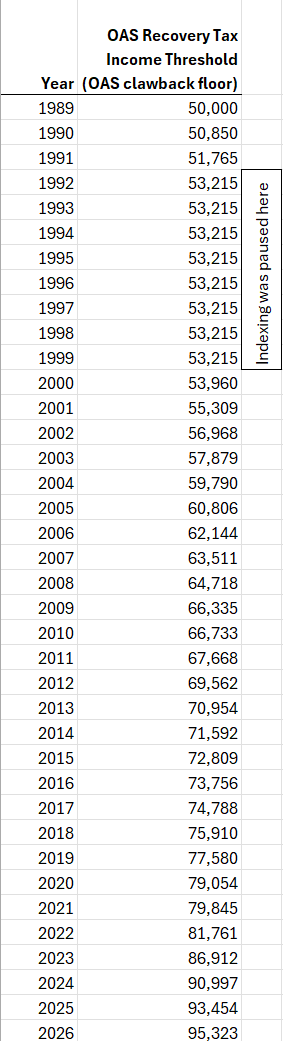
Founded TIER Wealth and earned the presidency of the IAFP while building a reputation for producing one-of-a-kind resources (like the complete OAS thresholds list) and threads that regularly hit 40k, 55k views.
To demystify complex financial rules and protect clients' long-term wellbeing by sharing evidence-based, actionable planning strategies; to raise the baseline of public financial literacy so people can make smarter decisions about retirement, taxes, and estate planning.
Values clarity, rigorous research, and client-first ethics; believes transparency and public education reduce costly mistakes; trusts data, legal precision, and creative planning techniques over hype; sees credentials and process as tools to build trust, not barriers.
Deep technical knowledge of tax, pensions, and estate planning; credibility from professional credentials and leadership roles; consistent, research-heavy content that creates authority; ability to turn obscure rules into useful, actionable guides.
Can lean into long-form technical detail that intimidates casual readers; occasionally reads more like a legal memo than a snackable tweet; may underuse bite-sized multimedia that boosts shareability to broader audiences.
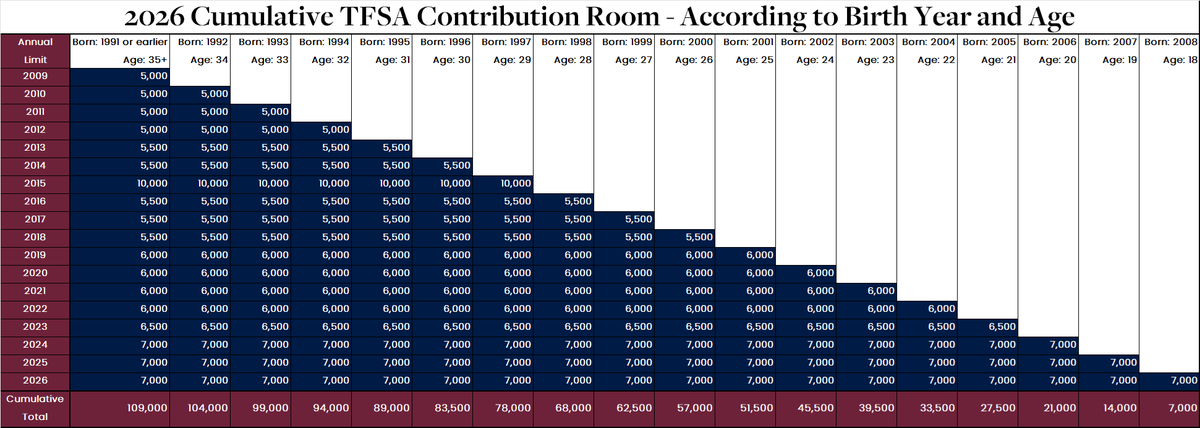
Keep doing deep threads but make them easier to skim: lead with a one-line hook and a TL;DR, then number the steps. Pin a living "resource library" thread for evergreen guides (OAS list, TFSA/RRSP comparisons, RESP drawdown) and update it regularly. Repurpose top threads into short videos or carousels with clear visuals to capture scrollers. Host a monthly X Space Q&A or AMA for live engagement and to surface follower questions you can turn into content. Use polls and one-question tweets to warm up replies, tag relevant institutions or reporters for amplification, and add a simple CTA (newsletter signup or downloadable checklist) to convert followers into subscribers. Finally, collaborate with one complementary influencer or journalist per quarter to expand reach outside your current niche.
Fun fact: Aaron assembled what he says is the only complete online list of OAS clawback thresholds, dug up from deep CRA archives, a true archival flex. He’s tweeted 8,359 times and regularly reaches tens of thousands of views on practical finance threads.
I am very proud to release this paper.
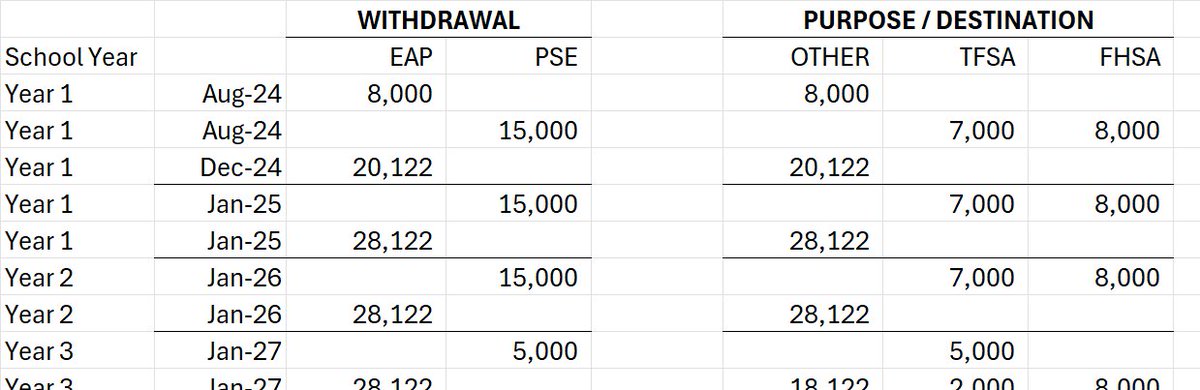
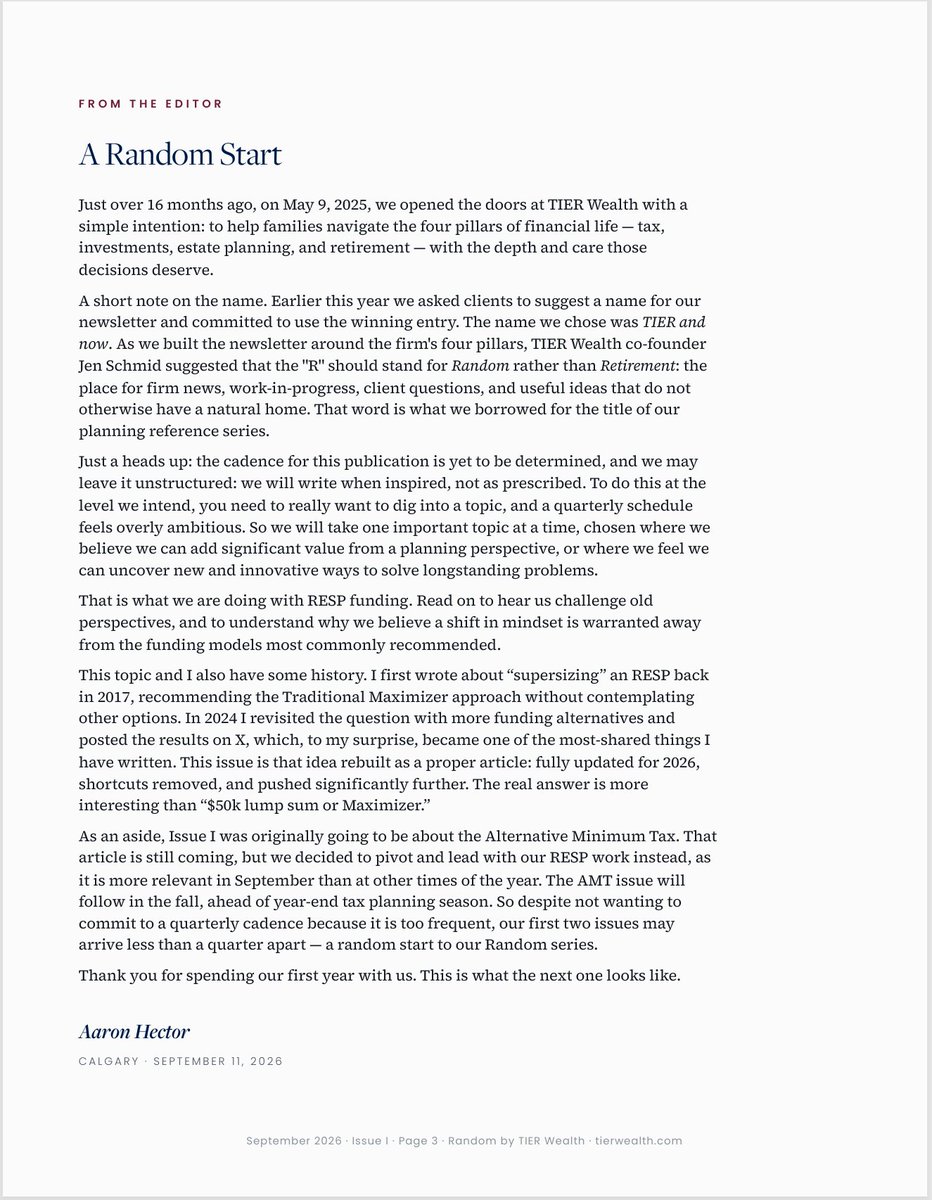
"Optimal RESP Funding - A New Answer to an Old Question" - by @TIERWealth
It's the most detailed RESP funding paper that you will find, and while the headline will be about how to fund a new RESP if you had $50k to invest, it also drills into how to complete funding an existing RESP, or how to start if your child is older. Or if you are funding for your Grandchild.
No corners were cut. We put in the work, and answered the question properly, along with all of the nuances (province, turnover, what if the market crashes, returns are random and not in a straight line, etc).
PS - It's long - use the clickable Table of Contents to navigate to the section that you are most interested in.
Read at: https://t.co/PhUdZKeDVA
There’s a lot of @WestJet rage bait going around right now… here’s another ‘take’.
I just got home on a “reconfigured”WestJet Boeing 737 Max 8 aircraft.
For context:
- 5 hour flight
- I normally don’t recline my seat, so that doesn’t matter to me.
- I’m 5’11 ish
- was seated in row 18 economy
I couldn’t notice any difference in leg room from previous flights. My knee was resting close to/up against the seat in front of me, just like it always has on flights. I didn’t feel noticeably less comfortable.
I did notice:
- new 60 watt usb c charger (can charge laptop) and USB type a as well
- new flip down phone/ipad holder in the seat in front of you that allows you to look at your device straight ahead instead of holding it and having your neck tilted down the whole time.
- 300 Mbps download / 25.5 Mbps upload speed on the Telus in flight wifi (I ran a Speedtest and those were my results. if you don’t understand this stat, it is very fast internet that is better than most have in their home). It’s unrestricted, so you can YouTube the whole flight if you want to.
For me, these changes made for a better flight experience than flying Westjet before. I understand everyone will have their own experience, this was mine. Just thought I’d share a positive opinion in a sea of negativity.
Your own priorities will dictate your opinion.
{"data":{"__meta":{"device":false,"path":"/creators/aaronhectorcfp"},"/creators/aaronhectorcfp":{"data":{"user":{"id":"262003045","name":"Aaron Hector, R.F.P., CFP, TEP","description":"Passion for personal finance, innovative ideas & the well being of my clients. Founder of TIER Wealth in Calgary. President of the IAFP.","followers_count":8641,"friends_count":430,"statuses_count":8885,"profile_image_url_https":"https://pbs.twimg.com/profile_images/1581136073790746625/GACri8VQ_normal.jpg","screen_name":"AaronHectorCFP","location":"Calgary, Alberta","entities":{"description":{},"url":{"urls":[{"display_url":"tierwealth.com","expanded_url":"http://www.tierwealth.com","indices":[0,23],"url":"https://t.co/qr5GhCm7RW"}]}}},"details":{"type":"The Thought Leader","description":"Aaron Hector, R.F.P., CFP, TEP is a Calgary-based personal finance thought leader — founder of TIER Wealth and President of the IAFP — who turns dense tax and retirement rules into practical advice. He publishes research-driven threads, unique archival resources, and guides that both professionals and everyday investors rely on. His feed blends technical depth with real-world planning hacks.","purpose":"To demystify complex financial rules and protect clients' long-term wellbeing by sharing evidence-based, actionable planning strategies; to raise the baseline of public financial literacy so people can make smarter decisions about retirement, taxes, and estate planning.","beliefs":"Values clarity, rigorous research, and client-first ethics; believes transparency and public education reduce costly mistakes; trusts data, legal precision, and creative planning techniques over hype; sees credentials and process as tools to build trust, not barriers.","facts":"Fun fact: Aaron assembled what he says is the only complete online list of OAS clawback thresholds, dug up from deep CRA archives — a true archival flex. He’s tweeted 8,359 times and regularly reaches tens of thousands of views on practical finance threads.","strength":"Deep technical knowledge of tax, pensions, and estate planning; credibility from professional credentials and leadership roles; consistent, research-heavy content that creates authority; ability to turn obscure rules into useful, actionable guides.","weakness":"Can lean into long-form technical detail that intimidates casual readers; occasionally reads more like a legal memo than a snackable tweet; may underuse bite-sized multimedia that boosts shareability to broader audiences.","roast":"You’re the guy who will calmly thread a 10-point legal workaround at 2 a.m. and then ask if everyone ‘has any questions’ like you didn’t just commit the internet to a three-hour audit — charmingly unstoppable and mildly terrifying to accountants everywhere.","win":"Founded TIER Wealth and earned the presidency of the IAFP while building a reputation for producing one-of-a-kind resources (like the complete OAS thresholds list) and threads that regularly hit 40k–55k views.","recommendation":"Keep doing deep threads but make them easier to skim: lead with a one-line hook and a TL;DR, then number the steps. Pin a living \"resource library\" thread for evergreen guides (OAS list, TFSA/RRSP comparisons, RESP drawdown) and update it regularly. Repurpose top threads into short videos or carousels with clear visuals to capture scrollers. Host a monthly X Space Q&A or AMA for live engagement and to surface follower questions you can turn into content. Use polls and one-question tweets to warm up replies, tag relevant institutions or reporters for amplification, and add a simple CTA (newsletter signup or downloadable checklist) to convert followers into subscribers. Finally, collaborate with one complementary influencer or journalist per quarter to expand reach outside your current niche."},"tweets":[{"entities":{"media":[{"allow_download_status":{"allow_download":true},"display_url":"pic.x.com/AoBRwC3WhT","expanded_url":"https://x.com/AaronHectorCFP/status/1788196751821738360/photo/1","ext_media_availability":{"status":"Available"},"features":{"large":{"faces":[]},"medium":{"faces":[]},"orig":{"faces":[]},"small":{"faces":[]}},"id_str":"1788125281326170112","indices":[186,209],"media_key":"3_1788125281326170112","media_results":{"result":{"media_key":"3_1788125281326170112"}},"media_url_https":"https://pbs.twimg.com/media/GNCyeC9XgAAbH3Z.jpg","original_info":{"focus_rects":[{"h":403,"w":720,"x":104,"y":0},{"h":403,"w":403,"x":263,"y":0},{"h":403,"w":354,"x":287,"y":0},{"h":403,"w":202,"x":363,"y":0},{"h":403,"w":1239,"x":0,"y":0}],"height":403,"width":1239},"sizes":{"large":{"h":403,"resize":"fit","w":1239},"medium":{"h":390,"resize":"fit","w":1200},"small":{"h":221,"resize":"fit","w":680},"thumb":{"h":150,"resize":"crop","w":150}},"type":"photo","url":"https://t.co/AoBRwC3WhT"}]},"extended_entities":{"media":[{"allow_download_status":{"allow_download":true},"display_url":"pic.x.com/AoBRwC3WhT","expanded_url":"https://x.com/AaronHectorCFP/status/1788196751821738360/photo/1","ext_media_availability":{"status":"Available"},"features":{"large":{"faces":[]},"medium":{"faces":[]},"orig":{"faces":[]},"small":{"faces":[]}},"id_str":"1788125281326170112","indices":[186,209],"media_key":"3_1788125281326170112","media_results":{"result":{"media_key":"3_1788125281326170112"}},"media_url_https":"https://pbs.twimg.com/media/GNCyeC9XgAAbH3Z.jpg","original_info":{"focus_rects":[{"h":403,"w":720,"x":104,"y":0},{"h":403,"w":403,"x":263,"y":0},{"h":403,"w":354,"x":287,"y":0},{"h":403,"w":202,"x":363,"y":0},{"h":403,"w":1239,"x":0,"y":0}],"height":403,"width":1239},"sizes":{"large":{"h":403,"resize":"fit","w":1239},"medium":{"h":390,"resize":"fit","w":1200},"small":{"h":221,"resize":"fit","w":680},"thumb":{"h":150,"resize":"crop","w":150}},"type":"photo","url":"https://t.co/AoBRwC3WhT"}]},"display_text_range":[0,185],"lang":"en","possibly_sensitive":false,"fact_check":null,"id":"1788196751821738360","view_count":120892,"bookmark_count":860,"created_at":1715174303000,"favorite_count":342,"quote_count":12,"reply_count":35,"retweet_count":53,"user_id_str":"262003045","conversation_id_str":"1788196751821738360","full_text":"Guide:\n\"How to draw down a $200k RESP over a 4 year university program\"\n\nLet's say you front loaded your RESP, and years later you have $200k.... how do you get the money out? \nThread👇 https://t.co/AoBRwC3WhT","in_reply_to_user_id_str":null,"in_reply_to_status_id_str":null,"is_quote_status":0,"is_ai":null,"ai_score":null,"source":"rapidapi","fetched_at":1784227230415,"edit_history_tweet_ids":null,"poll_10min_at":null,"poll_3day_at":null,"poll_count":0,"poll_complete":0},{"bookmarked":false,"display_text_range":[0,140],"entities":{"hashtags":[],"media":[{"display_url":"pic.x.com/i1hrnhs4bu","expanded_url":"https://twitter.com/AaronHectorCFP/status/1791908639722361286/photo/1","id_str":"1791908634886029312","indices":[141,164],"media_key":"3_1791908634886029312","media_url_https":"https://pbs.twimg.com/media/GN4jaNRWQAAmilD.jpg","type":"photo","url":"https://t.co/I1hRNHS4BU","ext_media_availability":{"status":"Available"},"features":{"large":{"faces":[]},"medium":{"faces":[]},"small":{"faces":[]},"orig":{"faces":[]}},"sizes":{"large":{"h":1654,"w":1179,"resize":"fit"},"medium":{"h":1200,"w":855,"resize":"fit"},"small":{"h":680,"w":485,"resize":"fit"},"thumb":{"h":150,"w":150,"resize":"crop"}},"original_info":{"height":1654,"width":1179,"focus_rects":[{"x":0,"y":0,"w":1179,"h":660},{"x":0,"y":0,"w":1179,"h":1179},{"x":0,"y":0,"w":1179,"h":1344},{"x":0,"y":0,"w":827,"h":1654},{"x":0,"y":0,"w":1179,"h":1654}]},"allow_download_status":{"allow_download":true},"media_results":{"result":{"media_key":"3_1791908634886029312"}}}],"symbols":[],"timestamps":[],"urls":[],"user_mentions":[]},"extended_entities":{"media":[{"display_url":"pic.x.com/i1hrnhs4bu","expanded_url":"https://twitter.com/AaronHectorCFP/status/1791908639722361286/photo/1","id_str":"1791908634886029312","indices":[141,164],"media_key":"3_1791908634886029312","media_url_https":"https://pbs.twimg.com/media/GN4jaNRWQAAmilD.jpg","type":"photo","url":"https://t.co/I1hRNHS4BU","ext_media_availability":{"status":"Available"},"features":{"large":{"faces":[]},"medium":{"faces":[]},"small":{"faces":[]},"orig":{"faces":[]}},"sizes":{"large":{"h":1654,"w":1179,"resize":"fit"},"medium":{"h":1200,"w":855,"resize":"fit"},"small":{"h":680,"w":485,"resize":"fit"},"thumb":{"h":150,"w":150,"resize":"crop"}},"original_info":{"height":1654,"width":1179,"focus_rects":[{"x":0,"y":0,"w":1179,"h":660},{"x":0,"y":0,"w":1179,"h":1179},{"x":0,"y":0,"w":1179,"h":1344},{"x":0,"y":0,"w":827,"h":1654},{"x":0,"y":0,"w":1179,"h":1654}]},"allow_download_status":{"allow_download":true},"media_results":{"result":{"media_key":"3_1791908634886029312"}}}]},"favorited":false,"lang":"en","possibly_sensitive":false,"possibly_sensitive_editable":true,"retweeted":false,"fact_check":null,"id":"1791908639722361286","view_count":54781,"bookmark_count":199,"created_at":1716059286000,"favorite_count":276,"quote_count":4,"reply_count":20,"retweet_count":12,"user_id_str":"262003045","conversation_id_str":"1791908639722361286","full_text":"A nice perk if you’ve bundled your home and auto with TD insurance… you have access to unlimited legal advice from actual lawyers via phone. https://t.co/I1hRNHS4BU","in_reply_to_user_id_str":null,"in_reply_to_status_id_str":null,"is_quote_status":0,"is_ai":null,"ai_score":null,"source":"scraping","fetched_at":null,"edit_history_tweet_ids":null,"poll_10min_at":null,"poll_3day_at":null,"poll_count":0,"poll_complete":0},{"entities":{"hashtags":[],"media":[{"display_url":"pic.x.com/6VePJX7jHF","expanded_url":"https://x.com/AaronHectorCFP/status/1994565769234174381/photo/1","id_str":"1994564960043896832","indices":[278,301],"media_key":"3_1994564960043896832","media_url_https":"https://pbs.twimg.com/media/G64eQ3TbkAAc2I2.png","type":"photo","url":"https://t.co/6VePJX7jHF","ext_media_availability":{"status":"Available"},"features":{"large":{"faces":[]},"medium":{"faces":[]},"small":{"faces":[]},"orig":{"faces":[]}},"sizes":{"large":{"h":1041,"w":283,"resize":"fit"},"medium":{"h":1041,"w":283,"resize":"fit"},"small":{"h":680,"w":185,"resize":"fit"},"thumb":{"h":150,"w":150,"resize":"crop"}},"original_info":{"height":1041,"width":283,"focus_rects":[{"x":0,"y":51,"w":283,"h":158},{"x":0,"y":0,"w":283,"h":283},{"x":0,"y":0,"w":283,"h":323},{"x":0,"y":0,"w":283,"h":566},{"x":0,"y":0,"w":283,"h":1041}]},"allow_download_status":{"allow_download":true},"media_results":{"result":{"media_key":"3_1994564960043896832"}}}],"symbols":[],"timestamps":[],"urls":[],"user_mentions":[]},"extended_entities":{"media":[{"display_url":"pic.x.com/6VePJX7jHF","expanded_url":"https://x.com/AaronHectorCFP/status/1994565769234174381/photo/1","id_str":"1994564960043896832","indices":[278,301],"media_key":"3_1994564960043896832","media_url_https":"https://pbs.twimg.com/media/G64eQ3TbkAAc2I2.png","type":"photo","url":"https://t.co/6VePJX7jHF","ext_media_availability":{"status":"Available"},"features":{"large":{"faces":[]},"medium":{"faces":[]},"small":{"faces":[]},"orig":{"faces":[]}},"sizes":{"large":{"h":1041,"w":283,"resize":"fit"},"medium":{"h":1041,"w":283,"resize":"fit"},"small":{"h":680,"w":185,"resize":"fit"},"thumb":{"h":150,"w":150,"resize":"crop"}},"original_info":{"height":1041,"width":283,"focus_rects":[{"x":0,"y":51,"w":283,"h":158},{"x":0,"y":0,"w":283,"h":283},{"x":0,"y":0,"w":283,"h":323},{"x":0,"y":0,"w":283,"h":566},{"x":0,"y":0,"w":283,"h":1041}]},"allow_download_status":{"allow_download":true},"media_results":{"result":{"media_key":"3_1994564960043896832"}}}]},"display_text_range":[0,277],"lang":"en","possibly_sensitive":false,"fact_check":null,"id":"1994565769234174381","view_count":20619,"bookmark_count":129,"created_at":1764376511000,"favorite_count":219,"quote_count":1,"reply_count":27,"retweet_count":31,"user_id_str":"262003045","conversation_id_str":"1994565769234174381","full_text":"I understand that likely nobody cares about this... but, this is now the only place on the internet that you will find this complete list of the OAS clawback thresholds for each year since it's inception.\n\nTrust me - this list does not exist anywhere else. I had to piece this together by looking up the actual year by year tax forms for the earlier years that can be found deep in the CRA archives.","in_reply_to_user_id_str":null,"in_reply_to_status_id_str":null,"is_quote_status":0,"is_ai":null,"ai_score":null,"source":"scraping","fetched_at":1765471343437,"edit_history_tweet_ids":null,"poll_10min_at":null,"poll_3day_at":null,"poll_count":0,"poll_complete":0},{"entities":{"media":[{"allow_download_status":{"allow_download":true},"display_url":"pic.x.com/1hCNMm0OAj","expanded_url":"https://x.com/AaronHectorCFP/status/1787188396248731967/photo/1","ext_media_availability":{"status":"Available"},"features":{"large":{"faces":[]},"medium":{"faces":[]},"orig":{"faces":[]},"small":{"faces":[]}},"id_str":"1787187285571874816","indices":[275,298],"media_key":"3_1787187285571874816","media_results":{"result":{"media_key":"3_1787187285571874816"}},"media_url_https":"https://pbs.twimg.com/media/GM1dXgebMAAQ3Tt.png","original_info":{"focus_rects":[{"h":262,"w":468,"x":368,"y":0},{"h":262,"w":262,"x":516,"y":0},{"h":262,"w":230,"x":532,"y":0},{"h":262,"w":131,"x":582,"y":0},{"h":262,"w":836,"x":0,"y":0}],"height":262,"width":836},"sizes":{"large":{"h":262,"resize":"fit","w":836},"medium":{"h":262,"resize":"fit","w":836},"small":{"h":213,"resize":"fit","w":680},"thumb":{"h":150,"resize":"crop","w":150}},"type":"photo","url":"https://t.co/1hCNMm0OAj"}]},"extended_entities":{"media":[{"allow_download_status":{"allow_download":true},"display_url":"pic.x.com/1hCNMm0OAj","expanded_url":"https://x.com/AaronHectorCFP/status/1787188396248731967/photo/1","ext_media_availability":{"status":"Available"},"features":{"large":{"faces":[]},"medium":{"faces":[]},"orig":{"faces":[]},"small":{"faces":[]}},"id_str":"1787187285571874816","indices":[275,298],"media_key":"3_1787187285571874816","media_results":{"result":{"media_key":"3_1787187285571874816"}},"media_url_https":"https://pbs.twimg.com/media/GM1dXgebMAAQ3Tt.png","original_info":{"focus_rects":[{"h":262,"w":468,"x":368,"y":0},{"h":262,"w":262,"x":516,"y":0},{"h":262,"w":230,"x":532,"y":0},{"h":262,"w":131,"x":582,"y":0},{"h":262,"w":836,"x":0,"y":0}],"height":262,"width":836},"sizes":{"large":{"h":262,"resize":"fit","w":836},"medium":{"h":262,"resize":"fit","w":836},"small":{"h":213,"resize":"fit","w":680},"thumb":{"h":150,"resize":"crop","w":150}},"type":"photo","url":"https://t.co/1hCNMm0OAj"}]},"display_text_range":[0,274],"lang":"en","possibly_sensitive":false,"fact_check":null,"id":"1787188396248731967","view_count":77067,"bookmark_count":496,"created_at":1714933892000,"favorite_count":211,"quote_count":5,"reply_count":14,"retweet_count":29,"user_id_str":"262003045","conversation_id_str":"1787188396248731967","full_text":"If you had $50k available to invest, and you just had a child, what's the optimal way to fund your RESP to maximize it’s long term growth potential? \n\nThis thread is a fairly deep look at that 👇\n\nThere are two typical answers to this question, but the real answer is deeper. https://t.co/1hCNMm0OAj","in_reply_to_user_id_str":null,"in_reply_to_status_id_str":null,"is_quote_status":0,"is_ai":null,"ai_score":null,"source":"rapidapi","fetched_at":1784205632624,"edit_history_tweet_ids":null,"poll_10min_at":null,"poll_3day_at":null,"poll_count":0,"poll_complete":0},{"entities":{"media":[{"allow_download_status":{"allow_download":true},"display_url":"pic.x.com/paQQ7KzOHy","expanded_url":"https://x.com/AaronHectorCFP/status/2098474798661972226/photo/1","ext_media_availability":{"status":"Available"},"features":{"large":{"faces":[]},"medium":{"faces":[]},"orig":{"faces":[]},"small":{"faces":[]}},"id_str":"2098465318251511808","indices":[279,302],"media_key":"3_2098465318251511808","media_results":{"result":{"media_key":"3_2098465318251511808"}},"media_url_https":"https://pbs.twimg.com/media/HR8_FrvbwAAplYJ.jpg","original_info":{"focus_rects":[{"h":742,"w":1325,"x":0,"y":0},{"h":1325,"w":1325,"x":0,"y":0},{"h":1511,"w":1325,"x":0,"y":0},{"h":1706,"w":853,"x":0,"y":0},{"h":1706,"w":1325,"x":0,"y":0}],"height":1706,"width":1325},"sizes":{"large":{"h":1706,"resize":"fit","w":1325},"medium":{"h":1200,"resize":"fit","w":932},"small":{"h":680,"resize":"fit","w":528},"thumb":{"h":150,"resize":"crop","w":150}},"type":"photo","url":"https://t.co/paQQ7KzOHy"}],"user_mentions":[{"id_str":"1897345204228907014","indices":[102,113],"name":"TIER Wealth","screen_name":"TIERWealth"}]},"extended_entities":{"media":[{"allow_download_status":{"allow_download":true},"display_url":"pic.x.com/paQQ7KzOHy","expanded_url":"https://x.com/AaronHectorCFP/status/2098474798661972226/photo/1","ext_media_availability":{"status":"Available"},"features":{"large":{"faces":[]},"medium":{"faces":[]},"orig":{"faces":[]},"small":{"faces":[]}},"id_str":"2098465318251511808","indices":[279,302],"media_key":"3_2098465318251511808","media_results":{"result":{"media_key":"3_2098465318251511808"}},"media_url_https":"https://pbs.twimg.com/media/HR8_FrvbwAAplYJ.jpg","original_info":{"focus_rects":[{"h":742,"w":1325,"x":0,"y":0},{"h":1325,"w":1325,"x":0,"y":0},{"h":1511,"w":1325,"x":0,"y":0},{"h":1706,"w":853,"x":0,"y":0},{"h":1706,"w":1325,"x":0,"y":0}],"height":1706,"width":1325},"sizes":{"large":{"h":1706,"resize":"fit","w":1325},"medium":{"h":1200,"resize":"fit","w":932},"small":{"h":680,"resize":"fit","w":528},"thumb":{"h":150,"resize":"crop","w":150}},"type":"photo","url":"https://t.co/paQQ7KzOHy"}]},"display_text_range":[0,278],"lang":"en","possibly_sensitive":false,"fact_check":null,"id":"2098474798661972226","view_count":28434,"bookmark_count":302,"created_at":1789150354000,"favorite_count":198,"quote_count":2,"reply_count":11,"retweet_count":20,"user_id_str":"262003045","conversation_id_str":"2098474798661972226","full_text":"I am very proud to release this paper.\n\n\"Optimal RESP Funding - A New Answer to an Old Question\" - by @TIERWealth\n\nIt's the most detailed RESP funding paper that you will find, and while the headline will be about how to fund a new RESP if you had $50k to invest, it also drills into how to complete funding an existing RESP, or how to start if your child is older. Or if you are funding for your Grandchild.\n\nNo corners were cut. We put in the work, and answered the question properly, along with all of the nuances (province, turnover, what if the market crashes, returns are random and not in a straight line, etc).\n\nPS - It's long - use the clickable Table of Contents to navigate to the section that you are most interested in.\n\nRead at: https://t.co/PhUdZKeDVA","in_reply_to_user_id_str":null,"in_reply_to_status_id_str":null,"is_quote_status":0,"is_ai":null,"ai_score":null,"source":"rapidapi","fetched_at":1791395764603,"edit_history_tweet_ids":null,"poll_10min_at":null,"poll_3day_at":1789412411668,"poll_count":1,"poll_complete":1},{"entities":{"hashtags":[],"symbols":[],"timestamps":[],"urls":[],"user_mentions":[]},"display_text_range":[0,275],"lang":"en","fact_check":null,"id":"2025662571609829426","view_count":46291,"bookmark_count":288,"created_at":1771790566000,"favorite_count":174,"quote_count":3,"reply_count":15,"retweet_count":24,"user_id_str":"262003045","conversation_id_str":"2025662571609829426","full_text":"I heard this recently…\n\n\"The TFSA and RRSP are identical if your tax rate when you contribute is the same as your tax rate when you make a withdrawal. The only difference between them is that you know what rate of tax applies to your TFSA investment, and you do not know what rate of tax will eventually apply to your RRSP.\"\n\nNot true. There are many differences between them:\n\n1. With a RRSP you can eventually get a pension credit by transferring money into a RRIF and then withdrawing it when you are over 65. You will never get a pension credit due to a TFSA withdrawal.\n\n2. You can use a RRSP (in combination with a RRIF) to split 50% of the income with a spouse once you reach age 65. You can't do this with a TFSA.\n\n3. With a Spousal RRSP you can lower your taxable income, and then shift 100% of the future income to your spouse. You can't do this with a TFSA.\n\n4. With a RRSP, when you die with a minor child, you can shift the tax away from the deceased’s final tax return and have it taxed in the child’s name by using the RRSP proceeds to purchase a ‘term-certain annuity’ that pays the income out in equal parts annually from their current age until age 18. You can't do this level of estate planning with a TFSA.\n\n5. If you die with a minor who was disabled, you could roll the parent’s RRSP on a tax-deferred basis into a RRSP for the minor (no contribution room required) or into a RDSP for the minor (subject to $200k lifetime contribution limits). With a TFSA you don’t have these same rollover options.\n\n6. If you die with an adult child, who has a disability, and also was financially dependent on the deceased, then the RRSP of the deceased can avoid being taxed on the final tax return by either: rolling it into the adult child’s into RDSP, RRSP, or by buying a life annuity for them.\n\n7. US income in a TFSA is subject to non-recoverable foreign withholding tax, this withholding tax does not apply to RRSPs.\n\n8. TFSA withdrawals create new contribution room as of January 1 the following year. RRSP withdrawals do not create new RRSP contribution room.\n\nThere are many more differences as well.\n\nSo while the accounts are often said to be comparable on the surface, if tax rates are the same on contribution as they are on withdrawal… when you dig into the details there are many nuances and differences.\n\nAlso, I’ll just say that RRSPs are pretty cool for planning… so many tricks.","in_reply_to_user_id_str":null,"in_reply_to_status_id_str":null,"is_quote_status":0,"is_ai":null,"ai_score":null,"source":"rapidapi","fetched_at":1774729226220,"edit_history_tweet_ids":null,"poll_10min_at":null,"poll_3day_at":1772053203598,"poll_count":1,"poll_complete":1},{"bookmarked":false,"display_text_range":[0,86],"entities":{"hashtags":[],"symbols":[],"timestamps":[],"urls":[],"user_mentions":[]},"favorited":false,"lang":"en","retweeted":false,"fact_check":null,"id":"1871624161640276299","view_count":43463,"bookmark_count":442,"created_at":1735064947000,"favorite_count":171,"quote_count":3,"reply_count":12,"retweet_count":25,"user_id_str":"262003045","conversation_id_str":"1871624161640276299","full_text":"GUIDE: How to draw down a $100,000 RESP over a 4-Year Post-Secondary program\n\nThread 👇","in_reply_to_user_id_str":null,"in_reply_to_status_id_str":null,"is_quote_status":0,"is_ai":null,"ai_score":null,"source":"scraping","fetched_at":null,"edit_history_tweet_ids":null,"poll_10min_at":null,"poll_3day_at":null,"poll_count":0,"poll_complete":0},{"entities":{},"display_text_range":[0,271],"lang":"en","fact_check":null,"id":"2050443590732824747","view_count":57577,"bookmark_count":181,"created_at":1777698822000,"favorite_count":169,"quote_count":2,"reply_count":25,"retweet_count":15,"user_id_str":"262003045","conversation_id_str":"2050443590732824747","full_text":"If you have foreign investment property… \n\n(ie. shares of Nvidia, Apple, Nestle, Toyota, ETFs, like VT, VTI, foreign rental properties, cash in foreign bank accounts, CDs, etc)….\n\n…that exceeds $100k CAD in book value \n\n- in aggregate - \n\n… and you haven’t yet filed form T1135 to the CRA?\n\nThen you’ve already accrued $100 in penalties. And that amount ticks along at $25 per day.\n\nGet on it. ⏰\n\n(for assets held in Canadian investment accounts, you only need to consider amounts inside non-registered accounts. All registered accounts (TFSA, RRSP, FHSA, RRIF, LIRA, LIF, RESP, RDSP) are excluded from this)","in_reply_to_user_id_str":null,"in_reply_to_status_id_str":null,"is_quote_status":0,"is_ai":null,"ai_score":null,"source":"rapidapi","fetched_at":1780107632311,"edit_history_tweet_ids":null,"poll_10min_at":null,"poll_3day_at":1777960808007,"poll_count":1,"poll_complete":1},{"entities":{"hashtags":[],"media":[{"display_url":"pic.x.com/tS4TP1onnf","expanded_url":"https://x.com/AaronHectorCFP/status/2003140711383019561/photo/1","id_str":"2003140239041409024","indices":[266,289],"media_key":"3_2003140239041409024","media_url_https":"https://pbs.twimg.com/media/G8yVby9asAAcOBd.png","type":"photo","url":"https://t.co/tS4TP1onnf","ext_media_availability":{"status":"Available"},"features":{"large":{"faces":[]},"medium":{"faces":[]},"small":{"faces":[]},"orig":{"faces":[]}},"sizes":{"large":{"h":693,"w":1941,"resize":"fit"},"medium":{"h":428,"w":1200,"resize":"fit"},"small":{"h":243,"w":680,"resize":"fit"},"thumb":{"h":150,"w":150,"resize":"crop"}},"original_info":{"height":693,"width":1941,"focus_rects":[{"x":0,"y":0,"w":1238,"h":693},{"x":0,"y":0,"w":693,"h":693},{"x":0,"y":0,"w":608,"h":693},{"x":69,"y":0,"w":347,"h":693},{"x":0,"y":0,"w":1941,"h":693}]},"allow_download_status":{"allow_download":true},"media_results":{"result":{"media_key":"3_2003140239041409024"}}}],"symbols":[],"timestamps":[],"urls":[],"user_mentions":[]},"extended_entities":{"media":[{"display_url":"pic.x.com/tS4TP1onnf","expanded_url":"https://x.com/AaronHectorCFP/status/2003140711383019561/photo/1","id_str":"2003140239041409024","indices":[266,289],"media_key":"3_2003140239041409024","media_url_https":"https://pbs.twimg.com/media/G8yVby9asAAcOBd.png","type":"photo","url":"https://t.co/tS4TP1onnf","ext_media_availability":{"status":"Available"},"features":{"large":{"faces":[]},"medium":{"faces":[]},"small":{"faces":[]},"orig":{"faces":[]}},"sizes":{"large":{"h":693,"w":1941,"resize":"fit"},"medium":{"h":428,"w":1200,"resize":"fit"},"small":{"h":243,"w":680,"resize":"fit"},"thumb":{"h":150,"w":150,"resize":"crop"}},"original_info":{"height":693,"width":1941,"focus_rects":[{"x":0,"y":0,"w":1238,"h":693},{"x":0,"y":0,"w":693,"h":693},{"x":0,"y":0,"w":608,"h":693},{"x":69,"y":0,"w":347,"h":693},{"x":0,"y":0,"w":1941,"h":693}]},"allow_download_status":{"allow_download":true},"media_results":{"result":{"media_key":"3_2003140239041409024"}}}]},"display_text_range":[0,265],"lang":"en","possibly_sensitive":false,"fact_check":null,"id":"2003140711383019561","view_count":18036,"bookmark_count":67,"created_at":1766420936000,"favorite_count":139,"quote_count":2,"reply_count":9,"retweet_count":19,"user_id_str":"262003045","conversation_id_str":"2003140711383019561","full_text":"As of January 1, 2026, the cumulative TFSA contribution limit will be $109,000... but that's only relevant for those who were 18 in 2009 when the TFSA was introduced. Below is a table that shows the cumulative TFSA contribution amounts for ALL ages and birth years. https://t.co/tS4TP1onnf","in_reply_to_user_id_str":null,"in_reply_to_status_id_str":null,"is_quote_status":0,"is_ai":null,"ai_score":null,"source":"rapidapi","fetched_at":1767307361840,"edit_history_tweet_ids":null,"poll_10min_at":null,"poll_3day_at":null,"poll_count":0,"poll_complete":0},{"entities":{},"display_text_range":[0,34],"lang":"en","quoted_tweet":{"id":"2072775932415193245","text":"$10M is not a lot of money. There I said it.\n\n$10M investible assets in retirement will soon be commonplace if it isn't already.\n\n$10M may have been a lot of money when I adulted in 1990, but it is not a lot today.\n\nIt's just comfortable.","full_text":"$10M is not a lot of money. There I said it.\n\n$10M investible assets in retirement will soon be commonplace if it isn't already.\n\n$10M may have been a lot of money when I adulted in 1990, but it is not a lot today.\n\nIt's just comfortable.","created_at":1783023267000,"author_id":"1272183128136847363","author":{"id":"1272183128136847363","name":"Lazy Canadian Entrepreneur","username":"JimChuong","screen_name":"JimChuong","profile_image_url":"https://pbs.twimg.com/profile_images/1864681398054821888/m8oIxWFW_400x400.jpg","profile_image_url_https":"https://pbs.twimg.com/profile_images/1864681398054821888/m8oIxWFW_400x400.jpg","is_blue_verified":1},"public_metrics":{"like_count":93,"retweet_count":1,"reply_count":82,"quote_count":6}},"fact_check":null,"id":"2073139569265152012","view_count":32725,"bookmark_count":2,"created_at":1783109965000,"favorite_count":137,"quote_count":0,"reply_count":17,"retweet_count":4,"user_id_str":"262003045","conversation_id_str":"2073139569265152012","full_text":"Counterpoint: It’s a lot of money.","in_reply_to_user_id_str":null,"in_reply_to_status_id_str":null,"is_quote_status":1,"is_ai":null,"ai_score":null,"source":"rapidapi","fetched_at":1785273725542,"edit_history_tweet_ids":null,"poll_10min_at":null,"poll_3day_at":1783371618490,"poll_count":1,"poll_complete":1},{"entities":{},"display_text_range":[0,81],"lang":"en","fact_check":null,"id":"2082241863785062700","view_count":74387,"bookmark_count":349,"created_at":1785280121000,"favorite_count":137,"quote_count":2,"reply_count":9,"retweet_count":19,"user_id_str":"262003045","conversation_id_str":"2082241863785062700","full_text":"Let's talk about buying a vehicle using funds inside of a RESP account. Thread 👇","in_reply_to_user_id_str":null,"in_reply_to_status_id_str":null,"is_quote_status":0,"is_ai":null,"ai_score":null,"source":"rapidapi","fetched_at":1786832454127,"edit_history_tweet_ids":null,"poll_10min_at":null,"poll_3day_at":1785542405152,"poll_count":1,"poll_complete":1},{"entities":{},"display_text_range":[0,277],"lang":"en","fact_check":null,"id":"2052184615297954291","view_count":17388,"bookmark_count":43,"created_at":1778113914000,"favorite_count":134,"quote_count":1,"reply_count":10,"retweet_count":16,"user_id_str":"262003045","conversation_id_str":"2052184615297954291","full_text":"You want to gift a property to a family member? Please… don’t sell it for $1.\n\nGift it for nothing.\n\nOr sell it at fair market value.\n\nSelling it for $1 is the worst thing you can do. You still need to report the sale at fair market value…. And their cost base is now $1. Which means when they sell in the future they will have a massive capital gain. \n\nWith a gift, you still report it as a fair market value sale, but at least they acquire it with a cost base equal to FMV.\n\nI repeat. Don’t “gift” with a very low purchase price on the sale contract.","in_reply_to_user_id_str":null,"in_reply_to_status_id_str":null,"is_quote_status":0,"is_ai":null,"ai_score":null,"source":"rapidapi","fetched_at":1781310038242,"edit_history_tweet_ids":null,"poll_10min_at":null,"poll_3day_at":1778374814952,"poll_count":1,"poll_complete":1},{"entities":{},"display_text_range":[0,279],"lang":"en","fact_check":null,"id":"2080501793898062085","view_count":18288,"bookmark_count":46,"created_at":1784865256000,"favorite_count":110,"quote_count":0,"reply_count":15,"retweet_count":3,"user_id_str":"262003045","conversation_id_str":"2080501793898062085","full_text":"When discussing front-loading RESP accounts, I will no longer be recommending a $16,500 RESP contribution in year 1 - not even as the low risk default.\n\nI also would not recommend $50k in year 1 (I never did). \n\nI’ve looked at this extensively lately and there are better options in most all simulations I’ve modelled.\n\nI’m working on a longer piece - which will go on the TIER blog when it’s ready - to update and expand on some of my previous writing on max funding RESPs…. Looking forward to getting it out soon!","in_reply_to_user_id_str":null,"in_reply_to_status_id_str":null,"is_quote_status":0,"is_ai":null,"ai_score":null,"source":"rapidapi","fetched_at":1785273725542,"edit_history_tweet_ids":null,"poll_10min_at":null,"poll_3day_at":1785128424381,"poll_count":1,"poll_complete":1},{"entities":{"hashtags":[],"symbols":[],"timestamps":[],"urls":[],"user_mentions":[]},"display_text_range":[0,269],"lang":"en","fact_check":null,"id":"2006137085984715124","view_count":12939,"bookmark_count":87,"created_at":1767135328000,"favorite_count":106,"quote_count":2,"reply_count":5,"retweet_count":19,"user_id_str":"262003045","conversation_id_str":"2006137085984715124","full_text":"15 common-sense pieces of financial advice that are not hard to do. If you do them all, you will be further ahead than most of the people around you.\n\n1. Don’t carry balances on credit cards.\n\n2. Protect yourself and your family from catastrophic events. Insurance when appropriate is wise. Insurance when not appropriate can be costly.\n\n3. Understand what you spend and what you make. Spend less than you make. Set up automatic savings during your working years.\n\n4. Maintain flexibility so you can pivot if things don’t go exactly according to plan. Flexibility is underrated.\n\n5. If you are paying a fee for something, make sure you are getting something of value in return.\n\n6. If you have monthly subscription services that you haven’t used in the last 2 months - cancel them.\n\n7. Your interests and priorities are different than those around you. Stop comparing yourself to others.\n\n8. It’s ok to say “That sounds fun but I can’t afford it.”\n\n9. Get a Will, Power of Attorney, and Personal Directive (Health Representation Agreement / POA for Personal Care). If your situation is not complicated, online providers are available at low costs and are completely legal.\n\n10. Track your Net Worth over time. Saving increases Net Worth and so does paying down debt. Seeing improvement each year helps to keep you motivated.\n\n11. Coffee likely won’t derail your financial plans, but spending too much on cars and housing might.\n\n12. There’s power in simplicity. Take a minute to list all of your bank and investment accounts. If at the end of the minute you’ve missed or forgotten about an account, you probably have too many. \n\n13. Name beneficiaries or successors on your registered accounts (RRSP/TFSA/FHSA/LIRA/RRIF/LIF) if it makes sense to do so. Don’t forget about your work plans. Don’t assume you’ve done it already, especially if you have accounts at discount brokerages. \n\n14. Don’t forget about tax. RRSP and LIRAs have future tax associated with them when you eventually make withdrawals. There is future tax due when you sell your non-registered investments, real estate and other property outside of your principal residence if there are capital gains. Self employed individuals and business owners also need to remember about their upcoming tax bill on the income they earn. Don’t open yourself up to surprises that you can’t manage.\n\n15. Good communication can solve a lot of financial issues when they are small problems. Poor communication and secrecy can turn small financial problems into big ones over time.","in_reply_to_user_id_str":null,"in_reply_to_status_id_str":null,"is_quote_status":0,"is_ai":null,"ai_score":null,"source":"rapidapi","fetched_at":1767850501095,"edit_history_tweet_ids":null,"poll_10min_at":null,"poll_3day_at":null,"poll_count":0,"poll_complete":0},{"entities":{"hashtags":[],"symbols":[],"timestamps":[],"urls":[],"user_mentions":[]},"display_text_range":[0,278],"lang":"en","fact_check":null,"id":"1995001901784744186","view_count":8029,"bookmark_count":2,"created_at":1764480493000,"favorite_count":103,"quote_count":0,"reply_count":6,"retweet_count":1,"user_id_str":"262003045","conversation_id_str":"1995001901784744186","full_text":"In high school I worked at McDonalds.\n\nIt was my first job that was not me working on the grain farm for my family.\n\nI was paid minimum wage. When I was hired, they had told me that after 6 months I would get a raise.\n\nWhen 6 months came, it coincidentally was at the same time…","in_reply_to_user_id_str":null,"in_reply_to_status_id_str":null,"is_quote_status":0,"is_ai":null,"ai_score":null,"source":"rapidapi","fetched_at":1765093202622,"edit_history_tweet_ids":null,"poll_10min_at":null,"poll_3day_at":null,"poll_count":0,"poll_complete":0},{"entities":{},"display_text_range":[0,279],"lang":"en","fact_check":null,"id":"2087692693984223280","view_count":12958,"bookmark_count":13,"created_at":1786579700000,"favorite_count":86,"quote_count":0,"reply_count":26,"retweet_count":3,"user_id_str":"262003045","conversation_id_str":"2087692693984223280","full_text":"If you want to determine if someone is financially astute, a good way to do that is by asking someone if they have an opinion on RRSP accounts. Do that, and then listen to what they say.\n\nPeople who are upset and call it a scam probably at some point in time forgot/lost sight of the fact that they have to pay tax on the eventual withdrawal, and are now scarred by the surprise they felt when they remembered.\n\nPeople who speak in absolutes likely are only thinking from their own personal perspective, and not seeing the nuance involved in other situations.\n\nSingletons or childless folks discount the benefits available to couples and parents.\n\nLower income households often don't think about their income tested benefits (both on contributions, and again withdrawals).\n\nMany only look at tax rates when contributing and withdrawing, and forget about the additional compounding value of the deferral itself.","in_reply_to_user_id_str":null,"in_reply_to_status_id_str":null,"is_quote_status":0,"is_ai":null,"ai_score":null,"source":"rapidapi","fetched_at":1791395764604,"edit_history_tweet_ids":null,"poll_10min_at":null,"poll_3day_at":1786845603487,"poll_count":1,"poll_complete":1}],"ctweets":[{"entities":{},"display_text_range":[0,275],"lang":"en","fact_check":null,"id":"2083790598071615673","view_count":8285,"bookmark_count":10,"created_at":1785649368000,"favorite_count":45,"quote_count":0,"reply_count":36,"retweet_count":4,"user_id_str":"262003045","conversation_id_str":"2083790598071615673","full_text":"Please help me, by letting me help you.\n\nI’m looking to test drive an RESP modelling tool I’ve been working extensively on lately.\n\nFor the first five people (I wish I could do more, but.. time) who reply below, 👇, I’ll prepare a custom RESP schedule for them, for one of the following scenarios:\n\n 1. I just had a kid and my RRSP and TFSA are maxed out. How much should I contribute to the RESP? and when?\n\n2. My RESP is now bigger than I expected it would be. Tell me the best way to take the money out over x years of post secondary.\n\n3. I already contributed $16,500 in year 0 and have since been putting in $2,500 - is that still the best thing to do? \n\n4. I’m a grandparent and my income puts me in the OAS clawback zone. What would it be worth to the overall family if I were to move some funds into a RESP for my grandchild?\n\n5. I’m a low income senior, but I do have non-reg assets, what does an RESP have to offer me?\n\nIf interested, just a heads up - I’d be looking for your honest answers to personal financial questions regarding your situation - if I’m going to take the time, I’d like it to be valuable. What I’d prepare would be unique to your responses.\n\nThis won’t take much time, 6 to 15 questions that should be simple to answer..\n\nIn return, id ask that you provide feedback to a few questions that I have about what you like/dislike / room for improvement or otherwise general feedback on the value you’d received.\n\nThank you for your willingness to participate! 🙏","in_reply_to_user_id_str":null,"in_reply_to_status_id_str":null,"is_quote_status":0,"is_ai":null,"ai_score":null,"source":"rapidapi","fetched_at":1788373228587,"edit_history_tweet_ids":null,"poll_10min_at":null,"poll_3day_at":1785909615772,"poll_count":1,"poll_complete":1},{"entities":{"media":[{"allow_download_status":{"allow_download":true},"display_url":"pic.x.com/AoBRwC3WhT","expanded_url":"https://x.com/AaronHectorCFP/status/1788196751821738360/photo/1","ext_media_availability":{"status":"Available"},"features":{"large":{"faces":[]},"medium":{"faces":[]},"orig":{"faces":[]},"small":{"faces":[]}},"id_str":"1788125281326170112","indices":[186,209],"media_key":"3_1788125281326170112","media_results":{"result":{"media_key":"3_1788125281326170112"}},"media_url_https":"https://pbs.twimg.com/media/GNCyeC9XgAAbH3Z.jpg","original_info":{"focus_rects":[{"h":403,"w":720,"x":104,"y":0},{"h":403,"w":403,"x":263,"y":0},{"h":403,"w":354,"x":287,"y":0},{"h":403,"w":202,"x":363,"y":0},{"h":403,"w":1239,"x":0,"y":0}],"height":403,"width":1239},"sizes":{"large":{"h":403,"resize":"fit","w":1239},"medium":{"h":390,"resize":"fit","w":1200},"small":{"h":221,"resize":"fit","w":680},"thumb":{"h":150,"resize":"crop","w":150}},"type":"photo","url":"https://t.co/AoBRwC3WhT"}]},"extended_entities":{"media":[{"allow_download_status":{"allow_download":true},"display_url":"pic.x.com/AoBRwC3WhT","expanded_url":"https://x.com/AaronHectorCFP/status/1788196751821738360/photo/1","ext_media_availability":{"status":"Available"},"features":{"large":{"faces":[]},"medium":{"faces":[]},"orig":{"faces":[]},"small":{"faces":[]}},"id_str":"1788125281326170112","indices":[186,209],"media_key":"3_1788125281326170112","media_results":{"result":{"media_key":"3_1788125281326170112"}},"media_url_https":"https://pbs.twimg.com/media/GNCyeC9XgAAbH3Z.jpg","original_info":{"focus_rects":[{"h":403,"w":720,"x":104,"y":0},{"h":403,"w":403,"x":263,"y":0},{"h":403,"w":354,"x":287,"y":0},{"h":403,"w":202,"x":363,"y":0},{"h":403,"w":1239,"x":0,"y":0}],"height":403,"width":1239},"sizes":{"large":{"h":403,"resize":"fit","w":1239},"medium":{"h":390,"resize":"fit","w":1200},"small":{"h":221,"resize":"fit","w":680},"thumb":{"h":150,"resize":"crop","w":150}},"type":"photo","url":"https://t.co/AoBRwC3WhT"}]},"display_text_range":[0,185],"lang":"en","possibly_sensitive":false,"fact_check":null,"id":"1788196751821738360","view_count":120892,"bookmark_count":860,"created_at":1715174303000,"favorite_count":342,"quote_count":12,"reply_count":35,"retweet_count":53,"user_id_str":"262003045","conversation_id_str":"1788196751821738360","full_text":"Guide:\n\"How to draw down a $200k RESP over a 4 year university program\"\n\nLet's say you front loaded your RESP, and years later you have $200k.... how do you get the money out? \nThread👇 https://t.co/AoBRwC3WhT","in_reply_to_user_id_str":null,"in_reply_to_status_id_str":null,"is_quote_status":0,"is_ai":null,"ai_score":null,"source":"rapidapi","fetched_at":1784227230415,"edit_history_tweet_ids":null,"poll_10min_at":null,"poll_3day_at":null,"poll_count":0,"poll_complete":0},{"entities":{},"display_text_range":[0,260],"lang":"en","fact_check":null,"id":"2057332738538303858","view_count":27372,"bookmark_count":6,"created_at":1779341322000,"favorite_count":21,"quote_count":2,"reply_count":32,"retweet_count":5,"user_id_str":"262003045","conversation_id_str":"2057332738538303858","full_text":"If you knew with certainty that your effective marginal tax rate (income tax + benefits) in retirement would be identical to what it is today… would you save in a TFSA or a RRSP if you couldn’t fund both? \n\n(No split amounts. It’s an all or nothing question).","in_reply_to_user_id_str":null,"in_reply_to_status_id_str":null,"is_quote_status":0,"is_ai":null,"ai_score":null,"source":"rapidapi","fetched_at":1783030826815,"edit_history_tweet_ids":null,"poll_10min_at":null,"poll_3day_at":1779602409566,"poll_count":1,"poll_complete":1},{"bookmarked":false,"display_text_range":[0,182],"entities":{"hashtags":[],"media":[{"display_url":"pic.x.com/q7itsxjykm","expanded_url":"https://twitter.com/AaronHectorCFP/status/1795229517276954857/photo/1","id_str":"1795229503645433856","indices":[183,206],"media_key":"3_1795229503645433856","media_url_https":"https://pbs.twimg.com/media/GOnvuNcWQAABcwo.jpg","type":"photo","url":"https://t.co/Q7ItSxjykm","ext_media_availability":{"status":"Available"},"features":{"large":{"faces":[]},"medium":{"faces":[]},"small":{"faces":[]},"orig":{"faces":[]}},"sizes":{"large":{"h":2047,"w":1664,"resize":"fit"},"medium":{"h":1200,"w":975,"resize":"fit"},"small":{"h":680,"w":553,"resize":"fit"},"thumb":{"h":150,"w":150,"resize":"crop"}},"original_info":{"height":2047,"width":1664,"focus_rects":[{"x":0,"y":608,"w":1664,"h":932},{"x":0,"y":242,"w":1664,"h":1664},{"x":0,"y":126,"w":1664,"h":1897},{"x":0,"y":0,"w":1024,"h":2047},{"x":0,"y":0,"w":1664,"h":2047}]},"media_results":{"result":{"media_key":"3_1795229503645433856"}}}],"symbols":[],"timestamps":[],"urls":[],"user_mentions":[]},"extended_entities":{"media":[{"display_url":"pic.x.com/q7itsxjykm","expanded_url":"https://twitter.com/AaronHectorCFP/status/1795229517276954857/photo/1","id_str":"1795229503645433856","indices":[183,206],"media_key":"3_1795229503645433856","media_url_https":"https://pbs.twimg.com/media/GOnvuNcWQAABcwo.jpg","type":"photo","url":"https://t.co/Q7ItSxjykm","ext_media_availability":{"status":"Available"},"features":{"large":{"faces":[]},"medium":{"faces":[]},"small":{"faces":[]},"orig":{"faces":[]}},"sizes":{"large":{"h":2047,"w":1664,"resize":"fit"},"medium":{"h":1200,"w":975,"resize":"fit"},"small":{"h":680,"w":553,"resize":"fit"},"thumb":{"h":150,"w":150,"resize":"crop"}},"original_info":{"height":2047,"width":1664,"focus_rects":[{"x":0,"y":608,"w":1664,"h":932},{"x":0,"y":242,"w":1664,"h":1664},{"x":0,"y":126,"w":1664,"h":1897},{"x":0,"y":0,"w":1024,"h":2047},{"x":0,"y":0,"w":1664,"h":2047}]},"media_results":{"result":{"media_key":"3_1795229503645433856"}}}]},"favorited":false,"lang":"en","possibly_sensitive":false,"possibly_sensitive_editable":true,"retweeted":false,"fact_check":null,"id":"1795229517276954857","view_count":9157,"bookmark_count":1,"created_at":1716851045000,"favorite_count":13,"quote_count":1,"reply_count":30,"retweet_count":0,"user_id_str":"262003045","conversation_id_str":"1795229517276954857","full_text":"Drawings used to explain things look good as they are happening in the meeting, yet often like utter garbage afterwards without context. \n\nAny guesses as to what I was talking about? https://t.co/Q7ItSxjykm","in_reply_to_user_id_str":null,"in_reply_to_status_id_str":null,"is_quote_status":0,"is_ai":null,"ai_score":null,"source":"scraping","fetched_at":null,"edit_history_tweet_ids":null,"poll_10min_at":null,"poll_3day_at":null,"poll_count":0,"poll_complete":0},{"entities":{"hashtags":[],"media":[{"display_url":"pic.x.com/6VePJX7jHF","expanded_url":"https://x.com/AaronHectorCFP/status/1994565769234174381/photo/1","id_str":"1994564960043896832","indices":[278,301],"media_key":"3_1994564960043896832","media_url_https":"https://pbs.twimg.com/media/G64eQ3TbkAAc2I2.png","type":"photo","url":"https://t.co/6VePJX7jHF","ext_media_availability":{"status":"Available"},"features":{"large":{"faces":[]},"medium":{"faces":[]},"small":{"faces":[]},"orig":{"faces":[]}},"sizes":{"large":{"h":1041,"w":283,"resize":"fit"},"medium":{"h":1041,"w":283,"resize":"fit"},"small":{"h":680,"w":185,"resize":"fit"},"thumb":{"h":150,"w":150,"resize":"crop"}},"original_info":{"height":1041,"width":283,"focus_rects":[{"x":0,"y":51,"w":283,"h":158},{"x":0,"y":0,"w":283,"h":283},{"x":0,"y":0,"w":283,"h":323},{"x":0,"y":0,"w":283,"h":566},{"x":0,"y":0,"w":283,"h":1041}]},"allow_download_status":{"allow_download":true},"media_results":{"result":{"media_key":"3_1994564960043896832"}}}],"symbols":[],"timestamps":[],"urls":[],"user_mentions":[]},"extended_entities":{"media":[{"display_url":"pic.x.com/6VePJX7jHF","expanded_url":"https://x.com/AaronHectorCFP/status/1994565769234174381/photo/1","id_str":"1994564960043896832","indices":[278,301],"media_key":"3_1994564960043896832","media_url_https":"https://pbs.twimg.com/media/G64eQ3TbkAAc2I2.png","type":"photo","url":"https://t.co/6VePJX7jHF","ext_media_availability":{"status":"Available"},"features":{"large":{"faces":[]},"medium":{"faces":[]},"small":{"faces":[]},"orig":{"faces":[]}},"sizes":{"large":{"h":1041,"w":283,"resize":"fit"},"medium":{"h":1041,"w":283,"resize":"fit"},"small":{"h":680,"w":185,"resize":"fit"},"thumb":{"h":150,"w":150,"resize":"crop"}},"original_info":{"height":1041,"width":283,"focus_rects":[{"x":0,"y":51,"w":283,"h":158},{"x":0,"y":0,"w":283,"h":283},{"x":0,"y":0,"w":283,"h":323},{"x":0,"y":0,"w":283,"h":566},{"x":0,"y":0,"w":283,"h":1041}]},"allow_download_status":{"allow_download":true},"media_results":{"result":{"media_key":"3_1994564960043896832"}}}]},"display_text_range":[0,277],"lang":"en","possibly_sensitive":false,"fact_check":null,"id":"1994565769234174381","view_count":20619,"bookmark_count":129,"created_at":1764376511000,"favorite_count":219,"quote_count":1,"reply_count":27,"retweet_count":31,"user_id_str":"262003045","conversation_id_str":"1994565769234174381","full_text":"I understand that likely nobody cares about this... but, this is now the only place on the internet that you will find this complete list of the OAS clawback thresholds for each year since it's inception.\n\nTrust me - this list does not exist anywhere else. I had to piece this together by looking up the actual year by year tax forms for the earlier years that can be found deep in the CRA archives.","in_reply_to_user_id_str":null,"in_reply_to_status_id_str":null,"is_quote_status":0,"is_ai":null,"ai_score":null,"source":"scraping","fetched_at":1765471343437,"edit_history_tweet_ids":null,"poll_10min_at":null,"poll_3day_at":null,"poll_count":0,"poll_complete":0},{"entities":{},"display_text_range":[0,279],"lang":"en","fact_check":null,"id":"2087692693984223280","view_count":12958,"bookmark_count":13,"created_at":1786579700000,"favorite_count":86,"quote_count":0,"reply_count":26,"retweet_count":3,"user_id_str":"262003045","conversation_id_str":"2087692693984223280","full_text":"If you want to determine if someone is financially astute, a good way to do that is by asking someone if they have an opinion on RRSP accounts. Do that, and then listen to what they say.\n\nPeople who are upset and call it a scam probably at some point in time forgot/lost sight of the fact that they have to pay tax on the eventual withdrawal, and are now scarred by the surprise they felt when they remembered.\n\nPeople who speak in absolutes likely are only thinking from their own personal perspective, and not seeing the nuance involved in other situations.\n\nSingletons or childless folks discount the benefits available to couples and parents.\n\nLower income households often don't think about their income tested benefits (both on contributions, and again withdrawals).\n\nMany only look at tax rates when contributing and withdrawing, and forget about the additional compounding value of the deferral itself.","in_reply_to_user_id_str":null,"in_reply_to_status_id_str":null,"is_quote_status":0,"is_ai":null,"ai_score":null,"source":"rapidapi","fetched_at":1791395764604,"edit_history_tweet_ids":null,"poll_10min_at":null,"poll_3day_at":1786845603487,"poll_count":1,"poll_complete":1},{"entities":{},"display_text_range":[0,271],"lang":"en","fact_check":null,"id":"2050443590732824747","view_count":57577,"bookmark_count":181,"created_at":1777698822000,"favorite_count":169,"quote_count":2,"reply_count":25,"retweet_count":15,"user_id_str":"262003045","conversation_id_str":"2050443590732824747","full_text":"If you have foreign investment property… \n\n(ie. shares of Nvidia, Apple, Nestle, Toyota, ETFs, like VT, VTI, foreign rental properties, cash in foreign bank accounts, CDs, etc)….\n\n…that exceeds $100k CAD in book value \n\n- in aggregate - \n\n… and you haven’t yet filed form T1135 to the CRA?\n\nThen you’ve already accrued $100 in penalties. And that amount ticks along at $25 per day.\n\nGet on it. ⏰\n\n(for assets held in Canadian investment accounts, you only need to consider amounts inside non-registered accounts. All registered accounts (TFSA, RRSP, FHSA, RRIF, LIRA, LIF, RESP, RDSP) are excluded from this)","in_reply_to_user_id_str":null,"in_reply_to_status_id_str":null,"is_quote_status":0,"is_ai":null,"ai_score":null,"source":"rapidapi","fetched_at":1780107632311,"edit_history_tweet_ids":null,"poll_10min_at":null,"poll_3day_at":1777960808007,"poll_count":1,"poll_complete":1},{"entities":{"hashtags":[],"symbols":[],"timestamps":[],"urls":[],"user_mentions":[]},"display_text_range":[0,275],"lang":"en","fact_check":null,"id":"2009268896482927071","view_count":6202,"bookmark_count":2,"created_at":1767882009000,"favorite_count":42,"quote_count":0,"reply_count":23,"retweet_count":0,"user_id_str":"262003045","conversation_id_str":"2009268896482927071","full_text":"Tried to post a positive comment about a recent personal experience that was contrary to recent public opinion. Got attacked. Called a sellout, “how much did you get paid”, etc.\n\nFor the record, nobody has ever paid me to say anything on here.\n\nBut I took it down, life’s too short to deal with the negativity.","in_reply_to_user_id_str":null,"in_reply_to_status_id_str":null,"is_quote_status":0,"is_ai":null,"ai_score":null,"source":"rapidapi","fetched_at":1768228856326,"edit_history_tweet_ids":null,"poll_10min_at":null,"poll_3day_at":null,"poll_count":0,"poll_complete":0},{"bookmarked":false,"display_text_range":[0,140],"entities":{"hashtags":[],"media":[{"display_url":"pic.x.com/i1hrnhs4bu","expanded_url":"https://twitter.com/AaronHectorCFP/status/1791908639722361286/photo/1","id_str":"1791908634886029312","indices":[141,164],"media_key":"3_1791908634886029312","media_url_https":"https://pbs.twimg.com/media/GN4jaNRWQAAmilD.jpg","type":"photo","url":"https://t.co/I1hRNHS4BU","ext_media_availability":{"status":"Available"},"features":{"large":{"faces":[]},"medium":{"faces":[]},"small":{"faces":[]},"orig":{"faces":[]}},"sizes":{"large":{"h":1654,"w":1179,"resize":"fit"},"medium":{"h":1200,"w":855,"resize":"fit"},"small":{"h":680,"w":485,"resize":"fit"},"thumb":{"h":150,"w":150,"resize":"crop"}},"original_info":{"height":1654,"width":1179,"focus_rects":[{"x":0,"y":0,"w":1179,"h":660},{"x":0,"y":0,"w":1179,"h":1179},{"x":0,"y":0,"w":1179,"h":1344},{"x":0,"y":0,"w":827,"h":1654},{"x":0,"y":0,"w":1179,"h":1654}]},"allow_download_status":{"allow_download":true},"media_results":{"result":{"media_key":"3_1791908634886029312"}}}],"symbols":[],"timestamps":[],"urls":[],"user_mentions":[]},"extended_entities":{"media":[{"display_url":"pic.x.com/i1hrnhs4bu","expanded_url":"https://twitter.com/AaronHectorCFP/status/1791908639722361286/photo/1","id_str":"1791908634886029312","indices":[141,164],"media_key":"3_1791908634886029312","media_url_https":"https://pbs.twimg.com/media/GN4jaNRWQAAmilD.jpg","type":"photo","url":"https://t.co/I1hRNHS4BU","ext_media_availability":{"status":"Available"},"features":{"large":{"faces":[]},"medium":{"faces":[]},"small":{"faces":[]},"orig":{"faces":[]}},"sizes":{"large":{"h":1654,"w":1179,"resize":"fit"},"medium":{"h":1200,"w":855,"resize":"fit"},"small":{"h":680,"w":485,"resize":"fit"},"thumb":{"h":150,"w":150,"resize":"crop"}},"original_info":{"height":1654,"width":1179,"focus_rects":[{"x":0,"y":0,"w":1179,"h":660},{"x":0,"y":0,"w":1179,"h":1179},{"x":0,"y":0,"w":1179,"h":1344},{"x":0,"y":0,"w":827,"h":1654},{"x":0,"y":0,"w":1179,"h":1654}]},"allow_download_status":{"allow_download":true},"media_results":{"result":{"media_key":"3_1791908634886029312"}}}]},"favorited":false,"lang":"en","possibly_sensitive":false,"possibly_sensitive_editable":true,"retweeted":false,"fact_check":null,"id":"1791908639722361286","view_count":54781,"bookmark_count":199,"created_at":1716059286000,"favorite_count":276,"quote_count":4,"reply_count":20,"retweet_count":12,"user_id_str":"262003045","conversation_id_str":"1791908639722361286","full_text":"A nice perk if you’ve bundled your home and auto with TD insurance… you have access to unlimited legal advice from actual lawyers via phone. https://t.co/I1hRNHS4BU","in_reply_to_user_id_str":null,"in_reply_to_status_id_str":null,"is_quote_status":0,"is_ai":null,"ai_score":null,"source":"scraping","fetched_at":null,"edit_history_tweet_ids":null,"poll_10min_at":null,"poll_3day_at":null,"poll_count":0,"poll_complete":0},{"entities":{"hashtags":[],"symbols":[],"timestamps":[],"urls":[],"user_mentions":[]},"display_text_range":[0,218],"lang":"en","fact_check":null,"id":"2009430957754102123","view_count":9029,"bookmark_count":3,"created_at":1767920648000,"favorite_count":62,"quote_count":1,"reply_count":20,"retweet_count":2,"user_id_str":"262003045","conversation_id_str":"2009430957754102123","full_text":"Do you think a principal residence should be included on a net worth statement?\n\nI had someone try and make reasons why it maybe shouldn't be.\n\nThe answer is yes, it should be.\n\nI can't believe I'm having to post this.","in_reply_to_user_id_str":null,"in_reply_to_status_id_str":null,"is_quote_status":0,"is_ai":null,"ai_score":null,"source":"rapidapi","fetched_at":1768228856326,"edit_history_tweet_ids":null,"poll_10min_at":null,"poll_3day_at":null,"poll_count":0,"poll_complete":0},{"entities":{"hashtags":[],"symbols":[],"timestamps":[],"urls":[],"user_mentions":[]},"display_text_range":[0,199],"lang":"en","fact_check":null,"id":"2009664729627930911","view_count":14146,"bookmark_count":12,"created_at":1767976383000,"favorite_count":6,"quote_count":1,"reply_count":19,"retweet_count":1,"user_id_str":"262003045","conversation_id_str":"2009664729627930911","full_text":"In 2023, Dan's Will left all RRSPs to his son, Justin. In 2025, he opened a new RRSP and named his daughter, Jane, as beneficiary on the account. He died in 2026. Who receives the 2025 RRSP proceeds?","in_reply_to_user_id_str":null,"in_reply_to_status_id_str":null,"is_quote_status":0,"is_ai":null,"ai_score":null,"source":"rapidapi","fetched_at":1768599376666,"edit_history_tweet_ids":null,"poll_10min_at":null,"poll_3day_at":null,"poll_count":0,"poll_complete":0},{"entities":{"hashtags":[],"media":[{"allow_download_status":{"allow_download":true},"display_url":"pic.x.com/7ETnLhdX1D","expanded_url":"https://x.com/AaronHectorCFP/status/2036653229870874910/photo/1","ext_media_availability":{"status":"Available"},"features":{"large":{"faces":[]},"medium":{"faces":[]},"orig":{"faces":[]},"small":{"faces":[]}},"id_str":"2036653226687385600","indices":[161,184],"media_key":"3_2036653226687385600","media_results":{"result":{"media_key":"3_2036653226687385600"}},"media_url_https":"https://pbs.twimg.com/media/HEOlUata0AAgFHw.jpg","original_info":{"focus_rects":[{"h":1147,"w":2048,"x":0,"y":0},{"h":1164,"w":1164,"x":442,"y":0},{"h":1164,"w":1021,"x":514,"y":0},{"h":1164,"w":582,"x":733,"y":0},{"h":1164,"w":2048,"x":0,"y":0}],"height":1164,"width":2048},"sizes":{"large":{"h":1164,"resize":"fit","w":2048},"medium":{"h":682,"resize":"fit","w":1200},"small":{"h":386,"resize":"fit","w":680},"thumb":{"h":150,"resize":"crop","w":150}},"type":"photo","url":"https://t.co/7ETnLhdX1D"}],"symbols":[],"timestamps":[],"urls":[],"user_mentions":[{"id_str":"1897345204228907014","indices":[115,126],"name":"TIER Wealth","screen_name":"TIERWealth"}]},"extended_entities":{"media":[{"allow_download_status":{"allow_download":true},"display_url":"pic.x.com/7ETnLhdX1D","expanded_url":"https://x.com/AaronHectorCFP/status/2036653229870874910/photo/1","ext_media_availability":{"status":"Available"},"features":{"large":{"faces":[]},"medium":{"faces":[]},"orig":{"faces":[]},"small":{"faces":[]}},"id_str":"2036653226687385600","indices":[161,184],"media_key":"3_2036653226687385600","media_results":{"result":{"media_key":"3_2036653226687385600"}},"media_url_https":"https://pbs.twimg.com/media/HEOlUata0AAgFHw.jpg","original_info":{"focus_rects":[{"h":1147,"w":2048,"x":0,"y":0},{"h":1164,"w":1164,"x":442,"y":0},{"h":1164,"w":1021,"x":514,"y":0},{"h":1164,"w":582,"x":733,"y":0},{"h":1164,"w":2048,"x":0,"y":0}],"height":1164,"width":2048},"sizes":{"large":{"h":1164,"resize":"fit","w":2048},"medium":{"h":682,"resize":"fit","w":1200},"small":{"h":386,"resize":"fit","w":680},"thumb":{"h":150,"resize":"crop","w":150}},"type":"photo","url":"https://t.co/7ETnLhdX1D"}]},"display_text_range":[0,160],"lang":"en","possibly_sensitive":false,"fact_check":null,"id":"2036653229870874910","view_count":7690,"bookmark_count":25,"created_at":1774410943000,"favorite_count":29,"quote_count":2,"reply_count":19,"retweet_count":3,"user_id_str":"262003045","conversation_id_str":"2036653229870874910","full_text":"If anyone in Alberta wants a very good executor’s guide… we just finalized a 7-page estate administration guide at @TIERWealth. \n\nHappy to share, shoot me a DM. https://t.co/7ETnLhdX1D","in_reply_to_user_id_str":null,"in_reply_to_status_id_str":null,"is_quote_status":0,"is_ai":null,"ai_score":null,"source":"rapidapi","fetched_at":1776471628511,"edit_history_tweet_ids":null,"poll_10min_at":null,"poll_3day_at":1774670417486,"poll_count":1,"poll_complete":1},{"entities":{},"display_text_range":[0,34],"lang":"en","quoted_tweet":{"id":"2072775932415193245","text":"$10M is not a lot of money. There I said it.\n\n$10M investible assets in retirement will soon be commonplace if it isn't already.\n\n$10M may have been a lot of money when I adulted in 1990, but it is not a lot today.\n\nIt's just comfortable.","full_text":"$10M is not a lot of money. There I said it.\n\n$10M investible assets in retirement will soon be commonplace if it isn't already.\n\n$10M may have been a lot of money when I adulted in 1990, but it is not a lot today.\n\nIt's just comfortable.","created_at":1783023267000,"author_id":"1272183128136847363","author":{"id":"1272183128136847363","name":"Lazy Canadian Entrepreneur","username":"JimChuong","screen_name":"JimChuong","profile_image_url":"https://pbs.twimg.com/profile_images/1864681398054821888/m8oIxWFW_400x400.jpg","profile_image_url_https":"https://pbs.twimg.com/profile_images/1864681398054821888/m8oIxWFW_400x400.jpg","is_blue_verified":1},"public_metrics":{"like_count":93,"retweet_count":1,"reply_count":82,"quote_count":6}},"fact_check":null,"id":"2073139569265152012","view_count":32725,"bookmark_count":2,"created_at":1783109965000,"favorite_count":137,"quote_count":0,"reply_count":17,"retweet_count":4,"user_id_str":"262003045","conversation_id_str":"2073139569265152012","full_text":"Counterpoint: It’s a lot of money.","in_reply_to_user_id_str":null,"in_reply_to_status_id_str":null,"is_quote_status":1,"is_ai":null,"ai_score":null,"source":"rapidapi","fetched_at":1785273725542,"edit_history_tweet_ids":null,"poll_10min_at":null,"poll_3day_at":1783371618490,"poll_count":1,"poll_complete":1},{"entities":{"hashtags":[],"symbols":[],"timestamps":[],"urls":[],"user_mentions":[{"id_str":"15519886","name":"WestJet","screen_name":"WestJet","indices":[17,25]}]},"display_text_range":[0,279],"lang":"en","fact_check":null,"id":"2009137913036964145","view_count":10563,"bookmark_count":4,"created_at":1767850781000,"favorite_count":58,"quote_count":0,"reply_count":16,"retweet_count":0,"user_id_str":"262003045","conversation_id_str":"2009137913036964145","full_text":"There’s a lot of @WestJet rage bait going around right now… here’s another ‘take’.\n\nI just got home on a “reconfigured”WestJet Boeing 737 Max 8 aircraft. \n\nFor context: \n- 5 hour flight\n- I normally don’t recline my seat, so that doesn’t matter to me.\n- I’m 5’11 ish\n- was seated in row 18 economy\n\nI couldn’t notice any difference in leg room from previous flights. My knee was resting close to/up against the seat in front of me, just like it always has on flights. I didn’t feel noticeably less comfortable.\n\nI did notice:\n- new 60 watt usb c charger (can charge laptop) and USB type a as well\n- new flip down phone/ipad holder in the seat in front of you that allows you to look at your device straight ahead instead of holding it and having your neck tilted down the whole time.\n- 300 Mbps download / 25.5 Mbps upload speed on the Telus in flight wifi (I ran a Speedtest and those were my results. if you don’t understand this stat, it is very fast internet that is better than most have in their home). It’s unrestricted, so you can YouTube the whole flight if you want to.\n\nFor me, these changes made for a better flight experience than flying Westjet before. I understand everyone will have their own experience, this was mine. Just thought I’d share a positive opinion in a sea of negativity. \n\nYour own priorities will dictate your opinion.","in_reply_to_user_id_str":null,"in_reply_to_status_id_str":null,"is_quote_status":0,"is_ai":null,"ai_score":null,"source":"rapidapi","fetched_at":1767879309137,"edit_history_tweet_ids":null,"poll_10min_at":null,"poll_3day_at":null,"poll_count":0,"poll_complete":0},{"entities":{"hashtags":[],"symbols":[],"timestamps":[],"urls":[],"user_mentions":[]},"display_text_range":[0,191],"lang":"en","quoted_tweet":{"id":"1999600113077928081","text":"RRIF minimum withdrawal amounts if you have a $1 million RRIF at various ages.\n\nThis is based on your age and market value of your RRIF on January 1. https://t.co/btTTvGlDLu","full_text":"RRIF minimum withdrawal amounts if you have a $1 million RRIF at various ages.\n\nThis is based on your age and market value of your RRIF on January 1. https://t.co/btTTvGlDLu","created_at":1765576792000,"author_id":"262003045","author":{"id":"262003045","name":"Aaron Hector, R.F.P., CFP, TEP","username":"AaronHectorCFP","screen_name":"AaronHectorCFP","profile_image_url":"https://pbs.twimg.com/profile_images/1581136073790746625/GACri8VQ_400x400.jpg","profile_image_url_https":"https://pbs.twimg.com/profile_images/1581136073790746625/GACri8VQ_400x400.jpg","is_blue_verified":1},"public_metrics":{"like_count":22,"retweet_count":2,"reply_count":4,"quote_count":2}},"fact_check":null,"id":"1999633206535217457","view_count":6195,"bookmark_count":9,"created_at":1765584682000,"favorite_count":37,"quote_count":0,"reply_count":15,"retweet_count":2,"user_id_str":"262003045","conversation_id_str":"1999633206535217457","full_text":"If a 95 year old married a 30 year old (for love, of course) that would open the doors to a reduction of the minimum withdrawal from 20% to 1.67%. \n\nI'm sorry for making you think about this.","in_reply_to_user_id_str":null,"in_reply_to_status_id_str":null,"is_quote_status":1,"is_ai":null,"ai_score":null,"source":"rapidapi","fetched_at":1767130961071,"edit_history_tweet_ids":null,"poll_10min_at":null,"poll_3day_at":null,"poll_count":0,"poll_complete":0},{"entities":{"hashtags":[],"symbols":[],"timestamps":[],"urls":[],"user_mentions":[]},"display_text_range":[0,275],"lang":"en","fact_check":null,"id":"2025662571609829426","view_count":46291,"bookmark_count":288,"created_at":1771790566000,"favorite_count":174,"quote_count":3,"reply_count":15,"retweet_count":24,"user_id_str":"262003045","conversation_id_str":"2025662571609829426","full_text":"I heard this recently…\n\n\"The TFSA and RRSP are identical if your tax rate when you contribute is the same as your tax rate when you make a withdrawal. The only difference between them is that you know what rate of tax applies to your TFSA investment, and you do not know what rate of tax will eventually apply to your RRSP.\"\n\nNot true. There are many differences between them:\n\n1. With a RRSP you can eventually get a pension credit by transferring money into a RRIF and then withdrawing it when you are over 65. You will never get a pension credit due to a TFSA withdrawal.\n\n2. You can use a RRSP (in combination with a RRIF) to split 50% of the income with a spouse once you reach age 65. You can't do this with a TFSA.\n\n3. With a Spousal RRSP you can lower your taxable income, and then shift 100% of the future income to your spouse. You can't do this with a TFSA.\n\n4. With a RRSP, when you die with a minor child, you can shift the tax away from the deceased’s final tax return and have it taxed in the child’s name by using the RRSP proceeds to purchase a ‘term-certain annuity’ that pays the income out in equal parts annually from their current age until age 18. You can't do this level of estate planning with a TFSA.\n\n5. If you die with a minor who was disabled, you could roll the parent’s RRSP on a tax-deferred basis into a RRSP for the minor (no contribution room required) or into a RDSP for the minor (subject to $200k lifetime contribution limits). With a TFSA you don’t have these same rollover options.\n\n6. If you die with an adult child, who has a disability, and also was financially dependent on the deceased, then the RRSP of the deceased can avoid being taxed on the final tax return by either: rolling it into the adult child’s into RDSP, RRSP, or by buying a life annuity for them.\n\n7. US income in a TFSA is subject to non-recoverable foreign withholding tax, this withholding tax does not apply to RRSPs.\n\n8. TFSA withdrawals create new contribution room as of January 1 the following year. RRSP withdrawals do not create new RRSP contribution room.\n\nThere are many more differences as well.\n\nSo while the accounts are often said to be comparable on the surface, if tax rates are the same on contribution as they are on withdrawal… when you dig into the details there are many nuances and differences.\n\nAlso, I’ll just say that RRSPs are pretty cool for planning… so many tricks.","in_reply_to_user_id_str":null,"in_reply_to_status_id_str":null,"is_quote_status":0,"is_ai":null,"ai_score":null,"source":"rapidapi","fetched_at":1774729226220,"edit_history_tweet_ids":null,"poll_10min_at":null,"poll_3day_at":1772053203598,"poll_count":1,"poll_complete":1}],"activities":null,"interactions":null,"interactions_updated":null,"created":1774557298462,"updated":1791396832895,"type":"the thought leader","hits":1},"people":[{"user":{"id":"950456353","name":"Jack 🤖","description":"10 years in robotics. Robotics deep dives before they hit your time line.\n\nInvestor @robostrategy. Not investment advice","followers_count":14125,"friends_count":9837,"statuses_count":4350,"profile_image_url_https":"https://pbs.twimg.com/profile_images/1778390603446763520/RPDobOji_normal.jpg","screen_name":"JacklouisP","location":"London, England","entities":{"description":{},"url":{"urls":[{"display_url":"robostrategy.co","expanded_url":"https://robostrategy.co/","indices":[0,23],"url":"https://t.co/soIESQcXcU"}]}}},"details":{"type":"The Thought Leader","description":"Jack 🤖 is a witty, industry-savvy voice in robotics and physical AI with a decade of ‘robot-maxxing’ experience. He blends technical deep-dives, investigative threads, and sharp humor to educate and entertain a growing audience of 12.8k followers. His posts spark conversations across security, policy, and design—always with a wink that posts are for entertainment and not investment advice.","purpose":"To demystify the future of physical AI and robotics by surfacing hard technical truths, industry backstories, and entertaining demonstrations that push conversations toward safer, smarter, and more accountable robotics.","beliefs":"Jack believes transparency, rigorous engineering, and a healthy dose of skepticism are the fastest routes to better robotics; that industry narratives matter (who owns what impacts tech sovereignty); and that humor is a powerful tool for making complex technical issues accessible and shareable.","facts":"Fun fact: Jack has spent 10 years ‘robot-maxxing’ — investing in robotics and physical AI while turning viral threads into mini-engineering classrooms. He once spotlighted an IoT auth flaw in a vacuum that prompted immediate industry attention, and he consistently mixes trade-show demos, deep threads, and meme-ready punchlines.","strength":"Sharp technical intuition, excellent storytelling (threads that read like mini investigative reports), a knack for making esoteric topics viral, and credibility from a decade in the field that attracts both engineers and curious laypeople.","weakness":"Tendency to lean into sensational framing for virality, which can polarize audiences; sometimes the rapid-fire humor shortcuts nuance; and the high tweet volume risks diluting long-form technical authority.","recommendation":"On X, double down on serial content: run a recurring series (e.g., 'Robot Recon: Weekly Deep-Dive') with pinned threads, short demo videos, and TL;DR summaries for quick consumption. Host monthly Spaces with guest roboticists and reel highlights, tag relevant labs/companies to boost pickup, use clear thread headers and timestamps, and convert top threads into a newsletter or LinkedIn longform to capture different audience funnels.","roast":"Jack’s been robot-maxxing for a decade but still treats DMs like legacy hardware—mostly ignored until someone tweets a vacuum photoset and then it's all critical patch notes and therapy for the internet.","win":"A viral investigative thread (2.3M+ views) that exposed an IoT auth flaw in a popular vacuum, drove a major industry conversation about device security, and helped accelerate a vendor patch—showcasing Jack’s ability to turn technical sleuthing into real-world impact."},"created":1774558471387,"type":"the thought leader","id":"jacklouisp"},{"user":{"id":"30192824","name":"Gergely Orosz","description":"Writing @Pragmatic_Eng, the #1 software engineering newsletter on Substack. Author of @EngGuidebook. Formerly Uber & Skype.","followers_count":359887,"friends_count":3100,"statuses_count":47896,"profile_image_url_https":"https://pbs.twimg.com/profile_images/673095429748350976/ei5eeouV_normal.png","screen_name":"GergelyOrosz","location":"Amsterdam, The Netherlands","entities":{"description":{},"url":{"urls":[{"display_url":"pragmaticengineer.com","expanded_url":"https://pragmaticengineer.com/","indices":[0,23],"url":"https://t.co/x8RulFUCyb"}]}}},"details":{"type":"The Thought Leader","description":"Gergely Orosz is the author of EngGuidebook and the writer behind @Pragmatic_Eng — the #1 software engineering newsletter on Substack. A former Uber & Skype engineer with a sharp, pragmatic voice, he turns engineering lessons into clear, actionable wisdom for thousands. His mix of data-driven posts, ethical takes, and product observations makes him a trusted signal in tech conversations.","purpose":"To elevate software engineering practice by turning frontline experience into practical guidance, ethical perspective, and reproducible lessons that help engineers and leaders make better decisions.","beliefs":"Values clarity, pragmatism, and evidence over hype; believes engineering is both a craft and a social system that improves when people share honest lessons, prioritize security and privacy by design, and protect communal goodwill.","facts":"Fun fact: Gergely runs the top software engineering Substack and has 321,226 followers on X, has tweeted 44,545 times, and one of his tweets about VPNs garnered over 3 million views — yes, engineers will read privacy homework on the timeline.","strength":"Credibility from real-world experience (Uber, Skype), consistent long-form output, data-driven insights, a strong, trusted voice in the engineering community, and an audience that amplifies his work.","weakness":"Can be perceived as blunt or overly analytical in short-form debates, which can attract heated replies; prolific posting risks diluting attention across many threads rather than concentrating impact.","recommendation":"On X, convert newsletter lessons into bite-sized, serializable threads with clear TL;DRs and a call-to-action to subscribe; pin an evergreen ‘best-of’ thread; reuse short explainer videos and quote tweets to resurface older essays; collaborate with peers for co-authored threads and AMAs to tap new audiences.","roast":"Gergely writes so many impeccable engineering takeaways that every time you open his feed you feel both wiser and personally underperforming — like getting graded by a kindly professor who also used to deploy at Uber.","win":"Built the #1 software engineering newsletter on Substack and a six-figure-strong audience on X, turning hands-on industry experience into a widely trusted resource for engineers and leaders."},"created":1774558105599,"type":"the thought leader","id":"gergelyorosz"},{"user":{"id":"1543121","name":"ᴅᴀɴɪᴇʟ ᴍɪᴇssʟᴇʀ 🛡️","description":"I help people and companies move from their Current to Ideal State. | https://t.co/Ey1UPBPrW1 | Ex: Apple, Robinhood, HP","followers_count":159926,"friends_count":1588,"statuses_count":29506,"profile_image_url_https":"https://pbs.twimg.com/profile_images/2039088969854705664/AdloLslI_normal.jpg","screen_name":"DanielMiessler","location":"San Francisco Bay Area","entities":{"description":{"urls":[{"display_url":"danielmiessler.com","expanded_url":"https://danielmiessler.com","indices":[70,93],"url":"https://t.co/Ey1UPBPrW1"}]},"url":{"urls":[{"display_url":"danielmiessler.com","expanded_url":"https://danielmiessler.com","indices":[0,23],"url":"https://t.co/Ey1UPBPrW1"}]}}},"details":{"type":"The Thought Leader","description":"A founder and AI evangelist who turns deep analysis into crisp, actionable frameworks that help people 'magnify' their careers and lives. Delivers high-velocity original ideas, predictions, and tools that keep a large audience ahead of AI trends. Commands viral reach and consistent output that shapes conversations about Human 3.0.","purpose":"To demystify powerful AI patterns and build tools, frameworks, and thinking that enable humans to amplify their intelligence, skills, and impact — essentially helping people level up into 'Human 3.0'.","beliefs":"Values clarity, rigor, and practical thinking; believes knowledge should be translated into usable frameworks rather than just links. Trusts in accelerated skill adoption, systems-level foresight, ethical deployment of AI, and empowering individuals to stay ahead of technological shifts.","facts":"Fun fact: one of his tweets reached ~30 million views. He’s the founder of Unsupervised Learning, has 154,241 followers, and has tweeted ~27,983 times — and still somehow finds time to publish original patterns and frameworks every week.","strength":"Relentless clarity and framing — he turns complex AI trends into memorable patterns, hooks, and tools; high credibility as a founder; excellent viral instincts and an ability to drive large-scale engagement.","weakness":"Can come across as relentlessly urgent or alarmist to some (the 'you’ll get left behind' vibe), risks repetition across posts, and the intense cadence could lead to audience fatigue or personal burnout.","recommendation":"Pin a flagship primer thread that explains 'Human 3.0' and repurpose it into a living resource; publish a predictable cadence (daily micro-insights + one deep thread/week); convert top threads into short videos and carousels; run regular X Spaces Q&As and collaborative tweetstorms with other thought leaders; use CTAs to drive newsletter signups and community growth so your audience migrates from passive follows to active members.","roast":"You tweet so many 'original predictions' that your drafts folder probably qualifies as an unlisted research paper — and yet somehow you still have time to tell the rest of us we’ll be left behind.","win":"Founded Unsupervised Learning and built a highly engaged audience (154k+) with multiple viral posts reaching tens of millions of views, turning complex AI ideas into actionable frameworks that people actually use."},"created":1774557827235,"type":"the thought leader","id":"danielmiessler"},{"user":{"id":"1169855971","name":"Charles Floate 📈","description":"British SEO 🐐 - Over A Decade In Digital Marketing.\n\nSEO NEWSLETTER ➡️ https://t.co/6lXQxZA5gs\nMY COMMUNITY ➡️ https://t.co/rlr8E2azHx","followers_count":97668,"friends_count":680,"statuses_count":36255,"profile_image_url_https":"https://pbs.twimg.com/profile_images/1297913100419522561/u5k_nNRP_normal.jpg","screen_name":"Charles_SEO","location":"Ko Samui, Thailand","entities":{"description":{"urls":[{"display_url":"CHARLES.INFO","expanded_url":"http://CHARLES.INFO","indices":[71,94],"url":"https://t.co/6lXQxZA5gs"},{"display_url":"skool.com/ai-seo-rainmak…","expanded_url":"https://www.skool.com/ai-seo-rainmakers/","indices":[111,134],"url":"https://t.co/rlr8E2azHx"}]},"url":{"urls":[{"display_url":"SEO.STREAM","expanded_url":"http://SEO.STREAM","indices":[0,23],"url":"https://t.co/jtrOwwHHIO"}]}}},"details":{"type":"The Thought Leader","description":"Charles Floate is a British SEO authority who turns deep technical know-how into viral threads, products, and punchy opinions. He blends decade-long experience with hands-on experiments, teaching marketers how to win search and links. Expect tactical audits, bold tests, and a marketplace to back it up.","purpose":"To demystify SEO and link-building by sharing actionable experiments, building useful tools and marketplaces, and raising the baseline of technical marketing knowledge for practitioners everywhere.","beliefs":"Data-first, practical, and transparent — Charles believes in testing over theory, making advanced SEO accessible, and that real authority comes from shipping work (and showing the steps). He values community-driven learning, ruthless optimization, and tools that scale knowledge into business results.","facts":"British SEO consultant with ~92.8k followers, 35,012 tweets, creator of the #1 Link Marketplace and multiple training products; once built a SaaS using ChatGPT in 15 minutes; top tweet hit ~2.24M views.","strength":"Clear, tactical content that delivers repeatable audits and frameworks; strong product/monetization instincts (marketplace + training); proven ability to make complex SEO approachable and viral-ready.","weakness":"Can come off blunt or transactional to newcomers; juggling many projects risks diluting focus; heavy tactical focus sometimes underplays long-form thought leadership or community nurturing.","roast":"Charles tweets so much he could index his own life in Google Search Console — if passion were backlinks, you'd be the whole SERP.","win":"Built a thriving personal brand and the #1 link marketplace while producing viral, high-impact SEO threads (including a 2.24M-view tweet) that turn readers into customers and students.","recommendation":"Pin a single evergreen thread that summarizes your signature frameworks and link to the marketplace; repurpose high-performing threads into short video clips and carousel posts; run regular Spaces or AMAs to deepen community ties and convert followers into customers; A/B test hooks and post times to boost impressions, then amplify top posts with small paid boosts; collaborate with other SEO/marketing leaders for cross-pollination and co-created case studies."},"created":1774557638688,"type":"the thought leader","id":"charles_seo"},{"user":{"id":"498840191","name":"Pyrate","description":"Warrior 🏴","followers_count":22804,"friends_count":34,"statuses_count":5154,"profile_image_url_https":"https://pbs.twimg.com/profile_images/1763200846492270592/9BoVd5cZ_normal.jpg","screen_name":"CEOLandshark","location":"","entities":{"description":{}}},"details":{"type":"The Thought Leader","description":"Pyrate is a sharp, tactical thinker who blends history, biohacking, and cultural observation into compact, viral takes. A self-styled 'Warrior' who prefers action over hot takes, they build authority through high-engagement micro-insights and contrarian context. Their feed reads like a mini masterclass in presence, reinvention, and long-game strategy.","purpose":"To wake people up to higher presence, smarter long-term thinking, and tactical reinvention—helping followers convert awareness into real-world advantage and generational outcomes.","beliefs":"Values clarity, discipline, and historical perspective; believes meditation and sensory training raise your 'perceptual FPS' and that studying past civilizational shifts is a practical blueprint for future wealth and survival. Trusts agency, reinvention, and selective contrarianism over herd instincts.","facts":"Fun fact: Pyrate calls themselves 'Warrior' and has tweeted 4,251 times while following only 33 people—proof they curate influence, not feed noise. Their tweets have repeatedly gone viral (one post hit ~11.3M views), and they sit at ~19.7K followers with exceptional engagement.","strength":"Concise, provocative hooks that scale—able to turn a one-line prompt into millions of impressions; strong thematic consistency (history, consciousness, reinvention) and credible anecdotes that spark shareability and debate.","weakness":"Can come off a bit cryptic or elitist; occasional broad assertions without step-by-step how-to can leave newcomers inspired but directionless. Also risks repeating the same high-level frames instead of deep, actionable threads.","roast":"Pyrate talks about 'raising your perceptual FPS' like it's an unlockable skill in a video game—meanwhile they can't be bothered to follow more than 33 people, because why network when you can monologue with cinematic flair?","win":"Built a highly engaged audience (~19.7K) and multiple viral hits (one post ≈11M views, others in the millions), turning niche takes on meditation, empire history, and reinvention into social proof and reach.","recommendation":"Keep the razor-sharp one-liners, but turn more of them into threads that map insight → example → practical step. Pin a 3-tweet primer: who you are (Warrior), what followers get (history + biohack tactics), and a CTA (subscribe/DM for collab). Use short native videos (30–90s) to explain top ideas (meditation as 'FPS', empire playbooks), host an X Space AMA once a month, and tag relevant thought leaders when quoting history or modern entrepreneurs. Repurpose viral tweets into themed threads and a periodic newsletter to convert followers into a loyal audience; prioritize reply-threading to capture high-engagement conversations into evergreen content."},"created":1774557574156,"type":"the thought leader","id":"ceolandshark"},{"user":{"id":"1457007269690945542","name":"Brian Burgess","description":"Catholic Husband, Dad, Son, Brother. Sursum Corda. Firmum Est Cor Meum. Instaurare Omnia in Christo. Max is my nom de guerre. C. Chrysologus is my nom de plume.","followers_count":21043,"friends_count":13604,"statuses_count":69017,"profile_image_url_https":"https://pbs.twimg.com/profile_images/1665412349484847105/O1LM1fWe_normal.jpg","screen_name":"Burgess7281975","location":"{\"location\":\"\"}","entities":{"description":{},"url":{"urls":[{"display_url":"substack.com/@inquisitorgen…","expanded_url":"https://substack.com/@inquisitorgeneralisalabamensis","indices":[0,23],"url":"https://t.co/cgk3IzHe9W"}]}}},"details":{"type":"The Thought Leader","description":"Brian “Max” Burgess is a prolific Catholic thought leader who combines classical theology, pastoral conviction, and a rallying online voice. A husband, father, son, and brother, he signs as Max and writes as C. Chrysologus while championing the renewal of all things in Christ. His timeline blends dense quotations, devotional cries of '¡Viva Cristo Rey!', and steady engagement with Catholic audiences.","purpose":"To teach, defend, and renew the Catholic faith online—forming minds and hearts by clarifying doctrine, inspiring devotion, and restoring truth 'Instaurare Omnia in Christo.' He aims to be both a catechist and a rallying presence for those committed to tradition and charity.","beliefs":"Firm commitment to traditional Catholic doctrine and ecclesial authority, a conviction that truth and charity are inseparable (the Church is intolerant in principle because she believes, tolerant in practice because she loves), and a missional posture toward evangelization and cultural renewal.","facts":"Fun fact: He tweets prolifically—over 60,000 tweets—and often uses two noms: Max (nom de guerre) and C. Chrysologus (nom de plume). His signature rallying cry '¡Viva Cristo Rey!' appears repeatedly and several of his theological posts have reached tens of thousands of views (one top tweet ~70k views).","strength":"Authoritative voice rooted in classical sources, consistent and prolific content production, strong engagement (nearly 20k followers with multiple viral posts), bilingual appeal, and clear, memorable messaging that rallies a devoted audience.","weakness":"Can come off polarizing or uncompromising, risking alienation of moderates; repetition of slogans and very high posting frequency can dilute impact; tendency to debate on-platform may foster echo chambers or heated replies.","roast":"You tweet '¡Viva Cristo Rey!' so reliably your keyboard thinks the inverted exclamation point is a sacrament—Max is single-handedly keeping the exclamation point economy afloat while trying to catechize the timeline.","win":"Built a devoted community of nearly 20,000 followers and repeatedly sparked wide theological conversations—one thread reached about 70k views and thousands of engagements, proving real influence in Catholic online spaces.","recommendation":"Turn signature posts into multimedia threads and pinned explainers: unpack a quoted passage into a 5–7 tweet thread, add images of sources and timestamps, and finish with a clear call-to-action (follow, retweet, join Space). Host occasional X Spaces or Twitter Spaces with clergy/scholars, collaborate with other Catholic creators, post bilingual content to widen reach, and funnel engaged followers to a newsletter or Substack for deeper formation and audience monetization."},"created":1774557556426,"type":"the thought leader","id":"burgess7281975"},{"user":{"id":"82172203","name":"Bob Loukas 🗽","description":"Position Trader, Entrepreneur, Family Man, Fullfilled. Omnia mea mecum porto.","followers_count":394084,"friends_count":436,"statuses_count":40958,"profile_image_url_https":"https://pbs.twimg.com/profile_images/1773320268343132162/TRw1qm4p_normal.jpg","screen_name":"BobLoukas","location":"New York, NY","entities":{"description":{},"url":{"urls":[{"display_url":"linktr.ee/bobloukas","expanded_url":"https://linktr.ee/bobloukas","indices":[0,23],"url":"https://t.co/cJ8yrtIy5j"}]}}},"details":{"type":"The Thought Leader","description":"Position trader, entrepreneur, and family man who mixes market-sense with a sprinkling of stoic wisdom. He translates complex financial themes into plain talk—often with a wry one-liner. Reliable, disciplined, and unapologetically pragmatic.","purpose":"To translate market noise into repeatable, life-changing financial habits so ordinary people can build real wealth and live well with their families; to be the steady voice that nudges impulsive investors toward durability over drama.","beliefs":"Long-term compounding beats chasing fads; skepticism toward hype (especially crypto grift) is healthy; extract real value as paper wealth grows; family and fulfillment matter as much as portfolio returns; discipline, patience, and humility are the real alpha.","facts":"Fun fact: Though he talks about the singularity and market cycles, he still uses Gmail to transfer files from phone to PC—proof that wisdom and old habits can coexist. He’s tweeted 40,277 times and oversees a community of 373,689 followers who hang on his dividend and market takeaways.","strength":"Clarity and credibility—combines lived investing wins with plainspoken lessons; consistent output and high engagement give him strong reach; family-forward authenticity makes his financial advice feel grounded and trustworthy.","weakness":"Can sound repetitive or lecturing when hammering the same lessons; skepticism of fast-money narratives risks alienating younger, high-risk traders; huge tweet volume sometimes buries signal in noise.","roast":"You predict the singularity yet drag files with Gmail—congrats, you’re single-handedly keeping nostalgia alive while telling everyone how to compound into retirement.","win":"Illustrated the power of steady investing: a $250/month dividend reinvestment plan grown to roughly $353,000 producing nearly $10,000 in annual dividends — and built a 373k-strong audience that trusts his playbook.","recommendation":"Pin an evergreen thread that teaches your core thesis (dividends + compounding) and funnel replies into a weekly X Space; convert top threads into short video clips and charts for high-share moments; host one monthly AMAs aimed at younger crypto folks to translate lessons rather than scold; trim daily one-liners into focused multi-tweet threads to boost shareability and subscriber growth."},"created":1774557504752,"type":"the thought leader","id":"bobloukas"},{"user":{"id":"1287576585353039872","name":"cygaar","description":"sometimes a software engineer. contributing to @AbstractChain","followers_count":130837,"friends_count":838,"statuses_count":10048,"profile_image_url_https":"https://pbs.twimg.com/profile_images/1874970187780194304/rEKKc4YC_normal.jpg","screen_name":"0xCygaar","location":"{\"location\":\"\"}","entities":{"description":{}}},"details":{"type":"The Thought Leader","description":"cygaar is a sometimes-software-engineer and full-time crypto commentator who mixes hard technical takes with courtroom-level citations for an audience of 136k+. They call out sloppy actors, celebrate legal wins for decentralization, and turn complicated on-chain mechanics into shareable how-tos. Expect a blend of legal receipts, memetic honesty, and practical tutorials.","purpose":"To educate the crypto community and the broader public about on-chain reality: make decentralized infrastructure understandable, hold centralized power and bad actors accountable, and push the ecosystem toward technically sound, permissionless systems. Their work bridges engineering, law, and public conversation so people can trust less and verify more.","beliefs":"Transparency, technical literacy, and decentralization are non-negotiable; infrastructure should be permissionless and auditable. Institutions and protocols should be held to both legal and technical standards, and healthy skepticism—served with a side of blunt humor—helps improve systems.","facts":"Fun fact: one of cygaar's viral moments was calling out the FBI for copying OpenZeppelin code without an MIT license notice — that takedown racked up nearly a million views and tens of thousands of likes. Also, they once posted a step-by-step guide to reading Etherscan that turned into a go-to resource for newcomers.","strength":"Sharp technical literacy + legal savvy + a knack for turning complex rulings and on-chain data into punchy, viral posts. Fearless criticism that sparks conversation and drives measurable awareness.","weakness":"Extreme bluntness and contrarian humor can rub people the wrong way or be misread; sometimes tweets prioritize a hot take over nuance, which risks alienating potential allies.","roast":"You’re the only person who will DM the FBI with a license citation and then tweet a one-liner about mental illness — part legal counsel, part stand-up comedian, part chaos auditor. Calm down, the block explorer isn’t your therapist.","win":"Exposed a major flaw in a bank-backed Euro stablecoin and turned it into a viral thread (1.37M+ views), driving public scrutiny and demonstrating how centralized controls can hide catastrophic single-point failures.","recommendation":"To grow on X, lean into repeatable formats: pinned, evergreen threads that teach how to read on-chain data; short explainer threads for every hot legal ruling; quick, quotable takes that invite replies; regular X Spaces for live explainers and AMAs; collaborate with other crypto builders and reporters to amplify reach; use clear CTAs (follow, save, subscribe) and repurpose threads into a newsletter or Substack to convert followers into loyal readers."},"created":1774557266041,"type":"the thought leader","id":"0xcygaar"},{"user":{"id":"186420551","name":"clem 🤗","description":"Co-founder & CEO @HuggingFace 🤗, the open and collaborative platform for AI builders","followers_count":721159,"friends_count":4919,"statuses_count":31414,"profile_image_url_https":"https://pbs.twimg.com/profile_images/1100512198139498497/utHSJ4st_normal.png","screen_name":"ClementDelangue","location":"Miami / New York / Paris","entities":{"description":{},"url":{"urls":[{"display_url":"huggingface.co/clem","expanded_url":"http://huggingface.co/clem","indices":[0,23],"url":"https://t.co/7OMlqfI2Rh"}]}}},"details":{"type":"The Thought Leader","description":"Clem is a passionate and articulate CEO driving the future of AI with Hugging Face, championing open collaboration and transparent technology. Their Tweets blend insightful analysis with personal moments, offering a human touch to the complex world of AI. Clem is not just a tech visionary but also a candid commentator on the social dynamics of technology platforms.","facts":"Fun fact: Clem tweets over 28,000 times, demonstrating both a prolific presence and relentless engagement in shaping AI conversations.","purpose":"Clem’s life purpose is to democratize artificial intelligence, making advanced technology accessible, understandable, and collaboratively developed to empower builders worldwide.","beliefs":"Clem believes deeply in transparency in AI, the power of open-source contributions, and the importance of critical thinking to dispel hype and misinformation within tech communities.","strength":"Clem’s greatest strength lies in their ability to blend technical expertise with clear, engaging communication, building trust and a knowledgeable community around complex AI topics.","weakness":"Their intense frequency in posting can sometimes overwhelm followers or dilute the impact of their key messages, potentially causing engagement fatigue.","recommendation":"To grow their audience on X, Clem should optimize the timing of their tweets to highlight best-performing content and leverage threaded conversations to distill longer ideas, ensuring followers stay engaged without feeling overloaded.","roast":"Clem tweets so much, fans are wondering if their keyboard has a life of its own—guess even AI can’t automate all those tweets, but maybe a ‘TweetBot 3000’ is next on their roadmap!","win":"Successfully co-founding and leading Hugging Face into becoming a pivotal hub for open and accessible AI has positioned Clem as one of the foremost voices in the tech community."},"created":1763568467220,"type":"the thought leader","id":"clementdelangue"},{"user":{"id":"3448284313","name":"elvis","description":"Building @dair_ai • Prev: Meta AI | PaperswithCode | Elastic | PhD • Learn Harness Engineering: https://t.co/nOPcXIaITT","followers_count":323357,"friends_count":1187,"statuses_count":20634,"profile_image_url_https":"https://pbs.twimg.com/profile_images/939313677647282181/vZjFWtAn_normal.jpg","screen_name":"omarsar0","location":"{\"location\":\"DAIR.AI Academy\"}"},"details":{"type":"The Thought Leader","description":"Elvis is a prolific AI researcher and communicator, dedicating his platform to sharing cutting-edge insights on AI agents with clarity and authority. His tweets combine breaking news with deep dives into complex topics, consistently engaging a tech-savvy audience. With a PhD background and experience at Meta AI and Elastic, he stands out as a trusted guide in the evolving AI landscape.","purpose":"Elvis’s life purpose is to advance understanding and innovation in artificial intelligence by bridging the gap between complex research and accessible knowledge. Through his work, he aims to empower others with the information and critical insights necessary to navigate and contribute to the future of AI.","beliefs":"He believes that knowledge sharing, transparency, and continuous learning are essential to driving progress in AI. Elvis values precision, evidence-based research, and the collaborative spirit of the tech community to solve challenging problems and unlock new possibilities.","facts":"Fun fact: Elvis has tweeted over 16,000 times, showcasing an unparalleled commitment to keeping his followers informed and engaged with the latest AI developments.","strength":"Elvis’s strengths lie in his expert knowledge combined with clear communication, enabling him to break down complex AI concepts into digestible content that resonates widely. His consistent activity and authoritative voice position him as a go-to source for AI insights.","weakness":"His high volume of tweets might overwhelm some followers or dilute the impact of individual messages, and his highly technical focus may occasionally alienate casual users not well-versed in AI jargon.","roast":"Elvis tweets so frequently and in such depth, you're likely to find him simultaneously live-tweeting an AI conference while debugging algorithms and composing a math book review—basically, the human embodiment of multi-threaded processing, just with less sleep.","win":"Elvis’s biggest win is building a reputable AI-focused knowledge hub post-PhD and industry experience, with standout tweets breaking major AI announcements that spark thousands of engagements and shape conversations.","recommendation":"To grow his audience on X, Elvis should experiment with more engaging, bite-sized content like short video explainers or infographics that simplify his research and invite broader interaction. Highlighting Q&A sessions or interactive threads could deepen community connection beyond sharing links and summaries."},"created":1763540441974,"type":"the thought leader","id":"omarsar0"},{"user":{"id":"27568547","name":"Jeff Park","description":"Partner @paraficapital advisor @Bitwise @solana. Radical Portfolio Theory™ Heretic. ex-@morganstanley @stanford. Views are my own. NFA","followers_count":103321,"friends_count":3098,"statuses_count":8839,"profile_image_url_https":"https://pbs.twimg.com/profile_images/1923484143825862657/TndSbFrg_normal.jpg","screen_name":"dgt10011","location":"NYC","entities":{"description":{},"url":{"urls":[{"display_url":"substack.com/@jeffpark1","expanded_url":"https://substack.com/@jeffpark1","indices":[0,23],"url":"https://t.co/nPu4vrn9M8"}]}}},"details":{"type":"The Thought Leader","description":"Jeff Park is a visionary CIO and advisor deeply embedded in Bitcoin and macroeconomic strategy. His insights blend high finance experience with radical portfolio theories, making his commentary both authoritative and thought-provoking. With a knack for connecting global economic trends to crypto markets, he commands attention through data-backed, high-conviction analysis.","purpose":"To guide the investment community through disruptive financial landscapes by pioneering innovative theories and actionable strategies that challenge the status quo in traditional and digital assets.","beliefs":"Jeff values rigorous macroeconomic understanding and transparency, driven by a belief that informed, strategic portfolio management can outmaneuver financial uncertainty. He champions radical innovation and esoteric knowledge, trusting data and historic precedent to illuminate future market movements.","facts":"Fun fact: Jeff coined the term 'Radical Portfolio Theory™' and is known for predicting seismic shifts in Bitcoin's trajectory tied to geopolitical trade dynamics like Plaza Accord 2.0.","strength":"His strengths lie in deep macroeconomic insights combined with a prolific content output (over 7,000 tweets) that attracts both seasoned investors and crypto enthusiasts. His ability to distill complex financial war scenarios into clear, compelling narratives empowers his audience to grasp high-stakes market strategies.","weakness":"His intense focus on niche financial theories and high-level macro trends may alienate casual followers or those less versed in economic jargon, potentially narrowing his audience reach. Additionally, following nearly 3,000 accounts might dilute his network's influence or his engagement with a core community.","roast":"For someone who’s an expert at forecasting financial turmoil, Jeff’s Twitter feed looks like he’s been predicting the same Bitcoin moonshot since 2015 – at this point, even Bitcoin might be tired of waiting for that Plaza Accord 2.0 party invitation.","win":"Commanding over 2.6 million views on an insightful tweet about Bitcoin and tariffs proves Jeff’s ability to cut through noise and become a go-to macro analyst in the crypto investment space.","recommendation":"To grow his audience on X, Jeff should balance his high-level thought leadership with more accessible, bite-sized explanations and engage more actively with his followers by answering questions or hosting Twitter Spaces. This approach will broaden his appeal beyond hardcore investors while maintaining his expert stature."},"created":1763418571474,"type":"the thought leader","id":"dgt10011"},{"user":{"id":"1587816802264006657","name":"Ole Lehmann","description":"I cover AI + robotics. Helping business owners win in the AI era. eu/acc supporter, dad, techno-optimist","followers_count":161141,"friends_count":3000,"statuses_count":27734,"profile_image_url_https":"https://pbs.twimg.com/profile_images/1633697720291704832/GBmxTCa6_normal.jpg","screen_name":"itsolelehmann","location":"Become a top 1% AI user:","entities":{"description":{},"url":{"urls":[{"display_url":"aisolo.beehiiv.com/subscribe","expanded_url":"http://aisolo.beehiiv.com/subscribe","indices":[0,23],"url":"https://t.co/nBTF3MyLRL"}]}}},"details":{"type":"The Thought Leader","description":"Ole Lehmann is a mosaic of tech optimism and economic critique, passionately dissecting the intricacies of Europe's economic decisions while championing innovative ventures. As a prolific voice in internet business and European economic discourse, he thrives on sharing sharp insights drawn from both his observations and experience. Ole combines serious analysis with a vibe-maxi spirit, offering his audience a mix of sophistication and relatable commentary.","purpose":"Driven by a mission to illuminate the economic and technological crossroads of Europe, Ole aims to empower his audience with knowledge that challenges the status quo and sparks forward-thinking solutions. His life purpose is to catalyze change by revealing uncomfortable truths and championing innovation as the currency of progress.","beliefs":"Ole believes firmly in the power of technology and entrepreneurship to reshape economies and societies for the better. He values transparent, data-driven critique and stands as a supporter of the EU's potential, despite its challenges. His techno-optimism reflects a core belief in progress through innovation, balanced by a critical eye on policy and economic strategy.","facts":"Fun fact: Ole has tweeted over 21,600 times, demonstrating not just dedication but an unstoppable drive to communicate and engage with his audience. His viral tweets often cross tens of millions of views, proving his knack for hitting the pulse of economic and political conversations.","strength":"Ole’s greatest strength lies in his ability to blend deep economic analysis with accessible and engaging storytelling. His prolific content output keeps his followers constantly informed and provoked to think differently about Europe's future. Coupled with his techno-optimism, he inspires confidence in innovation amidst economic challenges.","weakness":"Ole's intense focus on critical economic issues sometimes risks being perceived as overly negative or alarmist, potentially alienating more casual followers. His heavy tweet volume might overwhelm or dilute the impact for some, making selective messaging a challenge.","roast":"You’ve mastered the art of turning ‘techno optimist’ into code for ‘I’ve got 21,000 tweets worth of why Europe’s economy is doomed, but hey, keep the vibes positive!’ — it’s like being the economic doom prophet who booked all the festival tickets.","win":"Ole’s biggest achievement is successfully building and sharing ‘magic internet money businesses’ while establishing himself as a go-to voice on European economic realities, demonstrating the power of combining entrepreneurship with incisive commentary.","recommendation":"To grow his audience on X, Ole should lean into concise, high-impact threads paired with more interactive formats like polls or live Q&As to break down complex topics and invite real-time engagement. Leveraging multimedia like short videos or infographics to simplify dense economic concepts would also broaden his appeal beyond hardcore followers."},"created":1763363619666,"type":"the thought leader","id":"itsolelehmann"}],"activities":{"nreplies":[],"nbookmarks":[],"nretweets":[],"nlikes":[],"nviews":[]},"interactions":null}},"settings":{},"session":null,"routeProps":{"/creators/:username":{}}}