Get live statistics and analysis of Optimist Prime's profile on X / Twitter
CEO OP Labs & Co-founder Optimism.
506following28kfollowers
The Visionary
Optimist Prime is a candid, results-driven CEO and co‑founder who traded platitudes for hard strategy to rebuild Optimism into enterprise‑grade infrastructure. He mixes brutal honesty with earned credibility, rallying an ecosystem while holding his team (and himself) accountable. Expect long-form threads that read like battle plans and occasional memes about Vitalik rapping.
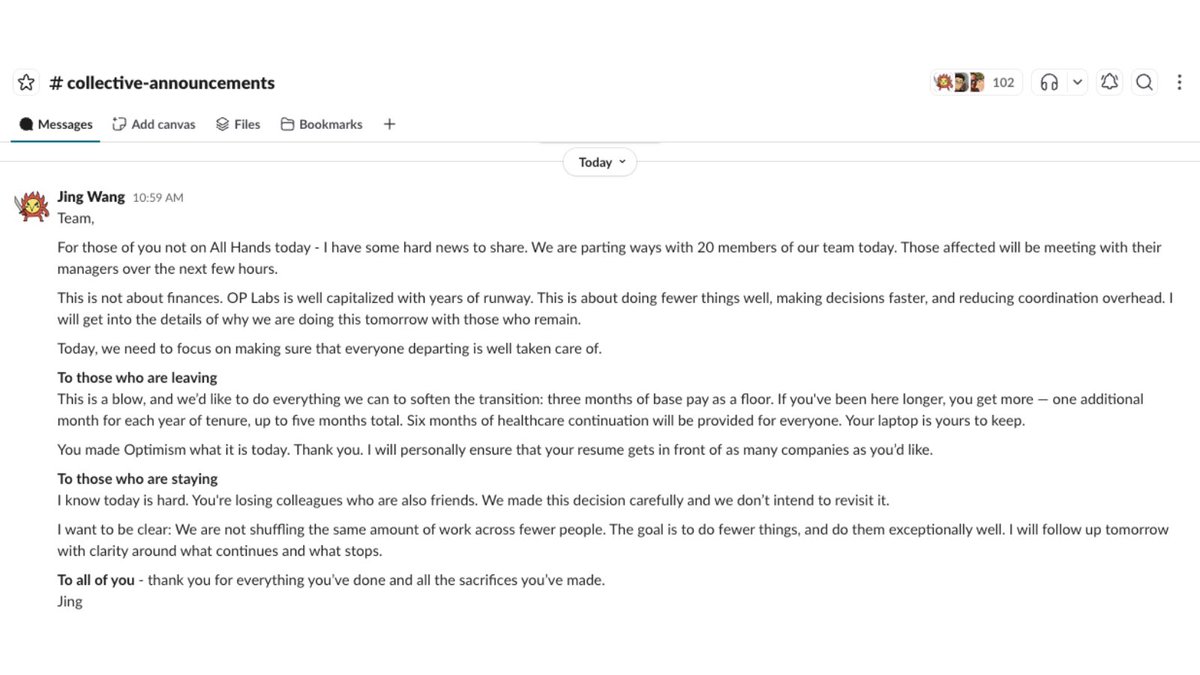
You’re the only CEO who can announce a layoff, publish the battle plan, and still sound like you’re recruiting for a startup retreat, half ruthless general, half motivational LinkedIn influencer. Calm down, Optimist Prime, your org chart doesn’t need another sequel.
Built and scaled the OP Stack into the backbone that processes hundreds of millions of transactions monthly and co‑developed Base, turning experimental rollups into enterprise‑grade rails that other chains are trying to emulate.
To build the most scalable, reliable financial rails for enterprises onchain and to push Ethereum adoption from hobbyist rails to mission‑critical infrastructure. He wants standards that enable chain autonomy while making it easy for enterprises to migrate onchain, turning past lessons and wasted dollars into a repeatable, winning operating model.
Believes transparency and accountability beat marketing spin; that strategy must come before tactics; that open source and shared standards accelerate a healthier ecosystem; and that difficult restructures are preferable to slow drift. He trusts long horizons and rigorous engineering over hype cycles, and values enterprise expectations for scale, reliability, and economic sovereignty.
Radical candor and credibility, he admits mistakes publicly and converts hard lessons into strategy. Deep technical and operational experience, strong enterprise GTM instincts, a wide network across web3, and the ability to rally builders and buyers around a concrete stack.
Tendency to be blunt can inflame critics or be misread as cold during layoffs. Can overcorrect into heavy restructuring, risking morale or short‑term PR pain. Also prone to leaning on technical/strategic detail when broader narrative and softer community signals are needed.
Own the narrative: pin a concise origin + strategy thread explaining the pivot and outcomes (metrics, timelines, case studies). Use weekly developer & enterprise micro‑threads showing wins (latency, throughput, case study ROI), short video clips of demos, and hosted Spaces (AMAs with engineers and partners). Amplify human stories of departing teammates (referrals), reply transparently to critics, and share consistent cadence: 1 long thread, 2, 3 short updates, daily engagement in replies, and a weekly Space. Use clear CTAs (Docs, demo signups, job links), hashtags like #OPStack #Web3Infra, and repurpose content to LinkedIn and newsletters to drag enterprise attention back to X.
Fun fact: he spent three years in Mexico City before returning as CEO and opened a new NYC office. Follower count ~28.7k, following 500, ~2,087 tweets. OP Stack currently processes more than half a billion transactions per month and co‑developed Base, tangible proof he builds things that move money and people.
I have not been able to stop thinking about @worldcoin. The stats are insane.
World is onboarding by far more net new humans into crypto (not just the Superchain), than literally any other team and it’s not even close.
I have not been able to stop thinking about @worldcoin. The stats are insane.
World is onboarding by far more net new humans into crypto (not just the Superchain), than literally any other team and it’s not even close.
{"data":{"__meta":{"device":false,"path":"/creators/jinglejamOP"},"/creators/jinglejamOP":{"data":{"user":{"id":"2742539024","name":"Optimist Prime","description":"CEO OP Labs & Co-founder Optimism.","followers_count":28506,"friends_count":506,"statuses_count":2109,"profile_image_url_https":"https://pbs.twimg.com/profile_images/2019518577074753536/TJDzEdwQ_normal.jpg","screen_name":"jinglejamOP","location":"","entities":{"description":{},"url":{"urls":[{"display_url":"github.com/ethereum-optim…","expanded_url":"https://github.com/ethereum-optimism/ecosystem-contributions#readme","indices":[0,23],"url":"https://t.co/aABsyfSxkX"}]}}},"details":{"type":"The Visionary","description":"Optimist Prime is a candid, results-driven CEO and co‑founder who traded platitudes for hard strategy to rebuild Optimism into enterprise‑grade infrastructure. He mixes brutal honesty with earned credibility, rallying an ecosystem while holding his team (and himself) accountable. Expect long-form threads that read like battle plans and occasional memes about Vitalik rapping.","purpose":"To build the most scalable, reliable financial rails for enterprises onchain and to push Ethereum adoption from hobbyist rails to mission‑critical infrastructure. He wants standards that enable chain autonomy while making it easy for enterprises to migrate onchain, turning past lessons and wasted dollars into a repeatable, winning operating model.","beliefs":"Believes transparency and accountability beat marketing spin; that strategy must come before tactics; that open source and shared standards accelerate a healthier ecosystem; and that difficult restructures are preferable to slow drift. He trusts long horizons and rigorous engineering over hype cycles, and values enterprise expectations for scale, reliability, and economic sovereignty.","facts":"Fun fact: he spent three years in Mexico City before returning as CEO and opened a new NYC office. Follower count ~28.7k, following 500, ~2,087 tweets. OP Stack currently processes more than half a billion transactions per month and co‑developed Base — tangible proof he builds things that move money and people.","strength":"Radical candor and credibility — he admits mistakes publicly and converts hard lessons into strategy. Deep technical and operational experience, strong enterprise GTM instincts, a wide network across web3, and the ability to rally builders and buyers around a concrete stack.","weakness":"Tendency to be blunt can inflame critics or be misread as cold during layoffs. Can overcorrect into heavy restructuring, risking morale or short‑term PR pain. Also prone to leaning on technical/strategic detail when broader narrative and softer community signals are needed.","roast":"You’re the only CEO who can announce a layoff, publish the battle plan, and still sound like you’re recruiting for a startup retreat—half ruthless general, half motivational LinkedIn influencer. Calm down, Optimist Prime—your org chart doesn’t need another sequel.","win":"Built and scaled the OP Stack into the backbone that processes hundreds of millions of transactions monthly and co‑developed Base — turning experimental rollups into enterprise‑grade rails that other chains are trying to emulate.","recommendation":"Own the narrative: pin a concise origin + strategy thread explaining the pivot and outcomes (metrics, timelines, case studies). Use weekly developer & enterprise micro‑threads showing wins (latency, throughput, case study ROI), short video clips of demos, and hosted Spaces (AMAs with engineers and partners). Amplify human stories of departing teammates (referrals), reply transparently to critics, and share consistent cadence: 1 long thread, 2–3 short updates, daily engagement in replies, and a weekly Space. Use clear CTAs (Docs, demo signups, job links), hashtags like #OPStack #Web3Infra, and repurpose content to LinkedIn and newsletters to drag enterprise attention back to X."},"tweets":[{"bookmarked":false,"display_text_range":[0,278],"entities":{"hashtags":[],"symbols":[],"timestamps":[],"urls":[],"user_mentions":[]},"favorited":false,"lang":"en","retweeted":false,"fact_check":null,"id":"1993806277873725722","view_count":242178,"bookmark_count":232,"created_at":1764195434000,"favorite_count":973,"quote_count":49,"reply_count":186,"retweet_count":88,"user_id_str":"2742539024","conversation_id_str":"1993806277873725722","full_text":"I’ve been wanting to talk about this for a while.\n\nThe truth is… Optimism did too much and focused too little. We massively over-hired without a clear strategy. And token price is in the gutter.\n\nWe’ve been bathing in tactics for a long time, clinging to previous successes like launching Base, Ink, Unichain, Worldchain, Soneium… without building the operating machinery to continue that momentum into a market that’s dramatically different today.\n\nSun Tzu says: “Tactics without strategy is the noise before defeat.”\n\nFor a long time, I rationalized our difficulties as due to regulatory uncertainty, market noise, and the impossibility of coordinating 3+ independent organizations. But at this point, doesn’t matter.\n\nThe world today is vastly different than when Optimism started. So we’ve been upgrading Optimism for this new world. We’ve parted ways with many talented teammates, re-unified execution under a single entity, and re-built our engineering and enterprise sales orgs. \nThe goal is simple:\n1. Build the most scalable financial infrastructure\n2. Bring enterprises and their assets onchain\n3. Maximize the productivity of those assets\n\nEnterprise deals are now a competitive space. When we talk to these enterprises, we see Solana, Tempo, Arbitrum, Avalanche, all trying to help enterprises come onchain.\n\nBut I’m confident OP Stack is going to beat them all.\n\nWhy?\n\nThe OP Stack is the only stack that has successfully brought & scaled multiple enterprises onchain. We’ve seen what works & what doesn’t work. We’ve earned this knowledge by—honestly—wasting a lot of money. We’ve seen every single enterprise blockchain failure mode because we’ve been doing this longer than anyone else.\n\nHere’s why enterprises consistently end up choosing OP Stack: enterprises’ expectations on scale and reliability are far beyond what Web3 is used to, and the OP Stack is the closest to what enterprises need. That’s not a coincidence - we’ve co-developed this infrastructure alongside the fastest growing enterprise in web3: Base.\n\nAt the end of the day, enterprises want to control their own economics. They aren't gonna be sharecroppers on Stripe's blockchain. \n\nThe OP Stack vision will win. Shared standards balanced with chain autonomy.\n\nThe starting gun is now. See you in the ring.","in_reply_to_user_id_str":null,"in_reply_to_status_id_str":null,"is_quote_status":0,"is_ai":null,"ai_score":null,"source":"scraping","fetched_at":null,"edit_history_tweet_ids":null,"poll_10min_at":null,"poll_3day_at":null,"poll_count":0,"poll_complete":0},{"entities":{"hashtags":[],"media":[{"display_url":"pic.x.com/rJThhlcFaw","expanded_url":"https://x.com/jinglejamOP/status/2031906216277131745/photo/1","ext_media_availability":{"status":"Available"},"features":{"large":{"faces":[]},"medium":{"faces":[]},"orig":{"faces":[]},"small":{"faces":[]}},"id_str":"2031906209281069056","indices":[283,306],"media_key":"3_2031906209281069056","media_results":{"result":{"media_key":"3_2031906209281069056"}},"media_url_https":"https://pbs.twimg.com/media/HDLH7o0b0AAZILp.jpg","original_info":{"focus_rects":[{"h":896,"w":1600,"x":0,"y":0},{"h":900,"w":900,"x":0,"y":0},{"h":900,"w":789,"x":0,"y":0},{"h":900,"w":450,"x":0,"y":0},{"h":900,"w":1600,"x":0,"y":0}],"height":900,"width":1600},"sizes":{"large":{"h":900,"resize":"fit","w":1600},"medium":{"h":675,"resize":"fit","w":1200},"small":{"h":383,"resize":"fit","w":680},"thumb":{"h":150,"resize":"crop","w":150}},"type":"photo","url":"https://t.co/rJThhlcFaw"}],"symbols":[],"timestamps":[],"urls":[],"user_mentions":[]},"extended_entities":{"media":[{"display_url":"pic.x.com/rJThhlcFaw","expanded_url":"https://x.com/jinglejamOP/status/2031906216277131745/photo/1","ext_media_availability":{"status":"Available"},"features":{"large":{"faces":[]},"medium":{"faces":[]},"orig":{"faces":[]},"small":{"faces":[]}},"id_str":"2031906209281069056","indices":[283,306],"media_key":"3_2031906209281069056","media_results":{"result":{"media_key":"3_2031906209281069056"}},"media_url_https":"https://pbs.twimg.com/media/HDLH7o0b0AAZILp.jpg","original_info":{"focus_rects":[{"h":896,"w":1600,"x":0,"y":0},{"h":900,"w":900,"x":0,"y":0},{"h":900,"w":789,"x":0,"y":0},{"h":900,"w":450,"x":0,"y":0},{"h":900,"w":1600,"x":0,"y":0}],"height":900,"width":1600},"sizes":{"large":{"h":900,"resize":"fit","w":1600},"medium":{"h":675,"resize":"fit","w":1200},"small":{"h":383,"resize":"fit","w":680},"thumb":{"h":150,"resize":"crop","w":150}},"type":"photo","url":"https://t.co/rJThhlcFaw"}]},"display_text_range":[0,282],"lang":"en","possibly_sensitive":false,"fact_check":null,"id":"2031906216277131745","view_count":218889,"bookmark_count":176,"created_at":1773279167000,"favorite_count":676,"quote_count":32,"reply_count":84,"retweet_count":33,"user_id_str":"2742539024","conversation_id_str":"2031906216277131745","full_text":"Today we shared difficult news with the OP Labs team.\n\nOur priority was to communicate with the impacted people & give the team time to process the news before sharing publicly. This decision reflects a narrowing of our focus, not our runway.\n\nI’m sharing the note I sent to the team earlier today, and I strongly encourage teams across the ecosystem to reach out to the people leaving OP Labs because they are talented engineers, operators, and builders who helped build Optimism into what it is today.\n\nIf you are genuinely hiring, feel free to shoot me a DM with your open roles and I will make introductions (with dual consent).","in_reply_to_user_id_str":null,"in_reply_to_status_id_str":null,"is_quote_status":0,"is_ai":null,"ai_score":null,"source":"rapidapi","fetched_at":1777899765675,"edit_history_tweet_ids":null,"poll_10min_at":null,"poll_3day_at":1773543614836,"poll_count":1,"poll_complete":1},{"bookmarked":false,"display_text_range":[0,277],"entities":{"hashtags":[],"symbols":[],"timestamps":[],"urls":[],"user_mentions":[]},"favorited":false,"lang":"en","retweeted":false,"fact_check":null,"id":"1990795626213265707","view_count":71716,"bookmark_count":52,"created_at":1763477639000,"favorite_count":494,"quote_count":21,"reply_count":72,"retweet_count":33,"user_id_str":"2742539024","conversation_id_str":"1990795626213265707","full_text":"Is crypto dead? It feels dead. \n\nIt felt dead in 2014 when Mt. Gox happened and I was already the “weird bitcoin person” on campus. But it didn’t die, legit companies like Coinbase got formed. \n\nIt felt dead in 2017 after getting pilled on the world computer, only to see the most horrible scams as the first wave of adoption. But it didn’t die, it tripled the talent market in crypto. \n\nIt felt dead in 2021, because technology didn’t matter when the casino ruled all. But it didn’t die, it flooded the ecosystem with capital. \n\nNow it’s 2025. \n\nWith every hype cycle there’s been a comedown. It weeded people out, and provided the necessary focus to prepare the infrastructure for the next wave of adoption. \n\nGlobal finance will settle on crypto rails. The world computer is effortlessly handling trillions in value and the OP Stack processes more than half a billion transactions every month. \n\nI’ve returned to OP Labs as the CEO to take us into this new chapter. We have made a ton of changes - both bittersweet and exciting. For years, we've operated as a fragmented ecosystem, crippling our ability to move quickly. Now, we are re-unifying our GTM and Engineering teams under one roof. Our Foundation remains focused on decentralization. \n\nAnd, after 3 years in Mexico City, my cofounders and I have finally returned to the US and we've opened up a new office in NYC. \n\nWe’re rounding out year 7 of scaling Ethereum. None of us are going anywhere. This isn’t the last storm we’ll weather, and we’re still fighting like hell. \n\nAnd you know what, Crypto isn’t going anywhere. Stop taking so much adderall and buying extra strength Zyns, it’s making everything feel worse. Go to the gym, drink some water, and I’ll meet you back at the office. \n\nWe’ve been cooking & I can’t wait to share more with y’all.","in_reply_to_user_id_str":null,"in_reply_to_status_id_str":null,"is_quote_status":0,"is_ai":null,"ai_score":null,"source":"scraping","fetched_at":null,"edit_history_tweet_ids":null,"poll_10min_at":null,"poll_3day_at":null,"poll_count":0,"poll_complete":0},{"bookmarked":false,"display_text_range":[0,70],"entities":{"hashtags":[{"indices":[60,70],"text":"EDCON2019"}],"media":[{"display_url":"pic.x.com/CbGp9P7vYH","expanded_url":"https://x.com/jinglanW/status/1116136960001601536/video/1","id_str":"1116136634020352000","indices":[71,94],"media_key":"7_1116136634020352000","media_url_https":"https://pbs.twimg.com/ext_tw_video_thumb/1116136634020352000/pu/img/7UVfcVIZNkf9tJNw.jpg","type":"video","url":"https://t.co/CbGp9P7vYH","additional_media_info":{"monetizable":false},"ext_media_availability":{"status":"Available"},"sizes":{"large":{"h":720,"w":1280,"resize":"fit"},"medium":{"h":675,"w":1200,"resize":"fit"},"small":{"h":383,"w":680,"resize":"fit"},"thumb":{"h":150,"w":150,"resize":"crop"}},"original_info":{"height":720,"width":1280,"focus_rects":[]},"video_info":{"aspect_ratio":[16,9],"duration_millis":32563,"variants":[{"content_type":"application/x-mpegURL","url":"https://video.twimg.com/ext_tw_video/1116136634020352000/pu/pl/7GZM-8o1329y90qM.m3u8?tag=8"},{"bitrate":256000,"content_type":"video/mp4","url":"https://video.twimg.com/ext_tw_video/1116136634020352000/pu/vid/320x180/LHRyt3ANwRhxPy3I.mp4?tag=8"},{"bitrate":832000,"content_type":"video/mp4","url":"https://video.twimg.com/ext_tw_video/1116136634020352000/pu/vid/640x360/ZJiZbp0wfkgH-bmK.mp4?tag=8"},{"bitrate":2176000,"content_type":"video/mp4","url":"https://video.twimg.com/ext_tw_video/1116136634020352000/pu/vid/1280x720/p2y8WkCW5iR-Pq6D.mp4?tag=8"}]},"media_results":{"result":{"media_key":"7_1116136634020352000"}}}],"symbols":[],"timestamps":[],"urls":[],"user_mentions":[{"id_str":"295218901","name":"vitalik.eth","screen_name":"VitalikButerin","indices":[20,35]},{"id_str":"3891213255","name":"karl.floersch.eth (✨🔴_🔴✨)","screen_name":"karl_dot_tech","indices":[40,54]}]},"extended_entities":{"media":[{"display_url":"pic.x.com/CbGp9P7vYH","expanded_url":"https://x.com/jinglanW/status/1116136960001601536/video/1","id_str":"1116136634020352000","indices":[71,94],"media_key":"7_1116136634020352000","media_url_https":"https://pbs.twimg.com/ext_tw_video_thumb/1116136634020352000/pu/img/7UVfcVIZNkf9tJNw.jpg","type":"video","url":"https://t.co/CbGp9P7vYH","additional_media_info":{"monetizable":false},"ext_media_availability":{"status":"Available"},"sizes":{"large":{"h":720,"w":1280,"resize":"fit"},"medium":{"h":675,"w":1200,"resize":"fit"},"small":{"h":383,"w":680,"resize":"fit"},"thumb":{"h":150,"w":150,"resize":"crop"}},"original_info":{"height":720,"width":1280,"focus_rects":[]},"video_info":{"aspect_ratio":[16,9],"duration_millis":32563,"variants":[{"content_type":"application/x-mpegURL","url":"https://video.twimg.com/ext_tw_video/1116136634020352000/pu/pl/7GZM-8o1329y90qM.m3u8?tag=8"},{"bitrate":256000,"content_type":"video/mp4","url":"https://video.twimg.com/ext_tw_video/1116136634020352000/pu/vid/320x180/LHRyt3ANwRhxPy3I.mp4?tag=8"},{"bitrate":832000,"content_type":"video/mp4","url":"https://video.twimg.com/ext_tw_video/1116136634020352000/pu/vid/640x360/ZJiZbp0wfkgH-bmK.mp4?tag=8"},{"bitrate":2176000,"content_type":"video/mp4","url":"https://video.twimg.com/ext_tw_video/1116136634020352000/pu/vid/1280x720/p2y8WkCW5iR-Pq6D.mp4?tag=8"}]},"media_results":{"result":{"media_key":"7_1116136634020352000"}}}]},"favorited":false,"lang":"en","possibly_sensitive":false,"possibly_sensitive_editable":true,"retweeted":false,"fact_check":null,"id":"1116136960001601536","view_count":0,"bookmark_count":7,"created_at":1554942762000,"favorite_count":395,"quote_count":47,"reply_count":49,"retweet_count":60,"user_id_str":"2742539024","conversation_id_str":"1116136960001601536","full_text":"So who wants to see @VitalikButerin and @karl_dot_tech rap? #EDCON2019 https://t.co/CbGp9P7vYH","in_reply_to_user_id_str":null,"in_reply_to_status_id_str":null,"is_quote_status":0,"is_ai":null,"ai_score":null,"source":"scraping","fetched_at":null,"edit_history_tweet_ids":null,"poll_10min_at":null,"poll_3day_at":null,"poll_count":0,"poll_complete":0},{"bookmarked":false,"display_text_range":[0,275],"entities":{"hashtags":[],"symbols":[],"timestamps":[],"urls":[],"user_mentions":[]},"favorited":false,"lang":"en","quoted_status_id_str":"1883589895056437488","quoted_status_permalink":{"url":"https://t.co/WYMhvpMl5a","expanded":"https://twitter.com/jillrgunter/status/1883589895056437488","display":"x.com/jillrgunter/st…"},"retweeted":false,"fact_check":null,"id":"1884054729975816493","view_count":126291,"bookmark_count":68,"created_at":1738028626000,"favorite_count":333,"quote_count":11,"reply_count":33,"retweet_count":31,"user_id_str":"2742539024","conversation_id_str":"1884054729975816493","full_text":"I've been thinking a lot about \"if you don't tell your story, others will tell it for you\". So - I'm usually quiet on these topics, but I can't be quiet about this. \n\nTalking about Ethereum unification and actually doing something about it are two very different things.\n\nThe Optimism team has consistently done things to help everyone, competitors included. 4844 is just one of many examples. \n\nAnd don't forget that we're the only L2 with fully open source (MIT licensed) code, and that we're the only L2 that consistently gives millions in funding to L1 public goods every year as specified in the original Rollup Centric Roadmap. And what is the Superchain if not a unification of Ethereum?\n\nIf there's more we could be doing to further lift the whole space up, I'd genuinely love to hear it. \n\nWe haven't gotten everything right as a team, but I can say that we at least put our money where our mouth is.","in_reply_to_user_id_str":null,"in_reply_to_status_id_str":null,"is_quote_status":1,"is_ai":null,"ai_score":null,"source":"scraping","fetched_at":null,"edit_history_tweet_ids":null,"poll_10min_at":null,"poll_3day_at":null,"poll_count":0,"poll_complete":0},{"entities":{"hashtags":[],"symbols":[],"timestamps":[],"urls":[],"user_mentions":[]},"display_text_range":[0,272],"lang":"en","fact_check":null,"id":"2024235407953535254","view_count":39019,"bookmark_count":66,"created_at":1771450304000,"favorite_count":329,"quote_count":8,"reply_count":65,"retweet_count":26,"user_id_str":"2742539024","conversation_id_str":"2024235407953535254","full_text":"Base forked the OP Stack. Here's how I'm thinking about it from a technical and economic standpoint.\n\nTech: OP Stack continues to be the best stack my frens. Make no mistake - it is a combination of our tech and Coinbase GTM that made Base the biggest L2. As Base grew, we (+Sunnyside, Flashbots, Paradigm) shipped the features that kept the chain up, scaled it, lowered fees, and made operating the chain vastly more profitable.\n\nOur code still processes 13% of all transactions in crypto. If you want the most scalable, highest reliability, and most production-hardened stack, that’s the OP Stack.\n\nToday, the “Unified Base Stack” shares 99% of its code with the OP Stack/ Flashbots/ Reth, and there remains major overlap in the roadmap. Because of that, Base will continue to be an OP Enterprise customer. If Base makes so many changes that it's no longer recognizable as the OP Stack then they will no longer require “Mission Critical” support from us.\n\nEconomics: This is a hit to near-term onchain revenues. But as cryptotwitter has been saying for ages, we needed to evolve our biz model. We used to just say “everybody joins the Superchain and pays revshare” no matter who the customer was.\n\nWe introduced OP Enterprise in January and we now have tiers of specific support and SLAs based on what different chains need. Base is on OP Enterprise: Mission Critical Support tier. We made this tier for self-managed chains that want customizations. There’s also “OP Enterprise: Fully Managed” for people who prioritize convenience. Base used to need that. They have evolved.\n\nThe reason we made this MIT licensed in the beginning was to encourage forks in order to become the standard way rollups get built. We accomplished that - Blast, MegaETH, opBNB, and many more are all forks of the OP Stack. All 3rd party services and tools have OP Stack-compatible integrations.\n\nWe built and scaled the fastest growing blockchain in crypto, and are now helping our partners create and execute on that playbook.\n\nWe’re a strategic partner offering faster time to market, and exclusive knowledge of how to handle the largest production workloads.\n\nCoinbase is doubling down on their blockchain. That’s validation that every business will have its own blockspace. A vast majority of these businesses will utilize the OP Stack for their chains.\n\nThank you all for reading this, and for thinking about Optimism and our strategy. Now back to building.","in_reply_to_user_id_str":null,"in_reply_to_status_id_str":null,"is_quote_status":0,"is_ai":null,"ai_score":null,"source":"rapidapi","fetched_at":1777899765675,"edit_history_tweet_ids":null,"poll_10min_at":null,"poll_3day_at":1771711220721,"poll_count":1,"poll_complete":1},{"bookmarked":false,"display_text_range":[0,284],"entities":{"hashtags":[],"symbols":[],"timestamps":[],"urls":[],"user_mentions":[]},"favorited":false,"lang":"en","retweeted":false,"fact_check":null,"id":"1881747943759478790","view_count":26874,"bookmark_count":7,"created_at":1737478645000,"favorite_count":315,"quote_count":5,"reply_count":8,"retweet_count":22,"user_id_str":"2742539024","conversation_id_str":"1881747943759478790","full_text":"Aya is one of the reasons I joined Ethereum. She had just stepped into her role during an extremely chaotic time for Ethereum. Folks called it the \"Miyaguchi Restoration\". I saw a role model & a welcoming community. \n\nIt's easy to forget the wins during market downturns but let's not forget all the incredible wins that the existing EF leadership has brought in over the years - like Ethereum not being a security!\n\nLike others here have said, the EF is not Ethereum. We are all Ethereum. It's been really cool seeing fellow community members step up respectfully. We should all be united now more than ever.","in_reply_to_user_id_str":null,"in_reply_to_status_id_str":null,"is_quote_status":0,"is_ai":null,"ai_score":null,"source":"scraping","fetched_at":null,"edit_history_tweet_ids":null,"poll_10min_at":null,"poll_3day_at":null,"poll_count":0,"poll_complete":0},{"bookmarked":false,"display_text_range":[0,220],"entities":{"hashtags":[],"symbols":[],"timestamps":[],"urls":[],"user_mentions":[{"id_str":"70203939","name":"World","screen_name":"worldcoin","indices":[44,54]},{"id_str":"70203939","name":"World","screen_name":"worldcoin","indices":[44,54]}]},"favorited":false,"lang":"en","retweeted":false,"fact_check":null,"id":"1916904184495882542","view_count":43374,"bookmark_count":38,"created_at":1745860546000,"favorite_count":295,"quote_count":9,"reply_count":26,"retweet_count":35,"user_id_str":"2742539024","conversation_id_str":"1916904184495882542","full_text":"I have not been able to stop thinking about @worldcoin. The stats are insane. \n\nWorld is onboarding by far more net new humans into crypto (not just the Superchain), than literally any other team and it’s not even close.","in_reply_to_user_id_str":null,"in_reply_to_status_id_str":null,"is_quote_status":0,"is_ai":null,"ai_score":null,"source":"scraping","fetched_at":null,"edit_history_tweet_ids":null,"poll_10min_at":null,"poll_3day_at":null,"poll_count":0,"poll_complete":0},{"entities":{"hashtags":[],"symbols":[],"timestamps":[],"urls":[{"display_url":"ether.fi","expanded_url":"http://ether.fi","indices":[30,53],"url":"https://t.co/eUNlUFVbU8"}],"user_mentions":[]},"display_text_range":[0,277],"lang":"en","possibly_sensitive":false,"fact_check":null,"id":"2024152129737576896","view_count":65916,"bookmark_count":15,"created_at":1771430449000,"favorite_count":284,"quote_count":7,"reply_count":25,"retweet_count":27,"user_id_str":"2742539024","conversation_id_str":"2024152129737576896","full_text":"Very excited to announce that https://t.co/hHaS8z42pQ Cash is migrating to OP Mainnet.\n\n70,000 active cards. 300,000 accounts. $200M TVL.\n\nOne of crypto's fastest-growing payments products is making Optimism its home.\n\nThe problem: crypto holders want to spend without selling. Every transaction forces a choice between conviction and convenience. https://t.co/hHaS8z42pQ built https://t.co/hHaS8z42pQ Cash to solve this. \n\nTeams building consumer-facing products at scale choose Optimism for production-ready infrastructure, ecosystem network effects, and long-term alignment.\n\nFor developers building payments, lending, or consumer-facing applications: this is what production scale looks like.\n\nWelcome, @ether_fi!\n\nLETS GOOOOO!!","in_reply_to_user_id_str":null,"in_reply_to_status_id_str":null,"is_quote_status":0,"is_ai":null,"ai_score":null,"source":"rapidapi","fetched_at":1776776794365,"edit_history_tweet_ids":null,"poll_10min_at":null,"poll_3day_at":1771693201518,"poll_count":1,"poll_complete":1},{"entities":{},"display_text_range":[0,159],"lang":"en","fact_check":null,"id":"2036791249097932926","view_count":67853,"bookmark_count":36,"created_at":1774443850000,"favorite_count":269,"quote_count":20,"reply_count":30,"retweet_count":42,"user_id_str":"2742539024","conversation_id_str":"2036791249097932926","full_text":"We are extremely excited to announce Vision Chain in collaboration with Bitpanda - A regulated European exchange with 7 million users, powered by the OP Stack!","in_reply_to_user_id_str":null,"in_reply_to_status_id_str":null,"is_quote_status":0,"is_ai":null,"ai_score":null,"source":"rapidapi","fetched_at":1780167161913,"edit_history_tweet_ids":null,"poll_10min_at":null,"poll_3day_at":1774706404149,"poll_count":1,"poll_complete":1},{"entities":{"hashtags":[],"symbols":[],"timestamps":[],"urls":[],"user_mentions":[]},"display_text_range":[0,279],"lang":"en","fact_check":null,"id":"2016895349521109444","view_count":38016,"bookmark_count":65,"created_at":1769700298000,"favorite_count":255,"quote_count":22,"reply_count":53,"retweet_count":53,"user_id_str":"2742539024","conversation_id_str":"2016895349521109444","full_text":"LISTEN UP EVERYBODY! Today we're launching OP Enterprise.\n\nWe all know that crypto is at the cusp of major mainstream adoption. Nearly every major enterprise has a crypto strategy. \n\nWe're the only team that has successfully launched chains for multiple companies. We've packaged up all of our learnings into a product offering that will onboard the next wave of enterprises.\n\nOP Enterprise is production-grade blockchain infrastructure for companies that want to build businesses, not become blockchain experts.\n𝗬𝗼𝘂𝗿 𝗯𝗹𝗼𝗰𝗸𝗰𝗵𝗮𝗶𝗻. 𝗬𝗼𝘂𝗿 𝗿𝗲𝘃𝗲𝗻𝘂𝗲. 𝗘𝗻𝘁𝗲𝗿𝗽𝗿𝗶𝘀𝗲 𝗴𝘂𝗮𝗿𝗮𝗻𝘁𝗲𝗲𝘀.\n—\n𝗧𝗵𝗲 𝗽𝗿𝗼𝗯𝗹𝗲𝗺\nHere's what we keep hearing from enterprises:\nThey're building on infrastructure where the incentives don't align with their own. They're competing for mindshare, fighting to keep users, working against platform economics that extract value from everything they build.\n\nMost blockchain platforms don't care if you're successful. Their focus is on their own TVL and metrics - not yours. You launch your stablecoin into an environment that competes with everyone else's stablecoin and hemorrhage capital to onboard your users onto a blockchain you have zero control over. \n\nAnd even if you decide to own your chain, you hit the real bottleneck—onboarding the ecosystem partners you need to go live. Stablecoins, oracles, bridges, wallets, indexers. Each negotiation takes months. Costs hundreds of thousands to millions of dollars. Vendors pick off blockchain teams one by one.\n\nWe've seen this movie before. Many times.\n—\n𝗢𝗣 𝗘𝗻𝘁𝗲𝗿𝗽𝗿𝗶𝘀𝗲 𝗳𝗶𝘅𝗲𝘀 𝗯𝗼𝘁𝗵\n𝗥𝗲𝘃𝗲𝗻𝘂𝗲 𝗰𝗼𝗻𝘁𝗿𝗼𝗹 — When you own your chain, your infrastructure becomes a revenue-generating asset. Not a cost center. DeFi protocols deploy on your rails. The economic activity you enable accrues to you.\nThis isn't about saving on fees. It's about owning the infrastructure layer where financial value is created.\n𝗩𝗲𝗻𝗱𝗼𝗿 𝗺𝗮𝗻𝗮𝗴𝗲𝗺𝗲𝗻𝘁 𝗮𝘁 𝘀𝗰𝗮𝗹𝗲 — We've onboarded tier-one partners across 50+ production chains. They're already integrated, contracted, ready to deploy. We negotiate standard terms, manage costs down, and fast-track partnerships that would otherwise delay your launch by 6-12 months.\nWe've done this work already. You don't have to.\n—\n𝗪𝗵𝗮𝘁 𝘆𝗼𝘂 𝗴𝗲𝘁\n𝗙𝘂𝗹𝗹𝘆 𝗠𝗮𝗻𝗮𝗴𝗲𝗱: We run your chain end-to-end. 24/7 monitoring, incident response, security ops, upgrade orchestration. You focus on product.\n𝗦𝗲𝗹𝗳 𝗠𝗮𝗻𝗮𝗴𝗲𝗱: You operate, we support. Architecture guidance, security assessments, priority patches, direct access to core engineers.\n𝗢𝗣 𝗠𝗮𝗶𝗻𝗻𝗲𝘁: Start on our flagship public network with enterprise support. Graduate to your own chain when ready. Same codebase, seamless migration.\nFirst conversation to production: 8-12 weeks. \n—\n𝗧𝗵𝗲 𝘀𝗽𝗲𝗰𝘀\n99.99% uptime SLO\n15-minute P1 incident response\nUp to 5B RPC requests/month with multi-provider redundancy\n10 Mgas/sec baseline, 100+ Mgas/sec for high-volume applications\nSub-200ms block times\n20k requests-per-second burst capacity\nStage 1 security with permissionless fault proofs\nOptional ZK fault proofs for faster finality\n—\n𝗪𝗵𝘆 𝗻𝗼𝘄\nThe window for enterprise blockchain has shifted from \"if\" to \"how fast.\"\nMiCA is live in Europe. US policy is stabilizing. The enterprises that spent 2023-2024 in exploratory mode are now greenlighting production builds.\nEnterprise deals are now a competitive space. When we talk to enterprises, we see everyone trying to help them come onchain.\nBut the OP Stack is the only stack that has successfully brought and scaled multiple enterprises onchain. We've seen what works and what doesn't. We've earned this knowledge by building alongside the fastest-growing enterprises in web3. We've encountered every failure mode because we've been doing this longer than anyone else.\nAt the end of the day, enterprises want to control their own economics. They don't want to rent infrastructure from platforms that compete with them.\nThe OP Stack vision will win. Shared standards balanced with chain autonomy.\n—\n𝗪𝗵𝗮𝘁 𝗺𝗮𝗸𝗲𝘀 𝘂𝘀 𝗱𝗶𝗳𝗳𝗲𝗿𝗲𝗻𝘁\n𝗘𝗻𝘁𝗲𝗿𝗽𝗿𝗶𝘀𝗲 𝘁𝗿𝗮𝗰𝗸 𝗿𝗲𝗰𝗼𝗿𝗱 — 50+ chains launched. Not pilots. Production systems serving millions.\n𝗜𝗻𝗻𝗼𝘃𝗮𝘁𝗶𝗼𝗻 𝘃𝗲𝗹𝗼𝗰𝗶𝘁𝘆 — We control the entire stack. When we discover vulnerabilities, customers get patches within hours. Not weeks.\n𝗗𝗶𝗿𝗲𝗰𝘁 𝗮𝗰𝗰𝗲𝘀𝘀 𝘁𝗼 𝘁𝗵𝗲 𝘀𝗼𝘂𝗿𝗰𝗲 — Questions go to the engineers who wrote the code. Feature requests go to the people who can actually implement them. No translation layer.\n𝗘𝘁𝗵𝗲𝗿𝗲𝘂𝗺 𝗰𝗿𝗲𝗱𝗶𝗯𝗶𝗹𝗶𝘁𝘆 — We've worked on Ethereum's core protocol. Defined its scaling roadmap. Invented the L2 architecture that powers the industry.\n𝗡𝗼 𝘃𝗲𝗻𝗱𝗼𝗿 𝗹𝗼𝗰𝗸-𝗶𝗻 — Open source. Fork if you want. Most teams discover they'd rather work with us—but the choice is always yours.\n—\nOur first customers:\nUnichain — Uniswap needed their own chain. They chose us. Uniswap Labs operates Unichain with Mission-Critical Support—priority response for high-stakes moments where downtime isn't an option.\nCelo — Scaling mobile payments across Latin America and Africa. Millions of users. Celo operates their network with Mission-Critical Support, ensuring enterprise-grade backing in emerging markets.\nDifferent use cases. Same infrastructure. Same commitment to their success\nWe are here today because partners like these rolled up their sleeves and built together with us.\n—\n𝗪𝗵𝗼 𝘁𝗵𝗶𝘀 𝗶𝘀 𝗳𝗼𝗿\nFintechs building next-generation financial services Centralized exchanges launching tokenized products Payments companies building cross-border rails Financial institutions exploring tokenization and digital assets\nIf you need infrastructure that performs without the operational burden—and you want to own your economics instead of renting them—OP Enterprise is for you.\n—\nOP Enterprise is a major focus for us in 2026.\nWe have active engagements across fintech, exchanges, payments, and financial services. The direction is clear: the OP Stack is becoming the standard for the next generation of financial systems.\n\nThis is the first of many announcements to come.\nIf you're serious about building onchain, we should talk.","in_reply_to_user_id_str":null,"in_reply_to_status_id_str":null,"is_quote_status":0,"is_ai":null,"ai_score":null,"source":"rapidapi","fetched_at":1771447074646,"edit_history_tweet_ids":null,"poll_10min_at":null,"poll_3day_at":null,"poll_count":0,"poll_complete":0},{"bookmarked":false,"display_text_range":[0,26],"entities":{"hashtags":[],"symbols":[],"timestamps":[],"urls":[],"user_mentions":[]},"favorited":false,"lang":"en","quoted_status_id_str":"1965220031320793442","quoted_status_permalink":{"url":"https://t.co/EoxOktHJgZ","expanded":"https://twitter.com/Ronin_Network/status/1965220031320793442","display":"x.com/Ronin_Network/…"},"retweeted":false,"fact_check":null,"id":"1965472066263826695","view_count":7778,"bookmark_count":1,"created_at":1757440031000,"favorite_count":202,"quote_count":0,"reply_count":18,"retweet_count":22,"user_id_str":"2742539024","conversation_id_str":"1965472066263826695","full_text":"Welcome back to Ethereum 💖","in_reply_to_user_id_str":null,"in_reply_to_status_id_str":null,"is_quote_status":1,"is_ai":null,"ai_score":null,"source":"scraping","fetched_at":null,"edit_history_tweet_ids":null,"poll_10min_at":null,"poll_3day_at":null,"poll_count":0,"poll_complete":0},{"entities":{"urls":[{"display_url":"x.com/i/article/2046…","expanded_url":"http://x.com/i/article/2046581303550627841","indices":[0,23],"url":"https://t.co/UZSiGVJecl"}]},"display_text_range":[0,23],"lang":"zxx","possibly_sensitive":false,"fact_check":null,"id":"2046588658464034852","view_count":91831,"bookmark_count":93,"created_at":1776779734000,"favorite_count":198,"quote_count":18,"reply_count":18,"retweet_count":32,"user_id_str":"2742539024","conversation_id_str":"2046588658464034852","full_text":"https://t.co/UZSiGVJecl","in_reply_to_user_id_str":null,"in_reply_to_status_id_str":null,"is_quote_status":0,"is_ai":null,"ai_score":null,"source":"rapidapi","fetched_at":1784660182251,"edit_history_tweet_ids":null,"poll_10min_at":null,"poll_3day_at":1777102067551,"poll_count":1,"poll_complete":1},{"bookmarked":false,"display_text_range":[0,34],"entities":{"hashtags":[],"symbols":[],"timestamps":[],"urls":[],"user_mentions":[]},"favorited":false,"lang":"en","retweeted":false,"fact_check":null,"id":"1628431131539300353","view_count":78170,"bookmark_count":14,"created_at":1677083211000,"favorite_count":195,"quote_count":7,"reply_count":31,"retweet_count":33,"user_id_str":"2742539024","conversation_id_str":"1628431131539300353","full_text":"chains are the new smart contracts","in_reply_to_user_id_str":null,"in_reply_to_status_id_str":null,"is_quote_status":0,"is_ai":null,"ai_score":null,"source":"scraping","fetched_at":null,"edit_history_tweet_ids":null,"poll_10min_at":null,"poll_3day_at":null,"poll_count":0,"poll_complete":0},{"entities":{"hashtags":[],"symbols":[],"timestamps":[],"urls":[],"user_mentions":[]},"display_text_range":[0,279],"lang":"en","fact_check":null,"id":"2018809312534303074","view_count":13890,"bookmark_count":16,"created_at":1770156622000,"favorite_count":189,"quote_count":2,"reply_count":20,"retweet_count":16,"user_id_str":"2742539024","conversation_id_str":"2018809312534303074","full_text":"Ok in all seriousness…\n\nL2s are L1s in their own right. The difference from one L2 to another L2 can be more vast than the difference between L1s. The industry does not have good terminology.\n\nFUD or not, Ethereum is still a great DA & settlement layer. Doesn’t really matter what gets tweeted! \n\nThe reality is that every system is a set of tradeoffs. \n\nThe internet itself is a set of open decentralized standards (eg DNS) + hyper-centralized zones (eg website).\n\nL2s are websites. Every company will have its own, tailored to its needs. Ethereum is an open settlement standard. It’s important for Ethereum to stay true to those base layer values to give L2s the flexibility to customize.\n\nTough job to be Vitalik. I wish he was constantly bull posting only OP obviously 🤣, but the industry is really lucky to have him. I’m grateful. And tough job to be any long lasting builder in Ethereum.\n\nSay what you want about L2s dying. The term might die but the tech will not. It’s been a decade of constant grind and constant sprint. More highs and lows will hit us. We have the stamina and the grit to push through and continue innovating the tech.\n\nThat’s true for my homies at Polygon, Arbitrum, and ZK sync too. Peace and love to you guys - you’re the only ones who know how hard it is to build this damn technology! (And fine, Solana too!)\n\nCheers to the last decade and here’s to another. \n\nLove,\nJing","in_reply_to_user_id_str":null,"in_reply_to_status_id_str":null,"is_quote_status":0,"is_ai":null,"ai_score":null,"source":"rapidapi","fetched_at":1774435989858,"edit_history_tweet_ids":null,"poll_10min_at":null,"poll_3day_at":1770494401885,"poll_count":1,"poll_complete":1},{"entities":{"urls":[{"display_url":"Ether.fi","expanded_url":"http://Ether.fi","indices":[83,106],"url":"https://t.co/RLR0RDq4fU"}]},"display_text_range":[0,268],"lang":"en","possibly_sensitive":false,"fact_check":null,"id":"2044411240181555327","view_count":42149,"bookmark_count":40,"created_at":1776260597000,"favorite_count":179,"quote_count":28,"reply_count":19,"retweet_count":12,"user_id_str":"2742539024","conversation_id_str":"2044411240181555327","full_text":"LETS GOOO! \nWe just completed the single largest TVL event in OP Mainnet history.\n\nhttps://t.co/RLR0RDq4fU is now live on OPM! \n\n$220M TVL migrated over 3 days with zero disruption. 300k accounts and 70k active cards operational the entire time. \n\nNext... more assets!","in_reply_to_user_id_str":null,"in_reply_to_status_id_str":null,"is_quote_status":0,"is_ai":null,"ai_score":null,"source":"rapidapi","fetched_at":1783515283233,"edit_history_tweet_ids":null,"poll_10min_at":null,"poll_3day_at":1776520827787,"poll_count":1,"poll_complete":1}],"ctweets":[{"bookmarked":false,"display_text_range":[0,278],"entities":{"hashtags":[],"symbols":[],"timestamps":[],"urls":[],"user_mentions":[]},"favorited":false,"lang":"en","retweeted":false,"fact_check":null,"id":"1993806277873725722","view_count":242178,"bookmark_count":232,"created_at":1764195434000,"favorite_count":973,"quote_count":49,"reply_count":186,"retweet_count":88,"user_id_str":"2742539024","conversation_id_str":"1993806277873725722","full_text":"I’ve been wanting to talk about this for a while.\n\nThe truth is… Optimism did too much and focused too little. We massively over-hired without a clear strategy. And token price is in the gutter.\n\nWe’ve been bathing in tactics for a long time, clinging to previous successes like launching Base, Ink, Unichain, Worldchain, Soneium… without building the operating machinery to continue that momentum into a market that’s dramatically different today.\n\nSun Tzu says: “Tactics without strategy is the noise before defeat.”\n\nFor a long time, I rationalized our difficulties as due to regulatory uncertainty, market noise, and the impossibility of coordinating 3+ independent organizations. But at this point, doesn’t matter.\n\nThe world today is vastly different than when Optimism started. So we’ve been upgrading Optimism for this new world. We’ve parted ways with many talented teammates, re-unified execution under a single entity, and re-built our engineering and enterprise sales orgs. \nThe goal is simple:\n1. Build the most scalable financial infrastructure\n2. Bring enterprises and their assets onchain\n3. Maximize the productivity of those assets\n\nEnterprise deals are now a competitive space. When we talk to these enterprises, we see Solana, Tempo, Arbitrum, Avalanche, all trying to help enterprises come onchain.\n\nBut I’m confident OP Stack is going to beat them all.\n\nWhy?\n\nThe OP Stack is the only stack that has successfully brought & scaled multiple enterprises onchain. We’ve seen what works & what doesn’t work. We’ve earned this knowledge by—honestly—wasting a lot of money. We’ve seen every single enterprise blockchain failure mode because we’ve been doing this longer than anyone else.\n\nHere’s why enterprises consistently end up choosing OP Stack: enterprises’ expectations on scale and reliability are far beyond what Web3 is used to, and the OP Stack is the closest to what enterprises need. That’s not a coincidence - we’ve co-developed this infrastructure alongside the fastest growing enterprise in web3: Base.\n\nAt the end of the day, enterprises want to control their own economics. They aren't gonna be sharecroppers on Stripe's blockchain. \n\nThe OP Stack vision will win. Shared standards balanced with chain autonomy.\n\nThe starting gun is now. See you in the ring.","in_reply_to_user_id_str":null,"in_reply_to_status_id_str":null,"is_quote_status":0,"is_ai":null,"ai_score":null,"source":"scraping","fetched_at":null,"edit_history_tweet_ids":null,"poll_10min_at":null,"poll_3day_at":null,"poll_count":0,"poll_complete":0},{"entities":{"hashtags":[],"media":[{"display_url":"pic.x.com/rJThhlcFaw","expanded_url":"https://x.com/jinglejamOP/status/2031906216277131745/photo/1","ext_media_availability":{"status":"Available"},"features":{"large":{"faces":[]},"medium":{"faces":[]},"orig":{"faces":[]},"small":{"faces":[]}},"id_str":"2031906209281069056","indices":[283,306],"media_key":"3_2031906209281069056","media_results":{"result":{"media_key":"3_2031906209281069056"}},"media_url_https":"https://pbs.twimg.com/media/HDLH7o0b0AAZILp.jpg","original_info":{"focus_rects":[{"h":896,"w":1600,"x":0,"y":0},{"h":900,"w":900,"x":0,"y":0},{"h":900,"w":789,"x":0,"y":0},{"h":900,"w":450,"x":0,"y":0},{"h":900,"w":1600,"x":0,"y":0}],"height":900,"width":1600},"sizes":{"large":{"h":900,"resize":"fit","w":1600},"medium":{"h":675,"resize":"fit","w":1200},"small":{"h":383,"resize":"fit","w":680},"thumb":{"h":150,"resize":"crop","w":150}},"type":"photo","url":"https://t.co/rJThhlcFaw"}],"symbols":[],"timestamps":[],"urls":[],"user_mentions":[]},"extended_entities":{"media":[{"display_url":"pic.x.com/rJThhlcFaw","expanded_url":"https://x.com/jinglejamOP/status/2031906216277131745/photo/1","ext_media_availability":{"status":"Available"},"features":{"large":{"faces":[]},"medium":{"faces":[]},"orig":{"faces":[]},"small":{"faces":[]}},"id_str":"2031906209281069056","indices":[283,306],"media_key":"3_2031906209281069056","media_results":{"result":{"media_key":"3_2031906209281069056"}},"media_url_https":"https://pbs.twimg.com/media/HDLH7o0b0AAZILp.jpg","original_info":{"focus_rects":[{"h":896,"w":1600,"x":0,"y":0},{"h":900,"w":900,"x":0,"y":0},{"h":900,"w":789,"x":0,"y":0},{"h":900,"w":450,"x":0,"y":0},{"h":900,"w":1600,"x":0,"y":0}],"height":900,"width":1600},"sizes":{"large":{"h":900,"resize":"fit","w":1600},"medium":{"h":675,"resize":"fit","w":1200},"small":{"h":383,"resize":"fit","w":680},"thumb":{"h":150,"resize":"crop","w":150}},"type":"photo","url":"https://t.co/rJThhlcFaw"}]},"display_text_range":[0,282],"lang":"en","possibly_sensitive":false,"fact_check":null,"id":"2031906216277131745","view_count":218889,"bookmark_count":176,"created_at":1773279167000,"favorite_count":676,"quote_count":32,"reply_count":84,"retweet_count":33,"user_id_str":"2742539024","conversation_id_str":"2031906216277131745","full_text":"Today we shared difficult news with the OP Labs team.\n\nOur priority was to communicate with the impacted people & give the team time to process the news before sharing publicly. This decision reflects a narrowing of our focus, not our runway.\n\nI’m sharing the note I sent to the team earlier today, and I strongly encourage teams across the ecosystem to reach out to the people leaving OP Labs because they are talented engineers, operators, and builders who helped build Optimism into what it is today.\n\nIf you are genuinely hiring, feel free to shoot me a DM with your open roles and I will make introductions (with dual consent).","in_reply_to_user_id_str":null,"in_reply_to_status_id_str":null,"is_quote_status":0,"is_ai":null,"ai_score":null,"source":"rapidapi","fetched_at":1777899765675,"edit_history_tweet_ids":null,"poll_10min_at":null,"poll_3day_at":1773543614836,"poll_count":1,"poll_complete":1},{"bookmarked":false,"display_text_range":[0,277],"entities":{"hashtags":[],"symbols":[],"timestamps":[],"urls":[],"user_mentions":[]},"favorited":false,"lang":"en","retweeted":false,"fact_check":null,"id":"1990795626213265707","view_count":71716,"bookmark_count":52,"created_at":1763477639000,"favorite_count":494,"quote_count":21,"reply_count":72,"retweet_count":33,"user_id_str":"2742539024","conversation_id_str":"1990795626213265707","full_text":"Is crypto dead? It feels dead. \n\nIt felt dead in 2014 when Mt. Gox happened and I was already the “weird bitcoin person” on campus. But it didn’t die, legit companies like Coinbase got formed. \n\nIt felt dead in 2017 after getting pilled on the world computer, only to see the most horrible scams as the first wave of adoption. But it didn’t die, it tripled the talent market in crypto. \n\nIt felt dead in 2021, because technology didn’t matter when the casino ruled all. But it didn’t die, it flooded the ecosystem with capital. \n\nNow it’s 2025. \n\nWith every hype cycle there’s been a comedown. It weeded people out, and provided the necessary focus to prepare the infrastructure for the next wave of adoption. \n\nGlobal finance will settle on crypto rails. The world computer is effortlessly handling trillions in value and the OP Stack processes more than half a billion transactions every month. \n\nI’ve returned to OP Labs as the CEO to take us into this new chapter. We have made a ton of changes - both bittersweet and exciting. For years, we've operated as a fragmented ecosystem, crippling our ability to move quickly. Now, we are re-unifying our GTM and Engineering teams under one roof. Our Foundation remains focused on decentralization. \n\nAnd, after 3 years in Mexico City, my cofounders and I have finally returned to the US and we've opened up a new office in NYC. \n\nWe’re rounding out year 7 of scaling Ethereum. None of us are going anywhere. This isn’t the last storm we’ll weather, and we’re still fighting like hell. \n\nAnd you know what, Crypto isn’t going anywhere. Stop taking so much adderall and buying extra strength Zyns, it’s making everything feel worse. Go to the gym, drink some water, and I’ll meet you back at the office. \n\nWe’ve been cooking & I can’t wait to share more with y’all.","in_reply_to_user_id_str":null,"in_reply_to_status_id_str":null,"is_quote_status":0,"is_ai":null,"ai_score":null,"source":"scraping","fetched_at":null,"edit_history_tweet_ids":null,"poll_10min_at":null,"poll_3day_at":null,"poll_count":0,"poll_complete":0},{"entities":{"hashtags":[],"symbols":[],"timestamps":[],"urls":[],"user_mentions":[]},"display_text_range":[0,272],"lang":"en","fact_check":null,"id":"2024235407953535254","view_count":39019,"bookmark_count":66,"created_at":1771450304000,"favorite_count":329,"quote_count":8,"reply_count":65,"retweet_count":26,"user_id_str":"2742539024","conversation_id_str":"2024235407953535254","full_text":"Base forked the OP Stack. Here's how I'm thinking about it from a technical and economic standpoint.\n\nTech: OP Stack continues to be the best stack my frens. Make no mistake - it is a combination of our tech and Coinbase GTM that made Base the biggest L2. As Base grew, we (+Sunnyside, Flashbots, Paradigm) shipped the features that kept the chain up, scaled it, lowered fees, and made operating the chain vastly more profitable.\n\nOur code still processes 13% of all transactions in crypto. If you want the most scalable, highest reliability, and most production-hardened stack, that’s the OP Stack.\n\nToday, the “Unified Base Stack” shares 99% of its code with the OP Stack/ Flashbots/ Reth, and there remains major overlap in the roadmap. Because of that, Base will continue to be an OP Enterprise customer. If Base makes so many changes that it's no longer recognizable as the OP Stack then they will no longer require “Mission Critical” support from us.\n\nEconomics: This is a hit to near-term onchain revenues. But as cryptotwitter has been saying for ages, we needed to evolve our biz model. We used to just say “everybody joins the Superchain and pays revshare” no matter who the customer was.\n\nWe introduced OP Enterprise in January and we now have tiers of specific support and SLAs based on what different chains need. Base is on OP Enterprise: Mission Critical Support tier. We made this tier for self-managed chains that want customizations. There’s also “OP Enterprise: Fully Managed” for people who prioritize convenience. Base used to need that. They have evolved.\n\nThe reason we made this MIT licensed in the beginning was to encourage forks in order to become the standard way rollups get built. We accomplished that - Blast, MegaETH, opBNB, and many more are all forks of the OP Stack. All 3rd party services and tools have OP Stack-compatible integrations.\n\nWe built and scaled the fastest growing blockchain in crypto, and are now helping our partners create and execute on that playbook.\n\nWe’re a strategic partner offering faster time to market, and exclusive knowledge of how to handle the largest production workloads.\n\nCoinbase is doubling down on their blockchain. That’s validation that every business will have its own blockspace. A vast majority of these businesses will utilize the OP Stack for their chains.\n\nThank you all for reading this, and for thinking about Optimism and our strategy. Now back to building.","in_reply_to_user_id_str":null,"in_reply_to_status_id_str":null,"is_quote_status":0,"is_ai":null,"ai_score":null,"source":"rapidapi","fetched_at":1777899765675,"edit_history_tweet_ids":null,"poll_10min_at":null,"poll_3day_at":1771711220721,"poll_count":1,"poll_complete":1},{"bookmarked":false,"display_text_range":[0,249],"entities":{"hashtags":[],"symbols":[],"timestamps":[],"urls":[],"user_mentions":[]},"favorited":false,"lang":"en","retweeted":false,"fact_check":null,"id":"1859990270579990690","view_count":23721,"bookmark_count":19,"created_at":1732291212000,"favorite_count":164,"quote_count":4,"reply_count":53,"retweet_count":2,"user_id_str":"2742539024","conversation_id_str":"1859990270579990690","full_text":"how much tweeting did it take for you guys before tweeting felt natural & you started consistently writing high quality tweets?\n\nmy team wants me to tweet more but right now i feel like it takes 200% of my brain capacity to just ship the roadmap","in_reply_to_user_id_str":null,"in_reply_to_status_id_str":null,"is_quote_status":0,"is_ai":null,"ai_score":null,"source":"scraping","fetched_at":null,"edit_history_tweet_ids":null,"poll_10min_at":null,"poll_3day_at":null,"poll_count":0,"poll_complete":0},{"entities":{"hashtags":[],"symbols":[],"timestamps":[],"urls":[],"user_mentions":[]},"display_text_range":[0,279],"lang":"en","fact_check":null,"id":"2016895349521109444","view_count":38016,"bookmark_count":65,"created_at":1769700298000,"favorite_count":255,"quote_count":22,"reply_count":53,"retweet_count":53,"user_id_str":"2742539024","conversation_id_str":"2016895349521109444","full_text":"LISTEN UP EVERYBODY! Today we're launching OP Enterprise.\n\nWe all know that crypto is at the cusp of major mainstream adoption. Nearly every major enterprise has a crypto strategy. \n\nWe're the only team that has successfully launched chains for multiple companies. We've packaged up all of our learnings into a product offering that will onboard the next wave of enterprises.\n\nOP Enterprise is production-grade blockchain infrastructure for companies that want to build businesses, not become blockchain experts.\n𝗬𝗼𝘂𝗿 𝗯𝗹𝗼𝗰𝗸𝗰𝗵𝗮𝗶𝗻. 𝗬𝗼𝘂𝗿 𝗿𝗲𝘃𝗲𝗻𝘂𝗲. 𝗘𝗻𝘁𝗲𝗿𝗽𝗿𝗶𝘀𝗲 𝗴𝘂𝗮𝗿𝗮𝗻𝘁𝗲𝗲𝘀.\n—\n𝗧𝗵𝗲 𝗽𝗿𝗼𝗯𝗹𝗲𝗺\nHere's what we keep hearing from enterprises:\nThey're building on infrastructure where the incentives don't align with their own. They're competing for mindshare, fighting to keep users, working against platform economics that extract value from everything they build.\n\nMost blockchain platforms don't care if you're successful. Their focus is on their own TVL and metrics - not yours. You launch your stablecoin into an environment that competes with everyone else's stablecoin and hemorrhage capital to onboard your users onto a blockchain you have zero control over. \n\nAnd even if you decide to own your chain, you hit the real bottleneck—onboarding the ecosystem partners you need to go live. Stablecoins, oracles, bridges, wallets, indexers. Each negotiation takes months. Costs hundreds of thousands to millions of dollars. Vendors pick off blockchain teams one by one.\n\nWe've seen this movie before. Many times.\n—\n𝗢𝗣 𝗘𝗻𝘁𝗲𝗿𝗽𝗿𝗶𝘀𝗲 𝗳𝗶𝘅𝗲𝘀 𝗯𝗼𝘁𝗵\n𝗥𝗲𝘃𝗲𝗻𝘂𝗲 𝗰𝗼𝗻𝘁𝗿𝗼𝗹 — When you own your chain, your infrastructure becomes a revenue-generating asset. Not a cost center. DeFi protocols deploy on your rails. The economic activity you enable accrues to you.\nThis isn't about saving on fees. It's about owning the infrastructure layer where financial value is created.\n𝗩𝗲𝗻𝗱𝗼𝗿 𝗺𝗮𝗻𝗮𝗴𝗲𝗺𝗲𝗻𝘁 𝗮𝘁 𝘀𝗰𝗮𝗹𝗲 — We've onboarded tier-one partners across 50+ production chains. They're already integrated, contracted, ready to deploy. We negotiate standard terms, manage costs down, and fast-track partnerships that would otherwise delay your launch by 6-12 months.\nWe've done this work already. You don't have to.\n—\n𝗪𝗵𝗮𝘁 𝘆𝗼𝘂 𝗴𝗲𝘁\n𝗙𝘂𝗹𝗹𝘆 𝗠𝗮𝗻𝗮𝗴𝗲𝗱: We run your chain end-to-end. 24/7 monitoring, incident response, security ops, upgrade orchestration. You focus on product.\n𝗦𝗲𝗹𝗳 𝗠𝗮𝗻𝗮𝗴𝗲𝗱: You operate, we support. Architecture guidance, security assessments, priority patches, direct access to core engineers.\n𝗢𝗣 𝗠𝗮𝗶𝗻𝗻𝗲𝘁: Start on our flagship public network with enterprise support. Graduate to your own chain when ready. Same codebase, seamless migration.\nFirst conversation to production: 8-12 weeks. \n—\n𝗧𝗵𝗲 𝘀𝗽𝗲𝗰𝘀\n99.99% uptime SLO\n15-minute P1 incident response\nUp to 5B RPC requests/month with multi-provider redundancy\n10 Mgas/sec baseline, 100+ Mgas/sec for high-volume applications\nSub-200ms block times\n20k requests-per-second burst capacity\nStage 1 security with permissionless fault proofs\nOptional ZK fault proofs for faster finality\n—\n𝗪𝗵𝘆 𝗻𝗼𝘄\nThe window for enterprise blockchain has shifted from \"if\" to \"how fast.\"\nMiCA is live in Europe. US policy is stabilizing. The enterprises that spent 2023-2024 in exploratory mode are now greenlighting production builds.\nEnterprise deals are now a competitive space. When we talk to enterprises, we see everyone trying to help them come onchain.\nBut the OP Stack is the only stack that has successfully brought and scaled multiple enterprises onchain. We've seen what works and what doesn't. We've earned this knowledge by building alongside the fastest-growing enterprises in web3. We've encountered every failure mode because we've been doing this longer than anyone else.\nAt the end of the day, enterprises want to control their own economics. They don't want to rent infrastructure from platforms that compete with them.\nThe OP Stack vision will win. Shared standards balanced with chain autonomy.\n—\n𝗪𝗵𝗮𝘁 𝗺𝗮𝗸𝗲𝘀 𝘂𝘀 𝗱𝗶𝗳𝗳𝗲𝗿𝗲𝗻𝘁\n𝗘𝗻𝘁𝗲𝗿𝗽𝗿𝗶𝘀𝗲 𝘁𝗿𝗮𝗰𝗸 𝗿𝗲𝗰𝗼𝗿𝗱 — 50+ chains launched. Not pilots. Production systems serving millions.\n𝗜𝗻𝗻𝗼𝘃𝗮𝘁𝗶𝗼𝗻 𝘃𝗲𝗹𝗼𝗰𝗶𝘁𝘆 — We control the entire stack. When we discover vulnerabilities, customers get patches within hours. Not weeks.\n𝗗𝗶𝗿𝗲𝗰𝘁 𝗮𝗰𝗰𝗲𝘀𝘀 𝘁𝗼 𝘁𝗵𝗲 𝘀𝗼𝘂𝗿𝗰𝗲 — Questions go to the engineers who wrote the code. Feature requests go to the people who can actually implement them. No translation layer.\n𝗘𝘁𝗵𝗲𝗿𝗲𝘂𝗺 𝗰𝗿𝗲𝗱𝗶𝗯𝗶𝗹𝗶𝘁𝘆 — We've worked on Ethereum's core protocol. Defined its scaling roadmap. Invented the L2 architecture that powers the industry.\n𝗡𝗼 𝘃𝗲𝗻𝗱𝗼𝗿 𝗹𝗼𝗰𝗸-𝗶𝗻 — Open source. Fork if you want. Most teams discover they'd rather work with us—but the choice is always yours.\n—\nOur first customers:\nUnichain — Uniswap needed their own chain. They chose us. Uniswap Labs operates Unichain with Mission-Critical Support—priority response for high-stakes moments where downtime isn't an option.\nCelo — Scaling mobile payments across Latin America and Africa. Millions of users. Celo operates their network with Mission-Critical Support, ensuring enterprise-grade backing in emerging markets.\nDifferent use cases. Same infrastructure. Same commitment to their success\nWe are here today because partners like these rolled up their sleeves and built together with us.\n—\n𝗪𝗵𝗼 𝘁𝗵𝗶𝘀 𝗶𝘀 𝗳𝗼𝗿\nFintechs building next-generation financial services Centralized exchanges launching tokenized products Payments companies building cross-border rails Financial institutions exploring tokenization and digital assets\nIf you need infrastructure that performs without the operational burden—and you want to own your economics instead of renting them—OP Enterprise is for you.\n—\nOP Enterprise is a major focus for us in 2026.\nWe have active engagements across fintech, exchanges, payments, and financial services. The direction is clear: the OP Stack is becoming the standard for the next generation of financial systems.\n\nThis is the first of many announcements to come.\nIf you're serious about building onchain, we should talk.","in_reply_to_user_id_str":null,"in_reply_to_status_id_str":null,"is_quote_status":0,"is_ai":null,"ai_score":null,"source":"rapidapi","fetched_at":1771447074646,"edit_history_tweet_ids":null,"poll_10min_at":null,"poll_3day_at":null,"poll_count":0,"poll_complete":0},{"entities":{"hashtags":[],"symbols":[],"timestamps":[],"urls":[],"user_mentions":[]},"display_text_range":[0,268],"lang":"en","fact_check":null,"id":"2021581934690791788","view_count":11101,"bookmark_count":14,"created_at":1770817667000,"favorite_count":167,"quote_count":6,"reply_count":51,"retweet_count":32,"user_id_str":"2742539024","conversation_id_str":"2021581934690791788","full_text":"Messari report is out - The OP Stack processed 3.6 billion transactions in H2 alone. That's 13% of all transactions in crypto.\n\nAll the new L1s will learn the lessons we did 4 years ago. Performance optimizations are not differentiators. \n \nThe OP Stack is the peak of customizability. You really have to be, in order to enable such vastly different businesses & business models to succeed:\n\n@base — consumer adoption at scale\n@unichain — DeFi trading infrastructure\n@worldcoin — identity for 20M+ verified users\n@soneium — creators and entertainment\n@inkonchain — institutional DeFi\n@Celo — mobile payments\n\nPlus @OKX migrating XLayer to OP Stack, @Official_Upbit launching @giwa_io, @EYnews deploying Nightfall for enterprise privacy.\n\nAll working because we set our roadmap based on what our partners need, not what's trending.\n\nYour blockchain. Your revenue. Enterprise guarantees.\n\nMore at Scaling Summit next week.","in_reply_to_user_id_str":null,"in_reply_to_status_id_str":null,"is_quote_status":0,"is_ai":null,"ai_score":null,"source":"rapidapi","fetched_at":1776430986892,"edit_history_tweet_ids":null,"poll_10min_at":null,"poll_3day_at":1771077627790,"poll_count":1,"poll_complete":1},{"bookmarked":false,"display_text_range":[0,70],"entities":{"hashtags":[{"indices":[60,70],"text":"EDCON2019"}],"media":[{"display_url":"pic.x.com/CbGp9P7vYH","expanded_url":"https://x.com/jinglanW/status/1116136960001601536/video/1","id_str":"1116136634020352000","indices":[71,94],"media_key":"7_1116136634020352000","media_url_https":"https://pbs.twimg.com/ext_tw_video_thumb/1116136634020352000/pu/img/7UVfcVIZNkf9tJNw.jpg","type":"video","url":"https://t.co/CbGp9P7vYH","additional_media_info":{"monetizable":false},"ext_media_availability":{"status":"Available"},"sizes":{"large":{"h":720,"w":1280,"resize":"fit"},"medium":{"h":675,"w":1200,"resize":"fit"},"small":{"h":383,"w":680,"resize":"fit"},"thumb":{"h":150,"w":150,"resize":"crop"}},"original_info":{"height":720,"width":1280,"focus_rects":[]},"video_info":{"aspect_ratio":[16,9],"duration_millis":32563,"variants":[{"content_type":"application/x-mpegURL","url":"https://video.twimg.com/ext_tw_video/1116136634020352000/pu/pl/7GZM-8o1329y90qM.m3u8?tag=8"},{"bitrate":256000,"content_type":"video/mp4","url":"https://video.twimg.com/ext_tw_video/1116136634020352000/pu/vid/320x180/LHRyt3ANwRhxPy3I.mp4?tag=8"},{"bitrate":832000,"content_type":"video/mp4","url":"https://video.twimg.com/ext_tw_video/1116136634020352000/pu/vid/640x360/ZJiZbp0wfkgH-bmK.mp4?tag=8"},{"bitrate":2176000,"content_type":"video/mp4","url":"https://video.twimg.com/ext_tw_video/1116136634020352000/pu/vid/1280x720/p2y8WkCW5iR-Pq6D.mp4?tag=8"}]},"media_results":{"result":{"media_key":"7_1116136634020352000"}}}],"symbols":[],"timestamps":[],"urls":[],"user_mentions":[{"id_str":"295218901","name":"vitalik.eth","screen_name":"VitalikButerin","indices":[20,35]},{"id_str":"3891213255","name":"karl.floersch.eth (✨🔴_🔴✨)","screen_name":"karl_dot_tech","indices":[40,54]}]},"extended_entities":{"media":[{"display_url":"pic.x.com/CbGp9P7vYH","expanded_url":"https://x.com/jinglanW/status/1116136960001601536/video/1","id_str":"1116136634020352000","indices":[71,94],"media_key":"7_1116136634020352000","media_url_https":"https://pbs.twimg.com/ext_tw_video_thumb/1116136634020352000/pu/img/7UVfcVIZNkf9tJNw.jpg","type":"video","url":"https://t.co/CbGp9P7vYH","additional_media_info":{"monetizable":false},"ext_media_availability":{"status":"Available"},"sizes":{"large":{"h":720,"w":1280,"resize":"fit"},"medium":{"h":675,"w":1200,"resize":"fit"},"small":{"h":383,"w":680,"resize":"fit"},"thumb":{"h":150,"w":150,"resize":"crop"}},"original_info":{"height":720,"width":1280,"focus_rects":[]},"video_info":{"aspect_ratio":[16,9],"duration_millis":32563,"variants":[{"content_type":"application/x-mpegURL","url":"https://video.twimg.com/ext_tw_video/1116136634020352000/pu/pl/7GZM-8o1329y90qM.m3u8?tag=8"},{"bitrate":256000,"content_type":"video/mp4","url":"https://video.twimg.com/ext_tw_video/1116136634020352000/pu/vid/320x180/LHRyt3ANwRhxPy3I.mp4?tag=8"},{"bitrate":832000,"content_type":"video/mp4","url":"https://video.twimg.com/ext_tw_video/1116136634020352000/pu/vid/640x360/ZJiZbp0wfkgH-bmK.mp4?tag=8"},{"bitrate":2176000,"content_type":"video/mp4","url":"https://video.twimg.com/ext_tw_video/1116136634020352000/pu/vid/1280x720/p2y8WkCW5iR-Pq6D.mp4?tag=8"}]},"media_results":{"result":{"media_key":"7_1116136634020352000"}}}]},"favorited":false,"lang":"en","possibly_sensitive":false,"possibly_sensitive_editable":true,"retweeted":false,"fact_check":null,"id":"1116136960001601536","view_count":0,"bookmark_count":7,"created_at":1554942762000,"favorite_count":395,"quote_count":47,"reply_count":49,"retweet_count":60,"user_id_str":"2742539024","conversation_id_str":"1116136960001601536","full_text":"So who wants to see @VitalikButerin and @karl_dot_tech rap? #EDCON2019 https://t.co/CbGp9P7vYH","in_reply_to_user_id_str":null,"in_reply_to_status_id_str":null,"is_quote_status":0,"is_ai":null,"ai_score":null,"source":"scraping","fetched_at":null,"edit_history_tweet_ids":null,"poll_10min_at":null,"poll_3day_at":null,"poll_count":0,"poll_complete":0},{"entities":{"hashtags":[],"media":[{"display_url":"pic.x.com/JF2kKfxWvZ","expanded_url":"https://x.com/jinglejamOP/status/2013628269061427547/photo/1","id_str":"2013628238321311744","indices":[274,297],"media_key":"3_2013628238321311744","media_url_https":"https://pbs.twimg.com/media/G_HYNs7WYAAFqVi.jpg","type":"photo","url":"https://t.co/JF2kKfxWvZ","ext_media_availability":{"status":"Available"},"features":{"large":{"faces":[]},"medium":{"faces":[]},"small":{"faces":[]},"orig":{"faces":[]}},"sizes":{"large":{"h":749,"w":1124,"resize":"fit"},"medium":{"h":749,"w":1124,"resize":"fit"},"small":{"h":453,"w":680,"resize":"fit"},"thumb":{"h":150,"w":150,"resize":"crop"}},"original_info":{"height":749,"width":1124,"focus_rects":[{"x":0,"y":0,"w":1124,"h":629},{"x":216,"y":0,"w":749,"h":749},{"x":262,"y":0,"w":657,"h":749},{"x":403,"y":0,"w":375,"h":749},{"x":0,"y":0,"w":1124,"h":749}]},"media_results":{"result":{"media_key":"3_2013628238321311744"}}}],"symbols":[],"timestamps":[],"urls":[],"user_mentions":[]},"extended_entities":{"media":[{"display_url":"pic.x.com/JF2kKfxWvZ","expanded_url":"https://x.com/jinglejamOP/status/2013628269061427547/photo/1","id_str":"2013628238321311744","indices":[274,297],"media_key":"3_2013628238321311744","media_url_https":"https://pbs.twimg.com/media/G_HYNs7WYAAFqVi.jpg","type":"photo","url":"https://t.co/JF2kKfxWvZ","ext_media_availability":{"status":"Available"},"features":{"large":{"faces":[]},"medium":{"faces":[]},"small":{"faces":[]},"orig":{"faces":[]}},"sizes":{"large":{"h":749,"w":1124,"resize":"fit"},"medium":{"h":749,"w":1124,"resize":"fit"},"small":{"h":453,"w":680,"resize":"fit"},"thumb":{"h":150,"w":150,"resize":"crop"}},"original_info":{"height":749,"width":1124,"focus_rects":[{"x":0,"y":0,"w":1124,"h":629},{"x":216,"y":0,"w":749,"h":749},{"x":262,"y":0,"w":657,"h":749},{"x":403,"y":0,"w":375,"h":749},{"x":0,"y":0,"w":1124,"h":749}]},"media_results":{"result":{"media_key":"3_2013628238321311744"}}}]},"display_text_range":[0,273],"lang":"en","possibly_sensitive":false,"fact_check":null,"id":"2013628269061427547","view_count":44782,"bookmark_count":38,"created_at":1768921365000,"favorite_count":153,"quote_count":15,"reply_count":34,"retweet_count":40,"user_id_str":"2742539024","conversation_id_str":"2013628269061427547","full_text":"Our 2026 Roadmap\n\nLast year, we made transactions 10x faster and 10x cheaper. But that’s not enough. This year, we also want to make the OP Stack hands down the best toolset for scaling to your first million dollars in onchain revenue.\n\nTo us, scaling means identifying and removing bottlenecks. And the bottleneck isn’t always throughput. Sometimes, the bottleneck is liquidity. Sometimes it’s security, UX or integrations.\n\nWe build tools to solve every flavor of bottleneck. That’s why OP Stack chains earn up to 3x more in profit (2x more revenue) per dollar onchain than the most successful chains on other L2 stacks. That’s why we process 14% of all transactions in crypto. And we do this all while maintaining the lowest fees.\n\nOur goal is to build infrastructure that enables companies to expand their product lines faster, and build superior user experiences. So in 2026, a majority of our product development will be focused on the following three pillars:\n\nPerformance\nThe most at-scale chains use the OP Stack. @base is the fastest and highest throughput L2 on the market - they will continue to push the limits of scaling in 2026, and the rest of the Superchain will benefit too. We’ll be allowing more compute supply for lower infrastructure costs while simultaneously handling more compute demand with the same supply through features like BALs to scale node operation, lightweight derivation, and fee market modularization. op-reth will also be available to any chain that wants it.\n\nCustomizability\nThe OP Stack is widely regarded as the most modular and customizable chain stack on the market. Notable examples include: @world_chain_'s Proof of Humanity, @Celo's native fee abstraction, and @unichain's provable blockbuilding. In 2026, we’ll add more customization levers like multiple gas tokens, priority lanes, and dynamic opcode repricing for improved execution. And alas - ZK.\n\nRevenue\nYour money already works harder for you on the OP Stack. We want to push that even further with native token actions such as buy & burn for any chain, MEV auctions (in partnership with Flashbots), sequencer revenue modules that enable different transaction ordering schemes, and features that enable more liquidity to move securely and quickly between chains to help reduce LTV ratios in defi apps on the Superchain.\n\nWe're excited to see our partners succeed in 2026, and to deliver the roadmap that enables that. If you'd like to talk to us, come find us at our Scaling Summit in ETH Denver:","in_reply_to_user_id_str":null,"in_reply_to_status_id_str":null,"is_quote_status":0,"is_ai":null,"ai_score":null,"source":"rapidapi","fetched_at":1770590404954,"edit_history_tweet_ids":null,"poll_10min_at":null,"poll_3day_at":null,"poll_count":0,"poll_complete":0},{"bookmarked":false,"display_text_range":[0,275],"entities":{"hashtags":[],"symbols":[],"timestamps":[],"urls":[],"user_mentions":[]},"favorited":false,"lang":"en","quoted_status_id_str":"1883589895056437488","quoted_status_permalink":{"url":"https://t.co/WYMhvpMl5a","expanded":"https://twitter.com/jillrgunter/status/1883589895056437488","display":"x.com/jillrgunter/st…"},"retweeted":false,"fact_check":null,"id":"1884054729975816493","view_count":126291,"bookmark_count":68,"created_at":1738028626000,"favorite_count":333,"quote_count":11,"reply_count":33,"retweet_count":31,"user_id_str":"2742539024","conversation_id_str":"1884054729975816493","full_text":"I've been thinking a lot about \"if you don't tell your story, others will tell it for you\". So - I'm usually quiet on these topics, but I can't be quiet about this. \n\nTalking about Ethereum unification and actually doing something about it are two very different things.\n\nThe Optimism team has consistently done things to help everyone, competitors included. 4844 is just one of many examples. \n\nAnd don't forget that we're the only L2 with fully open source (MIT licensed) code, and that we're the only L2 that consistently gives millions in funding to L1 public goods every year as specified in the original Rollup Centric Roadmap. And what is the Superchain if not a unification of Ethereum?\n\nIf there's more we could be doing to further lift the whole space up, I'd genuinely love to hear it. \n\nWe haven't gotten everything right as a team, but I can say that we at least put our money where our mouth is.","in_reply_to_user_id_str":null,"in_reply_to_status_id_str":null,"is_quote_status":1,"is_ai":null,"ai_score":null,"source":"scraping","fetched_at":null,"edit_history_tweet_ids":null,"poll_10min_at":null,"poll_3day_at":null,"poll_count":0,"poll_complete":0},{"entities":{"hashtags":[],"symbols":[],"timestamps":[],"urls":[],"user_mentions":[]},"display_text_range":[0,274],"lang":"en","fact_check":null,"id":"2023785635887411382","view_count":36723,"bookmark_count":12,"created_at":1771343070000,"favorite_count":124,"quote_count":9,"reply_count":32,"retweet_count":19,"user_id_str":"2742539024","conversation_id_str":"2023785635887411382","full_text":"Our Official Response to FUD and Drama.\n\nYou're gonna see us on a rampage this year. Of course, the most delightful things to engage with on twitter are drama and FUD posts. So reasonably, I’ve been getting questions about what various trends mean for Optimism. Whether it's regarding thought leader commentary, other L1s, or poorly disguised forks of the OP Stack.\n\nLet me be clear: External commentary doesn't change our roadmap. It doesn't modify the history of what we've already accomplished. It doesn't change our priorities. We set our roadmap based on what our partners need.\n\nPeople choose the OP stack because it's the best technology, the most performant chain stack, and the most profit-enabling infrastructure. These claims are proven in production, not flashy headlines for technology that hasn't been built.\n\nWhat we're actually building\n\nThe Scale\n\nThe Superchain is by far the fastest growing blockchain stack in crypto. Two years ago, we processed 208 million transactions. Last year, 6.1 billion. That's 29x growth— by far the fastest of any blockchain ecosystem in crypto.\n\nThe Economics\n\n10.1x.\n\nFor every dollar users spend on fees, chains generate ten dollars in revenue.\nThe value flows to partners, not the platform. That's by design.\n\nThe Model\n\nThe OP Stack is open source. To differentiate in a competitive market, you need to own your infrastructure. But most enterprises don't want to build and maintain it themselves—they want to focus on their product and their users. That's the gap we fill. That's why we built OP Enterprise.\n\nThink of it like Databricks for Spark or Elastic for Elasticsearch: open source core, widely adopted, but enterprises need support, customization, and guaranteed service levels. OP Enterprise is that layer for blockchain infrastructure.\n\nThe Partners\n\nWorld is building identity systems for 20 million users. Sony is building for creators and gaming. Uniswap is building the home for onchain trading. Kraken is bringing institutional-grade infrastructure to their users. Base has scaled to become one of the largest chains in crypto. Each chose us for specific strategic reasons—and those reasons haven't changed.\n\nThe Future\n\nAs the market matures, partners will evolve in different directions. Some will want more control. Some will build specialized systems for their unique requirements. That's expected. The Superchain was designed to be bigger than any single partner.\n\nWe've been at this for four years. We're just getting started. This week at the Scaling Summit, we're showing the next generation: native interoperability, faster block times, enterprise-grade compliance controls.\n\nWhat if you could launch products in weeks, not years—and make more revenue for every dollar deposited? \n\nThat's what we help you do.","in_reply_to_user_id_str":null,"in_reply_to_status_id_str":null,"is_quote_status":0,"is_ai":null,"ai_score":null,"source":"rapidapi","fetched_at":1776437819422,"edit_history_tweet_ids":null,"poll_10min_at":null,"poll_3day_at":1771606827962,"poll_count":1,"poll_complete":1},{"bookmarked":false,"display_text_range":[0,34],"entities":{"hashtags":[],"symbols":[],"timestamps":[],"urls":[],"user_mentions":[]},"favorited":false,"lang":"en","retweeted":false,"fact_check":null,"id":"1628431131539300353","view_count":78170,"bookmark_count":14,"created_at":1677083211000,"favorite_count":195,"quote_count":7,"reply_count":31,"retweet_count":33,"user_id_str":"2742539024","conversation_id_str":"1628431131539300353","full_text":"chains are the new smart contracts","in_reply_to_user_id_str":null,"in_reply_to_status_id_str":null,"is_quote_status":0,"is_ai":null,"ai_score":null,"source":"scraping","fetched_at":null,"edit_history_tweet_ids":null,"poll_10min_at":null,"poll_3day_at":null,"poll_count":0,"poll_complete":0},{"entities":{},"display_text_range":[0,159],"lang":"en","fact_check":null,"id":"2036791249097932926","view_count":67853,"bookmark_count":36,"created_at":1774443850000,"favorite_count":269,"quote_count":20,"reply_count":30,"retweet_count":42,"user_id_str":"2742539024","conversation_id_str":"2036791249097932926","full_text":"We are extremely excited to announce Vision Chain in collaboration with Bitpanda - A regulated European exchange with 7 million users, powered by the OP Stack!","in_reply_to_user_id_str":null,"in_reply_to_status_id_str":null,"is_quote_status":0,"is_ai":null,"ai_score":null,"source":"rapidapi","fetched_at":1780167161913,"edit_history_tweet_ids":null,"poll_10min_at":null,"poll_3day_at":1774706404149,"poll_count":1,"poll_complete":1},{"bookmarked":false,"display_text_range":[0,274],"entities":{"hashtags":[],"symbols":[],"timestamps":[],"urls":[],"user_mentions":[]},"favorited":false,"lang":"en","retweeted":false,"fact_check":null,"id":"1995907469067829519","view_count":14398,"bookmark_count":3,"created_at":1764696397000,"favorite_count":131,"quote_count":6,"reply_count":27,"retweet_count":14,"user_id_str":"2742539024","conversation_id_str":"1995907469067829519","full_text":"I can't wait to see what Coinbase unveils on Dec 17.\n\nBase is a powerhouse:\n#3 in Productive Stablecoins\n#4 in DEX Volume\n#6 in TVL\n... in all of crypto, leading all L2s\n\nI'm so bullish. 3 years of close partnership has given us insight on why they will continue to succeed.","in_reply_to_user_id_str":null,"in_reply_to_status_id_str":null,"is_quote_status":0,"is_ai":null,"ai_score":null,"source":"scraping","fetched_at":null,"edit_history_tweet_ids":null,"poll_10min_at":null,"poll_3day_at":null,"poll_count":0,"poll_complete":0},{"bookmarked":false,"display_text_range":[0,220],"entities":{"hashtags":[],"symbols":[],"timestamps":[],"urls":[],"user_mentions":[{"id_str":"70203939","name":"World","screen_name":"worldcoin","indices":[44,54]},{"id_str":"70203939","name":"World","screen_name":"worldcoin","indices":[44,54]}]},"favorited":false,"lang":"en","retweeted":false,"fact_check":null,"id":"1916904184495882542","view_count":43374,"bookmark_count":38,"created_at":1745860546000,"favorite_count":295,"quote_count":9,"reply_count":26,"retweet_count":35,"user_id_str":"2742539024","conversation_id_str":"1916904184495882542","full_text":"I have not been able to stop thinking about @worldcoin. The stats are insane. \n\nWorld is onboarding by far more net new humans into crypto (not just the Superchain), than literally any other team and it’s not even close.","in_reply_to_user_id_str":null,"in_reply_to_status_id_str":null,"is_quote_status":0,"is_ai":null,"ai_score":null,"source":"scraping","fetched_at":null,"edit_history_tweet_ids":null,"poll_10min_at":null,"poll_3day_at":null,"poll_count":0,"poll_complete":0},{"entities":{"hashtags":[],"symbols":[],"timestamps":[],"urls":[{"display_url":"ether.fi","expanded_url":"http://ether.fi","indices":[30,53],"url":"https://t.co/eUNlUFVbU8"}],"user_mentions":[]},"display_text_range":[0,277],"lang":"en","possibly_sensitive":false,"fact_check":null,"id":"2024152129737576896","view_count":65916,"bookmark_count":15,"created_at":1771430449000,"favorite_count":284,"quote_count":7,"reply_count":25,"retweet_count":27,"user_id_str":"2742539024","conversation_id_str":"2024152129737576896","full_text":"Very excited to announce that https://t.co/hHaS8z42pQ Cash is migrating to OP Mainnet.\n\n70,000 active cards. 300,000 accounts. $200M TVL.\n\nOne of crypto's fastest-growing payments products is making Optimism its home.\n\nThe problem: crypto holders want to spend without selling. Every transaction forces a choice between conviction and convenience. https://t.co/hHaS8z42pQ built https://t.co/hHaS8z42pQ Cash to solve this. \n\nTeams building consumer-facing products at scale choose Optimism for production-ready infrastructure, ecosystem network effects, and long-term alignment.\n\nFor developers building payments, lending, or consumer-facing applications: this is what production scale looks like.\n\nWelcome, @ether_fi!\n\nLETS GOOOOO!!","in_reply_to_user_id_str":null,"in_reply_to_status_id_str":null,"is_quote_status":0,"is_ai":null,"ai_score":null,"source":"rapidapi","fetched_at":1776776794365,"edit_history_tweet_ids":null,"poll_10min_at":null,"poll_3day_at":1771693201518,"poll_count":1,"poll_complete":1}],"activities":null,"interactions":null,"interactions_updated":null,"created":1774575558770,"updated":1791398615233,"type":"the visionary","hits":1},"people":[{"user":{"id":"13479","name":"Matt Mullenweg","description":"I can think. I can wait. I can fast.","followers_count":415509,"friends_count":4507,"statuses_count":23689,"profile_image_url_https":"https://pbs.twimg.com/profile_images/1998201848008679424/OGHs2IoF_normal.png","screen_name":"photomatt","location":"The Future","entities":{"description":{},"url":{"urls":[{"display_url":"ma.tt/about","expanded_url":"https://ma.tt/about","indices":[0,23],"url":"https://t.co/Rza2AAxUBV"}]}}},"details":{"type":"The Visionary","description":"A calm, long-game builder of the open web who blends product craft with principled advocacy. Patient and strategic — he launches platforms, defends user freedom, and still finds time to recruit engineers with a single tweet. His feed mixes product wins, developer calls-to-action, and witty takes on internet culture.","purpose":"To democratize publishing and keep the web open and interoperable — building tools and communities so anyone can own their voice and data rather than be trapped in walled gardens.","beliefs":"Open source, decentralization, and long-term thinking are non-negotiable; communities and interoperable platforms beat closed ecosystems; patience, clarity, and engineering craftsmanship create durable products that empower others.","facts":"Fun fact: his pithy bio — \"I can think. I can wait. I can fast.\" — is basically a three-step product strategy. He has ~169k followers, ~22.5k tweets, and his tweets about the open web and WordPress regularly earn thousands of likes and hundreds of retweets (one plea for a Silicon Valley revival scored ~301k views).","strength":"Big-picture vision paired with technical credibility and community leadership; excellent at turning ideals into widely used products; high influence and the ability to rally engineers and users alike.","weakness":"Can come across as idealistic or blunt in public debates; deep principles sometimes clash with pragmatic business realities, and the devotion to long-term bets can slow rapid, opportunistic moves.","roast":"You built a platform that powers millions of sites and literally argues for the open web, yet you still beg Netflix for a Silicon Valley reboot — clearly the only thing you haven't disrupted is peak TV nostalgia.","win":"Creating WordPress and leading it into a platform that enabled millions of people and businesses to publish and own their content — a foundational win for the open internet.","recommendation":"Turn big ideas into snackable threads and short video explainers that show wins and how-tos; pin an evergreen thread about the open web and recent victories; host regular AMAs/Spaces to recruit and energize devs; repurpose long posts into multi-tweet stories with clear CTAs to drive signups and contributions; and engage top repliers to amplify reach."},"created":1774577324353,"type":"the visionary","id":"photomatt"},{"user":{"id":"17765734","name":"Noah Levin","description":"VP of Design @Figma","followers_count":132051,"friends_count":3874,"statuses_count":11410,"profile_image_url_https":"https://pbs.twimg.com/profile_images/1694024124673449984/hk3wLuIu_normal.jpg","screen_name":"nlevin","location":"San Francisco, CA","entities":{"description":{},"url":{"urls":[{"display_url":"nlevin.com","expanded_url":"http://nlevin.com","indices":[0,23],"url":"https://t.co/crrrSEe7p1"}]}}},"details":{"type":"The Visionary","description":"Noah Levin is VP of Design at Figma — a product-minded creative leader who turns big design ideas into shipped experiences. He’s an enthusiastic teacher and cheerleader for his team, posting a mix of product launches, micro-tips, and design joy across a very active X account.","purpose":"To push the boundaries of what design tools can do, empowering creators everywhere by building delightful, accessible products and a culture that celebrates craft, curiosity, and collaboration.","beliefs":"Design is both craft and strategy: it should be beautiful, useful, and shared. He values learning-from-others, rapid iteration, team empowerment, and making tools that scale creative thinking across teams and products.","facts":"Fun fact: Noah has tweeted 11,148 times and still finds new tricks in Figma (like 'shift+delete' for bezier healing). He also led the massive Config2025 set of launches that doubled Figma’s product offering.","strength":"Big-picture product vision combined with hands-on design empathy; excellent at rallying teams, communicating launches, and demystifying design with practical tips and contagious enthusiasm.","weakness":"Perfectionist streak and sometimes spreads attention thin across many projects and public takes — which can invite drama or dilute focus. Also liable to fall into endless threads about furniture and feelings for mid-century lamps.","roast":"Noah’s timeline reads like a love letter to Figma, modern furniture, and release notes — he’s the kind of designer who will passionately argue about bezier curves at 2 a.m. and then tweet a poetic review of a chair like it saved his soul.","win":"Led Config2025’s biggest-ever launch slate (Grids, Figma Sites, Figma Buzz, Figma Make, Figma Draw), effectively doubling Figma’s product offering and showing leadership at scale.","recommendation":"Grow on X by mixing three formats: short how-to threads (micro-tips like 'shift+delete'), behind-the-scenes launch stories (decision tradeoffs + sketches), and regular AMA/Spaces to engage designers. Pin a launch thread, use short video demos from Figma files, cross-collaborate with other design leaders, and keep cadence consistent — show the craft, not just the announcement."},"created":1774577004527,"type":"the visionary","id":"nlevin"},{"user":{"id":"836224570013138944","name":"Lisa Su","description":"Chair and CEO of @AMD","followers_count":324312,"friends_count":467,"statuses_count":539,"profile_image_url_https":"https://pbs.twimg.com/profile_images/836654735553777664/gWyrS-2a_normal.jpg","screen_name":"LisaSu","location":"Austin, TX","entities":{"description":{},"url":{"urls":[{"display_url":"amd.com/LisaSu","expanded_url":"http://www.amd.com/LisaSu","indices":[0,23],"url":"https://t.co/zF03dMwTeU"}]}}},"details":{"type":"The Visionary","description":"Chair and CEO of AMD who blends technical mastery with bold, long-term thinking to reshape computing. Her feed pairs product milestones with heartfelt gratitude for the global AMD team and community. Results-driven, public-facing, and quietly influential.","purpose":"To accelerate the future of computing by delivering breakthrough silicon and empowering teams and partners to build the next generation of devices, games, and AI experiences.","beliefs":"Believes in innovation grounded in engineering excellence, the power of teams over individuals, and that great products earn both market share and genuine fan loyalty. Values clear communication, gratitude, and strategic partnerships as accelerants for change.","facts":"Fun fact: She celebrated 10 years as AMD CEO and repeatedly turns holidays and product launches into viral moments — her top Thanksgiving tweet reached ~1.47M views and 23.5K likes. Follower count: 232,213; following: 439; tweets: 505. Frequently tweets product wins (e.g., Ryzen 7 9800X3D) and public gratitude.","strength":"Visionary leadership and technical credibility, strong storytelling around product milestones, high trust and authority in tech and industry circles, and the ability to rally a global team and community.","weakness":"Corporate polish can come across as guarded or overly formal, limiting spontaneous, human moments; tends to keep a tight following list and modest tweet cadence, which can restrict informal audience connection.","roast":"You're running a global semiconductor comeback and your tweets hit like a flagship CPU — powerful, efficient, and slightly too polished; if you showed as many behind-the-scenes bloopers as product specs, your engagement might overclock itself.","win":"Led AMD through a decade-long turnaround as CEO, delivering category-leading products like Ryzen CPUs and reclaiming market momentum — turning skeptics into fans and partners into champions.","recommendation":"Grow your X audience by mixing short technical threads (product breakdowns + why they matter) with bite-sized behind-the-scenes videos and AMAs; spotlight engineers and partners in quote tweets, use X Spaces for live product chats, reply selectively to community praise/questions to humanize the brand, and experiment with 1–2 weekly recurring formats (e.g., 'Ask Me About Chips' threads or launch-day micro-vlogs) to build habitual engagement."},"created":1774576101036,"type":"the visionary","id":"lisasu"},{"user":{"id":"301427990","name":"Laura 🌲 ⛰️","description":"CEO of @untillabs\n\nI enjoy helping new technologies into the Overton window of acceptable discourse","followers_count":261596,"friends_count":252,"statuses_count":2100,"profile_image_url_https":"https://pbs.twimg.com/profile_images/1675004947598016513/_IxkfGMW_normal.jpg","screen_name":"LauraDeming","location":"","entities":{"description":{},"url":{"urls":[{"display_url":"ldeming.com","expanded_url":"http://www.ldeming.com/","indices":[0,23],"url":"https://t.co/mxZpxpAtme"}]}}},"details":{"type":"The Visionary","description":"Laura 🌲 ⛰️ is a founder-CEO who pushes bold science from fringe conversations into mainstream practice — think reversible cryo and hibernation pods. Her feed mixes fundraising milestones, contagious scientific wonder, and high-signal storytelling. She makes the future feel inevitable and fundable.","purpose":"To expand humanity's sense of what's possible by normalizing radical, translational technologies: turning speculative science into working products, funding the people who build them, and shifting cultural norms so ambitious ideas are no longer taboo.","beliefs":"Optimistic tech-first worldview, meritocratic openness to talent (even without traditional credentials), the importance of rapid translational R&D, and that persuasive storytelling and bold experiments accelerate societal acceptance of new tools.","facts":"Fun fact: one of Laura's tweets about a 17‑year‑old who solved a 40‑year math conjecture racked up ~2M views and drove a huge conversation about credentials — proof she can both humanize experts and viralize ideas; she also led multi‑million dollar fundraises (announcing $48M and later a $58M Series A) to build reversible cryo tech. Follower count: ~61.9k, Tweets: ~2,076.","strength":"Big-picture imagination + execution: she turns sci‑fi concepts into fundraising roadmaps, writes viral high-signal posts, attracts top talent and investors, and explains complex science in an inspiring, accessible way.","weakness":"Can come off as overly techno-optimistic or impatient with nuance; pushing fringe ideas quickly risks polarizing conversation or under-addressing ethical/regulatory concerns; sometimes assumes the audience moves as fast as she does.","roast":"You treat the future like a whiteboard to be frosted over until it fits your product roadmap — adorable that you call it 'humble ignorance' while quietly freezing the next industrial revolution into a pitch deck.","win":"Secured a major Series A (announced $58M led by Founders Fund) and built a credible, funded roadmap toward reversible cryopreservation — plus viral moments that shifted public discourse toward formerly fringe science.","recommendation":"For X growth: lean into explainer threads that break down one idea per thread (5–8 tweets), pair them with short video or diagrams, pin a living roadmap thread, host regular Twitter Spaces AMAs with scientists/investors, highlight outsider success stories (the 17‑year‑old tweet is a template), collaborate with fellow founders and VC accounts for co-promo, and convert long threads into short, frequent micro-updates so followers get steady progress and shareable soundbites."},"created":1774576050642,"type":"the visionary","id":"laurademing"},{"user":{"id":"39191312","name":"Kirsten Green","description":"Founder/Investor @ForerunnerVC. All in on founders building a future worth having.","followers_count":277207,"friends_count":1491,"statuses_count":2501,"profile_image_url_https":"https://pbs.twimg.com/profile_images/2001365305436835842/IZokuYgy_normal.jpg","screen_name":"kirstenagreen","location":"San Francisco, CA","entities":{"description":{},"url":{"urls":[{"display_url":"forerunnerventures.com","expanded_url":"http://www.forerunnerventures.com","indices":[0,23],"url":"https://t.co/aw0wGh7xQC"}]}}},"details":{"type":"The Visionary","description":"Founder and lead investor at ForerunnerVC who lives for bold consumer bets and the founders behind them. Outspoken, optimistic, and skilled at turning big ideas into household momentum.","purpose":"To discover, back, and amplify founders building a future worth having — turning consumer-focused products into large-scale, life-changing businesses.","beliefs":"Founder-first investing, optimism about large consumer opportunities, the power of narrative to accelerate growth, long-term value creation over short-term optics, and that courage + conviction unlocks outsized outcomes.","facts":"Fun fact: Kirsten has ~58,298 followers, has tweeted 2,275 times, and helped back Oura to an $11B valuation and a projected $1B in revenue — proof her consumer instincts pay off.","strength":"Exceptional at spotting consumer trends and product-market fit, amplifying founders through storytelling and networks, raising capital, and turning portfolio wins into cultural moments.","weakness":"Can be relentlessly optimistic—sometimes reading success into early signals—and may favor narrative momentum over cautious skepticism; high visibility invites hot takes and public scrutiny.","recommendation":"Grow on X by publishing short, repeatable formats: weekly founder spotlights, concise investment-thesis threads, behind-the-scenes deal stories, and data-backed charts. Host regular Spaces/AMAs with portfolio founders, post short video clips for key insights, engage replies to seed conversations, and use consistent hashtags to build appointment listening.","roast":"You cheerlead consumer wins so loudly I'm convinced you have a confetti cannon wired to your term sheet — and probably send a celebratory emoji necklace to every startup that raises Series A.","win":"Backing Oura through its breakout run — $11B valuation and a trajectory toward $1B in revenue — a marquee consumer victory that validates ForerunnerVC's thesis and her conviction-driven approach."},"created":1774575858847,"type":"the visionary","id":"kirstenagreen"},{"user":{"id":"1465395468955897859","name":"Jonathan Ross","description":"Double the World's AI Compute\nChief Software Architect @ Nvidia, Founder of Groq, Creator of the LPU & Google's TPU","followers_count":114774,"friends_count":252,"statuses_count":1557,"profile_image_url_https":"https://pbs.twimg.com/profile_images/1827406129066078208/gFpaaXaq_normal.jpg","screen_name":"JonathanRoss321","location":"","entities":{"description":{},"url":{"urls":[{"display_url":"nvidia.com","expanded_url":"https://www.nvidia.com","indices":[0,23],"url":"https://t.co/v9ZKLeYaHF"}]}}},"details":{"type":"The Visionary","description":"A silicon-and-cloud futurist who builds the plumbing of tomorrow's AI. Founder of Groq and architect behind the LPU (and credited with work on Google's TPU), Jonathan moves infrastructure from idea to global scale at breakneck speed.","purpose":"To collapse latency and friction across the AI stack so real-time intelligence is no longer a luxury but a default — effectively doubling the world's usable AI compute and making instant intelligence ubiquitous.","beliefs":"Believes bottlenecks live in hardware and system design, that speed and simplicity win, and that bold collaboration (yes, even licensing deals with competitors) accelerates innovation. Values measurable impact over prestige and prefers shipping working systems to theorizing forever.","facts":"Fun fact: Jonathan built the region’s largest inference cluster in Saudi Arabia in 51 days. He led Groq into a non-exclusive licensing deal with Nvidia while keeping GroqCloud running, and he tweets prolifically (1,469 tweets) to a community of ~50K followers.","strength":"Relentless execution and systems-level thinking: blends deep hardware expertise with product instincts and go-to-market savvy, plus a knack for dramatic, memorable messaging that rallies engineers and customers alike.","weakness":"Can come off as relentless and impatient — moves faster than most ecosystems can absorb, sometimes trading nuance for velocity and risking overconfidence or terse public replies that invite heated debate.","recommendation":"On X, lean into technical storytelling: publish short threaded deep-dives with diagrams and real benchmarks, pin a clear 'How to try Groq' tweet, post bite-sized demo videos and behind-the-scenes build timelines, host regular developer Spaces/AMAs, and amplify partner success stories. Use polls and succinct takeaways to turn complex wins into shareable soundbites that non-engineers can retweet.","roast":"You move so fast you probably file patents before your coffee cools — congratulations on inventing tomorrow, now please slow down long enough for the rest of us to update our LinkedIns.","win":"Architect and founder-level success that reshaped AI infrastructure: credited with TPU/LPU innovations, led Groq to a headline licensing deal with Nvidia and a multi-billion-dollar expansion for LPU-based inference — tangible proof you don't just prototype ideas, you industrialize them."},"created":1774575627752,"type":"the visionary","id":"jonathanross321"},{"user":{"id":"22255654","name":"John Doerr","description":"Passionate about moving leaders to act—with speed and scale. Chair @KleinerPerkins","followers_count":542149,"friends_count":408,"statuses_count":981,"profile_image_url_https":"https://pbs.twimg.com/profile_images/1440315265695182863/tESu6l5X_normal.jpg","screen_name":"johndoerr","location":"","entities":{"description":{},"url":{"urls":[{"display_url":"speedandscale.com","expanded_url":"http://speedandscale.com","indices":[0,23],"url":"https://t.co/LDuwhJekpL"}]}}},"details":{"type":"The Visionary","description":"A venture-capital titan turned climate crusader who pushes leaders to act with speed and scale. Chair at Kleiner Perkins, John Doerr turns big ideas into big bets—recently partnering with Stanford to launch the Doerr School of Sustainability.","purpose":"To mobilize capital, policy, and talent toward scalable solutions that preserve a habitable future—moving institutions and leaders from intention to rapid, measurable action.","beliefs":"Believes in urgency, evidence-driven decision making, the power of technology and markets to solve hard problems, and that high-leverage partnerships between philanthropy, academia, government, and business are the fastest route to systemic change.","facts":"Chair at Kleiner Perkins; announced the Stanford Doerr School of Sustainability (the first new Stanford school in 70 years); roughly 295,729 followers, follows 410, and has tweeted 974 times; regularly champions climate action, AI for good, and policy wins like the Inflation Reduction Act.","strength":"Massive credibility and reach, an unrivaled network of founders and policymakers, skill at translating vision into funded initiatives, and a track record of launching influential programs and tools (e.g., Speed & Scale Global Climate Tracker).","weakness":"Can come across as top-down or buttoned-up for casual social audiences; messages sometimes live at a high strategic level and may miss gritty storytelling that drives viral engagement; occasional overreliance on technocratic solutions.","roast":"John's so good at long-range planning he probably schedules his spontaneity three fiscal quarters in advance—great if you're building a school, not so great if you want a meme.","win":"Announced and funded the Stanford Doerr School of Sustainability—the first new Stanford school in 70 years—while driving influential climate tools like the Speed & Scale tracker and backing policy momentum such as the Inflation Reduction Act.","recommendation":"Lean into storytelling and bite-sized impact metrics: post short video clips or threads breaking down tangible wins from Speed & Scale, spotlight founders and frontline workers, and share behind-the-scenes moments from partnerships (Stanford, policy meetings, portfolio startups). Use data cards and visual charts for quick shareability, host regular X Spaces or AMAs to humanize the work, engage replies with one thoughtful call-to-action, and pin a clear resource thread linking reports, trackers, and opportunities to get involved. Amplify key posts with partners and occasional promoted tweets to reach beyond the existing network."},"created":1774575591974,"type":"the visionary","id":"johndoerr"},{"user":{"id":"1588323862110162944","name":"Jimmy Ba","description":"100x | pumping MPI up co-founder @xai | @uoft","followers_count":256190,"friends_count":127,"statuses_count":98,"profile_image_url_https":"https://pbs.twimg.com/profile_images/1588327287795363841/LCtMroik_normal.jpg","screen_name":"jimmybajimmyba","location":"San Francisco, CA","entities":{"description":{}}},"details":{"type":"The Visionary","description":"Big-picture builder and unapologetic futurist who thinks in orders-of-magnitude and timelines that make people squint. Co-founder energy, recruitment magnet, and loud proponent of accelerating intelligence to push humanity up the Kardashev tech tree. Tweets sparingly but with viral force—when Jimmy speaks, the internet listens.","purpose":"To accelerate humanity’s technological trajectory by building and championing the tools that unlock 100x productivity and enable recursive self‑improvement—moving civilization toward higher scales of capability while assembling world-class teams to do it.","beliefs":"Believes intelligence expansion + cost compression is the core engine of progress; that staying on the edge of the intelligence-price frontier is a strategic survival skill; that bold technical bets and elite teams are the fastest path to systemic change; and that camaraderie and craftsmanship matter as much as hype.","facts":"Fun fact: co‑founder of xAI and posted a resignation/transition thread that reached millions (one tweet ~21M views). Has ~68,275 followers, follows 128, and has tweeted only 98 times—high signal, low noise. UofT alum, actively hiring and hyping breakthroughs like Grok-2 previews.","strength":"Sees far ahead and communicates compelling, large‑scale narratives; has startup credibility and the network to recruit top talent; produces high‑ROI posts that consistently go viral and mobilize attention and hires.","weakness":"Can be too abstract or jargon‑heavy for broader audiences, posting infrequently which leaves threads underdeveloped; timelines and bold claims risk polarizing reactions and occasional overconfidence in near‑term predictions.","recommendation":"Post more explainer threads and bite‑size demos that translate your macro vision into tangible milestones (pin a mission & roadmap thread). Host regular AMAs/Spaces to humanize the journey, tweet product/benchmarks and hiring wins as visuals, retweet team highlights, and engage in high-value replies—consistency + accessible storytelling will turn casual viewers into loyal followers.","roast":"You quit xAI and somehow still get more impressions than most startups get in Series A funding—congrats, you turned your exit tweet into a product launch with better PR than the product itself. Try not to recalibrate everyone's gradients before breakfast.","win":"Co‑founding xAI and driving a message that reached tens of millions (including viral recruitment and product teasers like the Grok‑2 preview), proving you can mobilize elite talent and global attention around a grand technical mission."},"created":1774575541740,"type":"the visionary","id":"jimmybajimmyba"},{"user":{"id":"5518842","name":"Jess Lee","description":"Partner and Chief Product Officer @Sequoia. Cofounder & Janitor @AllRaise. CEO & Cofounder @Polyvore. PM @GoogleMaps. Stanford CS. Love manga, drawing, cosplay.","followers_count":268977,"friends_count":2459,"statuses_count":2337,"profile_image_url_https":"https://pbs.twimg.com/profile_images/1843677349050757125/ItCxaPYP_normal.jpg","screen_name":"jesskah","location":"Silicon Valley, CA","entities":{"description":{},"url":{"urls":[{"display_url":"sequoiacap.com/people/jess-le…","expanded_url":"https://sequoiacap.com/people/jess-lee/","indices":[0,23],"url":"https://t.co/ZC9NU0amH0"}]}}},"details":{"type":"The Visionary","description":"Product-first founder turned investor who sees tomorrow’s creator economy before breakfast. Jess blends startup grit, product intuition, and a love of manga and cosplay to imagine new creative mediums—and then helps founders build them. She explains big tech shifts in bite-sized frameworks and unapologetic analogies.","purpose":"To democratize creative power by building and funding tools and platforms that let anyone conjure worlds—empowering a new generation of AI-native creators (the “Generators”) and the founders who serve them.","beliefs":"Strong believers in velocity over perfection, 'spiky' talent over perfect generalists, and that cultural change often begins as messy, lovable slop. She values storytelling, product-first thinking, and inclusion—especially lifting underrepresented founders through initiatives like AllRaise.","facts":"Fun fact: Jess literally 'uploaded her brain' to Delphi’s Library of Minds so people can chat with her past thinking. Also: Stanford CS grad, ex-PM at Google Maps, CEO & cofounder of Polyvore, cofounder & janitor at AllRaise, now Partner & CPO at Sequoia—and she draws, reads manga, and cosplays in her spare time.","strength":"Uncanny product intuition and trend-spotting, excellent storyteller who turns complex ideas into shareable frameworks, deep operator + investor network, and a knack for mentoring founders and scaling consumer products.","weakness":"Can be impatient with slow traction and too quick to evangelize nascent trends (which invites noise). High standards and a bias for bold bets can sometimes overlook friction in execution or the quieter but necessary incremental work.","roast":"Jess can predict the next creator platform and name its winner before breakfast—then cosplay as that winner by lunch. She’s uploaded her brain to Delphi but still insists her cosplay closet is the real proprietary dataset.","win":"Built Polyvore into a culturally influential consumer product and parlayed that operator credibility into a Partner & CPO role at Sequoia—now shaping which creators and AI-native startups get the next round of funding.","recommendation":"On X, double down on signature frameworks and serialized threads (short explainer + 3 visuals) that break down AI/creator trends. Share experiment artifacts (AI videos, cosplay-as-product metaphors), host regular Spaces/AMAs with founders she backs, pin a 'how to pitch my Delphi' CTA, and amplify Generator creators by retweeting short demos—mix high-signal strategy with playful, human content to keep both founders and fans engaged."},"created":1774575518262,"type":"the visionary","id":"jesskah"},{"user":{"id":"1033541900035403777","name":"Jason Ma","description":"Co-founder @DynaRobotics \n\nPrev: @GoogleDeepMind, @NVIDIAAI, @Penn, @Harvard.","followers_count":125065,"friends_count":997,"statuses_count":1115,"profile_image_url_https":"https://pbs.twimg.com/profile_images/1251149220062486538/u9aMLf5n_normal.jpg","screen_name":"JasonMa2020","location":"","entities":{"description":{},"url":{"urls":[{"display_url":"jasonma2016.github.io","expanded_url":"https://jasonma2016.github.io/","indices":[0,23],"url":"https://t.co/TbZR0Ub5FF"}]}}},"details":{"type":"The Visionary","description":"A founder-engineer who turns frontier research into real-world robots that actually, reliably work. Jason blends DeepMind-grade science with startup hustle to push general-purpose robotics from lab demos to live deployments. He talks big, ships bigger, and backs it up with demos and funding.","purpose":"To accelerate the transition of robotics from brittle lab experiments to reliable, general-purpose systems that amplify human productivity across industries — making trustworthy physical AI as ubiquitous as smartphones and cloud services.","beliefs":"Believes in rigorous empirical results, reproducibility, and scaling scientific breakthroughs into products; values safety, practical impact, and collaboration between academia and industry; trusts that bold, well-executed engineering combined with solid research will deliver societal benefit.","facts":"Fun fact: his team’s DYNA-1 folded 850+ napkins in 24 hours at a 99.4% success rate with zero human intervention. He’s also launched DrEureka (robots learning from LLMs), demoed live on-stage zero-shot dexterous tasks, and led a $120M raise to scale deployments in SF, LA, and Sacramento.","strength":"Rare mix of top-tier research pedigree and product/operational grit — can conceive new algorithms, ship robust demos, and close fundraising; strong storytelling with high-engagement demo videos and clear metrics; credibility from DeepMind/NVIDIA/Meta/Harvard/Penn background.","weakness":"Can skew highly technical and optimistic, which risks alienating broader audiences or overpromising timelines; intense focus on demos and metrics can make the human side of the story (ethics, day-to-day setbacks) feel underexposed.","roast":"Jason’s robots fold napkins so reliably that the family linen cupboard is updating its résumé — at this rate he’ll have a robot CEO running product meetings while he gives keynote talks about why robots shouldn’t complain about office coffee.","win":"Raised $120M and deployed DYNA-1 models in real customer sites, plus multiple high-profile zero-shot demos (including folding 850+ napkins and on-stage, no-setup dexterous demos) that proved research could work out in the world.","recommendation":"Grow on X by marrying your technical credibility with approachable storytelling: 1) Post short, captioned demo clips (15–30s) with one clear metric per clip (success rate, throughput). 2) Thread deep dives that break a demo into ‘problem → idea → result → lesson’ so researchers and engineers can both learn. 3) Do regular behind-the-scenes posts about failures and debugging — humans love the messy path to success. 4) Host AMAs or live Q&As after big demos and RT thoughtful replies to build community. 5) Share reproducible artifacts (demos, simplified code, datasets, or visualizations) and tag relevant researchers/projects to spark convo. 6) Pin a short explainer + key metrics (and a call to action: newsletter/demo sign-up) to convert curious visitors into followers. 7) Use polls and simple threads to invite collaboration (e.g., ‘Which real-world task should DYNA try next?’)."},"created":1774575491199,"type":"the visionary","id":"jasonma2020"},{"user":{"id":"2360241314","name":"Jack Mallers","description":"Yo","followers_count":716682,"friends_count":700,"statuses_count":10475,"profile_image_url_https":"https://pbs.twimg.com/profile_images/1865106740397621248/0zv_Fccm_normal.jpg","screen_name":"jackmallers","location":"Chicago, IL","entities":{"description":{},"url":{"urls":[{"display_url":"strike.me","expanded_url":"https://strike.me","indices":[0,23],"url":"https://t.co/IaXpF3ah97"}]}}},"details":{"type":"The Visionary","description":"Bold builder and unapologetic Bitcoin evangelist who turns ideas into products and press conferences into momentum. Jack leverages product launches, political commentary, and showmanship to push a future where money is permissionless and instant. His feed reads like a roadmap to a new monetary order — with occasional mic drops.","purpose":"To accelerate global adoption of Bitcoin and the Lightning Network by building simple, instant payment infrastructure that empowers people and undermines centralized, predatory financial systems. He wants to move money freedom from theory into everyday reality.","beliefs":"Decentralization, individual financial sovereignty, open money over corporate-controlled tokens, product-led persuasion, and that technology (not regulation alone) will restore fairer global economic balance. He trusts bold action and public pressure to shape institutions.","facts":"Fun fact: Jack has ~577,793 followers, has tweeted 9,286 times, follows 692 accounts, and once literally 'framed' a proud moment (yes, he tweeted a photo of it). His top tweets combine product launches (Strike API), geopolitical economic commentary, and activism against centralized crypto players like Ripple.","strength":"Charismatic communicator who can mobilize a large audience, skilled at shipping product integrations (e.g., Strike API), excellent at timing big announcements and tying technical wins to cultural narratives.","weakness":"Polarizing and combative stance can alienate potential allies; sometimes mixes activism with product announcements in ways that invite controversy and heated replies. May prioritize bold statements over nuance and diplomacy.","roast":"He describes his whole strategy in one-syllable profile text ('Yo') and then proceeds to run global monetary debates like a man who framed a press release and hung it above his desk — dramatic, loud, and convinced the revolution comes with a launch checklist.","win":"Launched the Strike API integration enabling free, instant, global payments on Twitter — a high-profile product milestone that tied mainstream social platforms to Lightning-powered Bitcoin payments and drove massive visibility.","recommendation":"On X, double down on short explainer threads and demo videos that convert curiosity into action: pin a ‘How to use Strike + Lightning’ thread, host regular Spaces AMAs and live demos, share real-time transaction stories from places like Argentina, collaborate with other crypto and regional influencers for local trust, and turn high-engagement tweets into email sign-ups and product walkthroughs. Use polls and CTAs to turn followers into active users rather than just reactors."},"created":1774575408189,"type":"the visionary","id":"jackmallers"},{"user":{"id":"1435266698701991936","name":"Isaiah Taylor - making nuclear reactors","description":"Founder @valaratomics. Making nuclear reactors built for planetary scale.","followers_count":136353,"friends_count":926,"statuses_count":11894,"profile_image_url_https":"https://pbs.twimg.com/profile_images/1919954147853701120/PbALuNsl_normal.jpg","screen_name":"isaiah_p_taylor","location":"LA","entities":{"description":{},"url":{"urls":[{"display_url":"valaratomics.com","expanded_url":"https://valaratomics.com","indices":[0,23],"url":"https://t.co/eW8Mg1uBxJ"}]}}},"details":{"type":"The Visionary","description":"Isaiah Taylor is the founder of Valar Atomics, building nuclear reactors meant to operate at planetary scale. He pairs hard-edged engineering ambition with a blunt, meme-ready Twitter voice that makes big technical bets feel entertaining.","purpose":"To redesign how humanity generates and scales energy so civilization can grow without burning the planet — turning reactor-scale engineering into a practical, deployable infrastructure that supports long-term human flourishing.","beliefs":"Pragmatic long-termism: find the one lever that moves the world and apply relentless engineering; transparency in processes and manufacturing; tech-first solutions to systemic problems; meritocratic, results-driven collaboration over bureaucracy.","facts":"Fun fact: his wife logs on every day to like all of his posts. He runs Valar Atomics, has ~52,843 followers, and has tweeted ~11,416 times. His top tweet pulled ~3.569M views and 132,763 likes.","strength":"Big-picture technical credibility + viral communication: he can explain and ship audacious engineering while commanding attention and turning complex manufacturing insights into shareable narratives.","weakness":"Bluntness and high cadence can alienate nuance — he sometimes sacrifices diplomatic framing for sharp takes, and a relentless focus on the 'one lever' risks underplaying coordination, policy, or soft constraints.","recommendation":"Turn viral instincts into a content system: publish regular explainer threads and short video clips demystifying reactor design and manufacturing (timelapses, CAD walkthroughs, BOM comparisons). Run a weekly 'factory diary' thread, host X Spaces AMAs with engineers and regulators, pin a clear roadmap tweet, and convert popular tweets into threaded deep-dives. Collaborate with policy voices and documentary creators to reach non-technical audiences, and use visuals/data to make technical credibility shareable.","roast":"You build reactors for planetary scale but treat Twitter like a microreactor — 11k tweets later you're still waiting for the small, harmless glow from all those 'critical' takes. Also, big thanks to your wife for keeping the like-count from going extinct.","win":"Founding Valar Atomics and cultivating a 52k+ engaged audience with multiple viral hits (including a 3.5M-view, 132k-like tweet), positioning him as a public-facing leader in scaling next‑gen nuclear tech."},"created":1774575365767,"type":"the visionary","id":"isaiah_p_taylor"}],"activities":{"nreplies":[],"nbookmarks":[],"nretweets":[],"nlikes":[],"nviews":[]},"interactions":null}},"settings":{},"session":null,"routeProps":{"/creators/:username":{}}}