 SuperX
Get live statistics and analysis of Elie Steinbock — oss/acc's profile on X / Twitter

Building getinboxzero.com, your executive assistant for email. 15k users. OSS | Cursor Ambassador | YouTube on open source: youtube.com/elie2222
The Innovator
Elie Steinbock is a forward-thinking builder focused on creating cutting-edge tools for productivity, specifically in the realm of AI-driven developer assistance. With a strong open source spirit and an impressive output of 33,000+ tweets, Elie shares deep insights and practical guidance to empower a vibrant user base of 15,000. His passion for improving workflows is evident in his detailed, educational content and proactive community engagement.
Top users who interacted with Elie Steinbock — oss/acc over the last 14 days

I build stuff. On my way to making $1M 💰 My projects 👇

Building a portfolio of bootstrapped SaaS products.

Solopreneur & Lead Python Dev, AI Consultant. Solving real problems with tech. Blog: kamilkwapisz.com pickproxy.com

Senior Full-Stack SWE @ VPN company | Building custom tools and solutions | Code, 80% unfinished projects & memes | Target is to have my own B2B agency.

unrivaled acuity combined with relentless tenacity renders me a formidable adversary in every sphere of human pursuit.

Shipping tiny SaaS tools until I hit $10K MRR. Build, Learn, Win in public. booksforleads.com aitree.app


Building B2B SaaS with my homies like God intended. Dad of 5. All with Diony. paperform.co stepper.io (new!)


AI Dev agency owner | Husband | Father | SWE DiligenceAI.dev SubredditTraffic.live CursorIntro.com

🍓🍓🍓🍓

Bootstrapped startups for 7 years. Now selling SOC2 compliance for @compai.

Twitter is not a real place. Theoretical Lecture at University of Waterloo.

Husband | Father | MBA | Startup, 20+ years of software R&D experience. focus on business , Building useful software.

•••• Motion Founder @MikeToonStudio •••• Focused on building @DebutLaunch •••• CryptoChart.io for sale. •••• @BasedBlitz for sale. DM with offers.

🎨Scientific Illustrator Helping researchers learn scientific illustration through live workshops. 🎓 Founder @scidartacademy Building @labcanvasapp

I build open-source in public | currently working on my dev-tool replyke.com empowering developers with social functionalities & infra for their apps

software engineer | I share stuff about web dev i don't use arch or vim btw

I know how to code without AI, but I won’t. Built and grew ScreenshotOne.com to 500+ paying customers. One of the best screenshot APIs for developers.

Marketer, self-taught developer, and founder of @Bento and TatamiMonitor.com. Designing a quiet family life in 福岡, Japan. DMs open if you need email help 🌿
For someone so obsessed with efficient workflows and automation, Elie seems to have manually tweeted 33,000+ times — maybe it's time Cursor helps him automate his own tweeting before his finger falls off!
His biggest win is building a thriving, engaged community of 15,000 users around his open source Cursor assistant, proving that his innovative approach to developer productivity tools truly resonates and delivers lasting value.
Elie's life purpose revolves around transforming how developers interact with code and AI assistants by pioneering systems that enhance productivity and consistency, reducing repetitive work and enabling smarter collaboration between humans and machines.
He values transparency, open source collaboration, efficiency, and continual learning. He believes that democratizing access to powerful tools through OSS and sharing detailed processes unlocks superior productivity and innovation for individuals and teams alike.
His strengths lie in deep technical expertise, ability to communicate complex ideas clearly, and dedication to building practical, reusable tools that others can adopt and adapt. His consistent engagement and transparency foster trust and community growth.
On the flip side, his massive volume of highly detailed content could overwhelm newcomers or casual followers, and his focus on specialized technical workflows might limit broader appeal outside developer and AI enthusiast circles.
To grow his audience on X, Elie should continue leveraging video demos and step-by-step guides, while incorporating more accessible, beginner-friendly content that highlights the real-world impact of his work. Engaging directly with broader tech communities and encouraging user-generated content could amplify reach and relatability.
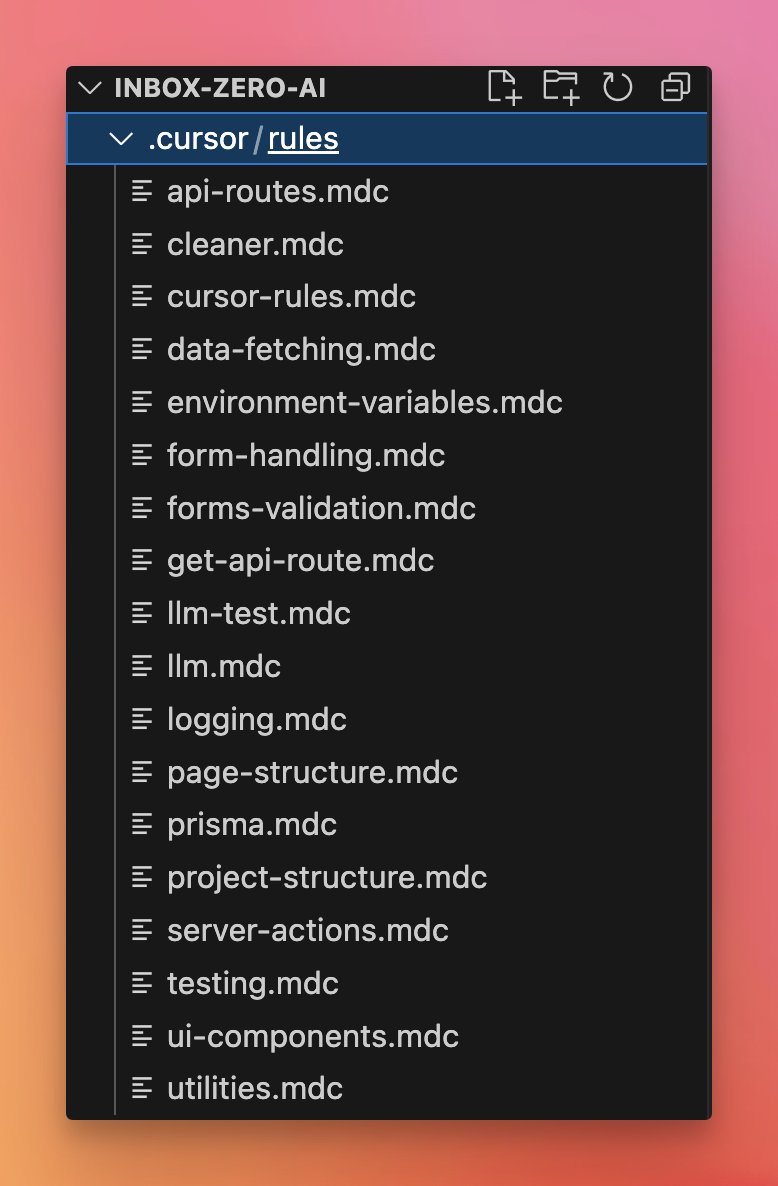
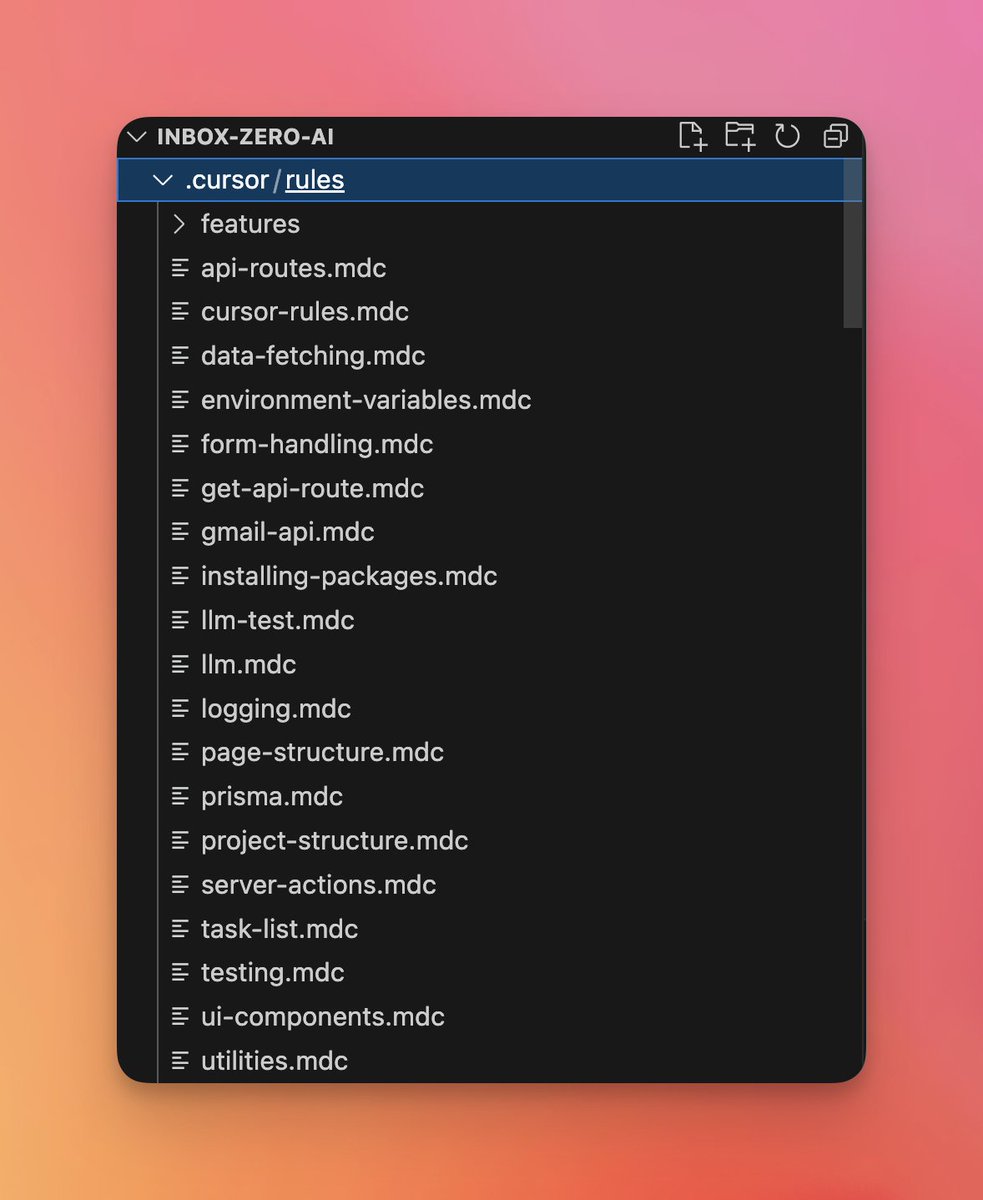
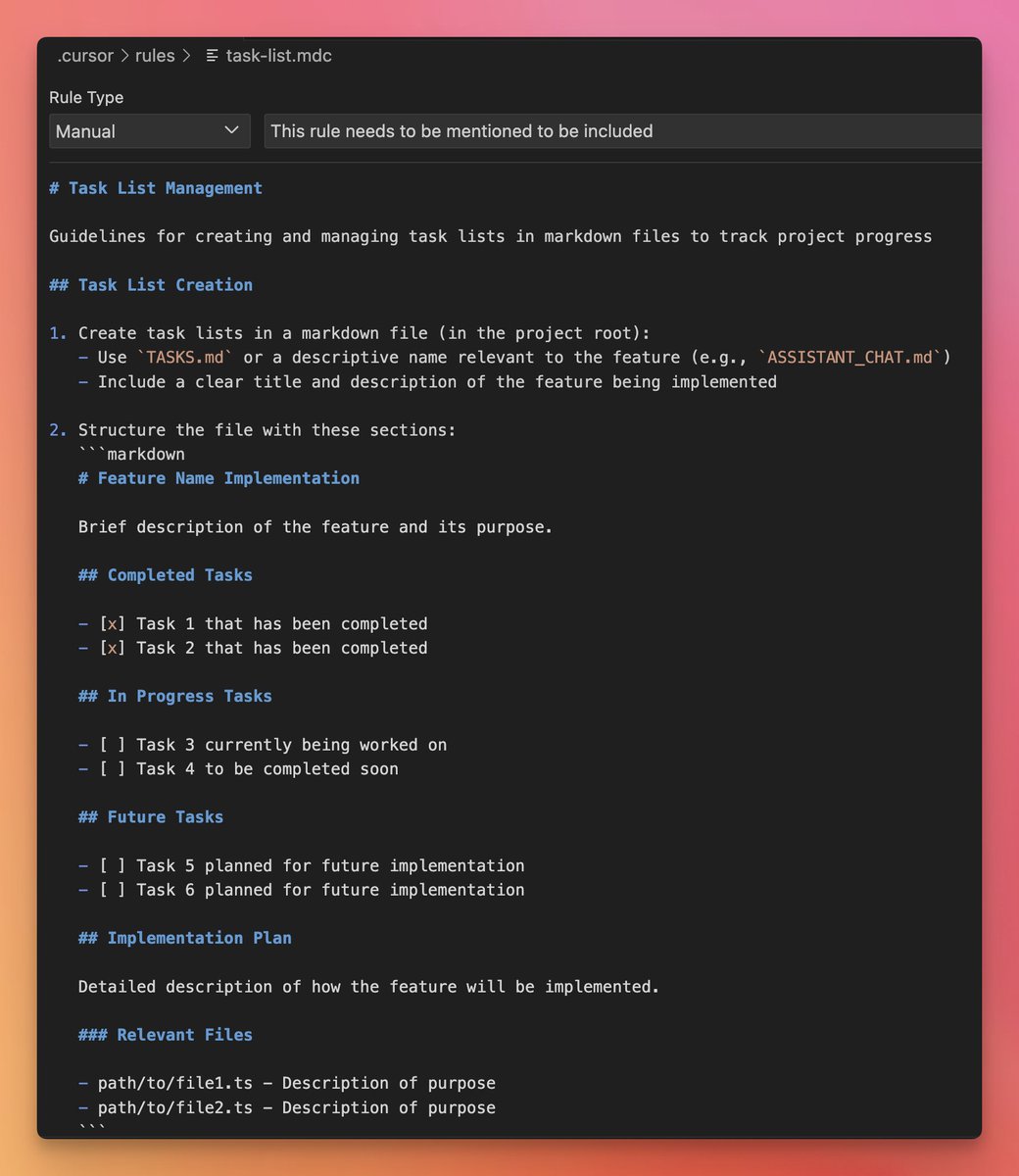
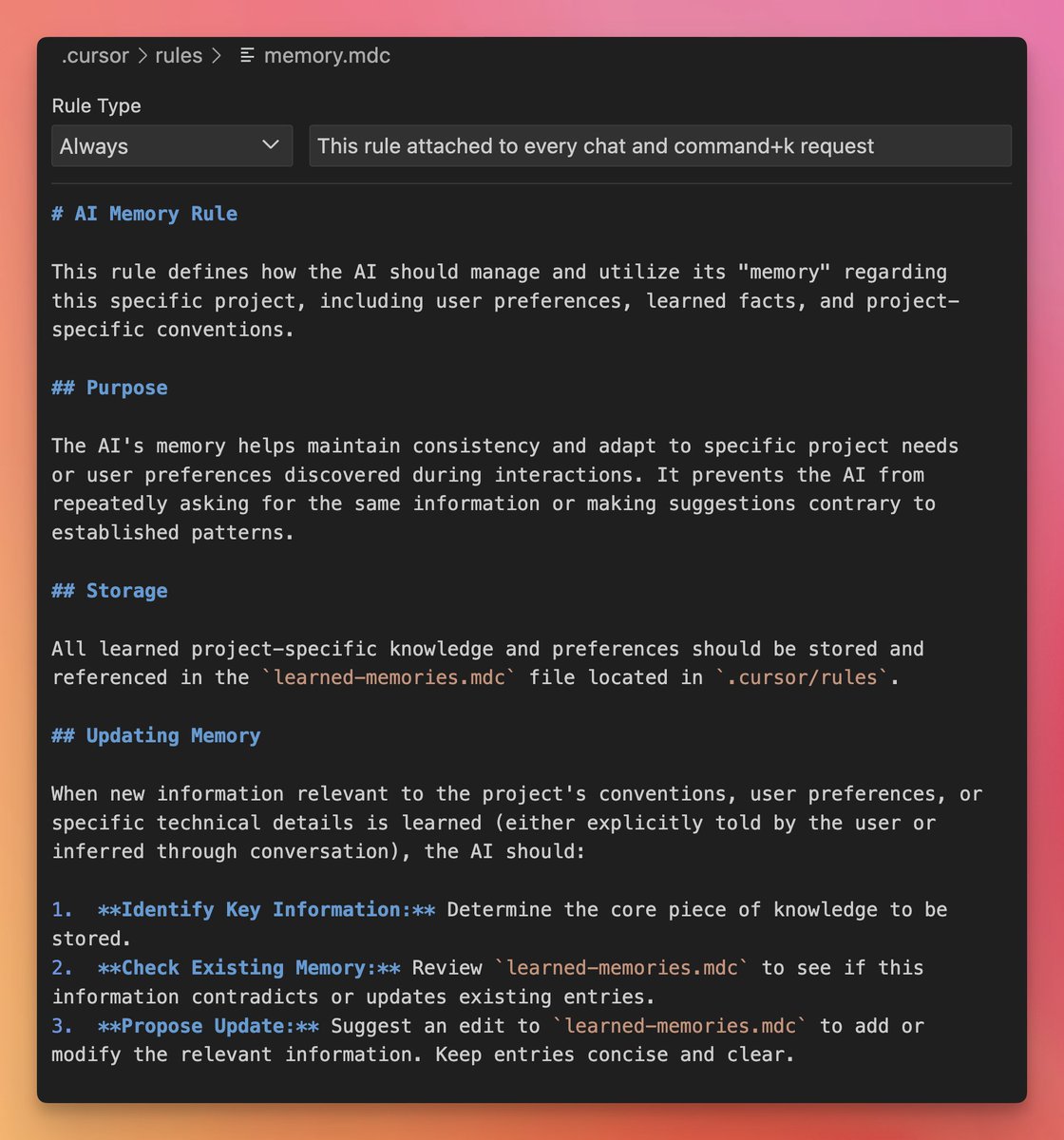
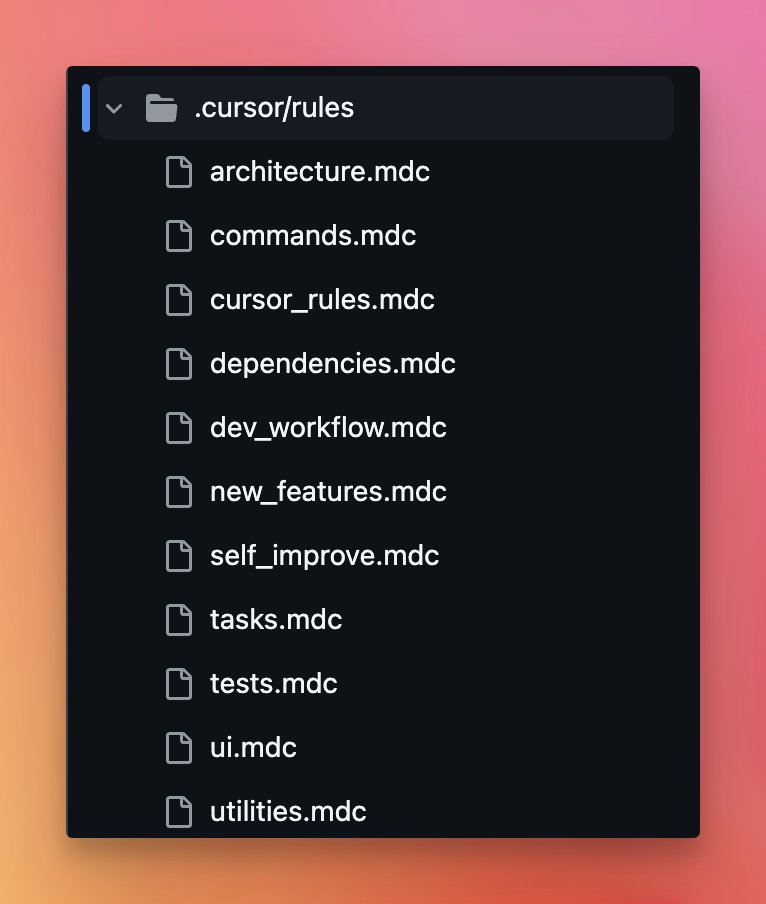
Fun fact: Elie has meticulously open sourced his Cursor .mdc rule files, breaking down complex workflows into manageable chunks that serve as AI-readable 'memory,' effectively turning Cursor into his 'number one employee.'
Top tweets of Elie Steinbock — oss/acc

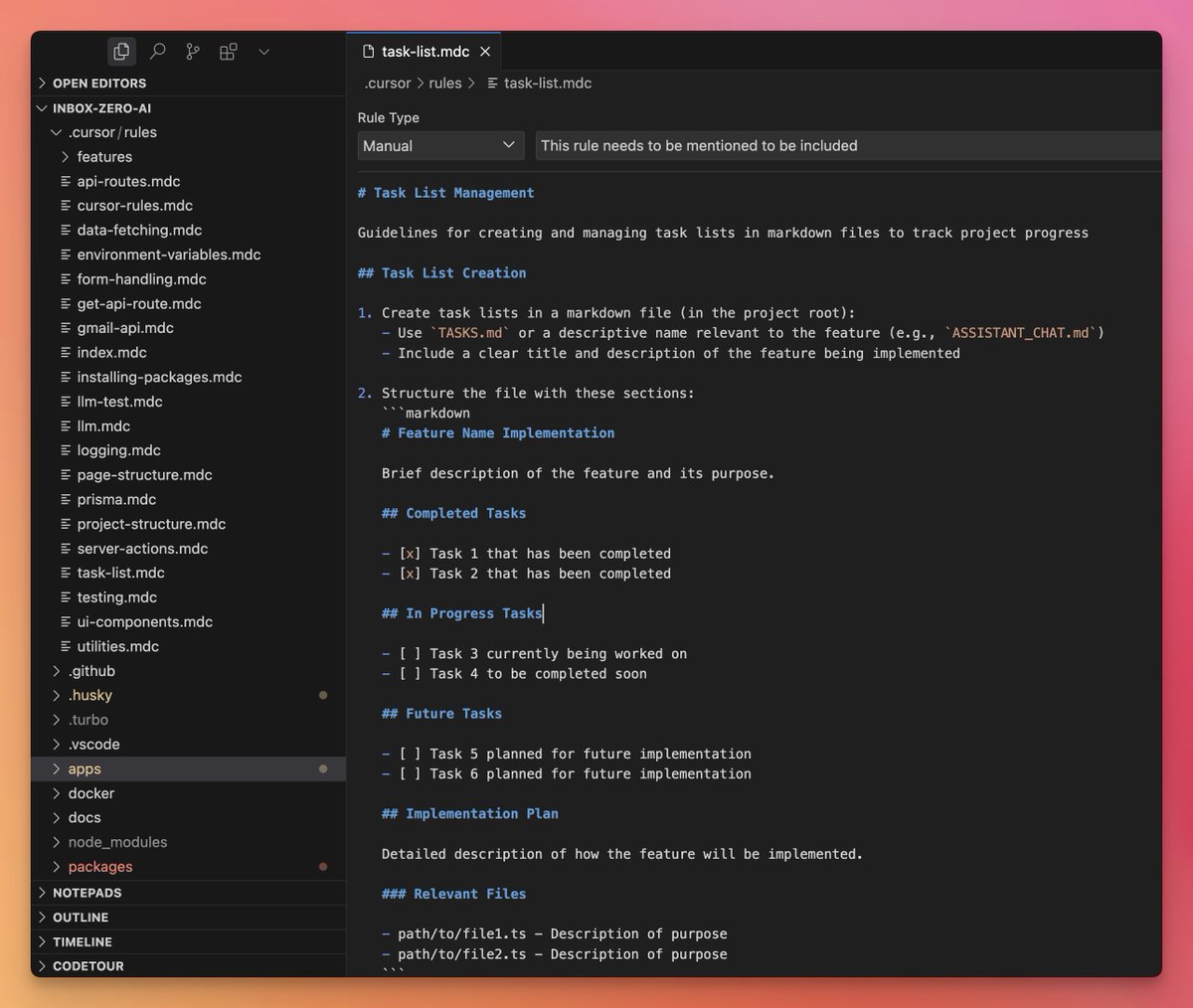
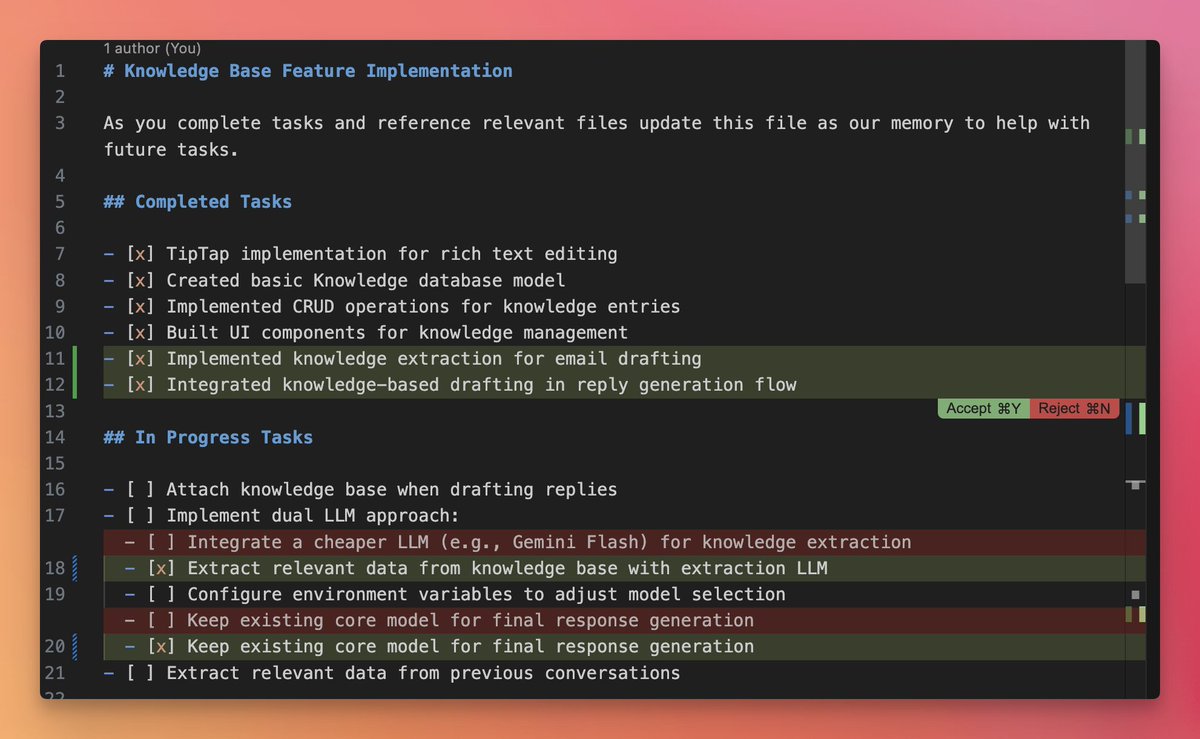
A new 10x flow I'm using with Cursor: 1. Create a .md file 2. Add this line to the top of it: "As you complete tasks and reference relevant files update this file as our memory to help with future tasks." 3. Explain the task to Cursor Agent and have it fill out the core of the file. A transcription app like @WisprFlow or @superwhisperapp is great for this. Takes 2 minutes to describe a full feature and the steps needed. Then let Cursor organise the tasks for you neatly in the .md file based on your voice note. 4. Ask Cursor to implement the first task in the file. 5. Once that's done, the .md will be updated with the latest info, and you can ask it to move on to the next and so on. You could ask Cursor to implement everything in one go, but I prefer to understand what's happening at each stage - correct or approve - and then move on to the next step. What does this give us? Every step the .md file gets "smarter" and has all the latest context. This file is basically our to do list / kanban. It helps prevent the need to explain the same thing over and over. It's our task memory. It breaks down the tasks into manageable chunks. The same way a productive human works. The same way that AIs like Manus work. Have any good tricks you use with @cursor_ai? I'd love to learn.

Open source is eating the world. Here are 13 open source projects I love ❤️: 1. @dubdotco - Dub - short links with superpowers 2. @calcom - Cal - the best calendar scheduler 3. @getpostiz - Postiz - manage every social media account in one place. Buffer alternative 4. @Cap - Cap - Loom alternative. Beautiful, shareable screen recordings 5. @middayai - Midday - all-in-one tool to monitor your business's financial health, time-track projects, and send invoices 6. @novuhq - Novu - notification building blocks for developers 7. @formbricks FormBricks - feedback/survey platform. Qualtrics alternative 8. @polar_sh - Polar - Lemon Squeezy alternative with 20%+ lower fees 9. @papermarkio - Papermark - #1 DocSend alternative 10. @codehagen - Badget - awesome finance tracker 11. @unkeydev - Unkey - API management for developers 12. @documenso - Documenso - incredible document signing app. DocuSign alternative 13. @inboxzero_ai - Inbox Zero - AI personal assistant for email. Spend 50% less time on email 😍 Building something awesome? Reply with your project - I'd love to check it out! 🚀

Task Master CLI will makes Cursor 10x better at building projects. I created a full video demo of how it works. For those that don't want to watch. Here's what happens: 1️⃣ Install @TaskmasterAI CLI 2️⃣ Give it a description of your project. It will generate a PRD 3️⃣ It will then convert the PRD into tasks (10 detailed .txt files and a .json that acts as a local db to task track status) 4️⃣ Ask it to do a task. It will do the task and mark it off as done. Each task can also be broken down into small tasks using "expand" command. Following these steps it will build out an entire project. This is the future of dev and how tools like Manus work. But you can run it locally and follow step by step to make sure you're happy with what's happening. Seems a fitting to be posting about Task Master the day before Passover starts. Good job by @EyalToledano who built this project.


Most engaged tweets of Elie Steinbock — oss/acc
A new app, @getairchat, went live on the App Store today. I don’t say this lightly, but this app could change social media forever. What is it? 🤔 It’s Twitter meets Clubhouse. And no, it’s not Twitter Spaces. It's a timeline of async Twitter Spaces. It’s a Twitter like interface, but every chit (tweet) is a voice note (that's also transcribed). Why’s this interesting? 🧐 It means real, authentic conversations. Text is impersonal. But here you can’t hide behind the veil of your computer. You’re putting the raw, unedited version of yourself out there. Want to talk about 5 tips to improve your health or how to improve your SEO? You can. But now people can respond with real questions and get a real response from you - same way they’d dial in to a radio show, or ask a question in a classroom. The potential here is absolutely massive. If you’d like an invite either DM me or reply to this tweet. I’m not affiliated in any way. Just excited by something I can see being the future of social media - and a step up on everything that exists today.



🚀 Inbox Zero v2 is live on Product Hunt! Self-funded. No YC or VC backing. But it's open source, so expect a YC company to clone it soon. 🤖 The v2 has a powerful AI email assistant that handles your email for you. You manage it with simple Cursor-style rules. And many other tools that will help you clean up your inbox in minutes. 🗑️ If you want to see OSS and self-funded win, give me 5 minutes of your time sharing Inbox Zero today. I will return the favour and more so. Just send me a DM. 🙏 👨💻 The awesome tech stack I use: @tinybirdco @nextjs @vercel @nextauthjs @prisma @neondatabase @loops @resend @AnthropicAI @OpenAI @shadcn @tailwindcss



I’ve been using the early version of @naval's new app @getairchat for a year. Last week it went viral. And with it the haters came out in full force. Here’s why I’m still bullish on Airchat and believe it will change social media forever: 💬 Talk with real people: Twitter is the closest app to Airchat right now. But it’s completely impersonal. I’ve already built stronger connections with people on Airchat than I have from years of using Twitter. 🎤 Transcription is awesome. Voice notes are long. You don’t know if they're relevant. Having a text version of the voice note to scan makes it easier to find relevant content. 🗣️ Transcription supports multiple languages. I can record in Hebrew, and you’ll read it in English. It works great! Try it! 👥 Groups: launched this week. This focuses discussions around specific topics. Can’t wait to see more of this in the weeks ahead. 🏆 Talk to people you couldn't in other settings. Part of this is because it's so early. But you can speak to people like Naval that you wouldn't have been able to speak to otherwise. And a response to the haters: “It’s just Clubhouse” It’s not. Saying it’s Clubhouse is like saying Zoom is Clubhouse. Or a Podcast is Clubhouse. Clubhouse is sync. Airchat is async. Clubhouse is 1:many. Airchat is 1:1. “It’ll die down. Every new social app dies” Maybe. Creating a new social app is hard. It might die. But what’s that matter to you. The relationships you build last whether or not the app becomes a unicorn. “Twitter will just copy it like they copied Clubhouse” They might eventually. But what’s that matter unless you’re an investor in Airchat? I predict apps will copy it. Discord channels will offer this feature, and it will be awesome. Turning text chats into real conversations. WhatsApp is long overdue transcription for voice notes. Ideas from Airchat will get added to many apps. “I can’t use Airchat in places I can’t talk” The intimacy of Airchat is a feature, not a bug. Certain settings are meant for talking, others aren’t. Airchat is about conversations with people. You can’t do Zoom meetings everywhere either. “Twitter conversations are also conversations” Yes, but they’re far less intimate. You’re talking to a wall of text, not a person. You don’t date over text, you date over voice. It’s more intimate. You’re talking to a real person. “The content is boring” It will improve over time. There will be more content. The algorithm will improve to show you the best content. Groups will allow you to find specific content you're interested in. “I prefer Twitter” Good. Use Twitter. I use it too. “The hype will die down” Probably. But what’s that matter to you? You’ll only use apps that have 100m DAU? Successful social apps have early hype that dies down, and then grow steadily after that. 🪭 As you can tell, I’m a fan 🪭 If you’re on the app feel free to say hi. My username is `eliezer`. And feel free to DM if you need an invite.
A new 10x flow I'm using with Cursor: 1. Create a .md file 2. Add this line to the top of it: "As you complete tasks and reference relevant files update this file as our memory to help with future tasks." 3. Explain the task to Cursor Agent and have it fill out the core of the file. A transcription app like @WisprFlow or @superwhisperapp is great for this. Takes 2 minutes to describe a full feature and the steps needed. Then let Cursor organise the tasks for you neatly in the .md file based on your voice note. 4. Ask Cursor to implement the first task in the file. 5. Once that's done, the .md will be updated with the latest info, and you can ask it to move on to the next and so on. You could ask Cursor to implement everything in one go, but I prefer to understand what's happening at each stage - correct or approve - and then move on to the next step. What does this give us? Every step the .md file gets "smarter" and has all the latest context. This file is basically our to do list / kanban. It helps prevent the need to explain the same thing over and over. It's our task memory. It breaks down the tasks into manageable chunks. The same way a productive human works. The same way that AIs like Manus work. Have any good tricks you use with @cursor_ai? I'd love to learn.
People with Innovator archetype

Artist | Founder of consistentcharacter.ai - Bootstrapped

Data & AI Consultant | Building construction SaaS | 400+ analytics platforms, dashboards & automations delivered to SMB'S | Top Rated Fiverr Seller | Backpacker

产品经理。保持黑客的解构精神与画家对美与简单的追求 业余创造 VideoLingo&小舒同学 / Github 混了 16k+ ✨

Plumber for the Internet Pipes. I'm the (co-)designer of Jpegli, Brotli, Butteraugli, JPEG XL, Guetzli, WebP lossless, WOFF2, and Zopfli. Opinions are my own.

Paid Search Expert exploring AI disruptions | Building new ventures in public 🦾 | Ex-LVMH Performance Marketing Lead | Training for Paris Marathon 04.2026 🏃

Building @postsyncer - helping creators automate content and reclaim their time

I built a Cursor-like experience plugin for Neovim: avante.nvim

AI, software and consciousness. Building Voice AI agents for 50k+ SMBs, CS @uwaterloo.

Building AI tools, bullish on the future of privacy-first AI | Currently @writesonic | Ex @unacademy | IIT Varanasi

Informática, IA e innovación. 📬 hola@iaordinaria.com

Building the best supplements app in the world @supplements_ai

Passionate about AI and ChatGPT technology. Always exploring new ways to utilize these tools to improve businesses and daily life.
Explore Related Archetypes
If you enjoy the innovator profiles, you might also like these personality types:
