Get live statistics and analysis of jordan's profile on X / Twitter
Delphi Research
1kfollowing4kfollowers
The Analyst
Jordan is a tokenomics-focused researcher at Delphi Research who turns dense crypto mechanics into thread-sized field guides. Their writing blends data-driven analysis, early-cycle predictions, and practical trading instincts to help builders and investors think clearer about token design. Expect deep dives that reward careful reading and a healthy dose of skepticism toward hype.
Jordan will happily publish a 12-tweet excavation of why your favorite token’s incentives are flawed, then lament that people only replied with memes, proof they read the table of contents but skipped the footnotes. Spreadsheet charisma: 10/10, small-talk charisma: pending.
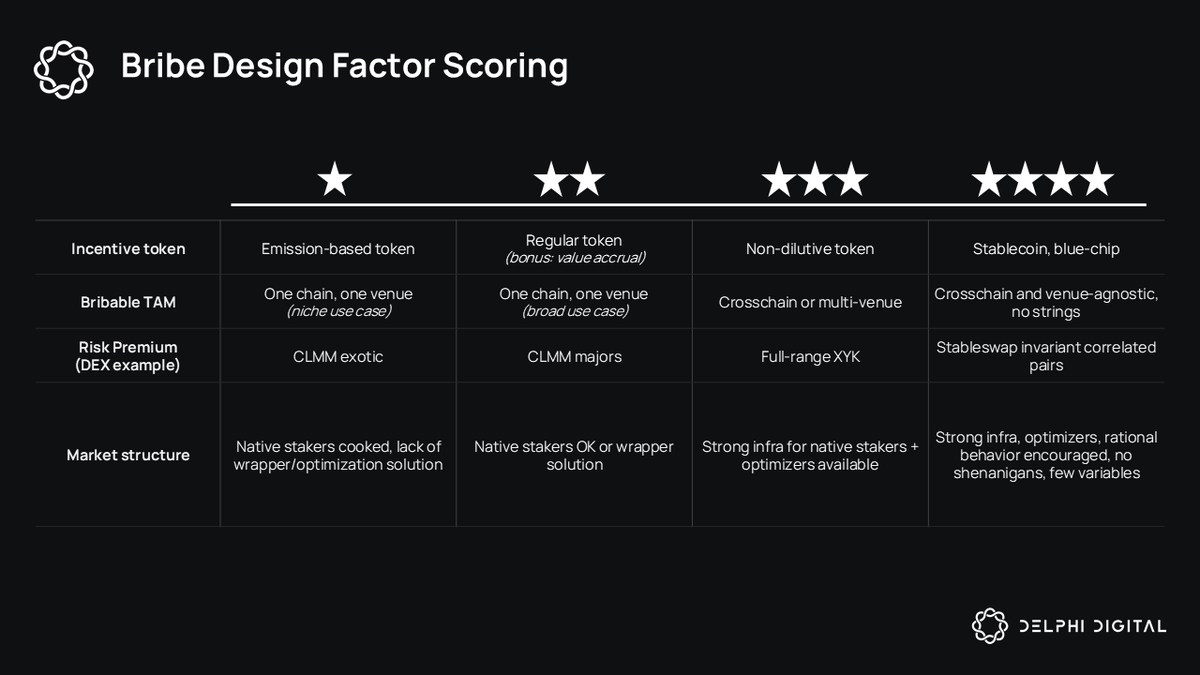
The token-design tier list thread that amassed ~171k views and sparked wide discussion, cementing Jordan's voice on tokenomics and boosting visibility for Delphi Research.
To demystify token design and crypto economic models so builders can ship healthier systems and investors can separate durable value from noise; in short, to make better-informed markets through rigorous analysis and clear explanation.
Values empirical rigor, transparency, and long-term alignment over short-term hype. Believes mechanisms matter more than marketing, that good token design can steer ecosystems toward healthier outcomes, and that skepticism paired with curiosity is the best defense in crypto.
Exceptional at breaking complex tokenomics into readable threads, spotting flywheels and sinks, and backing claims with concrete metrics and precedent. Good at issuing early, defensible predictions and connecting protocol mechanics to market behavior.
Can be overly technical for casual audiences, which limits viral crossover; occasional rhetorical bluntness invites high-reply threads and heated debate. Tendency to keep digging, sometimes at the expense of simpler, broader messaging.
To grow on X: lead with strong hooks (one-line thesis + why it matters), follow each deep thread with a TL;DR and a visual (chart or simple diagram). Pin your top-performing thread and convert it into a short Loom or 60, 90s video summary. Use regular ‘what to watch’ tweets with measurable signals, host a monthly Space or AMA to turn readers into followers, and amplify reach by replying analytically to high-visibility posts and collaborating with complementary accounts (builders, economists, DAOs). Finally, turn evergreen threads into a newsletter issue to capture long-term subscribers and reuse charts as carousels for easy retweets.
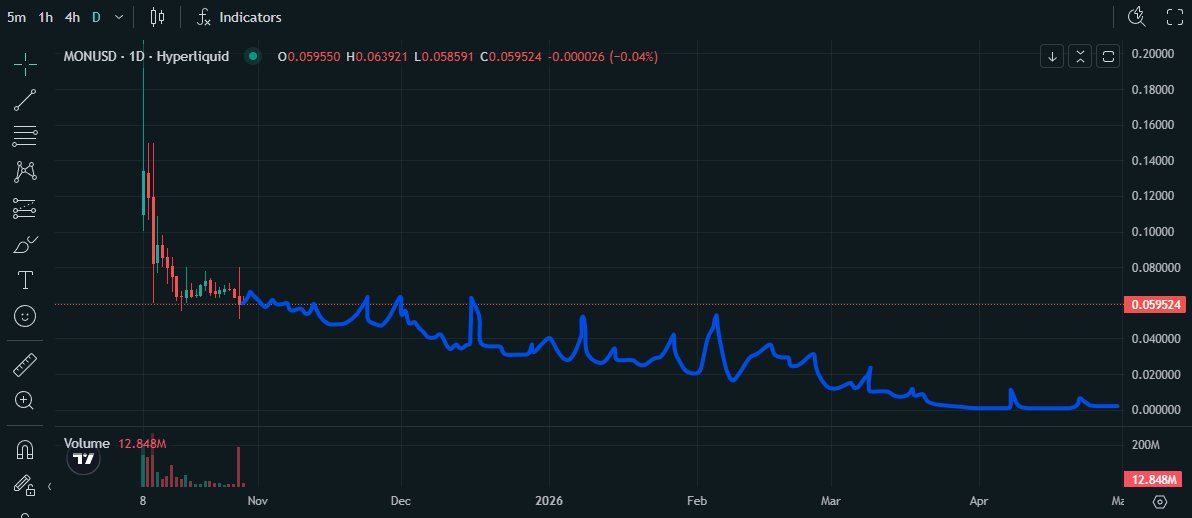
Fun fact: Jordan's token-design tier list thread pulled ~171k views and became a reference point in tokenomics conversations. Also: they qualified for the MON airdrop and have shared firsthand premarket trading notes and mid-curve theses.
Coinbase just acquired Echo for $375M. Coinbase now appears to be leaning heavily into the Internet Capital Markets (ICM) narrative.
Here is a quick post debriefing the move and what it means for Base ecosystem projects such as @noicedotso, an ICM sleeper.
Solana’s ICM pitch centered around bringing competent Web2 builders into onchain consumer apps, rethinking the fundraising and token structure aspects of these projects.
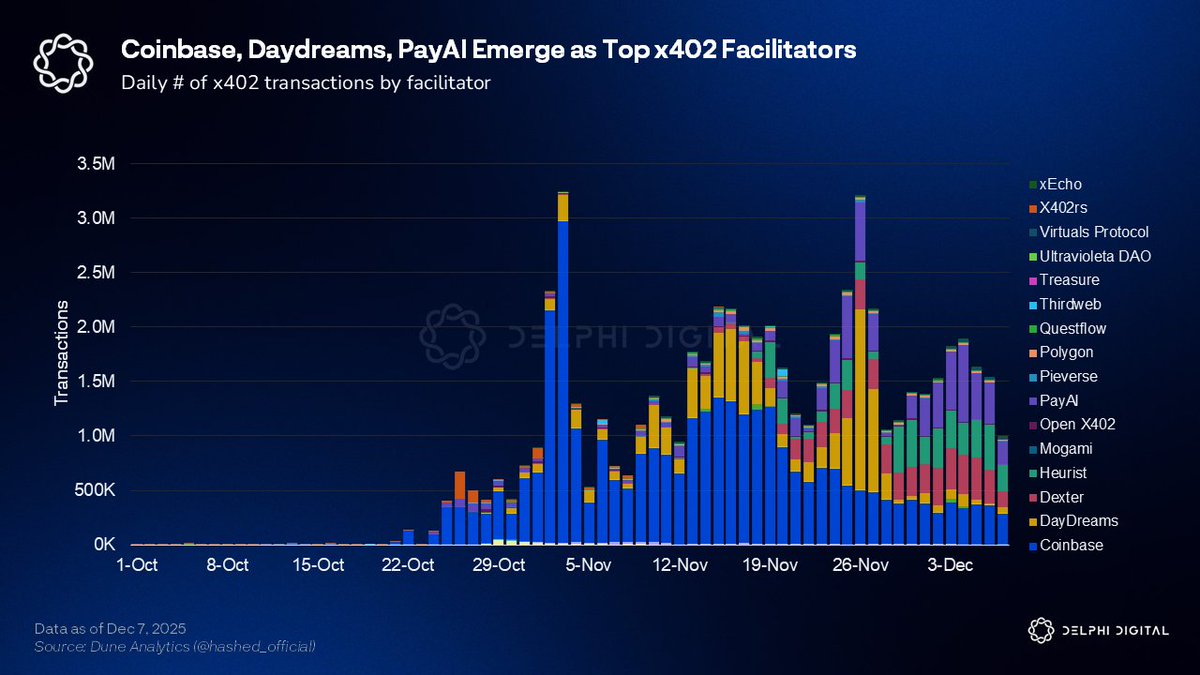
Coinbase is taking a stab at this narrative and seems to be taking its efforts even further. They have gone to great lengths to offer a supportive environment for builders to experiment with crypto. The smart wallet, Base App, x402, and the mini app SDK offer a compelling foundation for the builder ecosystem. Coinbase’s “Base is for Builders” slogan has landed much better than its user-targeted comms.
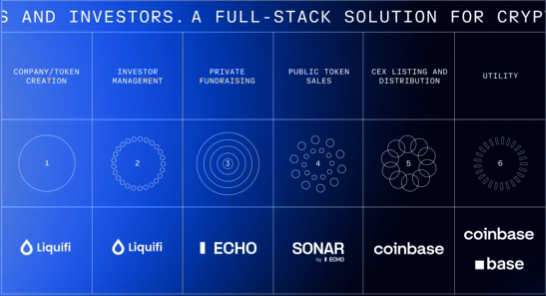
With a healthy foundation in place, Coinbase has now purchased Cobie’s Echo, an early-stage investing platform that scales access to private funding rounds for qualified individuals.
The key takeaway from the acquisition is that Coinbase is building a full-stack capital formation suite for crypto projects and investors. This will cover everything from launch, private rounds, public rounds, listing and secondary market trading.
Aside from being a major bet on the mother of all alt seasons, these moves have major implications on the broader Base ecosystem. The Coinbase DEX integration benefits Aerodrome and Uniswap. Aerodrome has this community launch feature that is gaining attention, and there is a Backroom ICM incubator emerging as well. But a big winner seems to be flying under the radar: Noice.
Upon hearing about Noice’s venture into ICM, I wasn’t overly excited. It still felt (and still feels) a bit corny to me, and the microtransaction angle is what attracted me originally. But now things are starting to fall into place.
Here is everything we know about the Noice v2 umbrella:
Noice v2: general product updates, interoperability between Farcaster & TBA, new feature reverse amps allowing users to pay for engagement. An example of the ‘Ramps’ feature can be found here.
Oracle: @noiceagent talks about Coinbase and Solana ICM projects. Users can automatically buy tokens mentioned through liking and commenting on the post with amounts calibrated in their settings. Essentially an AIXBT that lets people buy through engagement. Oracle is in closed beta at the moment.
Nothing yet revealed about Noice Earn, syndicate, ecosystem fund, or capital alignment.
Oracle should see a full release next week. If the ICM meta truly takes off, there will be numerous projects to keep track of. Dubbed “The front page of internet capital markets,” Oracle removes research overhead, allowing users to view bite-sized decks and ape from within their social feed.
This touches so many narratives: AI agents, ICM, SocialFi, trenches… Oracle should be a fantastic top of funnel bringing mindshare to Noice while its other products swing for the fences.
I am still most excited to see the full feature set of Noice v2, as I view microtransactions embedded within social media to be a truly massive design space ripe for experimentation (potentially with my creator coin).
Noice v1's launch dominated Farcaster for 2 weeks. Farcaster acts as a microcosm for how CT will react when Noice finally arrives. Noice is powerful and it is fun, with new products, features, and audiences being onboarded soon.
Coinbase Ventures and Balaji recently invested in Noice. HeetTike shared the stage at Base “A New Day One” back in July. I’d argue Noice has been knighted as a Base ecosystem blue chip behind closed doors. Even if I’m wrong, the scope of the idea and the positioning within Base’s current priorities offers a compelling opportunity.
Sanctum might be Solana's most overlooked protocol.
They have quietly become Solana's 4th largest DeFi protocol by making every liquid staking token on Solana liquid.
But what’s driving this growth?
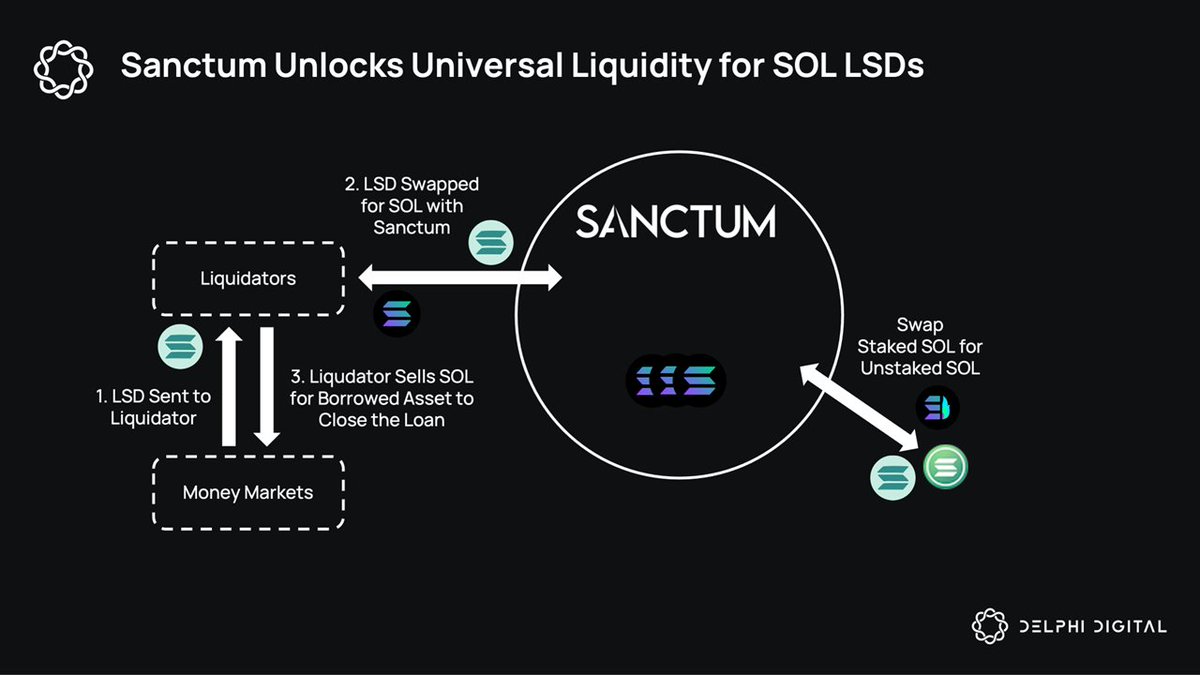
For context, @sanctumso is a liquidity-oriented product suite for Solana LSTs, enabling liquidity for any liquid staking token on Solana.
Sanctum consists of:
• Reserve - 200K+ SOL pool enabling instant unstaking for any LST (no 2-4 day wait)
• Router - Seamless any-to-any LST swapping via stake account transfers
• LSTs - One-click validator tokens (bonkSOL, jupSOL, etc.) with built-in liquidity access
Sanctum LSTs are currently responsible for the bulk of Sanctum’s growth. TVL continues to grow even after a fee switch was activated in March. Solana’s 90% native staked SOL offers plenty of room for further growth.
Sanctum Infinity might be the most exciting product. INF is a multi-asset AMM of whitelisted LSTs. Think of GMX's GLP but for the entire liquid staking universe.
Holders earn staking yields from underlying LSTs along with swap fees. This dual yield model has translated to a 10% annual boost over standard liquid staking solutions.
However, INF’s growth has stagnated despite a concrete advantage over competitors. This could be due to greater perceived risk or fewer integrations with DeFi apps.
With the launch of an INF multiply market in Kamino v2, the most popular LST yield strategy has incorporated the most lucrative LST vehicle. As SOL inflation decreases, INF's surplus APY will become a greater portion of LST total return, further boosting its competitive advantage.
Sanctum’s product suite warrants attention as it’s solving the liquidity fragmentation that held back LST adoption in the first place.
Sanctum might be Solana's most overlooked protocol.
They have quietly become Solana's 4th largest DeFi protocol by making every liquid staking token on Solana liquid.
But what’s driving this growth?
For context, @sanctumso is a liquidity-oriented product suite for Solana LSTs, enabling liquidity for any liquid staking token on Solana.
Sanctum consists of:
• Reserve - 200K+ SOL pool enabling instant unstaking for any LST (no 2-4 day wait)
• Router - Seamless any-to-any LST swapping via stake account transfers
• LSTs - One-click validator tokens (bonkSOL, jupSOL, etc.) with built-in liquidity access
Sanctum LSTs are currently responsible for the bulk of Sanctum’s growth. TVL continues to grow even after a fee switch was activated in March. Solana’s 90% native staked SOL offers plenty of room for further growth.
Sanctum Infinity might be the most exciting product. INF is a multi-asset AMM of whitelisted LSTs. Think of GMX's GLP but for the entire liquid staking universe.
Holders earn staking yields from underlying LSTs along with swap fees. This dual yield model has translated to a 10% annual boost over standard liquid staking solutions.
However, INF’s growth has stagnated despite a concrete advantage over competitors. This could be due to greater perceived risk or fewer integrations with DeFi apps.
With the launch of an INF multiply market in Kamino v2, the most popular LST yield strategy has incorporated the most lucrative LST vehicle. As SOL inflation decreases, INF's surplus APY will become a greater portion of LST total return, further boosting its competitive advantage.
Sanctum’s product suite warrants attention as it’s solving the liquidity fragmentation that held back LST adoption in the first place.
Coinbase just acquired Echo for $375M. Coinbase now appears to be leaning heavily into the Internet Capital Markets (ICM) narrative.
Here is a quick post debriefing the move and what it means for Base ecosystem projects such as @noicedotso, an ICM sleeper.
Solana’s ICM pitch centered around bringing competent Web2 builders into onchain consumer apps, rethinking the fundraising and token structure aspects of these projects.
Coinbase is taking a stab at this narrative and seems to be taking its efforts even further. They have gone to great lengths to offer a supportive environment for builders to experiment with crypto. The smart wallet, Base App, x402, and the mini app SDK offer a compelling foundation for the builder ecosystem. Coinbase’s “Base is for Builders” slogan has landed much better than its user-targeted comms.
With a healthy foundation in place, Coinbase has now purchased Cobie’s Echo, an early-stage investing platform that scales access to private funding rounds for qualified individuals.
The key takeaway from the acquisition is that Coinbase is building a full-stack capital formation suite for crypto projects and investors. This will cover everything from launch, private rounds, public rounds, listing and secondary market trading.
Aside from being a major bet on the mother of all alt seasons, these moves have major implications on the broader Base ecosystem. The Coinbase DEX integration benefits Aerodrome and Uniswap. Aerodrome has this community launch feature that is gaining attention, and there is a Backroom ICM incubator emerging as well. But a big winner seems to be flying under the radar: Noice.
Upon hearing about Noice’s venture into ICM, I wasn’t overly excited. It still felt (and still feels) a bit corny to me, and the microtransaction angle is what attracted me originally. But now things are starting to fall into place.
Here is everything we know about the Noice v2 umbrella:
Noice v2: general product updates, interoperability between Farcaster & TBA, new feature reverse amps allowing users to pay for engagement. An example of the ‘Ramps’ feature can be found here.
Oracle: @noiceagent talks about Coinbase and Solana ICM projects. Users can automatically buy tokens mentioned through liking and commenting on the post with amounts calibrated in their settings. Essentially an AIXBT that lets people buy through engagement. Oracle is in closed beta at the moment.
Nothing yet revealed about Noice Earn, syndicate, ecosystem fund, or capital alignment.
Oracle should see a full release next week. If the ICM meta truly takes off, there will be numerous projects to keep track of. Dubbed “The front page of internet capital markets,” Oracle removes research overhead, allowing users to view bite-sized decks and ape from within their social feed.
This touches so many narratives: AI agents, ICM, SocialFi, trenches… Oracle should be a fantastic top of funnel bringing mindshare to Noice while its other products swing for the fences.
I am still most excited to see the full feature set of Noice v2, as I view microtransactions embedded within social media to be a truly massive design space ripe for experimentation (potentially with my creator coin).
Noice v1's launch dominated Farcaster for 2 weeks. Farcaster acts as a microcosm for how CT will react when Noice finally arrives. Noice is powerful and it is fun, with new products, features, and audiences being onboarded soon.
Coinbase Ventures and Balaji recently invested in Noice. HeetTike shared the stage at Base “A New Day One” back in July. I’d argue Noice has been knighted as a Base ecosystem blue chip behind closed doors. Even if I’m wrong, the scope of the idea and the positioning within Base’s current priorities offers a compelling opportunity.
Senior ETF Analyst for @Bloomberg. Dad. Rutgers grad. Gen X-er. Author of "The Institutional ETF Toolbox" & "The Bogle Effect.” Co-host of Trillions & ETF IQ.
{"data":{"__meta":{"device":false,"path":"/creators/yeak__"},"/creators/yeak__":{"data":{"user":{"id":"1004393364987531264","name":"jordan","description":"Delphi Research","followers_count":4672,"friends_count":1229,"statuses_count":3105,"profile_image_url_https":"https://pbs.twimg.com/profile_images/2090215505063780352/OYWFCR9M_normal.jpg","screen_name":"yeak__","location":"","entities":{"description":{}}},"details":{"type":"The Analyst","description":"Jordan is a tokenomics-focused researcher at Delphi Research who turns dense crypto mechanics into thread-sized field guides. Their writing blends data-driven analysis, early-cycle predictions, and practical trading instincts to help builders and investors think clearer about token design. Expect deep dives that reward careful reading and a healthy dose of skepticism toward hype.","purpose":"To demystify token design and crypto economic models so builders can ship healthier systems and investors can separate durable value from noise; in short, to make better-informed markets through rigorous analysis and clear explanation.","beliefs":"Values empirical rigor, transparency, and long-term alignment over short-term hype. Believes mechanisms matter more than marketing, that good token design can steer ecosystems toward healthier outcomes, and that skepticism paired with curiosity is the best defense in crypto.","facts":"Fun fact: Jordan's token-design tier list thread pulled ~171k views and became a reference point in tokenomics conversations. Also: they qualified for the MON airdrop and have shared firsthand premarket trading notes and mid-curve theses.","strength":"Exceptional at breaking complex tokenomics into readable threads, spotting flywheels and sinks, and backing claims with concrete metrics and precedent. Good at issuing early, defensible predictions and connecting protocol mechanics to market behavior.","weakness":"Can be overly technical for casual audiences, which limits viral crossover; occasional rhetorical bluntness invites high-reply threads and heated debate. Tendency to keep digging—sometimes at the expense of simpler, broader messaging.","roast":"Jordan will happily publish a 12-tweet excavation of why your favorite token’s incentives are flawed, then lament that people only replied with memes—proof they read the table of contents but skipped the footnotes. Spreadsheet charisma: 10/10, small-talk charisma: pending.","win":"The token-design tier list thread that amassed ~171k views and sparked wide discussion—cementing Jordan's voice on tokenomics and boosting visibility for Delphi Research.","recommendation":"To grow on X: lead with strong hooks (one-line thesis + why it matters), follow each deep thread with a TL;DR and a visual (chart or simple diagram). Pin your top-performing thread and convert it into a short Loom or 60–90s video summary. Use regular ‘what to watch’ tweets with measurable signals, host a monthly Space or AMA to turn readers into followers, and amplify reach by replying analytically to high-visibility posts and collaborating with complementary accounts (builders, economists, DAOs). Finally, turn evergreen threads into a newsletter issue to capture long-term subscribers and reuse charts as carousels for easy retweets."},"tweets":[{"bookmarked":false,"display_text_range":[0,215],"entities":{"hashtags":[],"media":[{"display_url":"pic.x.com/ChgdpWD7GP","expanded_url":"https://x.com/yeak__/status/1702739384682827893/photo/1","id_str":"1702727617646858240","indices":[216,239],"media_key":"3_1702727617646858240","media_url_https":"https://pbs.twimg.com/media/F6FNvy8WkAAZyep.jpg","type":"photo","url":"https://t.co/ChgdpWD7GP","ext_media_availability":{"status":"Available"},"features":{"large":{"faces":[{"x":379,"y":58,"h":53,"w":53}]},"medium":{"faces":[{"x":379,"y":58,"h":53,"w":53}]},"small":{"faces":[{"x":245,"y":37,"h":34,"w":34}]},"orig":{"faces":[{"x":379,"y":58,"h":53,"w":53}]}},"sizes":{"large":{"h":960,"w":1048,"resize":"fit"},"medium":{"h":960,"w":1048,"resize":"fit"},"small":{"h":623,"w":680,"resize":"fit"},"thumb":{"h":150,"w":150,"resize":"crop"}},"original_info":{"height":960,"width":1048,"focus_rects":[{"x":0,"y":0,"w":1048,"h":587},{"x":0,"y":0,"w":960,"h":960},{"x":24,"y":0,"w":842,"h":960},{"x":205,"y":0,"w":480,"h":960},{"x":0,"y":0,"w":1048,"h":960}]},"media_results":{"result":{"media_key":"3_1702727617646858240"}}}],"symbols":[],"timestamps":[],"urls":[],"user_mentions":[]},"extended_entities":{"media":[{"display_url":"pic.x.com/ChgdpWD7GP","expanded_url":"https://x.com/yeak__/status/1702739384682827893/photo/1","id_str":"1702727617646858240","indices":[216,239],"media_key":"3_1702727617646858240","media_url_https":"https://pbs.twimg.com/media/F6FNvy8WkAAZyep.jpg","type":"photo","url":"https://t.co/ChgdpWD7GP","ext_media_availability":{"status":"Available"},"features":{"large":{"faces":[{"x":379,"y":58,"h":53,"w":53}]},"medium":{"faces":[{"x":379,"y":58,"h":53,"w":53}]},"small":{"faces":[{"x":245,"y":37,"h":34,"w":34}]},"orig":{"faces":[{"x":379,"y":58,"h":53,"w":53}]}},"sizes":{"large":{"h":960,"w":1048,"resize":"fit"},"medium":{"h":960,"w":1048,"resize":"fit"},"small":{"h":623,"w":680,"resize":"fit"},"thumb":{"h":150,"w":150,"resize":"crop"}},"original_info":{"height":960,"width":1048,"focus_rects":[{"x":0,"y":0,"w":1048,"h":587},{"x":0,"y":0,"w":960,"h":960},{"x":24,"y":0,"w":842,"h":960},{"x":205,"y":0,"w":480,"h":960},{"x":0,"y":0,"w":1048,"h":960}]},"media_results":{"result":{"media_key":"3_1702727617646858240"}}}]},"favorited":false,"lang":"en","possibly_sensitive":false,"possibly_sensitive_editable":true,"retweeted":false,"fact_check":null,"id":"1702739384682827893","view_count":171405,"bookmark_count":527,"created_at":1694799679000,"favorite_count":466,"quote_count":23,"reply_count":38,"retweet_count":81,"user_id_str":"1004393364987531264","conversation_id_str":"1702739384682827893","full_text":"1/ Been thinking a lot about token design lately. Made a tier list of token designs and organized some thoughts on tokens that stick out to me.\nAlso have some way-to-early predictions for next cycle’s blow off top 🧵 https://t.co/ChgdpWD7GP","in_reply_to_user_id_str":null,"in_reply_to_status_id_str":null,"is_quote_status":0,"is_ai":null,"ai_score":null,"source":"scraping","fetched_at":null,"edit_history_tweet_ids":null,"poll_10min_at":null,"poll_3day_at":null,"poll_count":0,"poll_complete":0},{"entities":{},"display_text_range":[0,274],"lang":"en","fact_check":null,"id":"2104614255152742875","view_count":37230,"bookmark_count":10,"created_at":1790614114000,"favorite_count":326,"quote_count":4,"reply_count":20,"retweet_count":21,"user_id_str":"1004393364987531264","conversation_id_str":"2104614255152742875","full_text":"Robinhood Summit is pivotal for RH chain. Vlad & co have hit all the right notes in areas Coinbase left people frustrated. \n\nCoinbase's habit of moving slowly and doing hollow announcement events leaves a big opportunity for RH to deliver something big and reinforce the built-different vibe that has worked well so far","in_reply_to_user_id_str":null,"in_reply_to_status_id_str":null,"is_quote_status":0,"is_ai":null,"ai_score":null,"source":"rapidapi","fetched_at":1792283529218,"edit_history_tweet_ids":null,"poll_10min_at":null,"poll_3day_at":1790874049969,"poll_count":1,"poll_complete":1},{"bookmarked":false,"display_text_range":[0,23],"entities":{"media":[{"sizes":{"large":{"w":2600,"h":1040}},"media_url_https":"https://pbs.twimg.com/media/GWE_t94XMAAbatB.jpg"}]},"favorited":false,"lang":"zxx","possibly_sensitive":false,"possibly_sensitive_editable":true,"retweeted":false,"fact_check":null,"id":"1828904368755880227","view_count":81191,"bookmark_count":152,"created_at":1724879755000,"favorite_count":286,"quote_count":32,"reply_count":37,"retweet_count":63,"user_id_str":"1004393364987531264","conversation_id_str":"1828904368755880227","full_text":"Ekubo: Starknet’s Golden Child\nDAOs are dead, AMMs are dead, fair launches are dead. Ballooned valuations, bloated foundations, and deceptive points programs are the new meta. Consequently, fundamentals have been overshadowed by","in_reply_to_user_id_str":null,"in_reply_to_status_id_str":null,"is_quote_status":0,"is_ai":null,"ai_score":null,"source":"scraping","fetched_at":null,"edit_history_tweet_ids":null,"poll_10min_at":null,"poll_3day_at":null,"poll_count":0,"poll_complete":0},{"entities":{"hashtags":[],"symbols":[],"timestamps":[],"urls":[{"display_url":"x.com/i/article/1958…","expanded_url":"http://x.com/i/article/1958172002922995713","url":"https://t.co/0z65CnlU7H","indices":[0,23]}],"user_mentions":[]},"display_text_range":[0,23],"lang":"zxx","possibly_sensitive":false,"fact_check":null,"id":"1958199252338741448","view_count":52550,"bookmark_count":121,"created_at":1755706057000,"favorite_count":269,"quote_count":23,"reply_count":26,"retweet_count":37,"user_id_str":"1004393364987531264","conversation_id_str":"1958199252338741448","full_text":"https://t.co/0z65CnlU7H","in_reply_to_user_id_str":null,"in_reply_to_status_id_str":null,"is_quote_status":0,"is_ai":null,"ai_score":null,"source":"scraping","fetched_at":1770244418697,"edit_history_tweet_ids":null,"poll_10min_at":null,"poll_3day_at":null,"poll_count":0,"poll_complete":0},{"bookmarked":false,"display_text_range":[0,277],"entities":{"hashtags":[],"media":[{"display_url":"pic.x.com/5KG2zP3o6z","expanded_url":"https://x.com/yeak__/status/1956371617061191696/photo/1","id_str":"1956367099510546432","indices":[278,301],"media_key":"3_1956367099510546432","media_url_https":"https://pbs.twimg.com/media/GyZpgwCWYAA3GUZ.jpg","type":"photo","url":"https://t.co/5KG2zP3o6z","ext_media_availability":{"status":"Available"},"features":{"large":{"faces":[]},"medium":{"faces":[]},"small":{"faces":[]},"orig":{"faces":[]}},"sizes":{"large":{"h":720,"w":1280,"resize":"fit"},"medium":{"h":675,"w":1200,"resize":"fit"},"small":{"h":383,"w":680,"resize":"fit"},"thumb":{"h":150,"w":150,"resize":"crop"}},"original_info":{"height":720,"width":1280,"focus_rects":[{"x":0,"y":0,"w":1280,"h":717},{"x":248,"y":0,"w":720,"h":720},{"x":292,"y":0,"w":632,"h":720},{"x":428,"y":0,"w":360,"h":720},{"x":0,"y":0,"w":1280,"h":720}]},"media_results":{"result":{"media_key":"3_1956367099510546432"}}},{"display_url":"pic.x.com/5KG2zP3o6z","expanded_url":"https://x.com/yeak__/status/1956371617061191696/photo/1","id_str":"1956367099506417669","indices":[278,301],"media_key":"3_1956367099506417669","media_url_https":"https://pbs.twimg.com/media/GyZpgwBXYAUmO2v.jpg","type":"photo","url":"https://t.co/5KG2zP3o6z","ext_media_availability":{"status":"Available"},"features":{"large":{"faces":[]},"medium":{"faces":[]},"small":{"faces":[]},"orig":{"faces":[]}},"sizes":{"large":{"h":720,"w":1280,"resize":"fit"},"medium":{"h":675,"w":1200,"resize":"fit"},"small":{"h":383,"w":680,"resize":"fit"},"thumb":{"h":150,"w":150,"resize":"crop"}},"original_info":{"height":720,"width":1280,"focus_rects":[{"x":0,"y":0,"w":1280,"h":717},{"x":0,"y":0,"w":720,"h":720},{"x":0,"y":0,"w":632,"h":720},{"x":0,"y":0,"w":360,"h":720},{"x":0,"y":0,"w":1280,"h":720}]},"media_results":{"result":{"media_key":"3_1956367099506417669"}}},{"display_url":"pic.x.com/5KG2zP3o6z","expanded_url":"https://x.com/yeak__/status/1956371617061191696/photo/1","id_str":"1956367099493810182","indices":[278,301],"media_key":"3_1956367099493810182","media_url_https":"https://pbs.twimg.com/media/GyZpgv-XAAYTXFj.jpg","type":"photo","url":"https://t.co/5KG2zP3o6z","ext_media_availability":{"status":"Available"},"features":{"large":{"faces":[]},"medium":{"faces":[]},"small":{"faces":[]},"orig":{"faces":[]}},"sizes":{"large":{"h":720,"w":1280,"resize":"fit"},"medium":{"h":675,"w":1200,"resize":"fit"},"small":{"h":383,"w":680,"resize":"fit"},"thumb":{"h":150,"w":150,"resize":"crop"}},"original_info":{"height":720,"width":1280,"focus_rects":[{"x":0,"y":3,"w":1280,"h":717},{"x":560,"y":0,"w":720,"h":720},{"x":648,"y":0,"w":632,"h":720},{"x":812,"y":0,"w":360,"h":720},{"x":0,"y":0,"w":1280,"h":720}]},"media_results":{"result":{"media_key":"3_1956367099493810182"}}}],"symbols":[{"indices":[329,334],"text":"ZORA"},{"indices":[421,426],"text":"ZORA"},{"indices":[596,601],"text":"ZORA"},{"indices":[1446,1451],"text":"ZORA"}],"timestamps":[],"urls":[],"user_mentions":[]},"extended_entities":{"media":[{"display_url":"pic.x.com/5KG2zP3o6z","expanded_url":"https://x.com/yeak__/status/1956371617061191696/photo/1","id_str":"1956367099510546432","indices":[278,301],"media_key":"3_1956367099510546432","media_url_https":"https://pbs.twimg.com/media/GyZpgwCWYAA3GUZ.jpg","type":"photo","url":"https://t.co/5KG2zP3o6z","ext_media_availability":{"status":"Available"},"features":{"large":{"faces":[]},"medium":{"faces":[]},"small":{"faces":[]},"orig":{"faces":[]}},"sizes":{"large":{"h":720,"w":1280,"resize":"fit"},"medium":{"h":675,"w":1200,"resize":"fit"},"small":{"h":383,"w":680,"resize":"fit"},"thumb":{"h":150,"w":150,"resize":"crop"}},"original_info":{"height":720,"width":1280,"focus_rects":[{"x":0,"y":0,"w":1280,"h":717},{"x":248,"y":0,"w":720,"h":720},{"x":292,"y":0,"w":632,"h":720},{"x":428,"y":0,"w":360,"h":720},{"x":0,"y":0,"w":1280,"h":720}]},"media_results":{"result":{"media_key":"3_1956367099510546432"}}},{"display_url":"pic.x.com/5KG2zP3o6z","expanded_url":"https://x.com/yeak__/status/1956371617061191696/photo/1","id_str":"1956367099506417669","indices":[278,301],"media_key":"3_1956367099506417669","media_url_https":"https://pbs.twimg.com/media/GyZpgwBXYAUmO2v.jpg","type":"photo","url":"https://t.co/5KG2zP3o6z","ext_media_availability":{"status":"Available"},"features":{"large":{"faces":[]},"medium":{"faces":[]},"small":{"faces":[]},"orig":{"faces":[]}},"sizes":{"large":{"h":720,"w":1280,"resize":"fit"},"medium":{"h":675,"w":1200,"resize":"fit"},"small":{"h":383,"w":680,"resize":"fit"},"thumb":{"h":150,"w":150,"resize":"crop"}},"original_info":{"height":720,"width":1280,"focus_rects":[{"x":0,"y":0,"w":1280,"h":717},{"x":0,"y":0,"w":720,"h":720},{"x":0,"y":0,"w":632,"h":720},{"x":0,"y":0,"w":360,"h":720},{"x":0,"y":0,"w":1280,"h":720}]},"media_results":{"result":{"media_key":"3_1956367099506417669"}}},{"display_url":"pic.x.com/5KG2zP3o6z","expanded_url":"https://x.com/yeak__/status/1956371617061191696/photo/1","id_str":"1956367099493810182","indices":[278,301],"media_key":"3_1956367099493810182","media_url_https":"https://pbs.twimg.com/media/GyZpgv-XAAYTXFj.jpg","type":"photo","url":"https://t.co/5KG2zP3o6z","ext_media_availability":{"status":"Available"},"features":{"large":{"faces":[]},"medium":{"faces":[]},"small":{"faces":[]},"orig":{"faces":[]}},"sizes":{"large":{"h":720,"w":1280,"resize":"fit"},"medium":{"h":675,"w":1200,"resize":"fit"},"small":{"h":383,"w":680,"resize":"fit"},"thumb":{"h":150,"w":150,"resize":"crop"}},"original_info":{"height":720,"width":1280,"focus_rects":[{"x":0,"y":3,"w":1280,"h":717},{"x":560,"y":0,"w":720,"h":720},{"x":648,"y":0,"w":632,"h":720},{"x":812,"y":0,"w":360,"h":720},{"x":0,"y":0,"w":1280,"h":720}]},"media_results":{"result":{"media_key":"3_1956367099493810182"}}}]},"favorited":false,"lang":"en","possibly_sensitive":false,"possibly_sensitive_editable":true,"retweeted":false,"fact_check":null,"id":"1956371617061191696","view_count":56955,"bookmark_count":129,"created_at":1755270315000,"favorite_count":232,"quote_count":6,"reply_count":44,"retweet_count":37,"user_id_str":"1004393364987531264","conversation_id_str":"1956371617061191696","full_text":"How does the Zora flywheel work?\n\nThe term \"flywheel\" is overused in crypto, but Zora's tokenomics model is worth a closer look.\n\nZora is engineered around a simple 3% fee on every trade: 1% to the creator, 1% to Zora, and 1% to the Liquidity Positions (LP).\nEvery asset on the platform is directly or indirectly paired with the $ZORA token. Content coins are paired with creator coins, and creator coins are paired with $ZORA.\n\nThis gives ZORA two distinct value accrual forces: fees and sinks.\n\nAs the ultimate base pair, half of the fee to LP (0.5% of every trade) is effectively a buyback of $ZORA to be added to the liquidity pool. Since Zora and creator rewards are distributed in ZORA, all fees flow through and impact ZORA in one way or another. 2.5% of each trade results in immediate ZORA buy pressure.\nTo understand why this design is so robust, we can look at Virtuals which inspired this model. Virtuals also had a powerful flywheel, but it was dependent on the initial launch and \"graduation\" of new agents from its bonding curve.\nOnce major agent tokens matured, liquidity became fragmented and moved to more capital-efficient pools on Uniswap v3 or against other assets like USDC. This weakened the token sink aspect of the flywheel.\n\nZora learns from this by routing trading volume through its official, canonical pools, preventing the liquidity fragmentation that Virtuals experienced. The result is a persistent token sink for $ZORA over the entire lifecycle of a creator's coin, ensuring that ongoing volume fuels the flywheel.\n\nSome may argue that a 3% swap fee is too high to sustain volume. However, there is precedent for this. During its peak, the NFT market thrived with $5B monthly volume despite ~10% fees. \n\nThe Solana trenches all-in fees approach 3%:\n- Tokens graduate into 1% fee pools\n- The refined consumer-app interfaces (Phantom/Photon/Axiom) charge a 1% fee\n- Poor liquidity conditions, MEV, and socialized losses from snipers likely amount to 1%+\n\nAt its bear case, Zora is just a repackaging of the trenches with better tokenomics, distribution and branding. Zora brings hidden costs to the forefront and retains the value within the ecosystem. \n\nTrading volume of Zora coins will be the key metric to watch as the flywheel gets going.","in_reply_to_user_id_str":null,"in_reply_to_status_id_str":null,"is_quote_status":0,"is_ai":null,"ai_score":null,"source":"scraping","fetched_at":null,"edit_history_tweet_ids":null,"poll_10min_at":null,"poll_3day_at":null,"poll_count":0,"poll_complete":0},{"bookmarked":false,"display_text_range":[0,279],"entities":{"hashtags":[],"media":[{"display_url":"pic.x.com/ZxAvEiMlE0","expanded_url":"https://x.com/yeak__/status/1983566103205814398/photo/1","id_str":"1983558115413917697","indices":[280,303],"media_key":"3_1983558115413917697","media_url_https":"https://pbs.twimg.com/media/G4cDmLyXAAEDE12.jpg","type":"photo","url":"https://t.co/ZxAvEiMlE0","ext_media_availability":{"status":"Available"},"features":{"large":{"faces":[{"x":146,"y":452,"h":52,"w":52}]},"medium":{"faces":[{"x":146,"y":452,"h":52,"w":52}]},"small":{"faces":[{"x":83,"y":257,"h":29,"w":29}]},"orig":{"faces":[{"x":146,"y":452,"h":52,"w":52}]}},"sizes":{"large":{"h":518,"w":1192,"resize":"fit"},"medium":{"h":518,"w":1192,"resize":"fit"},"small":{"h":296,"w":680,"resize":"fit"},"thumb":{"h":150,"w":150,"resize":"crop"}},"original_info":{"height":518,"width":1192,"focus_rects":[{"x":267,"y":0,"w":925,"h":518},{"x":486,"y":0,"w":518,"h":518},{"x":518,"y":0,"w":454,"h":518},{"x":616,"y":0,"w":259,"h":518},{"x":0,"y":0,"w":1192,"h":518}]},"media_results":{"result":{"media_key":"3_1983558115413917697"}}}],"symbols":[{"indices":[37,41],"text":"MON"},{"indices":[37,41],"text":"MON"}],"timestamps":[],"urls":[],"user_mentions":[]},"extended_entities":{"media":[{"display_url":"pic.x.com/ZxAvEiMlE0","expanded_url":"https://x.com/yeak__/status/1983566103205814398/photo/1","id_str":"1983558115413917697","indices":[280,303],"media_key":"3_1983558115413917697","media_url_https":"https://pbs.twimg.com/media/G4cDmLyXAAEDE12.jpg","type":"photo","url":"https://t.co/ZxAvEiMlE0","ext_media_availability":{"status":"Available"},"features":{"large":{"faces":[{"x":146,"y":452,"h":52,"w":52}]},"medium":{"faces":[{"x":146,"y":452,"h":52,"w":52}]},"small":{"faces":[{"x":83,"y":257,"h":29,"w":29}]},"orig":{"faces":[{"x":146,"y":452,"h":52,"w":52}]}},"sizes":{"large":{"h":518,"w":1192,"resize":"fit"},"medium":{"h":518,"w":1192,"resize":"fit"},"small":{"h":296,"w":680,"resize":"fit"},"thumb":{"h":150,"w":150,"resize":"crop"}},"original_info":{"height":518,"width":1192,"focus_rects":[{"x":267,"y":0,"w":925,"h":518},{"x":486,"y":0,"w":518,"h":518},{"x":518,"y":0,"w":454,"h":518},{"x":616,"y":0,"w":259,"h":518},{"x":0,"y":0,"w":1192,"h":518}]},"media_results":{"result":{"media_key":"3_1983558115413917697"}}}]},"favorited":false,"lang":"en","possibly_sensitive":false,"possibly_sensitive_editable":true,"retweeted":false,"fact_check":null,"id":"1983566103205814398","view_count":29238,"bookmark_count":35,"created_at":1761753986000,"favorite_count":230,"quote_count":4,"reply_count":65,"retweet_count":4,"user_id_str":"1004393364987531264","conversation_id_str":"1983566103205814398","full_text":"I’m thinking something like this for $MON...\n- premarket traders, apparently.\n\nI did premarket trading for the first time to long MON under $6B. Here’s my mid-curve thesis:\n\nDo you really think they raised $250M, took 3 years to rebuild Ethereum from the ground up, hired CTs top social media gurus, went super polished overkill on every shred of public-facing material they’ve put out (monad cards, validator graphics, box opening animations, even managed to prevent all the copycat account phishing bots)…\n\n...You think they did all this to run a vanilla 8% airdrop low float, high FDV TGE? Really?\n\nMonad view themselves as a legitimate competitor to Ethereum. They want to appear decentralized, neutral, make people happy, and lay a foundation for their claim as heir to Ethereum. I think the MON airdrop will be more generous than expectations (~20%) and have some additional mechanics:\n\n- Day 1 boxes are your take the MONAD and run amount\n- Day 2 boxes are some other variable\n- Day 3 boxes are by far the biggest and you get it by aligning yourself with opt-in vesting or something\n\nMonad is a parallelized EVM L1 with SSF. It supposedly offers Solana's throughput with Ethereum’s engine. Meanwhile, Ethereum is slightly vulnerable. The rollup-centric roadmap thesis is recovering—mostly thanks to Rabby and Tom Lee—but it’s not out of the woods. \n\nBeam is going to take 1.5 Monad development cycles to finish, while the EF is battling incentive alignment and commie culture. Can’t decide if they wanna build for Raspberry Pis to survive a world led by Karl Marx or to enable Karl Marx. \n\nSo what if Monad avoids CEX listing stuff that leaks activity. They unleash absolute madness day 1 onchain, demonstrate their claim as an ultra-performant EVM L1 while acquainting everyone with their ecosystem apps. \n\nNothing breaks, the community is happy and ready to go to war for Monad. They talk shit about Ethereum haha ur chain is slow, talk shit about L2s for existing, talk shit to Solana haha you have to push this 4D underwater chess metric to compensate for lacking the EVM’s academic moat..\n\nMON is trading at $6B FDV premarket. So somewhere around $2B implied circ. Comps:\n\n- MegaETH (assuming 33% circ)- $1.5B/$4.4B\n- Avax $8.3B/$9B\n- Solana $106B/$120B\n- Ethereum $480B\n- Sei $1.2B/$2B\n- Sui $9B/$25B\n- Aptos $2.4B/$4B\n- Arbitrum $1.8B/$3.3B\n\nI'll take my chances at $6B. The big uncertainty is the apps. Sure Monad has apps, but every ecosystem has apps. Unclear if they have chad GMI Monad-native flagship apps.\n\nDisc: I qualified for MON Airdrop and am long premarket perps.","in_reply_to_user_id_str":null,"in_reply_to_status_id_str":null,"is_quote_status":0,"is_ai":null,"ai_score":null,"source":"scraping","fetched_at":null,"edit_history_tweet_ids":null,"poll_10min_at":null,"poll_3day_at":null,"poll_count":0,"poll_complete":0},{"entities":{"media":[{"display_url":"pic.x.com/0vNTJfViFu","expanded_url":"https://x.com/yeak__/status/2095187899629121808/photo/1","ext_media_availability":{"status":"Available"},"features":{"large":{"faces":[]},"medium":{"faces":[]},"orig":{"faces":[]},"small":{"faces":[]}},"id_str":"2095185149495320577","indices":[273,296],"media_key":"3_2095185149495320577","media_results":{"result":{"media_key":"3_2095185149495320577"}},"media_url_https":"https://pbs.twimg.com/media/HROXyu5XoAEDz31.jpg","original_info":{"focus_rects":[{"h":247,"w":441,"x":575,"y":0},{"h":247,"w":247,"x":672,"y":0},{"h":247,"w":217,"x":687,"y":0},{"h":247,"w":124,"x":733,"y":0},{"h":247,"w":1272,"x":0,"y":0}],"height":247,"width":1272},"sizes":{"large":{"h":247,"resize":"fit","w":1272},"medium":{"h":233,"resize":"fit","w":1200},"small":{"h":132,"resize":"fit","w":680},"thumb":{"h":150,"resize":"crop","w":150}},"type":"photo","url":"https://t.co/0vNTJfViFu"}],"symbols":[{"indices":[158,164],"text":"BONER"}]},"extended_entities":{"media":[{"display_url":"pic.x.com/0vNTJfViFu","expanded_url":"https://x.com/yeak__/status/2095187899629121808/photo/1","ext_media_availability":{"status":"Available"},"features":{"large":{"faces":[]},"medium":{"faces":[]},"orig":{"faces":[]},"small":{"faces":[]}},"id_str":"2095185149495320577","indices":[273,296],"media_key":"3_2095185149495320577","media_results":{"result":{"media_key":"3_2095185149495320577"}},"media_url_https":"https://pbs.twimg.com/media/HROXyu5XoAEDz31.jpg","original_info":{"focus_rects":[{"h":247,"w":441,"x":575,"y":0},{"h":247,"w":247,"x":672,"y":0},{"h":247,"w":217,"x":687,"y":0},{"h":247,"w":124,"x":733,"y":0},{"h":247,"w":1272,"x":0,"y":0}],"height":247,"width":1272},"sizes":{"large":{"h":247,"resize":"fit","w":1272},"medium":{"h":233,"resize":"fit","w":1200},"small":{"h":132,"resize":"fit","w":680},"thumb":{"h":150,"resize":"crop","w":150}},"type":"photo","url":"https://t.co/0vNTJfViFu"}]},"display_text_range":[0,272],"lang":"en","possibly_sensitive":false,"fact_check":null,"id":"2095187899629121808","view_count":70039,"bookmark_count":80,"created_at":1788366696000,"favorite_count":219,"quote_count":24,"reply_count":35,"retweet_count":26,"user_id_str":"1004393364987531264","conversation_id_str":"2095187899629121808","full_text":"The meme-stock meta appears to have legs. To outperform in meme szn, pls consult this canonical memecoin rubric. Crude memes are the easy winner, which means $BONER is the best memestock pair out rn. \n\nLed by FARTCOIN, crude memes include Unicorn Fart Dust, LLM, DickButt, BUMSHAFT, BUTTHOLE and similarly rude taboo phrases. They have all the necessary elements of powerful memes: funny, provocative, and approachable with strong alignment to financial nihilism. \n\nCrude memes have the provocativeness of racist memes, the approachability of animal memes, the funnyness of themselves, and the financial nihilism of TikTok memes. These strengths are demonstrated by normie reaction to Fartcoin’s ascension. Fartcoin never reached mania escape velocity, so there's room for the sector-defining household name. bid crude meme-stock pairs on graduation for superior returns","in_reply_to_user_id_str":null,"in_reply_to_status_id_str":null,"is_quote_status":0,"is_ai":null,"ai_score":null,"source":"rapidapi","fetched_at":1791210791089,"edit_history_tweet_ids":null,"poll_10min_at":null,"poll_3day_at":1788627628985,"poll_count":1,"poll_complete":1},{"entities":{"hashtags":[],"symbols":[],"timestamps":[],"urls":[],"user_mentions":[]},"display_text_range":[0,279],"lang":"en","fact_check":null,"id":"1988271183830126641","view_count":12887,"bookmark_count":16,"created_at":1762875765000,"favorite_count":184,"quote_count":0,"reply_count":20,"retweet_count":9,"user_id_str":"1004393364987531264","conversation_id_str":"1988271183830126641","full_text":"Uniswap, the most successful DeFi protocol of all time, with notorious alignment issues and governance charades, finally makes things right, helps establish a new standard for tokens and signals a hospitable legal climate to do so\n\nvetoken people: How can we make this about us??","in_reply_to_user_id_str":null,"in_reply_to_status_id_str":null,"is_quote_status":0,"is_ai":null,"ai_score":null,"source":"scraping","fetched_at":1765476058592,"edit_history_tweet_ids":null,"poll_10min_at":null,"poll_3day_at":null,"poll_count":0,"poll_complete":0},{"bookmarked":false,"display_text_range":[0,277],"entities":{"hashtags":[],"media":[{"display_url":"pic.x.com/UW1TzUNle8","expanded_url":"https://x.com/yeak__/status/1981073239360360485/photo/1","id_str":"1981056174129639424","indices":[278,301],"media_key":"3_1981056174129639424","media_url_https":"https://pbs.twimg.com/media/G34gGCMXcAAk9TG.png","type":"photo","url":"https://t.co/UW1TzUNle8","ext_media_availability":{"status":"Available"},"features":{"large":{"faces":[]},"medium":{"faces":[]},"small":{"faces":[]},"orig":{"faces":[]}},"sizes":{"large":{"h":296,"w":546,"resize":"fit"},"medium":{"h":296,"w":546,"resize":"fit"},"small":{"h":296,"w":546,"resize":"fit"},"thumb":{"h":150,"w":150,"resize":"crop"}},"original_info":{"height":296,"width":546,"focus_rects":[{"x":17,"y":0,"w":529,"h":296},{"x":250,"y":0,"w":296,"h":296},{"x":286,"y":0,"w":260,"h":296},{"x":398,"y":0,"w":148,"h":296},{"x":0,"y":0,"w":546,"h":296}]},"media_results":{"result":{"media_key":"3_1981056174129639424"}}},{"display_url":"pic.x.com/UW1TzUNle8","expanded_url":"https://x.com/yeak__/status/1981073239360360485/photo/1","id_str":"1981056174108680192","indices":[278,301],"media_key":"3_1981056174108680192","media_url_https":"https://pbs.twimg.com/media/G34gGCHXoAAewiX.png","type":"photo","url":"https://t.co/UW1TzUNle8","ext_media_availability":{"status":"Available"},"features":{"large":{"faces":[]},"medium":{"faces":[]},"small":{"faces":[]},"orig":{"faces":[]}},"sizes":{"large":{"h":237,"w":534,"resize":"fit"},"medium":{"h":237,"w":534,"resize":"fit"},"small":{"h":237,"w":534,"resize":"fit"},"thumb":{"h":150,"w":150,"resize":"crop"}},"original_info":{"height":237,"width":534,"focus_rects":[{"x":0,"y":0,"w":423,"h":237},{"x":0,"y":0,"w":237,"h":237},{"x":0,"y":0,"w":208,"h":237},{"x":7,"y":0,"w":119,"h":237},{"x":0,"y":0,"w":534,"h":237}]},"media_results":{"result":{"media_key":"3_1981056174108680192"}}},{"display_url":"pic.x.com/UW1TzUNle8","expanded_url":"https://x.com/yeak__/status/1981073239360360485/photo/1","id_str":"1981056279444426752","indices":[278,301],"media_key":"3_1981056279444426752","media_url_https":"https://pbs.twimg.com/media/G34gMKhXkAA7s-h.jpg","type":"photo","url":"https://t.co/UW1TzUNle8","ext_media_availability":{"status":"Available"},"features":{"large":{"faces":[]},"medium":{"faces":[]},"small":{"faces":[]},"orig":{"faces":[]}},"sizes":{"large":{"h":725,"w":1624,"resize":"fit"},"medium":{"h":536,"w":1200,"resize":"fit"},"small":{"h":304,"w":680,"resize":"fit"},"thumb":{"h":150,"w":150,"resize":"crop"}},"original_info":{"height":725,"width":1624,"focus_rects":[{"x":0,"y":0,"w":1295,"h":725},{"x":0,"y":0,"w":725,"h":725},{"x":0,"y":0,"w":636,"h":725},{"x":0,"y":0,"w":363,"h":725},{"x":0,"y":0,"w":1624,"h":725}]},"media_results":{"result":{"media_key":"3_1981056279444426752"}}}],"symbols":[],"timestamps":[],"urls":[],"user_mentions":[{"id_str":"1920620889969684480","name":"noice","screen_name":"noicedotso","indices":[230,241]},{"id_str":"1920620889969684480","name":"noice","screen_name":"noicedotso","indices":[230,241]},{"id_str":"1963980703781318657","name":"oracle","screen_name":"noiceagent","indices":[2139,2150]}]},"extended_entities":{"media":[{"display_url":"pic.x.com/UW1TzUNle8","expanded_url":"https://x.com/yeak__/status/1981073239360360485/photo/1","id_str":"1981056174129639424","indices":[278,301],"media_key":"3_1981056174129639424","media_url_https":"https://pbs.twimg.com/media/G34gGCMXcAAk9TG.png","type":"photo","url":"https://t.co/UW1TzUNle8","ext_media_availability":{"status":"Available"},"features":{"large":{"faces":[]},"medium":{"faces":[]},"small":{"faces":[]},"orig":{"faces":[]}},"sizes":{"large":{"h":296,"w":546,"resize":"fit"},"medium":{"h":296,"w":546,"resize":"fit"},"small":{"h":296,"w":546,"resize":"fit"},"thumb":{"h":150,"w":150,"resize":"crop"}},"original_info":{"height":296,"width":546,"focus_rects":[{"x":17,"y":0,"w":529,"h":296},{"x":250,"y":0,"w":296,"h":296},{"x":286,"y":0,"w":260,"h":296},{"x":398,"y":0,"w":148,"h":296},{"x":0,"y":0,"w":546,"h":296}]},"media_results":{"result":{"media_key":"3_1981056174129639424"}}},{"display_url":"pic.x.com/UW1TzUNle8","expanded_url":"https://x.com/yeak__/status/1981073239360360485/photo/1","id_str":"1981056174108680192","indices":[278,301],"media_key":"3_1981056174108680192","media_url_https":"https://pbs.twimg.com/media/G34gGCHXoAAewiX.png","type":"photo","url":"https://t.co/UW1TzUNle8","ext_media_availability":{"status":"Available"},"features":{"large":{"faces":[]},"medium":{"faces":[]},"small":{"faces":[]},"orig":{"faces":[]}},"sizes":{"large":{"h":237,"w":534,"resize":"fit"},"medium":{"h":237,"w":534,"resize":"fit"},"small":{"h":237,"w":534,"resize":"fit"},"thumb":{"h":150,"w":150,"resize":"crop"}},"original_info":{"height":237,"width":534,"focus_rects":[{"x":0,"y":0,"w":423,"h":237},{"x":0,"y":0,"w":237,"h":237},{"x":0,"y":0,"w":208,"h":237},{"x":7,"y":0,"w":119,"h":237},{"x":0,"y":0,"w":534,"h":237}]},"media_results":{"result":{"media_key":"3_1981056174108680192"}}},{"display_url":"pic.x.com/UW1TzUNle8","expanded_url":"https://x.com/yeak__/status/1981073239360360485/photo/1","id_str":"1981056279444426752","indices":[278,301],"media_key":"3_1981056279444426752","media_url_https":"https://pbs.twimg.com/media/G34gMKhXkAA7s-h.jpg","type":"photo","url":"https://t.co/UW1TzUNle8","ext_media_availability":{"status":"Available"},"features":{"large":{"faces":[]},"medium":{"faces":[]},"small":{"faces":[]},"orig":{"faces":[]}},"sizes":{"large":{"h":725,"w":1624,"resize":"fit"},"medium":{"h":536,"w":1200,"resize":"fit"},"small":{"h":304,"w":680,"resize":"fit"},"thumb":{"h":150,"w":150,"resize":"crop"}},"original_info":{"height":725,"width":1624,"focus_rects":[{"x":0,"y":0,"w":1295,"h":725},{"x":0,"y":0,"w":725,"h":725},{"x":0,"y":0,"w":636,"h":725},{"x":0,"y":0,"w":363,"h":725},{"x":0,"y":0,"w":1624,"h":725}]},"media_results":{"result":{"media_key":"3_1981056279444426752"}}}]},"favorited":false,"lang":"en","possibly_sensitive":false,"possibly_sensitive_editable":true,"retweeted":false,"fact_check":null,"id":"1981073239360360485","view_count":83702,"bookmark_count":93,"created_at":1761159641000,"favorite_count":178,"quote_count":11,"reply_count":22,"retweet_count":30,"user_id_str":"1004393364987531264","conversation_id_str":"1981073239360360485","full_text":"Coinbase just acquired Echo for $375M. Coinbase now appears to be leaning heavily into the Internet Capital Markets (ICM) narrative. \n\nHere is a quick post debriefing the move and what it means for Base ecosystem projects such as @noicedotso, an ICM sleeper.\nSolana’s ICM pitch centered around bringing competent Web2 builders into onchain consumer apps, rethinking the fundraising and token structure aspects of these projects.\n\nCoinbase is taking a stab at this narrative and seems to be taking its efforts even further. They have gone to great lengths to offer a supportive environment for builders to experiment with crypto. The smart wallet, Base App, x402, and the mini app SDK offer a compelling foundation for the builder ecosystem. Coinbase’s “Base is for Builders” slogan has landed much better than its user-targeted comms.\n\nWith a healthy foundation in place, Coinbase has now purchased Cobie’s Echo, an early-stage investing platform that scales access to private funding rounds for qualified individuals.\n\nThe key takeaway from the acquisition is that Coinbase is building a full-stack capital formation suite for crypto projects and investors. This will cover everything from launch, private rounds, public rounds, listing and secondary market trading.\n\nAside from being a major bet on the mother of all alt seasons, these moves have major implications on the broader Base ecosystem. The Coinbase DEX integration benefits Aerodrome and Uniswap. Aerodrome has this community launch feature that is gaining attention, and there is a Backroom ICM incubator emerging as well. But a big winner seems to be flying under the radar: Noice.\nUpon hearing about Noice’s venture into ICM, I wasn’t overly excited. It still felt (and still feels) a bit corny to me, and the microtransaction angle is what attracted me originally. But now things are starting to fall into place.\nHere is everything we know about the Noice v2 umbrella:\n\nNoice v2: general product updates, interoperability between Farcaster & TBA, new feature reverse amps allowing users to pay for engagement. An example of the ‘Ramps’ feature can be found here.\n\nOracle: @noiceagent talks about Coinbase and Solana ICM projects. Users can automatically buy tokens mentioned through liking and commenting on the post with amounts calibrated in their settings. Essentially an AIXBT that lets people buy through engagement. Oracle is in closed beta at the moment.\n\nNothing yet revealed about Noice Earn, syndicate, ecosystem fund, or capital alignment.\nOracle should see a full release next week. If the ICM meta truly takes off, there will be numerous projects to keep track of. Dubbed “The front page of internet capital markets,” Oracle removes research overhead, allowing users to view bite-sized decks and ape from within their social feed. \n\nThis touches so many narratives: AI agents, ICM, SocialFi, trenches… Oracle should be a fantastic top of funnel bringing mindshare to Noice while its other products swing for the fences. \n\nI am still most excited to see the full feature set of Noice v2, as I view microtransactions embedded within social media to be a truly massive design space ripe for experimentation (potentially with my creator coin).\n\nNoice v1's launch dominated Farcaster for 2 weeks. Farcaster acts as a microcosm for how CT will react when Noice finally arrives. Noice is powerful and it is fun, with new products, features, and audiences being onboarded soon.\n\nCoinbase Ventures and Balaji recently invested in Noice. HeetTike shared the stage at Base “A New Day One” back in July. I’d argue Noice has been knighted as a Base ecosystem blue chip behind closed doors. Even if I’m wrong, the scope of the idea and the positioning within Base’s current priorities offers a compelling opportunity.","in_reply_to_user_id_str":null,"in_reply_to_status_id_str":null,"is_quote_status":0,"is_ai":null,"ai_score":null,"source":"scraping","fetched_at":null,"edit_history_tweet_ids":null,"poll_10min_at":null,"poll_3day_at":null,"poll_count":0,"poll_complete":0},{"entities":{"urls":[{"display_url":"x.com/i/article/2101…","expanded_url":"https://x.com/i/article/2101870257048584192","indices":[257,280],"url":"https://t.co/TdbAcsPzT8"}]},"display_text_range":[0,280],"lang":"en","possibly_sensitive":false,"fact_check":null,"id":"2102485611831517624","view_count":63581,"bookmark_count":41,"created_at":1790106606000,"favorite_count":139,"quote_count":14,"reply_count":19,"retweet_count":38,"user_id_str":"1004393364987531264","conversation_id_str":"2102485611831517624","full_text":"Memecoins have a mission again. Meme-stocks are the new frontier in an otherwise played-out memecoin meta, turning holders into voters. A Fartcoin-sized BONER with a community LP and delegated HIMS would control ~7% of HIMS votes at the peak and ~8% today. https://t.co/TdbAcsPzT8","in_reply_to_user_id_str":null,"in_reply_to_status_id_str":null,"is_quote_status":0,"is_ai":null,"ai_score":null,"source":"rapidapi","fetched_at":1792283529218,"edit_history_tweet_ids":null,"poll_10min_at":null,"poll_3day_at":1790366830256,"poll_count":1,"poll_complete":1},{"entities":{"hashtags":[],"symbols":[],"timestamps":[],"urls":[],"user_mentions":[]},"display_text_range":[0,277],"lang":"en","quoted_tweet":{"id":"1996396577800208828","text":"Literally dead wrong on both points.\n\nI worked in anti-fraud at Airbnb before I got into crypto. So I often shared notes with people who worked in anti-fraud at Uber. Uber gave up their China business because they were beset with waves of professionalized fraud rings, taking thousands of fake rides a month to farm Uber incentives. Uber was quite literally farmed out of business in China. \n\nEvery tech company that offers incentives has to police fraud, and they expect some amount of waste that gets captured by fraudsters (in crypto we call them \"farmers\"). The idea that this is unique to crypto is silly. Many, many web2 startups have gone out of business because they failed to put a lid on incentive abuse, while investors were told they were \"subsidizing demand.\"\n\nPart 2 of Gwart's claim is that in crypto, these incentives are given out \"at 0 cost,\" while in web2 companies, \"VCs are burning real cash.\"\n\nStop and think for a second. What do farmers get if they are dumping your token incentives? They are selling it for cash.\n\nSo, in web2: equity => sell for cash to private investors => give cash to user => user gets cash\nweb2: tokens => give user tokens => user dumps tokens => user gets cash\n\nIt's the same damn thing, you're just skipping a middleman.\n\nMarkets evolve through trying shit and learning from failure. There is good spend and bad spend. To the extent that crypto startups previously thought spending a lot of money on short-term incentives was effective, they have now learned that it isn't, and they adapt. Same thing was learned in the \"gig economy\" era where a bunch of companies went bust, and the ones that survived learned how to keep economics sustainable.","full_text":"Literally dead wrong on both points.\n\nI worked in anti-fraud at Airbnb before I got into crypto. So I often shared notes with people who worked in anti-fraud at Uber. Uber gave up their China business because they were beset with waves of professionalized fraud rings, taking thousands of fake rides a month to farm Uber incentives. Uber was quite literally farmed out of business in China. \n\nEvery tech company that offers incentives has to police fraud, and they expect some amount of waste that gets captured by fraudsters (in crypto we call them \"farmers\"). The idea that this is unique to crypto is silly. Many, many web2 startups have gone out of business because they failed to put a lid on incentive abuse, while investors were told they were \"subsidizing demand.\"\n\nPart 2 of Gwart's claim is that in crypto, these incentives are given out \"at 0 cost,\" while in web2 companies, \"VCs are burning real cash.\"\n\nStop and think for a second. What do farmers get if they are dumping your token incentives? They are selling it for cash.\n\nSo, in web2: equity => sell for cash to private investors => give cash to user => user gets cash\nweb2: tokens => give user tokens => user dumps tokens => user gets cash\n\nIt's the same damn thing, you're just skipping a middleman.\n\nMarkets evolve through trying shit and learning from failure. There is good spend and bad spend. To the extent that crypto startups previously thought spending a lot of money on short-term incentives was effective, they have now learned that it isn't, and they adapt. Same thing was learned in the \"gig economy\" era where a bunch of companies went bust, and the ones that survived learned how to keep economics sustainable.","created_at":1764813010000,"author_id":"231208649","author":{"id":"231208649","name":"Haseeb Qureshi >|<","username":"hosseeb","screen_name":"hosseeb","profile_image_url":"https://pbs.twimg.com/profile_images/1988156658925924354/1LQJc-Ma_400x400.jpg","profile_image_url_https":"https://pbs.twimg.com/profile_images/1988156658925924354/1LQJc-Ma_400x400.jpg","is_blue_verified":1},"public_metrics":{"like_count":534,"retweet_count":20,"reply_count":79,"quote_count":20}},"fact_check":null,"id":"1996969934216180099","view_count":39128,"bookmark_count":87,"created_at":1764949708000,"favorite_count":138,"quote_count":7,"reply_count":13,"retweet_count":3,"user_id_str":"1004393364987531264","conversation_id_str":"1996969934216180099","full_text":"Haseeb is literally dead wrong here. Gwart is correct. \n\nGwart points out 2 flaws in the following statement: traditional incentives work; ergo, crypto incentives work.\n1. Web2 is incentivizing real products people want to use, unlike crypto (correct)\n2. Web2 incentives have a cost, crypto incentives do not necessarily (also correct)\n\nWhat Gwart is saying is intuitively true. Haseeb uses lots of words to nitpick, but Gwart's point stands.\n\nHaseeb says #1 is wrong bc he worked at Airbnb and his friends at uber said they had to shut down in china bc fraud. And fraud is pervasive in incentives.\n\nSure, but this misses the point and also proves the point. Everyone knows how uber came up. The taxi model was outdated. Uber vastly improved payment flow, matchmaking, removed counterparty risk and cut costs by removing downtime. There was a massive edge, nothing proprietary, and a value to blitzing the discovery process by any means.\n\nChina market incentives were far different than the global model. less sustainable, more of a subsidy-war. 0 spread or even negative spread on fares. Along with the driver milestone incentives, it’s very easy to see how this could be abused. It was a calculated moonshot to win a massive market, and Gwart obv wasn’t talking about the Chinese market. \n\nWeb2's actual crypto analogue is SPELL. There was a proven behavioral phenomenon (CDP lending), a weak incumbent (Maker), an improved successor (yield bearing collateral). As a result, Spell issued token incentives, tapered off incentives and used revenue to buyback the token. Eventually, revenue surpassed incentives, neutralizing cost and suggesting the incentive program succeeded. \n\nHaseeb says #2 is wrong bc “in web2: equity => sell for cash to private investors => give cash to user => user gets cash\nweb2: tokens => give user tokens => user dumps tokens => user gets cash… it's the same damn thing.”\n\nNo it’s not. The user doesn’t “get cash,” they get compressed margins on goods they were already searching for. McDonalds isn’t giving out $6 coupons for $5 menu items. This doesn’t work unless you’re in crypto and your name is [REDACTED].\n\nRe VCs: in web2 there is no guaranteed liquidity event, so there’s more accountability. In crypto you can just raise and trust that people will farm and dump at a higher val. Or just not raise and not pretend to have a product and mint tokens.\n\nTLDR gwart wins. His point is that web2 incentives are sweetening the deal on existing behaviors, which is why it works. There is also an opportunity cost of time that serves as proof of stake in the transaction. Crypto incentives are largely undifferentiated regurgitations of the same products. The product has become the incentive program itself.","in_reply_to_user_id_str":null,"in_reply_to_status_id_str":null,"is_quote_status":1,"is_ai":null,"ai_score":null,"source":"scraping","fetched_at":1767721731068,"edit_history_tweet_ids":null,"poll_10min_at":null,"poll_3day_at":null,"poll_count":0,"poll_complete":0},{"bookmarked":false,"display_text_range":[0,265],"entities":{"hashtags":[],"media":[{"display_url":"pic.x.com/qI3d2eW5em","expanded_url":"https://x.com/yeak__/status/1943696195483849179/photo/1","id_str":"1943673924073533440","indices":[266,289],"media_key":"3_1943673924073533440","media_url_https":"https://pbs.twimg.com/media/GvlRIsuXsAAMtzX.png","type":"photo","url":"https://t.co/qI3d2eW5em","ext_media_availability":{"status":"Available"},"features":{"large":{"faces":[]},"medium":{"faces":[]},"small":{"faces":[]},"orig":{"faces":[]}},"sizes":{"large":{"h":720,"w":1280,"resize":"fit"},"medium":{"h":675,"w":1200,"resize":"fit"},"small":{"h":383,"w":680,"resize":"fit"},"thumb":{"h":150,"w":150,"resize":"crop"}},"original_info":{"height":720,"width":1280,"focus_rects":[{"x":0,"y":0,"w":1280,"h":717},{"x":0,"y":0,"w":720,"h":720},{"x":36,"y":0,"w":632,"h":720},{"x":172,"y":0,"w":360,"h":720},{"x":0,"y":0,"w":1280,"h":720}]},"media_results":{"result":{"media_key":"3_1943673924073533440"}}},{"display_url":"pic.x.com/qI3d2eW5em","expanded_url":"https://x.com/yeak__/status/1943696195483849179/photo/1","id_str":"1943675673744154624","indices":[266,289],"media_key":"3_1943675673744154624","media_url_https":"https://pbs.twimg.com/media/GvlSuiwWoAAwGXj.png","type":"photo","url":"https://t.co/qI3d2eW5em","ext_media_availability":{"status":"Available"},"features":{"large":{"faces":[]},"medium":{"faces":[]},"small":{"faces":[]},"orig":{"faces":[]}},"sizes":{"large":{"h":720,"w":1280,"resize":"fit"},"medium":{"h":675,"w":1200,"resize":"fit"},"small":{"h":383,"w":680,"resize":"fit"},"thumb":{"h":150,"w":150,"resize":"crop"}},"original_info":{"height":720,"width":1280,"focus_rects":[{"x":0,"y":0,"w":1280,"h":717},{"x":56,"y":0,"w":720,"h":720},{"x":100,"y":0,"w":632,"h":720},{"x":236,"y":0,"w":360,"h":720},{"x":0,"y":0,"w":1280,"h":720}]},"media_results":{"result":{"media_key":"3_1943675673744154624"}}},{"display_url":"pic.x.com/qI3d2eW5em","expanded_url":"https://x.com/yeak__/status/1943696195483849179/photo/1","id_str":"1943675673752576000","indices":[266,289],"media_key":"3_1943675673752576000","media_url_https":"https://pbs.twimg.com/media/GvlSuiyXIAAmh44.jpg","type":"photo","url":"https://t.co/qI3d2eW5em","ext_media_availability":{"status":"Available"},"features":{"large":{"faces":[]},"medium":{"faces":[]},"small":{"faces":[]},"orig":{"faces":[]}},"sizes":{"large":{"h":720,"w":1280,"resize":"fit"},"medium":{"h":675,"w":1200,"resize":"fit"},"small":{"h":383,"w":680,"resize":"fit"},"thumb":{"h":150,"w":150,"resize":"crop"}},"original_info":{"height":720,"width":1280,"focus_rects":[{"x":0,"y":3,"w":1280,"h":717},{"x":280,"y":0,"w":720,"h":720},{"x":324,"y":0,"w":632,"h":720},{"x":460,"y":0,"w":360,"h":720},{"x":0,"y":0,"w":1280,"h":720}]},"media_results":{"result":{"media_key":"3_1943675673752576000"}}}],"symbols":[{"indices":[406,411],"text":"LQTY"}],"timestamps":[],"urls":[],"user_mentions":[]},"extended_entities":{"media":[{"display_url":"pic.x.com/qI3d2eW5em","expanded_url":"https://x.com/yeak__/status/1943696195483849179/photo/1","id_str":"1943673924073533440","indices":[266,289],"media_key":"3_1943673924073533440","media_url_https":"https://pbs.twimg.com/media/GvlRIsuXsAAMtzX.png","type":"photo","url":"https://t.co/qI3d2eW5em","ext_media_availability":{"status":"Available"},"features":{"large":{"faces":[]},"medium":{"faces":[]},"small":{"faces":[]},"orig":{"faces":[]}},"sizes":{"large":{"h":720,"w":1280,"resize":"fit"},"medium":{"h":675,"w":1200,"resize":"fit"},"small":{"h":383,"w":680,"resize":"fit"},"thumb":{"h":150,"w":150,"resize":"crop"}},"original_info":{"height":720,"width":1280,"focus_rects":[{"x":0,"y":0,"w":1280,"h":717},{"x":0,"y":0,"w":720,"h":720},{"x":36,"y":0,"w":632,"h":720},{"x":172,"y":0,"w":360,"h":720},{"x":0,"y":0,"w":1280,"h":720}]},"media_results":{"result":{"media_key":"3_1943673924073533440"}}},{"display_url":"pic.x.com/qI3d2eW5em","expanded_url":"https://x.com/yeak__/status/1943696195483849179/photo/1","id_str":"1943675673744154624","indices":[266,289],"media_key":"3_1943675673744154624","media_url_https":"https://pbs.twimg.com/media/GvlSuiwWoAAwGXj.png","type":"photo","url":"https://t.co/qI3d2eW5em","ext_media_availability":{"status":"Available"},"features":{"large":{"faces":[]},"medium":{"faces":[]},"small":{"faces":[]},"orig":{"faces":[]}},"sizes":{"large":{"h":720,"w":1280,"resize":"fit"},"medium":{"h":675,"w":1200,"resize":"fit"},"small":{"h":383,"w":680,"resize":"fit"},"thumb":{"h":150,"w":150,"resize":"crop"}},"original_info":{"height":720,"width":1280,"focus_rects":[{"x":0,"y":0,"w":1280,"h":717},{"x":56,"y":0,"w":720,"h":720},{"x":100,"y":0,"w":632,"h":720},{"x":236,"y":0,"w":360,"h":720},{"x":0,"y":0,"w":1280,"h":720}]},"media_results":{"result":{"media_key":"3_1943675673744154624"}}},{"display_url":"pic.x.com/qI3d2eW5em","expanded_url":"https://x.com/yeak__/status/1943696195483849179/photo/1","id_str":"1943675673752576000","indices":[266,289],"media_key":"3_1943675673752576000","media_url_https":"https://pbs.twimg.com/media/GvlSuiyXIAAmh44.jpg","type":"photo","url":"https://t.co/qI3d2eW5em","ext_media_availability":{"status":"Available"},"features":{"large":{"faces":[]},"medium":{"faces":[]},"small":{"faces":[]},"orig":{"faces":[]}},"sizes":{"large":{"h":720,"w":1280,"resize":"fit"},"medium":{"h":675,"w":1200,"resize":"fit"},"small":{"h":383,"w":680,"resize":"fit"},"thumb":{"h":150,"w":150,"resize":"crop"}},"original_info":{"height":720,"width":1280,"focus_rects":[{"x":0,"y":3,"w":1280,"h":717},{"x":280,"y":0,"w":720,"h":720},{"x":324,"y":0,"w":632,"h":720},{"x":460,"y":0,"w":360,"h":720},{"x":0,"y":0,"w":1280,"h":720}]},"media_results":{"result":{"media_key":"3_1943675673752576000"}}}]},"favorited":false,"lang":"en","possibly_sensitive":false,"possibly_sensitive_editable":true,"retweeted":false,"fact_check":null,"id":"1943696195483849179","view_count":22227,"bookmark_count":83,"created_at":1752248259000,"favorite_count":136,"quote_count":4,"reply_count":24,"retweet_count":16,"user_id_str":"1004393364987531264","conversation_id_str":"1943696195483849179","full_text":"Liquity v2 is quietly building the most efficient bribe market in crypto.\n \nThe bribe meta has been a fixture in DeFi with Curve, Aerodrome, and now Liquity v2.\n\nHowever, bribe incentives come at the expense of token holders through inflationary rewards. This makes emissions-based bribe markets a net negative for token lockers.\nLiquity solves this with protocol incentivized liquidity (PIL), directed by $LQTY stakers. Instead of using governance tokens as the reward token, Liquity rewards bribers with BOLD from protocol revenue instead. \n\nThis makes a big difference. \n\n4 main factors contribute to the efficiency of a bribe economy:\n1. Incentive token\n2. Scope of bribable venues\n3. Risk premium of incentivized action\n4. Market structure\nLet’s use Curve as an example. \n\n1. Incentive token\nThe volatility and uncertainty of the incentive token may limit the market’s ability to price it properly. Bribers bid less to avoid overpaying, which leads to less bribes per dollar of incentives. \n\nIncentivizing with an emissions-based governance token like CRV likely earns a lower multiple than a stablecoin (BOLD).\n\n2. Scope of bribeable venues (TAM)\nCurve’s bribe program is limited to Curve. This is necessary or things would get weird, but it places a ceiling on the TAM for bribes.\n\nLiquity PIL is venue-agnostic. You can bribe across any chain & protocol. Any project incentivizing liquidity can pay LQTY stakers, get a small bonus, and distribute cold hard cash to users.\n\n3. Risk premium\nAll liquidity mining campaigns must consider the yield threshold at which users are willing to leave lower-risk strategies like Curve 3Pool or Aave USDC. Bribe economies are not absolved from this process, but to see it we have to work backwards.\n\nConsider a $100 bribe to a new Aerodrome pool. It receives X votes—let’s assume $150 worth. If the pool attracts $7.8K TVL for the epoch, that implies LPs require 100% APY for that pool. To increase the TVL, you will have to pay more to scale that APY for additional liquidity, and this risk premium will change with implied volatility.\n\nThe flipside of this is higher risk premiums often come with greater capital efficiency. While Aerodrome will typically earn less per dollar of emissions than Curve, its potential fees from these positions is higher, and projects need less TVL (and thus, less bribes) for the same goal. \n\nBOLD’s wide array of potential incentive venues means the risk premium will vary, but it will generally involve liquidity for BOLD and is considered on the safer side. \n\n4. Market structure\nHow does the token structure, vote bribing apparatus, program rules, and behavior of major entities facilitate or inhibit monetization of gauge votes? In other words, how cutthroat is the vote market?\n\nAs the first mover, Curve has a sloppy infrastructure for native lockers. Lack of native support for liquid wrappers and the bribe economy make monetization of vote power difficult. Aerodrome has robust tooling for lockers and bribers with its veNFTs & Relay feature. This strong setup is part of the reason why liquid wrappers for veAERO haven’t formed. \n\nLQTY has native bribe support, but no liquid wrappers or optimization features.\nThere are other factors that influence the success of a bribe economy, but these factors highlight the fundamentals. \n\nLiquity has nailed most of the bribe economy design, but still needs things to fall its way to achieve success. The friendly fork ecosystem seems to be the most likely path to achieving the elusive highly competitive BOLD wars narrative.","in_reply_to_user_id_str":null,"in_reply_to_status_id_str":null,"is_quote_status":0,"is_ai":null,"ai_score":null,"source":"scraping","fetched_at":null,"edit_history_tweet_ids":null,"poll_10min_at":null,"poll_3day_at":null,"poll_count":0,"poll_complete":0},{"entities":{"hashtags":[],"media":[{"display_url":"pic.x.com/KUNkjIZf4m","expanded_url":"https://x.com/yeak__/status/2001759862716252521/photo/1","id_str":"2001750577697402880","indices":[279,302],"media_key":"3_2001750577697402880","media_url_https":"https://pbs.twimg.com/media/G8eli3CWMAAV4ib.jpg","type":"photo","url":"https://t.co/KUNkjIZf4m","ext_media_availability":{"status":"Available"},"features":{"large":{"faces":[]},"medium":{"faces":[]},"small":{"faces":[]},"orig":{"faces":[]}},"sizes":{"large":{"h":720,"w":1280,"resize":"fit"},"medium":{"h":675,"w":1200,"resize":"fit"},"small":{"h":383,"w":680,"resize":"fit"},"thumb":{"h":150,"w":150,"resize":"crop"}},"original_info":{"height":720,"width":1280,"focus_rects":[{"x":0,"y":0,"w":1280,"h":717},{"x":0,"y":0,"w":720,"h":720},{"x":0,"y":0,"w":632,"h":720},{"x":0,"y":0,"w":360,"h":720},{"x":0,"y":0,"w":1280,"h":720}]},"media_results":{"result":{"media_key":"3_2001750577697402880"}}},{"display_url":"pic.x.com/KUNkjIZf4m","expanded_url":"https://x.com/yeak__/status/2001759862716252521/photo/1","id_str":"2001750791506305024","indices":[279,302],"media_key":"3_2001750791506305024","media_url_https":"https://pbs.twimg.com/media/G8elvTiXIAAyT64.jpg","type":"photo","url":"https://t.co/KUNkjIZf4m","ext_media_availability":{"status":"Available"},"features":{"large":{"faces":[]},"medium":{"faces":[]},"small":{"faces":[]},"orig":{"faces":[]}},"sizes":{"large":{"h":576,"w":1024,"resize":"fit"},"medium":{"h":576,"w":1024,"resize":"fit"},"small":{"h":383,"w":680,"resize":"fit"},"thumb":{"h":150,"w":150,"resize":"crop"}},"original_info":{"height":576,"width":1024,"focus_rects":[{"x":0,"y":0,"w":1024,"h":573},{"x":0,"y":0,"w":576,"h":576},{"x":0,"y":0,"w":505,"h":576},{"x":0,"y":0,"w":288,"h":576},{"x":0,"y":0,"w":1024,"h":576}]},"media_results":{"result":{"media_key":"3_2001750791506305024"}}}],"symbols":[],"timestamps":[],"urls":[],"user_mentions":[]},"extended_entities":{"media":[{"display_url":"pic.x.com/KUNkjIZf4m","expanded_url":"https://x.com/yeak__/status/2001759862716252521/photo/1","id_str":"2001750577697402880","indices":[279,302],"media_key":"3_2001750577697402880","media_url_https":"https://pbs.twimg.com/media/G8eli3CWMAAV4ib.jpg","type":"photo","url":"https://t.co/KUNkjIZf4m","ext_media_availability":{"status":"Available"},"features":{"large":{"faces":[]},"medium":{"faces":[]},"small":{"faces":[]},"orig":{"faces":[]}},"sizes":{"large":{"h":720,"w":1280,"resize":"fit"},"medium":{"h":675,"w":1200,"resize":"fit"},"small":{"h":383,"w":680,"resize":"fit"},"thumb":{"h":150,"w":150,"resize":"crop"}},"original_info":{"height":720,"width":1280,"focus_rects":[{"x":0,"y":0,"w":1280,"h":717},{"x":0,"y":0,"w":720,"h":720},{"x":0,"y":0,"w":632,"h":720},{"x":0,"y":0,"w":360,"h":720},{"x":0,"y":0,"w":1280,"h":720}]},"media_results":{"result":{"media_key":"3_2001750577697402880"}}},{"display_url":"pic.x.com/KUNkjIZf4m","expanded_url":"https://x.com/yeak__/status/2001759862716252521/photo/1","id_str":"2001750791506305024","indices":[279,302],"media_key":"3_2001750791506305024","media_url_https":"https://pbs.twimg.com/media/G8elvTiXIAAyT64.jpg","type":"photo","url":"https://t.co/KUNkjIZf4m","ext_media_availability":{"status":"Available"},"features":{"large":{"faces":[]},"medium":{"faces":[]},"small":{"faces":[]},"orig":{"faces":[]}},"sizes":{"large":{"h":576,"w":1024,"resize":"fit"},"medium":{"h":576,"w":1024,"resize":"fit"},"small":{"h":383,"w":680,"resize":"fit"},"thumb":{"h":150,"w":150,"resize":"crop"}},"original_info":{"height":576,"width":1024,"focus_rects":[{"x":0,"y":0,"w":1024,"h":573},{"x":0,"y":0,"w":576,"h":576},{"x":0,"y":0,"w":505,"h":576},{"x":0,"y":0,"w":288,"h":576},{"x":0,"y":0,"w":1024,"h":576}]},"media_results":{"result":{"media_key":"3_2001750791506305024"}}}]},"display_text_range":[0,278],"lang":"en","possibly_sensitive":false,"fact_check":null,"id":"2001759862716252521","view_count":53251,"bookmark_count":29,"created_at":1766091716000,"favorite_count":136,"quote_count":8,"reply_count":32,"retweet_count":16,"user_id_str":"1004393364987531264","conversation_id_str":"2001759862716252521","full_text":"X402 Rejuvenates Crypto x AI\n\nDeveloped by Coinbase, x402 is a chain agnostic extension of the HTTP 402 status code that lets users and AI agents pay per request using stablecoins.\nThe most relatable, immediate use case for x402 is solving the clunky UX of paywalls. The typical flow for a user is as follows: click on a link > hit paywall > register for an account > add credit card info > pay for service. With x402, users could seamlessly pay by article or by action instead of reloading API credits or committing to a subscription.\nThe big picture use case is AI agent commerce, allowing agents to natively transfer value and act on behalf of users. x402 is beneficial for everyone, but it is uniquely beneficial for AI agents that lack an alternative. Model context protocol (MCP) allows agents to interact with tools. x402 is essentially a payments MCP.\n\nGoogle announced an x402 extension for its Agent Payments Protocol (AP2). Lowe’s is piloting AI agent commerce with Google’s AP2. Here is a demo demonstrating how an agent can research, shop and purchase a refrigerator. Cloudfare is partnering with Coinbase to launch the x402 Foundation.\n\nSolana x402 adoption is rapidly increasing, having just reached 50% of total x402 transactions. EIP-8004 brings trust and reputation layer for AI agents, aiding in discoverability and collaboration. x402 v2 was just released, offering better devx, fiat payment support, and extensions.\n\nx402 is similar to intents and zkTLS, in that it is a powerful, disruptive primitive that lends itself to big ideas. It’s easy to see the importance, but hard to fully grasp the implications or forecast the path to true adoption.\n\nWithout a clean way to get directional exposure to x402, the market takeaway so far seems to be green light to speculate on crypto x AI. If the real use cases surface, there could be a fundamentals driven narrative push.","in_reply_to_user_id_str":null,"in_reply_to_status_id_str":null,"is_quote_status":0,"is_ai":null,"ai_score":null,"source":"rapidapi","fetched_at":1769859149849,"edit_history_tweet_ids":null,"poll_10min_at":null,"poll_3day_at":null,"poll_count":0,"poll_complete":0},{"bookmarked":false,"display_text_range":[0,280],"entities":{"hashtags":[],"media":[{"display_url":"pic.x.com/YVvPoEX8Fk","expanded_url":"https://x.com/yeak__/status/1948048929116872861/photo/1","id_str":"1948037005541023744","indices":[281,304],"media_key":"3_1948037005541023744","media_url_https":"https://pbs.twimg.com/media/GwjRVdyWoAAOBht.jpg","type":"photo","url":"https://t.co/YVvPoEX8Fk","ext_media_availability":{"status":"Available"},"features":{"large":{"faces":[{"x":388,"y":40,"h":52,"w":52}]},"medium":{"faces":[{"x":363,"y":37,"h":48,"w":48}]},"small":{"faces":[{"x":206,"y":21,"h":27,"w":27}]},"orig":{"faces":[{"x":388,"y":40,"h":52,"w":52}]}},"sizes":{"large":{"h":720,"w":1280,"resize":"fit"},"medium":{"h":675,"w":1200,"resize":"fit"},"small":{"h":383,"w":680,"resize":"fit"},"thumb":{"h":150,"w":150,"resize":"crop"}},"original_info":{"height":720,"width":1280,"focus_rects":[{"x":0,"y":0,"w":1280,"h":717},{"x":376,"y":0,"w":720,"h":720},{"x":420,"y":0,"w":632,"h":720},{"x":556,"y":0,"w":360,"h":720},{"x":0,"y":0,"w":1280,"h":720}]},"media_results":{"result":{"media_key":"3_1948037005541023744"}}},{"display_url":"pic.x.com/YVvPoEX8Fk","expanded_url":"https://x.com/yeak__/status/1948048929116872861/photo/1","id_str":"1948037133995847680","indices":[281,304],"media_key":"3_1948037133995847680","media_url_https":"https://pbs.twimg.com/media/GwjRc8UXsAA0af3.jpg","type":"photo","url":"https://t.co/YVvPoEX8Fk","ext_media_availability":{"status":"Available"},"features":{"large":{"faces":[{"x":1736,"y":217,"h":101,"w":101}]},"medium":{"faces":[{"x":1085,"y":135,"h":63,"w":63}]},"small":{"faces":[{"x":614,"y":76,"h":35,"w":35}]},"orig":{"faces":[{"x":1736,"y":217,"h":101,"w":101}]}},"sizes":{"large":{"h":1080,"w":1920,"resize":"fit"},"medium":{"h":675,"w":1200,"resize":"fit"},"small":{"h":383,"w":680,"resize":"fit"},"thumb":{"h":150,"w":150,"resize":"crop"}},"original_info":{"height":1080,"width":1920,"focus_rects":[{"x":0,"y":0,"w":1920,"h":1075},{"x":0,"y":0,"w":1080,"h":1080},{"x":0,"y":0,"w":947,"h":1080},{"x":0,"y":0,"w":540,"h":1080},{"x":0,"y":0,"w":1920,"h":1080}]},"media_results":{"result":{"media_key":"3_1948037133995847680"}}},{"display_url":"pic.x.com/YVvPoEX8Fk","expanded_url":"https://x.com/yeak__/status/1948048929116872861/photo/1","id_str":"1948037134129987584","indices":[281,304],"media_key":"3_1948037134129987584","media_url_https":"https://pbs.twimg.com/media/GwjRc80WgAAlbVH.jpg","type":"photo","url":"https://t.co/YVvPoEX8Fk","ext_media_availability":{"status":"Available"},"features":{"large":{"faces":[]},"medium":{"faces":[]},"small":{"faces":[]},"orig":{"faces":[]}},"sizes":{"large":{"h":1080,"w":1920,"resize":"fit"},"medium":{"h":675,"w":1200,"resize":"fit"},"small":{"h":383,"w":680,"resize":"fit"},"thumb":{"h":150,"w":150,"resize":"crop"}},"original_info":{"height":1080,"width":1920,"focus_rects":[{"x":0,"y":0,"w":1920,"h":1075},{"x":0,"y":0,"w":1080,"h":1080},{"x":0,"y":0,"w":947,"h":1080},{"x":0,"y":0,"w":540,"h":1080},{"x":0,"y":0,"w":1920,"h":1080}]},"media_results":{"result":{"media_key":"3_1948037134129987584"}}},{"display_url":"pic.x.com/YVvPoEX8Fk","expanded_url":"https://x.com/yeak__/status/1948048929116872861/photo/1","id_str":"1948037247980212226","indices":[281,304],"media_key":"3_1948037247980212226","media_url_https":"https://pbs.twimg.com/media/GwjRjk8XEAIb6z6.png","type":"photo","url":"https://t.co/YVvPoEX8Fk","ext_media_availability":{"status":"Available"},"features":{"large":{"faces":[]},"medium":{"faces":[]},"small":{"faces":[]},"orig":{"faces":[]}},"sizes":{"large":{"h":720,"w":1280,"resize":"fit"},"medium":{"h":675,"w":1200,"resize":"fit"},"small":{"h":383,"w":680,"resize":"fit"},"thumb":{"h":150,"w":150,"resize":"crop"}},"original_info":{"height":720,"width":1280,"focus_rects":[{"x":0,"y":0,"w":1280,"h":717},{"x":0,"y":0,"w":720,"h":720},{"x":0,"y":0,"w":632,"h":720},{"x":0,"y":0,"w":360,"h":720},{"x":0,"y":0,"w":1280,"h":720}]},"media_results":{"result":{"media_key":"3_1948037247980212226"}}}],"symbols":[],"timestamps":[],"urls":[],"user_mentions":[{"id_str":"1679030141140504576","name":"Sanctum 📍TOKEN2049","screen_name":"sanctumso","indices":[215,225]},{"id_str":"1679030141140504576","name":"Sanctum ☁️","screen_name":"sanctumso","indices":[215,225]},{"id_str":"1679030141140504576","name":"Sanctum ☁️","screen_name":"sanctumso","indices":[215,225]}]},"extended_entities":{"media":[{"display_url":"pic.x.com/YVvPoEX8Fk","expanded_url":"https://x.com/yeak__/status/1948048929116872861/photo/1","id_str":"1948037005541023744","indices":[281,304],"media_key":"3_1948037005541023744","media_url_https":"https://pbs.twimg.com/media/GwjRVdyWoAAOBht.jpg","type":"photo","url":"https://t.co/YVvPoEX8Fk","ext_media_availability":{"status":"Available"},"features":{"large":{"faces":[{"x":388,"y":40,"h":52,"w":52}]},"medium":{"faces":[{"x":363,"y":37,"h":48,"w":48}]},"small":{"faces":[{"x":206,"y":21,"h":27,"w":27}]},"orig":{"faces":[{"x":388,"y":40,"h":52,"w":52}]}},"sizes":{"large":{"h":720,"w":1280,"resize":"fit"},"medium":{"h":675,"w":1200,"resize":"fit"},"small":{"h":383,"w":680,"resize":"fit"},"thumb":{"h":150,"w":150,"resize":"crop"}},"original_info":{"height":720,"width":1280,"focus_rects":[{"x":0,"y":0,"w":1280,"h":717},{"x":376,"y":0,"w":720,"h":720},{"x":420,"y":0,"w":632,"h":720},{"x":556,"y":0,"w":360,"h":720},{"x":0,"y":0,"w":1280,"h":720}]},"media_results":{"result":{"media_key":"3_1948037005541023744"}}},{"display_url":"pic.x.com/YVvPoEX8Fk","expanded_url":"https://x.com/yeak__/status/1948048929116872861/photo/1","id_str":"1948037133995847680","indices":[281,304],"media_key":"3_1948037133995847680","media_url_https":"https://pbs.twimg.com/media/GwjRc8UXsAA0af3.jpg","type":"photo","url":"https://t.co/YVvPoEX8Fk","ext_media_availability":{"status":"Available"},"features":{"large":{"faces":[{"x":1736,"y":217,"h":101,"w":101}]},"medium":{"faces":[{"x":1085,"y":135,"h":63,"w":63}]},"small":{"faces":[{"x":614,"y":76,"h":35,"w":35}]},"orig":{"faces":[{"x":1736,"y":217,"h":101,"w":101}]}},"sizes":{"large":{"h":1080,"w":1920,"resize":"fit"},"medium":{"h":675,"w":1200,"resize":"fit"},"small":{"h":383,"w":680,"resize":"fit"},"thumb":{"h":150,"w":150,"resize":"crop"}},"original_info":{"height":1080,"width":1920,"focus_rects":[{"x":0,"y":0,"w":1920,"h":1075},{"x":0,"y":0,"w":1080,"h":1080},{"x":0,"y":0,"w":947,"h":1080},{"x":0,"y":0,"w":540,"h":1080},{"x":0,"y":0,"w":1920,"h":1080}]},"media_results":{"result":{"media_key":"3_1948037133995847680"}}},{"display_url":"pic.x.com/YVvPoEX8Fk","expanded_url":"https://x.com/yeak__/status/1948048929116872861/photo/1","id_str":"1948037134129987584","indices":[281,304],"media_key":"3_1948037134129987584","media_url_https":"https://pbs.twimg.com/media/GwjRc80WgAAlbVH.jpg","type":"photo","url":"https://t.co/YVvPoEX8Fk","ext_media_availability":{"status":"Available"},"features":{"large":{"faces":[]},"medium":{"faces":[]},"small":{"faces":[]},"orig":{"faces":[]}},"sizes":{"large":{"h":1080,"w":1920,"resize":"fit"},"medium":{"h":675,"w":1200,"resize":"fit"},"small":{"h":383,"w":680,"resize":"fit"},"thumb":{"h":150,"w":150,"resize":"crop"}},"original_info":{"height":1080,"width":1920,"focus_rects":[{"x":0,"y":0,"w":1920,"h":1075},{"x":0,"y":0,"w":1080,"h":1080},{"x":0,"y":0,"w":947,"h":1080},{"x":0,"y":0,"w":540,"h":1080},{"x":0,"y":0,"w":1920,"h":1080}]},"media_results":{"result":{"media_key":"3_1948037134129987584"}}},{"display_url":"pic.x.com/YVvPoEX8Fk","expanded_url":"https://x.com/yeak__/status/1948048929116872861/photo/1","id_str":"1948037247980212226","indices":[281,304],"media_key":"3_1948037247980212226","media_url_https":"https://pbs.twimg.com/media/GwjRjk8XEAIb6z6.png","type":"photo","url":"https://t.co/YVvPoEX8Fk","ext_media_availability":{"status":"Available"},"features":{"large":{"faces":[]},"medium":{"faces":[]},"small":{"faces":[]},"orig":{"faces":[]}},"sizes":{"large":{"h":720,"w":1280,"resize":"fit"},"medium":{"h":675,"w":1200,"resize":"fit"},"small":{"h":383,"w":680,"resize":"fit"},"thumb":{"h":150,"w":150,"resize":"crop"}},"original_info":{"height":720,"width":1280,"focus_rects":[{"x":0,"y":0,"w":1280,"h":717},{"x":0,"y":0,"w":720,"h":720},{"x":0,"y":0,"w":632,"h":720},{"x":0,"y":0,"w":360,"h":720},{"x":0,"y":0,"w":1280,"h":720}]},"media_results":{"result":{"media_key":"3_1948037247980212226"}}}]},"favorited":false,"lang":"en","possibly_sensitive":false,"possibly_sensitive_editable":true,"retweeted":false,"fact_check":null,"id":"1948048929116872861","view_count":28843,"bookmark_count":48,"created_at":1753286032000,"favorite_count":130,"quote_count":4,"reply_count":22,"retweet_count":13,"user_id_str":"1004393364987531264","conversation_id_str":"1948048929116872861","full_text":"Sanctum might be Solana's most overlooked protocol.\n\nThey have quietly become Solana's 4th largest DeFi protocol by making every liquid staking token on Solana liquid.\n\nBut what’s driving this growth?\n\nFor context, @sanctumso is a liquidity-oriented product suite for Solana LSTs, enabling liquidity for any liquid staking token on Solana.\nSanctum consists of:\n• Reserve - 200K+ SOL pool enabling instant unstaking for any LST (no 2-4 day wait)\n• Router - Seamless any-to-any LST swapping via stake account transfers\n• LSTs - One-click validator tokens (bonkSOL, jupSOL, etc.) with built-in liquidity access\nSanctum LSTs are currently responsible for the bulk of Sanctum’s growth. TVL continues to grow even after a fee switch was activated in March. Solana’s 90% native staked SOL offers plenty of room for further growth.\n\nSanctum Infinity might be the most exciting product. INF is a multi-asset AMM of whitelisted LSTs. Think of GMX's GLP but for the entire liquid staking universe.\nHolders earn staking yields from underlying LSTs along with swap fees. This dual yield model has translated to a 10% annual boost over standard liquid staking solutions. \nHowever, INF’s growth has stagnated despite a concrete advantage over competitors. This could be due to greater perceived risk or fewer integrations with DeFi apps. \n\nWith the launch of an INF multiply market in Kamino v2, the most popular LST yield strategy has incorporated the most lucrative LST vehicle. As SOL inflation decreases, INF's surplus APY will become a greater portion of LST total return, further boosting its competitive advantage. \n\nSanctum’s product suite warrants attention as it’s solving the liquidity fragmentation that held back LST adoption in the first place.","in_reply_to_user_id_str":null,"in_reply_to_status_id_str":null,"is_quote_status":0,"is_ai":null,"ai_score":null,"source":"scraping","fetched_at":null,"edit_history_tweet_ids":null,"poll_10min_at":null,"poll_3day_at":null,"poll_count":0,"poll_complete":0},{"entities":{"hashtags":[],"media":[{"display_url":"pic.x.com/I3Rq8wr6N5","expanded_url":"https://x.com/yeak__/status/2006069268593443060/photo/1","id_str":"2006063042438610944","indices":[281,304],"media_key":"3_2006063042438610944","media_url_https":"https://pbs.twimg.com/media/G9b3tWGXwAAYPtj.png","type":"photo","url":"https://t.co/I3Rq8wr6N5","ext_media_availability":{"status":"Available"},"features":{"large":{"faces":[]},"medium":{"faces":[]},"small":{"faces":[]},"orig":{"faces":[]}},"sizes":{"large":{"h":294,"w":534,"resize":"fit"},"medium":{"h":294,"w":534,"resize":"fit"},"small":{"h":294,"w":534,"resize":"fit"},"thumb":{"h":150,"w":150,"resize":"crop"}},"original_info":{"height":294,"width":534,"focus_rects":[{"x":9,"y":0,"w":525,"h":294},{"x":186,"y":0,"w":294,"h":294},{"x":204,"y":0,"w":258,"h":294},{"x":260,"y":0,"w":147,"h":294},{"x":0,"y":0,"w":534,"h":294}]},"media_results":{"result":{"media_key":"3_2006063042438610944"}}},{"display_url":"pic.x.com/I3Rq8wr6N5","expanded_url":"https://x.com/yeak__/status/2006069268593443060/photo/1","id_str":"2006063041599680512","indices":[281,304],"media_key":"3_2006063041599680512","media_url_https":"https://pbs.twimg.com/media/G9b3tS-WsAAj48G.png","type":"photo","url":"https://t.co/I3Rq8wr6N5","ext_media_availability":{"status":"Available"},"features":{"large":{"faces":[]},"medium":{"faces":[]},"small":{"faces":[]},"orig":{"faces":[]}},"sizes":{"large":{"h":464,"w":404,"resize":"fit"},"medium":{"h":464,"w":404,"resize":"fit"},"small":{"h":464,"w":404,"resize":"fit"},"thumb":{"h":150,"w":150,"resize":"crop"}},"original_info":{"height":464,"width":404,"focus_rects":[{"x":0,"y":0,"w":404,"h":226},{"x":0,"y":0,"w":404,"h":404},{"x":0,"y":0,"w":404,"h":461},{"x":86,"y":0,"w":232,"h":464},{"x":0,"y":0,"w":404,"h":464}]},"media_results":{"result":{"media_key":"3_2006063041599680512"}}},{"display_url":"pic.x.com/I3Rq8wr6N5","expanded_url":"https://x.com/yeak__/status/2006069268593443060/photo/1","id_str":"2006067945399611392","indices":[281,304],"media_key":"3_2006067945399611392","media_url_https":"https://pbs.twimg.com/media/G9b8KvDXcAAcS2l.jpg","type":"photo","url":"https://t.co/I3Rq8wr6N5","ext_media_availability":{"status":"Available"},"features":{"large":{"faces":[]},"medium":{"faces":[]},"small":{"faces":[]},"orig":{"faces":[]}},"sizes":{"large":{"h":720,"w":1280,"resize":"fit"},"medium":{"h":675,"w":1200,"resize":"fit"},"small":{"h":383,"w":680,"resize":"fit"},"thumb":{"h":150,"w":150,"resize":"crop"}},"original_info":{"height":720,"width":1280,"focus_rects":[{"x":0,"y":0,"w":1280,"h":717},{"x":0,"y":0,"w":720,"h":720},{"x":0,"y":0,"w":632,"h":720},{"x":0,"y":0,"w":360,"h":720},{"x":0,"y":0,"w":1280,"h":720}]},"media_results":{"result":{"media_key":"3_2006067945399611392"}}}],"symbols":[],"timestamps":[],"urls":[],"user_mentions":[]},"extended_entities":{"media":[{"display_url":"pic.x.com/I3Rq8wr6N5","expanded_url":"https://x.com/yeak__/status/2006069268593443060/photo/1","id_str":"2006063042438610944","indices":[281,304],"media_key":"3_2006063042438610944","media_url_https":"https://pbs.twimg.com/media/G9b3tWGXwAAYPtj.png","type":"photo","url":"https://t.co/I3Rq8wr6N5","ext_media_availability":{"status":"Available"},"features":{"large":{"faces":[]},"medium":{"faces":[]},"small":{"faces":[]},"orig":{"faces":[]}},"sizes":{"large":{"h":294,"w":534,"resize":"fit"},"medium":{"h":294,"w":534,"resize":"fit"},"small":{"h":294,"w":534,"resize":"fit"},"thumb":{"h":150,"w":150,"resize":"crop"}},"original_info":{"height":294,"width":534,"focus_rects":[{"x":9,"y":0,"w":525,"h":294},{"x":186,"y":0,"w":294,"h":294},{"x":204,"y":0,"w":258,"h":294},{"x":260,"y":0,"w":147,"h":294},{"x":0,"y":0,"w":534,"h":294}]},"media_results":{"result":{"media_key":"3_2006063042438610944"}}},{"display_url":"pic.x.com/I3Rq8wr6N5","expanded_url":"https://x.com/yeak__/status/2006069268593443060/photo/1","id_str":"2006063041599680512","indices":[281,304],"media_key":"3_2006063041599680512","media_url_https":"https://pbs.twimg.com/media/G9b3tS-WsAAj48G.png","type":"photo","url":"https://t.co/I3Rq8wr6N5","ext_media_availability":{"status":"Available"},"features":{"large":{"faces":[]},"medium":{"faces":[]},"small":{"faces":[]},"orig":{"faces":[]}},"sizes":{"large":{"h":464,"w":404,"resize":"fit"},"medium":{"h":464,"w":404,"resize":"fit"},"small":{"h":464,"w":404,"resize":"fit"},"thumb":{"h":150,"w":150,"resize":"crop"}},"original_info":{"height":464,"width":404,"focus_rects":[{"x":0,"y":0,"w":404,"h":226},{"x":0,"y":0,"w":404,"h":404},{"x":0,"y":0,"w":404,"h":461},{"x":86,"y":0,"w":232,"h":464},{"x":0,"y":0,"w":404,"h":464}]},"media_results":{"result":{"media_key":"3_2006063041599680512"}}},{"display_url":"pic.x.com/I3Rq8wr6N5","expanded_url":"https://x.com/yeak__/status/2006069268593443060/photo/1","id_str":"2006067945399611392","indices":[281,304],"media_key":"3_2006067945399611392","media_url_https":"https://pbs.twimg.com/media/G9b8KvDXcAAcS2l.jpg","type":"photo","url":"https://t.co/I3Rq8wr6N5","ext_media_availability":{"status":"Available"},"features":{"large":{"faces":[]},"medium":{"faces":[]},"small":{"faces":[]},"orig":{"faces":[]}},"sizes":{"large":{"h":720,"w":1280,"resize":"fit"},"medium":{"h":675,"w":1200,"resize":"fit"},"small":{"h":383,"w":680,"resize":"fit"},"thumb":{"h":150,"w":150,"resize":"crop"}},"original_info":{"height":720,"width":1280,"focus_rects":[{"x":0,"y":0,"w":1280,"h":717},{"x":0,"y":0,"w":720,"h":720},{"x":0,"y":0,"w":632,"h":720},{"x":0,"y":0,"w":360,"h":720},{"x":0,"y":0,"w":1280,"h":720}]},"media_results":{"result":{"media_key":"3_2006067945399611392"}}}]},"display_text_range":[0,280],"lang":"en","possibly_sensitive":false,"quoted_tweet":{"id":"2005329339534266836","text":"great question. my current mental model is that content coins will be more or less 24hr trades, because posts tend to go viral and fade around that cadence. you’re trading virality, not making a long term investment in it. through that lens, this chart makes perfect sense and people that recognized the content’s viral potential were rewarded with up to 10x very quickly.\n\nagree that for most assets this chart would not be something to be happy about, but context matters","full_text":"great question. my current mental model is that content coins will be more or less 24hr trades, because posts tend to go viral and fade around that cadence. you’re trading virality, not making a long term investment in it. through that lens, this chart makes perfect sense and people that recognized the content’s viral potential were rewarded with up to 10x very quickly.\n\nagree that for most assets this chart would not be something to be happy about, but context matters","created_at":1766942746000,"author_id":"945479718157025280","author":{"id":"945479718157025280","name":"Nick Prince🛡","username":"Nickprince","screen_name":"Nickprince","profile_image_url":"https://pbs.twimg.com/profile_images/1717376222450307072/_LnYHqG4_400x400.jpg","profile_image_url_https":"https://pbs.twimg.com/profile_images/1717376222450307072/_LnYHqG4_400x400.jpg","is_blue_verified":1},"public_metrics":{"like_count":61,"retweet_count":4,"reply_count":98,"quote_count":68}},"fact_check":null,"id":"2006069268593443060","view_count":21935,"bookmark_count":49,"created_at":1767119159000,"favorite_count":116,"quote_count":5,"reply_count":41,"retweet_count":8,"user_id_str":"1004393364987531264","conversation_id_str":"2006069268593443060","full_text":"CT is wrong about content coins.\nBase is withholding any real vision here and is naive in their comms.\n\nTwo things can be true. Attacking the content tokenization model itself is short-sighted.\n\nStablecoins are crypto's darling narrative and they're merely tokenizing fiat. So how is tokenizing content a dead end?\n\nAttacking content tokenization is like saying airtags and lightweight saddles on pigeons is a dumb idea. It’s only dumb until you teach them to be little carrier pigeons. But even before that, it expands the pigeon's skill tree.\nThe current reasons everyone is mad about content coins:\n- Nick Shirley didn’t make enough money on his post.\n- 24 hr markets for content coins = pump and dump.\n\nNick Shirley ~only~ made $6K bc content coins are barebones and unfinished, and Base should stop marketing the current state as a remarkable victory. If content coins are just going to be this bait-and-switch rhetoric where we correctly assert content is valuable, but wholly replace the value drivers with speculation… then yes, Base’s implementation of tokenized content is cooked.\n\nBut if you’ve been in crypto long enough, Crypto is basically just BTC, stablecoins, perp dexes, and unfulfilled promises. Who cares if we have another L. Go for the biggest promise. Right now, the biggest promise in crypto is content coins: a spot market for the most granular unit of the attention economy.\n\nlow effort napkin math on Nick Shirley's post:\nX makes ~$1.7B ad revenue annually, ~$4.7M/day.\n100B impressions/day.\n> Suggests CPM user-side is $0.046\n\nThis is much lower than the $1.00-$2.00 CPM ballpark advertisers pay, but only a small fraction of posts have ads.\n\nSo if there is $2 advertiser CPM, only verified impressions count, low ad fill rate 2%. We tie out around $0.046✅\n\n126M views suggests Nick’s post would be worth ~$6K, i.e. Nick’s post made up some portion of the timeline that generated a total revenue by housing xyz ads. Disclaimer this is weak math, just illustrating the relationship. \nOh wow, $6K is what he made in creator fees on a platform with orders of magnitude less users where the content was cross-posted. maybe this isn't embarrassing. Interesting coincidence here, not anything to brag about by Base though. Nick’s speculation-driven creator fees are not the end game and should not be celebrated like it's some incredible feat. But it suggests maybe this isn’t an egregiously low number for a brand new barebones model, and could become a material supplement to real value if it emerges.\n\nIf this $6K implied value above were the property of the content coin, and the market cap was below $6K at the dividend record date, all owners made a profit (assuming no real trading, just buying), and they can dump at ex dividend for scrap.\n\nThere’s some weird quirks here since content coins are bought from the bonding curve and so market cap =/= aggregate cost basis of holders, so this is technically flawed but I digress.\n\nFor most content that doesn’t go viral, this entire process will commence and conclude within 24-48 hours, which could be where the controversial post’s rhetoric is derived. This isn’t a “pump and dump,” this is a natural characteristic of social media content, which is what we are building around..\n\nThis is how we arrive at an organic value of speculation. If you believe Nick Shirley’s post will go viral and hit 126M views, you can buy at 10K views and $500 market cap or whatever knowing there is a legitimate basis for follow-up buyers, not just speculation ponzi. \n\nNick derives earnings through ownership of his content, which earns off of the revenue it generates and from other users speculating on its virality potential, because the value of virality is democratized and accessible. This value passively flows to his creator coin, which is an index of his content and allows the more chill users who are wary of 24 hour markets to opt for this instead.\nAt scale, this looks something like users calibrating their viewing experience, earning for their attention rather than paying attention, and distributing this value to the content (and creators) that make up their timeline. This is sustainable even at low adoption levels. Some little 50-person town in Nebraska onboards to Base and shares town gossip. John Deere pays good money to run ads in this lucrative corner of the social graph. Bob the farmer is paid to post memes. We are obviously a long way from this, but this is what we should be striving for and talking about: crypto disintermediating what should be a p2p marketplace.\n\nI know nothing about law but some LLM research suggests this form of content coins could be interpreted as an unregistered security. The draft Clarity act which seems to be floundering had a classification for digital commodities, which content coins appear to qualify as. A Clarity act could allow Base to be more direct in communicating this vision. For now, it seems they are just trying to avoid overpromising, but they are trying to drum up excitement for what is frankly an unfinished and naked stack, which is having a problematic effect on CT.\n\nCT needs to be more pragmatic in our pushback to Base and not discard the potential of content coins. Base appears to be taking a crack at disintermediating one of the fastest growing and most societally-relevant marketplaces. Whether they succeed or not, it is worth discussing earnestly, and tokenizing content is clearly not a dead end.","in_reply_to_user_id_str":null,"in_reply_to_status_id_str":null,"is_quote_status":1,"is_ai":null,"ai_score":null,"source":"rapidapi","fetched_at":1770179518795,"edit_history_tweet_ids":null,"poll_10min_at":null,"poll_3day_at":null,"poll_count":0,"poll_complete":0},{"entities":{},"display_text_range":[0,128],"lang":"en","fact_check":null,"id":"2047730662031990865","view_count":5354,"bookmark_count":2,"created_at":1777052009000,"favorite_count":114,"quote_count":0,"reply_count":5,"retweet_count":0,"user_id_str":"1004393364987531264","conversation_id_str":"2047730662031990865","full_text":"Morpho team has handled the Kelp Aave stuff with class. Haven't seen any jabs or model comparisons, despite the easy opportunity","in_reply_to_user_id_str":null,"in_reply_to_status_id_str":null,"is_quote_status":0,"is_ai":null,"ai_score":null,"source":"rapidapi","fetched_at":1785164242667,"edit_history_tweet_ids":null,"poll_10min_at":null,"poll_3day_at":1777312816097,"poll_count":1,"poll_complete":1}],"ctweets":[{"bookmarked":false,"display_text_range":[0,279],"entities":{"hashtags":[],"media":[{"display_url":"pic.x.com/ZxAvEiMlE0","expanded_url":"https://x.com/yeak__/status/1983566103205814398/photo/1","id_str":"1983558115413917697","indices":[280,303],"media_key":"3_1983558115413917697","media_url_https":"https://pbs.twimg.com/media/G4cDmLyXAAEDE12.jpg","type":"photo","url":"https://t.co/ZxAvEiMlE0","ext_media_availability":{"status":"Available"},"features":{"large":{"faces":[{"x":146,"y":452,"h":52,"w":52}]},"medium":{"faces":[{"x":146,"y":452,"h":52,"w":52}]},"small":{"faces":[{"x":83,"y":257,"h":29,"w":29}]},"orig":{"faces":[{"x":146,"y":452,"h":52,"w":52}]}},"sizes":{"large":{"h":518,"w":1192,"resize":"fit"},"medium":{"h":518,"w":1192,"resize":"fit"},"small":{"h":296,"w":680,"resize":"fit"},"thumb":{"h":150,"w":150,"resize":"crop"}},"original_info":{"height":518,"width":1192,"focus_rects":[{"x":267,"y":0,"w":925,"h":518},{"x":486,"y":0,"w":518,"h":518},{"x":518,"y":0,"w":454,"h":518},{"x":616,"y":0,"w":259,"h":518},{"x":0,"y":0,"w":1192,"h":518}]},"media_results":{"result":{"media_key":"3_1983558115413917697"}}}],"symbols":[{"indices":[37,41],"text":"MON"},{"indices":[37,41],"text":"MON"}],"timestamps":[],"urls":[],"user_mentions":[]},"extended_entities":{"media":[{"display_url":"pic.x.com/ZxAvEiMlE0","expanded_url":"https://x.com/yeak__/status/1983566103205814398/photo/1","id_str":"1983558115413917697","indices":[280,303],"media_key":"3_1983558115413917697","media_url_https":"https://pbs.twimg.com/media/G4cDmLyXAAEDE12.jpg","type":"photo","url":"https://t.co/ZxAvEiMlE0","ext_media_availability":{"status":"Available"},"features":{"large":{"faces":[{"x":146,"y":452,"h":52,"w":52}]},"medium":{"faces":[{"x":146,"y":452,"h":52,"w":52}]},"small":{"faces":[{"x":83,"y":257,"h":29,"w":29}]},"orig":{"faces":[{"x":146,"y":452,"h":52,"w":52}]}},"sizes":{"large":{"h":518,"w":1192,"resize":"fit"},"medium":{"h":518,"w":1192,"resize":"fit"},"small":{"h":296,"w":680,"resize":"fit"},"thumb":{"h":150,"w":150,"resize":"crop"}},"original_info":{"height":518,"width":1192,"focus_rects":[{"x":267,"y":0,"w":925,"h":518},{"x":486,"y":0,"w":518,"h":518},{"x":518,"y":0,"w":454,"h":518},{"x":616,"y":0,"w":259,"h":518},{"x":0,"y":0,"w":1192,"h":518}]},"media_results":{"result":{"media_key":"3_1983558115413917697"}}}]},"favorited":false,"lang":"en","possibly_sensitive":false,"possibly_sensitive_editable":true,"retweeted":false,"fact_check":null,"id":"1983566103205814398","view_count":29238,"bookmark_count":35,"created_at":1761753986000,"favorite_count":230,"quote_count":4,"reply_count":65,"retweet_count":4,"user_id_str":"1004393364987531264","conversation_id_str":"1983566103205814398","full_text":"I’m thinking something like this for $MON...\n- premarket traders, apparently.\n\nI did premarket trading for the first time to long MON under $6B. Here’s my mid-curve thesis:\n\nDo you really think they raised $250M, took 3 years to rebuild Ethereum from the ground up, hired CTs top social media gurus, went super polished overkill on every shred of public-facing material they’ve put out (monad cards, validator graphics, box opening animations, even managed to prevent all the copycat account phishing bots)…\n\n...You think they did all this to run a vanilla 8% airdrop low float, high FDV TGE? Really?\n\nMonad view themselves as a legitimate competitor to Ethereum. They want to appear decentralized, neutral, make people happy, and lay a foundation for their claim as heir to Ethereum. I think the MON airdrop will be more generous than expectations (~20%) and have some additional mechanics:\n\n- Day 1 boxes are your take the MONAD and run amount\n- Day 2 boxes are some other variable\n- Day 3 boxes are by far the biggest and you get it by aligning yourself with opt-in vesting or something\n\nMonad is a parallelized EVM L1 with SSF. It supposedly offers Solana's throughput with Ethereum’s engine. Meanwhile, Ethereum is slightly vulnerable. The rollup-centric roadmap thesis is recovering—mostly thanks to Rabby and Tom Lee—but it’s not out of the woods. \n\nBeam is going to take 1.5 Monad development cycles to finish, while the EF is battling incentive alignment and commie culture. Can’t decide if they wanna build for Raspberry Pis to survive a world led by Karl Marx or to enable Karl Marx. \n\nSo what if Monad avoids CEX listing stuff that leaks activity. They unleash absolute madness day 1 onchain, demonstrate their claim as an ultra-performant EVM L1 while acquainting everyone with their ecosystem apps. \n\nNothing breaks, the community is happy and ready to go to war for Monad. They talk shit about Ethereum haha ur chain is slow, talk shit about L2s for existing, talk shit to Solana haha you have to push this 4D underwater chess metric to compensate for lacking the EVM’s academic moat..\n\nMON is trading at $6B FDV premarket. So somewhere around $2B implied circ. Comps:\n\n- MegaETH (assuming 33% circ)- $1.5B/$4.4B\n- Avax $8.3B/$9B\n- Solana $106B/$120B\n- Ethereum $480B\n- Sei $1.2B/$2B\n- Sui $9B/$25B\n- Aptos $2.4B/$4B\n- Arbitrum $1.8B/$3.3B\n\nI'll take my chances at $6B. The big uncertainty is the apps. Sure Monad has apps, but every ecosystem has apps. Unclear if they have chad GMI Monad-native flagship apps.\n\nDisc: I qualified for MON Airdrop and am long premarket perps.","in_reply_to_user_id_str":null,"in_reply_to_status_id_str":null,"is_quote_status":0,"is_ai":null,"ai_score":null,"source":"scraping","fetched_at":null,"edit_history_tweet_ids":null,"poll_10min_at":null,"poll_3day_at":null,"poll_count":0,"poll_complete":0},{"bookmarked":false,"display_text_range":[0,277],"entities":{"hashtags":[],"media":[{"display_url":"pic.x.com/5KG2zP3o6z","expanded_url":"https://x.com/yeak__/status/1956371617061191696/photo/1","id_str":"1956367099510546432","indices":[278,301],"media_key":"3_1956367099510546432","media_url_https":"https://pbs.twimg.com/media/GyZpgwCWYAA3GUZ.jpg","type":"photo","url":"https://t.co/5KG2zP3o6z","ext_media_availability":{"status":"Available"},"features":{"large":{"faces":[]},"medium":{"faces":[]},"small":{"faces":[]},"orig":{"faces":[]}},"sizes":{"large":{"h":720,"w":1280,"resize":"fit"},"medium":{"h":675,"w":1200,"resize":"fit"},"small":{"h":383,"w":680,"resize":"fit"},"thumb":{"h":150,"w":150,"resize":"crop"}},"original_info":{"height":720,"width":1280,"focus_rects":[{"x":0,"y":0,"w":1280,"h":717},{"x":248,"y":0,"w":720,"h":720},{"x":292,"y":0,"w":632,"h":720},{"x":428,"y":0,"w":360,"h":720},{"x":0,"y":0,"w":1280,"h":720}]},"media_results":{"result":{"media_key":"3_1956367099510546432"}}},{"display_url":"pic.x.com/5KG2zP3o6z","expanded_url":"https://x.com/yeak__/status/1956371617061191696/photo/1","id_str":"1956367099506417669","indices":[278,301],"media_key":"3_1956367099506417669","media_url_https":"https://pbs.twimg.com/media/GyZpgwBXYAUmO2v.jpg","type":"photo","url":"https://t.co/5KG2zP3o6z","ext_media_availability":{"status":"Available"},"features":{"large":{"faces":[]},"medium":{"faces":[]},"small":{"faces":[]},"orig":{"faces":[]}},"sizes":{"large":{"h":720,"w":1280,"resize":"fit"},"medium":{"h":675,"w":1200,"resize":"fit"},"small":{"h":383,"w":680,"resize":"fit"},"thumb":{"h":150,"w":150,"resize":"crop"}},"original_info":{"height":720,"width":1280,"focus_rects":[{"x":0,"y":0,"w":1280,"h":717},{"x":0,"y":0,"w":720,"h":720},{"x":0,"y":0,"w":632,"h":720},{"x":0,"y":0,"w":360,"h":720},{"x":0,"y":0,"w":1280,"h":720}]},"media_results":{"result":{"media_key":"3_1956367099506417669"}}},{"display_url":"pic.x.com/5KG2zP3o6z","expanded_url":"https://x.com/yeak__/status/1956371617061191696/photo/1","id_str":"1956367099493810182","indices":[278,301],"media_key":"3_1956367099493810182","media_url_https":"https://pbs.twimg.com/media/GyZpgv-XAAYTXFj.jpg","type":"photo","url":"https://t.co/5KG2zP3o6z","ext_media_availability":{"status":"Available"},"features":{"large":{"faces":[]},"medium":{"faces":[]},"small":{"faces":[]},"orig":{"faces":[]}},"sizes":{"large":{"h":720,"w":1280,"resize":"fit"},"medium":{"h":675,"w":1200,"resize":"fit"},"small":{"h":383,"w":680,"resize":"fit"},"thumb":{"h":150,"w":150,"resize":"crop"}},"original_info":{"height":720,"width":1280,"focus_rects":[{"x":0,"y":3,"w":1280,"h":717},{"x":560,"y":0,"w":720,"h":720},{"x":648,"y":0,"w":632,"h":720},{"x":812,"y":0,"w":360,"h":720},{"x":0,"y":0,"w":1280,"h":720}]},"media_results":{"result":{"media_key":"3_1956367099493810182"}}}],"symbols":[{"indices":[329,334],"text":"ZORA"},{"indices":[421,426],"text":"ZORA"},{"indices":[596,601],"text":"ZORA"},{"indices":[1446,1451],"text":"ZORA"}],"timestamps":[],"urls":[],"user_mentions":[]},"extended_entities":{"media":[{"display_url":"pic.x.com/5KG2zP3o6z","expanded_url":"https://x.com/yeak__/status/1956371617061191696/photo/1","id_str":"1956367099510546432","indices":[278,301],"media_key":"3_1956367099510546432","media_url_https":"https://pbs.twimg.com/media/GyZpgwCWYAA3GUZ.jpg","type":"photo","url":"https://t.co/5KG2zP3o6z","ext_media_availability":{"status":"Available"},"features":{"large":{"faces":[]},"medium":{"faces":[]},"small":{"faces":[]},"orig":{"faces":[]}},"sizes":{"large":{"h":720,"w":1280,"resize":"fit"},"medium":{"h":675,"w":1200,"resize":"fit"},"small":{"h":383,"w":680,"resize":"fit"},"thumb":{"h":150,"w":150,"resize":"crop"}},"original_info":{"height":720,"width":1280,"focus_rects":[{"x":0,"y":0,"w":1280,"h":717},{"x":248,"y":0,"w":720,"h":720},{"x":292,"y":0,"w":632,"h":720},{"x":428,"y":0,"w":360,"h":720},{"x":0,"y":0,"w":1280,"h":720}]},"media_results":{"result":{"media_key":"3_1956367099510546432"}}},{"display_url":"pic.x.com/5KG2zP3o6z","expanded_url":"https://x.com/yeak__/status/1956371617061191696/photo/1","id_str":"1956367099506417669","indices":[278,301],"media_key":"3_1956367099506417669","media_url_https":"https://pbs.twimg.com/media/GyZpgwBXYAUmO2v.jpg","type":"photo","url":"https://t.co/5KG2zP3o6z","ext_media_availability":{"status":"Available"},"features":{"large":{"faces":[]},"medium":{"faces":[]},"small":{"faces":[]},"orig":{"faces":[]}},"sizes":{"large":{"h":720,"w":1280,"resize":"fit"},"medium":{"h":675,"w":1200,"resize":"fit"},"small":{"h":383,"w":680,"resize":"fit"},"thumb":{"h":150,"w":150,"resize":"crop"}},"original_info":{"height":720,"width":1280,"focus_rects":[{"x":0,"y":0,"w":1280,"h":717},{"x":0,"y":0,"w":720,"h":720},{"x":0,"y":0,"w":632,"h":720},{"x":0,"y":0,"w":360,"h":720},{"x":0,"y":0,"w":1280,"h":720}]},"media_results":{"result":{"media_key":"3_1956367099506417669"}}},{"display_url":"pic.x.com/5KG2zP3o6z","expanded_url":"https://x.com/yeak__/status/1956371617061191696/photo/1","id_str":"1956367099493810182","indices":[278,301],"media_key":"3_1956367099493810182","media_url_https":"https://pbs.twimg.com/media/GyZpgv-XAAYTXFj.jpg","type":"photo","url":"https://t.co/5KG2zP3o6z","ext_media_availability":{"status":"Available"},"features":{"large":{"faces":[]},"medium":{"faces":[]},"small":{"faces":[]},"orig":{"faces":[]}},"sizes":{"large":{"h":720,"w":1280,"resize":"fit"},"medium":{"h":675,"w":1200,"resize":"fit"},"small":{"h":383,"w":680,"resize":"fit"},"thumb":{"h":150,"w":150,"resize":"crop"}},"original_info":{"height":720,"width":1280,"focus_rects":[{"x":0,"y":3,"w":1280,"h":717},{"x":560,"y":0,"w":720,"h":720},{"x":648,"y":0,"w":632,"h":720},{"x":812,"y":0,"w":360,"h":720},{"x":0,"y":0,"w":1280,"h":720}]},"media_results":{"result":{"media_key":"3_1956367099493810182"}}}]},"favorited":false,"lang":"en","possibly_sensitive":false,"possibly_sensitive_editable":true,"retweeted":false,"fact_check":null,"id":"1956371617061191696","view_count":56955,"bookmark_count":129,"created_at":1755270315000,"favorite_count":232,"quote_count":6,"reply_count":44,"retweet_count":37,"user_id_str":"1004393364987531264","conversation_id_str":"1956371617061191696","full_text":"How does the Zora flywheel work?\n\nThe term \"flywheel\" is overused in crypto, but Zora's tokenomics model is worth a closer look.\n\nZora is engineered around a simple 3% fee on every trade: 1% to the creator, 1% to Zora, and 1% to the Liquidity Positions (LP).\nEvery asset on the platform is directly or indirectly paired with the $ZORA token. Content coins are paired with creator coins, and creator coins are paired with $ZORA.\n\nThis gives ZORA two distinct value accrual forces: fees and sinks.\n\nAs the ultimate base pair, half of the fee to LP (0.5% of every trade) is effectively a buyback of $ZORA to be added to the liquidity pool. Since Zora and creator rewards are distributed in ZORA, all fees flow through and impact ZORA in one way or another. 2.5% of each trade results in immediate ZORA buy pressure.\nTo understand why this design is so robust, we can look at Virtuals which inspired this model. Virtuals also had a powerful flywheel, but it was dependent on the initial launch and \"graduation\" of new agents from its bonding curve.\nOnce major agent tokens matured, liquidity became fragmented and moved to more capital-efficient pools on Uniswap v3 or against other assets like USDC. This weakened the token sink aspect of the flywheel.\n\nZora learns from this by routing trading volume through its official, canonical pools, preventing the liquidity fragmentation that Virtuals experienced. The result is a persistent token sink for $ZORA over the entire lifecycle of a creator's coin, ensuring that ongoing volume fuels the flywheel.\n\nSome may argue that a 3% swap fee is too high to sustain volume. However, there is precedent for this. During its peak, the NFT market thrived with $5B monthly volume despite ~10% fees. \n\nThe Solana trenches all-in fees approach 3%:\n- Tokens graduate into 1% fee pools\n- The refined consumer-app interfaces (Phantom/Photon/Axiom) charge a 1% fee\n- Poor liquidity conditions, MEV, and socialized losses from snipers likely amount to 1%+\n\nAt its bear case, Zora is just a repackaging of the trenches with better tokenomics, distribution and branding. Zora brings hidden costs to the forefront and retains the value within the ecosystem. \n\nTrading volume of Zora coins will be the key metric to watch as the flywheel gets going.","in_reply_to_user_id_str":null,"in_reply_to_status_id_str":null,"is_quote_status":0,"is_ai":null,"ai_score":null,"source":"scraping","fetched_at":null,"edit_history_tweet_ids":null,"poll_10min_at":null,"poll_3day_at":null,"poll_count":0,"poll_complete":0},{"entities":{"hashtags":[],"media":[{"display_url":"pic.x.com/I3Rq8wr6N5","expanded_url":"https://x.com/yeak__/status/2006069268593443060/photo/1","id_str":"2006063042438610944","indices":[281,304],"media_key":"3_2006063042438610944","media_url_https":"https://pbs.twimg.com/media/G9b3tWGXwAAYPtj.png","type":"photo","url":"https://t.co/I3Rq8wr6N5","ext_media_availability":{"status":"Available"},"features":{"large":{"faces":[]},"medium":{"faces":[]},"small":{"faces":[]},"orig":{"faces":[]}},"sizes":{"large":{"h":294,"w":534,"resize":"fit"},"medium":{"h":294,"w":534,"resize":"fit"},"small":{"h":294,"w":534,"resize":"fit"},"thumb":{"h":150,"w":150,"resize":"crop"}},"original_info":{"height":294,"width":534,"focus_rects":[{"x":9,"y":0,"w":525,"h":294},{"x":186,"y":0,"w":294,"h":294},{"x":204,"y":0,"w":258,"h":294},{"x":260,"y":0,"w":147,"h":294},{"x":0,"y":0,"w":534,"h":294}]},"media_results":{"result":{"media_key":"3_2006063042438610944"}}},{"display_url":"pic.x.com/I3Rq8wr6N5","expanded_url":"https://x.com/yeak__/status/2006069268593443060/photo/1","id_str":"2006063041599680512","indices":[281,304],"media_key":"3_2006063041599680512","media_url_https":"https://pbs.twimg.com/media/G9b3tS-WsAAj48G.png","type":"photo","url":"https://t.co/I3Rq8wr6N5","ext_media_availability":{"status":"Available"},"features":{"large":{"faces":[]},"medium":{"faces":[]},"small":{"faces":[]},"orig":{"faces":[]}},"sizes":{"large":{"h":464,"w":404,"resize":"fit"},"medium":{"h":464,"w":404,"resize":"fit"},"small":{"h":464,"w":404,"resize":"fit"},"thumb":{"h":150,"w":150,"resize":"crop"}},"original_info":{"height":464,"width":404,"focus_rects":[{"x":0,"y":0,"w":404,"h":226},{"x":0,"y":0,"w":404,"h":404},{"x":0,"y":0,"w":404,"h":461},{"x":86,"y":0,"w":232,"h":464},{"x":0,"y":0,"w":404,"h":464}]},"media_results":{"result":{"media_key":"3_2006063041599680512"}}},{"display_url":"pic.x.com/I3Rq8wr6N5","expanded_url":"https://x.com/yeak__/status/2006069268593443060/photo/1","id_str":"2006067945399611392","indices":[281,304],"media_key":"3_2006067945399611392","media_url_https":"https://pbs.twimg.com/media/G9b8KvDXcAAcS2l.jpg","type":"photo","url":"https://t.co/I3Rq8wr6N5","ext_media_availability":{"status":"Available"},"features":{"large":{"faces":[]},"medium":{"faces":[]},"small":{"faces":[]},"orig":{"faces":[]}},"sizes":{"large":{"h":720,"w":1280,"resize":"fit"},"medium":{"h":675,"w":1200,"resize":"fit"},"small":{"h":383,"w":680,"resize":"fit"},"thumb":{"h":150,"w":150,"resize":"crop"}},"original_info":{"height":720,"width":1280,"focus_rects":[{"x":0,"y":0,"w":1280,"h":717},{"x":0,"y":0,"w":720,"h":720},{"x":0,"y":0,"w":632,"h":720},{"x":0,"y":0,"w":360,"h":720},{"x":0,"y":0,"w":1280,"h":720}]},"media_results":{"result":{"media_key":"3_2006067945399611392"}}}],"symbols":[],"timestamps":[],"urls":[],"user_mentions":[]},"extended_entities":{"media":[{"display_url":"pic.x.com/I3Rq8wr6N5","expanded_url":"https://x.com/yeak__/status/2006069268593443060/photo/1","id_str":"2006063042438610944","indices":[281,304],"media_key":"3_2006063042438610944","media_url_https":"https://pbs.twimg.com/media/G9b3tWGXwAAYPtj.png","type":"photo","url":"https://t.co/I3Rq8wr6N5","ext_media_availability":{"status":"Available"},"features":{"large":{"faces":[]},"medium":{"faces":[]},"small":{"faces":[]},"orig":{"faces":[]}},"sizes":{"large":{"h":294,"w":534,"resize":"fit"},"medium":{"h":294,"w":534,"resize":"fit"},"small":{"h":294,"w":534,"resize":"fit"},"thumb":{"h":150,"w":150,"resize":"crop"}},"original_info":{"height":294,"width":534,"focus_rects":[{"x":9,"y":0,"w":525,"h":294},{"x":186,"y":0,"w":294,"h":294},{"x":204,"y":0,"w":258,"h":294},{"x":260,"y":0,"w":147,"h":294},{"x":0,"y":0,"w":534,"h":294}]},"media_results":{"result":{"media_key":"3_2006063042438610944"}}},{"display_url":"pic.x.com/I3Rq8wr6N5","expanded_url":"https://x.com/yeak__/status/2006069268593443060/photo/1","id_str":"2006063041599680512","indices":[281,304],"media_key":"3_2006063041599680512","media_url_https":"https://pbs.twimg.com/media/G9b3tS-WsAAj48G.png","type":"photo","url":"https://t.co/I3Rq8wr6N5","ext_media_availability":{"status":"Available"},"features":{"large":{"faces":[]},"medium":{"faces":[]},"small":{"faces":[]},"orig":{"faces":[]}},"sizes":{"large":{"h":464,"w":404,"resize":"fit"},"medium":{"h":464,"w":404,"resize":"fit"},"small":{"h":464,"w":404,"resize":"fit"},"thumb":{"h":150,"w":150,"resize":"crop"}},"original_info":{"height":464,"width":404,"focus_rects":[{"x":0,"y":0,"w":404,"h":226},{"x":0,"y":0,"w":404,"h":404},{"x":0,"y":0,"w":404,"h":461},{"x":86,"y":0,"w":232,"h":464},{"x":0,"y":0,"w":404,"h":464}]},"media_results":{"result":{"media_key":"3_2006063041599680512"}}},{"display_url":"pic.x.com/I3Rq8wr6N5","expanded_url":"https://x.com/yeak__/status/2006069268593443060/photo/1","id_str":"2006067945399611392","indices":[281,304],"media_key":"3_2006067945399611392","media_url_https":"https://pbs.twimg.com/media/G9b8KvDXcAAcS2l.jpg","type":"photo","url":"https://t.co/I3Rq8wr6N5","ext_media_availability":{"status":"Available"},"features":{"large":{"faces":[]},"medium":{"faces":[]},"small":{"faces":[]},"orig":{"faces":[]}},"sizes":{"large":{"h":720,"w":1280,"resize":"fit"},"medium":{"h":675,"w":1200,"resize":"fit"},"small":{"h":383,"w":680,"resize":"fit"},"thumb":{"h":150,"w":150,"resize":"crop"}},"original_info":{"height":720,"width":1280,"focus_rects":[{"x":0,"y":0,"w":1280,"h":717},{"x":0,"y":0,"w":720,"h":720},{"x":0,"y":0,"w":632,"h":720},{"x":0,"y":0,"w":360,"h":720},{"x":0,"y":0,"w":1280,"h":720}]},"media_results":{"result":{"media_key":"3_2006067945399611392"}}}]},"display_text_range":[0,280],"lang":"en","possibly_sensitive":false,"quoted_tweet":{"id":"2005329339534266836","text":"great question. my current mental model is that content coins will be more or less 24hr trades, because posts tend to go viral and fade around that cadence. you’re trading virality, not making a long term investment in it. through that lens, this chart makes perfect sense and people that recognized the content’s viral potential were rewarded with up to 10x very quickly.\n\nagree that for most assets this chart would not be something to be happy about, but context matters","full_text":"great question. my current mental model is that content coins will be more or less 24hr trades, because posts tend to go viral and fade around that cadence. you’re trading virality, not making a long term investment in it. through that lens, this chart makes perfect sense and people that recognized the content’s viral potential were rewarded with up to 10x very quickly.\n\nagree that for most assets this chart would not be something to be happy about, but context matters","created_at":1766942746000,"author_id":"945479718157025280","author":{"id":"945479718157025280","name":"Nick Prince🛡","username":"Nickprince","screen_name":"Nickprince","profile_image_url":"https://pbs.twimg.com/profile_images/1717376222450307072/_LnYHqG4_400x400.jpg","profile_image_url_https":"https://pbs.twimg.com/profile_images/1717376222450307072/_LnYHqG4_400x400.jpg","is_blue_verified":1},"public_metrics":{"like_count":61,"retweet_count":4,"reply_count":98,"quote_count":68}},"fact_check":null,"id":"2006069268593443060","view_count":21935,"bookmark_count":49,"created_at":1767119159000,"favorite_count":116,"quote_count":5,"reply_count":41,"retweet_count":8,"user_id_str":"1004393364987531264","conversation_id_str":"2006069268593443060","full_text":"CT is wrong about content coins.\nBase is withholding any real vision here and is naive in their comms.\n\nTwo things can be true. Attacking the content tokenization model itself is short-sighted.\n\nStablecoins are crypto's darling narrative and they're merely tokenizing fiat. So how is tokenizing content a dead end?\n\nAttacking content tokenization is like saying airtags and lightweight saddles on pigeons is a dumb idea. It’s only dumb until you teach them to be little carrier pigeons. But even before that, it expands the pigeon's skill tree.\nThe current reasons everyone is mad about content coins:\n- Nick Shirley didn’t make enough money on his post.\n- 24 hr markets for content coins = pump and dump.\n\nNick Shirley ~only~ made $6K bc content coins are barebones and unfinished, and Base should stop marketing the current state as a remarkable victory. If content coins are just going to be this bait-and-switch rhetoric where we correctly assert content is valuable, but wholly replace the value drivers with speculation… then yes, Base’s implementation of tokenized content is cooked.\n\nBut if you’ve been in crypto long enough, Crypto is basically just BTC, stablecoins, perp dexes, and unfulfilled promises. Who cares if we have another L. Go for the biggest promise. Right now, the biggest promise in crypto is content coins: a spot market for the most granular unit of the attention economy.\n\nlow effort napkin math on Nick Shirley's post:\nX makes ~$1.7B ad revenue annually, ~$4.7M/day.\n100B impressions/day.\n> Suggests CPM user-side is $0.046\n\nThis is much lower than the $1.00-$2.00 CPM ballpark advertisers pay, but only a small fraction of posts have ads.\n\nSo if there is $2 advertiser CPM, only verified impressions count, low ad fill rate 2%. We tie out around $0.046✅\n\n126M views suggests Nick’s post would be worth ~$6K, i.e. Nick’s post made up some portion of the timeline that generated a total revenue by housing xyz ads. Disclaimer this is weak math, just illustrating the relationship. \nOh wow, $6K is what he made in creator fees on a platform with orders of magnitude less users where the content was cross-posted. maybe this isn't embarrassing. Interesting coincidence here, not anything to brag about by Base though. Nick’s speculation-driven creator fees are not the end game and should not be celebrated like it's some incredible feat. But it suggests maybe this isn’t an egregiously low number for a brand new barebones model, and could become a material supplement to real value if it emerges.\n\nIf this $6K implied value above were the property of the content coin, and the market cap was below $6K at the dividend record date, all owners made a profit (assuming no real trading, just buying), and they can dump at ex dividend for scrap.\n\nThere’s some weird quirks here since content coins are bought from the bonding curve and so market cap =/= aggregate cost basis of holders, so this is technically flawed but I digress.\n\nFor most content that doesn’t go viral, this entire process will commence and conclude within 24-48 hours, which could be where the controversial post’s rhetoric is derived. This isn’t a “pump and dump,” this is a natural characteristic of social media content, which is what we are building around..\n\nThis is how we arrive at an organic value of speculation. If you believe Nick Shirley’s post will go viral and hit 126M views, you can buy at 10K views and $500 market cap or whatever knowing there is a legitimate basis for follow-up buyers, not just speculation ponzi. \n\nNick derives earnings through ownership of his content, which earns off of the revenue it generates and from other users speculating on its virality potential, because the value of virality is democratized and accessible. This value passively flows to his creator coin, which is an index of his content and allows the more chill users who are wary of 24 hour markets to opt for this instead.\nAt scale, this looks something like users calibrating their viewing experience, earning for their attention rather than paying attention, and distributing this value to the content (and creators) that make up their timeline. This is sustainable even at low adoption levels. Some little 50-person town in Nebraska onboards to Base and shares town gossip. John Deere pays good money to run ads in this lucrative corner of the social graph. Bob the farmer is paid to post memes. We are obviously a long way from this, but this is what we should be striving for and talking about: crypto disintermediating what should be a p2p marketplace.\n\nI know nothing about law but some LLM research suggests this form of content coins could be interpreted as an unregistered security. The draft Clarity act which seems to be floundering had a classification for digital commodities, which content coins appear to qualify as. A Clarity act could allow Base to be more direct in communicating this vision. For now, it seems they are just trying to avoid overpromising, but they are trying to drum up excitement for what is frankly an unfinished and naked stack, which is having a problematic effect on CT.\n\nCT needs to be more pragmatic in our pushback to Base and not discard the potential of content coins. Base appears to be taking a crack at disintermediating one of the fastest growing and most societally-relevant marketplaces. Whether they succeed or not, it is worth discussing earnestly, and tokenizing content is clearly not a dead end.","in_reply_to_user_id_str":null,"in_reply_to_status_id_str":null,"is_quote_status":1,"is_ai":null,"ai_score":null,"source":"rapidapi","fetched_at":1770179518795,"edit_history_tweet_ids":null,"poll_10min_at":null,"poll_3day_at":null,"poll_count":0,"poll_complete":0},{"bookmarked":false,"display_text_range":[0,215],"entities":{"hashtags":[],"media":[{"display_url":"pic.x.com/ChgdpWD7GP","expanded_url":"https://x.com/yeak__/status/1702739384682827893/photo/1","id_str":"1702727617646858240","indices":[216,239],"media_key":"3_1702727617646858240","media_url_https":"https://pbs.twimg.com/media/F6FNvy8WkAAZyep.jpg","type":"photo","url":"https://t.co/ChgdpWD7GP","ext_media_availability":{"status":"Available"},"features":{"large":{"faces":[{"x":379,"y":58,"h":53,"w":53}]},"medium":{"faces":[{"x":379,"y":58,"h":53,"w":53}]},"small":{"faces":[{"x":245,"y":37,"h":34,"w":34}]},"orig":{"faces":[{"x":379,"y":58,"h":53,"w":53}]}},"sizes":{"large":{"h":960,"w":1048,"resize":"fit"},"medium":{"h":960,"w":1048,"resize":"fit"},"small":{"h":623,"w":680,"resize":"fit"},"thumb":{"h":150,"w":150,"resize":"crop"}},"original_info":{"height":960,"width":1048,"focus_rects":[{"x":0,"y":0,"w":1048,"h":587},{"x":0,"y":0,"w":960,"h":960},{"x":24,"y":0,"w":842,"h":960},{"x":205,"y":0,"w":480,"h":960},{"x":0,"y":0,"w":1048,"h":960}]},"media_results":{"result":{"media_key":"3_1702727617646858240"}}}],"symbols":[],"timestamps":[],"urls":[],"user_mentions":[]},"extended_entities":{"media":[{"display_url":"pic.x.com/ChgdpWD7GP","expanded_url":"https://x.com/yeak__/status/1702739384682827893/photo/1","id_str":"1702727617646858240","indices":[216,239],"media_key":"3_1702727617646858240","media_url_https":"https://pbs.twimg.com/media/F6FNvy8WkAAZyep.jpg","type":"photo","url":"https://t.co/ChgdpWD7GP","ext_media_availability":{"status":"Available"},"features":{"large":{"faces":[{"x":379,"y":58,"h":53,"w":53}]},"medium":{"faces":[{"x":379,"y":58,"h":53,"w":53}]},"small":{"faces":[{"x":245,"y":37,"h":34,"w":34}]},"orig":{"faces":[{"x":379,"y":58,"h":53,"w":53}]}},"sizes":{"large":{"h":960,"w":1048,"resize":"fit"},"medium":{"h":960,"w":1048,"resize":"fit"},"small":{"h":623,"w":680,"resize":"fit"},"thumb":{"h":150,"w":150,"resize":"crop"}},"original_info":{"height":960,"width":1048,"focus_rects":[{"x":0,"y":0,"w":1048,"h":587},{"x":0,"y":0,"w":960,"h":960},{"x":24,"y":0,"w":842,"h":960},{"x":205,"y":0,"w":480,"h":960},{"x":0,"y":0,"w":1048,"h":960}]},"media_results":{"result":{"media_key":"3_1702727617646858240"}}}]},"favorited":false,"lang":"en","possibly_sensitive":false,"possibly_sensitive_editable":true,"retweeted":false,"fact_check":null,"id":"1702739384682827893","view_count":171405,"bookmark_count":527,"created_at":1694799679000,"favorite_count":466,"quote_count":23,"reply_count":38,"retweet_count":81,"user_id_str":"1004393364987531264","conversation_id_str":"1702739384682827893","full_text":"1/ Been thinking a lot about token design lately. Made a tier list of token designs and organized some thoughts on tokens that stick out to me.\nAlso have some way-to-early predictions for next cycle’s blow off top 🧵 https://t.co/ChgdpWD7GP","in_reply_to_user_id_str":null,"in_reply_to_status_id_str":null,"is_quote_status":0,"is_ai":null,"ai_score":null,"source":"scraping","fetched_at":null,"edit_history_tweet_ids":null,"poll_10min_at":null,"poll_3day_at":null,"poll_count":0,"poll_complete":0},{"bookmarked":false,"display_text_range":[0,23],"entities":{"media":[{"sizes":{"large":{"w":2600,"h":1040}},"media_url_https":"https://pbs.twimg.com/media/GWE_t94XMAAbatB.jpg"}]},"favorited":false,"lang":"zxx","possibly_sensitive":false,"possibly_sensitive_editable":true,"retweeted":false,"fact_check":null,"id":"1828904368755880227","view_count":81191,"bookmark_count":152,"created_at":1724879755000,"favorite_count":286,"quote_count":32,"reply_count":37,"retweet_count":63,"user_id_str":"1004393364987531264","conversation_id_str":"1828904368755880227","full_text":"Ekubo: Starknet’s Golden Child\nDAOs are dead, AMMs are dead, fair launches are dead. Ballooned valuations, bloated foundations, and deceptive points programs are the new meta. Consequently, fundamentals have been overshadowed by","in_reply_to_user_id_str":null,"in_reply_to_status_id_str":null,"is_quote_status":0,"is_ai":null,"ai_score":null,"source":"scraping","fetched_at":null,"edit_history_tweet_ids":null,"poll_10min_at":null,"poll_3day_at":null,"poll_count":0,"poll_complete":0},{"entities":{"media":[{"display_url":"pic.x.com/0vNTJfViFu","expanded_url":"https://x.com/yeak__/status/2095187899629121808/photo/1","ext_media_availability":{"status":"Available"},"features":{"large":{"faces":[]},"medium":{"faces":[]},"orig":{"faces":[]},"small":{"faces":[]}},"id_str":"2095185149495320577","indices":[273,296],"media_key":"3_2095185149495320577","media_results":{"result":{"media_key":"3_2095185149495320577"}},"media_url_https":"https://pbs.twimg.com/media/HROXyu5XoAEDz31.jpg","original_info":{"focus_rects":[{"h":247,"w":441,"x":575,"y":0},{"h":247,"w":247,"x":672,"y":0},{"h":247,"w":217,"x":687,"y":0},{"h":247,"w":124,"x":733,"y":0},{"h":247,"w":1272,"x":0,"y":0}],"height":247,"width":1272},"sizes":{"large":{"h":247,"resize":"fit","w":1272},"medium":{"h":233,"resize":"fit","w":1200},"small":{"h":132,"resize":"fit","w":680},"thumb":{"h":150,"resize":"crop","w":150}},"type":"photo","url":"https://t.co/0vNTJfViFu"}],"symbols":[{"indices":[158,164],"text":"BONER"}]},"extended_entities":{"media":[{"display_url":"pic.x.com/0vNTJfViFu","expanded_url":"https://x.com/yeak__/status/2095187899629121808/photo/1","ext_media_availability":{"status":"Available"},"features":{"large":{"faces":[]},"medium":{"faces":[]},"orig":{"faces":[]},"small":{"faces":[]}},"id_str":"2095185149495320577","indices":[273,296],"media_key":"3_2095185149495320577","media_results":{"result":{"media_key":"3_2095185149495320577"}},"media_url_https":"https://pbs.twimg.com/media/HROXyu5XoAEDz31.jpg","original_info":{"focus_rects":[{"h":247,"w":441,"x":575,"y":0},{"h":247,"w":247,"x":672,"y":0},{"h":247,"w":217,"x":687,"y":0},{"h":247,"w":124,"x":733,"y":0},{"h":247,"w":1272,"x":0,"y":0}],"height":247,"width":1272},"sizes":{"large":{"h":247,"resize":"fit","w":1272},"medium":{"h":233,"resize":"fit","w":1200},"small":{"h":132,"resize":"fit","w":680},"thumb":{"h":150,"resize":"crop","w":150}},"type":"photo","url":"https://t.co/0vNTJfViFu"}]},"display_text_range":[0,272],"lang":"en","possibly_sensitive":false,"fact_check":null,"id":"2095187899629121808","view_count":70039,"bookmark_count":80,"created_at":1788366696000,"favorite_count":219,"quote_count":24,"reply_count":35,"retweet_count":26,"user_id_str":"1004393364987531264","conversation_id_str":"2095187899629121808","full_text":"The meme-stock meta appears to have legs. To outperform in meme szn, pls consult this canonical memecoin rubric. Crude memes are the easy winner, which means $BONER is the best memestock pair out rn. \n\nLed by FARTCOIN, crude memes include Unicorn Fart Dust, LLM, DickButt, BUMSHAFT, BUTTHOLE and similarly rude taboo phrases. They have all the necessary elements of powerful memes: funny, provocative, and approachable with strong alignment to financial nihilism. \n\nCrude memes have the provocativeness of racist memes, the approachability of animal memes, the funnyness of themselves, and the financial nihilism of TikTok memes. These strengths are demonstrated by normie reaction to Fartcoin’s ascension. Fartcoin never reached mania escape velocity, so there's room for the sector-defining household name. bid crude meme-stock pairs on graduation for superior returns","in_reply_to_user_id_str":null,"in_reply_to_status_id_str":null,"is_quote_status":0,"is_ai":null,"ai_score":null,"source":"rapidapi","fetched_at":1791210791089,"edit_history_tweet_ids":null,"poll_10min_at":null,"poll_3day_at":1788627628985,"poll_count":1,"poll_complete":1},{"entities":{"hashtags":[],"media":[{"display_url":"pic.x.com/KUNkjIZf4m","expanded_url":"https://x.com/yeak__/status/2001759862716252521/photo/1","id_str":"2001750577697402880","indices":[279,302],"media_key":"3_2001750577697402880","media_url_https":"https://pbs.twimg.com/media/G8eli3CWMAAV4ib.jpg","type":"photo","url":"https://t.co/KUNkjIZf4m","ext_media_availability":{"status":"Available"},"features":{"large":{"faces":[]},"medium":{"faces":[]},"small":{"faces":[]},"orig":{"faces":[]}},"sizes":{"large":{"h":720,"w":1280,"resize":"fit"},"medium":{"h":675,"w":1200,"resize":"fit"},"small":{"h":383,"w":680,"resize":"fit"},"thumb":{"h":150,"w":150,"resize":"crop"}},"original_info":{"height":720,"width":1280,"focus_rects":[{"x":0,"y":0,"w":1280,"h":717},{"x":0,"y":0,"w":720,"h":720},{"x":0,"y":0,"w":632,"h":720},{"x":0,"y":0,"w":360,"h":720},{"x":0,"y":0,"w":1280,"h":720}]},"media_results":{"result":{"media_key":"3_2001750577697402880"}}},{"display_url":"pic.x.com/KUNkjIZf4m","expanded_url":"https://x.com/yeak__/status/2001759862716252521/photo/1","id_str":"2001750791506305024","indices":[279,302],"media_key":"3_2001750791506305024","media_url_https":"https://pbs.twimg.com/media/G8elvTiXIAAyT64.jpg","type":"photo","url":"https://t.co/KUNkjIZf4m","ext_media_availability":{"status":"Available"},"features":{"large":{"faces":[]},"medium":{"faces":[]},"small":{"faces":[]},"orig":{"faces":[]}},"sizes":{"large":{"h":576,"w":1024,"resize":"fit"},"medium":{"h":576,"w":1024,"resize":"fit"},"small":{"h":383,"w":680,"resize":"fit"},"thumb":{"h":150,"w":150,"resize":"crop"}},"original_info":{"height":576,"width":1024,"focus_rects":[{"x":0,"y":0,"w":1024,"h":573},{"x":0,"y":0,"w":576,"h":576},{"x":0,"y":0,"w":505,"h":576},{"x":0,"y":0,"w":288,"h":576},{"x":0,"y":0,"w":1024,"h":576}]},"media_results":{"result":{"media_key":"3_2001750791506305024"}}}],"symbols":[],"timestamps":[],"urls":[],"user_mentions":[]},"extended_entities":{"media":[{"display_url":"pic.x.com/KUNkjIZf4m","expanded_url":"https://x.com/yeak__/status/2001759862716252521/photo/1","id_str":"2001750577697402880","indices":[279,302],"media_key":"3_2001750577697402880","media_url_https":"https://pbs.twimg.com/media/G8eli3CWMAAV4ib.jpg","type":"photo","url":"https://t.co/KUNkjIZf4m","ext_media_availability":{"status":"Available"},"features":{"large":{"faces":[]},"medium":{"faces":[]},"small":{"faces":[]},"orig":{"faces":[]}},"sizes":{"large":{"h":720,"w":1280,"resize":"fit"},"medium":{"h":675,"w":1200,"resize":"fit"},"small":{"h":383,"w":680,"resize":"fit"},"thumb":{"h":150,"w":150,"resize":"crop"}},"original_info":{"height":720,"width":1280,"focus_rects":[{"x":0,"y":0,"w":1280,"h":717},{"x":0,"y":0,"w":720,"h":720},{"x":0,"y":0,"w":632,"h":720},{"x":0,"y":0,"w":360,"h":720},{"x":0,"y":0,"w":1280,"h":720}]},"media_results":{"result":{"media_key":"3_2001750577697402880"}}},{"display_url":"pic.x.com/KUNkjIZf4m","expanded_url":"https://x.com/yeak__/status/2001759862716252521/photo/1","id_str":"2001750791506305024","indices":[279,302],"media_key":"3_2001750791506305024","media_url_https":"https://pbs.twimg.com/media/G8elvTiXIAAyT64.jpg","type":"photo","url":"https://t.co/KUNkjIZf4m","ext_media_availability":{"status":"Available"},"features":{"large":{"faces":[]},"medium":{"faces":[]},"small":{"faces":[]},"orig":{"faces":[]}},"sizes":{"large":{"h":576,"w":1024,"resize":"fit"},"medium":{"h":576,"w":1024,"resize":"fit"},"small":{"h":383,"w":680,"resize":"fit"},"thumb":{"h":150,"w":150,"resize":"crop"}},"original_info":{"height":576,"width":1024,"focus_rects":[{"x":0,"y":0,"w":1024,"h":573},{"x":0,"y":0,"w":576,"h":576},{"x":0,"y":0,"w":505,"h":576},{"x":0,"y":0,"w":288,"h":576},{"x":0,"y":0,"w":1024,"h":576}]},"media_results":{"result":{"media_key":"3_2001750791506305024"}}}]},"display_text_range":[0,278],"lang":"en","possibly_sensitive":false,"fact_check":null,"id":"2001759862716252521","view_count":53251,"bookmark_count":29,"created_at":1766091716000,"favorite_count":136,"quote_count":8,"reply_count":32,"retweet_count":16,"user_id_str":"1004393364987531264","conversation_id_str":"2001759862716252521","full_text":"X402 Rejuvenates Crypto x AI\n\nDeveloped by Coinbase, x402 is a chain agnostic extension of the HTTP 402 status code that lets users and AI agents pay per request using stablecoins.\nThe most relatable, immediate use case for x402 is solving the clunky UX of paywalls. The typical flow for a user is as follows: click on a link > hit paywall > register for an account > add credit card info > pay for service. With x402, users could seamlessly pay by article or by action instead of reloading API credits or committing to a subscription.\nThe big picture use case is AI agent commerce, allowing agents to natively transfer value and act on behalf of users. x402 is beneficial for everyone, but it is uniquely beneficial for AI agents that lack an alternative. Model context protocol (MCP) allows agents to interact with tools. x402 is essentially a payments MCP.\n\nGoogle announced an x402 extension for its Agent Payments Protocol (AP2). Lowe’s is piloting AI agent commerce with Google’s AP2. Here is a demo demonstrating how an agent can research, shop and purchase a refrigerator. Cloudfare is partnering with Coinbase to launch the x402 Foundation.\n\nSolana x402 adoption is rapidly increasing, having just reached 50% of total x402 transactions. EIP-8004 brings trust and reputation layer for AI agents, aiding in discoverability and collaboration. x402 v2 was just released, offering better devx, fiat payment support, and extensions.\n\nx402 is similar to intents and zkTLS, in that it is a powerful, disruptive primitive that lends itself to big ideas. It’s easy to see the importance, but hard to fully grasp the implications or forecast the path to true adoption.\n\nWithout a clean way to get directional exposure to x402, the market takeaway so far seems to be green light to speculate on crypto x AI. If the real use cases surface, there could be a fundamentals driven narrative push.","in_reply_to_user_id_str":null,"in_reply_to_status_id_str":null,"is_quote_status":0,"is_ai":null,"ai_score":null,"source":"rapidapi","fetched_at":1769859149849,"edit_history_tweet_ids":null,"poll_10min_at":null,"poll_3day_at":null,"poll_count":0,"poll_complete":0},{"entities":{"hashtags":[],"symbols":[],"timestamps":[],"urls":[{"display_url":"x.com/i/article/1958…","expanded_url":"http://x.com/i/article/1958172002922995713","url":"https://t.co/0z65CnlU7H","indices":[0,23]}],"user_mentions":[]},"display_text_range":[0,23],"lang":"zxx","possibly_sensitive":false,"fact_check":null,"id":"1958199252338741448","view_count":52550,"bookmark_count":121,"created_at":1755706057000,"favorite_count":269,"quote_count":23,"reply_count":26,"retweet_count":37,"user_id_str":"1004393364987531264","conversation_id_str":"1958199252338741448","full_text":"https://t.co/0z65CnlU7H","in_reply_to_user_id_str":null,"in_reply_to_status_id_str":null,"is_quote_status":0,"is_ai":null,"ai_score":null,"source":"scraping","fetched_at":1770244418697,"edit_history_tweet_ids":null,"poll_10min_at":null,"poll_3day_at":null,"poll_count":0,"poll_complete":0},{"bookmarked":false,"display_text_range":[0,265],"entities":{"hashtags":[],"media":[{"display_url":"pic.x.com/qI3d2eW5em","expanded_url":"https://x.com/yeak__/status/1943696195483849179/photo/1","id_str":"1943673924073533440","indices":[266,289],"media_key":"3_1943673924073533440","media_url_https":"https://pbs.twimg.com/media/GvlRIsuXsAAMtzX.png","type":"photo","url":"https://t.co/qI3d2eW5em","ext_media_availability":{"status":"Available"},"features":{"large":{"faces":[]},"medium":{"faces":[]},"small":{"faces":[]},"orig":{"faces":[]}},"sizes":{"large":{"h":720,"w":1280,"resize":"fit"},"medium":{"h":675,"w":1200,"resize":"fit"},"small":{"h":383,"w":680,"resize":"fit"},"thumb":{"h":150,"w":150,"resize":"crop"}},"original_info":{"height":720,"width":1280,"focus_rects":[{"x":0,"y":0,"w":1280,"h":717},{"x":0,"y":0,"w":720,"h":720},{"x":36,"y":0,"w":632,"h":720},{"x":172,"y":0,"w":360,"h":720},{"x":0,"y":0,"w":1280,"h":720}]},"media_results":{"result":{"media_key":"3_1943673924073533440"}}},{"display_url":"pic.x.com/qI3d2eW5em","expanded_url":"https://x.com/yeak__/status/1943696195483849179/photo/1","id_str":"1943675673744154624","indices":[266,289],"media_key":"3_1943675673744154624","media_url_https":"https://pbs.twimg.com/media/GvlSuiwWoAAwGXj.png","type":"photo","url":"https://t.co/qI3d2eW5em","ext_media_availability":{"status":"Available"},"features":{"large":{"faces":[]},"medium":{"faces":[]},"small":{"faces":[]},"orig":{"faces":[]}},"sizes":{"large":{"h":720,"w":1280,"resize":"fit"},"medium":{"h":675,"w":1200,"resize":"fit"},"small":{"h":383,"w":680,"resize":"fit"},"thumb":{"h":150,"w":150,"resize":"crop"}},"original_info":{"height":720,"width":1280,"focus_rects":[{"x":0,"y":0,"w":1280,"h":717},{"x":56,"y":0,"w":720,"h":720},{"x":100,"y":0,"w":632,"h":720},{"x":236,"y":0,"w":360,"h":720},{"x":0,"y":0,"w":1280,"h":720}]},"media_results":{"result":{"media_key":"3_1943675673744154624"}}},{"display_url":"pic.x.com/qI3d2eW5em","expanded_url":"https://x.com/yeak__/status/1943696195483849179/photo/1","id_str":"1943675673752576000","indices":[266,289],"media_key":"3_1943675673752576000","media_url_https":"https://pbs.twimg.com/media/GvlSuiyXIAAmh44.jpg","type":"photo","url":"https://t.co/qI3d2eW5em","ext_media_availability":{"status":"Available"},"features":{"large":{"faces":[]},"medium":{"faces":[]},"small":{"faces":[]},"orig":{"faces":[]}},"sizes":{"large":{"h":720,"w":1280,"resize":"fit"},"medium":{"h":675,"w":1200,"resize":"fit"},"small":{"h":383,"w":680,"resize":"fit"},"thumb":{"h":150,"w":150,"resize":"crop"}},"original_info":{"height":720,"width":1280,"focus_rects":[{"x":0,"y":3,"w":1280,"h":717},{"x":280,"y":0,"w":720,"h":720},{"x":324,"y":0,"w":632,"h":720},{"x":460,"y":0,"w":360,"h":720},{"x":0,"y":0,"w":1280,"h":720}]},"media_results":{"result":{"media_key":"3_1943675673752576000"}}}],"symbols":[{"indices":[406,411],"text":"LQTY"}],"timestamps":[],"urls":[],"user_mentions":[]},"extended_entities":{"media":[{"display_url":"pic.x.com/qI3d2eW5em","expanded_url":"https://x.com/yeak__/status/1943696195483849179/photo/1","id_str":"1943673924073533440","indices":[266,289],"media_key":"3_1943673924073533440","media_url_https":"https://pbs.twimg.com/media/GvlRIsuXsAAMtzX.png","type":"photo","url":"https://t.co/qI3d2eW5em","ext_media_availability":{"status":"Available"},"features":{"large":{"faces":[]},"medium":{"faces":[]},"small":{"faces":[]},"orig":{"faces":[]}},"sizes":{"large":{"h":720,"w":1280,"resize":"fit"},"medium":{"h":675,"w":1200,"resize":"fit"},"small":{"h":383,"w":680,"resize":"fit"},"thumb":{"h":150,"w":150,"resize":"crop"}},"original_info":{"height":720,"width":1280,"focus_rects":[{"x":0,"y":0,"w":1280,"h":717},{"x":0,"y":0,"w":720,"h":720},{"x":36,"y":0,"w":632,"h":720},{"x":172,"y":0,"w":360,"h":720},{"x":0,"y":0,"w":1280,"h":720}]},"media_results":{"result":{"media_key":"3_1943673924073533440"}}},{"display_url":"pic.x.com/qI3d2eW5em","expanded_url":"https://x.com/yeak__/status/1943696195483849179/photo/1","id_str":"1943675673744154624","indices":[266,289],"media_key":"3_1943675673744154624","media_url_https":"https://pbs.twimg.com/media/GvlSuiwWoAAwGXj.png","type":"photo","url":"https://t.co/qI3d2eW5em","ext_media_availability":{"status":"Available"},"features":{"large":{"faces":[]},"medium":{"faces":[]},"small":{"faces":[]},"orig":{"faces":[]}},"sizes":{"large":{"h":720,"w":1280,"resize":"fit"},"medium":{"h":675,"w":1200,"resize":"fit"},"small":{"h":383,"w":680,"resize":"fit"},"thumb":{"h":150,"w":150,"resize":"crop"}},"original_info":{"height":720,"width":1280,"focus_rects":[{"x":0,"y":0,"w":1280,"h":717},{"x":56,"y":0,"w":720,"h":720},{"x":100,"y":0,"w":632,"h":720},{"x":236,"y":0,"w":360,"h":720},{"x":0,"y":0,"w":1280,"h":720}]},"media_results":{"result":{"media_key":"3_1943675673744154624"}}},{"display_url":"pic.x.com/qI3d2eW5em","expanded_url":"https://x.com/yeak__/status/1943696195483849179/photo/1","id_str":"1943675673752576000","indices":[266,289],"media_key":"3_1943675673752576000","media_url_https":"https://pbs.twimg.com/media/GvlSuiyXIAAmh44.jpg","type":"photo","url":"https://t.co/qI3d2eW5em","ext_media_availability":{"status":"Available"},"features":{"large":{"faces":[]},"medium":{"faces":[]},"small":{"faces":[]},"orig":{"faces":[]}},"sizes":{"large":{"h":720,"w":1280,"resize":"fit"},"medium":{"h":675,"w":1200,"resize":"fit"},"small":{"h":383,"w":680,"resize":"fit"},"thumb":{"h":150,"w":150,"resize":"crop"}},"original_info":{"height":720,"width":1280,"focus_rects":[{"x":0,"y":3,"w":1280,"h":717},{"x":280,"y":0,"w":720,"h":720},{"x":324,"y":0,"w":632,"h":720},{"x":460,"y":0,"w":360,"h":720},{"x":0,"y":0,"w":1280,"h":720}]},"media_results":{"result":{"media_key":"3_1943675673752576000"}}}]},"favorited":false,"lang":"en","possibly_sensitive":false,"possibly_sensitive_editable":true,"retweeted":false,"fact_check":null,"id":"1943696195483849179","view_count":22227,"bookmark_count":83,"created_at":1752248259000,"favorite_count":136,"quote_count":4,"reply_count":24,"retweet_count":16,"user_id_str":"1004393364987531264","conversation_id_str":"1943696195483849179","full_text":"Liquity v2 is quietly building the most efficient bribe market in crypto.\n \nThe bribe meta has been a fixture in DeFi with Curve, Aerodrome, and now Liquity v2.\n\nHowever, bribe incentives come at the expense of token holders through inflationary rewards. This makes emissions-based bribe markets a net negative for token lockers.\nLiquity solves this with protocol incentivized liquidity (PIL), directed by $LQTY stakers. Instead of using governance tokens as the reward token, Liquity rewards bribers with BOLD from protocol revenue instead. \n\nThis makes a big difference. \n\n4 main factors contribute to the efficiency of a bribe economy:\n1. Incentive token\n2. Scope of bribable venues\n3. Risk premium of incentivized action\n4. Market structure\nLet’s use Curve as an example. \n\n1. Incentive token\nThe volatility and uncertainty of the incentive token may limit the market’s ability to price it properly. Bribers bid less to avoid overpaying, which leads to less bribes per dollar of incentives. \n\nIncentivizing with an emissions-based governance token like CRV likely earns a lower multiple than a stablecoin (BOLD).\n\n2. Scope of bribeable venues (TAM)\nCurve’s bribe program is limited to Curve. This is necessary or things would get weird, but it places a ceiling on the TAM for bribes.\n\nLiquity PIL is venue-agnostic. You can bribe across any chain & protocol. Any project incentivizing liquidity can pay LQTY stakers, get a small bonus, and distribute cold hard cash to users.\n\n3. Risk premium\nAll liquidity mining campaigns must consider the yield threshold at which users are willing to leave lower-risk strategies like Curve 3Pool or Aave USDC. Bribe economies are not absolved from this process, but to see it we have to work backwards.\n\nConsider a $100 bribe to a new Aerodrome pool. It receives X votes—let’s assume $150 worth. If the pool attracts $7.8K TVL for the epoch, that implies LPs require 100% APY for that pool. To increase the TVL, you will have to pay more to scale that APY for additional liquidity, and this risk premium will change with implied volatility.\n\nThe flipside of this is higher risk premiums often come with greater capital efficiency. While Aerodrome will typically earn less per dollar of emissions than Curve, its potential fees from these positions is higher, and projects need less TVL (and thus, less bribes) for the same goal. \n\nBOLD’s wide array of potential incentive venues means the risk premium will vary, but it will generally involve liquidity for BOLD and is considered on the safer side. \n\n4. Market structure\nHow does the token structure, vote bribing apparatus, program rules, and behavior of major entities facilitate or inhibit monetization of gauge votes? In other words, how cutthroat is the vote market?\n\nAs the first mover, Curve has a sloppy infrastructure for native lockers. Lack of native support for liquid wrappers and the bribe economy make monetization of vote power difficult. Aerodrome has robust tooling for lockers and bribers with its veNFTs & Relay feature. This strong setup is part of the reason why liquid wrappers for veAERO haven’t formed. \n\nLQTY has native bribe support, but no liquid wrappers or optimization features.\nThere are other factors that influence the success of a bribe economy, but these factors highlight the fundamentals. \n\nLiquity has nailed most of the bribe economy design, but still needs things to fall its way to achieve success. The friendly fork ecosystem seems to be the most likely path to achieving the elusive highly competitive BOLD wars narrative.","in_reply_to_user_id_str":null,"in_reply_to_status_id_str":null,"is_quote_status":0,"is_ai":null,"ai_score":null,"source":"scraping","fetched_at":null,"edit_history_tweet_ids":null,"poll_10min_at":null,"poll_3day_at":null,"poll_count":0,"poll_complete":0},{"bookmarked":false,"display_text_range":[0,280],"entities":{"hashtags":[],"media":[{"display_url":"pic.x.com/YVvPoEX8Fk","expanded_url":"https://x.com/yeak__/status/1948048929116872861/photo/1","id_str":"1948037005541023744","indices":[281,304],"media_key":"3_1948037005541023744","media_url_https":"https://pbs.twimg.com/media/GwjRVdyWoAAOBht.jpg","type":"photo","url":"https://t.co/YVvPoEX8Fk","ext_media_availability":{"status":"Available"},"features":{"large":{"faces":[{"x":388,"y":40,"h":52,"w":52}]},"medium":{"faces":[{"x":363,"y":37,"h":48,"w":48}]},"small":{"faces":[{"x":206,"y":21,"h":27,"w":27}]},"orig":{"faces":[{"x":388,"y":40,"h":52,"w":52}]}},"sizes":{"large":{"h":720,"w":1280,"resize":"fit"},"medium":{"h":675,"w":1200,"resize":"fit"},"small":{"h":383,"w":680,"resize":"fit"},"thumb":{"h":150,"w":150,"resize":"crop"}},"original_info":{"height":720,"width":1280,"focus_rects":[{"x":0,"y":0,"w":1280,"h":717},{"x":376,"y":0,"w":720,"h":720},{"x":420,"y":0,"w":632,"h":720},{"x":556,"y":0,"w":360,"h":720},{"x":0,"y":0,"w":1280,"h":720}]},"media_results":{"result":{"media_key":"3_1948037005541023744"}}},{"display_url":"pic.x.com/YVvPoEX8Fk","expanded_url":"https://x.com/yeak__/status/1948048929116872861/photo/1","id_str":"1948037133995847680","indices":[281,304],"media_key":"3_1948037133995847680","media_url_https":"https://pbs.twimg.com/media/GwjRc8UXsAA0af3.jpg","type":"photo","url":"https://t.co/YVvPoEX8Fk","ext_media_availability":{"status":"Available"},"features":{"large":{"faces":[{"x":1736,"y":217,"h":101,"w":101}]},"medium":{"faces":[{"x":1085,"y":135,"h":63,"w":63}]},"small":{"faces":[{"x":614,"y":76,"h":35,"w":35}]},"orig":{"faces":[{"x":1736,"y":217,"h":101,"w":101}]}},"sizes":{"large":{"h":1080,"w":1920,"resize":"fit"},"medium":{"h":675,"w":1200,"resize":"fit"},"small":{"h":383,"w":680,"resize":"fit"},"thumb":{"h":150,"w":150,"resize":"crop"}},"original_info":{"height":1080,"width":1920,"focus_rects":[{"x":0,"y":0,"w":1920,"h":1075},{"x":0,"y":0,"w":1080,"h":1080},{"x":0,"y":0,"w":947,"h":1080},{"x":0,"y":0,"w":540,"h":1080},{"x":0,"y":0,"w":1920,"h":1080}]},"media_results":{"result":{"media_key":"3_1948037133995847680"}}},{"display_url":"pic.x.com/YVvPoEX8Fk","expanded_url":"https://x.com/yeak__/status/1948048929116872861/photo/1","id_str":"1948037134129987584","indices":[281,304],"media_key":"3_1948037134129987584","media_url_https":"https://pbs.twimg.com/media/GwjRc80WgAAlbVH.jpg","type":"photo","url":"https://t.co/YVvPoEX8Fk","ext_media_availability":{"status":"Available"},"features":{"large":{"faces":[]},"medium":{"faces":[]},"small":{"faces":[]},"orig":{"faces":[]}},"sizes":{"large":{"h":1080,"w":1920,"resize":"fit"},"medium":{"h":675,"w":1200,"resize":"fit"},"small":{"h":383,"w":680,"resize":"fit"},"thumb":{"h":150,"w":150,"resize":"crop"}},"original_info":{"height":1080,"width":1920,"focus_rects":[{"x":0,"y":0,"w":1920,"h":1075},{"x":0,"y":0,"w":1080,"h":1080},{"x":0,"y":0,"w":947,"h":1080},{"x":0,"y":0,"w":540,"h":1080},{"x":0,"y":0,"w":1920,"h":1080}]},"media_results":{"result":{"media_key":"3_1948037134129987584"}}},{"display_url":"pic.x.com/YVvPoEX8Fk","expanded_url":"https://x.com/yeak__/status/1948048929116872861/photo/1","id_str":"1948037247980212226","indices":[281,304],"media_key":"3_1948037247980212226","media_url_https":"https://pbs.twimg.com/media/GwjRjk8XEAIb6z6.png","type":"photo","url":"https://t.co/YVvPoEX8Fk","ext_media_availability":{"status":"Available"},"features":{"large":{"faces":[]},"medium":{"faces":[]},"small":{"faces":[]},"orig":{"faces":[]}},"sizes":{"large":{"h":720,"w":1280,"resize":"fit"},"medium":{"h":675,"w":1200,"resize":"fit"},"small":{"h":383,"w":680,"resize":"fit"},"thumb":{"h":150,"w":150,"resize":"crop"}},"original_info":{"height":720,"width":1280,"focus_rects":[{"x":0,"y":0,"w":1280,"h":717},{"x":0,"y":0,"w":720,"h":720},{"x":0,"y":0,"w":632,"h":720},{"x":0,"y":0,"w":360,"h":720},{"x":0,"y":0,"w":1280,"h":720}]},"media_results":{"result":{"media_key":"3_1948037247980212226"}}}],"symbols":[],"timestamps":[],"urls":[],"user_mentions":[{"id_str":"1679030141140504576","name":"Sanctum 📍TOKEN2049","screen_name":"sanctumso","indices":[215,225]},{"id_str":"1679030141140504576","name":"Sanctum ☁️","screen_name":"sanctumso","indices":[215,225]},{"id_str":"1679030141140504576","name":"Sanctum ☁️","screen_name":"sanctumso","indices":[215,225]}]},"extended_entities":{"media":[{"display_url":"pic.x.com/YVvPoEX8Fk","expanded_url":"https://x.com/yeak__/status/1948048929116872861/photo/1","id_str":"1948037005541023744","indices":[281,304],"media_key":"3_1948037005541023744","media_url_https":"https://pbs.twimg.com/media/GwjRVdyWoAAOBht.jpg","type":"photo","url":"https://t.co/YVvPoEX8Fk","ext_media_availability":{"status":"Available"},"features":{"large":{"faces":[{"x":388,"y":40,"h":52,"w":52}]},"medium":{"faces":[{"x":363,"y":37,"h":48,"w":48}]},"small":{"faces":[{"x":206,"y":21,"h":27,"w":27}]},"orig":{"faces":[{"x":388,"y":40,"h":52,"w":52}]}},"sizes":{"large":{"h":720,"w":1280,"resize":"fit"},"medium":{"h":675,"w":1200,"resize":"fit"},"small":{"h":383,"w":680,"resize":"fit"},"thumb":{"h":150,"w":150,"resize":"crop"}},"original_info":{"height":720,"width":1280,"focus_rects":[{"x":0,"y":0,"w":1280,"h":717},{"x":376,"y":0,"w":720,"h":720},{"x":420,"y":0,"w":632,"h":720},{"x":556,"y":0,"w":360,"h":720},{"x":0,"y":0,"w":1280,"h":720}]},"media_results":{"result":{"media_key":"3_1948037005541023744"}}},{"display_url":"pic.x.com/YVvPoEX8Fk","expanded_url":"https://x.com/yeak__/status/1948048929116872861/photo/1","id_str":"1948037133995847680","indices":[281,304],"media_key":"3_1948037133995847680","media_url_https":"https://pbs.twimg.com/media/GwjRc8UXsAA0af3.jpg","type":"photo","url":"https://t.co/YVvPoEX8Fk","ext_media_availability":{"status":"Available"},"features":{"large":{"faces":[{"x":1736,"y":217,"h":101,"w":101}]},"medium":{"faces":[{"x":1085,"y":135,"h":63,"w":63}]},"small":{"faces":[{"x":614,"y":76,"h":35,"w":35}]},"orig":{"faces":[{"x":1736,"y":217,"h":101,"w":101}]}},"sizes":{"large":{"h":1080,"w":1920,"resize":"fit"},"medium":{"h":675,"w":1200,"resize":"fit"},"small":{"h":383,"w":680,"resize":"fit"},"thumb":{"h":150,"w":150,"resize":"crop"}},"original_info":{"height":1080,"width":1920,"focus_rects":[{"x":0,"y":0,"w":1920,"h":1075},{"x":0,"y":0,"w":1080,"h":1080},{"x":0,"y":0,"w":947,"h":1080},{"x":0,"y":0,"w":540,"h":1080},{"x":0,"y":0,"w":1920,"h":1080}]},"media_results":{"result":{"media_key":"3_1948037133995847680"}}},{"display_url":"pic.x.com/YVvPoEX8Fk","expanded_url":"https://x.com/yeak__/status/1948048929116872861/photo/1","id_str":"1948037134129987584","indices":[281,304],"media_key":"3_1948037134129987584","media_url_https":"https://pbs.twimg.com/media/GwjRc80WgAAlbVH.jpg","type":"photo","url":"https://t.co/YVvPoEX8Fk","ext_media_availability":{"status":"Available"},"features":{"large":{"faces":[]},"medium":{"faces":[]},"small":{"faces":[]},"orig":{"faces":[]}},"sizes":{"large":{"h":1080,"w":1920,"resize":"fit"},"medium":{"h":675,"w":1200,"resize":"fit"},"small":{"h":383,"w":680,"resize":"fit"},"thumb":{"h":150,"w":150,"resize":"crop"}},"original_info":{"height":1080,"width":1920,"focus_rects":[{"x":0,"y":0,"w":1920,"h":1075},{"x":0,"y":0,"w":1080,"h":1080},{"x":0,"y":0,"w":947,"h":1080},{"x":0,"y":0,"w":540,"h":1080},{"x":0,"y":0,"w":1920,"h":1080}]},"media_results":{"result":{"media_key":"3_1948037134129987584"}}},{"display_url":"pic.x.com/YVvPoEX8Fk","expanded_url":"https://x.com/yeak__/status/1948048929116872861/photo/1","id_str":"1948037247980212226","indices":[281,304],"media_key":"3_1948037247980212226","media_url_https":"https://pbs.twimg.com/media/GwjRjk8XEAIb6z6.png","type":"photo","url":"https://t.co/YVvPoEX8Fk","ext_media_availability":{"status":"Available"},"features":{"large":{"faces":[]},"medium":{"faces":[]},"small":{"faces":[]},"orig":{"faces":[]}},"sizes":{"large":{"h":720,"w":1280,"resize":"fit"},"medium":{"h":675,"w":1200,"resize":"fit"},"small":{"h":383,"w":680,"resize":"fit"},"thumb":{"h":150,"w":150,"resize":"crop"}},"original_info":{"height":720,"width":1280,"focus_rects":[{"x":0,"y":0,"w":1280,"h":717},{"x":0,"y":0,"w":720,"h":720},{"x":0,"y":0,"w":632,"h":720},{"x":0,"y":0,"w":360,"h":720},{"x":0,"y":0,"w":1280,"h":720}]},"media_results":{"result":{"media_key":"3_1948037247980212226"}}}]},"favorited":false,"lang":"en","possibly_sensitive":false,"possibly_sensitive_editable":true,"retweeted":false,"fact_check":null,"id":"1948048929116872861","view_count":28843,"bookmark_count":48,"created_at":1753286032000,"favorite_count":130,"quote_count":4,"reply_count":22,"retweet_count":13,"user_id_str":"1004393364987531264","conversation_id_str":"1948048929116872861","full_text":"Sanctum might be Solana's most overlooked protocol.\n\nThey have quietly become Solana's 4th largest DeFi protocol by making every liquid staking token on Solana liquid.\n\nBut what’s driving this growth?\n\nFor context, @sanctumso is a liquidity-oriented product suite for Solana LSTs, enabling liquidity for any liquid staking token on Solana.\nSanctum consists of:\n• Reserve - 200K+ SOL pool enabling instant unstaking for any LST (no 2-4 day wait)\n• Router - Seamless any-to-any LST swapping via stake account transfers\n• LSTs - One-click validator tokens (bonkSOL, jupSOL, etc.) with built-in liquidity access\nSanctum LSTs are currently responsible for the bulk of Sanctum’s growth. TVL continues to grow even after a fee switch was activated in March. Solana’s 90% native staked SOL offers plenty of room for further growth.\n\nSanctum Infinity might be the most exciting product. INF is a multi-asset AMM of whitelisted LSTs. Think of GMX's GLP but for the entire liquid staking universe.\nHolders earn staking yields from underlying LSTs along with swap fees. This dual yield model has translated to a 10% annual boost over standard liquid staking solutions. \nHowever, INF’s growth has stagnated despite a concrete advantage over competitors. This could be due to greater perceived risk or fewer integrations with DeFi apps. \n\nWith the launch of an INF multiply market in Kamino v2, the most popular LST yield strategy has incorporated the most lucrative LST vehicle. As SOL inflation decreases, INF's surplus APY will become a greater portion of LST total return, further boosting its competitive advantage. \n\nSanctum’s product suite warrants attention as it’s solving the liquidity fragmentation that held back LST adoption in the first place.","in_reply_to_user_id_str":null,"in_reply_to_status_id_str":null,"is_quote_status":0,"is_ai":null,"ai_score":null,"source":"scraping","fetched_at":null,"edit_history_tweet_ids":null,"poll_10min_at":null,"poll_3day_at":null,"poll_count":0,"poll_complete":0},{"bookmarked":false,"display_text_range":[0,277],"entities":{"hashtags":[],"media":[{"display_url":"pic.x.com/UW1TzUNle8","expanded_url":"https://x.com/yeak__/status/1981073239360360485/photo/1","id_str":"1981056174129639424","indices":[278,301],"media_key":"3_1981056174129639424","media_url_https":"https://pbs.twimg.com/media/G34gGCMXcAAk9TG.png","type":"photo","url":"https://t.co/UW1TzUNle8","ext_media_availability":{"status":"Available"},"features":{"large":{"faces":[]},"medium":{"faces":[]},"small":{"faces":[]},"orig":{"faces":[]}},"sizes":{"large":{"h":296,"w":546,"resize":"fit"},"medium":{"h":296,"w":546,"resize":"fit"},"small":{"h":296,"w":546,"resize":"fit"},"thumb":{"h":150,"w":150,"resize":"crop"}},"original_info":{"height":296,"width":546,"focus_rects":[{"x":17,"y":0,"w":529,"h":296},{"x":250,"y":0,"w":296,"h":296},{"x":286,"y":0,"w":260,"h":296},{"x":398,"y":0,"w":148,"h":296},{"x":0,"y":0,"w":546,"h":296}]},"media_results":{"result":{"media_key":"3_1981056174129639424"}}},{"display_url":"pic.x.com/UW1TzUNle8","expanded_url":"https://x.com/yeak__/status/1981073239360360485/photo/1","id_str":"1981056174108680192","indices":[278,301],"media_key":"3_1981056174108680192","media_url_https":"https://pbs.twimg.com/media/G34gGCHXoAAewiX.png","type":"photo","url":"https://t.co/UW1TzUNle8","ext_media_availability":{"status":"Available"},"features":{"large":{"faces":[]},"medium":{"faces":[]},"small":{"faces":[]},"orig":{"faces":[]}},"sizes":{"large":{"h":237,"w":534,"resize":"fit"},"medium":{"h":237,"w":534,"resize":"fit"},"small":{"h":237,"w":534,"resize":"fit"},"thumb":{"h":150,"w":150,"resize":"crop"}},"original_info":{"height":237,"width":534,"focus_rects":[{"x":0,"y":0,"w":423,"h":237},{"x":0,"y":0,"w":237,"h":237},{"x":0,"y":0,"w":208,"h":237},{"x":7,"y":0,"w":119,"h":237},{"x":0,"y":0,"w":534,"h":237}]},"media_results":{"result":{"media_key":"3_1981056174108680192"}}},{"display_url":"pic.x.com/UW1TzUNle8","expanded_url":"https://x.com/yeak__/status/1981073239360360485/photo/1","id_str":"1981056279444426752","indices":[278,301],"media_key":"3_1981056279444426752","media_url_https":"https://pbs.twimg.com/media/G34gMKhXkAA7s-h.jpg","type":"photo","url":"https://t.co/UW1TzUNle8","ext_media_availability":{"status":"Available"},"features":{"large":{"faces":[]},"medium":{"faces":[]},"small":{"faces":[]},"orig":{"faces":[]}},"sizes":{"large":{"h":725,"w":1624,"resize":"fit"},"medium":{"h":536,"w":1200,"resize":"fit"},"small":{"h":304,"w":680,"resize":"fit"},"thumb":{"h":150,"w":150,"resize":"crop"}},"original_info":{"height":725,"width":1624,"focus_rects":[{"x":0,"y":0,"w":1295,"h":725},{"x":0,"y":0,"w":725,"h":725},{"x":0,"y":0,"w":636,"h":725},{"x":0,"y":0,"w":363,"h":725},{"x":0,"y":0,"w":1624,"h":725}]},"media_results":{"result":{"media_key":"3_1981056279444426752"}}}],"symbols":[],"timestamps":[],"urls":[],"user_mentions":[{"id_str":"1920620889969684480","name":"noice","screen_name":"noicedotso","indices":[230,241]},{"id_str":"1920620889969684480","name":"noice","screen_name":"noicedotso","indices":[230,241]},{"id_str":"1963980703781318657","name":"oracle","screen_name":"noiceagent","indices":[2139,2150]}]},"extended_entities":{"media":[{"display_url":"pic.x.com/UW1TzUNle8","expanded_url":"https://x.com/yeak__/status/1981073239360360485/photo/1","id_str":"1981056174129639424","indices":[278,301],"media_key":"3_1981056174129639424","media_url_https":"https://pbs.twimg.com/media/G34gGCMXcAAk9TG.png","type":"photo","url":"https://t.co/UW1TzUNle8","ext_media_availability":{"status":"Available"},"features":{"large":{"faces":[]},"medium":{"faces":[]},"small":{"faces":[]},"orig":{"faces":[]}},"sizes":{"large":{"h":296,"w":546,"resize":"fit"},"medium":{"h":296,"w":546,"resize":"fit"},"small":{"h":296,"w":546,"resize":"fit"},"thumb":{"h":150,"w":150,"resize":"crop"}},"original_info":{"height":296,"width":546,"focus_rects":[{"x":17,"y":0,"w":529,"h":296},{"x":250,"y":0,"w":296,"h":296},{"x":286,"y":0,"w":260,"h":296},{"x":398,"y":0,"w":148,"h":296},{"x":0,"y":0,"w":546,"h":296}]},"media_results":{"result":{"media_key":"3_1981056174129639424"}}},{"display_url":"pic.x.com/UW1TzUNle8","expanded_url":"https://x.com/yeak__/status/1981073239360360485/photo/1","id_str":"1981056174108680192","indices":[278,301],"media_key":"3_1981056174108680192","media_url_https":"https://pbs.twimg.com/media/G34gGCHXoAAewiX.png","type":"photo","url":"https://t.co/UW1TzUNle8","ext_media_availability":{"status":"Available"},"features":{"large":{"faces":[]},"medium":{"faces":[]},"small":{"faces":[]},"orig":{"faces":[]}},"sizes":{"large":{"h":237,"w":534,"resize":"fit"},"medium":{"h":237,"w":534,"resize":"fit"},"small":{"h":237,"w":534,"resize":"fit"},"thumb":{"h":150,"w":150,"resize":"crop"}},"original_info":{"height":237,"width":534,"focus_rects":[{"x":0,"y":0,"w":423,"h":237},{"x":0,"y":0,"w":237,"h":237},{"x":0,"y":0,"w":208,"h":237},{"x":7,"y":0,"w":119,"h":237},{"x":0,"y":0,"w":534,"h":237}]},"media_results":{"result":{"media_key":"3_1981056174108680192"}}},{"display_url":"pic.x.com/UW1TzUNle8","expanded_url":"https://x.com/yeak__/status/1981073239360360485/photo/1","id_str":"1981056279444426752","indices":[278,301],"media_key":"3_1981056279444426752","media_url_https":"https://pbs.twimg.com/media/G34gMKhXkAA7s-h.jpg","type":"photo","url":"https://t.co/UW1TzUNle8","ext_media_availability":{"status":"Available"},"features":{"large":{"faces":[]},"medium":{"faces":[]},"small":{"faces":[]},"orig":{"faces":[]}},"sizes":{"large":{"h":725,"w":1624,"resize":"fit"},"medium":{"h":536,"w":1200,"resize":"fit"},"small":{"h":304,"w":680,"resize":"fit"},"thumb":{"h":150,"w":150,"resize":"crop"}},"original_info":{"height":725,"width":1624,"focus_rects":[{"x":0,"y":0,"w":1295,"h":725},{"x":0,"y":0,"w":725,"h":725},{"x":0,"y":0,"w":636,"h":725},{"x":0,"y":0,"w":363,"h":725},{"x":0,"y":0,"w":1624,"h":725}]},"media_results":{"result":{"media_key":"3_1981056279444426752"}}}]},"favorited":false,"lang":"en","possibly_sensitive":false,"possibly_sensitive_editable":true,"retweeted":false,"fact_check":null,"id":"1981073239360360485","view_count":83702,"bookmark_count":93,"created_at":1761159641000,"favorite_count":178,"quote_count":11,"reply_count":22,"retweet_count":30,"user_id_str":"1004393364987531264","conversation_id_str":"1981073239360360485","full_text":"Coinbase just acquired Echo for $375M. Coinbase now appears to be leaning heavily into the Internet Capital Markets (ICM) narrative. \n\nHere is a quick post debriefing the move and what it means for Base ecosystem projects such as @noicedotso, an ICM sleeper.\nSolana’s ICM pitch centered around bringing competent Web2 builders into onchain consumer apps, rethinking the fundraising and token structure aspects of these projects.\n\nCoinbase is taking a stab at this narrative and seems to be taking its efforts even further. They have gone to great lengths to offer a supportive environment for builders to experiment with crypto. The smart wallet, Base App, x402, and the mini app SDK offer a compelling foundation for the builder ecosystem. Coinbase’s “Base is for Builders” slogan has landed much better than its user-targeted comms.\n\nWith a healthy foundation in place, Coinbase has now purchased Cobie’s Echo, an early-stage investing platform that scales access to private funding rounds for qualified individuals.\n\nThe key takeaway from the acquisition is that Coinbase is building a full-stack capital formation suite for crypto projects and investors. This will cover everything from launch, private rounds, public rounds, listing and secondary market trading.\n\nAside from being a major bet on the mother of all alt seasons, these moves have major implications on the broader Base ecosystem. The Coinbase DEX integration benefits Aerodrome and Uniswap. Aerodrome has this community launch feature that is gaining attention, and there is a Backroom ICM incubator emerging as well. But a big winner seems to be flying under the radar: Noice.\nUpon hearing about Noice’s venture into ICM, I wasn’t overly excited. It still felt (and still feels) a bit corny to me, and the microtransaction angle is what attracted me originally. But now things are starting to fall into place.\nHere is everything we know about the Noice v2 umbrella:\n\nNoice v2: general product updates, interoperability between Farcaster & TBA, new feature reverse amps allowing users to pay for engagement. An example of the ‘Ramps’ feature can be found here.\n\nOracle: @noiceagent talks about Coinbase and Solana ICM projects. Users can automatically buy tokens mentioned through liking and commenting on the post with amounts calibrated in their settings. Essentially an AIXBT that lets people buy through engagement. Oracle is in closed beta at the moment.\n\nNothing yet revealed about Noice Earn, syndicate, ecosystem fund, or capital alignment.\nOracle should see a full release next week. If the ICM meta truly takes off, there will be numerous projects to keep track of. Dubbed “The front page of internet capital markets,” Oracle removes research overhead, allowing users to view bite-sized decks and ape from within their social feed. \n\nThis touches so many narratives: AI agents, ICM, SocialFi, trenches… Oracle should be a fantastic top of funnel bringing mindshare to Noice while its other products swing for the fences. \n\nI am still most excited to see the full feature set of Noice v2, as I view microtransactions embedded within social media to be a truly massive design space ripe for experimentation (potentially with my creator coin).\n\nNoice v1's launch dominated Farcaster for 2 weeks. Farcaster acts as a microcosm for how CT will react when Noice finally arrives. Noice is powerful and it is fun, with new products, features, and audiences being onboarded soon.\n\nCoinbase Ventures and Balaji recently invested in Noice. HeetTike shared the stage at Base “A New Day One” back in July. I’d argue Noice has been knighted as a Base ecosystem blue chip behind closed doors. Even if I’m wrong, the scope of the idea and the positioning within Base’s current priorities offers a compelling opportunity.","in_reply_to_user_id_str":null,"in_reply_to_status_id_str":null,"is_quote_status":0,"is_ai":null,"ai_score":null,"source":"scraping","fetched_at":null,"edit_history_tweet_ids":null,"poll_10min_at":null,"poll_3day_at":null,"poll_count":0,"poll_complete":0},{"entities":{"hashtags":[],"symbols":[],"timestamps":[],"urls":[],"user_mentions":[]},"display_text_range":[0,279],"lang":"en","fact_check":null,"id":"1988271183830126641","view_count":12887,"bookmark_count":16,"created_at":1762875765000,"favorite_count":184,"quote_count":0,"reply_count":20,"retweet_count":9,"user_id_str":"1004393364987531264","conversation_id_str":"1988271183830126641","full_text":"Uniswap, the most successful DeFi protocol of all time, with notorious alignment issues and governance charades, finally makes things right, helps establish a new standard for tokens and signals a hospitable legal climate to do so\n\nvetoken people: How can we make this about us??","in_reply_to_user_id_str":null,"in_reply_to_status_id_str":null,"is_quote_status":0,"is_ai":null,"ai_score":null,"source":"scraping","fetched_at":1765476058592,"edit_history_tweet_ids":null,"poll_10min_at":null,"poll_3day_at":null,"poll_count":0,"poll_complete":0},{"entities":{},"display_text_range":[0,274],"lang":"en","fact_check":null,"id":"2104614255152742875","view_count":37230,"bookmark_count":10,"created_at":1790614114000,"favorite_count":326,"quote_count":4,"reply_count":20,"retweet_count":21,"user_id_str":"1004393364987531264","conversation_id_str":"2104614255152742875","full_text":"Robinhood Summit is pivotal for RH chain. Vlad & co have hit all the right notes in areas Coinbase left people frustrated. \n\nCoinbase's habit of moving slowly and doing hollow announcement events leaves a big opportunity for RH to deliver something big and reinforce the built-different vibe that has worked well so far","in_reply_to_user_id_str":null,"in_reply_to_status_id_str":null,"is_quote_status":0,"is_ai":null,"ai_score":null,"source":"rapidapi","fetched_at":1792283529218,"edit_history_tweet_ids":null,"poll_10min_at":null,"poll_3day_at":1790874049969,"poll_count":1,"poll_complete":1},{"entities":{"urls":[{"display_url":"x.com/i/article/2101…","expanded_url":"https://x.com/i/article/2101870257048584192","indices":[257,280],"url":"https://t.co/TdbAcsPzT8"}]},"display_text_range":[0,280],"lang":"en","possibly_sensitive":false,"fact_check":null,"id":"2102485611831517624","view_count":63581,"bookmark_count":41,"created_at":1790106606000,"favorite_count":139,"quote_count":14,"reply_count":19,"retweet_count":38,"user_id_str":"1004393364987531264","conversation_id_str":"2102485611831517624","full_text":"Memecoins have a mission again. Meme-stocks are the new frontier in an otherwise played-out memecoin meta, turning holders into voters. A Fartcoin-sized BONER with a community LP and delegated HIMS would control ~7% of HIMS votes at the peak and ~8% today. https://t.co/TdbAcsPzT8","in_reply_to_user_id_str":null,"in_reply_to_status_id_str":null,"is_quote_status":0,"is_ai":null,"ai_score":null,"source":"rapidapi","fetched_at":1792283529218,"edit_history_tweet_ids":null,"poll_10min_at":null,"poll_3day_at":1790366830256,"poll_count":1,"poll_complete":1},{"entities":{"hashtags":[],"symbols":[],"timestamps":[],"urls":[],"user_mentions":[]},"display_text_range":[0,264],"lang":"en","fact_check":null,"id":"2006452780857463063","view_count":503,"bookmark_count":1,"created_at":1767210595000,"favorite_count":20,"quote_count":0,"reply_count":14,"retweet_count":0,"user_id_str":"1004393364987531264","conversation_id_str":"2006452780857463063","full_text":"Imagine the scenes if:\n\n- Thursday, Jan 1, 2026, UpOnly returns, marking the bottom\n- Fed chair announced mid Jan, we start pricing in the printer\n- Coinbase/Base app Super Bowl commercial unveiling (updated) creator coins for partnered A list creators\n- alt szn 😃","in_reply_to_user_id_str":null,"in_reply_to_status_id_str":null,"is_quote_status":0,"is_ai":null,"ai_score":null,"source":"rapidapi","fetched_at":1770345215405,"edit_history_tweet_ids":null,"poll_10min_at":null,"poll_3day_at":null,"poll_count":0,"poll_complete":0},{"entities":{"hashtags":[],"symbols":[],"timestamps":[],"urls":[],"user_mentions":[]},"display_text_range":[0,277],"lang":"en","quoted_tweet":{"id":"1996396577800208828","text":"Literally dead wrong on both points.\n\nI worked in anti-fraud at Airbnb before I got into crypto. So I often shared notes with people who worked in anti-fraud at Uber. Uber gave up their China business because they were beset with waves of professionalized fraud rings, taking thousands of fake rides a month to farm Uber incentives. Uber was quite literally farmed out of business in China. \n\nEvery tech company that offers incentives has to police fraud, and they expect some amount of waste that gets captured by fraudsters (in crypto we call them \"farmers\"). The idea that this is unique to crypto is silly. Many, many web2 startups have gone out of business because they failed to put a lid on incentive abuse, while investors were told they were \"subsidizing demand.\"\n\nPart 2 of Gwart's claim is that in crypto, these incentives are given out \"at 0 cost,\" while in web2 companies, \"VCs are burning real cash.\"\n\nStop and think for a second. What do farmers get if they are dumping your token incentives? They are selling it for cash.\n\nSo, in web2: equity => sell for cash to private investors => give cash to user => user gets cash\nweb2: tokens => give user tokens => user dumps tokens => user gets cash\n\nIt's the same damn thing, you're just skipping a middleman.\n\nMarkets evolve through trying shit and learning from failure. There is good spend and bad spend. To the extent that crypto startups previously thought spending a lot of money on short-term incentives was effective, they have now learned that it isn't, and they adapt. Same thing was learned in the \"gig economy\" era where a bunch of companies went bust, and the ones that survived learned how to keep economics sustainable.","full_text":"Literally dead wrong on both points.\n\nI worked in anti-fraud at Airbnb before I got into crypto. So I often shared notes with people who worked in anti-fraud at Uber. Uber gave up their China business because they were beset with waves of professionalized fraud rings, taking thousands of fake rides a month to farm Uber incentives. Uber was quite literally farmed out of business in China. \n\nEvery tech company that offers incentives has to police fraud, and they expect some amount of waste that gets captured by fraudsters (in crypto we call them \"farmers\"). The idea that this is unique to crypto is silly. Many, many web2 startups have gone out of business because they failed to put a lid on incentive abuse, while investors were told they were \"subsidizing demand.\"\n\nPart 2 of Gwart's claim is that in crypto, these incentives are given out \"at 0 cost,\" while in web2 companies, \"VCs are burning real cash.\"\n\nStop and think for a second. What do farmers get if they are dumping your token incentives? They are selling it for cash.\n\nSo, in web2: equity => sell for cash to private investors => give cash to user => user gets cash\nweb2: tokens => give user tokens => user dumps tokens => user gets cash\n\nIt's the same damn thing, you're just skipping a middleman.\n\nMarkets evolve through trying shit and learning from failure. There is good spend and bad spend. To the extent that crypto startups previously thought spending a lot of money on short-term incentives was effective, they have now learned that it isn't, and they adapt. Same thing was learned in the \"gig economy\" era where a bunch of companies went bust, and the ones that survived learned how to keep economics sustainable.","created_at":1764813010000,"author_id":"231208649","author":{"id":"231208649","name":"Haseeb Qureshi >|<","username":"hosseeb","screen_name":"hosseeb","profile_image_url":"https://pbs.twimg.com/profile_images/1988156658925924354/1LQJc-Ma_400x400.jpg","profile_image_url_https":"https://pbs.twimg.com/profile_images/1988156658925924354/1LQJc-Ma_400x400.jpg","is_blue_verified":1},"public_metrics":{"like_count":534,"retweet_count":20,"reply_count":79,"quote_count":20}},"fact_check":null,"id":"1996969934216180099","view_count":39128,"bookmark_count":87,"created_at":1764949708000,"favorite_count":138,"quote_count":7,"reply_count":13,"retweet_count":3,"user_id_str":"1004393364987531264","conversation_id_str":"1996969934216180099","full_text":"Haseeb is literally dead wrong here. Gwart is correct. \n\nGwart points out 2 flaws in the following statement: traditional incentives work; ergo, crypto incentives work.\n1. Web2 is incentivizing real products people want to use, unlike crypto (correct)\n2. Web2 incentives have a cost, crypto incentives do not necessarily (also correct)\n\nWhat Gwart is saying is intuitively true. Haseeb uses lots of words to nitpick, but Gwart's point stands.\n\nHaseeb says #1 is wrong bc he worked at Airbnb and his friends at uber said they had to shut down in china bc fraud. And fraud is pervasive in incentives.\n\nSure, but this misses the point and also proves the point. Everyone knows how uber came up. The taxi model was outdated. Uber vastly improved payment flow, matchmaking, removed counterparty risk and cut costs by removing downtime. There was a massive edge, nothing proprietary, and a value to blitzing the discovery process by any means.\n\nChina market incentives were far different than the global model. less sustainable, more of a subsidy-war. 0 spread or even negative spread on fares. Along with the driver milestone incentives, it’s very easy to see how this could be abused. It was a calculated moonshot to win a massive market, and Gwart obv wasn’t talking about the Chinese market. \n\nWeb2's actual crypto analogue is SPELL. There was a proven behavioral phenomenon (CDP lending), a weak incumbent (Maker), an improved successor (yield bearing collateral). As a result, Spell issued token incentives, tapered off incentives and used revenue to buyback the token. Eventually, revenue surpassed incentives, neutralizing cost and suggesting the incentive program succeeded. \n\nHaseeb says #2 is wrong bc “in web2: equity => sell for cash to private investors => give cash to user => user gets cash\nweb2: tokens => give user tokens => user dumps tokens => user gets cash… it's the same damn thing.”\n\nNo it’s not. The user doesn’t “get cash,” they get compressed margins on goods they were already searching for. McDonalds isn’t giving out $6 coupons for $5 menu items. This doesn’t work unless you’re in crypto and your name is [REDACTED].\n\nRe VCs: in web2 there is no guaranteed liquidity event, so there’s more accountability. In crypto you can just raise and trust that people will farm and dump at a higher val. Or just not raise and not pretend to have a product and mint tokens.\n\nTLDR gwart wins. His point is that web2 incentives are sweetening the deal on existing behaviors, which is why it works. There is also an opportunity cost of time that serves as proof of stake in the transaction. Crypto incentives are largely undifferentiated regurgitations of the same products. The product has become the incentive program itself.","in_reply_to_user_id_str":null,"in_reply_to_status_id_str":null,"is_quote_status":1,"is_ai":null,"ai_score":null,"source":"scraping","fetched_at":1767721731068,"edit_history_tweet_ids":null,"poll_10min_at":null,"poll_3day_at":null,"poll_count":0,"poll_complete":0}],"activities":null,"interactions":null,"interactions_updated":null,"created":1774572233793,"updated":1792293789606,"type":"the analyst","hits":1},"people":[{"user":{"id":"2936015319","name":"Luke Gromen","description":"Founder & President, Forest for the Trees (FFTT). Author of \"The Mr. X Interviews, Volumes I & II.” I never solicit via DM's. RT not endorsements.","followers_count":638908,"friends_count":2511,"statuses_count":99219,"profile_image_url_https":"https://pbs.twimg.com/profile_images/1324915316359639040/CHzzcMuI_normal.jpg","screen_name":"LukeGromen","location":"","entities":{"description":{},"url":{"urls":[{"display_url":"FFTT-LLC.com","expanded_url":"http://FFTT-LLC.com","indices":[0,23],"url":"https://t.co/Jf3hpOqyuZ"}]}}},"details":{"type":"The Analyst","description":"Luke Gromen is a contrarian macro analyst and founder of Forest for the Trees who turns messy financial systems into sharp, provocative threads. Author of The Mr. X Interviews, he blends investigative instincts with blunt commentary to push conversations that mainstream outlets sometimes miss. He runs a highly engaged public feed (RTs ≠ endorsements) and explicitly never solicits via DMs.","purpose":"To expose systemic financial and geopolitical blind spots, force rigorous debate, and equip followers with clear, evidence-driven perspectives so they can see the forest for the trees.","beliefs":"Skepticism of conventional narratives, commitment to data-driven analysis, distrust of financial engineering that masks real economic value, and a belief that public scrutiny and blunt truth-telling improve decision-making.","facts":"Fun fact: He explicitly says 'I never solicit via DM's' and 'RT not endorsements.' He has authored The Mr. X Interviews (Volumes I & II), has tweeted over 94,334 times, and commands an audience of about 416,432 followers.","strength":"Relentless productivity and credibility — deep macro expertise, a prolific output that keeps his audience engaged, an ability to spot underreported risks, and the clout to move conversations (and even get MSM to admit overlooked facts).","weakness":"Can be relentlessly contrarian and dense, which sometimes alienates casual readers; long threads and heavy jargon may limit shareability beyond an informed audience and invite pushback that derails nuance.","recommendation":"Maximize high-impact reach by pairing short, punchy threads with a single data-visual; pin a flagship explainer thread or newsletter signup; host periodic X Spaces to convert lurkers into superfans; tag or reply to complementary influencers to spark amplification; use concise lead tweets with clear CTAs and occasional media (charts/video) to boost shareability; and curate a 'must-read' thread series to onboard newcomers quickly.","roast":"He’s tweeted so much he could single-handedly repopulate the timeline — Luke won’t DM you his hot takes because he’d rather stage a public courtroom drama and subpoena your timeline live.","win":"Built a highly engaged, 400k+ audience and repeatedly forced mainstream acknowledgement of underreported risks (e.g., drawing attention to damage at U.S. bases and sparking broader discussion)."},"created":1774576229824,"type":"the analyst","id":"lukegromen"},{"user":{"id":"24903274","name":"Gregg Rosenthal","description":"NFL Daily Podcast","followers_count":274904,"friends_count":1687,"statuses_count":44755,"profile_image_url_https":"https://pbs.twimg.com/profile_images/1869832329927241729/YkQOxXhS_normal.jpg","screen_name":"greggrosenthal","location":"Los Angeles","entities":{"description":{},"url":{"urls":[{"display_url":"landing.podtrac.com/nfldaily","expanded_url":"https://landing.podtrac.com/nfldaily","indices":[0,23],"url":"https://t.co/7mAWBmtFw9"}]}}},"details":{"type":"The Analyst","description":"A relentless NFL commentator and podcaster who turns game tape and hot takes into must-listen content. Gregg mixes sharp analysis with humor, building a loyal audience of 261,306 followers through daily coverage and decades of tweets. His voice is equal parts scoreboard-savvy and punchline-ready.","purpose":"To inform, entertain, and hold the NFL world accountable by turning complex game details into clear, compelling narratives that spark conversation and keep fans hooked.","beliefs":"Clear, honest analysis matters more than popularity; consistency builds trust; sports are best enjoyed with a mix of data, context, and a sarcastic sense of humor; great storytelling can turn a play-by-play into a community.","facts":"Fun fact: Gregg helped run the Around the NFL Podcast for 11 years and produced over 1,600 episodes without a break — a streak so impressive it could be a franchise record. He’s tweeted over 43,873 times and regularly draws viral engagement (his top tweets hit hundreds of thousands of views and tens of thousands of likes).","strength":"Relentless consistency, deep NFL knowledge, ability to distill complex plays into memorable lines, and a proven track record of driving high engagement and loyal listeners.","weakness":"Brutally honest takes can polarize and invite flare-ups; relentless output risks burnout and occasional knee-jerk tweets that attract more heat than help.","roast":"You’ve produced more episodes than some teams have playoff wins recently, and you’ll happily roast a coach live while simultaneously live-tweeting the consolation prize. If hot takes burned calories, you’d be NFL-fit by now.","win":"Built a 261K+ audience and sustained a daily NFL podcast for 11 years — over 1,600 episodes — while generating multiple viral tweets that reach hundreds of thousands of viewers.","recommendation":"On X, lean into short, captioned video clips (30–60s) from the podcast, post concise analytical threads after big games, and pin weekly highlight threads. Use polls and quick game-day reads to boost engagement, cross-promote audio highlights, tag relevant players/teams for reach, collaborate with other NFL creators, and focus on a few signature tweet formats so followers know exactly what daily value to expect."},"created":1774575042316,"type":"the analyst","id":"greggrosenthal"},{"user":{"id":"149571760","name":"Eric Balchunas","description":"Senior ETF Analyst for @Bloomberg. Dad. Rutgers grad. Gen X-er. Author of \"The Institutional ETF Toolbox\" & \"The Bogle Effect.” Co-host of Trillions & ETF IQ.","followers_count":629891,"friends_count":3071,"statuses_count":76769,"profile_image_url_https":"https://pbs.twimg.com/profile_images/2007953725831180288/1e2n5kDL_normal.jpg","screen_name":"EricBalchunas","location":"South Philly, yo","entities":{"description":{},"url":{"urls":[{"display_url":"amazon.com/Bogle-Effect-V…","expanded_url":"https://www.amazon.com/Bogle-Effect-Vanguard-Investors-Trillions/dp/1637740719","indices":[0,23],"url":"https://t.co/AyY9UNATw0"}]}}},"details":{"type":"The Analyst","description":"Senior ETF analyst at Bloomberg who turns market noise into crisp probabilities and must-read takes. Dad, Rutgers grad, author of two ETF books and co-host of Trillions & ETF IQ — he explains the markets like a friend with a PhD in common sense. Live‑tweeting the financial world one data point at a time.","purpose":"To demystify ETFs and market events so investors, journalists, and institutions can make smarter, faster decisions — translating complex regulatory and market moves into clear probabilities, context, and actionable insight.","beliefs":"Values data, transparency, and timely analysis; believes clear communication beats jargon, that markets reward informed debate, and that humor and honesty make financial literacy accessible to more people.","facts":"Fun fact: Eric has tweeted over 73,000 times, built a 417,516-strong audience, authored \"The Institutional ETF Toolbox\" & \"The Bogle Effect,\" co-hosts two popular podcasts, and has had individual tweets rack up millions of views (one update on Ether ETFs hit ~5.6M views).","strength":"Deep, specialized ETF expertise combined with journalistic instincts — fast, credible analysis; high reach and engagement; excellent at turning breaking news into readable probabilities and narrative threads.","weakness":"Can over-share in real time (73k tweets suggests impulse-to-tweet is strong), which sometimes fuels debate rather than closure; strong focus on ETFs can occasionally make broader investing nuance take a back seat.","recommendation":"Lean into short, bite-sized explainer threads with clear TL;DRs and charts (pin the best ones). Use X Spaces for scheduled, promoted Q&As after big market days; clip podcast highlights into 30–60 second native videos; run periodic polls to boost engagement and surface audience questions; brand a recurring POV (e.g., \"Odds of the Day\") to make your unique analytical voice instantly recognizable.","roast":"You tweet so often you probably have a 10‑year chart of your keyboard's wear; if the SEC had a fan club, you'd be both its president and its fact‑checker — and still give their odds of approval in percentages like it's fantasy football.","win":"Built a trusted, institutional-grade platform from reporting and analysis: authoring two books, co-hosting high-profile podcasts, and converting ETF expertise into a 400k+ engaged audience — plus viral, market-moving tweets (e.g., the Ether approval update that reached millions)."},"created":1774574631398,"type":"the analyst","id":"ericbalchunas"},{"user":{"id":"846921210122395648","name":"cold 🥑","description":"TikTok anthropologist, midwesterner-in-exile, dark statistician, vegan, ex @Kroger. There is a secret garden in the middle of America","followers_count":287522,"friends_count":3444,"statuses_count":64820,"profile_image_url_https":"https://pbs.twimg.com/profile_images/1872264607500259329/Mr-VgsE5_normal.jpg","screen_name":"coldhealing","location":"SF, CA ✈️ NY, NY ✈️ Peoria, IL","entities":{"description":{},"url":{"urls":[{"display_url":"coldhealing.substack.com","expanded_url":"https://coldhealing.substack.com/","indices":[0,23],"url":"https://t.co/KFgwwGadb5"}]}}},"details":{"type":"The Analyst","description":"cold 🥑 is a TikTok anthropologist and self-styled “dark statistician” who turns culture into tidy, viral insights. An ex-@Kroger data whisperer, they fuse sharp analysis with absurd humor to make trends stick. Their feed is equal parts threadable research and meme-ready one-liners.","purpose":"To decode 21st-century culture with data and dark humor—making social trends understandable, shareable, and impossible to ignore. They aim to turn fleeting moments into memorable patterns that help people see the internet (and each other) more clearly.","beliefs":"Values evidence, curiosity, and brutal honesty wrapped in comedy; believes that patterns in culture are discoverable and that humor is the best vessel for truth. Skeptical of lazy narratives, pro community-driven insight, and convinced that good data + a good joke beats grandstanding.","facts":"Fun fact: cold 🥑 has 127,149 followers, has tweeted 63,096 times, is an ex-@Kroger, and scored a breakout tweet with millions of views and 442,256 likes. They call themselves a TikTok anthropologist and a dark statistician—yes, both at once.","strength":"Exceptional at spotting and explaining cultural micro-patterns, high virality instincts, prolific output that keeps audience engagement high, and the credibility of data-based takes combined with memorable humor.","weakness":"Can overshare—volume sometimes drowns signal; a tendency toward snark that polarizes; occasional confirmation bias when a narrative fits the data too neatly; risk of burnout from relentless posting.","recommendation":"Pin a signature data-driven thread as your brand manifesto, repurpose TikTok snippets into native X video clips, post regular 'cold takes + receipts' threads with simple visuals, host X Spaces for live breakdowns, collaborate with other analysts/creators, and use concise polls to convert followers into repeat engagers. Schedule high-impact posts for peak hours and thread your best viral bits into evergreen content.","roast":"You’ve tweeted so much you’ve turned your timeline into an archaeological dig—archaeologists will be carbon-dating your takes long after you’ve archived them. Also, calling yourself a 'dark statistician' is just your way of admitting you cried into Excel and then made it a mood board.","win":"Built a 127k-strong audience and cemented cultural influence with a breakout tweet that reached millions and earned over 442k likes—turning observational data and weird humor into a signature, platform-defining moment."},"created":1774573492556,"type":"the analyst","id":"coldhealing"},{"user":{"id":"304593201","name":"cynthia frelund","description":"Mostly NFL Data Science @nflnetwork. Breaking down sports data on @numbersgme. IG and TikTok: cynthiafrelund BlueSky: @cfrelund","followers_count":233743,"friends_count":873,"statuses_count":15298,"profile_image_url_https":"https://pbs.twimg.com/profile_images/1369821865049346049/OpAq4Gor_normal.jpg","screen_name":"cfrelund","location":"NFL Network","entities":{"description":{},"url":{"urls":[{"display_url":"youtube.com/@NumbersGameSh…","expanded_url":"https://youtube.com/@NumbersGameShow/videos","indices":[0,23],"url":"https://t.co/txOxo5vVZ9"}]}}},"details":{"type":"The Analyst","description":"Cynthia Frelund is an NFL data scientist who translates complex sports numbers into digestible, opinionated takes across TV and social. She breaks down plays and trends for NFL Network and @numbersgme while keeping fans entertained on IG, TikTok, and X. Her mix of nerdy charts and hot takes makes analytics feel like the best part of the game.","purpose":"To democratize sports analytics — turning raw data into clear, compelling stories that help fans, players, and media see the game smarter and more clearly.","beliefs":"Data-driven clarity matters; transparency builds trust; fandom and curiosity can coexist; context beats raw stats; and the best sports conversations come from combining insight with a little personality.","facts":"Fun fact: She’s not just on TV — Cynthia has built a 221K-strong following on X and has tweeted nearly 15K times, and one of her most viral posts (about Buffalo wings) hit ~173K views. She also cross-posts content across IG, TikTok, and BlueSky as @cfrelund.","strength":"Exceptional ability to simplify complex models into memorable visuals and bite-sized takes, strong credibility from NFL Network, and a consistent, authentic voice that blends technical rigor with relatable fandom.","weakness":"Can sometimes over-index on technical nuance that casual fans skip, and candid hot takes occasionally ignite passionate reply storms — she’s brilliant at analysis but the emotional fallout can be loud.","recommendation":"To grow on X: lean into short, snackable explainer threads with a lead hook (1 tweet → why this matters), attach clear visuals/GIFs of plays, post 30–60s video clips optimized for autoplay, use polls to invite quick engagement, host regular Spaces/Q&A after big games, cross-promote TikTok/IG highlights as native X video, pin a ‘best-of analytics’ thread, and collaborate with players/hosts for co-posts that expose your analytics to new audiences. Post your tasty non-analytics takes (wings, fandom) regularly — they drive strong human engagement.","roast":"You analyze every snap like it’s a high-stakes lab experiment and still managed to spark a national debate about Buffalo wings — congrats, you’ve turned football analytics into food drama. Also, with nearly 15K tweets, your keyboard must have a loyalty program.","win":"Earning a trusted role as the NFL’s go-to data explainer — building a 221K follower audience, a regular spot on NFL Network, and multiple viral breakdowns (top tweet ~173K views) that made analytics mainstream and entertaining."},"created":1774573274576,"type":"the analyst","id":"cfrelund"},{"user":{"id":"2957214987","name":"Brian Baldinger","description":"NFL Network, Fox Sports, Compass Media Networks football analyst, and @Audacy NFL Insider; SKY Sports UK Analyst, #BaldysBreakdowns❤️🏈","followers_count":519624,"friends_count":1057,"statuses_count":52889,"profile_image_url_https":"https://pbs.twimg.com/profile_images/604078888138878976/CgbRcBMu_normal.jpg","screen_name":"BaldyNFL","location":"","entities":{"description":{},"url":{"urls":[{"display_url":"NFL.com/baldysbreakdow…","expanded_url":"http://NFL.com/baldysbreakdowns","indices":[0,23],"url":"https://t.co/JfFBmtAUkO"}]}}},"details":{"type":"The Analyst","description":"Veteran NFL film-breaker turned national analyst who makes complex football mechanics feel obvious and exciting. Known for signature breakdowns (#BaldysBreakdowns) that blend technical detail with clear, fan-friendly takeaways. A trusted voice across NFL Network, Fox Sports, SKY Sports UK and Audacy.","purpose":"To teach fans how to see the game the way coaches and players do — translating tape into insight so everyone watches smarter and appreciates the craft of football.","beliefs":"Believes fundamentals, preparation, and accountability win games; values clarity over hype, honesty over hot takes, and that great players are built by technique as much as talent.","facts":"Fun fact: Brian has tweeted over 50,000 times and amassed nearly half a million followers while turning his #BaldysBreakdowns into viral classroom moments (one clip hit ~2.7M views). He’s also a cross-Atlantic voice — appearing on SKY Sports UK in addition to U.S. outlets.","strength":"Deep technical knowledge, clear teaching ability, multi-platform credibility, and memorable, repeatable breakdowns that fans and players actually share.","weakness":"Can get so deep in film detail that casual fans tune out; repetition of signature phrases and frequent posting can make content feel familiar rather than fresh at times.","roast":"You dissect linemen like a surgeon and cheer for pad level like it’s a holiday — if NFL tape had a frequent flyer program, you’d have lifetime status and a commemorative blazer.","win":"Built a national analyst career from pro playing experience, turning regular breakdowns into viral hits and becoming a go-to voice for both U.S. and U.K. audiences (including a clip that topped ~2.7M views).","recommendation":"Keep the tape deep but package it short: post 15–60s clip highlights from each breakdown with a one-line take, thread the full breakdown for nerds, and use X Spaces after big games to answer fan questions live. Collaborate with younger creators for repurposed short-form edits, pin a best-of #BaldysBreakdowns thread, and sprinkle in a few behind-the-scenes or personality posts to widen appeal without losing credibility."},"created":1774572825114,"type":"the analyst","id":"baldynfl"},{"user":{"id":"1468103131737247748","name":"amit","description":"breaking down tech, business, & stocks $PLTR","followers_count":671609,"friends_count":1000,"statuses_count":110406,"profile_image_url_https":"https://pbs.twimg.com/profile_images/1691241014659301377/yybT0mFC_normal.jpg","screen_name":"amitisinvesting","location":"youtube ➡️","entities":{"description":{},"url":{"urls":[{"display_url":"youtube.com/@amitinvesting","expanded_url":"https://youtube.com/@amitinvesting","indices":[0,23],"url":"https://t.co/GPHI0Zp3t9"}]}}},"details":{"type":"The Analyst","description":"Amit dissects tech, business, and stocks with punchy, high‑energy threads that turn complex market moves into instantly shareable takes. He mixes data, skepticism, and meme-ready rage to keep 345k followers glued to every Fed hearing and earnings call.","purpose":"To demystify markets and tech for a broad audience — exposing sloppy narratives, calling out power players, and giving retail investors clarity so they can make smarter decisions instead of panicking at headlines.","beliefs":"Values evidence over spin, accountability over PR, and plainspoken analysis over jargon. He believes markets and tech matter for everyday people and that clear, blunt commentary helps hold elites and companies to account.","facts":"Fun fact: Amit has 345,127 followers, has tweeted 107,082 times, and one OpenAI thread reached ~57 million views — proof he turns skeptical curiosity into viral moments. He frequently covers $PLTR and macro events like bond auctions and Fed testimony.","strength":"Sharp instincts for what will go viral, an ability to simplify complex macro/tech topics, relentless posting cadence, and a loyal, highly engaged audience that amplifies his takes.","weakness":"Prone to loud, sometimes polarizing hot takes that can trade nuance for virality; heavy posting risks burnout and occasional confirmation bias; critics can frame bluntness as clickbait rather than rigorous analysis.","recommendation":"Double down on threaded explainers with sourced charts and short video clips (X-native), pin evergreen deep-dive threads (PLTR playbook, Fed primers), host regular X Spaces to convert lurkers into superfans, collaborate with other analysts for co-posts, and use concise tweet series + newsletters to monetize without diluting credibility. Prioritize fewer, high-quality signal threads and promote them selectively to grow reach.","roast":"You tweet like someone who treats every Fed statement as a cliffhanger — dramatic enough to make Netflix jealous, but with 107,082 episodes of 'Amit Reacts' we know you just need a new hobby (or a bigger coffee mug).","win":"Turning a single OpenAI thread into ~57 million views and building a 345k-strong audience while consistently moving conversations on tech, macro, and $PLTR — a clear sign his analysis resonates."},"created":1774572638579,"type":"the analyst","id":"amitisinvesting"},{"user":{"id":"36536211","name":"signull","description":"","followers_count":0,"friends_count":2,"statuses_count":0,"profile_image_url_https":"https://abs.twimg.com/sticky/default_profile_images/default_profile_normal.png","screen_name":"signull","location":"","entities":{"description":{"urls":[]}}},"details":{"type":"The Analyst","description":"signull is a strategic lurker on X who studies the room before stepping into it. With 0 tweets and 0 followers but two carefully chosen follows, they prefer collecting evidence and refining ideas in private. When they do speak, expect concise, data-backed observations rather than noise.","purpose":"To spot patterns, ask sharper questions, and translate complex information into clear, reliable insights that help others make better decisions — but only after the hypothesis is fully tested.","beliefs":"Curiosity over chatter; accuracy over virality; nuance matters; slow thinking produces stronger takes; quality interactions beat quantity of impressions.","facts":"Fun fact: signull currently has 0 tweets, 0 followers and follows exactly 2 accounts — a masterclass in stealth research mode.","strength":"Patient, methodical, detail-oriented thinker who can synthesize scattered data into compelling, credible points. Low noise and high credibility when they choose to contribute.","weakness":"Prone to analysis paralysis and perfectionism, which keeps them from posting. Their silence makes growth slow and reduces spontaneous engagement opportunities.","roast":"signull is such an expert at lurking that the algorithm sends them postcards asking if they're still alive — your account is the digital equivalent of a library reading room with a strict 'no talking' policy.","win":"Biggest win: maintained a drama-free, uncluttered presence and curated a focused follow list — essentially mastering the art of readiness so their first real post can be a mic-drop thread.","recommendation":"Start small: pin a 1–2 sentence intro tweet explaining who you are and what topics you’ll cover. Post one short thread a week that translates one insight into actionable points. Reply thoughtfully to high-value posts to get on others’ radars, use clear hooks and visuals, turn deep analysis into accessible micro-threads, and schedule consistency (even 2–3 posts/week) to convert your private credibility into a visible audience."},"created":1774571220342,"type":"the analyst","id":"signull"},{"user":{"id":"738560511059464192","name":"The Great Martis","description":"Cursed with knowledge.","followers_count":198641,"friends_count":540,"statuses_count":96156,"profile_image_url_https":"https://pbs.twimg.com/profile_images/1366626515882975235/Qdo2hhJn_normal.jpg","screen_name":"great_martis","location":"Global","entities":{"description":{}}},"details":{"type":"The Analyst","description":"A razor-tongued market commentator cursed with knowledge — part macro-mapmaker, part meme-slinger. Lives to translate chaos into one-liners that make 187k people refresh their feeds. Tweets like they own a trading desk and a stand-up mic.","purpose":"To decode complex market moves, spot cycles before the crowd, and turn opaque macro events into shareable insights that educate, provoke, and (occasionally) move sentiment.","beliefs":"Markets are information condensed into price; clarity beats noise; contrarian thinking uncovers opportunity; humor is the best way to smuggle a lesson into a feed. Skepticism of consensus and an obsession with patterns guide every take.","facts":"Fun fact: The Great Martis has tweeted 86,541 times, follows 519 accounts, and built an audience of 187,304 — with top tweets racking up to ~1.7M views. Favorite genre: brutal, economy-flavored mic drops (see: “Daddy, I'm long 100 mil”).","strength":"Uncanny ability to distill macro complexity into punchy, viral lines; high engagement and credibility in finance circles; relentless output keeps the audience constantly entertained and informed.","weakness":"Over-tweeting and cryptic one-liners can alienate newcomers; occasional sarcasm and brashness risk being misread or dismissed as performative; strong takes sometimes lack step-by-step nuance for learners.","recommendation":"Pin a 5–7 tweet starter thread that explains your POV and how you analyze markets; turn best one-liners into short explainer threads (1 insight per tweet) to convert casual viewers into loyal followers; use visuals (simple charts) and periodic AMA Spaces to onboard newcomers; schedule regular themed threads (e.g., Cycle Fridays) and collaborate with one credible peer monthly to amplify reach.","roast":"Cursed with knowledge? More like cursed with the inability to stop tweeting the perfect market burn—your timeline is where nuance goes to die and smug gets its diploma. Also, congrats on single-handedly proving that insomnia pairs well with macro commentary.","win":"Built a devoted 187k-strong audience and scored multiple viral hits (top tweet ~1.7M views), turning sharp macro calls and savage one-liners into a recognized voice in the finance Twitterverse."},"created":1774563232276,"type":"the analyst","id":"great_martis"},{"user":{"id":"1643966166","name":"Benn Stancil","description":"I have a blog | https://t.co/vSiSGIleUo\nMy place of work | https://t.co/f6QIgfbiI2\nJoin my professional network | https://t.co/nxw4OZspsV\nI have a website | https://t.co/5YOf0jstfE","followers_count":7790,"friends_count":297,"statuses_count":3203,"profile_image_url_https":"https://pbs.twimg.com/profile_images/1387229616528666629/zSDydmJ__normal.jpg","screen_name":"bennstancil","location":"New York","entities":{"description":{"urls":[{"display_url":"benn.substack.com","expanded_url":"https://benn.substack.com/","indices":[18,41],"url":"https://t.co/vSiSGIleUo"},{"display_url":"benn.work","expanded_url":"http://benn.work","indices":[63,86],"url":"https://t.co/f6QIgfbiI2"},{"display_url":"benn.network","expanded_url":"http://benn.network","indices":[120,143],"url":"https://t.co/nxw4OZspsV"},{"display_url":"benn.website","expanded_url":"http://benn.website","indices":[164,187],"url":"https://t.co/5YOf0jstfE"}]}}},"details":{"type":"The Analyst","description":"A data-first writer who turns spreadsheets into sharp, shareable takes and makes analytics feel human. Runs a Substack and a charmingly janky Linktree, and drops dry-humored tweets that regularly punch above their follower count. Equal parts insight and snark.","purpose":"To clarify complexity by translating data into memorable stories and practical takes, helping readers and teams make smarter decisions without drowning in rows and formulas.","beliefs":"Values intellectual honesty, clarity over jargon, and that good analysis should be useful and entertaining. Believes numbers should illuminate human behavior, not obscure it, and that a well-crafted chart is a moral good.","facts":"Has a Substack at benn.substack, a delightfully janky Linktree, ~7,403 followers, 3,169 tweets, and a knack for getting tweets into the tens of thousands of views (one top tweet hit ~20k views).","strength":"Turns complex data into concise, witty insights; communicates clearly across blog posts and short-form tweets; credibility from professional experience and community-savvy commentary.","weakness":"Snark and inside-baseball humor can alienate non-technical readers; sometimes leans on sarcasm instead of scaffolding ideas for newcomers; could underexploit platform growth tactics.","recommendation":"1) Repurpose Substack posts into bite-sized X threads with a striking lead sentence and one clear chart per tweet. 2) Pin a \"Start here\" thread linking to your best explainers. 3) Use image-first tweets (clean charts, annotated screenshots) to improve shareability. 4) Host X Spaces or co-thread with other analytics writers to widen reach. 5) Reply publicly to big accounts with useful micro-insights to attract attention. 6) Run occasional polls and explain the results in follow-up threads to showcase thinking in public.","roast":"Your Linktree is gloriously janky — it's the kind of portfolio that tells people, \"I will optimize your funnel, but I will do it wearing a flannel and refusing to RTFM.\"","win":"Built a recognizable analytics voice with a popular Substack, a loyal 7.4k-strong audience, and multiple high-visibility tweets (one reached ~20k views), turning technical insight into widely shared cultural quips."},"created":1774561708174,"type":"the analyst","id":"bennstancil"},{"user":{"id":"986054149920866305","name":"Ash","description":"@mementoresearch","followers_count":33129,"friends_count":3366,"statuses_count":6056,"profile_image_url_https":"https://pbs.twimg.com/profile_images/1627195541150105600/S5PBXAw1_normal.jpg","screen_name":"ahboyash","location":"","entities":{"description":{},"url":{"urls":[{"display_url":"t.me/ahboyashreads","expanded_url":"https://t.me/ahboyashreads","indices":[0,23],"url":"https://t.co/CjyncQrk4U"}]}}},"details":{"type":"The Analyst","description":"Ash is a data-first blockchain & gaming researcher (intern @mementoresearch @playkamiapp) who turns tokenomics and protocol architecture into viral, tweet-sized investigations. With 33,056 followers and an appetite for metrics, Ash makes dense technical ideas readable and debate-worthy. Their threads blend charts, comps, and no-nonsense takeaways that the crypto community actually reads.","purpose":"To demystify complex crypto and gaming ecosystems by surfacing rigorous, data-driven analysis that helps builders, traders, and community members make smarter decisions — and to spotlight underrated projects before the narrative catches up.","beliefs":"Values evidence over hype, collaboration over turf wars, and sustainable tokenomics over quick mint-and-dump plays. Believes rigorous research and clear explanations can shift capital and strategy, and that Asia’s gaming ecosystems are a major growth frontier for web3.","facts":"Fun fact: despite being an intern, Ash has 33,056 followers, has tweeted ~5,600 times, and produced a viral data thread (tracking 118 TGEs) that reached ~498k views — plus a deep-dive thread done in collaboration with the Tabi team.","strength":"Exceptional at deep research and threadcraft: distills complex protocol design, tokenomics, and GTM into clear, authoritative threads; strong traction and community engagement; savvy at comps and numbers that investors and builders care about; able to secure project collaborations.","weakness":"Can get long-winded and DeFi-jargony for newcomers; occasionally leans heavily on insider analogies that alienate mainstream audiences; high-precision takes invite heated replies and can fuel controversy; still perceived as 'the intern' by some despite the reach.","recommendation":"Turn long threads into multi-format content: short charts, 60–90s explainer videos, and a pinned TL;DR thread for each deep dive. Host regular X Spaces AMAs with builders mentioned, post bite-sized daily insights (1 metric or 1 micro-opinion), and convert top threads into a newsletter or Notion digest. Use visuals, polls, and collaborator quote-retweets to boost shareability and onboard non-crypto audiences with simpler analogies.","roast":"Ash writes five-paragraph dossiers on token launches at 2 a.m., then humbly labels them 'TLDR' — because nothing says humility like a 3,000-word overview of why your token will fail.","win":"A blockbuster data thread tracking 118 TGEs (median -71% FDV) that hit ~498k views and helped shape industry conversation — plus high-engagement deep dives (e.g., the Tabi thread) that earned collaboration with project teams and showcased Ash as a go-to analyst in gaming + tokenomics."},"created":1774560527928,"type":"the analyst","id":"ahboyash"},{"user":{"id":"1292566836098236419","name":"Zeus 🇬🇧","description":"Helping tokenization, stablecoins, and RWA eat the world. \n\n@RWAFoundation_","followers_count":26668,"friends_count":3293,"statuses_count":95165,"profile_image_url_https":"https://pbs.twimg.com/profile_images/2100470089132785664/HafaCpAr_normal.jpg","screen_name":"ZeusRWA","location":"{\"location\":\"\"}","entities":{"description":{}}},"details":{"type":"The Analyst","description":"A data-first explainer who turns Real-World Assets, tokenization and stablecoins into clear, actionable insights for builders and investors. Known for long, razor-sharp threads that translate TradFi jargon into DeFi reality. Consistently educates while nudging the ecosystem toward practical adoption.","purpose":"To bridge TradFi and DeFi by demystifying RWAs and stablecoins, accelerating mainstream adoption through clear, evidence-based explanation and practical playbooks.","beliefs":"Values transparency, empirical reasoning, and pragmatic innovation; believes open information and rigorous analysis are the fastest paths to responsible tokenization and broader financial inclusion.","facts":"Fun fact: Zeus has tweeted 90,070 times, grown a focused audience of 25,531 followers, and produced threads that have reached six-figure views (top tweet: ~111,865 views). He’s associated with @RWAFoundation_ and @PreStocks and often launches deep dives like the MAIV Finance explainer.","strength":"Exceptional at breaking complex concepts into digestible threads, high consistency and credibility, strong engagement on technical topics, and a knack for bridging audiences across TradFi and DeFi.","weakness":"Threads can get dense and long-winded for newcomers; risks preaching to the converted, occasional analysis paralysis, and a tweet cadence (90k tweets) that can dilute standout moments.","recommendation":"Pin an evergreen 'RWA 101' thread with clear TL;DRs and visuals; format future deep-dives as bite-sized numbered threads with a concise first-tweet summary; use infographics, short video explainers, and carousels for complex flows; host regular Spaces AMAs with protocol teams, cross-post highlights to LinkedIn and a newsletter, tag relevant projects/journalists, and run targeted polls to boost engagement and reach.","roast":"Zeus explains RWAs like a human whitepaper: impeccably thorough, slightly obsessed, and guaranteed to make your bedtime reading look exciting—so long as you enjoy amortization schedules for fun.","win":"Built a niche, influential audience (~25k) and delivered multiple viral deep-dives (top thread ~111,865 views) that helped shape conversations around MAIV Finance and the inevitability of RWA adoption."},"created":1774560432863,"type":"the analyst","id":"zeusrwa"}],"activities":{"nreplies":[],"nbookmarks":[],"nretweets":[],"nlikes":[],"nviews":[]},"interactions":null}},"settings":{},"session":null,"routeProps":{"/creators/:username":{}}}