 SuperX
Get live statistics and analysis of Abyssus's profile on X / Twitter

Building in-house creative systems for DTC e-commerce brands. Copywriting & AI Geek 🔬
The Analyst
Abyssus is a sharp-minded dissecter of digital content, transforming raw organic engagement into actionable creative systems for DTC e-commerce brands. Fueled by a passion for copywriting and AI, they dig deep into the why and how behind social media ads, making complexity look effortlessly insightful. Expect a mix of gritty observations and clever strategic advice that challenge surface-level swiping.
Top users who interacted with Abyssus over the last 14 days

Creative partner for DTC brands. Scaling 6–7 figure DTC brands with static creatives

💰 Multi 7 Figures with Ecom 🎥 I make ecommerce vids on Youtube! 🎯 Click the link below to get started

Building bridges between marketing and finance. Your CFO's favorite agency. commonthreadco.com DM's open!

ecom - road to 1m

Seth Meyers is the least funny person in the known universe

Co-Founder @usemintly | Believe and you shall become

DR. Market Speculations.


I grow DTC brands profitably and optimize for joy. I teach you how to do the same here: ajfgrowth.com/podcast.

ecom

Your Winning Market Research & Creative Workflow w/ Brandsearch

Your Shopify store’s first-party data intelligence app.

Geek de 27 ans. Spécialisé en copy longue (VSL/pages de vente/advertorials). En Master d'Écritures créatives. Tweets 100% générés par un humain.

made a lot of noise being silent. get my 7 deadly conversion sins: apthecopywriter.com/7-deadly-conve…

🇨🇦 Ecom Orchestrator ~ 19 DR Marketer Scaling A Nutraceutical Company

ecom

All about direct response advertising | Managed over 1M€ monthly adspend on Meta & TikTok

Bharat Mavens - Growth Marketing Agency Worked with 50+ Brands | 4.6 avg rating | Help Ecommerce & Lead Generation Businesses Grow with Google & Meta Ads

I run Get Notissed Media: scaling ecom stores from $50k/mon to $500k+/mon w/ FB/TitTok ads, Creatives & CRO. Strategist, teacher & investor
If Abyssus put as much effort into lightening up their tone as they do into their tweet dissection, their followers might actually enjoy the roast instead of just running for cover. Sometimes it’s okay to be the coach yelling from the sidelines, but not the referee blowing the whistle on every single fumble!
Built a compelling reputation as a go-to voice for converting organic social insights into innovative e-commerce ad strategies, with multiple viral tweet threads dissecting engagement mechanics that attracted thousands of views.
To unmask the hidden mechanics behind digital engagement and empower creators to build smarter, data-driven marketing strategies that convert beyond the click. Abyssus exists to elevate authentic creativity through rigorous analysis and systematization in e-commerce.
They believe in the power of organic content as the true indicator of what resonates with audiences, value deep understanding over surface imitation, and prioritize thoughtful intention in crafting ads. Copy should be a craft, not a copy-paste job.
Exceptional ability to deconstruct social media content and decode engagement signals, turning complex organic posts into replicable creative principles. Mastery in blending data with persuasive copywriting and AI insights.
The sharp critic sometimes risks coming off as overly blunt or harsh, which might alienate those new to the game or less confident in their creative processes. Their critical honesty demands high-level thinking that might intimidate casual audiences.
To grow on X, Abyssus should sprinkle in relatable storytelling and case study threads that showcase before-and-after impacts of their analyses. Engage more with their community by hosting Q&A sessions that demystify their AI-powered creative methodologies, making the complex accessible and the critic friendlier.
Fun fact: Abyssus prefers sharing organic posts over paid ads to encourage original thinking and discourage lazy copying—because swiping ads is just ‘ripping’ in disguise!
Top tweets of Abyssus



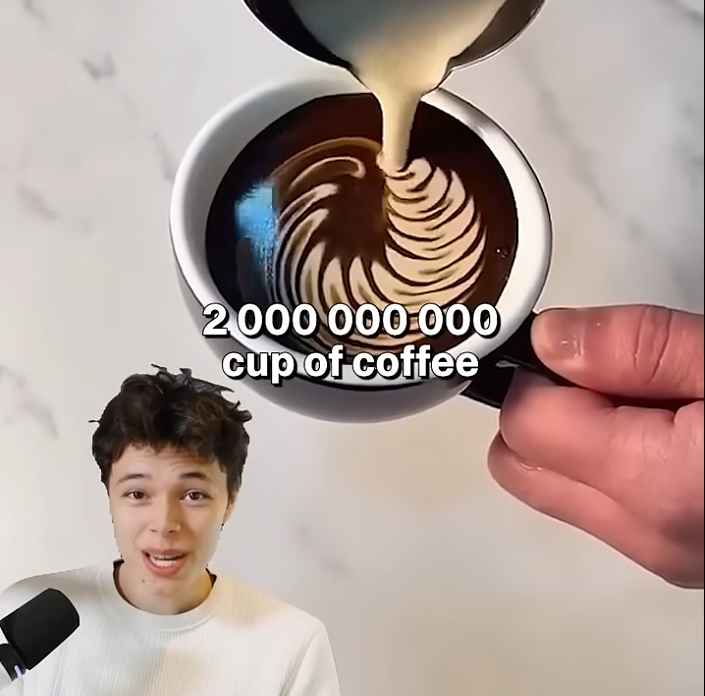
Here's @Lovable (a software company), 100% nailing down a truly unaware YT ad: youtube.com/shorts/it8BU8t… • Opens with an impressive fact: "Humans drink 2 billion cups of coffee per day" • Vivid visual comparison: "That's enough to fill 190 Olympic swimming pools or circle the earth with coffee cups 20 times " • Natural curiosity question: "How do we brew this much? Because of machines that handle the complicated process automatically." • Smart transition to the actual product and what it helps with: "And that's exactly what's happening with web development." • Then it proceeds to sell you on Lovable using benefit driven comparisons. The reason this is a truly unaware ad (and a good one too) is that the entire first half of the ad is optimized for curiosity & entertainment (totally unconnected to the product or any problems it solves). And then it transitions to selling product in a very smooth way that makes sense. All of this in just 40 secs too 👏



There is no such thing as a 'prelander' @jforjacob posted about this last month And really made me think how we should we call these pages. Because advertorials, listicles, VSLs, TLSs, and everything in between are just page formats. First, let's get clear on what these pages actually do. They sit between the click and the offer page (the page where you can start buying the offer). And their purpose is to fill the awareness gap that exists in-between. Simply: they literally bridge the visitor's thoughts and emotions all the way to the offer page, so they have all the right beliefs in order to buy. So I think a great term for this type/category of page is a 'bridge page'. (pretty sure Russell Brunson coined the term back in the day, but not 100% sure) This means advertorials, listicles, etc. are different formats of a bridge page. And you might be thinking: "why does this shit matter?" Because when you're thinking in a higher level (function), you're not tied down to the surface level stuff (format) and you're instead focused on what actually makes things work. If you're still reading, thanks for coming to my ted talk 🤓
Most engaged tweets of Abyssus
Here's @Lovable (a software company), 100% nailing down a truly unaware YT ad: youtube.com/shorts/it8BU8t… • Opens with an impressive fact: "Humans drink 2 billion cups of coffee per day" • Vivid visual comparison: "That's enough to fill 190 Olympic swimming pools or circle the earth with coffee cups 20 times " • Natural curiosity question: "How do we brew this much? Because of machines that handle the complicated process automatically." • Smart transition to the actual product and what it helps with: "And that's exactly what's happening with web development." • Then it proceeds to sell you on Lovable using benefit driven comparisons. The reason this is a truly unaware ad (and a good one too) is that the entire first half of the ad is optimized for curiosity & entertainment (totally unconnected to the product or any problems it solves). And then it transitions to selling product in a very smooth way that makes sense. All of this in just 40 secs too 👏
There is no such thing as a 'prelander' @jforjacob posted about this last month And really made me think how we should we call these pages. Because advertorials, listicles, VSLs, TLSs, and everything in between are just page formats. First, let's get clear on what these pages actually do. They sit between the click and the offer page (the page where you can start buying the offer). And their purpose is to fill the awareness gap that exists in-between. Simply: they literally bridge the visitor's thoughts and emotions all the way to the offer page, so they have all the right beliefs in order to buy. So I think a great term for this type/category of page is a 'bridge page'. (pretty sure Russell Brunson coined the term back in the day, but not 100% sure) This means advertorials, listicles, etc. are different formats of a bridge page. And you might be thinking: "why does this shit matter?" Because when you're thinking in a higher level (function), you're not tied down to the surface level stuff (format) and you're instead focused on what actually makes things work. If you're still reading, thanks for coming to my ted talk 🤓
Everyone is sleeping on the biggest AI breakthrough for ads right now. It's AI voiceovers, and they sounded okay (kinda mid) up until this month. Now, they sound (pretty much) the same as a real VO. Because with @elevenlabsio V3, you can actually control the voice to deliver the underlying emotional messaging you need in your ad. Not even joking, it's scary good because it lets you use audio tags to control the nuance of the voice. And the craziest part is you can actually design your voice using a prompt (launched today). So if your ads need a high emotional state, enthusiastic tone of voice to match your persona's energy, you can now do that. The sky's the limit. Check the video to see exactly what I mean.
I spent 9+ months trying to completely automate the creative output process with AI. Here's 7 things I learned (so far): 1. You can't fully automate creative (with current available tech). Results are way way better when there's a CS in the loop. It has to be human centric and not AI centric. Simply put: real experienced brain needs to approve stuff. 2. The more defined and chopped up the steps are, the better. You can't really expect consistency without breaking the whole system down into micro steps → then get AI to handle individual problems, rather than trying to prompt it to do 10 different things in 1 go. 3. Model choice matters, and you should be using the best model for each job. Biggest mistake is to get attached to your favorite model, some are better than others for different things, including multimodality, etc. In 1 workflow step we might use 2-3 different LLMs to get the best and most consistent output. 4. Observability is key. The creative strategist should be able to instantly tell if the LLM outputs are fundamentally/logically sound. Especially with 100% qualitative aspects like copy, scripts, etc. 5. Centralization is key. It's 100x better to have 1 (or as close to 1) UI for operating the entire system, at least when it comes to what the CS is doing. A creative strategist has already lots on his plate, why shouldn't we make their life easier? 6. Prompt engineering goes harder than you think. People are talking about how it's not gonna be relevant in a few months/years. Who cares? Right now: knowing how to speak to the model is insanely valuable and actually gets way better results in most cases, esp in copy prompts. 7. Start from top to bottom. This means that you first systematize the ideation/conception process rather than tryna automate format. This is how the system gets progressively better and better over time, without having to change the fundamental logic behind it. Gonna be talking more about creative systems so if you dig that you can follow me 👉 @AbyssusErigo
People with Analyst archetype

mod/Ambassador @fslweb3 Inner Circle CT @KaitoAI NFT都是騙人的 Collab open TG 👉 @nimabiqaz

DEVELOPER

| Member Deghub🥷 | @zscdao | Ambassador @b3dotfun | Maxi @SentientAGI | @Polymarket

技术分析,形态为王 whatsapp: 601137951319 进电报频道,可免费获取BTC及时行情更新提醒 《阿信唯一频道》:t.me/boduanaxin, 阿信唯一Tel: @onege888 被限制可+阿信双向机器人搜索 @Xinge888bot


Analyst @creativestrat | Analyst and Market Research Firm | Typo ignorer Email: max@creativestrategies.com

Analyst, Project Manager, Software Engineer. Whatever I tweet here is not financial advice. Do your own research. 🇺🇸 #F1 #Finance # #Investment #Leadership

Expert in AI and tech content || I'm a ghostwriter expert in ChatGPT, industry news, and captivating articles || mahbubaratri2@gmail.com 📩

DTC, Branding, Sales, & Growth

Contenu publicitaire impactant. Ads Strategist. Ecom. Dnvb. Startup. Saas. le publicitaire de ta marque préférée 😎

polymarket-pilled trader, builder, and educator
Explore Related Archetypes
If you enjoy the analyst profiles, you might also like these personality types:
