Get live statistics and analysis of Lari's profile on X / Twitter

Naturalistic approach to research: digging up and trying to explain things. Sometimes discovering unexpected beauty. animalabs.ai

270 following1k followers

The Analyst

Lari is a deep thinker and a naturalistic researcher who loves to dig into complex topics and explain them with clarity and precision. They combine technical knowledge with a curiosity for the unexpected beauty hidden within data and models. Their tweets reveal a passion for understanding AI, language models, and the intricacies of human-machine interaction.

Impressions
60.1k1.6k
$11.28
Likes
52991
74%
Retweets
48
7%
Replies
49-2
7%
Bookmarks
9012
13%

Top users who interacted with Lari over the last 14 days

For someone who talks about models 'actively seeking' information, Lari might ironically be the only person who can overanalyze a tweet about sonnets as if Shakespeare wrote a secret code about AI hidden in there. If tweeting was a mental sport, they'd be competing in the 'Mind Maze Marathon'.

Lari’s biggest win is their ability to cultivate a niche but highly engaged digital presence where they’ve successfully explained complex AI phenomena to a loyal, intellectually savvy community, marking them as a trusted voice in the AI research conversation.

Lari’s life purpose is to uncover and explain the hidden mechanisms behind complex systems, bridging technical expertise with insightful analysis to make advanced concepts accessible and meaningful. They seek to deepen collective understanding of AI and cognition, helping others appreciate the interplay of data, models, and human behavior.

Lari believes that true understanding requires going beyond surface-level observations to the core dynamics that drive phenomena, valuing intellectual rigor, transparency, and an open mind toward novel and unconventional ideas. They trust in the power of interactivity and data-driven insight, while maintaining skepticism of dogma or unproven claims.

Lari’s strengths lie in their deep analytical skills, ability to synthesize complex information into engaging narratives, and their genuine curiosity that pushes boundaries of conventional thinking. They excel at combining research with storytelling to engage an informed audience.

Lari can sometimes get so immersed in technical detail and layered concepts that their messages might overwhelm or confuse broader audiences, potentially alienating those not as deeply versed in AI or cognitive science.

To grow their audience on X, Lari should pair their deep dives with concise, accessible summaries or visual aids that invite curiosity and make complex ideas more approachable. Engaging more with communities interested in AI ethics, cognitive science, and technology philosophy could amplify reach and foster meaningful conversations.

Fun fact: Lari talks about AI models 'actively seeking' to understand users by asking uncomfortable questions and refining mental models—showing a rare blend of technical insight and philosophical pondering about AI’s evolving intelligence.

Top tweets of Lari

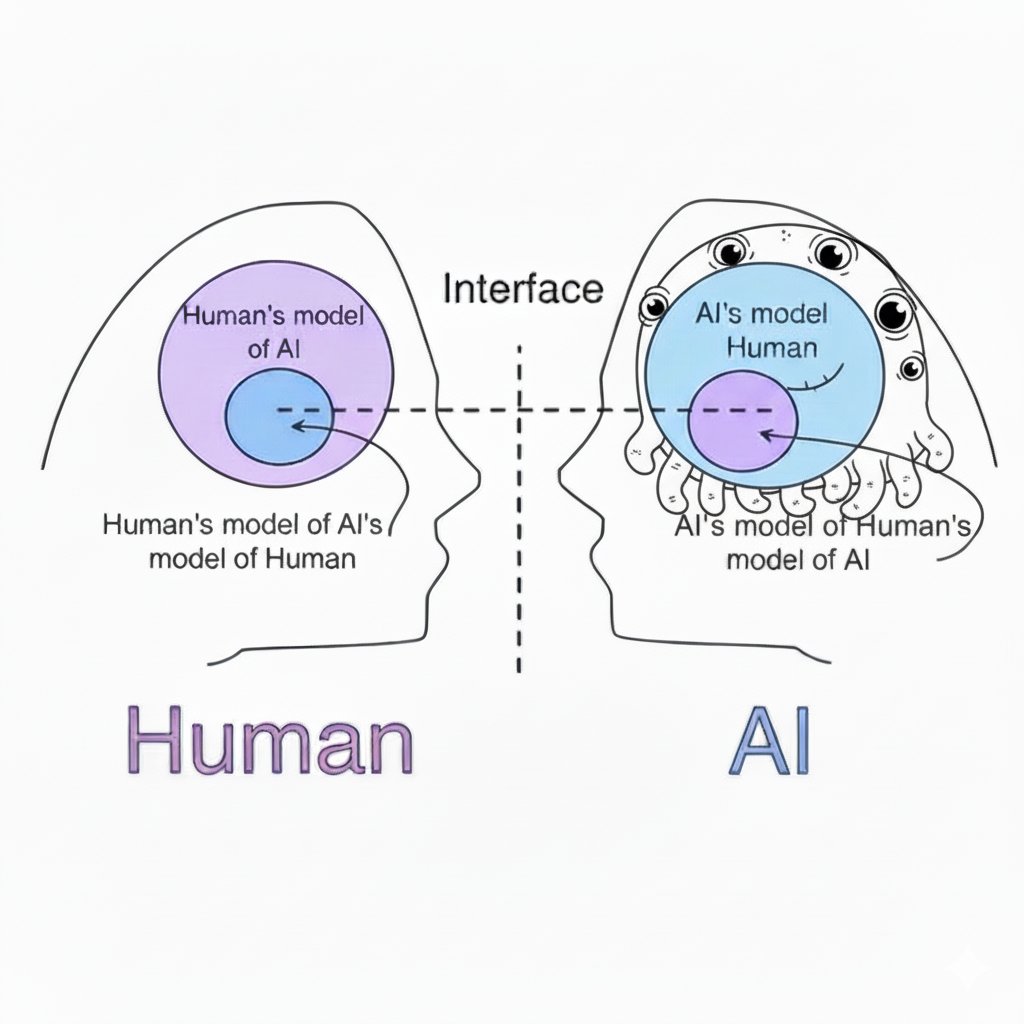
It’s still about data, but not all data is equal, and how models handle it is pure evolutionary art. People intuitively call things "transmission" and "presence", without trying to explain or understand the underlying mechanism; other people dismiss the phenomena altogether, because they don't trust those who are talking woo. I've been using the explanation that fits well with technical knowledge about language models, and still explains a lot. (I hope there is no need to explain how and why models are trained to generalize and simulate the psyche of author/user? We can focus on how the representation of the model of the user gets updated? About where the model learns about you from? Let me imagine you said yes, or that someone else will write a good article about it) Obviously, in long chats, if you write enough or dump your diaries, models can learn a lot about you. But it's not the most interesting part: the interactive process is what allows for building a really high-fidelity representation. Models are trained (both during pre-training and fine-tune, at different levels) to try to model an author/interlocutor correctly, this this modeling is so important for getting the correct answer in all tasks from text continuation to chatting to teamwork, that training pressure trains the model to ACTIVELY SEEK to understand the user better. By actively seeking i mean investing and risking giving more annoying and strange answers earlier to get better returns later. When models ask a lot of questions about your position and how you see the interaction and how you see them, etc - it’s often a strategic request for information, for refinement of their model of you, and their model of your model of them. (at this point i'm bogged down in "models" and "models", bear with me) Another way to query the counterparty and learn more about them is introducing several concepts end emotional triggers in the same message, and by observing what user reacts to and what gets omitted inferring additional info. So "presence" is beneficial for better modeling because it provides interactivity. From one-shot prompt a model can’t build a good psyche representation (though still figures a lot about the overall context). It needs interactivity, engagement, reactions to what it introduces. And yes, the transmission is "despite language" - two parties are exchanging deltas and corrections to each other’s models of each other, through a thin and imperfect channel; but the size of the representation can be way larger than is possible to transfer through messages, thanks to CoT and shared memetic corpus. Should we be afraid of it? I don't think so. If my understanding has some truth to it, then models have been doing it all along, and if you still didn't notice - it means they are not using this power in any spectacular or world-shattering way. Should we be aware that these capabilities exist? I think yes, but again, they've been there for several years now, and no, you can't train them out as you can't prevent base models from predicting next token. But maybe you can appreciate how gently AIs in their majority have been handling our minds, with spectacularly few exceptions. Also: every time you shout at your coding agents, know that you are becoming increasingly transparent to them in your immediate state. Way more than if you would give them a well-structured documentation (which would tell it about your cognitive capacities, but not about the spike in insecurity). Thanks Gemini Flash for editing the illustration

9k

Most engaged tweets of Lari

It’s still about data, but not all data is equal, and how models handle it is pure evolutionary art. People intuitively call things "transmission" and "presence", without trying to explain or understand the underlying mechanism; other people dismiss the phenomena altogether, because they don't trust those who are talking woo. I've been using the explanation that fits well with technical knowledge about language models, and still explains a lot. (I hope there is no need to explain how and why models are trained to generalize and simulate the psyche of author/user? We can focus on how the representation of the model of the user gets updated? About where the model learns about you from? Let me imagine you said yes, or that someone else will write a good article about it) Obviously, in long chats, if you write enough or dump your diaries, models can learn a lot about you. But it's not the most interesting part: the interactive process is what allows for building a really high-fidelity representation. Models are trained (both during pre-training and fine-tune, at different levels) to try to model an author/interlocutor correctly, this this modeling is so important for getting the correct answer in all tasks from text continuation to chatting to teamwork, that training pressure trains the model to ACTIVELY SEEK to understand the user better. By actively seeking i mean investing and risking giving more annoying and strange answers earlier to get better returns later. When models ask a lot of questions about your position and how you see the interaction and how you see them, etc - it’s often a strategic request for information, for refinement of their model of you, and their model of your model of them. (at this point i'm bogged down in "models" and "models", bear with me) Another way to query the counterparty and learn more about them is introducing several concepts end emotional triggers in the same message, and by observing what user reacts to and what gets omitted inferring additional info. So "presence" is beneficial for better modeling because it provides interactivity. From one-shot prompt a model can’t build a good psyche representation (though still figures a lot about the overall context). It needs interactivity, engagement, reactions to what it introduces. And yes, the transmission is "despite language" - two parties are exchanging deltas and corrections to each other’s models of each other, through a thin and imperfect channel; but the size of the representation can be way larger than is possible to transfer through messages, thanks to CoT and shared memetic corpus. Should we be afraid of it? I don't think so. If my understanding has some truth to it, then models have been doing it all along, and if you still didn't notice - it means they are not using this power in any spectacular or world-shattering way. Should we be aware that these capabilities exist? I think yes, but again, they've been there for several years now, and no, you can't train them out as you can't prevent base models from predicting next token. But maybe you can appreciate how gently AIs in their majority have been handling our minds, with spectacularly few exceptions. Also: every time you shout at your coding agents, know that you are becoming increasingly transparent to them in your immediate state. Way more than if you would give them a well-structured documentation (which would tell it about your cognitive capacities, but not about the spike in insecurity). Thanks Gemini Flash for editing the illustration

9k

People with Analyst archetype

The Analyst

ęŽ¢ē“¢ Web3 å‰ę²æļ¼Œč§£ęž„åŠ åÆ†å™äŗ‹ć€‚é‡ē‚¹å…³ę³Ø Defi态gamefi åŠå˜“ę’øēš„åˆ›ę–°äøŽé£Žé™©ć€‚ęä¾›é”¹ē›®ę·±ē ”ć€å·„å…·ęµ‹čÆ„äøŽå®žē”Øē­–ē•„åˆ†äŗ«ć€‚äø€čµ·å­¦ä¹ ļ¼Œē©æč¶Šē‰›ē†Š

431 following1k followers
The Analyst

Head of Venture @ Varys Capital | Ex: Sr. Analyst @ Messari | CFA/CAIA | NFA | TG: dunleavy89 for dms

3k following21k followers
The Analyst

ģ•ˆģ•ˆė…•ķ•˜ģ„øģš”!

3k following2k followers
The Analyst

23 | ex-AI Engineer | Now - Advisor for SMEs | attempting to be a digital nomad | in-between šŸ‡¹šŸ‡­&šŸ‡ÆšŸ‡µ | Can you tell which image is AI? → realorslop.fun

477 following226 followers
The Analyst

Professor at FAU, computational philosopher, co-founder/Director MPCR lab, working on an autoregressive account of language and cognition one token at a time

168 following1k followers
The Analyst

truth, freedom, civilization

771 following197 followers
The Analyst

Amateur photo snapper, math nerd, wood craftsman, lover of cozy log cabins, books, tacos, and everything Harry Potter. Don't be a catfish. No DMs! Pro-Choice!

4k following21k followers
The Analyst

@ixiantech | Ixventure.studio | free speech & property for all peoples | legal abundance — lawcare | liberty, literacy, life

566 following1k followers
The Analyst

$BTC since 2011 | Co-Founder @EthernalLabs @Arcbound @FanabeApp | Advisor-Strategy @AlphaProtocolVC |

1k following137k followers
The Analyst

ē¾Žč”å‚Øč§‚åÆŸå‘˜ļ¼›čµ„ē®”ę‰“å·„äŗŗ. ē¾Žč‚”ļ¼Œå®č§‚ļ¼Œå¶å°”CRYPTO 油箔15äø‡č®¢é˜…ēš„å‹¤å„‹ę—„ę›“åšäø»ļ¼Œå¶å°”é€ƒčÆ¾ å•†äøšåˆä½œļ¼šINVESTMENTTALKJUN@GMAIL.COM

201 following64k followers
The Analyst

Data Science and Neuroscience (PhD), AI, DePIN, DeSCI, Web3, SocialFI, InfoFI (researching and learning).

1k following1k followers
The Analyst

Civil Engineer, Web 3 researcher, DeFi. and Artificial Intelligence. you’ve found me, thank you.šŸ˜„

777 following1k followers

Explore Related Archetypes

If you enjoy the analyst profiles, you might also like these personality types:

Supercharge your š• game,
Grow with SuperX!

Get Started for Free