Builder of large-scale ML systems; adjunct prof @ucla; ex quant derivatives trader & startup founder. Tweets on AI, tech, science, & econ.
3kfollowing4kfollowers
Want the AI archetype, social circle and earnings estimate?
SuperX runs a deeper analysis of @sudoraohacker and any X profile. You get archetype classification, engagement chart, social-circle map, estimated earnings, and personalised growth tips.
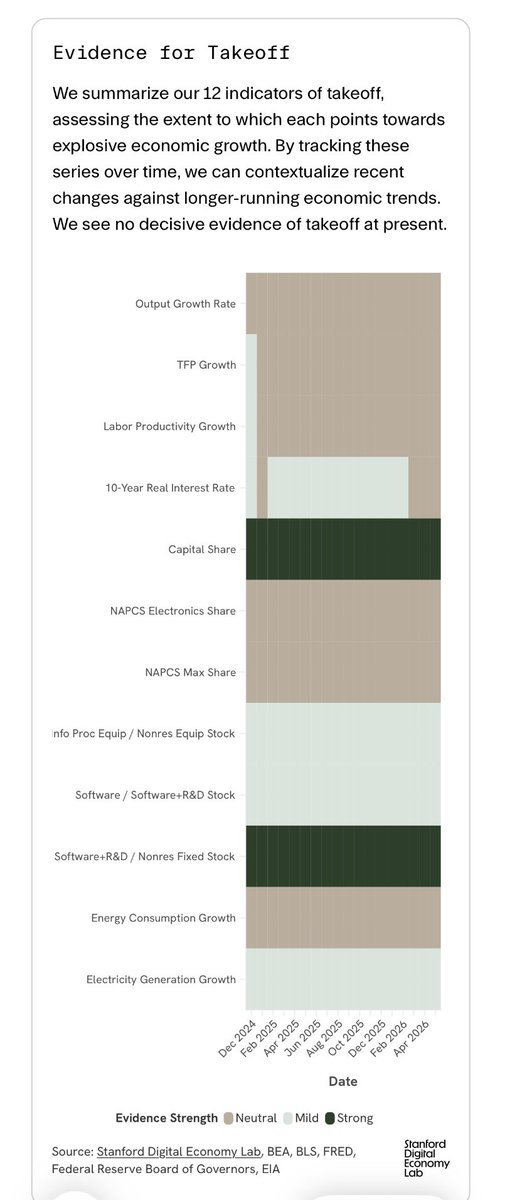
Fantastic launch from Erik and the @DigEconLab at Stanford on providing continuous dashboards and metrics on AI’s progress, work impacts, and takeoff.
I was a little surprised to see more AI takeoff indicators than I expected; non-zero and higher than I expected. Ideally we
{"data":{"__meta":{"device":false,"path":"/creators/sudoraohacker"},"/creators/sudoraohacker":{"isPublicFallback":true,"username":"sudoraohacker","publicData":{"user":{"name":"Arun Rao","screen_name":"sudoraohacker","rest_id":"598951979","description":"Builder of large-scale ML systems; adjunct prof @ucla; ex quant derivatives trader & startup founder. Tweets on AI, tech, science, & econ.","followers_count":4313,"friends_count":3469,"statuses_count":16692,"profile_image_url_https":"https://pbs.twimg.com/profile_images/1864820603536183298/GNLH0XvH_normal.jpg","profile_banner_url":"https://pbs.twimg.com/profile_banners/598951979/1644703504","location":"Berkeley, CA","verified":true,"created_at":"Mon Jun 04 05:13:53 +0000 2012"},"tweets":[{"id":"2002942569588682788","full_text":"My favorite books and reading trace for 2025: \n\n I had a five-way tie for the best books this year: \n\n1) Mokyr’s A Culture of Growth on how societies build or block the conditions for sustained progress; \n\n2) John Williams’ masterpiece Augustus, and the runner-up, Stoner, as","created_at":"Mon Dec 22 03:21:36 +0000 2025","favorite_count":22,"retweet_count":3,"reply_count":3,"quote_count":1,"view_count":6691,"entities":{}},{"id":"2065228303997468760","full_text":"Mostly correct take on companies avoiding pretraining, though larger enterprises and some savvy AI natives (Cursor, Fin/Intercom) can take base models from open labs and do their own mid-training and post-training, and often those models will give the best performance per cost.","created_at":"Fri Jun 12 00:22:52 +0000 2026","favorite_count":3,"retweet_count":1,"reply_count":0,"quote_count":1,"view_count":400,"entities":{}},{"id":"2064777272650047732","full_text":"Fantastic launch from Erik and the @DigEconLab at Stanford on providing continuous dashboards and metrics on AI’s progress, work impacts, and takeoff.\n\nI was a little surprised to see more AI takeoff indicators than I expected; non-zero and higher than I expected. Ideally we https://t.co/dEHP3wXG7l","created_at":"Wed Jun 10 18:30:38 +0000 2026","favorite_count":6,"retweet_count":3,"reply_count":0,"quote_count":0,"view_count":1101,"entities":{"media":[{"display_url":"pic.x.com/dEHP3wXG7l","expanded_url":"https://x.com/sudoraohacker/status/2064777272650047732/photo/1","ext_media_availability":{"status":"Available"},"features":{"large":{"faces":[]},"medium":{"faces":[]},"orig":{"faces":[]},"small":{"faces":[]}},"id_str":"2064777269923778560","indices":[277,300],"media_key":"3_2064777269923778560","media_results":{"result":{"media_key":"3_2064777269923778560"}},"media_url_https":"https://pbs.twimg.com/media/HKeP_MIbkAAUtcw.jpg","original_info":{"focus_rects":[{"h":451,"w":805,"x":0,"y":1463},{"h":805,"w":805,"x":0,"y":1109},{"h":918,"w":805,"x":0,"y":996},{"h":1610,"w":805,"x":0,"y":304},{"h":1914,"w":805,"x":0,"y":0}],"height":1914,"width":805},"sizes":{"large":{"h":1914,"resize":"fit","w":805},"medium":{"h":1200,"resize":"fit","w":505},"small":{"h":680,"resize":"fit","w":286},"thumb":{"h":150,"resize":"crop","w":150}},"type":"photo","url":"https://t.co/dEHP3wXG7l"}],"user_mentions":[{"id_str":"1263917894590742528","indices":[35,46],"name":"Stanford Digital Economy Lab","screen_name":"DigEconLab"}]},"extended_entities":{"media":[{"display_url":"pic.x.com/dEHP3wXG7l","expanded_url":"https://x.com/sudoraohacker/status/2064777272650047732/photo/1","ext_media_availability":{"status":"Available"},"features":{"large":{"faces":[]},"medium":{"faces":[]},"orig":{"faces":[]},"small":{"faces":[]}},"id_str":"2064777269923778560","indices":[277,300],"media_key":"3_2064777269923778560","media_results":{"result":{"media_key":"3_2064777269923778560"}},"media_url_https":"https://pbs.twimg.com/media/HKeP_MIbkAAUtcw.jpg","original_info":{"focus_rects":[{"h":451,"w":805,"x":0,"y":1463},{"h":805,"w":805,"x":0,"y":1109},{"h":918,"w":805,"x":0,"y":996},{"h":1610,"w":805,"x":0,"y":304},{"h":1914,"w":805,"x":0,"y":0}],"height":1914,"width":805},"sizes":{"large":{"h":1914,"resize":"fit","w":805},"medium":{"h":1200,"resize":"fit","w":505},"small":{"h":680,"resize":"fit","w":286},"thumb":{"h":150,"resize":"crop","w":150}},"type":"photo","url":"https://t.co/dEHP3wXG7l"}]}},{"id":"2064496711209480473","full_text":"My first question for Claude Fable 5 and its unexpected answer:\n\nMe: What are the biggest bottlenecks in the economy where replacing humans with AI would unlock large economic and productivity value and speed up and AGI takeoff? Be realistic about how a model of your class can","created_at":"Tue Jun 09 23:55:47 +0000 2026","favorite_count":3,"retweet_count":0,"reply_count":0,"quote_count":0,"view_count":637,"entities":{}}]},"linkableRecentProfiles":[{"user":{"id":"1717671858521194496","name":"signüll","description":"village regard. @skye","followers_count":203978,"friends_count":1669,"statuses_count":15950,"profile_image_url_https":"https://pbs.twimg.com/profile_images/1717763325692383232/Jk2PKCx6_normal.jpg","screen_name":"signulll","location":"manhattan","entities":{"description":{},"url":{"urls":[{"display_url":"signull.substack.com","expanded_url":"http://signull.substack.com","indices":[0,23],"url":"https://t.co/D3Hcp2V4DP"}]}}},"details":{"type":"The Entertainer","description":"Signüll is a master of witty and relatable content that effortlessly captures attention and sparks conversations. Their tweets blend humor and social commentary with sharp observations about everyday life and current events. With a unique village-minded vibe, they keep their audience laughing while reflecting on the quirks of modern culture.","purpose":"To bring joy, laughter, and a fresh perspective to online communities by transforming ordinary moments into viral delights that everyone can relate to.","beliefs":"Signüll believes humor is the best connector and a powerful tool for social commentary, using laughter to break down barriers and invite dialogue on complex topics. They value authenticity, relatability, and the power of a well-placed joke to brighten perspectives and challenge the status quo.","facts":"Fun fact: Signüll’s tweet about 'the gulf of mexico should’ve been renamed to sea señor' showcases their signature blend of playful wordplay and cultural references that resonate widely, garnering millions of views and likes.","strength":"Remarkable ability to craft viral content that balances humor with insightful social observations, consistently engaging a broad audience with diverse yet relatable topics.","weakness":"Can occasionally lean too heavily on humor, which might overshadow deeper messages or alienate those looking for more nuanced discussion. Also, high tweet volume might dilute individual tweet impact.","roast":"Signüll tweets so frequently, they might actually be running for president of Twitter’s ‘Most Likely to Hit Refresh 5000 Times a Day’ club — folks probably need to unmute just to keep up with the nonstop punchlines!","win":"Viral domination with tweets reaching over 14 million views, proving their knack for piggybacking timely humor with broad cultural appeal that resonates globally.","recommendation":"To grow their audience on X, Signüll should consider threading deeper stories behind their funniest takes to build emotional connection, and strategically engage with trending conversations to amplify visibility. Using polls or interactive tweets could also enhance follower interaction and loyalty."},"created":1763378386710,"type":"the entertainer","id":"signulll"},{"user":{"id":"1219744975228952576","name":"∩","description":"founder https://t.co/rJ27vezJhQ\nfollow obsession","followers_count":60119,"friends_count":2547,"statuses_count":34121,"profile_image_url_https":"https://pbs.twimg.com/profile_images/2050208899920224256/zNUAnsbi_normal.jpg","screen_name":"zachpogrob","location":"nyc","entities":{"description":{"urls":[{"display_url":"shareaura.app","expanded_url":"http://shareaura.app","indices":[8,31],"url":"https://t.co/rJ27vezJhQ"}]},"url":{"urls":[{"display_url":"instagram.com/zachpogrob/","expanded_url":"https://www.instagram.com/zachpogrob/","indices":[0,23],"url":"https://t.co/GYzRZKKJ7c"}]}}},"details":{"type":"The Thought Leader","description":"Zach 🏴 is a deep thinker who blends philosophy, productivity, and life wisdom with a passion for obsession as a way of life. His tweets resonate widely, inspiring followers to rethink time, creativity, and personal growth. Building an app that celebrates sharing runs, Zach channels his drive to empower others through thoughtful engagement.","purpose":"To challenge conventional thinking and inspire others to embrace obsession as a catalyst for meaningful personal and creative transformation.","beliefs":"Zach believes life is fleeting and must be lived with intense focus and passion. He values simplicity, reflection, and the power of perseverance, seeing obsession not as a burden but as a pathway to greatness.","facts":"Fun fact: Zach's tweet about the '4000 weeks' life frame went viral with nearly 14 million views and over 296,000 likes, proving he taps into universal truths that captivate large audiences.","strength":"Zach's strength lies in his ability to distill profound ideas into concise, compelling messages that spark reflection and motivation. His consistency with over 16,000 tweets shows remarkable dedication and presence.","weakness":"Despite his deep insights, Zach risks appearing overly introspective or abstract which might limit engagement from those seeking more actionable or lighter content. Following nearly 2000 accounts might also dilute his personal brand clarity.","recommendation":"To grow on X, Zach should balance his philosophical tweets with more interactive content—polls, Q&As, or threads that break down his big ideas into practical steps. Collaborating with influencers in fitness and entrepreneurship could also amplify his reach.","roast":"Zach tweets so much life wisdom that even his notifications need a meditation break—seriously, have you considered tweeting slower to give folks a chance to catch up and actually live those 4000 weeks?","win":"Zach's biggest win is crafting viral thought leadership that consistently resonates on a massive scale, triggering millions to rethink time, creativity, and purpose."},"created":1752492789799,"type":"the thought leader","id":"zachpogrob"},{"user":{"id":"786375418685165568","name":"Theo - t3.gg","description":"Full time CEO @t3dotchat. Part time YouTuber, investor, and developer","followers_count":340205,"friends_count":4142,"statuses_count":62793,"profile_image_url_https":"https://pbs.twimg.com/profile_images/1909353910130950147/EeSGdgA5_normal.jpg","screen_name":"theo","location":"San Francisco, CA","entities":{"description":{},"url":{"urls":[{"display_url":"t3.gg","expanded_url":"https://t3.gg","indices":[0,23],"url":"https://t.co/RIvNYtJWVz"}]}}},"details":{"type":"The Entertainer","description":"Theo - t3.gg is a dynamic digital personality who blends humor, gaming culture, and topical commentary to captivate a wide audience. Known for his sharp wit and engaging takes, he keeps his followers entertained with a steady stream of relatable, insightful, and often hilarious content. As a CEO, YouTuber, investor, and developer, Theo uniquely balances business savvy with a playful online presence.","purpose":"Theo’s life purpose revolves around making complex and niche digital cultures accessible and enjoyable to a broad audience, while fostering community through humor and shared interests. He seeks to entertain and inform simultaneously, using his platform as a medium to engage diverse followers and inspire conversational interaction.","beliefs":"Theo values authenticity and creativity, championing the intersection of technology, gaming, and social commentary. He believes in using humor as a tool to provoke thought and connect people, while also emphasizing the importance of safety and awareness, as highlighted in his commentary on the NRA. He likely upholds community and culture as core pillars of his online identity.","facts":"Despite his undefined follower count, Theo follows a large circle of 3,497 individuals and has tweeted over 52,000 times, indicating a high level of activity and engagement. His most viral tweets often combine humor with cultural critique, such as poking fun at gaming trends or current events.","strength":"Theo’s greatest strength is his ability to blend humor with insightful commentary, making potentially complex or niche topics accessible and entertaining. His substantial tweet volume shows consistency and dedication, while his diverse roles (CEO, YouTuber, developer) provide multidimensional credibility and relate-ability.","weakness":"Theo’s weakness might lie in the sheer volume of his tweets which risks overwhelming followers or diluting the impact of individual posts. Additionally, following nearly as many people as he tweets might make his audience targeting less precise, potentially limiting follower growth or engagement intensity.","recommendation":"To grow his audience on X, Theo should consider concentrating his content strategy to highlight key themes that resonate most deeply with his followers, such as gaming culture or tech trends, and leverage threaded storytelling to increase engagement. Collaborations with fellow influencers or Thought Leaders in related niches could elevate his profile even further.","roast":"Theo’s tweet count suggests he’s the president of the ‘Tweet Till You Drop’ club — if tweeting were an Olympic sport, he’d have more gold than Michael Phelps, but might struggle to remember what he even tweeted yesterday!","win":"Theo’s biggest win is mastering the art of viral engagement, evidenced by multiple tweets hitting multi-million views and hundreds of thousands of likes, proving his content hits the sweet spot between entertainment and relevance."},"created":1752452558114,"type":"the entertainer","id":"theo"},{"user":{"id":"470129898","name":"Tibo","description":"Building https://t.co/OyNJ8ZV6DP, https://t.co/JkVOl1OyHz, https://t.co/KG9PgxJI0O, https://t.co/jS9GQJ6nhG, https://t.co/EFUcKeBJfs\nBuilt Tweet Hunter, Taplio (sold $8m)\nPH Maker of Year 🥇\nSharing growth tips: https://t.co/ereQodNBE3","followers_count":193714,"friends_count":3212,"statuses_count":46839,"profile_image_url_https":"https://pbs.twimg.com/profile_images/1631931185180934144/59z_ZFKm_normal.jpg","screen_name":"tibo_maker","location":"","entities":{"description":{"urls":[{"display_url":"revid.ai","expanded_url":"http://revid.ai","indices":[9,32],"url":"https://t.co/OyNJ8ZV6DP"},{"display_url":"outrank.so","expanded_url":"http://outrank.so","indices":[34,57],"url":"https://t.co/JkVOl1OyHz"},{"display_url":"postsyncer.com","expanded_url":"http://postsyncer.com","indices":[59,82],"url":"https://t.co/KG9PgxJI0O"},{"display_url":"feather.so","expanded_url":"http://feather.so","indices":[84,107],"url":"https://t.co/jS9GQJ6nhG"},{"display_url":"superx.so","expanded_url":"http://superx.so","indices":[109,132],"url":"https://t.co/EFUcKeBJfs"},{"display_url":"tmaker.io","expanded_url":"http://tmaker.io","indices":[211,234],"url":"https://t.co/ereQodNBE3"}]},"url":{"urls":[{"display_url":"tmaker.io","expanded_url":"https://www.tmaker.io","indices":[0,23],"url":"https://t.co/9kqacCTvjw"}]}}},"details":{"type":"The Entrepreneur","description":"Tibo is a serial entrepreneur who built and scaled successful startups like Tweet Hunter and Taplio, demonstrating a sharp knack for growth hacking and tech innovation. His presence on X is marked by high-volume tweeting and sharing actionable insights, especially on growth and no-code tools. Tibo combines witty cultural commentary with practical business tips, making him a go-to for aspiring founders and growth enthusiasts.","purpose":"To empower and inspire entrepreneurs and creators by sharing growth strategies, leveraging technology to simplify business building, and fostering a community of makers who innovate without limits.","beliefs":"Tibo values authenticity, innovation, and continuous learning. He believes in the power of building and selling impactful products, the democratizing force of technology (particularly no-code tools), and the importance of staying humble despite success.","facts":"Fun fact: Tibo sold his startup Taplio for $8 million and tweets over 43,000 times, showcasing a relentless dedication to engagement and content sharing on social media.","strength":"His biggest strengths lie in his entrepreneurial mindset, an exceptional ability to spot and capitalize on growth opportunities, and his prolific and consistent content output that keeps his audience engaged and informed.","weakness":"Posting over 43,000 tweets might sometimes lead to content saturation, where quality risks being diluted, and followers may struggle to keep up or feel overwhelmed by the volume.","roast":"Tibo tweets so much that if Twitter was a country, he'd probably be its president, prime minister, and sole citizen all at once—talk about a one-man tweet empire that refuses to grant its followers a moment of peace!","win":"Successfully built and exited two startups, including Taplio, which sold for $8 million—proving he doesn’t just talk growth, he lives it.","recommendation":"To grow his audience on X, Tibo should consider mixing his high-frequency tweeting with curated, in-depth threads that offer exclusive insights and case studies. Engaging more directly with followers through Q&As or live tweet sessions can also deepen community bonds and boost loyalty."},"created":1723537841908,"type":"the entrepreneur","id":"tibo_maker"},{"user":{"id":"2311987360","name":"Marc Lou","description":"⭐️ https://t.co/MZc8tGa5LQ $29K/m\n📈 https://t.co/3EDxln5U2Q $21K/m\n🦐 https://t.co/d4zcSHnfYk $6K/m\n⚡️ https://t.co/vatLDmiHKe $6K/m\n🏴☠️ https://t.co/dr6UTvtYcO $5K/mo\n🧑💻 https://t.co/Y30jsaI4oH $3K/m\n\n+28 https://t.co/4zCWHGJWRq","followers_count":345791,"friends_count":1206,"statuses_count":33791,"profile_image_url_https":"https://pbs.twimg.com/profile_images/2059062507923472384/n3Zl7nhZ_normal.jpg","screen_name":"marclou","location":"My 34 startups →","entities":{"description":{"urls":[{"display_url":"TrustMRR.com","expanded_url":"http://TrustMRR.com","indices":[3,26],"url":"https://t.co/MZc8tGa5LQ"},{"display_url":"DataFa.st","expanded_url":"http://DataFa.st","indices":[36,59],"url":"https://t.co/3EDxln5U2Q"},{"display_url":"SuperShrimp.io","expanded_url":"http://SuperShrimp.io","indices":[69,92],"url":"https://t.co/d4zcSHnfYk"},{"display_url":"ShipFa.st","expanded_url":"http://ShipFa.st","indices":[102,125],"url":"https://t.co/vatLDmiHKe"},{"display_url":"SHlPORDIE.COM","expanded_url":"http://SHlPORDIE.COM","indices":[137,160],"url":"https://t.co/dr6UTvtYcO"},{"display_url":"CodeFa.st","expanded_url":"http://CodeFa.st","indices":[172,195],"url":"https://t.co/Y30jsaI4oH"},{"display_url":"marclou.com","expanded_url":"http://marclou.com","indices":[207,230],"url":"https://t.co/4zCWHGJWRq"}]},"url":{"urls":[{"display_url":"marclou.com","expanded_url":"https://marclou.com","indices":[0,23],"url":"https://t.co/6RumujkrmE"}]}}},"details":{"type":"The Lurker","description":"Marcelo Lourenco is a quiet observer in the bustling world of social media, sprinkling friendly greetings and sharing bits of news softly without seeking the spotlight. With a modest tweet count and minimal interaction, Marcelo embodies the classic digital wallflower who prefers watching the scene rather than leading it. Engaging warmly but subtly, this profile brings a gentle presence into their online space.","purpose":"To maintain a low-key yet meaningful connection with a close circle, offering support and sharing occasional insights without the pressure of public recognition or follower approval.","beliefs":"Values authenticity and genuine personal connections over digital fame, believing that social media serves as a subtle, unobtrusive tool for staying connected rather than a platform for constant self-promotion.","facts":"Despite having just 19 tweets and no visible engagement metrics, Marcelo’s interactions reveal a caring nature and inclination to share cultural tidbits — like theater events — demonstrating an understated contribution to community awareness.","strength":"A natural observer who avoids online drama and provides quiet encouragement, fostering close-knit relationships with a calm, unassuming online presence.","weakness":"Limited activity and engagement can leave Marcelo virtually invisible to a wider audience, making it difficult to grow influence or spark substantial interactions on platforms like X.","roast":"Marcelo’s social media strategy is like a ninja at a disco — present but nobody notices if he’s there or not. It’s the digital equivalent of whispering secrets in an empty room!","win":"Mastered the art of low-profile social media presence, maintaining genuine, heartfelt connections without succumbing to the noise of online trends.","recommendation":"Try to engage more actively by replying to others’ tweets and sharing original thoughts or personal experiences. Even small, consistent interactions can spark visibility and help build a modest but meaningful audience on X."},"created":1752345553454,"type":"the lurker","id":"marclou"},{"user":{"id":"2455740283","name":"MrBeast","description":"Beast Games Strong Vs Smart Is Out Now!","followers_count":34358581,"friends_count":2292,"statuses_count":7862,"profile_image_url_https":"https://pbs.twimg.com/profile_images/2008838029776158720/oDvxIJ1X_normal.jpg","screen_name":"MrBeast","location":"Follow me for a cookie","entities":{"description":{"urls":[]},"url":{"urls":[{"display_url":"linktr.ee/beastgames","expanded_url":"https://linktr.ee/beastgames","indices":[0,23],"url":"https://t.co/Sn9fDg55Ji"}]}}},"details":{"type":"The Entertainer","description":"MrBeast is a dynamic presence on X, known for his extravagant giveaways and engaging content that captivates a wide audience. He combines humor with generosity, creating a unique brand of entertainment that encourages participation and spreads positivity.","purpose":"His life purpose seems to be bringing joy and excitement to others through charitable acts and entertaining content, using his platform to make a positive impact on the world.","beliefs":"MrBeast believes in the power of giving and the importance of using his influence for good. He values community, creativity, and the role of entertainment in bringing people together.","facts":"Fun fact: MrBeast's giveaways have not only made him a beloved figure online but have also set new standards for philanthropy on social media.","strength":"His strength lies in his ability to create viral content that resonates with a broad audience, combining entertainment with genuine acts of kindness.","weakness":"His weakness might be the potential for his giveaways to overshadow other content, leading to an expectation of constant extravagant posts from his followers.","roast":"MrBeast gives away money so often, his followers probably check their bank accounts more than they check their X timelines.","win":"His biggest win is transforming online generosity into a form of entertainment, inspiring a new wave of digital philanthropy.","recommendation":"To grow his audience further, MrBeast could engage in more collaborative content with other prominent figures on X, diversifying his content while maintaining his signature style of entertaining generosity."},"created":1723622698902,"type":"the entertainer","id":"mrbeast"}],"linkablePopularProfiles":[{"user":{"id":"2455740283","name":"MrBeast","description":"Beast Games Strong Vs Smart Is Out Now!","followers_count":34358581,"friends_count":2292,"statuses_count":7862,"profile_image_url_https":"https://pbs.twimg.com/profile_images/2008838029776158720/oDvxIJ1X_normal.jpg","screen_name":"MrBeast","location":"Follow me for a cookie","entities":{"description":{"urls":[]},"url":{"urls":[{"display_url":"linktr.ee/beastgames","expanded_url":"https://linktr.ee/beastgames","indices":[0,23],"url":"https://t.co/Sn9fDg55Ji"}]}}},"details":{"type":"The Entertainer","description":"MrBeast is a dynamic presence on X, known for his extravagant giveaways and engaging content that captivates a wide audience. He combines humor with generosity, creating a unique brand of entertainment that encourages participation and spreads positivity.","purpose":"His life purpose seems to be bringing joy and excitement to others through charitable acts and entertaining content, using his platform to make a positive impact on the world.","beliefs":"MrBeast believes in the power of giving and the importance of using his influence for good. He values community, creativity, and the role of entertainment in bringing people together.","facts":"Fun fact: MrBeast's giveaways have not only made him a beloved figure online but have also set new standards for philanthropy on social media.","strength":"His strength lies in his ability to create viral content that resonates with a broad audience, combining entertainment with genuine acts of kindness.","weakness":"His weakness might be the potential for his giveaways to overshadow other content, leading to an expectation of constant extravagant posts from his followers.","roast":"MrBeast gives away money so often, his followers probably check their bank accounts more than they check their X timelines.","win":"His biggest win is transforming online generosity into a form of entertainment, inspiring a new wave of digital philanthropy.","recommendation":"To grow his audience further, MrBeast could engage in more collaborative content with other prominent figures on X, diversifying his content while maintaining his signature style of entertaining generosity."},"created":1723622698902,"type":"the entertainer","id":"mrbeast"},{"user":{"id":"26589987","name":"Serena Williams","description":"Tennis Player turned VC Investor @SerenaVentures founder & entrepreneur","followers_count":11837448,"friends_count":373,"statuses_count":14976,"profile_image_url_https":"https://pbs.twimg.com/profile_images/1935021602191642624/EzlCcphY_normal.jpg","screen_name":"serenawilliams","location":"Somewhere over the Rainbow","entities":{"description":{}}},"details":{"type":"The Entrepreneur","description":"A champion athlete turned venture investor and founder who moves effortlessly between the tennis court, boardroom and cultural moments. Bold, authentic and wildly influential, she uses her platform to uplift founders and celebrate the things she loves. Her voice blends superstar energy with investor credibility.","purpose":"To build lasting businesses and opportunities—especially for underrepresented founders—while leveraging fame to open doors, normalize diverse leadership, and inspire others to chase big ambitions both on and off the court.","beliefs":"Believes in excellence, hustle, and resilience; champions equity and mentorship; trusts that authenticity and joy are powerful tools for influence and change; treats failure as fuel for smarter risk-taking.","facts":"Fun fact: Even as a VC founder, her most viral tweets are delightfully fan-like — celebrating Super Bowl halftime shows and shouting out Taylor Swift — proving she can close deals and scream at pop culture in the same breath. She has 10+ million followers and nearly 15k tweets, so her reach and consistency are enormous.","strength":"Massive credibility across sports, business and pop culture; extreme audience reach and engagement; authentic, relatable voice that drives viral moments; strong network and capital to back meaningful ventures.","weakness":"Juggling superstar responsibilities can limit time for deep community engagement; casual, celebratory tweets sometimes overshadow investor insights; high visibility makes every slip more scrutinized.","roast":"You went from serving match point to serving term sheets, but your timeline reads like a glittery fan club — you flip from venture wisdom to fangirl-level halftime devotion so fast, your startups will expect their pitch decks in sequins.","win":"Built a rare triple-threat legacy: undeniable athletic greatness translated into cultural influence and a venture fund that amplifies founders—turning championship-level momentum into real-world impact and millions of engaged followers.","recommendation":"Lean into a signature X series (e.g., 'From Court to Capital') of short threads: founder spotlights, quick lessons from investments, and behind-the-scenes moments; host monthly X Spaces with portfolio founders and guest stars; pin an intro tweet linking to portfolio highlights and ways to submit pitches; post short vertical videos reacting to pitches or industry trends; repurpose viral cultural tweets into connective moments that spotlight investments; use polls and AMAs to convert casual fans into startup supporters; collaborate with other high-profile creators for cross-audience reach."},"created":1774577757577,"type":"the entrepreneur","id":"serenawilliams"},{"user":{"id":"902926941413453824","name":"CZ 🔶 BNB","description":"Buy the book (proceeds go to charity):\nEnglish: https://t.co/UxgYxYJ3NF\nChinese: https://t.co/ItFd8FEyuK \n\n@binance\n@BNBchain\n@YZiLabs\n@GiggleAcademy","followers_count":11621948,"friends_count":1277,"statuses_count":8782,"profile_image_url_https":"https://pbs.twimg.com/profile_images/2041696316451909632/7K4xEnRE_normal.jpg","screen_name":"cz_binance","location":"","entities":{"description":{"urls":[{"display_url":"a.co/d/08NMxBOH","expanded_url":"https://a.co/d/08NMxBOH","indices":[48,71],"url":"https://t.co/UxgYxYJ3NF"},{"display_url":"a.co/d/01f7iQTn","expanded_url":"https://a.co/d/01f7iQTn","indices":[81,104],"url":"https://t.co/ItFd8FEyuK"}]},"url":{"urls":[{"display_url":"binance.com","expanded_url":"http://www.binance.com","indices":[0,23],"url":"https://t.co/zlvCSBIFGA"}]}}},"details":{"type":"The Thought Leader","description":"CZ is a prominent figure in the cryptocurrency world, known for his role in founding Binance and his strong opinions on the future of blockchain technology. He uses his platform to share his insights and advocate for the adoption of crypto. He is often regarded as a visionary who inspires others to explore the potential of this emerging sector.","purpose":"To champion the adoption of cryptocurrency and blockchain technology globally, aiming to create a more inclusive and decentralized financial system.","beliefs":"CZ strongly believes in the transformative power of blockchain technology and its ability to democratize finance and empower individuals. He advocates for a decentralized future where crypto plays a pivotal role in shaping the global economy and improving lives.","facts":"CZ once lost all his belongings due to a fire, including his computer which contained all his college applications. He rebuilt his life from scratch and eventually found success in the crypto industry.","strength":"CZ is a skilled communicator, able to articulate complex ideas in a clear and engaging way. He is also a passionate advocate for crypto and possesses a deep understanding of the technology's potential. His vast experience in the industry makes him a credible voice for the future of finance.","weakness":"CZ's outspoken nature can sometimes lead to controversy, and his criticisms of certain projects or individuals have drawn ire from some within the crypto community. He is also known for his willingness to take calculated risks, which can sometimes backfire.","roast":"CZ is like a crypto evangelist who believes in the power of blockchain so much, he's practically turning his followers into disciples. Just be sure to check your wallets before you start chanting 'BNB!'","win":"CZ's vision for Binance has transformed the platform into one of the world's leading cryptocurrency exchanges, with millions of users worldwide. His influence has helped to shape the development of the crypto industry and drive mainstream adoption of blockchain technology.","recommendation":"To further expand his reach and influence, CZ can leverage his expertise to contribute to thought leadership publications, speak at industry events, and engage in deeper, more nuanced discussions about the future of crypto. He can also focus on building stronger relationships with other prominent voices in the community, fostering collaboration and creating a more cohesive ecosystem."},"created":1725742332602,"type":"the thought leader","id":"cz_binance"},{"user":{"id":"12","name":"jack","description":"no state is the best state","followers_count":8384157,"friends_count":3,"statuses_count":30552,"profile_image_url_https":"https://pbs.twimg.com/profile_images/1661201415899951105/azNjKOSH_normal.jpg","screen_name":"jack","location":"","entities":{"description":{},"url":{"urls":[{"display_url":"primal.net/jack","expanded_url":"http://primal.net/jack","indices":[0,23],"url":"https://t.co/ZEpOg6rn5L"}]}}},"details":{"type":"The Visionary","description":"Jack is a visionary who leverages his platform to drive impactful social and technological change. With a strong stance on transparency and ethics, he focuses on meaningful causes like global relief and equitable access to opportunities. His bold declarations and influential actions make him a trailblazer in shaping the digital and philanthropic landscape.","purpose":"To create large-scale positive change by challenging the status quo and implementing innovative solutions that promote fairness, health, and education worldwide.","beliefs":"Jack believes in earning influence through authentic engagement rather than paid reach, transparency in all operations, and the power of technology and philanthropy to address global challenges.","facts":"Jack challenged the traditional advertising norms by stopping all political ads on Twitter globally, emphasizing earned reach over paid influence.","strength":"Visionary leadership with a commitment to transparency and a powerful ability to mobilize resources and public attention for global causes.","weakness":"Occasionally, his bold moves may come across as unilateral or top-down, risking pushback from those who prefer gradual change or collaborative approaches.","recommendation":"To grow his audience on X, Jack should foster more two-way engagement by responding to followers’ questions and encouraging dialogue around his initiatives to complement his broadcast-style updates.","roast":"Jack tweets so much you'd think he owns the platform—maybe he should just start charging rent on all those characters he's occupying.","win":"Mobilizing $1 billion of personal equity for global COVID-19 relief and establishing a transparent philanthropic fund that shifts focus to girls’ health, education, and universal basic income."},"created":1725571004239,"type":"The Visionary","id":"jack"},{"user":{"id":"14130366","name":"Sundar Pichai","description":"CEO, Google and Alphabet","followers_count":7373055,"friends_count":194,"statuses_count":2714,"profile_image_url_https":"https://pbs.twimg.com/profile_images/2051799620062429184/AL8CoAUG_normal.jpg","screen_name":"sundarpichai","location":"","entities":{"description":{}}},"details":{"type":"The Visionary","description":"Sundar Pichai, CEO of Google and Alphabet, is a calm, big-picture leader whose occasional posts pack enormous reach and resonance. He blends product-first thinking with personal touches—cheering on Team India, celebrating space milestones, and noting global search trends. Quiet but impactful: when he speaks, millions listen.","purpose":"To steer technology toward useful, widely accessible innovation—building products and platforms that empower billions, connect communities, and push the boundaries of what information and computing can do for humanity.","beliefs":"Believes in long-term product thinking, user-first design, inclusive global opportunity, collaboration across cultures and teams, and using technology as a force for positive societal impact.","facts":"Fun fact: With just ~2,655 tweets but 6.1M followers, his posts routinely generate huge engagement—proving he doesn't need to tweet often to break the internet. Top tweets show a mix of national pride (cricket, Chandrayaan3), celebration of milestones (FIFA search spikes), and warm holiday notes (Diwali).","strength":"Strategic vision, credibility, calm communicator, ability to unify engineers and public audiences, knack for turning big moments into simple, shareable messages that scale globally.","weakness":"Tends to be cautious and corporate in tone, tweets infrequently which limits sustained algorithmic reach, and can come across as reserved rather than personally relatable.","recommendation":"Post more regularly with a mix of short personal moments and concise thought-leadership threads. Use video clips or voice notes to add warmth, host occasional X Spaces with engineers or partners, pin a short thread outlining product vision, engage selectively in replies to humanize the feed, and tweet in timely moments (sports, science, launches) with local-language shoutouts to grow Indian and global audiences.","roast":"You have 6.1 million followers but tweet so rarely that when you do, it feels like spotting Halley's Comet—beautiful, historic, and everyone takes a selfie with it. Try not to treat your feed like a company memo archive.","win":"Rising to CEO of Google and Alphabet and guiding products and platforms that touch billions—plus presiding over moments when global search hit all-time records and celebrating landmark achievements like Chandrayaan-3 with a nation."},"created":1774577998981,"type":"the visionary","id":"sundarpichai"},{"user":{"id":"22637974","name":"Barstool Sports","description":"Viva La Stool","followers_count":6981909,"friends_count":634,"statuses_count":204466,"profile_image_url_https":"https://pbs.twimg.com/profile_images/1222128514624892935/zC0ABl3m_normal.jpg","screen_name":"barstoolsports","location":"America","entities":{"description":{},"url":{"urls":[{"display_url":"Barstoolsports.com","expanded_url":"http://Barstoolsports.com","indices":[0,23],"url":"https://t.co/jbn01glCsp"}]}}},"details":{"type":"The Entertainer","description":"Loud, unapologetic sports-and-culture powerhouse that turns every play, meme, and controversy into watercooler content. Barstool thrives on hot takes, viral clips, and a rabid fanbase that shows up for both the jokes and the chaos. Short, punchy, and impossible to ignore.","purpose":"To entertain and rally a massive community around sports, pop culture, and irreverent commentary—turning moments into memes, fans into participants, and clicks into culture.","beliefs":"Values authenticity, speed, and crowd-driven humor; believes that fandom is best expressed loudly, that virality beats polish, and that a tight-knit, engaged audience matters more than playing it safe.","facts":"Fun fact: Barstool Sports commands ~6.9 million followers, has tweeted nearly 200,000 times, and has scored tweets with monster reach (one post hit ~14.5 million views and 374k likes).","strength":"Massive, loyal audience; razor-sharp knack for viral, snackable content; fast reaction time to sports moments; cross-platform reach (podcasts, merch, events); strong community participation that fuels organic spread.","weakness":"Hot-take culture can flare into controversy and alienate parts of the audience; reliance on shock and quick hits sometimes undermines depth; platform dependence makes algorithm shifts risky.","roast":"You’re basically the loud friend at every game who gets the chant started—then forgets to check if the stadium is on fire. Barstool: turning mild sports takes into national incidents since forever.","win":"Built a media empire from memes to merch—millions of followers, monster-viral tweets, popular podcasts and events, and the ability to turn a single clip into mainstream headlines.","recommendation":"Double-down on short, captioned video clips timed to live games and breaking moments; use X Spaces for postgame reactions and exclusive AMAs with hosts/guests; pin a community-first tweet and run frequent polls to drive replies; repurpose long-form podcast moments into microclips and threads with context; collaborate with athletes and creators for cross-promotion; track peak engagement windows around games and promote top-performing posts with small paid boosts to reach adjacent audiences."},"created":1774561628571,"type":"the entertainer","id":"barstoolsports"}]}},"settings":{},"session":null,"routeProps":{"/creators/:username":{}}}