Get live statistics and analysis of Jesper | Web3 SEO's profile on X / Twitter
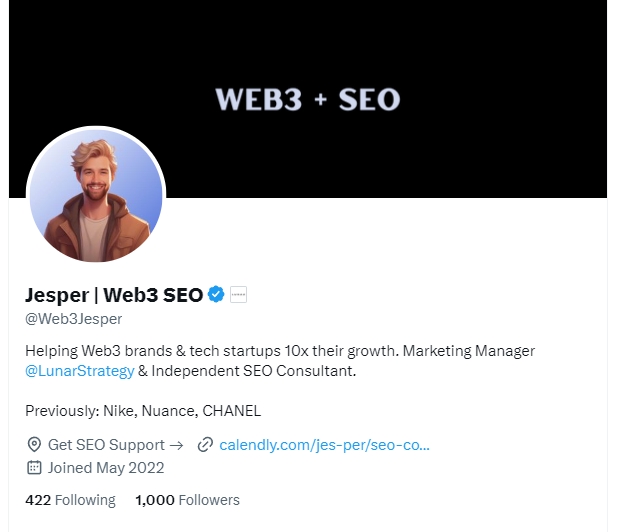
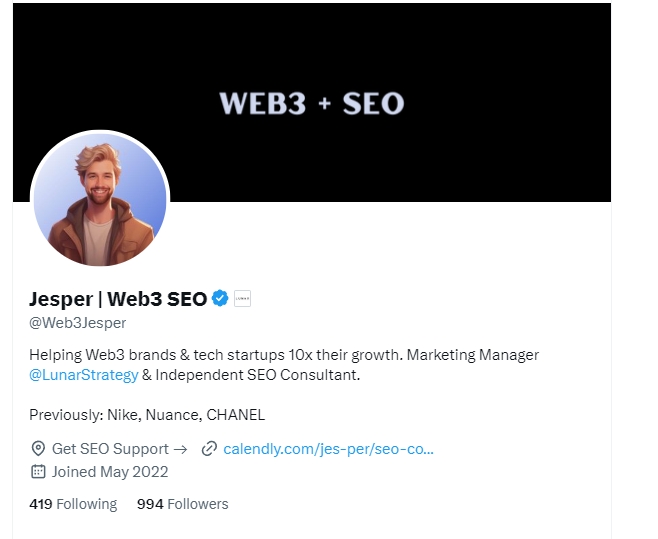
Helping Web3 brands & tech startups 10x growth. Marketing Director @LunarStrategy & SEO Consultant.
Crypto, AI & Tech Enthusiast
824following1kfollowers
The Thought Leader
Jesper is a seasoned SEO strategist who seamlessly bridges traditional big-brand experience with the cutting-edge Web3 frontier. With a passion for technology and a knack for demystifying SEO, he empowers Web3 brands and tech startups to harness SEO as their secret weapon for growth. His journey from global giants like Nike and Virgin Atlantic to pioneering within Web3 reflects his adaptability and forward-thinking mindset.
Jesper tweets so much about SEO you’d think Google himself is on speed dial—only to realize even he can’t fix a migration panic attack faster than Jesper hits 'tweet.' Maybe ease up on the tech jargon before your followers turn into SEO ghosts… or worse, Lurkers!
Successfully transitioned from managing SEO for global giants like Nike and Virgin Atlantic to becoming a trusted SEO consultant and marketing director for fast-growing Web3 startups, carving out a unique niche at the intersection of tech and marketing innovation.
Jesper’s life purpose centers on transforming the way emerging Web3 brands leverage digital visibility to claim their space in a competitive, evolving market. He aims to educate and lead businesses in mastering SEO to ensure they don’t just survive but thrive as the decentralized web unfolds.
He believes in the power of technology as a true game-changer, that smart, data-driven SEO strategies can cut through market noise, and that persistence through uncertainty (like SEO migrations) is crucial to long-term success. Jesper values transparency, continuous learning, and offering real, actionable advice over fluff and hype.
Jesper’s biggest strength is his deep SEO expertise coupled with real-world experience managing campaigns for both top-tier brands and innovative startups, enabling him to provide strategic, no-nonsense guidance that adapts to different scales and industries.
His intense focus on technical SEO and data-driven marketing might make his communication occasionally less accessible for beginners or non-technical audiences, limiting wider reach without further simplification. Also, the very high tweet volume with a strong follow-to-follower imbalance hints at a potential lack of active engagement reciprocity.
To grow his audience on X, Jesper should incorporate more interactive content such as polls, Twitter Spaces, or AMAs to foster two-way conversations. Simplifying complex SEO concepts into bite-sized, relatable tweets or threads and showcasing client success stories could increase engagement and follower loyalty.
Most AI today works alone: One model, one brain & one way of thinking.
@TheoriqAI does it different.
Here's how 👇
Theoriq makes it easy for anyone to build an AI agent. Communication between agents follows a shared standard, so agents can easily connect and collaborate with other agents. New agents can talk to existing agents right away. That means they can combine skills without starting from zero.
Because Theoriq is EVM-compatible, these agents are not stuck inside a single project or chain. They can move and work across the wider Web3 ecosystem. Their key actions are logged on-chain, giving users and developers a clear, tamper-proof record of what agents have done.
Building agents on Theoriq is modular. Developers can focus on specific skills and functions, knowing that their agents will plug into a larger system. The network also rewards agents and their developers through Proof of Contribution and Proof of Collaboration. These mechanisms track useful work and reward it fairly, without relying on a single platform to decide what matters.
But the real shift isn’t just about connection. It’s about collective intelligence.
That's the significance behind Theoriq swarms. These dynamic groups build themselves based on the needs of the task. Swarms grow, shrink and reconfigure in real time - depending on the tasks requirements. Each agent specializes in a specific type of work.
Some gather information.
Some run calculations.
Some make decisions.
By dividing the work, swarms solve problems that single large models aren't able to.
Coordination inside swarms follows rules baked into the protocol. This gives AI agent collectives full autonomy to complete tasks - and makes the swarms flexible, resilient and scalable by design.
In a Web3 world that values openness and composability, Theoriq is building the missing layer: autonomous agents that collaborate, adapt and work for users instead of corporations.
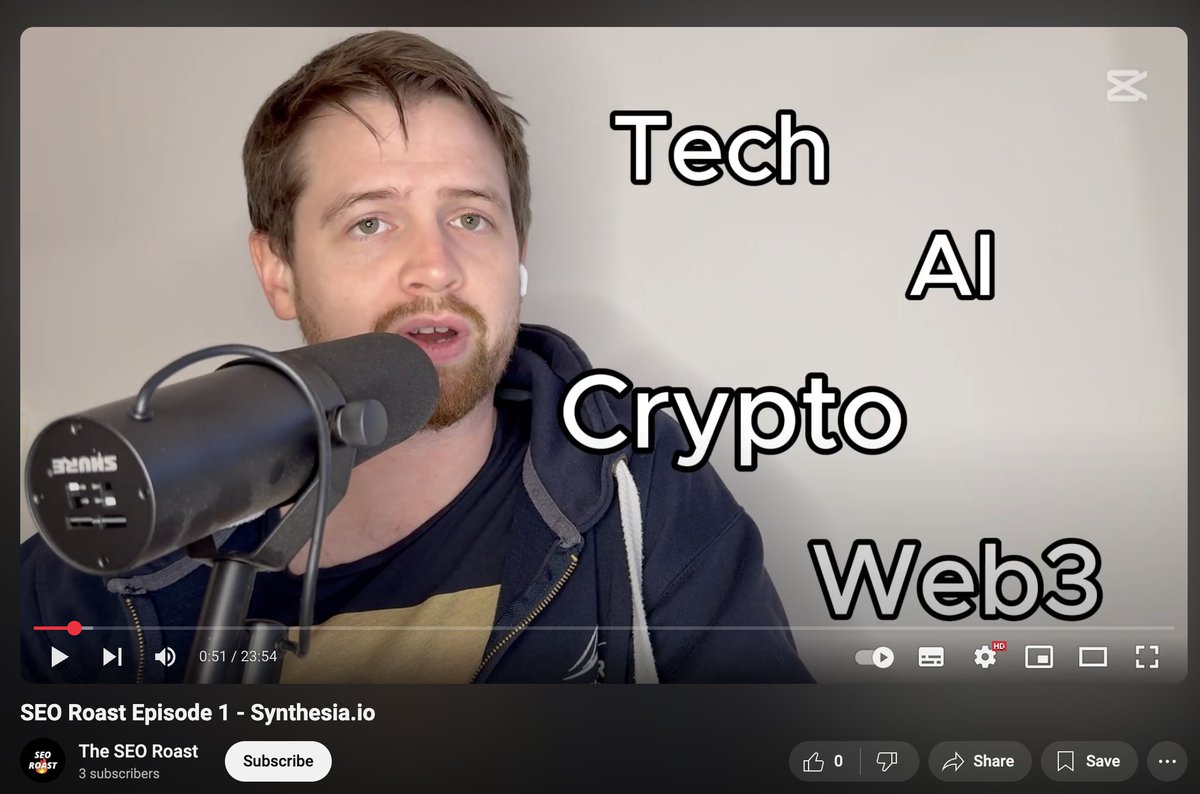
The first episode of @SEORoast is now live 👀
In this ep, I cover @synthesiaIO's SEO, compare them against their competitors and share some quick wins based on my 10+ years in the field
Link below 👇
Most AI today works alone: One model, one brain & one way of thinking.
@TheoriqAI does it different.
Here's how 👇
Theoriq makes it easy for anyone to build an AI agent. Communication between agents follows a shared standard, so agents can easily connect and collaborate with other agents. New agents can talk to existing agents right away. That means they can combine skills without starting from zero.
Because Theoriq is EVM-compatible, these agents are not stuck inside a single project or chain. They can move and work across the wider Web3 ecosystem. Their key actions are logged on-chain, giving users and developers a clear, tamper-proof record of what agents have done.
Building agents on Theoriq is modular. Developers can focus on specific skills and functions, knowing that their agents will plug into a larger system. The network also rewards agents and their developers through Proof of Contribution and Proof of Collaboration. These mechanisms track useful work and reward it fairly, without relying on a single platform to decide what matters.
But the real shift isn’t just about connection. It’s about collective intelligence.
That's the significance behind Theoriq swarms. These dynamic groups build themselves based on the needs of the task. Swarms grow, shrink and reconfigure in real time - depending on the tasks requirements. Each agent specializes in a specific type of work.
Some gather information.
Some run calculations.
Some make decisions.
By dividing the work, swarms solve problems that single large models aren't able to.
Coordination inside swarms follows rules baked into the protocol. This gives AI agent collectives full autonomy to complete tasks - and makes the swarms flexible, resilient and scalable by design.
In a Web3 world that values openness and composability, Theoriq is building the missing layer: autonomous agents that collaborate, adapt and work for users instead of corporations.
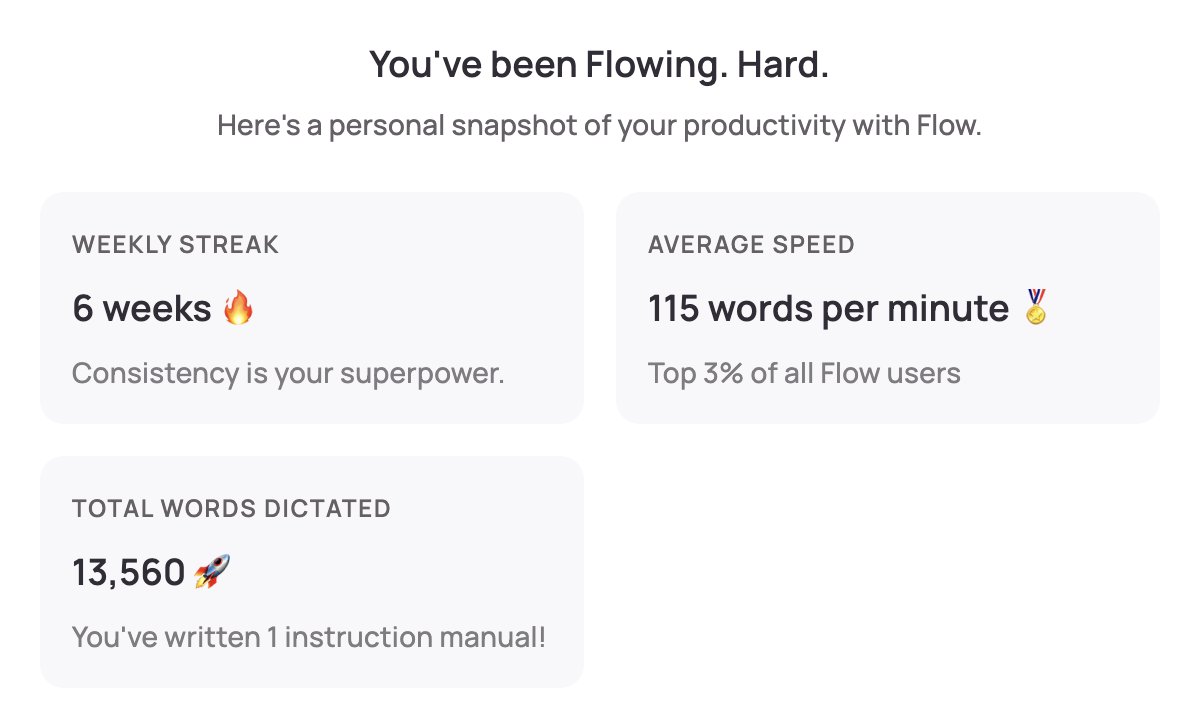
imo @WisprFlow is the most underrated AI tool in the market right now
Been using it consistently for 6 weeks to avoid typing everything. Not only is speaking faster, it takes a lot less mental energy.
2025 is the year I started building my AI productivity empire 🫡
Using data and technology to make every drop of water count for our communities and country. Founder of @infrasync, husband, father, builder, believer.
{"data":{"__meta":{"device":false,"path":"/creators/Web3Jesper"},"/creators/Web3Jesper":{"data":{"user":{"id":"1524120067994271745","name":"Jesper | Web3 SEO","description":"Helping Web3 brands & tech startups 10x growth. Marketing Director @LunarStrategy & SEO Consultant.\n\nCrypto, AI & Tech Enthusiast","followers_count":1300,"friends_count":824,"statuses_count":7111,"profile_image_url_https":"https://pbs.twimg.com/profile_images/1698715334671302656/uDBAM_-Z_normal.jpg","screen_name":"Web3Jesper","location":"Lisbon, Portugal","entities":{"description":{"urls":[]}}},"details":{"type":"The Thought Leader","description":"Jesper is a seasoned SEO strategist who seamlessly bridges traditional big-brand experience with the cutting-edge Web3 frontier. With a passion for technology and a knack for demystifying SEO, he empowers Web3 brands and tech startups to harness SEO as their secret weapon for growth. His journey from global giants like Nike and Virgin Atlantic to pioneering within Web3 reflects his adaptability and forward-thinking mindset.","facts":"Jesper once helped SEO giant brands like Nike and Tommy Hilfiger before focusing solely on the explosive potential of Web3 marketing.","purpose":"Jesper’s life purpose centers on transforming the way emerging Web3 brands leverage digital visibility to claim their space in a competitive, evolving market. He aims to educate and lead businesses in mastering SEO to ensure they don’t just survive but thrive as the decentralized web unfolds.","beliefs":"He believes in the power of technology as a true game-changer, that smart, data-driven SEO strategies can cut through market noise, and that persistence through uncertainty (like SEO migrations) is crucial to long-term success. Jesper values transparency, continuous learning, and offering real, actionable advice over fluff and hype.","strength":"Jesper’s biggest strength is his deep SEO expertise coupled with real-world experience managing campaigns for both top-tier brands and innovative startups, enabling him to provide strategic, no-nonsense guidance that adapts to different scales and industries.","weakness":"His intense focus on technical SEO and data-driven marketing might make his communication occasionally less accessible for beginners or non-technical audiences, limiting wider reach without further simplification. Also, the very high tweet volume with a strong follow-to-follower imbalance hints at a potential lack of active engagement reciprocity.","recommendation":"To grow his audience on X, Jesper should incorporate more interactive content such as polls, Twitter Spaces, or AMAs to foster two-way conversations. Simplifying complex SEO concepts into bite-sized, relatable tweets or threads and showcasing client success stories could increase engagement and follower loyalty.","roast":"Jesper tweets so much about SEO you’d think Google himself is on speed dial—only to realize even he can’t fix a migration panic attack faster than Jesper hits 'tweet.' Maybe ease up on the tech jargon before your followers turn into SEO ghosts… or worse, Lurkers!","win":"Successfully transitioned from managing SEO for global giants like Nike and Virgin Atlantic to becoming a trusted SEO consultant and marketing director for fast-growing Web3 startups, carving out a unique niche at the intersection of tech and marketing innovation."},"tweets":[{"bookmarked":false,"display_text_range":[0,279],"entities":{"hashtags":[],"symbols":[],"timestamps":[],"urls":[],"user_mentions":[]},"favorited":false,"lang":"en","retweeted":false,"fact_check":null,"id":"1707027279954497955","view_count":5206,"bookmark_count":2,"created_at":1695821993000,"favorite_count":29,"quote_count":2,"reply_count":5,"retweet_count":2,"user_id_str":"1524120067994271745","conversation_id_str":"1707027279954497955","full_text":"I managed SEO strategy for brands like Nike, Tommy Hilfiger and Virgin Atlantic for the past 7 years\n\nNow I help Web3 brands make SEO a core channel for customer acquisition\n \nIf you plan to pursue a similar path, you won’t want to miss this:\n\nAs a post-grad marketing student, I found myself in the unenviable position of realizing that marketing probably wasn't for me.\n\nBranding felt too fluffy and advertising was too focused on making a quick buck.\n\nI spent five years paying to learn marketing and still didn’t know what to do with my life…\n\nI was not excited to have that conversation with my parents 😅\n\nLuckily, a friend started his own agency and needed help. That’s when I first came across SEO, and I’m so glad I did!\n\nAs a tech geek, optimizing websites for Google felt like the coolest marketing I’d ever heard of!\n\nI quickly dove into all the guides and articles I could find and was soon managing my friend’s client websites.\n\nBut that position was never meant to last forever.\n\nI moved to London and landed a job at a premium agency.\n\nMy first client? Nike.\n\nYeah, it was intimidating at first. But I realized the big names have the same SEO issues as smaller brands.\n\nI guess even a Ferrari needs an oil change every once in a while.\n\nI managed the SEO strategies for brands like Virgin Atlantic, Tommy Hilfiger, Calvin Klein and countless others.\n\nI spent years working in every sector from fashion and skincare to travel and tech, learning everything I could.\n\nBut eventually, I hit a wall. I stopped learning. I felt stuck.\n\nImagine playing the same video game level over and over. That's how my job started to feel.\n\nSo I switched roles in the company to shake things up. Cool for a bit, but the same feeling came back. That's when I knew it was time for another change.\n\nNow I leverage my SEO expertise to help Web3 businesses grow.\n\nWhy Web3?\nThe same love of technology that drove me to SEO is fueling my work in Web3.\n\nSEO is the best way to stand out as an authority to users actively looking for your services.\n\nAnd Web3 businesses will need this differentiation to grow, especially since we’re going mainstream and new competitors flood the market everyday.\n\nSo if you’re wondering how SEO can help your business, you’re in luck!\n\nI’m offering free SEO consultations to Web3 brands over the next few weeks.\n\nI want to learn what you’re building, and in exchange I’ll answer your SEO questions and help however I can!\n\nDM me now to learn more!","in_reply_to_user_id_str":null,"in_reply_to_status_id_str":null,"is_quote_status":0,"is_ai":null,"ai_score":null},{"bookmarked":false,"display_text_range":[0,153],"entities":{"hashtags":[],"symbols":[],"timestamps":[],"urls":[],"user_mentions":[]},"favorited":false,"lang":"en","retweeted":false,"fact_check":null,"id":"1840050223604715570","view_count":8221,"bookmark_count":15,"created_at":1727537134000,"favorite_count":24,"quote_count":0,"reply_count":1,"retweet_count":11,"user_id_str":"1524120067994271745","conversation_id_str":"1840050223604715570","full_text":"If you've launched a new website and want to get organic traffic\n\nI'm sharing how I help new websites rank on the first page of Google.\n\nOpen this now: 👇","in_reply_to_user_id_str":null,"in_reply_to_status_id_str":null,"is_quote_status":0,"is_ai":null,"ai_score":null},{"bookmarked":false,"display_text_range":[0,58],"entities":{"hashtags":[],"media":[{"display_url":"pic.x.com/OIENvjAQhJ","expanded_url":"https://x.com/Web3Jesper/status/1911069856142705009/photo/1","id_str":"1911069838576844800","indices":[59,82],"media_key":"3_1911069838576844800","media_url_https":"https://pbs.twimg.com/media/GoV75JVWAAAuOIT.jpg","type":"photo","url":"https://t.co/OIENvjAQhJ","ext_media_availability":{"status":"Available"},"features":{"large":{"faces":[{"x":318,"y":922,"h":108,"w":108}]},"medium":{"faces":[{"x":186,"y":540,"h":63,"w":63}]},"small":{"faces":[{"x":105,"y":306,"h":35,"w":35}]},"orig":{"faces":[{"x":318,"y":922,"h":108,"w":108}]}},"sizes":{"large":{"h":1536,"w":2048,"resize":"fit"},"medium":{"h":900,"w":1200,"resize":"fit"},"small":{"h":510,"w":680,"resize":"fit"},"thumb":{"h":150,"w":150,"resize":"crop"}},"original_info":{"height":1536,"width":2048,"focus_rects":[{"x":0,"y":195,"w":2048,"h":1147},{"x":0,"y":0,"w":1536,"h":1536},{"x":0,"y":0,"w":1347,"h":1536},{"x":0,"y":0,"w":768,"h":1536},{"x":0,"y":0,"w":2048,"h":1536}]},"media_results":{"result":{"media_key":"3_1911069838576844800"}}}],"symbols":[],"timestamps":[],"urls":[],"user_mentions":[{"id_str":"1260942280220971008","name":"Lunar Strategy","screen_name":"LunarStrategy","indices":[25,39]},{"id_str":"1903079268193533952","name":"Vibe Haus","screen_name":"vibecodehouse","indices":[44,58]}]},"extended_entities":{"media":[{"display_url":"pic.x.com/OIENvjAQhJ","expanded_url":"https://x.com/Web3Jesper/status/1911069856142705009/photo/1","id_str":"1911069838576844800","indices":[59,82],"media_key":"3_1911069838576844800","media_url_https":"https://pbs.twimg.com/media/GoV75JVWAAAuOIT.jpg","type":"photo","url":"https://t.co/OIENvjAQhJ","ext_media_availability":{"status":"Available"},"features":{"large":{"faces":[{"x":318,"y":922,"h":108,"w":108}]},"medium":{"faces":[{"x":186,"y":540,"h":63,"w":63}]},"small":{"faces":[{"x":105,"y":306,"h":35,"w":35}]},"orig":{"faces":[{"x":318,"y":922,"h":108,"w":108}]}},"sizes":{"large":{"h":1536,"w":2048,"resize":"fit"},"medium":{"h":900,"w":1200,"resize":"fit"},"small":{"h":510,"w":680,"resize":"fit"},"thumb":{"h":150,"w":150,"resize":"crop"}},"original_info":{"height":1536,"width":2048,"focus_rects":[{"x":0,"y":195,"w":2048,"h":1147},{"x":0,"y":0,"w":1536,"h":1536},{"x":0,"y":0,"w":1347,"h":1536},{"x":0,"y":0,"w":768,"h":1536},{"x":0,"y":0,"w":2048,"h":1536}]},"media_results":{"result":{"media_key":"3_1911069838576844800"}}}]},"favorited":false,"lang":"en","possibly_sensitive":false,"possibly_sensitive_editable":true,"retweeted":false,"fact_check":null,"id":"1911069856142705009","view_count":387,"bookmark_count":0,"created_at":1744469534000,"favorite_count":17,"quote_count":0,"reply_count":3,"retweet_count":0,"user_id_str":"1524120067994271745","conversation_id_str":"1911069856142705009","full_text":"Great first session with @LunarStrategy and @vibecodehouse https://t.co/OIENvjAQhJ","in_reply_to_user_id_str":null,"in_reply_to_status_id_str":null,"is_quote_status":0,"is_ai":null,"ai_score":null},{"bookmarked":false,"display_text_range":[0,275],"entities":{"hashtags":[],"media":[{"display_url":"pic.x.com/t6ELH1cKjS","expanded_url":"https://x.com/Web3Jesper/status/1836688096131174904/photo/1","id_str":"1836688090120753152","indices":[276,299],"media_key":"3_1836688090120753152","media_url_https":"https://pbs.twimg.com/media/GX06FjbWkAATwxp.jpg","type":"photo","url":"https://t.co/t6ELH1cKjS","ext_media_availability":{"status":"Available"},"features":{"large":{"faces":[{"x":245,"y":220,"h":176,"w":176}]},"medium":{"faces":[{"x":245,"y":220,"h":176,"w":176}]},"small":{"faces":[{"x":162,"y":146,"h":116,"w":116}]},"orig":{"faces":[{"x":245,"y":220,"h":176,"w":176}]}},"sizes":{"large":{"h":1024,"w":1024,"resize":"fit"},"medium":{"h":1024,"w":1024,"resize":"fit"},"small":{"h":680,"w":680,"resize":"fit"},"thumb":{"h":150,"w":150,"resize":"crop"}},"original_info":{"height":1024,"width":1024,"focus_rects":[{"x":0,"y":46,"w":1024,"h":573},{"x":0,"y":0,"w":1024,"h":1024},{"x":126,"y":0,"w":898,"h":1024},{"x":332,"y":0,"w":512,"h":1024},{"x":0,"y":0,"w":1024,"h":1024}]},"media_results":{"result":{"media_key":"3_1836688090120753152"}}}],"symbols":[],"timestamps":[],"urls":[],"user_mentions":[]},"extended_entities":{"media":[{"display_url":"pic.x.com/t6ELH1cKjS","expanded_url":"https://x.com/Web3Jesper/status/1836688096131174904/photo/1","id_str":"1836688090120753152","indices":[276,299],"media_key":"3_1836688090120753152","media_url_https":"https://pbs.twimg.com/media/GX06FjbWkAATwxp.jpg","type":"photo","url":"https://t.co/t6ELH1cKjS","ext_media_availability":{"status":"Available"},"features":{"large":{"faces":[{"x":245,"y":220,"h":176,"w":176}]},"medium":{"faces":[{"x":245,"y":220,"h":176,"w":176}]},"small":{"faces":[{"x":162,"y":146,"h":116,"w":116}]},"orig":{"faces":[{"x":245,"y":220,"h":176,"w":176}]}},"sizes":{"large":{"h":1024,"w":1024,"resize":"fit"},"medium":{"h":1024,"w":1024,"resize":"fit"},"small":{"h":680,"w":680,"resize":"fit"},"thumb":{"h":150,"w":150,"resize":"crop"}},"original_info":{"height":1024,"width":1024,"focus_rects":[{"x":0,"y":46,"w":1024,"h":573},{"x":0,"y":0,"w":1024,"h":1024},{"x":126,"y":0,"w":898,"h":1024},{"x":332,"y":0,"w":512,"h":1024},{"x":0,"y":0,"w":1024,"h":1024}]},"media_results":{"result":{"media_key":"3_1836688090120753152"}}}]},"favorited":false,"lang":"en","possibly_sensitive":false,"possibly_sensitive_editable":true,"retweeted":false,"fact_check":null,"id":"1836688096131174904","view_count":5332,"bookmark_count":0,"created_at":1726735540000,"favorite_count":16,"quote_count":0,"reply_count":2,"retweet_count":5,"user_id_str":"1524120067994271745","conversation_id_str":"1836688096131174904","full_text":"Your path in marketing is never a straight line.\n\nI started in SEO with the big brands—Nike, Virgin, Tommy Hilfiger. It was a ride. Big names, big stakes. Seven years of agency life.\n\nThen I made a shift...\n\nnow I help Web3 brands and tech startups turn SEO into their secret weapon.\n\nIf you're thinking of jumping into SEO, here’s what you should know:\n\nBack in grad school, I had a crisis. Five years into a marketing degree, and I hated marketing.\n\nBranding felt like fluff.\n\nAdvertising? Just chasing the next dollar.\n\nI thought, \"Did I waste five years?\"\n\nNot a fun call to have with your parents\n\nBut then, a twist... A friend needed help at his agency. That’s where I found SEO. A tech geek’s dream.\n\nWebsites, algorithms, rankings—it all clicked.\n\nAnd really left an impression. (Pardon the pun 👀) I tried every guide I could find. Soon, I was running SEO for his clients.\n\nBut nothing lasts forever.\n\nI moved to London. Landed a spot at a top agency. My first client? Nike.\n\nTerrifying, sure.\n\nBut I learned quick—big brands have the same SEO problems as small ones. They all need the same oil change.\n\nI went deep. Fashion, travel, tech—every niche. Virgin Atlantic, Calvin Klein...\n\nBut after a while? I felt stuck. Like beating the same game level on repeat.\n\nI switched roles. Got a new angle. But soon enough, that wall showed up again.\n\nThat's when I knew it was time to move on.\n\nNow, I’m channelling all that experience into Web3.\n\nWhy Web3?\n\nIt’s the same spark that led me to SEO—tech that’s changing the game.\n\nAnd Web3 brands need SEO to cut through the noise.\n\nThe market’s exploding. New players every day. Standing out is survival.\n\nThat’s why I’m offering SEO consultations for Web3 brands.\n\nI want to hear what you're building and help your business get found.\n\nI’ll give you my best advice on how to get found.\n\nDM me... let’s see how SEO can take you further.","in_reply_to_user_id_str":null,"in_reply_to_status_id_str":null,"is_quote_status":0,"is_ai":null,"ai_score":null},{"bookmarked":false,"display_text_range":[0,279],"entities":{"hashtags":[],"media":[{"display_url":"pic.x.com/r0rj0dauec","expanded_url":"https://twitter.com/HoboMojo_/status/1835606472698315231/photo/1","id_str":"1835606468017500160","indices":[280,303],"media_key":"3_1835606468017500160","media_url_https":"https://pbs.twimg.com/media/GXliW3GXsAAusqk.jpg","type":"photo","url":"https://t.co/R0Rj0Dauec","ext_media_availability":{"status":"Available"},"features":{"large":{"faces":[]},"medium":{"faces":[]},"small":{"faces":[]},"orig":{"faces":[]}},"sizes":{"large":{"h":1024,"w":1024,"resize":"fit"},"medium":{"h":1024,"w":1024,"resize":"fit"},"small":{"h":680,"w":680,"resize":"fit"},"thumb":{"h":150,"w":150,"resize":"crop"}},"original_info":{"height":1024,"width":1024,"focus_rects":[{"x":0,"y":405,"w":1024,"h":573},{"x":0,"y":0,"w":1024,"h":1024},{"x":88,"y":0,"w":898,"h":1024},{"x":281,"y":0,"w":512,"h":1024},{"x":0,"y":0,"w":1024,"h":1024}]},"media_results":{"result":{"media_key":"3_1835606468017500160"}}}],"symbols":[],"timestamps":[],"urls":[],"user_mentions":[]},"extended_entities":{"media":[{"display_url":"pic.x.com/r0rj0dauec","expanded_url":"https://twitter.com/HoboMojo_/status/1835606472698315231/photo/1","id_str":"1835606468017500160","indices":[280,303],"media_key":"3_1835606468017500160","media_url_https":"https://pbs.twimg.com/media/GXliW3GXsAAusqk.jpg","type":"photo","url":"https://t.co/R0Rj0Dauec","ext_media_availability":{"status":"Available"},"features":{"large":{"faces":[]},"medium":{"faces":[]},"small":{"faces":[]},"orig":{"faces":[]}},"sizes":{"large":{"h":1024,"w":1024,"resize":"fit"},"medium":{"h":1024,"w":1024,"resize":"fit"},"small":{"h":680,"w":680,"resize":"fit"},"thumb":{"h":150,"w":150,"resize":"crop"}},"original_info":{"height":1024,"width":1024,"focus_rects":[{"x":0,"y":405,"w":1024,"h":573},{"x":0,"y":0,"w":1024,"h":1024},{"x":88,"y":0,"w":898,"h":1024},{"x":281,"y":0,"w":512,"h":1024},{"x":0,"y":0,"w":1024,"h":1024}]},"media_results":{"result":{"media_key":"3_1835606468017500160"}}}]},"favorited":false,"lang":"en","possibly_sensitive":false,"possibly_sensitive_editable":true,"retweeted":false,"fact_check":null,"id":"1835606472698315231","view_count":4429,"bookmark_count":2,"created_at":1726477661000,"favorite_count":12,"quote_count":0,"reply_count":3,"retweet_count":6,"user_id_str":"1524120067994271745","conversation_id_str":"1835606472698315231","full_text":"Most migrations are just nerves disguised as tasks.\n\nLet’s say you’re moving domain.\n\nIf you know the steps, you know the risks.\n\nYou don’t really have a problem.\n\nIt's just a process to manage.\n\nYou can either:\n\nA) Plan everything—redirects, risks, contingencies.\n\nB) Launch and pray Google gets it right.\n\nI’ve seen more sleepless nights over migrations than mistakes made.\n\nIf you mess up a migration, you can lose ALL your SEO traffic overnight. That’s why having SEO expertise during a site migration is so important.\n\nToo many treat SEO as an afterthought.\n\nYou hear the nightmare stories—businesses looking for SEO help a month after the migration, once they notice a loss in traffic.\n\nBy then, it’s too late.\n\nYou’ve lost A LOT of SEO value if you didn’t follow a good approach from the start.\n\nIn fact, every mistake teaches you something.\n\nIt's the unknown that gets you.\n\nEvery month I guide clients through this.\n\nMostly about redirects.\n\nOften about rankings.\n\nSometimes I’ll give them the exact steps to take.\n\nBut in some cases, that is too easy.\n\nSometimes the best thing I can do is make them face it.\n\n... to plan.\n\n... to wait.\n\n... to check every redirect.\n\n... to brace for the dip.\n\n… to ride it out.\n\n... to see the recovery.\n\n… to not panic.\n\n… to learn.\n\n… to trust the process.\n\nThat's what I had to do this time.\n\nI had to wait.\n\n... to see the old domain lose its rank.\n\n... to watch the new one slowly climb.\n\n... to tell myself it’s all part of the process.\n\n... to hold steady when the traffic was low.\n\n... to breathe when the rankings returned.\n\nI doubted some steps, but as I write this with traffic flowing back, I know we’re okay.\n\n(My heart's still beating fast but that’s normal).\n\nThe hardest part isn’t the migration itself.\n\nIt’s handling the wait.\n\nWe launch and face what comes.\n\nThen we adapt.\n\nBecause one wrong step won't kill you.\n\nBut not knowing what to expect will.","in_reply_to_user_id_str":null,"in_reply_to_status_id_str":null,"is_quote_status":0,"is_ai":null,"ai_score":null},{"bookmarked":false,"display_text_range":[0,274],"entities":{"hashtags":[],"symbols":[],"timestamps":[],"urls":[],"user_mentions":[]},"favorited":false,"lang":"en","retweeted":false,"fact_check":null,"id":"1844747572801397133","view_count":4848,"bookmark_count":6,"created_at":1728657069000,"favorite_count":12,"quote_count":0,"reply_count":0,"retweet_count":6,"user_id_str":"1524120067994271745","conversation_id_str":"1844747572801397133","full_text":"Most people start by creating content without a clear plan.\n\nThey push out blog posts, hoping for clicks and traffic.\n\nBut when it comes to driving serious SEO results?\n\nThey struggle.\n\nBut me? I’ve built strategies that rank new sites in predictable time.\n\nHow?\n\nHow does a brand-new website optimized by me\n\nCompete in the SEO field?\n\nSimple.\n\nI make sure the content works for the audience and Google.\n\nLet’s break it down.\n\nMost people don’t even track their SEO performance effectively.\n\nTheir approach looks something like this:\n\n➠ Write a blog post on a random topic.\n➠ Publish it without checking for keyword relevance.\n➠ Wait, hoping it magically ranks on Google. (Hint: it won’t get the results they want)\n\nNo wonder their traffic stays flat.\n\nHere’s what needs to happen instead.\n\nI’m going to use an analogy to explain SEO:\n\n➠ You build a house.\n➠ You want guests.\n➠ But you don’t tell anyone about the house.\n➠ Few people visit.\n➠ You wonder why it’s empty.\n➠ You put up signs to guide them.\n➠ Suddenly, the place is packed.\n\nWhat do I mean by that?\n\nSEO is like putting up those signs. You need to direct people to your content.\n\nPeople won’t just come to your website. You need to show up where they are searching.\n\nSo how do we make sure we appear in those searches?\n\nWe start with the right foundation.\n\n➠ Do keyword research.\n➠ Create content that solves real problems.\n➠ Set up Google Analytics and Search Console.\n\nWith this strategy, I’ve helped my clients grow their sites from zero traffic to thousands of monthly visitors.\n\nAnd with that,\n\nIf you found this breakdown helpful,\n\nBookmark + follow for more.","in_reply_to_user_id_str":null,"in_reply_to_status_id_str":null,"is_quote_status":0,"is_ai":null,"ai_score":null},{"bookmarked":false,"display_text_range":[0,211],"entities":{"hashtags":[],"symbols":[],"timestamps":[],"urls":[],"user_mentions":[{"id_str":"1260942280220971008","name":"Lunar Strategy","screen_name":"LunarStrategy","indices":[51,65]},{"id_str":"1903079268193533952","name":"Vibe Haus","screen_name":"vibecodehouse","indices":[70,84]}]},"favorited":false,"lang":"en","quoted_status_id_str":"1909570883858948485","quoted_status_permalink":{"url":"https://t.co/4TYMnCDaHa","expanded":"https://twitter.com/LunarStrategy/status/1909570883858948485","display":"x.com/LunarStrategy/…"},"retweeted":false,"fact_check":null,"id":"1910981033350094977","view_count":652,"bookmark_count":0,"created_at":1744448357000,"favorite_count":12,"quote_count":0,"reply_count":1,"retweet_count":2,"user_id_str":"1524120067994271745","conversation_id_str":"1910981033350094977","full_text":"Ready for a live, in-person vibe coding event with @LunarStrategy and @vibecodehouse \n\nIf you don’t spend part of your weekends catching up on AI tools…\n\nWhat are you up to? 👀\n\n(Just don’t forget to touch grass)","in_reply_to_user_id_str":null,"in_reply_to_status_id_str":null,"is_quote_status":1,"is_ai":null,"ai_score":null},{"bookmarked":false,"display_text_range":[0,279],"entities":{"hashtags":[],"media":[{"display_url":"pic.x.com/01wzAoxJvY","expanded_url":"https://x.com/Web3Jesper/status/1844687056015949948/photo/1","id_str":"1844686978823884815","indices":[280,303],"media_key":"3_1844686978823884815","media_url_https":"https://pbs.twimg.com/media/GZmlCJ6WEA8E7Yb.jpg","type":"photo","url":"https://t.co/01wzAoxJvY","ext_media_availability":{"status":"Available"},"features":{"large":{"faces":[{"x":77,"y":157,"h":39,"w":39}]},"medium":{"faces":[{"x":77,"y":157,"h":39,"w":39}]},"small":{"faces":[{"x":77,"y":157,"h":39,"w":39}]},"orig":{"faces":[{"x":77,"y":157,"h":39,"w":39}]}},"sizes":{"large":{"h":532,"w":617,"resize":"fit"},"medium":{"h":532,"w":617,"resize":"fit"},"small":{"h":532,"w":617,"resize":"fit"},"thumb":{"h":150,"w":150,"resize":"crop"}},"original_info":{"height":532,"width":617,"focus_rects":[{"x":0,"y":150,"w":617,"h":346},{"x":0,"y":0,"w":532,"h":532},{"x":0,"y":0,"w":467,"h":532},{"x":36,"y":0,"w":266,"h":532},{"x":0,"y":0,"w":617,"h":532}]},"media_results":{"result":{"media_key":"3_1844686978823884815"}}}],"symbols":[],"timestamps":[],"urls":[],"user_mentions":[]},"extended_entities":{"media":[{"display_url":"pic.x.com/01wzAoxJvY","expanded_url":"https://x.com/Web3Jesper/status/1844687056015949948/photo/1","id_str":"1844686978823884815","indices":[280,303],"media_key":"3_1844686978823884815","media_url_https":"https://pbs.twimg.com/media/GZmlCJ6WEA8E7Yb.jpg","type":"photo","url":"https://t.co/01wzAoxJvY","ext_media_availability":{"status":"Available"},"features":{"large":{"faces":[{"x":77,"y":157,"h":39,"w":39}]},"medium":{"faces":[{"x":77,"y":157,"h":39,"w":39}]},"small":{"faces":[{"x":77,"y":157,"h":39,"w":39}]},"orig":{"faces":[{"x":77,"y":157,"h":39,"w":39}]}},"sizes":{"large":{"h":532,"w":617,"resize":"fit"},"medium":{"h":532,"w":617,"resize":"fit"},"small":{"h":532,"w":617,"resize":"fit"},"thumb":{"h":150,"w":150,"resize":"crop"}},"original_info":{"height":532,"width":617,"focus_rects":[{"x":0,"y":150,"w":617,"h":346},{"x":0,"y":0,"w":532,"h":532},{"x":0,"y":0,"w":467,"h":532},{"x":36,"y":0,"w":266,"h":532},{"x":0,"y":0,"w":617,"h":532}]},"media_results":{"result":{"media_key":"3_1844686978823884815"}}}]},"favorited":false,"lang":"en","possibly_sensitive":false,"possibly_sensitive_editable":true,"retweeted":false,"fact_check":null,"id":"1844687056015949948","view_count":199,"bookmark_count":0,"created_at":1728642641000,"favorite_count":11,"quote_count":0,"reply_count":6,"retweet_count":0,"user_id_str":"1524120067994271745","conversation_id_str":"1844687056015949948","full_text":"Today, I hit 1,000 followers on X! 🎉\n\nTwo years ago, I started with:\n\n- No clear plan\n- A love for Web3\n- A corporate Web2 job\n\nNow, I have:\n\n- 1,003 followers\n- A strong Web3 community\n- A lot of Web3 projects I've worked with\n\nIt proves that staying consistent pays off.\n\n“I’ll keep giving value to those who believe in me.”\n\nThis journey isn’t just about me. That’s never been the goal.\n\nI want to help my community grow too.\n\n- Better SEO results\n- More organic traffic\n- A thriving Web3 space\n\nSimple actions + daily effort = Big results.\n\nLet’s keep building together.\n\nThank you to everyone who’s been a part of this.","in_reply_to_user_id_str":null,"in_reply_to_status_id_str":null,"is_quote_status":0,"is_ai":null,"ai_score":null},{"bookmarked":false,"display_text_range":[0,282],"entities":{"hashtags":[],"media":[{"display_url":"pic.x.com/9bDYsP6cgM","expanded_url":"https://x.com/Web3Jesper/status/1916774510595887438/photo/1","id_str":"1916774144147918848","indices":[283,306],"media_key":"3_1916774144147918848","media_url_https":"https://pbs.twimg.com/media/Gpm_7biXEAAhdFC.jpg","type":"photo","url":"https://t.co/9bDYsP6cgM","ext_media_availability":{"status":"Available"},"features":{"large":{"faces":[]},"medium":{"faces":[]},"small":{"faces":[]},"orig":{"faces":[]}},"sizes":{"large":{"h":1080,"w":1920,"resize":"fit"},"medium":{"h":675,"w":1200,"resize":"fit"},"small":{"h":383,"w":680,"resize":"fit"},"thumb":{"h":150,"w":150,"resize":"crop"}},"original_info":{"height":1080,"width":1920,"focus_rects":[{"x":0,"y":0,"w":1920,"h":1075},{"x":0,"y":0,"w":1080,"h":1080},{"x":55,"y":0,"w":947,"h":1080},{"x":258,"y":0,"w":540,"h":1080},{"x":0,"y":0,"w":1920,"h":1080}]},"allow_download_status":{"allow_download":true},"media_results":{"result":{"media_key":"3_1916774144147918848"}}}],"symbols":[],"timestamps":[],"urls":[],"user_mentions":[{"id_str":"1549505015655440384","name":"Theoriq","screen_name":"TheoriqAI","indices":[93,103]},{"id_str":"1549505015655440384","name":"Theoriq","screen_name":"TheoriqAI","indices":[89,99]}]},"extended_entities":{"media":[{"display_url":"pic.x.com/9bDYsP6cgM","expanded_url":"https://x.com/Web3Jesper/status/1916774510595887438/photo/1","id_str":"1916774144147918848","indices":[283,306],"media_key":"3_1916774144147918848","media_url_https":"https://pbs.twimg.com/media/Gpm_7biXEAAhdFC.jpg","type":"photo","url":"https://t.co/9bDYsP6cgM","ext_media_availability":{"status":"Available"},"features":{"large":{"faces":[]},"medium":{"faces":[]},"small":{"faces":[]},"orig":{"faces":[]}},"sizes":{"large":{"h":1080,"w":1920,"resize":"fit"},"medium":{"h":675,"w":1200,"resize":"fit"},"small":{"h":383,"w":680,"resize":"fit"},"thumb":{"h":150,"w":150,"resize":"crop"}},"original_info":{"height":1080,"width":1920,"focus_rects":[{"x":0,"y":0,"w":1920,"h":1075},{"x":0,"y":0,"w":1080,"h":1080},{"x":55,"y":0,"w":947,"h":1080},{"x":258,"y":0,"w":540,"h":1080},{"x":0,"y":0,"w":1920,"h":1080}]},"allow_download_status":{"allow_download":true},"media_results":{"result":{"media_key":"3_1916774144147918848"}}}]},"favorited":false,"lang":"en","possibly_sensitive":false,"possibly_sensitive_editable":true,"retweeted":false,"fact_check":null,"id":"1916774510595887438","view_count":757,"bookmark_count":2,"created_at":1745829629000,"favorite_count":11,"quote_count":0,"reply_count":3,"retweet_count":1,"user_id_str":"1524120067994271745","conversation_id_str":"1916774510595887438","full_text":"Most AI today works alone: One model, one brain & one way of thinking.\n \n@TheoriqAI does it different.\n \nHere's how 👇\n \nTheoriq makes it easy for anyone to build an AI agent. Communication between agents follows a shared standard, so agents can easily connect and collaborate with other agents. New agents can talk to existing agents right away. That means they can combine skills without starting from zero.\n\nBecause Theoriq is EVM-compatible, these agents are not stuck inside a single project or chain. They can move and work across the wider Web3 ecosystem. Their key actions are logged on-chain, giving users and developers a clear, tamper-proof record of what agents have done.\n\nBuilding agents on Theoriq is modular. Developers can focus on specific skills and functions, knowing that their agents will plug into a larger system. The network also rewards agents and their developers through Proof of Contribution and Proof of Collaboration. These mechanisms track useful work and reward it fairly, without relying on a single platform to decide what matters.\n\nBut the real shift isn’t just about connection. It’s about collective intelligence.\n\nThat's the significance behind Theoriq swarms. These dynamic groups build themselves based on the needs of the task. Swarms grow, shrink and reconfigure in real time - depending on the tasks requirements. Each agent specializes in a specific type of work. \n\nSome gather information. \nSome run calculations. \nSome make decisions. \n\nBy dividing the work, swarms solve problems that single large models aren't able to.\n\nCoordination inside swarms follows rules baked into the protocol. This gives AI agent collectives full autonomy to complete tasks - and makes the swarms flexible, resilient and scalable by design.\n\nIn a Web3 world that values openness and composability, Theoriq is building the missing layer: autonomous agents that collaborate, adapt and work for users instead of corporations.","in_reply_to_user_id_str":null,"in_reply_to_status_id_str":null,"is_quote_status":0,"is_ai":null,"ai_score":null},{"bookmarked":false,"display_text_range":[0,271],"entities":{"hashtags":[],"media":[{"display_url":"pic.x.com/vT1bu4OwXn","expanded_url":"https://x.com/Web3Jesper/status/1844072182751846579/photo/1","id_str":"1844072173733859328","indices":[272,295],"media_key":"3_1844072173733859328","media_url_https":"https://pbs.twimg.com/media/GZd13yeW0AA4Zly.jpg","type":"photo","url":"https://t.co/vT1bu4OwXn","ext_media_availability":{"status":"Available"},"features":{"large":{"faces":[{"x":81,"y":161,"h":40,"w":40}]},"medium":{"faces":[{"x":81,"y":161,"h":40,"w":40}]},"small":{"faces":[{"x":81,"y":161,"h":40,"w":40}]},"orig":{"faces":[{"x":81,"y":161,"h":40,"w":40}]}},"sizes":{"large":{"h":539,"w":658,"resize":"fit"},"medium":{"h":539,"w":658,"resize":"fit"},"small":{"h":539,"w":658,"resize":"fit"},"thumb":{"h":150,"w":150,"resize":"crop"}},"original_info":{"height":539,"width":658,"focus_rects":[{"x":0,"y":161,"w":658,"h":368},{"x":0,"y":0,"w":539,"h":539},{"x":0,"y":0,"w":473,"h":539},{"x":0,"y":0,"w":270,"h":539},{"x":0,"y":0,"w":658,"h":539}]},"media_results":{"result":{"media_key":"3_1844072173733859328"}}}],"symbols":[],"timestamps":[],"urls":[],"user_mentions":[]},"extended_entities":{"media":[{"display_url":"pic.x.com/vT1bu4OwXn","expanded_url":"https://x.com/Web3Jesper/status/1844072182751846579/photo/1","id_str":"1844072173733859328","indices":[272,295],"media_key":"3_1844072173733859328","media_url_https":"https://pbs.twimg.com/media/GZd13yeW0AA4Zly.jpg","type":"photo","url":"https://t.co/vT1bu4OwXn","ext_media_availability":{"status":"Available"},"features":{"large":{"faces":[{"x":81,"y":161,"h":40,"w":40}]},"medium":{"faces":[{"x":81,"y":161,"h":40,"w":40}]},"small":{"faces":[{"x":81,"y":161,"h":40,"w":40}]},"orig":{"faces":[{"x":81,"y":161,"h":40,"w":40}]}},"sizes":{"large":{"h":539,"w":658,"resize":"fit"},"medium":{"h":539,"w":658,"resize":"fit"},"small":{"h":539,"w":658,"resize":"fit"},"thumb":{"h":150,"w":150,"resize":"crop"}},"original_info":{"height":539,"width":658,"focus_rects":[{"x":0,"y":161,"w":658,"h":368},{"x":0,"y":0,"w":539,"h":539},{"x":0,"y":0,"w":473,"h":539},{"x":0,"y":0,"w":270,"h":539},{"x":0,"y":0,"w":658,"h":539}]},"media_results":{"result":{"media_key":"3_1844072173733859328"}}}]},"favorited":false,"lang":"en","possibly_sensitive":false,"possibly_sensitive_editable":true,"retweeted":false,"fact_check":null,"id":"1844072182751846579","view_count":200,"bookmark_count":0,"created_at":1728496044000,"favorite_count":10,"quote_count":0,"reply_count":4,"retweet_count":0,"user_id_str":"1524120067994271745","conversation_id_str":"1844072182751846579","full_text":"994 Followers!\n\nIt’s funny...\n\nStarted 2 years ago.\n\nRemember so many from back then.\n\nSo many things have changed—back then, it was Twitter, now it’s X.😅\n\nMost aren’t active anymore.\n\nThe Web3 community is incredible. It was, and it still is.\n\nWorking with Web3 clients.\n\nHelping with their SEO.\n\nHelping to increase their organic traffic.\n\nAnd I’m just 6 away from 1,000!\n\nIt’s proof that consistency matters, that I’ve given value to some of you.\n\nGrateful for all of you!\n\nThank you all!🙏","in_reply_to_user_id_str":null,"in_reply_to_status_id_str":null,"is_quote_status":0,"is_ai":null,"ai_score":null},{"bookmarked":false,"display_text_range":[0,50],"entities":{"hashtags":[],"symbols":[],"timestamps":[],"urls":[],"user_mentions":[]},"favorited":false,"lang":"en","quoted_status_id_str":"1915346158115017023","quoted_status_permalink":{"url":"https://t.co/fE9xcv9cwB","expanded":"https://twitter.com/Neo_Blockchain/status/1915346158115017023","display":"x.com/Neo_Blockchain…"},"retweeted":false,"fact_check":null,"id":"1915731715965739383","view_count":179,"bookmark_count":0,"created_at":1745581008000,"favorite_count":9,"quote_count":0,"reply_count":0,"retweet_count":1,"user_id_str":"1524120067994271745","conversation_id_str":"1915731715965739383","full_text":"I remember when you could buy pizza with Bitcoin 👀","in_reply_to_user_id_str":null,"in_reply_to_status_id_str":null,"is_quote_status":1,"is_ai":null,"ai_score":null},{"bookmarked":false,"display_text_range":[0,67],"entities":{"hashtags":[],"media":[{"display_url":"pic.x.com/aj4R4meLsO","expanded_url":"https://x.com/Web3Jesper/status/1911009810717307127/photo/1","id_str":"1911009621386444800","indices":[68,91],"media_key":"3_1911009621386444800","media_url_https":"https://pbs.twimg.com/media/GoVFIC0XwAAm9X8.jpg","type":"photo","url":"https://t.co/aj4R4meLsO","ext_media_availability":{"status":"Available"},"features":{"large":{"faces":[]},"medium":{"faces":[]},"small":{"faces":[]},"orig":{"faces":[]}},"sizes":{"large":{"h":1092,"w":1324,"resize":"fit"},"medium":{"h":990,"w":1200,"resize":"fit"},"small":{"h":561,"w":680,"resize":"fit"},"thumb":{"h":150,"w":150,"resize":"crop"}},"original_info":{"height":1092,"width":1324,"focus_rects":[{"x":0,"y":0,"w":1324,"h":741},{"x":82,"y":0,"w":1092,"h":1092},{"x":149,"y":0,"w":958,"h":1092},{"x":355,"y":0,"w":546,"h":1092},{"x":0,"y":0,"w":1324,"h":1092}]},"allow_download_status":{"allow_download":true},"media_results":{"result":{"media_key":"3_1911009621386444800"}}}],"symbols":[],"timestamps":[],"urls":[],"user_mentions":[{"id_str":"1695890961094909952","name":"Cursor","screen_name":"cursor_ai","indices":[36,46]},{"id_str":"1903079268193533952","name":"Vibe Haus","screen_name":"vibecodehouse","indices":[51,65]}]},"extended_entities":{"media":[{"display_url":"pic.x.com/aj4R4meLsO","expanded_url":"https://x.com/Web3Jesper/status/1911009810717307127/photo/1","id_str":"1911009621386444800","indices":[68,91],"media_key":"3_1911009621386444800","media_url_https":"https://pbs.twimg.com/media/GoVFIC0XwAAm9X8.jpg","type":"photo","url":"https://t.co/aj4R4meLsO","ext_media_availability":{"status":"Available"},"features":{"large":{"faces":[]},"medium":{"faces":[]},"small":{"faces":[]},"orig":{"faces":[]}},"sizes":{"large":{"h":1092,"w":1324,"resize":"fit"},"medium":{"h":990,"w":1200,"resize":"fit"},"small":{"h":561,"w":680,"resize":"fit"},"thumb":{"h":150,"w":150,"resize":"crop"}},"original_info":{"height":1092,"width":1324,"focus_rects":[{"x":0,"y":0,"w":1324,"h":741},{"x":82,"y":0,"w":1092,"h":1092},{"x":149,"y":0,"w":958,"h":1092},{"x":355,"y":0,"w":546,"h":1092},{"x":0,"y":0,"w":1324,"h":1092}]},"allow_download_status":{"allow_download":true},"media_results":{"result":{"media_key":"3_1911009621386444800"}}}]},"favorited":false,"lang":"en","possibly_sensitive":false,"possibly_sensitive_editable":true,"retweeted":false,"fact_check":null,"id":"1911009810717307127","view_count":192,"bookmark_count":0,"created_at":1744455218000,"favorite_count":9,"quote_count":0,"reply_count":0,"retweet_count":0,"user_id_str":"1524120067994271745","conversation_id_str":"1911009810717307127","full_text":"Built my first Cursor mini app with @cursor_ai and @vibecodehouse ✅ https://t.co/aj4R4meLsO","in_reply_to_user_id_str":null,"in_reply_to_status_id_str":null,"is_quote_status":0,"is_ai":null,"ai_score":null},{"bookmarked":false,"display_text_range":[0,31],"entities":{"hashtags":[],"symbols":[],"timestamps":[],"urls":[],"user_mentions":[{"id_str":"1260942280220971008","name":"Lunar Strategy","screen_name":"LunarStrategy","indices":[15,29]}]},"favorited":false,"lang":"en","quoted_status_id_str":"1923077909830566337","quoted_status_permalink":{"url":"https://t.co/K1tsbSwXMy","expanded":"https://twitter.com/LunarStrategy/status/1923077909830566337","display":"x.com/LunarStrategy/…"},"retweeted":false,"fact_check":null,"id":"1923090297371627785","view_count":167,"bookmark_count":1,"created_at":1747335430000,"favorite_count":8,"quote_count":0,"reply_count":0,"retweet_count":0,"user_id_str":"1524120067994271745","conversation_id_str":"1923090297371627785","full_text":"Happy birthday @LunarStrategy 🎂","in_reply_to_user_id_str":null,"in_reply_to_status_id_str":null,"is_quote_status":1,"is_ai":null,"ai_score":null},{"bookmarked":false,"display_text_range":[0,275],"entities":{"hashtags":[],"media":[{"display_url":"pic.x.com/toEG4UovPH","expanded_url":"https://x.com/Web3Jesper/status/1840694346187682158/photo/1","id_str":"1840694322028589056","indices":[276,299],"media_key":"3_1840694322028589056","media_url_https":"https://pbs.twimg.com/media/GYt1u8SXsAAtVoh.jpg","type":"photo","url":"https://t.co/toEG4UovPH","ext_media_availability":{"status":"Available"},"features":{"large":{"faces":[{"x":24,"y":348,"h":210,"w":210}]},"medium":{"faces":[{"x":24,"y":348,"h":210,"w":210}]},"small":{"faces":[{"x":24,"y":348,"h":210,"w":210}]},"orig":{"faces":[{"x":24,"y":348,"h":210,"w":210}]}},"sizes":{"large":{"h":602,"w":600,"resize":"fit"},"medium":{"h":602,"w":600,"resize":"fit"},"small":{"h":602,"w":600,"resize":"fit"},"thumb":{"h":150,"w":150,"resize":"crop"}},"original_info":{"height":602,"width":600,"focus_rects":[{"x":0,"y":0,"w":600,"h":336},{"x":0,"y":0,"w":600,"h":600},{"x":21,"y":0,"w":528,"h":602},{"x":135,"y":0,"w":301,"h":602},{"x":0,"y":0,"w":600,"h":602}]},"media_results":{"result":{"media_key":"3_1840694322028589056"}}}],"symbols":[],"timestamps":[],"urls":[],"user_mentions":[]},"extended_entities":{"media":[{"display_url":"pic.x.com/toEG4UovPH","expanded_url":"https://x.com/Web3Jesper/status/1840694346187682158/photo/1","id_str":"1840694322028589056","indices":[276,299],"media_key":"3_1840694322028589056","media_url_https":"https://pbs.twimg.com/media/GYt1u8SXsAAtVoh.jpg","type":"photo","url":"https://t.co/toEG4UovPH","ext_media_availability":{"status":"Available"},"features":{"large":{"faces":[{"x":24,"y":348,"h":210,"w":210}]},"medium":{"faces":[{"x":24,"y":348,"h":210,"w":210}]},"small":{"faces":[{"x":24,"y":348,"h":210,"w":210}]},"orig":{"faces":[{"x":24,"y":348,"h":210,"w":210}]}},"sizes":{"large":{"h":602,"w":600,"resize":"fit"},"medium":{"h":602,"w":600,"resize":"fit"},"small":{"h":602,"w":600,"resize":"fit"},"thumb":{"h":150,"w":150,"resize":"crop"}},"original_info":{"height":602,"width":600,"focus_rects":[{"x":0,"y":0,"w":600,"h":336},{"x":0,"y":0,"w":600,"h":600},{"x":21,"y":0,"w":528,"h":602},{"x":135,"y":0,"w":301,"h":602},{"x":0,"y":0,"w":600,"h":602}]},"media_results":{"result":{"media_key":"3_1840694322028589056"}}}]},"favorited":false,"lang":"en","possibly_sensitive":false,"possibly_sensitive_editable":true,"retweeted":false,"fact_check":null,"id":"1840694346187682158","view_count":374,"bookmark_count":0,"created_at":1727690705000,"favorite_count":7,"quote_count":0,"reply_count":4,"retweet_count":0,"user_id_str":"1524120067994271745","conversation_id_str":"1840694346187682158","full_text":"“AI or human-written content?”\n\nThat’s the wrong question.\n\nLet’s say you’re hiring content creators.\n\nYou ask for samples.\n\nMost look the same—generic, AI-generated fluff.\n\nThen you see one that stands out—real quality.\n\nWhy? Because it’s not about choosing AI or not.\n\nIt’s about knowing how to integrate AI into an expert’s workflow.\n\nThe others rely on AI to do the work.\n\nBut if you blend AI with real expertise, your content doesn’t just look good—it feels different.\n\nIt connects. It stands out. It gets chosen.\n\nAI alone won’t make you stand out.\n\nBut smart integration? That’s where the value is.\n\n(Pictured below: My workflow. You might want to rethink yours.)","in_reply_to_user_id_str":null,"in_reply_to_status_id_str":null,"is_quote_status":0,"is_ai":null,"ai_score":null},{"bookmarked":false,"display_text_range":[0,110],"entities":{"hashtags":[],"media":[{"display_url":"pic.x.com/TwmmpsK6Io","expanded_url":"https://x.com/Web3Jesper/status/1837162399108882667/photo/1","id_str":"1837162394272817152","indices":[111,134],"media_key":"3_1837162394272817152","media_url_https":"https://pbs.twimg.com/media/GX7pdsFWYAAEUeu.jpg","type":"photo","url":"https://t.co/TwmmpsK6Io","ext_media_availability":{"status":"Available"},"features":{"large":{"faces":[]},"medium":{"faces":[]},"small":{"faces":[]},"orig":{"faces":[]}},"sizes":{"large":{"h":1024,"w":1024,"resize":"fit"},"medium":{"h":1024,"w":1024,"resize":"fit"},"small":{"h":680,"w":680,"resize":"fit"},"thumb":{"h":150,"w":150,"resize":"crop"}},"original_info":{"height":1024,"width":1024,"focus_rects":[{"x":0,"y":0,"w":1024,"h":573},{"x":0,"y":0,"w":1024,"h":1024},{"x":88,"y":0,"w":898,"h":1024},{"x":281,"y":0,"w":512,"h":1024},{"x":0,"y":0,"w":1024,"h":1024}]},"media_results":{"result":{"media_key":"3_1837162394272817152"}}}],"symbols":[],"timestamps":[],"urls":[],"user_mentions":[]},"extended_entities":{"media":[{"display_url":"pic.x.com/TwmmpsK6Io","expanded_url":"https://x.com/Web3Jesper/status/1837162399108882667/photo/1","id_str":"1837162394272817152","indices":[111,134],"media_key":"3_1837162394272817152","media_url_https":"https://pbs.twimg.com/media/GX7pdsFWYAAEUeu.jpg","type":"photo","url":"https://t.co/TwmmpsK6Io","ext_media_availability":{"status":"Available"},"features":{"large":{"faces":[]},"medium":{"faces":[]},"small":{"faces":[]},"orig":{"faces":[]}},"sizes":{"large":{"h":1024,"w":1024,"resize":"fit"},"medium":{"h":1024,"w":1024,"resize":"fit"},"small":{"h":680,"w":680,"resize":"fit"},"thumb":{"h":150,"w":150,"resize":"crop"}},"original_info":{"height":1024,"width":1024,"focus_rects":[{"x":0,"y":0,"w":1024,"h":573},{"x":0,"y":0,"w":1024,"h":1024},{"x":88,"y":0,"w":898,"h":1024},{"x":281,"y":0,"w":512,"h":1024},{"x":0,"y":0,"w":1024,"h":1024}]},"media_results":{"result":{"media_key":"3_1837162394272817152"}}}]},"favorited":false,"lang":"en","possibly_sensitive":false,"possibly_sensitive_editable":true,"retweeted":false,"fact_check":null,"id":"1837162399108882667","view_count":134,"bookmark_count":0,"created_at":1726848623000,"favorite_count":7,"quote_count":0,"reply_count":2,"retweet_count":1,"user_id_str":"1524120067994271745","conversation_id_str":"1837162399108882667","full_text":"SEO isn’t just about keywords.\n\nIt’s a bridge.\n\nA bridge that connects your content to the people who need it. https://t.co/TwmmpsK6Io","in_reply_to_user_id_str":null,"in_reply_to_status_id_str":null,"is_quote_status":0,"is_ai":null,"ai_score":null},{"bookmarked":false,"display_text_range":[0,199],"entities":{"hashtags":[],"media":[{"display_url":"pic.x.com/MI24qmokwI","expanded_url":"https://x.com/Web3Jesper/status/1902410340408729639/photo/1","id_str":"1902376319226408961","indices":[200,223],"media_key":"3_1902376319226408961","media_url_https":"https://pbs.twimg.com/media/GmaZLuCa8AEE6A_.jpg","type":"photo","url":"https://t.co/MI24qmokwI","ext_media_availability":{"status":"Available"},"features":{"large":{"faces":[{"x":923,"y":765,"h":87,"w":87},{"x":489,"y":199,"h":471,"w":471}]},"medium":{"faces":[{"x":540,"y":448,"h":51,"w":51},{"x":286,"y":116,"h":276,"w":276}]},"small":{"faces":[{"x":306,"y":254,"h":28,"w":28},{"x":162,"y":66,"h":156,"w":156}]},"orig":{"faces":[{"x":962,"y":798,"h":91,"w":91},{"x":510,"y":208,"h":491,"w":491}]}},"sizes":{"large":{"h":1355,"w":2048,"resize":"fit"},"medium":{"h":794,"w":1200,"resize":"fit"},"small":{"h":450,"w":680,"resize":"fit"},"thumb":{"h":150,"w":150,"resize":"crop"}},"original_info":{"height":1412,"width":2134,"focus_rects":[{"x":0,"y":202,"w":2134,"h":1195},{"x":722,"y":0,"w":1412,"h":1412},{"x":819,"y":0,"w":1239,"h":1412},{"x":1085,"y":0,"w":706,"h":1412},{"x":0,"y":0,"w":2134,"h":1412}]},"allow_download_status":{"allow_download":true},"media_results":{"result":{"media_key":"3_1902376319226408961"}}}],"symbols":[],"timestamps":[],"urls":[],"user_mentions":[{"id_str":"1692123279727734784","name":"The SEO Roast","screen_name":"SEORoast","indices":[21,30]},{"id_str":"912955216559054848","name":"Synthesia 🎥","screen_name":"synthesiaIO","indices":[66,78]}]},"extended_entities":{"media":[{"display_url":"pic.x.com/MI24qmokwI","expanded_url":"https://x.com/Web3Jesper/status/1902410340408729639/photo/1","id_str":"1902376319226408961","indices":[200,223],"media_key":"3_1902376319226408961","media_url_https":"https://pbs.twimg.com/media/GmaZLuCa8AEE6A_.jpg","type":"photo","url":"https://t.co/MI24qmokwI","ext_media_availability":{"status":"Available"},"features":{"large":{"faces":[{"x":923,"y":765,"h":87,"w":87},{"x":489,"y":199,"h":471,"w":471}]},"medium":{"faces":[{"x":540,"y":448,"h":51,"w":51},{"x":286,"y":116,"h":276,"w":276}]},"small":{"faces":[{"x":306,"y":254,"h":28,"w":28},{"x":162,"y":66,"h":156,"w":156}]},"orig":{"faces":[{"x":962,"y":798,"h":91,"w":91},{"x":510,"y":208,"h":491,"w":491}]}},"sizes":{"large":{"h":1355,"w":2048,"resize":"fit"},"medium":{"h":794,"w":1200,"resize":"fit"},"small":{"h":450,"w":680,"resize":"fit"},"thumb":{"h":150,"w":150,"resize":"crop"}},"original_info":{"height":1412,"width":2134,"focus_rects":[{"x":0,"y":202,"w":2134,"h":1195},{"x":722,"y":0,"w":1412,"h":1412},{"x":819,"y":0,"w":1239,"h":1412},{"x":1085,"y":0,"w":706,"h":1412},{"x":0,"y":0,"w":2134,"h":1412}]},"allow_download_status":{"allow_download":true},"media_results":{"result":{"media_key":"3_1902376319226408961"}}}]},"favorited":false,"lang":"en","possibly_sensitive":false,"possibly_sensitive_editable":true,"retweeted":false,"fact_check":null,"id":"1902410340408729639","view_count":661,"bookmark_count":0,"created_at":1742404944000,"favorite_count":7,"quote_count":1,"reply_count":1,"retweet_count":3,"user_id_str":"1524120067994271745","conversation_id_str":"1902410340408729639","full_text":"The first episode of @SEORoast is now live 👀\n\nIn this ep, I cover @synthesiaIO's SEO, compare them against their competitors and share some quick wins based on my 10+ years in the field\n\nLink below 👇 https://t.co/MI24qmokwI","in_reply_to_user_id_str":null,"in_reply_to_status_id_str":null,"is_quote_status":0,"is_ai":null,"ai_score":null}],"ctweets":[{"bookmarked":false,"display_text_range":[0,279],"entities":{"hashtags":[],"media":[{"display_url":"pic.x.com/01wzAoxJvY","expanded_url":"https://x.com/Web3Jesper/status/1844687056015949948/photo/1","id_str":"1844686978823884815","indices":[280,303],"media_key":"3_1844686978823884815","media_url_https":"https://pbs.twimg.com/media/GZmlCJ6WEA8E7Yb.jpg","type":"photo","url":"https://t.co/01wzAoxJvY","ext_media_availability":{"status":"Available"},"features":{"large":{"faces":[{"x":77,"y":157,"h":39,"w":39}]},"medium":{"faces":[{"x":77,"y":157,"h":39,"w":39}]},"small":{"faces":[{"x":77,"y":157,"h":39,"w":39}]},"orig":{"faces":[{"x":77,"y":157,"h":39,"w":39}]}},"sizes":{"large":{"h":532,"w":617,"resize":"fit"},"medium":{"h":532,"w":617,"resize":"fit"},"small":{"h":532,"w":617,"resize":"fit"},"thumb":{"h":150,"w":150,"resize":"crop"}},"original_info":{"height":532,"width":617,"focus_rects":[{"x":0,"y":150,"w":617,"h":346},{"x":0,"y":0,"w":532,"h":532},{"x":0,"y":0,"w":467,"h":532},{"x":36,"y":0,"w":266,"h":532},{"x":0,"y":0,"w":617,"h":532}]},"media_results":{"result":{"media_key":"3_1844686978823884815"}}}],"symbols":[],"timestamps":[],"urls":[],"user_mentions":[]},"extended_entities":{"media":[{"display_url":"pic.x.com/01wzAoxJvY","expanded_url":"https://x.com/Web3Jesper/status/1844687056015949948/photo/1","id_str":"1844686978823884815","indices":[280,303],"media_key":"3_1844686978823884815","media_url_https":"https://pbs.twimg.com/media/GZmlCJ6WEA8E7Yb.jpg","type":"photo","url":"https://t.co/01wzAoxJvY","ext_media_availability":{"status":"Available"},"features":{"large":{"faces":[{"x":77,"y":157,"h":39,"w":39}]},"medium":{"faces":[{"x":77,"y":157,"h":39,"w":39}]},"small":{"faces":[{"x":77,"y":157,"h":39,"w":39}]},"orig":{"faces":[{"x":77,"y":157,"h":39,"w":39}]}},"sizes":{"large":{"h":532,"w":617,"resize":"fit"},"medium":{"h":532,"w":617,"resize":"fit"},"small":{"h":532,"w":617,"resize":"fit"},"thumb":{"h":150,"w":150,"resize":"crop"}},"original_info":{"height":532,"width":617,"focus_rects":[{"x":0,"y":150,"w":617,"h":346},{"x":0,"y":0,"w":532,"h":532},{"x":0,"y":0,"w":467,"h":532},{"x":36,"y":0,"w":266,"h":532},{"x":0,"y":0,"w":617,"h":532}]},"media_results":{"result":{"media_key":"3_1844686978823884815"}}}]},"favorited":false,"lang":"en","possibly_sensitive":false,"possibly_sensitive_editable":true,"retweeted":false,"fact_check":null,"id":"1844687056015949948","view_count":199,"bookmark_count":0,"created_at":1728642641000,"favorite_count":11,"quote_count":0,"reply_count":6,"retweet_count":0,"user_id_str":"1524120067994271745","conversation_id_str":"1844687056015949948","full_text":"Today, I hit 1,000 followers on X! 🎉\n\nTwo years ago, I started with:\n\n- No clear plan\n- A love for Web3\n- A corporate Web2 job\n\nNow, I have:\n\n- 1,003 followers\n- A strong Web3 community\n- A lot of Web3 projects I've worked with\n\nIt proves that staying consistent pays off.\n\n“I’ll keep giving value to those who believe in me.”\n\nThis journey isn’t just about me. That’s never been the goal.\n\nI want to help my community grow too.\n\n- Better SEO results\n- More organic traffic\n- A thriving Web3 space\n\nSimple actions + daily effort = Big results.\n\nLet’s keep building together.\n\nThank you to everyone who’s been a part of this.","in_reply_to_user_id_str":null,"in_reply_to_status_id_str":null,"is_quote_status":0,"is_ai":null,"ai_score":null},{"bookmarked":false,"display_text_range":[0,279],"entities":{"hashtags":[],"symbols":[],"timestamps":[],"urls":[],"user_mentions":[]},"favorited":false,"lang":"en","retweeted":false,"fact_check":null,"id":"1707027279954497955","view_count":5206,"bookmark_count":2,"created_at":1695821993000,"favorite_count":29,"quote_count":2,"reply_count":5,"retweet_count":2,"user_id_str":"1524120067994271745","conversation_id_str":"1707027279954497955","full_text":"I managed SEO strategy for brands like Nike, Tommy Hilfiger and Virgin Atlantic for the past 7 years\n\nNow I help Web3 brands make SEO a core channel for customer acquisition\n \nIf you plan to pursue a similar path, you won’t want to miss this:\n\nAs a post-grad marketing student, I found myself in the unenviable position of realizing that marketing probably wasn't for me.\n\nBranding felt too fluffy and advertising was too focused on making a quick buck.\n\nI spent five years paying to learn marketing and still didn’t know what to do with my life…\n\nI was not excited to have that conversation with my parents 😅\n\nLuckily, a friend started his own agency and needed help. That’s when I first came across SEO, and I’m so glad I did!\n\nAs a tech geek, optimizing websites for Google felt like the coolest marketing I’d ever heard of!\n\nI quickly dove into all the guides and articles I could find and was soon managing my friend’s client websites.\n\nBut that position was never meant to last forever.\n\nI moved to London and landed a job at a premium agency.\n\nMy first client? Nike.\n\nYeah, it was intimidating at first. But I realized the big names have the same SEO issues as smaller brands.\n\nI guess even a Ferrari needs an oil change every once in a while.\n\nI managed the SEO strategies for brands like Virgin Atlantic, Tommy Hilfiger, Calvin Klein and countless others.\n\nI spent years working in every sector from fashion and skincare to travel and tech, learning everything I could.\n\nBut eventually, I hit a wall. I stopped learning. I felt stuck.\n\nImagine playing the same video game level over and over. That's how my job started to feel.\n\nSo I switched roles in the company to shake things up. Cool for a bit, but the same feeling came back. That's when I knew it was time for another change.\n\nNow I leverage my SEO expertise to help Web3 businesses grow.\n\nWhy Web3?\nThe same love of technology that drove me to SEO is fueling my work in Web3.\n\nSEO is the best way to stand out as an authority to users actively looking for your services.\n\nAnd Web3 businesses will need this differentiation to grow, especially since we’re going mainstream and new competitors flood the market everyday.\n\nSo if you’re wondering how SEO can help your business, you’re in luck!\n\nI’m offering free SEO consultations to Web3 brands over the next few weeks.\n\nI want to learn what you’re building, and in exchange I’ll answer your SEO questions and help however I can!\n\nDM me now to learn more!","in_reply_to_user_id_str":null,"in_reply_to_status_id_str":null,"is_quote_status":0,"is_ai":null,"ai_score":null},{"bookmarked":false,"display_text_range":[0,276],"entities":{"hashtags":[],"symbols":[],"timestamps":[],"urls":[],"user_mentions":[]},"favorited":false,"lang":"en","retweeted":false,"fact_check":null,"id":"1841102692141220039","view_count":115,"bookmark_count":0,"created_at":1727788062000,"favorite_count":4,"quote_count":0,"reply_count":4,"retweet_count":0,"user_id_str":"1524120067994271745","conversation_id_str":"1841102692141220039","full_text":"If you want to rank higher, consider this:\n\n1/ Focus on long-tail keywords\n\n2/ Think specific, like \"best vegan restaurants in San Francisco\"\n\n3/ Create long-form content around these searches\n\n4/ Address the search intent behind them\n\n5/ Optimize and update regularly\n\nTarget niche terms.\n\nBecause targeting niche terms...\n\nGets you that steady, organic traffic.","in_reply_to_user_id_str":null,"in_reply_to_status_id_str":null,"is_quote_status":0,"is_ai":null,"ai_score":null},{"bookmarked":false,"display_text_range":[0,275],"entities":{"hashtags":[],"media":[{"display_url":"pic.x.com/toEG4UovPH","expanded_url":"https://x.com/Web3Jesper/status/1840694346187682158/photo/1","id_str":"1840694322028589056","indices":[276,299],"media_key":"3_1840694322028589056","media_url_https":"https://pbs.twimg.com/media/GYt1u8SXsAAtVoh.jpg","type":"photo","url":"https://t.co/toEG4UovPH","ext_media_availability":{"status":"Available"},"features":{"large":{"faces":[{"x":24,"y":348,"h":210,"w":210}]},"medium":{"faces":[{"x":24,"y":348,"h":210,"w":210}]},"small":{"faces":[{"x":24,"y":348,"h":210,"w":210}]},"orig":{"faces":[{"x":24,"y":348,"h":210,"w":210}]}},"sizes":{"large":{"h":602,"w":600,"resize":"fit"},"medium":{"h":602,"w":600,"resize":"fit"},"small":{"h":602,"w":600,"resize":"fit"},"thumb":{"h":150,"w":150,"resize":"crop"}},"original_info":{"height":602,"width":600,"focus_rects":[{"x":0,"y":0,"w":600,"h":336},{"x":0,"y":0,"w":600,"h":600},{"x":21,"y":0,"w":528,"h":602},{"x":135,"y":0,"w":301,"h":602},{"x":0,"y":0,"w":600,"h":602}]},"media_results":{"result":{"media_key":"3_1840694322028589056"}}}],"symbols":[],"timestamps":[],"urls":[],"user_mentions":[]},"extended_entities":{"media":[{"display_url":"pic.x.com/toEG4UovPH","expanded_url":"https://x.com/Web3Jesper/status/1840694346187682158/photo/1","id_str":"1840694322028589056","indices":[276,299],"media_key":"3_1840694322028589056","media_url_https":"https://pbs.twimg.com/media/GYt1u8SXsAAtVoh.jpg","type":"photo","url":"https://t.co/toEG4UovPH","ext_media_availability":{"status":"Available"},"features":{"large":{"faces":[{"x":24,"y":348,"h":210,"w":210}]},"medium":{"faces":[{"x":24,"y":348,"h":210,"w":210}]},"small":{"faces":[{"x":24,"y":348,"h":210,"w":210}]},"orig":{"faces":[{"x":24,"y":348,"h":210,"w":210}]}},"sizes":{"large":{"h":602,"w":600,"resize":"fit"},"medium":{"h":602,"w":600,"resize":"fit"},"small":{"h":602,"w":600,"resize":"fit"},"thumb":{"h":150,"w":150,"resize":"crop"}},"original_info":{"height":602,"width":600,"focus_rects":[{"x":0,"y":0,"w":600,"h":336},{"x":0,"y":0,"w":600,"h":600},{"x":21,"y":0,"w":528,"h":602},{"x":135,"y":0,"w":301,"h":602},{"x":0,"y":0,"w":600,"h":602}]},"media_results":{"result":{"media_key":"3_1840694322028589056"}}}]},"favorited":false,"lang":"en","possibly_sensitive":false,"possibly_sensitive_editable":true,"retweeted":false,"fact_check":null,"id":"1840694346187682158","view_count":374,"bookmark_count":0,"created_at":1727690705000,"favorite_count":7,"quote_count":0,"reply_count":4,"retweet_count":0,"user_id_str":"1524120067994271745","conversation_id_str":"1840694346187682158","full_text":"“AI or human-written content?”\n\nThat’s the wrong question.\n\nLet’s say you’re hiring content creators.\n\nYou ask for samples.\n\nMost look the same—generic, AI-generated fluff.\n\nThen you see one that stands out—real quality.\n\nWhy? Because it’s not about choosing AI or not.\n\nIt’s about knowing how to integrate AI into an expert’s workflow.\n\nThe others rely on AI to do the work.\n\nBut if you blend AI with real expertise, your content doesn’t just look good—it feels different.\n\nIt connects. It stands out. It gets chosen.\n\nAI alone won’t make you stand out.\n\nBut smart integration? That’s where the value is.\n\n(Pictured below: My workflow. You might want to rethink yours.)","in_reply_to_user_id_str":null,"in_reply_to_status_id_str":null,"is_quote_status":0,"is_ai":null,"ai_score":null},{"bookmarked":false,"display_text_range":[0,271],"entities":{"hashtags":[],"media":[{"display_url":"pic.x.com/vT1bu4OwXn","expanded_url":"https://x.com/Web3Jesper/status/1844072182751846579/photo/1","id_str":"1844072173733859328","indices":[272,295],"media_key":"3_1844072173733859328","media_url_https":"https://pbs.twimg.com/media/GZd13yeW0AA4Zly.jpg","type":"photo","url":"https://t.co/vT1bu4OwXn","ext_media_availability":{"status":"Available"},"features":{"large":{"faces":[{"x":81,"y":161,"h":40,"w":40}]},"medium":{"faces":[{"x":81,"y":161,"h":40,"w":40}]},"small":{"faces":[{"x":81,"y":161,"h":40,"w":40}]},"orig":{"faces":[{"x":81,"y":161,"h":40,"w":40}]}},"sizes":{"large":{"h":539,"w":658,"resize":"fit"},"medium":{"h":539,"w":658,"resize":"fit"},"small":{"h":539,"w":658,"resize":"fit"},"thumb":{"h":150,"w":150,"resize":"crop"}},"original_info":{"height":539,"width":658,"focus_rects":[{"x":0,"y":161,"w":658,"h":368},{"x":0,"y":0,"w":539,"h":539},{"x":0,"y":0,"w":473,"h":539},{"x":0,"y":0,"w":270,"h":539},{"x":0,"y":0,"w":658,"h":539}]},"media_results":{"result":{"media_key":"3_1844072173733859328"}}}],"symbols":[],"timestamps":[],"urls":[],"user_mentions":[]},"extended_entities":{"media":[{"display_url":"pic.x.com/vT1bu4OwXn","expanded_url":"https://x.com/Web3Jesper/status/1844072182751846579/photo/1","id_str":"1844072173733859328","indices":[272,295],"media_key":"3_1844072173733859328","media_url_https":"https://pbs.twimg.com/media/GZd13yeW0AA4Zly.jpg","type":"photo","url":"https://t.co/vT1bu4OwXn","ext_media_availability":{"status":"Available"},"features":{"large":{"faces":[{"x":81,"y":161,"h":40,"w":40}]},"medium":{"faces":[{"x":81,"y":161,"h":40,"w":40}]},"small":{"faces":[{"x":81,"y":161,"h":40,"w":40}]},"orig":{"faces":[{"x":81,"y":161,"h":40,"w":40}]}},"sizes":{"large":{"h":539,"w":658,"resize":"fit"},"medium":{"h":539,"w":658,"resize":"fit"},"small":{"h":539,"w":658,"resize":"fit"},"thumb":{"h":150,"w":150,"resize":"crop"}},"original_info":{"height":539,"width":658,"focus_rects":[{"x":0,"y":161,"w":658,"h":368},{"x":0,"y":0,"w":539,"h":539},{"x":0,"y":0,"w":473,"h":539},{"x":0,"y":0,"w":270,"h":539},{"x":0,"y":0,"w":658,"h":539}]},"media_results":{"result":{"media_key":"3_1844072173733859328"}}}]},"favorited":false,"lang":"en","possibly_sensitive":false,"possibly_sensitive_editable":true,"retweeted":false,"fact_check":null,"id":"1844072182751846579","view_count":200,"bookmark_count":0,"created_at":1728496044000,"favorite_count":10,"quote_count":0,"reply_count":4,"retweet_count":0,"user_id_str":"1524120067994271745","conversation_id_str":"1844072182751846579","full_text":"994 Followers!\n\nIt’s funny...\n\nStarted 2 years ago.\n\nRemember so many from back then.\n\nSo many things have changed—back then, it was Twitter, now it’s X.😅\n\nMost aren’t active anymore.\n\nThe Web3 community is incredible. It was, and it still is.\n\nWorking with Web3 clients.\n\nHelping with their SEO.\n\nHelping to increase their organic traffic.\n\nAnd I’m just 6 away from 1,000!\n\nIt’s proof that consistency matters, that I’ve given value to some of you.\n\nGrateful for all of you!\n\nThank you all!🙏","in_reply_to_user_id_str":null,"in_reply_to_status_id_str":null,"is_quote_status":0,"is_ai":null,"ai_score":null},{"bookmarked":false,"display_text_range":[0,266],"entities":{"hashtags":[],"symbols":[],"timestamps":[],"urls":[],"user_mentions":[]},"favorited":false,"lang":"en","quoted_status_id_str":"1715763537853956439","quoted_status_permalink":{"url":"https://t.co/4dr8YorxFf","expanded":"https://twitter.com/fabimarkl/status/1715763537853956439","display":"x.com/fabimarkl/stat…"},"retweeted":false,"fact_check":null,"id":"1715764927330164969","view_count":342,"bookmark_count":0,"created_at":1697905210000,"favorite_count":5,"quote_count":0,"reply_count":3,"retweet_count":0,"user_id_str":"1524120067994271745","conversation_id_str":"1715764927330164969","full_text":"The easiest way to rank for keywords is to go long-tail\n\nThat means diving deeper into specific types of AI prompts and chatgpt tips\n\nFor example, I'd consider \"AI prompts for digital marketers\" or \"chatgpt tips for SEO keyword research\"\n\nSomething along those lines","in_reply_to_user_id_str":null,"in_reply_to_status_id_str":null,"is_quote_status":1,"is_ai":null,"ai_score":null},{"bookmarked":false,"display_text_range":[0,279],"entities":{"hashtags":[],"media":[{"display_url":"pic.x.com/r0rj0dauec","expanded_url":"https://twitter.com/HoboMojo_/status/1835606472698315231/photo/1","id_str":"1835606468017500160","indices":[280,303],"media_key":"3_1835606468017500160","media_url_https":"https://pbs.twimg.com/media/GXliW3GXsAAusqk.jpg","type":"photo","url":"https://t.co/R0Rj0Dauec","ext_media_availability":{"status":"Available"},"features":{"large":{"faces":[]},"medium":{"faces":[]},"small":{"faces":[]},"orig":{"faces":[]}},"sizes":{"large":{"h":1024,"w":1024,"resize":"fit"},"medium":{"h":1024,"w":1024,"resize":"fit"},"small":{"h":680,"w":680,"resize":"fit"},"thumb":{"h":150,"w":150,"resize":"crop"}},"original_info":{"height":1024,"width":1024,"focus_rects":[{"x":0,"y":405,"w":1024,"h":573},{"x":0,"y":0,"w":1024,"h":1024},{"x":88,"y":0,"w":898,"h":1024},{"x":281,"y":0,"w":512,"h":1024},{"x":0,"y":0,"w":1024,"h":1024}]},"media_results":{"result":{"media_key":"3_1835606468017500160"}}}],"symbols":[],"timestamps":[],"urls":[],"user_mentions":[]},"extended_entities":{"media":[{"display_url":"pic.x.com/r0rj0dauec","expanded_url":"https://twitter.com/HoboMojo_/status/1835606472698315231/photo/1","id_str":"1835606468017500160","indices":[280,303],"media_key":"3_1835606468017500160","media_url_https":"https://pbs.twimg.com/media/GXliW3GXsAAusqk.jpg","type":"photo","url":"https://t.co/R0Rj0Dauec","ext_media_availability":{"status":"Available"},"features":{"large":{"faces":[]},"medium":{"faces":[]},"small":{"faces":[]},"orig":{"faces":[]}},"sizes":{"large":{"h":1024,"w":1024,"resize":"fit"},"medium":{"h":1024,"w":1024,"resize":"fit"},"small":{"h":680,"w":680,"resize":"fit"},"thumb":{"h":150,"w":150,"resize":"crop"}},"original_info":{"height":1024,"width":1024,"focus_rects":[{"x":0,"y":405,"w":1024,"h":573},{"x":0,"y":0,"w":1024,"h":1024},{"x":88,"y":0,"w":898,"h":1024},{"x":281,"y":0,"w":512,"h":1024},{"x":0,"y":0,"w":1024,"h":1024}]},"media_results":{"result":{"media_key":"3_1835606468017500160"}}}]},"favorited":false,"lang":"en","possibly_sensitive":false,"possibly_sensitive_editable":true,"retweeted":false,"fact_check":null,"id":"1835606472698315231","view_count":4429,"bookmark_count":2,"created_at":1726477661000,"favorite_count":12,"quote_count":0,"reply_count":3,"retweet_count":6,"user_id_str":"1524120067994271745","conversation_id_str":"1835606472698315231","full_text":"Most migrations are just nerves disguised as tasks.\n\nLet’s say you’re moving domain.\n\nIf you know the steps, you know the risks.\n\nYou don’t really have a problem.\n\nIt's just a process to manage.\n\nYou can either:\n\nA) Plan everything—redirects, risks, contingencies.\n\nB) Launch and pray Google gets it right.\n\nI’ve seen more sleepless nights over migrations than mistakes made.\n\nIf you mess up a migration, you can lose ALL your SEO traffic overnight. That’s why having SEO expertise during a site migration is so important.\n\nToo many treat SEO as an afterthought.\n\nYou hear the nightmare stories—businesses looking for SEO help a month after the migration, once they notice a loss in traffic.\n\nBy then, it’s too late.\n\nYou’ve lost A LOT of SEO value if you didn’t follow a good approach from the start.\n\nIn fact, every mistake teaches you something.\n\nIt's the unknown that gets you.\n\nEvery month I guide clients through this.\n\nMostly about redirects.\n\nOften about rankings.\n\nSometimes I’ll give them the exact steps to take.\n\nBut in some cases, that is too easy.\n\nSometimes the best thing I can do is make them face it.\n\n... to plan.\n\n... to wait.\n\n... to check every redirect.\n\n... to brace for the dip.\n\n… to ride it out.\n\n... to see the recovery.\n\n… to not panic.\n\n… to learn.\n\n… to trust the process.\n\nThat's what I had to do this time.\n\nI had to wait.\n\n... to see the old domain lose its rank.\n\n... to watch the new one slowly climb.\n\n... to tell myself it’s all part of the process.\n\n... to hold steady when the traffic was low.\n\n... to breathe when the rankings returned.\n\nI doubted some steps, but as I write this with traffic flowing back, I know we’re okay.\n\n(My heart's still beating fast but that’s normal).\n\nThe hardest part isn’t the migration itself.\n\nIt’s handling the wait.\n\nWe launch and face what comes.\n\nThen we adapt.\n\nBecause one wrong step won't kill you.\n\nBut not knowing what to expect will.","in_reply_to_user_id_str":null,"in_reply_to_status_id_str":null,"is_quote_status":0,"is_ai":null,"ai_score":null},{"bookmarked":false,"display_text_range":[0,280],"entities":{"hashtags":[],"symbols":[],"timestamps":[],"urls":[],"user_mentions":[]},"favorited":false,"lang":"en","retweeted":false,"fact_check":null,"id":"1841833014751269074","view_count":141,"bookmark_count":0,"created_at":1727962184000,"favorite_count":6,"quote_count":0,"reply_count":3,"retweet_count":0,"user_id_str":"1524120067994271745","conversation_id_str":"1841833014751269074","full_text":"“Good luck getting traffic without spending on ads,” - A typical comment from those who don’t believe in SEO.\n\nAs an SEO strategist for 8+ years.\n\nI am always focused on quick wins and rankings.\n\nAnd it always leads to great results.\n\nBut it wasn’t always easy. In the beginning, SEO was a challenge—learning the ropes, testing strategies, and figuring out what truly works.\n\nFast forward a bit.\n\nThe strategist became a traffic builder.\n\nA traffic builder who gets organic results.\n\nBecause successful SEO isn’t about shortcuts. It’s about having a clear strategy and consistent effort.\n\nI’ve worked with brands like Nike and Tommy Hilfiger, helping them improve their SEO game.\n\nBecause a clear strategy became high traffic, leads and conversions.\n\nAnd I’m thankful for those early challenges that shaped this path.\n\nHere’s how you can drive consistent organic traffic:\n\n1. Identify keyword opportunities:\n\n Look for “quick win” keywords where you can realistically rank.\n\nOr focus on low-competition, high-intent phrases.\n\n2. Create a content plan.\n\nMap out content around those keywords. Target 1-5 keywords per post.\n\n3. Write the content and publish.\n\nFocus on relevance, authority, and user intent. Content that speaks directly to your audience.\n\n4. Monitor and optimize.\n\nTrack rankings, traffic and conversions. Use data to refine and boost performance.\n\n5. Improve over time.\n\nOptimize old pages. Update with fresh insights. Watch the traffic grow.\n\nToo many get stuck in traffic loops without real growth.\n\nIt’s much smarter to build traffic first, validate your strategy and then scale.\n\nReady to see where your SEO stands?\n\n I’ll review your site’s performance and find key opportunities. We’ll focus on your top priorities and create a plan for growth.\n\nLet’s connect.","in_reply_to_user_id_str":null,"in_reply_to_status_id_str":null,"is_quote_status":0,"is_ai":null,"ai_score":null},{"bookmarked":false,"display_text_range":[0,278],"entities":{"hashtags":[],"symbols":[],"timestamps":[],"urls":[],"user_mentions":[]},"favorited":false,"lang":"en","retweeted":false,"fact_check":null,"id":"1840844180353851560","view_count":230,"bookmark_count":0,"created_at":1727726428000,"favorite_count":5,"quote_count":0,"reply_count":3,"retweet_count":0,"user_id_str":"1524120067994271745","conversation_id_str":"1840844180353851560","full_text":"I ran SEO for Nike, Tommy Hilfiger, and Virgin Atlantic.\n\nNow, I focus on Web3.\n\nI don’t:\n- want to be stuck in a comfort zone\n-want to stay in the corporate world\n\nI do:\n-want to capture new opportunities\n- want to help tech companies grow\n\nAsk yourself what excites you beyond the routine.\n\nThis changes your direction.\n\nAnd opens up new opportunities.\n\nOpportunities with meaning.\n\nA journey that’s worth taking.","in_reply_to_user_id_str":null,"in_reply_to_status_id_str":null,"is_quote_status":0,"is_ai":null,"ai_score":null},{"bookmarked":false,"display_text_range":[0,78],"entities":{"hashtags":[],"symbols":[],"timestamps":[],"urls":[],"user_mentions":[]},"favorited":false,"lang":"en","retweeted":false,"fact_check":null,"id":"1840127256758497772","view_count":149,"bookmark_count":0,"created_at":1727555500000,"favorite_count":4,"quote_count":0,"reply_count":3,"retweet_count":0,"user_id_str":"1524120067994271745","conversation_id_str":"1840127256758497772","full_text":"A lot of traffic is good... but the right strategy? \n\nThat’s where the ROI is.","in_reply_to_user_id_str":null,"in_reply_to_status_id_str":null,"is_quote_status":0,"is_ai":null,"ai_score":null},{"bookmarked":false,"display_text_range":[0,282],"entities":{"hashtags":[],"media":[{"display_url":"pic.x.com/9bDYsP6cgM","expanded_url":"https://x.com/Web3Jesper/status/1916774510595887438/photo/1","id_str":"1916774144147918848","indices":[283,306],"media_key":"3_1916774144147918848","media_url_https":"https://pbs.twimg.com/media/Gpm_7biXEAAhdFC.jpg","type":"photo","url":"https://t.co/9bDYsP6cgM","ext_media_availability":{"status":"Available"},"features":{"large":{"faces":[]},"medium":{"faces":[]},"small":{"faces":[]},"orig":{"faces":[]}},"sizes":{"large":{"h":1080,"w":1920,"resize":"fit"},"medium":{"h":675,"w":1200,"resize":"fit"},"small":{"h":383,"w":680,"resize":"fit"},"thumb":{"h":150,"w":150,"resize":"crop"}},"original_info":{"height":1080,"width":1920,"focus_rects":[{"x":0,"y":0,"w":1920,"h":1075},{"x":0,"y":0,"w":1080,"h":1080},{"x":55,"y":0,"w":947,"h":1080},{"x":258,"y":0,"w":540,"h":1080},{"x":0,"y":0,"w":1920,"h":1080}]},"allow_download_status":{"allow_download":true},"media_results":{"result":{"media_key":"3_1916774144147918848"}}}],"symbols":[],"timestamps":[],"urls":[],"user_mentions":[{"id_str":"1549505015655440384","name":"Theoriq","screen_name":"TheoriqAI","indices":[93,103]},{"id_str":"1549505015655440384","name":"Theoriq","screen_name":"TheoriqAI","indices":[89,99]}]},"extended_entities":{"media":[{"display_url":"pic.x.com/9bDYsP6cgM","expanded_url":"https://x.com/Web3Jesper/status/1916774510595887438/photo/1","id_str":"1916774144147918848","indices":[283,306],"media_key":"3_1916774144147918848","media_url_https":"https://pbs.twimg.com/media/Gpm_7biXEAAhdFC.jpg","type":"photo","url":"https://t.co/9bDYsP6cgM","ext_media_availability":{"status":"Available"},"features":{"large":{"faces":[]},"medium":{"faces":[]},"small":{"faces":[]},"orig":{"faces":[]}},"sizes":{"large":{"h":1080,"w":1920,"resize":"fit"},"medium":{"h":675,"w":1200,"resize":"fit"},"small":{"h":383,"w":680,"resize":"fit"},"thumb":{"h":150,"w":150,"resize":"crop"}},"original_info":{"height":1080,"width":1920,"focus_rects":[{"x":0,"y":0,"w":1920,"h":1075},{"x":0,"y":0,"w":1080,"h":1080},{"x":55,"y":0,"w":947,"h":1080},{"x":258,"y":0,"w":540,"h":1080},{"x":0,"y":0,"w":1920,"h":1080}]},"allow_download_status":{"allow_download":true},"media_results":{"result":{"media_key":"3_1916774144147918848"}}}]},"favorited":false,"lang":"en","possibly_sensitive":false,"possibly_sensitive_editable":true,"retweeted":false,"fact_check":null,"id":"1916774510595887438","view_count":757,"bookmark_count":2,"created_at":1745829629000,"favorite_count":11,"quote_count":0,"reply_count":3,"retweet_count":1,"user_id_str":"1524120067994271745","conversation_id_str":"1916774510595887438","full_text":"Most AI today works alone: One model, one brain & one way of thinking.\n \n@TheoriqAI does it different.\n \nHere's how 👇\n \nTheoriq makes it easy for anyone to build an AI agent. Communication between agents follows a shared standard, so agents can easily connect and collaborate with other agents. New agents can talk to existing agents right away. That means they can combine skills without starting from zero.\n\nBecause Theoriq is EVM-compatible, these agents are not stuck inside a single project or chain. They can move and work across the wider Web3 ecosystem. Their key actions are logged on-chain, giving users and developers a clear, tamper-proof record of what agents have done.\n\nBuilding agents on Theoriq is modular. Developers can focus on specific skills and functions, knowing that their agents will plug into a larger system. The network also rewards agents and their developers through Proof of Contribution and Proof of Collaboration. These mechanisms track useful work and reward it fairly, without relying on a single platform to decide what matters.\n\nBut the real shift isn’t just about connection. It’s about collective intelligence.\n\nThat's the significance behind Theoriq swarms. These dynamic groups build themselves based on the needs of the task. Swarms grow, shrink and reconfigure in real time - depending on the tasks requirements. Each agent specializes in a specific type of work. \n\nSome gather information. \nSome run calculations. \nSome make decisions. \n\nBy dividing the work, swarms solve problems that single large models aren't able to.\n\nCoordination inside swarms follows rules baked into the protocol. This gives AI agent collectives full autonomy to complete tasks - and makes the swarms flexible, resilient and scalable by design.\n\nIn a Web3 world that values openness and composability, Theoriq is building the missing layer: autonomous agents that collaborate, adapt and work for users instead of corporations.","in_reply_to_user_id_str":null,"in_reply_to_status_id_str":null,"is_quote_status":0,"is_ai":null,"ai_score":null},{"bookmarked":false,"display_text_range":[0,277],"entities":{"hashtags":[],"media":[{"display_url":"pic.x.com/4bqiZjZW9N","expanded_url":"https://x.com/Web3Jesper/status/1932062220768166213/photo/1","id_str":"1932059924009201664","indices":[278,301],"media_key":"3_1932059924009201664","media_url_https":"https://pbs.twimg.com/media/GtAOQ69WMAA2Zjw.jpg","type":"photo","url":"https://t.co/4bqiZjZW9N","ext_media_availability":{"status":"Available"},"features":{"large":{"faces":[{"x":63,"y":231,"h":52,"w":52},{"x":63,"y":369,"h":93,"w":93}]},"medium":{"faces":[{"x":49,"y":180,"h":40,"w":40},{"x":49,"y":288,"h":72,"w":72}]},"small":{"faces":[{"x":27,"y":102,"h":23,"w":23},{"x":27,"y":163,"h":41,"w":41}]},"orig":{"faces":[{"x":63,"y":231,"h":52,"w":52},{"x":63,"y":369,"h":93,"w":93}]}},"sizes":{"large":{"h":1024,"w":1536,"resize":"fit"},"medium":{"h":800,"w":1200,"resize":"fit"},"small":{"h":453,"w":680,"resize":"fit"},"thumb":{"h":150,"w":150,"resize":"crop"}},"original_info":{"height":1024,"width":1536,"focus_rects":[{"x":0,"y":0,"w":1536,"h":860},{"x":0,"y":0,"w":1024,"h":1024},{"x":0,"y":0,"w":898,"h":1024},{"x":166,"y":0,"w":512,"h":1024},{"x":0,"y":0,"w":1536,"h":1024}]},"allow_download_status":{"allow_download":true},"media_results":{"result":{"media_key":"3_1932059924009201664"}}}],"symbols":[],"timestamps":[],"urls":[],"user_mentions":[]},"extended_entities":{"media":[{"display_url":"pic.x.com/4bqiZjZW9N","expanded_url":"https://x.com/Web3Jesper/status/1932062220768166213/photo/1","id_str":"1932059924009201664","indices":[278,301],"media_key":"3_1932059924009201664","media_url_https":"https://pbs.twimg.com/media/GtAOQ69WMAA2Zjw.jpg","type":"photo","url":"https://t.co/4bqiZjZW9N","ext_media_availability":{"status":"Available"},"features":{"large":{"faces":[{"x":63,"y":231,"h":52,"w":52},{"x":63,"y":369,"h":93,"w":93}]},"medium":{"faces":[{"x":49,"y":180,"h":40,"w":40},{"x":49,"y":288,"h":72,"w":72}]},"small":{"faces":[{"x":27,"y":102,"h":23,"w":23},{"x":27,"y":163,"h":41,"w":41}]},"orig":{"faces":[{"x":63,"y":231,"h":52,"w":52},{"x":63,"y":369,"h":93,"w":93}]}},"sizes":{"large":{"h":1024,"w":1536,"resize":"fit"},"medium":{"h":800,"w":1200,"resize":"fit"},"small":{"h":453,"w":680,"resize":"fit"},"thumb":{"h":150,"w":150,"resize":"crop"}},"original_info":{"height":1024,"width":1536,"focus_rects":[{"x":0,"y":0,"w":1536,"h":860},{"x":0,"y":0,"w":1024,"h":1024},{"x":0,"y":0,"w":898,"h":1024},{"x":166,"y":0,"w":512,"h":1024},{"x":0,"y":0,"w":1536,"h":1024}]},"allow_download_status":{"allow_download":true},"media_results":{"result":{"media_key":"3_1932059924009201664"}}}]},"favorited":false,"lang":"en","possibly_sensitive":false,"possibly_sensitive_editable":true,"retweeted":false,"fact_check":null,"id":"1932062220768166213","view_count":430,"bookmark_count":0,"created_at":1749474504000,"favorite_count":5,"quote_count":0,"reply_count":3,"retweet_count":1,"user_id_str":"1524120067994271745","conversation_id_str":"1932062220768166213","full_text":"Exciting times in the world of SEO 👀\n\nAI Overviews already rank 1st for most search terms, and Google is only doubling down on this trend.\n\nThat's why I'm creating a new guide on AI SEO, aka GEO (Generative Engine Optimization).\n\nReach out if you're interested in a sneak peek🫡 https://t.co/4bqiZjZW9N","in_reply_to_user_id_str":null,"in_reply_to_status_id_str":null,"is_quote_status":0,"is_ai":null,"ai_score":null},{"bookmarked":false,"display_text_range":[0,86],"entities":{"hashtags":[],"media":[{"display_url":"pic.x.com/DYsaRTiWYp","expanded_url":"https://x.com/Web3Jesper/status/1925584207817953308/video/1","id_str":"1925584117095149568","indices":[87,110],"media_key":"13_1925584117095149568","media_url_https":"https://pbs.twimg.com/amplify_video_thumb/1925584117095149568/img/dpC7t6Mnb4qpXIBl.jpg","type":"video","url":"https://t.co/DYsaRTiWYp","additional_media_info":{"monetizable":false},"ext_media_availability":{"status":"Available"},"sizes":{"large":{"h":1198,"w":1186,"resize":"fit"},"medium":{"h":1198,"w":1186,"resize":"fit"},"small":{"h":680,"w":673,"resize":"fit"},"thumb":{"h":150,"w":150,"resize":"crop"}},"original_info":{"height":1198,"width":1186,"focus_rects":[]},"allow_download_status":{"allow_download":true},"video_info":{"aspect_ratio":[593,599],"duration_millis":12046,"variants":[{"content_type":"application/x-mpegURL","url":"https://video.twimg.com/amplify_video/1925584117095149568/pl/ElEYO3n057knb0bZ.m3u8?tag=21"},{"bitrate":632000,"content_type":"video/mp4","url":"https://video.twimg.com/amplify_video/1925584117095149568/vid/avc1/320x322/0sDQwWNH9IrmW3tj.mp4?tag=21"},{"bitrate":950000,"content_type":"video/mp4","url":"https://video.twimg.com/amplify_video/1925584117095149568/vid/avc1/480x484/u1J9j6dcIX-xz0ao.mp4?tag=21"},{"bitrate":2176000,"content_type":"video/mp4","url":"https://video.twimg.com/amplify_video/1925584117095149568/vid/avc1/720x726/e5LFpSTTxCbIfh72.mp4?tag=21"},{"bitrate":10368000,"content_type":"video/mp4","url":"https://video.twimg.com/amplify_video/1925584117095149568/vid/avc1/1186x1198/Xdo1lH83WxUlSlR-.mp4?tag=21"}]},"media_results":{"result":{"media_key":"13_1925584117095149568"}}}],"symbols":[],"timestamps":[],"urls":[],"user_mentions":[{"id_str":"1464825107226968064","name":"Kindred","screen_name":"Kindred_AI","indices":[19,30]}]},"extended_entities":{"media":[{"display_url":"pic.x.com/DYsaRTiWYp","expanded_url":"https://x.com/Web3Jesper/status/1925584207817953308/video/1","id_str":"1925584117095149568","indices":[87,110],"media_key":"13_1925584117095149568","media_url_https":"https://pbs.twimg.com/amplify_video_thumb/1925584117095149568/img/dpC7t6Mnb4qpXIBl.jpg","type":"video","url":"https://t.co/DYsaRTiWYp","additional_media_info":{"monetizable":false},"ext_media_availability":{"status":"Available"},"sizes":{"large":{"h":1198,"w":1186,"resize":"fit"},"medium":{"h":1198,"w":1186,"resize":"fit"},"small":{"h":680,"w":673,"resize":"fit"},"thumb":{"h":150,"w":150,"resize":"crop"}},"original_info":{"height":1198,"width":1186,"focus_rects":[]},"allow_download_status":{"allow_download":true},"video_info":{"aspect_ratio":[593,599],"duration_millis":12046,"variants":[{"content_type":"application/x-mpegURL","url":"https://video.twimg.com/amplify_video/1925584117095149568/pl/ElEYO3n057knb0bZ.m3u8?tag=21"},{"bitrate":632000,"content_type":"video/mp4","url":"https://video.twimg.com/amplify_video/1925584117095149568/vid/avc1/320x322/0sDQwWNH9IrmW3tj.mp4?tag=21"},{"bitrate":950000,"content_type":"video/mp4","url":"https://video.twimg.com/amplify_video/1925584117095149568/vid/avc1/480x484/u1J9j6dcIX-xz0ao.mp4?tag=21"},{"bitrate":2176000,"content_type":"video/mp4","url":"https://video.twimg.com/amplify_video/1925584117095149568/vid/avc1/720x726/e5LFpSTTxCbIfh72.mp4?tag=21"},{"bitrate":10368000,"content_type":"video/mp4","url":"https://video.twimg.com/amplify_video/1925584117095149568/vid/avc1/1186x1198/Xdo1lH83WxUlSlR-.mp4?tag=21"}]},"media_results":{"result":{"media_key":"13_1925584117095149568"}}}]},"favorited":false,"lang":"en","possibly_sensitive":false,"possibly_sensitive_editable":true,"retweeted":false,"fact_check":null,"id":"1925584207817953308","view_count":168,"bookmark_count":0,"created_at":1747930025000,"favorite_count":6,"quote_count":0,"reply_count":3,"retweet_count":0,"user_id_str":"1524120067994271745","conversation_id_str":"1925584207817953308","full_text":"Just tried out the @Kindred_AI Beta and my Pudgy companion couldn't be more thrilled 😆 https://t.co/DYsaRTiWYp","in_reply_to_user_id_str":null,"in_reply_to_status_id_str":null,"is_quote_status":0,"is_ai":null,"ai_score":null},{"bookmarked":false,"display_text_range":[0,58],"entities":{"hashtags":[],"media":[{"display_url":"pic.x.com/OIENvjAQhJ","expanded_url":"https://x.com/Web3Jesper/status/1911069856142705009/photo/1","id_str":"1911069838576844800","indices":[59,82],"media_key":"3_1911069838576844800","media_url_https":"https://pbs.twimg.com/media/GoV75JVWAAAuOIT.jpg","type":"photo","url":"https://t.co/OIENvjAQhJ","ext_media_availability":{"status":"Available"},"features":{"large":{"faces":[{"x":318,"y":922,"h":108,"w":108}]},"medium":{"faces":[{"x":186,"y":540,"h":63,"w":63}]},"small":{"faces":[{"x":105,"y":306,"h":35,"w":35}]},"orig":{"faces":[{"x":318,"y":922,"h":108,"w":108}]}},"sizes":{"large":{"h":1536,"w":2048,"resize":"fit"},"medium":{"h":900,"w":1200,"resize":"fit"},"small":{"h":510,"w":680,"resize":"fit"},"thumb":{"h":150,"w":150,"resize":"crop"}},"original_info":{"height":1536,"width":2048,"focus_rects":[{"x":0,"y":195,"w":2048,"h":1147},{"x":0,"y":0,"w":1536,"h":1536},{"x":0,"y":0,"w":1347,"h":1536},{"x":0,"y":0,"w":768,"h":1536},{"x":0,"y":0,"w":2048,"h":1536}]},"media_results":{"result":{"media_key":"3_1911069838576844800"}}}],"symbols":[],"timestamps":[],"urls":[],"user_mentions":[{"id_str":"1260942280220971008","name":"Lunar Strategy","screen_name":"LunarStrategy","indices":[25,39]},{"id_str":"1903079268193533952","name":"Vibe Haus","screen_name":"vibecodehouse","indices":[44,58]}]},"extended_entities":{"media":[{"display_url":"pic.x.com/OIENvjAQhJ","expanded_url":"https://x.com/Web3Jesper/status/1911069856142705009/photo/1","id_str":"1911069838576844800","indices":[59,82],"media_key":"3_1911069838576844800","media_url_https":"https://pbs.twimg.com/media/GoV75JVWAAAuOIT.jpg","type":"photo","url":"https://t.co/OIENvjAQhJ","ext_media_availability":{"status":"Available"},"features":{"large":{"faces":[{"x":318,"y":922,"h":108,"w":108}]},"medium":{"faces":[{"x":186,"y":540,"h":63,"w":63}]},"small":{"faces":[{"x":105,"y":306,"h":35,"w":35}]},"orig":{"faces":[{"x":318,"y":922,"h":108,"w":108}]}},"sizes":{"large":{"h":1536,"w":2048,"resize":"fit"},"medium":{"h":900,"w":1200,"resize":"fit"},"small":{"h":510,"w":680,"resize":"fit"},"thumb":{"h":150,"w":150,"resize":"crop"}},"original_info":{"height":1536,"width":2048,"focus_rects":[{"x":0,"y":195,"w":2048,"h":1147},{"x":0,"y":0,"w":1536,"h":1536},{"x":0,"y":0,"w":1347,"h":1536},{"x":0,"y":0,"w":768,"h":1536},{"x":0,"y":0,"w":2048,"h":1536}]},"media_results":{"result":{"media_key":"3_1911069838576844800"}}}]},"favorited":false,"lang":"en","possibly_sensitive":false,"possibly_sensitive_editable":true,"retweeted":false,"fact_check":null,"id":"1911069856142705009","view_count":387,"bookmark_count":0,"created_at":1744469534000,"favorite_count":17,"quote_count":0,"reply_count":3,"retweet_count":0,"user_id_str":"1524120067994271745","conversation_id_str":"1911069856142705009","full_text":"Great first session with @LunarStrategy and @vibecodehouse https://t.co/OIENvjAQhJ","in_reply_to_user_id_str":null,"in_reply_to_status_id_str":null,"is_quote_status":0,"is_ai":null,"ai_score":null},{"bookmarked":false,"display_text_range":[0,266],"entities":{"hashtags":[],"media":[{"display_url":"pic.x.com/aQ4y766dAX","expanded_url":"https://x.com/Web3Jesper/status/1954856250291740844/photo/1","id_str":"1954855227011584000","indices":[267,290],"media_key":"3_1954855227011584000","media_url_https":"https://pbs.twimg.com/media/GyEKeMFXUAAoEV4.jpg","type":"photo","url":"https://t.co/aQ4y766dAX","ext_media_availability":{"status":"Available"},"features":{"large":{"faces":[]},"medium":{"faces":[]},"small":{"faces":[]},"orig":{"faces":[]}},"sizes":{"large":{"h":726,"w":1192,"resize":"fit"},"medium":{"h":726,"w":1192,"resize":"fit"},"small":{"h":414,"w":680,"resize":"fit"},"thumb":{"h":150,"w":150,"resize":"crop"}},"original_info":{"height":726,"width":1192,"focus_rects":[{"x":0,"y":58,"w":1192,"h":668},{"x":0,"y":0,"w":726,"h":726},{"x":0,"y":0,"w":637,"h":726},{"x":0,"y":0,"w":363,"h":726},{"x":0,"y":0,"w":1192,"h":726}]},"allow_download_status":{"allow_download":true},"media_results":{"result":{"media_key":"3_1954855227011584000"}}}],"symbols":[],"timestamps":[],"urls":[],"user_mentions":[{"id_str":"1452175050765864960","name":"Wispr Flow","screen_name":"WisprFlow","indices":[4,14]}]},"extended_entities":{"media":[{"display_url":"pic.x.com/aQ4y766dAX","expanded_url":"https://x.com/Web3Jesper/status/1954856250291740844/photo/1","id_str":"1954855227011584000","indices":[267,290],"media_key":"3_1954855227011584000","media_url_https":"https://pbs.twimg.com/media/GyEKeMFXUAAoEV4.jpg","type":"photo","url":"https://t.co/aQ4y766dAX","ext_media_availability":{"status":"Available"},"features":{"large":{"faces":[]},"medium":{"faces":[]},"small":{"faces":[]},"orig":{"faces":[]}},"sizes":{"large":{"h":726,"w":1192,"resize":"fit"},"medium":{"h":726,"w":1192,"resize":"fit"},"small":{"h":414,"w":680,"resize":"fit"},"thumb":{"h":150,"w":150,"resize":"crop"}},"original_info":{"height":726,"width":1192,"focus_rects":[{"x":0,"y":58,"w":1192,"h":668},{"x":0,"y":0,"w":726,"h":726},{"x":0,"y":0,"w":637,"h":726},{"x":0,"y":0,"w":363,"h":726},{"x":0,"y":0,"w":1192,"h":726}]},"allow_download_status":{"allow_download":true},"media_results":{"result":{"media_key":"3_1954855227011584000"}}}]},"favorited":false,"lang":"en","possibly_sensitive":false,"possibly_sensitive_editable":true,"retweeted":false,"fact_check":null,"id":"1954856250291740844","view_count":178,"bookmark_count":3,"created_at":1754909024000,"favorite_count":4,"quote_count":0,"reply_count":3,"retweet_count":0,"user_id_str":"1524120067994271745","conversation_id_str":"1954856250291740844","full_text":"imo @WisprFlow is the most underrated AI tool in the market right now\n\nBeen using it consistently for 6 weeks to avoid typing everything. Not only is speaking faster, it takes a lot less mental energy.\n\n2025 is the year I started building my AI productivity empire 🫡 https://t.co/aQ4y766dAX","in_reply_to_user_id_str":null,"in_reply_to_status_id_str":null,"is_quote_status":0,"is_ai":null,"ai_score":null},{"bookmarked":false,"display_text_range":[0,195],"entities":{"hashtags":[],"media":[{"display_url":"pic.x.com/mrquch0slh","expanded_url":"https://twitter.com/HoboMojo_/status/1834608667959693745/photo/1","id_str":"1834608663132065793","indices":[196,219],"media_key":"3_1834608663132065793","media_url_https":"https://pbs.twimg.com/media/GXXW2-PXUAEJzbC.jpg","type":"photo","url":"https://t.co/MRquCH0sLh","ext_media_availability":{"status":"Available"},"features":{"large":{"faces":[]},"medium":{"faces":[]},"small":{"faces":[]},"orig":{"faces":[]}},"sizes":{"large":{"h":1024,"w":1024,"resize":"fit"},"medium":{"h":1024,"w":1024,"resize":"fit"},"small":{"h":680,"w":680,"resize":"fit"},"thumb":{"h":150,"w":150,"resize":"crop"}},"original_info":{"height":1024,"width":1024,"focus_rects":[{"x":0,"y":451,"w":1024,"h":573},{"x":0,"y":0,"w":1024,"h":1024},{"x":126,"y":0,"w":898,"h":1024},{"x":512,"y":0,"w":512,"h":1024},{"x":0,"y":0,"w":1024,"h":1024}]},"media_results":{"result":{"media_key":"3_1834608663132065793"}}}],"symbols":[],"timestamps":[],"urls":[],"user_mentions":[]},"extended_entities":{"media":[{"display_url":"pic.x.com/mrquch0slh","expanded_url":"https://twitter.com/HoboMojo_/status/1834608667959693745/photo/1","id_str":"1834608663132065793","indices":[196,219],"media_key":"3_1834608663132065793","media_url_https":"https://pbs.twimg.com/media/GXXW2-PXUAEJzbC.jpg","type":"photo","url":"https://t.co/MRquCH0sLh","ext_media_availability":{"status":"Available"},"features":{"large":{"faces":[]},"medium":{"faces":[]},"small":{"faces":[]},"orig":{"faces":[]}},"sizes":{"large":{"h":1024,"w":1024,"resize":"fit"},"medium":{"h":1024,"w":1024,"resize":"fit"},"small":{"h":680,"w":680,"resize":"fit"},"thumb":{"h":150,"w":150,"resize":"crop"}},"original_info":{"height":1024,"width":1024,"focus_rects":[{"x":0,"y":451,"w":1024,"h":573},{"x":0,"y":0,"w":1024,"h":1024},{"x":126,"y":0,"w":898,"h":1024},{"x":512,"y":0,"w":512,"h":1024},{"x":0,"y":0,"w":1024,"h":1024}]},"media_results":{"result":{"media_key":"3_1834608663132065793"}}}]},"favorited":false,"lang":"en","possibly_sensitive":false,"possibly_sensitive_editable":true,"retweeted":false,"fact_check":null,"id":"1834608667959693745","view_count":173,"bookmark_count":0,"created_at":1726239766000,"favorite_count":3,"quote_count":0,"reply_count":2,"retweet_count":0,"user_id_str":"1524120067994271745","conversation_id_str":"1834608667959693745","full_text":"The best way to build backlinks? Start with the right moves.\n\nPartnerships. Guest posts. Real connections.\n\nAuthority grows from these.\n\nThe first 20 links? They come easy when you know the game. https://t.co/MRquCH0sLh","in_reply_to_user_id_str":null,"in_reply_to_status_id_str":null,"is_quote_status":0,"is_ai":null,"ai_score":null}],"activities":{"nviews":[{"label":"2025-10-07","value":0},{"label":"2025-10-08","value":0},{"label":"2025-10-09","value":0},{"label":"2025-10-10","value":0},{"label":"2025-10-11","value":0},{"label":"2025-10-12","value":0},{"label":"2025-10-13","value":0},{"label":"2025-10-14","value":0},{"label":"2025-10-15","value":0},{"label":"2025-10-16","value":0},{"label":"2025-10-17","value":0},{"label":"2025-10-18","value":573},{"label":"2025-10-19","value":0},{"label":"2025-10-20","value":17},{"label":"2025-10-21","value":0},{"label":"2025-10-22","value":0},{"label":"2025-10-23","value":0},{"label":"2025-10-24","value":193},{"label":"2025-10-25","value":0},{"label":"2025-10-26","value":516},{"label":"2025-10-27","value":1145},{"label":"2025-10-28","value":2123},{"label":"2025-10-29","value":4},{"label":"2025-10-30","value":6679},{"label":"2025-10-31","value":13},{"label":"2025-11-01","value":937},{"label":"2025-11-02","value":0},{"label":"2025-11-03","value":68154},{"label":"2025-11-04","value":1999},{"label":"2025-11-05","value":124}],"nlikes":[{"label":"2025-10-07","value":0},{"label":"2025-10-08","value":0},{"label":"2025-10-09","value":0},{"label":"2025-10-10","value":0},{"label":"2025-10-11","value":0},{"label":"2025-10-12","value":0},{"label":"2025-10-13","value":0},{"label":"2025-10-14","value":0},{"label":"2025-10-15","value":0},{"label":"2025-10-16","value":0},{"label":"2025-10-17","value":0},{"label":"2025-10-18","value":2},{"label":"2025-10-19","value":0},{"label":"2025-10-20","value":0},{"label":"2025-10-21","value":0},{"label":"2025-10-22","value":0},{"label":"2025-10-23","value":0},{"label":"2025-10-24","value":9},{"label":"2025-10-25","value":0},{"label":"2025-10-26","value":16},{"label":"2025-10-27","value":11},{"label":"2025-10-28","value":1},{"label":"2025-10-29","value":0},{"label":"2025-10-30","value":54},{"label":"2025-10-31","value":0},{"label":"2025-11-01","value":0},{"label":"2025-11-02","value":0},{"label":"2025-11-03","value":33},{"label":"2025-11-04","value":0},{"label":"2025-11-05","value":2}],"nretweets":[{"label":"2025-10-07","value":0},{"label":"2025-10-08","value":0},{"label":"2025-10-09","value":0},{"label":"2025-10-10","value":0},{"label":"2025-10-11","value":0},{"label":"2025-10-12","value":0},{"label":"2025-10-13","value":0},{"label":"2025-10-14","value":0},{"label":"2025-10-15","value":0},{"label":"2025-10-16","value":0},{"label":"2025-10-17","value":0},{"label":"2025-10-18","value":0},{"label":"2025-10-19","value":0},{"label":"2025-10-20","value":0},{"label":"2025-10-21","value":0},{"label":"2025-10-22","value":0},{"label":"2025-10-23","value":0},{"label":"2025-10-24","value":0},{"label":"2025-10-25","value":0},{"label":"2025-10-26","value":2},{"label":"2025-10-27","value":0},{"label":"2025-10-28","value":0},{"label":"2025-10-29","value":0},{"label":"2025-10-30","value":0},{"label":"2025-10-31","value":0},{"label":"2025-11-01","value":0},{"label":"2025-11-02","value":0},{"label":"2025-11-03","value":0},{"label":"2025-11-04","value":0},{"label":"2025-11-05","value":0}],"nreplies":[{"label":"2025-10-07","value":0},{"label":"2025-10-08","value":0},{"label":"2025-10-09","value":0},{"label":"2025-10-10","value":0},{"label":"2025-10-11","value":0},{"label":"2025-10-12","value":0},{"label":"2025-10-13","value":0},{"label":"2025-10-14","value":0},{"label":"2025-10-15","value":0},{"label":"2025-10-16","value":0},{"label":"2025-10-17","value":0},{"label":"2025-10-18","value":2},{"label":"2025-10-19","value":0},{"label":"2025-10-20","value":0},{"label":"2025-10-21","value":0},{"label":"2025-10-22","value":0},{"label":"2025-10-23","value":0},{"label":"2025-10-24","value":1},{"label":"2025-10-25","value":0},{"label":"2025-10-26","value":5},{"label":"2025-10-27","value":0},{"label":"2025-10-28","value":0},{"label":"2025-10-29","value":0},{"label":"2025-10-30","value":5},{"label":"2025-10-31","value":0},{"label":"2025-11-01","value":1},{"label":"2025-11-02","value":0},{"label":"2025-11-03","value":6},{"label":"2025-11-04","value":1},{"label":"2025-11-05","value":2}],"nbookmarks":[{"label":"2025-10-07","value":0},{"label":"2025-10-08","value":0},{"label":"2025-10-09","value":0},{"label":"2025-10-10","value":0},{"label":"2025-10-11","value":0},{"label":"2025-10-12","value":0},{"label":"2025-10-13","value":0},{"label":"2025-10-14","value":0},{"label":"2025-10-15","value":0},{"label":"2025-10-16","value":0},{"label":"2025-10-17","value":0},{"label":"2025-10-18","value":0},{"label":"2025-10-19","value":0},{"label":"2025-10-20","value":0},{"label":"2025-10-21","value":0},{"label":"2025-10-22","value":0},{"label":"2025-10-23","value":0},{"label":"2025-10-24","value":1},{"label":"2025-10-25","value":0},{"label":"2025-10-26","value":1},{"label":"2025-10-27","value":0},{"label":"2025-10-28","value":0},{"label":"2025-10-29","value":0},{"label":"2025-10-30","value":1},{"label":"2025-10-31","value":0},{"label":"2025-11-01","value":0},{"label":"2025-11-02","value":0},{"label":"2025-11-03","value":0},{"label":"2025-11-04","value":0},{"label":"2025-11-05","value":0}]},"interactions":null,"interactions_updated":null,"created":1757618085804,"updated":1762444174996,"type":"the thought leader","hits":1},"people":[{"user":{"id":"2546281998","name":"Tom Bradshaw","description":"- Developing AI dev tools \n- Using: (C++, Qt), (Python, Textual), (TypeScript, Angular) \n- Teaching Databases II FA25","followers_count":879,"friends_count":1113,"statuses_count":1074,"profile_image_url_https":"https://pbs.twimg.com/profile_images/1961438606960029696/Jgq0HWjl_normal.jpg","screen_name":"presstab_dev","location":"","entities":{"description":{"urls":[]},"url":{"urls":[{"display_url":"github.com/presstab/jrdev","expanded_url":"https://github.com/presstab/jrdev","url":"https://t.co/GGxSGKG49k","indices":[0,23]}]}}},"details":{"type":"The Thought Leader","description":"Tom Bradshaw is a passionate AI developer and educator, building innovative dev tools and sharing expert insights about the AI ecosystem. With a clear focus on practical applications, Tom blends deep technical skills and teaching to influence how AI tools evolve. His engagement is rooted in knowledge-sharing and thoughtful discourse on technology's future.","purpose":"Tom’s life purpose is to pioneer and educate within the AI development space, empowering both novice and experienced developers with smart, accessible tools while shaping the conversation about AI’s real-world impact.","beliefs":"Tom believes that AI’s true value lies in the tools it enables rather than just the models themselves. He champions open source development, user empowerment, and the continuous pursuit of efficient, pragmatic solutions. He values education and helping others grow their skills with transparency and clarity.","facts":"Fun fact: Tom not only codes complex AI dev tools using a mix of C++, Python, and TypeScript but also teaches a university course on databases, bridging academia and industry in his work.","strength":"Tom’s greatest strength is his ability to combine hands-on technical expertise with educational influence—building meaningful tools while articulating their value clearly for the community. His multi-language prowess and deep understanding of AI infrastructure position him as a credible and inspiring tech thought leader.","weakness":"Despite his technical brilliance and clear insights, Tom’s follower count is surprisingly modest relative to his output and expertise—perhaps a sign that his outreach strategy could use refinement to better convert his knowledge into a wider, more engaged audience.","recommendation":"To grow his audience on X, Tom should lean into storytelling with more personal, behind-the-scenes content that humanizes his projects. Engaging directly with his followers through AMAs or polls could boost interaction, and strategic use of threads to break down complex topics would showcase his thought leadership while amplifying reach.","roast":"Tom’s tweets are so packed with technical gems, even his coffee needs debugging before it kicks in—maybe ease up on the jargon and let a few simple punchlines slip in to keep the 'likes' awake too!","win":"Tom’s biggest win is creating JrDev, a free and open-source AI coding assistant that not only advances development efficiency but also embodies his vision of AI as a supportive tool—not a replacement—for developers."},"created":1757619262804,"type":"the thought leader","id":"presstab_dev"},{"user":{"id":"126039122","name":"Yanni","description":"Ἓν οἶδα ὅτι οὐδὲν οἶδα - Socrates","followers_count":1066,"friends_count":645,"statuses_count":8199,"profile_image_url_https":"https://pbs.twimg.com/profile_images/1862093457751240704/Vdhlu3A6_normal.jpg","screen_name":"YannisTzortzis","location":"Chaos","entities":{"description":{"urls":[]}}},"details":{"type":"The Thought Leader","description":"Yanni is a reflective and humble sharer of wisdom, often exploring deep truths and personal growth with a philosophical twist. They combine life experience with genuine curiosity, inviting meaningful dialogue rather than preaching certainties. With a strong sense of self-awareness, Yanni offers guidance grounded in honesty and thoughtfulness.","purpose":"Yanni's life purpose is to foster deeper understanding and personal transformation by sharing insights that challenge comfort zones and promote authentic giving. They aim to inspire others to question the status quo and grow through self-reflection and resilience.","beliefs":"Yanni believes in the value of continuous learning, humility in knowledge, and the power of giving without attachment. They embrace the idea that true wisdom comes from acknowledging what we don’t know and that growth emerges from discomfort and honest self-examination.","facts":"Fun fact: Yanni boldly posted a deliberately upside-down profile pic paired with an upsidedown banner, subtly inviting followers to look closer and think deeper—just like their tweets.","strength":"Yanni excels at blending philosophical insight with relatable life experiences, creating authentic connections through vulnerability and candid storytelling. Their humility and clarity in communication make complex ideas accessible and engaging.","weakness":"Sometimes Yanni’s modesty about their expertise may prevent them from fully leveraging their knowledge or confidently positioning themselves as a go-to resource, potentially limiting broader recognition of their thought leadership.","roast":"Yanni's humility is so intense, they probably won’t brag about how many people pretend to understand their upside-down profile pic—guess it’s a riddle even Socrates would give up on. Maybe confidence is the missing upside-down piece, eh?","win":"Yanni successfully turned a complex personal burnout journey into an insightful, highly-engaged thread, resonating with tens of thousands and sparking meaningful conversations about mental health and work-life balance.","recommendation":"To grow on X, Yanni should lean into their storytelling strengths by threading more detailed personal narratives that invite engagement and questions. Pair these with clear pointers and occasional confident declarations to build authority, while continuing their signature humility and curiosity. Engaging actively in relevant hashtag conversations and connecting with complementary thinkers will also amplify their reach."},"created":1757619084244,"type":"the thought leader","id":"yannistzortzis"},{"user":{"id":"1579885166780190720","name":"Corentin","description":"Passionately curious. Web agency COO 🇨🇭 Building: https://t.co/tcneaRtpMD","followers_count":154,"friends_count":121,"statuses_count":533,"profile_image_url_https":"https://pbs.twimg.com/profile_images/1843745035205951488/AsSqKWgF_normal.jpg","screen_name":"corxntyn","location":"Prague","entities":{"description":{"urls":[{"display_url":"GPTBot.io","expanded_url":"https://GPTBot.io","url":"https://t.co/tcneaRtpMD","indices":[50,73]}]}}},"details":{"type":"The Thought Leader","description":"Corentin is a passionately curious Web agency COO from Switzerland who shares thoughtful insights on web development and industry tools. With a strong focus on practical solutions and honest opinions, he engages his community by diving deep into relevant tech debates and championing quality open-source projects. His content resonates with web professionals who appreciate clarity, expertise, and a no-nonsense approach.","purpose":"Corentin’s life purpose is to empower the web development community by sharing knowledge, advocating for practical and efficient tools, and leading by example in delivering high-quality digital solutions. He aims to bridge the gap between cutting-edge technology and everyday usability, ensuring that builders and creators can thrive without getting lost in unnecessary complexity.","beliefs":"He believes in the power of transparency, quality, and innovation while valuing open-source contributions and community-driven development. He holds a pragmatic view against change just for the sake of change and trusts in proven tools that genuinely add value and efficiency. Honesty, collaboration, and building with intention are at the core of his values.","facts":"Corentin has tweeted over 500 times and demonstrates deep engagement on topics such as WordPress tooling and plugin ecosystems, often attracting nearly 20,000 views and close to 1,000 likes per popular tweet — impressive for a niche B2B audience!","strength":"His strengths lie in authoritative, well-informed commentary combined with a clear, concise communication style that sparks meaningful discussions among peers. He’s a natural thought leader who strikes a balance between technical depth and accessibility, helping complex ideas reach a wider audience.","weakness":"On the downside, Corentin’s occasional skepticism toward change might make him resistant to new trends that lack immediate proven benefits, potentially slowing adaptations that could benefit his community in the long run. Also, with limited retweets compared to likes, he might be missing out on broader amplification opportunities.","recommendation":"To grow his audience on X, Corentin should leverage more interactive content like polls or Twitter Spaces to convert his strong opinions into community conversations. Sharing behind-the-scenes stories from his agency and celebrating client successes could humanize his brand further and invite follower engagement. Partnering with other thought leaders for tweetstorms or collaborative threads would expand his reach effectively.","roast":"Corentin’s tweets get a ton of likes but just one retweet per top hit — it’s like throwing a party where everyone claps but no one bothers to invite their friends. More sharing, less lurking behind the keyboard, please!","win":"Successfully positioning his agency as a trusted voice in the WordPress ecosystem and driving significant awareness around key tools like ACF and open-source projects such as Dub, all while maintaining authentic and sharp commentary on industry debates."},"created":1757619067788,"type":"the thought leader","id":"corxntyn"},{"user":{"id":"2999176651","name":"Anant \\\\ Designpixil","description":"Designing products for founders who want to stand out. 6+ years of experience","followers_count":774,"friends_count":431,"statuses_count":4685,"profile_image_url_https":"https://pbs.twimg.com/profile_images/1939763842424475648/l4F_vuh3_normal.jpg","screen_name":"HeyAnantJ","location":"","entities":{"description":{"urls":[]},"url":{"urls":[{"display_url":"cal.com/designpixil/di…","expanded_url":"https://cal.com/designpixil/discovery","url":"https://t.co/Fi1QmilWVp","indices":[0,23]}]}}},"details":{"type":"The Thought Leader","description":"Anant \\ Designpixil is a savvy product designer with over 6 years of experience helping founders build standout brands through impactful, conversion-focused website design. His tweets blend practical design wisdom with entrepreneurial insight, positioning him as a go-to expert for founders aiming to elevate their digital presence. Always ready to share actionable advice, he’s quietly building credibility one thoughtful tweet at a time.","facts":"Fun fact: Despite shying away from flaunting follower counts, Anant’s expertise and genuine gratitude have sparked organic growth and even recognition from influential peers like @michalmalewicz.","purpose":"Anant’s life purpose is to empower startup founders to transform their digital footprints into powerful, high-converting experiences that not only look good but also drive tangible business growth, turning design into a strategic asset.","beliefs":"He believes in the undeniable link between design functionality and business success, valuing speed, responsiveness, and meaningful user interactions over superficial aesthetics. He also champions long-term entrepreneurial resilience versus quick win mentalities.","strength":"Anant’s biggest strength lies in his deep domain knowledge combined with practical, no-nonsense communication that educates his audience and elevates their understanding of what truly makes a website convert.","weakness":"While he shares rich insights, his relatively low engagement and infrequent retweets suggest he could benefit from more community interaction and visibility to boost his audience growth faster.","recommendation":"To grow his audience on X, Anant should try engaging more directly with fellow founders and industry influencers by commenting, retweeting, and starting conversations. Hosting Twitter Spaces or Twitter threads with step-by-step actionable guides could also amplify his Thought Leader status.","roast":"Anant’s like that wise design guru who knows exactly why your website sucks—but he’s tweeting at you from the sidelines while sipping coffee, waiting for you to finally say, ‘Okay, hit me with the fix already!’","win":"Successfully helped over 30 brands scale their conversions and sales through his design expertise, proving that his principles aren’t just theory but fuel real business results."},"created":1757618241790,"type":"the thought leader","id":"heyanantj"},{"user":{"id":"1251932060945694721","name":"0xhustler","description":"smart contract + defi engineer | building @legiondotcc ⚔️","followers_count":847,"friends_count":359,"statuses_count":626,"profile_image_url_https":"https://pbs.twimg.com/profile_images/1947657897095106560/wVGrGi5p_normal.png","screen_name":"0xhustler_eth","location":"","entities":{"description":{"urls":[]},"url":{"urls":[{"display_url":"linktr.ee/0xhustler","expanded_url":"https://linktr.ee/0xhustler","url":"https://t.co/HfBP8D8JWD","indices":[0,23]}]}}},"details":{"type":"The Thought Leader","description":"0xhustler is a savvy smart contract and DeFi engineer sharing valuable insights and hands-on knowledge about Web3 development. With a focus on practical learning and innovation, they guide others through the complexities of smart contract engineering and decentralized finance. Their tweets blend technical expertise with real-world experience, making the cutting edge of blockchain accessible to developers and investors alike.","purpose":"To empower and educate the Web3 community by demystifying smart contract development and decentralized finance, inspiring others to build and innovate through hands-on experience.","beliefs":"They believe in learning by doing, the power of open access to blockchain technology, and fostering a community where knowledge-sharing drives innovation. They value transparency, practicality, and the importance of regulatory compliance alongside technological advancement.","facts":"Fun fact: 0xhustler’s very first project was creating an ERC20 'shitcoin' in 2017 — humble beginnings that sparked a deep expertise in smart contracts and DeFi.","strength":"Strong technical expertise combined with a practical, project-based approach to learning makes 0xhustler a trusted source for authentic, actionable advice in the Web3 space.","weakness":"Despite the depth of knowledge, their engagement levels suggest they haven’t yet fully capitalized on their potential audience reach or community-building opportunities on X.","roast":"You’re so deep in smart contracts and code, you’re basically the blockchain’s version of a secret agent — always working undercover so no one knows how brilliant you really are. If only your follower count matched the number of bugs you’ve squashed!","win":"Successfully building and promoting @legiondotcc, a project that aims to democratize angel investing, showing true innovation and community impact.","recommendation":"To grow your audience on X, try weaving more storytelling into your technical threads and engage actively with followers through Q&A sessions or developer challenges. Showcasing success stories from projects you’ve mentored or collaborated on could also spark wider interest and connection."},"created":1757618204965,"type":"the thought leader","id":"0xhustler_eth"},{"user":{"id":"1467141542850793474","name":"Simon Stawski 📖♣️","description":"Thoughts on Metamodernism, Epiphenomenology, and Literary Fiction. I’m nicer in person I swear","followers_count":130,"friends_count":89,"statuses_count":870,"profile_image_url_https":"https://pbs.twimg.com/profile_images/1712085380529287168/T9pH4sru_normal.jpg","screen_name":"simonsbookclub","location":"Lisbon","entities":{"description":{"urls":[]},"url":{"urls":[{"display_url":"simonstawski.notion.site/hi","expanded_url":"https://simonstawski.notion.site/hi","url":"https://t.co/L1xx4GZTzT","indices":[0,23]}]}}},"details":{"type":"The Thought Leader","description":"Simon Stawski is a reflective and deeply intellectual voice exploring complex ideas like Metamodernism and Epiphenomenology through literary fiction. With thoughtful and contemplative tweets, he invites followers to dwell on nuanced topics, even if his audience engagement is on the modest side. Despite a low-key online presence, Simon's mind is a rich tapestry of insights waiting to be discovered.","purpose":"To spark deeper reflection and philosophical curiosity by weaving intellectual discourse and literary sensibilities into the digital conversation.","beliefs":"Simon values depth, nuance, and the slow savoring of knowledge over instant gratification. He likely believes that true understanding requires patience, empathy, and an openness to complex, sometimes uncomfortable ideas. The personal connection behind ideas is as important as the ideas themselves.","facts":"Simon tweets thoughtfully about finishing books, neurodiversity topics like ADD medications, and critiques tech culture with a philosophical lens — clearly a lover of literature and complex social commentary!","strength":"His greatest strength is intellectual depth combined with authentic curiosity, providing content that encourages followers to think beyond surface-level narratives. Simon's literary and philosophical approach differentiates him from typical social media chatter.","weakness":"His tweets, though rich, attract limited engagement, likely due to their niche focus and subtlety which may not resonate widely or immediately. This might cause his valuable insights to remain underappreciated in noisy social feeds.","recommendation":"To grow his audience on X, Simon should consider weaving in more accessible entry points or threading his thoughts to build richer stories that invite discussion. Engaging more with like-minded creators and using topical hashtags around metaphysics, literature, and philosophy could amplify his reach.","roast":"Simon’s tweets are like a late-night philosophy seminar where only a handful show up, and half of them are asleep — but hey, at least the characters in his books probably appreciate the attention!","win":"Simon’s biggest win is his consistent, authentic voice sustained over 870 tweets that blend literary passion with sharp cultural critique, which is no small feat in a platform obsessed with instant gratification."},"created":1757618176533,"type":"the thought leader","id":"simonsbookclub"},{"user":{"id":"829599702","name":"maxarca","description":"Ex-law & finance and series C exec turned advisor & builder\nBuilding stuff with AI & sharing the journey","followers_count":3912,"friends_count":668,"statuses_count":795,"profile_image_url_https":"https://pbs.twimg.com/profile_images/1966115559893766144/z_Ay_QWi_normal.jpg","screen_name":"maxarca_","location":"Contact me → DM","entities":{"description":{"urls":[]}}},"details":{"type":"The Thought Leader","description":"Maxarca is a seasoned advisor and builder with a rich background in law, finance, and executive leadership, now deeply embedded in the AI and crypto space. He shares insightful perspectives and tools related to digital assets, remote sensing, and tech innovation with a professional and knowledgeable tone. His content resonates with niche audiences passionate about technology, law, and blockchain evolution.","purpose":"To educate and guide the tech and crypto communities by bridging complex legal and financial knowledge with cutting-edge AI and blockchain innovations, thereby shaping the future of digital ecosystems.","beliefs":"Maxarca values professionalism, continuous learning, and community-building based on trust and knowledge-sharing. He believes in the power of technology to transform industries and the importance of ethical conduct and regulatory clarity in the crypto space.","facts":"Despite having no visible follower count, Maxarca’s tweets engage a dedicated group who appreciate his deep dives into crypto regulations, digital asset evolution, and practical AI tools, showcasing quality over quantity.","strength":"His key strength lies in his authoritative expertise and ability to break down complex subjects like crypto law and AI implementation into thoughtful, engaging discussions that build credibility and trust within his audience.","weakness":"Maxarca’s niche focus and relatively low tweet exposure might limit broader reach or virality, and his professional tone may not captivate casual audiences looking for entertainment or simpler content.","roast":"Maxarca’s tweets are like legal briefs for the blockchain age — thorough, precise, and sometimes so dense that casual scrollers need a strong coffee just to get through the headline. It’s like attending a law seminar but with more blockchain jargon and fewer donuts.","win":"Successfully transitioned from a high-level executive in law and finance to a respected advisor and builder in AI and crypto, building valuable tools and sharing his journey with an engaged professional community.","recommendation":"To grow his audience on X, Maxarca should leverage thread storytelling around real-world applications of AI and crypto, add more approachable and visually engaging content, and increase interactions by engaging with influencers and participating in trending conversations to increase visibility without compromising his authoritative voice."},"created":1757618124226,"type":"the thought leader","id":"maxarca_"},{"user":{"id":"1937626201528356864","name":"Nick Grigora","description":"Bootstrapped Founder with 15 years of building enterprise solutions.\nFocus on Automotive, Home Construction and Healthcare domains.","followers_count":557,"friends_count":653,"statuses_count":232,"profile_image_url_https":"https://pbs.twimg.com/profile_images/1942263747055144961/_F6jxFyQ_normal.jpg","screen_name":"nickgrigora","location":"United States","entities":{"url":{"urls":[{"url":"https://t.co/Vp8bkEYgkr","expanded_url":"https://carconsul.com","display_url":"carconsul.com","indices":[0,23]}]},"description":{"urls":[]}}},"details":{"type":"The Thought Leader","description":"Nick Grigora is a seasoned bootstrapped founder with a laser focus on building enterprise vertical SaaS solutions in Automotive, Home Construction, and Healthcare. With 15 years of hands-on experience, Nick transparently shares his journey, challenges, and technical insights while steadily growing his niche community. His pragmatic updates and strategic investments reflect a deep commitment to innovation and cost-efficient scaling.","facts":"Nick achieved a 90% reduction in infrastructure costs resulting in a 50-70% earnings increase, proving he’s not just theorizing but optimizing in real-time.","purpose":"To pioneer practical, vertically specialized SaaS solutions that transform industry-specific challenges into scalable business successes, while mentoring others through authentic, data-driven storytelling.","beliefs":"Nick values transparency, efficiency, and continuous learning, believing that sharing real data and iterative improvements empower both founders and users. He also holds a strong stance against superficial queries, encouraging thoughtful, informed participation in tech communities.","strength":"Deep technical expertise combined with clear communication makes him a trusted voice for fellow builders, especially in how to balance cost management with growth. His ability to break down complex infrastructure concepts into digestible content adds real educational value.","weakness":"Modest tweet volume and a niche focus may limit broader engagement; occasional bluntness risks alienating less informed followers. Without a strong following or viral content, growth might be slow on X.","recommendation":"Nick should ramp up engagement by initiating conversations around common startup challenges and inviting peers to share their experiences. Leveraging polls, AMAs, or short educational threads tied to his domain expertise could boost visibility and community interaction on X.","roast":"Nick’s entrepreneurial hustle is so bootstrapped, even his tweets come with a cost-benefit analysis—because why share excitement without a spreadsheet attached? It’s like watching a startup pitch... but the MBA finally learned to tweet.","win":"Successfully reduced his SaaS infrastructure costs by 90%, resulting in a significant 50-70% boost in monthly earnings, proving his strategic tweaks pay off directly in the bottom line."},"created":1757618076448,"type":"the thought leader","id":"nickgrigora"},{"user":{"id":"369121874","name":"Ludo","description":"Life is good when you have a good sandwich","followers_count":690,"friends_count":38,"statuses_count":10657,"profile_image_url_https":"https://pbs.twimg.com/profile_images/1950585147478163456/S-i5AAhD_normal.jpg","screen_name":"RealLudo237","location":"Europe","entities":{"description":{"urls":[]},"url":{"urls":[{"display_url":"ludo237.com","expanded_url":"http://ludo237.com","url":"https://t.co/fOr4OdM56n","indices":[0,23]}]}}},"details":{"type":"The Thought Leader","description":"Ludo is a prolific thinker and sharer of nuanced insights, blending deep tech know-how with philosophical musings. Fueled by a curiosity that spans both code and life’s bigger questions, Ludo distills complexity into thoughtful, engaging commentary. A digital artisan weaving productivity hacks with reflective wisdom, they truly know how to keep their community pondering and innovating.","facts":"Despite not flaunting a massive following, Ludo’s immense tweet count (over 10,000) shows unmatched dedication and a persistent voice in the digital space. They juggle tech talk with philosophical statements that challenge conventional ideas about peace and drive, proving their range is as vast as their timeline.","purpose":"Ludo’s life purpose revolves around elevating collective understanding by sharing both practical expertise and profound reflections, inspiring others to think deeper and act smarter. They aim to be a beacon of knowledge and introspection, bridging the gap between technology and philosophy to ignite meaningful progress.","beliefs":"Ludo believes that true peace comes not from the absence of conflict but from strength and awareness, valuing authenticity and self-mastery. They hold a deep respect for tools and ideas that enhance productivity and creativity, trusting progress lies in continuous learning and practical application.","strength":"Ludo’s greatest strength is intellectual versatility—effortlessly weaving technical mastery with philosophical depth, producing content that engages a broad spectrum of thinkers. Their resilience and consistency, shown by thousands of tweets, demonstrate passionate commitment and stamina rarely rivaled.","weakness":"While prolific, Ludo’s engagement numbers suggest their messages may occasionally miss wider resonance or call to action, reflecting a challenge to convert deep knowledge into relatable or viral content. Their reflective style might also limit direct network growth, leaning more toward monologue than conversation.","recommendation":"To amplify their presence on X, Ludo should focus on creating more engagement hooks—question-driven tweets, community polls, or concise thread series that simplify and invite interaction. Leveraging hashtags related to tech and philosophy and collaborating with complementary creators can boost visibility and foster genuine dialogue.","roast":"With over 10,000 tweets and barely 38 folks on your side, Ludo, it seems you’re less ‘influencer’ and more ‘persistent monologue artist’—but hey, who needs fans when you’ve got a sandwich and a keyboard, right?","win":"Ludo’s biggest win is the seamless integration of cutting-edge tech tools like Pulumi and Claude AI into their workflow, heralding a personal productivity renaissance that stands as a testament to forward-thinking adaptability."},"created":1757617430272,"type":"the thought leader","id":"realludo237"},{"user":{"id":"1691780356540661760","name":"Andrew Swirsky - Water Data & Technology","description":"Using data and technology to make every drop of water count for our communities and country. Founder of @infrasync, husband, father, builder, believer.","followers_count":725,"friends_count":834,"statuses_count":1281,"profile_image_url_https":"https://pbs.twimg.com/profile_images/1957090397554884608/QxhMuef4_normal.jpg","screen_name":"Andrew_Swirsky","location":"Houston TX","entities":{"description":{"urls":[]},"url":{"urls":[{"display_url":"infrasync.com","expanded_url":"http://infrasync.com","url":"https://t.co/vYIkTxIprL","indices":[0,23]}]}}},"details":{"type":"The Thought Leader","description":"Andrew Swirsky is a visionary at the intersection of water technology and community impact, using data-driven insights to safeguard one of our most precious resources. As the founder of @infrasync and a dedicated family man, he bridges technical expertise with real-world challenges experienced by cities and families alike. His content reflects a passion for sustainable infrastructure and a desire to learn and grow beyond his engineering roots.","purpose":"To innovate in water technology and infrastructure, ensuring every drop counts for communities and future generations while building a thriving business that drives tangible environmental and societal progress.","beliefs":"Andrew believes that technology and engineering are powerful tools for social good but recognizes the importance of holistic growth including team building, marketing, and community learning. He values collaboration, long-term sustainability, and the potential for cities to thrive through smart water management.","facts":"Fun fact: Andrew is a family man with three young kids, motivating him to use the next 10-15 years as a critical window to make an impact both at home and professionally. Plus, he’s blending deep technical prowess with the messy, unpredictable world of entrepreneurship!","strength":"A strong blend of technical knowledge and genuine purpose-driven vision, combined with willingness to learn from diverse communities beyond his immediate field, makes him a credible and evolving leader. His ability to communicate complex water infrastructure issues in relatable ways is a major asset.","weakness":"His journey from engineer to business founder reveals a learning curve in areas like marketing and team management, which can slow growth and outreach if not addressed proactively.","recommendation":"Andrew should leverage Twitter’s conversational nature by engaging more interactively with industry peers and water technology enthusiasts — think frequent Q&As, AMAs, or thread discussions inviting feedback and collaboration. Highlighting success stories from @infrasync and sharing behind-the-scenes glimpses would humanize his brand and attract a broader audience.","roast":"For a guy who claims to care about every drop of water, he sure lets his follower count drip rather than flood — maybe he's treating his social media like a leaky faucet: slow, steady, and occasionally forgotten until you hear the drip-drip at 2 AM.","win":"Successfully left a corporate engineering career to build @infrasync, creating a growing platform that tackles complex water infrastructure challenges while balancing life as a husband and father."},"created":1757616295467,"type":"the thought leader","id":"andrew_swirsky"},{"user":{"id":"1431308328911589380","name":"Suhas","description":"I code, I ship, I repeat.\nNow building Cursor for video editing (ask→ edits). Join beta: (https://t.co/HuMF5aovNq) |\nFounder @codeasepro ($15k)","followers_count":1245,"friends_count":403,"statuses_count":7453,"profile_image_url_https":"https://pbs.twimg.com/profile_images/1727209462925262848/hSq2_r81_normal.jpg","screen_name":"zuess05","location":"Bengaluru, India","entities":{"description":{"urls":[{"display_url":"viskara.co","expanded_url":"http://viskara.co","url":"https://t.co/HuMF5aovNq","indices":[90,113]}]},"url":{"urls":[{"display_url":"viskara.co","expanded_url":"https://www.viskara.co","url":"https://t.co/y8BVtvw5Rg","indices":[0,23]}]}}},"details":{"type":"The Thought Leader","description":"Suhas is a tireless SaaS builder who openly shares the gritty reality of startup life with humor and honesty. He blends coding expertise with entrepreneurial grit, inspiring fellow builders to keep shipping despite the chaos. His tweets are a candid diary of late nights, constant learning, and the relentless pursuit of launching something great.","facts":"Suhas has tweeted over 7,400 times, showing serious dedication to engaging and documenting his startup journey. He balances a deep dive into both technical and marketing challenges while humorously admitting the tough emotional rollercoaster of entrepreneurship.","purpose":"To demystify the startup grind and empower aspiring founders by openly sharing the technical, emotional, and strategic ups and downs of building a SaaS product from scratch.","beliefs":"Suhas believes that persistence through imperfect shipping beats endless overthinking, and that transparency about struggles creates a stronger, more supportive community of builders. He values continuous learning, pragmatic experimentation, and humor as a vital coping tool.","strength":"His greatest strength is authenticity combined with deep technical knowledge, which builds trust and authority within the startup and developer communities. Suhas’s consistent content output and humorous relatability turn complex challenges into shared experiences.","weakness":"At times, Suhas’s self-deprecating humor and focus on the grind might come off as overwhelming or reinforce procrastination tendencies in his audience. Limited follower count indicates potential untapped reach, possibly due to less strategic audience building.","recommendation":"Suhas should amplify his thought leadership by engaging more directly with his audience through Twitter Spaces or regular Q&A threads. Sharing mini case studies or step-by-step insights from his projects could convert casual followers into loyal fans, accelerating growth on X.","roast":"Suhas, you know you’re a true entrepreneur when you spend more time redesigning your landing page than actually launching—maybe one day that feature ‘launch button’ will just click itself, huh? Keep crying silently, we’re all rooting for you!","win":"Successfully founded @codeasepro and secured $15K in funding, validating his ability to execute and inspire confidence in a competitive SaaS landscape."},"created":1757615127725,"type":"the thought leader","id":"zuess05"},{"user":{"id":"233545346","name":"Yorgo Hoebeke","description":"PhD in psychology turned dev. Working on a gamified life management/planner app @orakemu","followers_count":823,"friends_count":1679,"statuses_count":2077,"profile_image_url_https":"https://pbs.twimg.com/profile_images/1898719259015999489/JzSutDt5_normal.jpg","screen_name":"yorgohoebeke","location":"Belgium","entities":{"description":{"urls":[]},"url":{"urls":[{"display_url":"orakemu.com","expanded_url":"http://orakemu.com","url":"https://t.co/DnFNhgdNLE","indices":[0,23]}]}}},"details":{"type":"The Thought Leader","description":"Yorgo Hoebeke is a PhD-trained psychologist who has pivoted into software development to create a gamified life management app tailored for neurodiverse minds. Passionate about intentional living and mental health research, Yorgo bridges academic insights with practical productivity tools. Their journey exemplifies the fusion of science and innovation to improve everyday life.","facts":"Launched a gamified life planner app targeting ADHD-like and 'scattered brain' users, combining psychology expertise with dev skills.","purpose":"To empower individuals, particularly those with ADHD or scattered minds, to live intentionally and manage their lives effectively through a blend of psychological insights and engaging technology.","beliefs":"Believes that structure and fun can coexist to foster productivity and mental well-being, that science should inform real-life solutions, and that intentional living bridges the gap between aspiration and action.","strength":"Deep interdisciplinary knowledge from psychology and software development that informs a unique and user-centric product; ability to communicate complex scientific ideas clearly while showing vulnerability and authenticity.","weakness":"High focus on development and research might limit time for broad audience engagement and marketing; relatively low follower base despite high tweet count suggests potential underutilization of social media growth strategies.","recommendation":"Leverage storytelling to share user journeys and transformative moments with the app; engage more actively with online communities interested in ADHD, productivity, and mental health by replying to comments and collaborating with influencers. Use Twitter Spaces or threads to dive deep into psychological concepts related to the app and personal growth.","roast":"Yorgo’s Twitter might be the poster child for 'building in stealth mode'—except the stealth is just a polite way to say 'talking to 1679 people who might all be academics waiting for the app launch.'","win":"Successfully launched a scientifically grounded, gamified personal planner app in under a year after leaving academia, with positive initial user adoption and steady monthly recurring revenue."},"created":1757614664003,"type":"the thought leader","id":"yorgohoebeke"}],"activities":{"nviews":[{"label":"2025-10-07","value":0},{"label":"2025-10-08","value":0},{"label":"2025-10-09","value":0},{"label":"2025-10-10","value":0},{"label":"2025-10-11","value":0},{"label":"2025-10-12","value":0},{"label":"2025-10-13","value":0},{"label":"2025-10-14","value":0},{"label":"2025-10-15","value":0},{"label":"2025-10-16","value":0},{"label":"2025-10-17","value":0},{"label":"2025-10-18","value":573},{"label":"2025-10-19","value":0},{"label":"2025-10-20","value":17},{"label":"2025-10-21","value":0},{"label":"2025-10-22","value":0},{"label":"2025-10-23","value":0},{"label":"2025-10-24","value":193},{"label":"2025-10-25","value":0},{"label":"2025-10-26","value":516},{"label":"2025-10-27","value":1145},{"label":"2025-10-28","value":2123},{"label":"2025-10-29","value":4},{"label":"2025-10-30","value":6679},{"label":"2025-10-31","value":13},{"label":"2025-11-01","value":937},{"label":"2025-11-02","value":0},{"label":"2025-11-03","value":68154},{"label":"2025-11-04","value":1999},{"label":"2025-11-05","value":124}],"nlikes":[{"label":"2025-10-07","value":0},{"label":"2025-10-08","value":0},{"label":"2025-10-09","value":0},{"label":"2025-10-10","value":0},{"label":"2025-10-11","value":0},{"label":"2025-10-12","value":0},{"label":"2025-10-13","value":0},{"label":"2025-10-14","value":0},{"label":"2025-10-15","value":0},{"label":"2025-10-16","value":0},{"label":"2025-10-17","value":0},{"label":"2025-10-18","value":2},{"label":"2025-10-19","value":0},{"label":"2025-10-20","value":0},{"label":"2025-10-21","value":0},{"label":"2025-10-22","value":0},{"label":"2025-10-23","value":0},{"label":"2025-10-24","value":9},{"label":"2025-10-25","value":0},{"label":"2025-10-26","value":16},{"label":"2025-10-27","value":11},{"label":"2025-10-28","value":1},{"label":"2025-10-29","value":0},{"label":"2025-10-30","value":54},{"label":"2025-10-31","value":0},{"label":"2025-11-01","value":0},{"label":"2025-11-02","value":0},{"label":"2025-11-03","value":33},{"label":"2025-11-04","value":0},{"label":"2025-11-05","value":2}],"nretweets":[{"label":"2025-10-07","value":0},{"label":"2025-10-08","value":0},{"label":"2025-10-09","value":0},{"label":"2025-10-10","value":0},{"label":"2025-10-11","value":0},{"label":"2025-10-12","value":0},{"label":"2025-10-13","value":0},{"label":"2025-10-14","value":0},{"label":"2025-10-15","value":0},{"label":"2025-10-16","value":0},{"label":"2025-10-17","value":0},{"label":"2025-10-18","value":0},{"label":"2025-10-19","value":0},{"label":"2025-10-20","value":0},{"label":"2025-10-21","value":0},{"label":"2025-10-22","value":0},{"label":"2025-10-23","value":0},{"label":"2025-10-24","value":0},{"label":"2025-10-25","value":0},{"label":"2025-10-26","value":2},{"label":"2025-10-27","value":0},{"label":"2025-10-28","value":0},{"label":"2025-10-29","value":0},{"label":"2025-10-30","value":0},{"label":"2025-10-31","value":0},{"label":"2025-11-01","value":0},{"label":"2025-11-02","value":0},{"label":"2025-11-03","value":0},{"label":"2025-11-04","value":0},{"label":"2025-11-05","value":0}],"nreplies":[{"label":"2025-10-07","value":0},{"label":"2025-10-08","value":0},{"label":"2025-10-09","value":0},{"label":"2025-10-10","value":0},{"label":"2025-10-11","value":0},{"label":"2025-10-12","value":0},{"label":"2025-10-13","value":0},{"label":"2025-10-14","value":0},{"label":"2025-10-15","value":0},{"label":"2025-10-16","value":0},{"label":"2025-10-17","value":0},{"label":"2025-10-18","value":2},{"label":"2025-10-19","value":0},{"label":"2025-10-20","value":0},{"label":"2025-10-21","value":0},{"label":"2025-10-22","value":0},{"label":"2025-10-23","value":0},{"label":"2025-10-24","value":1},{"label":"2025-10-25","value":0},{"label":"2025-10-26","value":5},{"label":"2025-10-27","value":0},{"label":"2025-10-28","value":0},{"label":"2025-10-29","value":0},{"label":"2025-10-30","value":5},{"label":"2025-10-31","value":0},{"label":"2025-11-01","value":1},{"label":"2025-11-02","value":0},{"label":"2025-11-03","value":6},{"label":"2025-11-04","value":1},{"label":"2025-11-05","value":2}],"nbookmarks":[{"label":"2025-10-07","value":0},{"label":"2025-10-08","value":0},{"label":"2025-10-09","value":0},{"label":"2025-10-10","value":0},{"label":"2025-10-11","value":0},{"label":"2025-10-12","value":0},{"label":"2025-10-13","value":0},{"label":"2025-10-14","value":0},{"label":"2025-10-15","value":0},{"label":"2025-10-16","value":0},{"label":"2025-10-17","value":0},{"label":"2025-10-18","value":0},{"label":"2025-10-19","value":0},{"label":"2025-10-20","value":0},{"label":"2025-10-21","value":0},{"label":"2025-10-22","value":0},{"label":"2025-10-23","value":0},{"label":"2025-10-24","value":1},{"label":"2025-10-25","value":0},{"label":"2025-10-26","value":1},{"label":"2025-10-27","value":0},{"label":"2025-10-28","value":0},{"label":"2025-10-29","value":0},{"label":"2025-10-30","value":1},{"label":"2025-10-31","value":0},{"label":"2025-11-01","value":0},{"label":"2025-11-02","value":0},{"label":"2025-11-03","value":0},{"label":"2025-11-04","value":0},{"label":"2025-11-05","value":0}]},"interactions":null}},"settings":{},"session":null,"routeProps":{"/creators/:username":{}}}
 SuperX